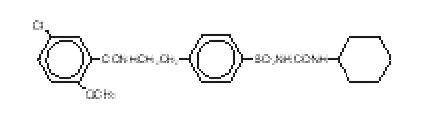
The hypoglycemic action of sulfonylureas may be potentiated by certain drugs including nonsteroidal anti-inflammatory agents, ACE inhibitors, disopyramide, fluoxetine, clarithromycin, and other drugs that are highly protein bound, salicylates, sulfonamides, chloramphenicol, probenecid, monoamine oxidase inhibitors, and beta adrenergic blocking agents. When such drugs are administered to a patient receiving Glyburide, the patient should be observed closely for hypoglycemia. When such drugs are withdrawn from a patient receiving Glyburide, the patient should be observed closely for loss of control.
An increased incidence of elevated liver enzymes was observed in patients receiving glyburide concomitantly with bosentan. Therefore concomitant administration of glyburide and bosentan is contraindicated (see CONTRAINDICATIONS).
A potential interaction between oral miconazole and oral hypoglycemic agents leading to severe hypoglycemia has been reported. Whether this interaction also occurs with the intravenous, topical or vaginal preparations of miconazole is not known.
A possible interaction between glyburide and fluoroquinolone antibiotics has been reported resulting in a potentiation of the hypoglycemic action of glyburide. The mechanism for this interaction is not known.
Possible interactions between glyburide and coumarin derivatives have been reported that may either potentiate or weaken the effects of coumarin derivatives. The mechanism of these interactions is not known.
Rifampin may worsen glucose control of glyburide because rifampin can significantly induce metabolic isozymes of glyburide such as CYP2C9 and 3A4.
Certain drugs tend to produce hyperglycemia and may lead to loss of control. These drugs include the thiazides and other diuretics, corticosteroids, phenothiazines, thyroid products, estrogens, oral contraceptives, phenytoin, nicotinic acid, sympathomimetics, calcium channel blocking drugs, and isoniazid. When such drugs are administered to a patient receiving Glyburide, the patient should be closely observed for loss of control. When such drugs are withdrawn from a patient receiving Glyburide, the patient should be observed closely for hypoglycemia.
Glyburide may increase cyclosporine plasma concentration and potentially lead to its increased toxicity. Monitoring and dosage adjustment of cyclosporine are therefore recommended when both drugs are coadministered.