If serum potassium concentration is <2.5 mEq/L, use intravenous potassium instead of oral supplementation.
Monitoring
Monitor serum potassium and adjust dosages accordingly. For treatment of hypokalemia, monitor potassium levels daily or more often depending on the severity of hypokalemia until they return to normal. Monitor potassium levels monthly to biannually for maintenance or prophylaxis.
The treatment of potassium depletion, particularly in the presence of cardiac disease, renal disease, or acidosis requires careful attention to acid-base balance, volume status, electrolytes, including magnesium, sodium, chloride, phosphate, and calcium, electrocardiograms and the clinical status of the patient. Correct volume status, acid-base balance and electrolyte deficits as appropriate.
Administration
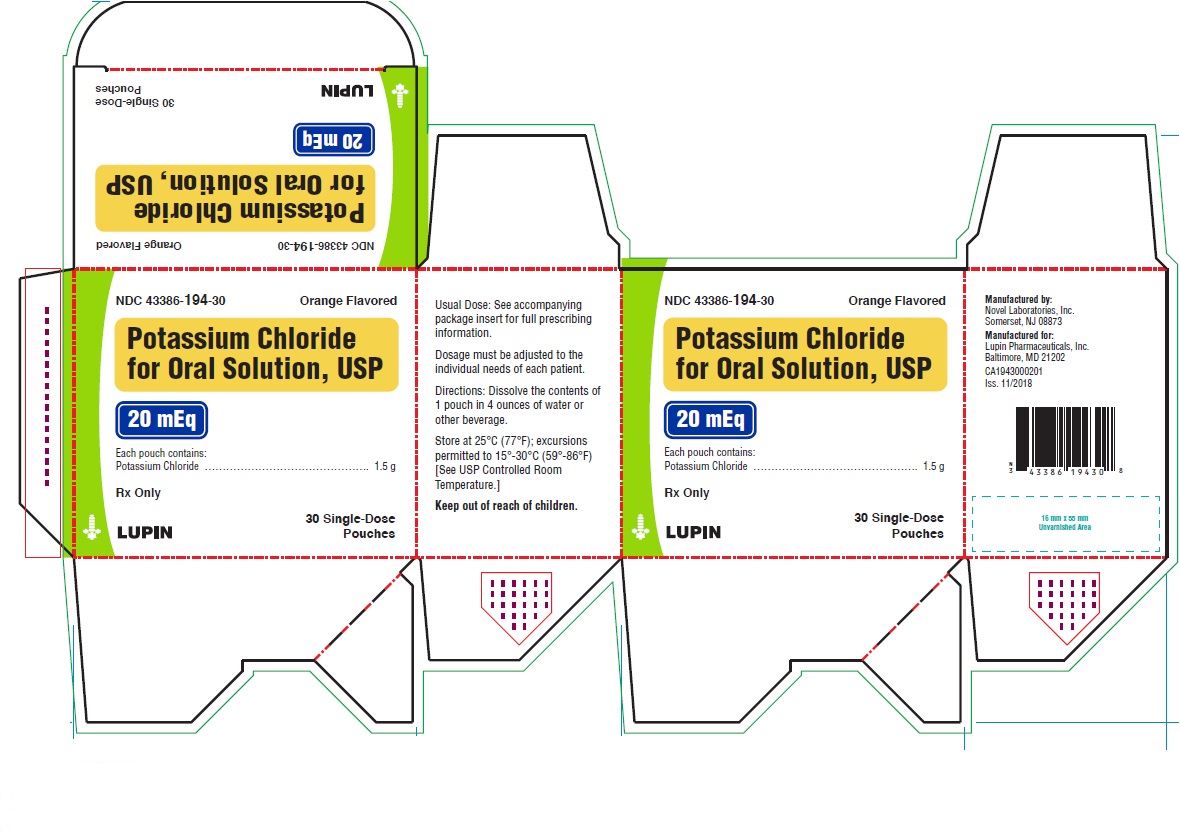
Dilute the potassium chloride for oral solution with at least 4 ounces of cold water [see Warnings and Precautions (5.1)].
Take with meals or immediately after eating.