Other
WARNING: ADDICTION, ABUSE, AND MISUSE; LIFE-THREATENING RESPIRATORY DEPRESSION; ACCIDENTAL INGESTION; NEONATAL OPIOID WITHDRAWAL SYNDROME; and RISKS FROM CONCOMITANT USE WITH BENZODIAZEPINES OR OTHER CNS DEPRESSANTS
Addiction, Abuse, and Misuse
Morphine sulfate extended-release tablets exposes patients and other users to the risks of opioid addiction, abuse, and misuse, which can lead to overdose and death. Assess each patient's risk prior to prescribing morphine sulfate extended-release tablets, and monitor all patients regularly for the development of these behaviors and conditions [see Warnings and Precautions (5.1)].
Life-Threatening Respiratory Depression
Serious, life-threatening, or fatal respiratory depression may occur with use of morphine sulfate extended-release tablets. Monitor for respiratory depression, especially during initiation of morphine sulfate extended-release tablets or following a dose increase. Instruct patients to swallow morphine sulfate extended-release tablets whole; crushing, chewing, or dissolving morphine sulfate extended-release tablets can cause rapid release and absorption of a potentially fatal dose of morphine [see Warnings and Precautions (5.2)].
Accidental Ingestion
Accidental ingestion of even one dose of morphine sulfate extended-release tablets, especially by children, can result in a fatal overdose of morphine [see Warnings and Precautions (5.2)].
Neonatal Opioid Withdrawal Syndrome
Prolonged use of morphine sulfate extended-release tablets during pregnancy can result in neonatal opioid withdrawal syndrome, which may be life-threatening if not recognized and treated, and requires management according to protocols developed by neonatology experts. If opioid use is required for a prolonged period in a pregnant woman, advise the patient of the risk of neonatal opioid withdrawal syndrome and ensure that appropriate treatment will be available [see Warnings and Precautions (5.3)].
Risks From Concomitant Use With Benzodiazepines Or Other CNS Depressants
Concomitant use of opioids with benzodiazepines or other central nervous system (CNS) depressants, including alcohol, may result in profound sedation, respiratory depression, coma, and death [see Warnings and Precautions (5.4), Drug Interactions (7)].
- Reserve concomitant prescribing of morphine sulfate extended-release tablets Injection and benzodiazepines or other CNS depressants for use in patients for whom alternative treatment options are inadequate.
- Limit dosages and durations to the minimum required.
- Follow patients for signs and symptoms of respiratory depression and sedation.
- Because of the risks of addiction, abuse, and misuse with opioids, even at recommended doses, and because of the greater risks of overdose and death with extended-release opioid formulations [see Warnings and Precautions (5.1)] , reserve morphine sulfate extended-release tablets for use in patients for whom alternative treatment options (e.g., non- opioid analgesics or immediate-release opioids) are ineffective, not tolerated, or would be otherwise inadequate to provide sufficient management of pain.
- Morphine sulfate extended-release tablets is not indicated as an as-needed (prn) analgesic.
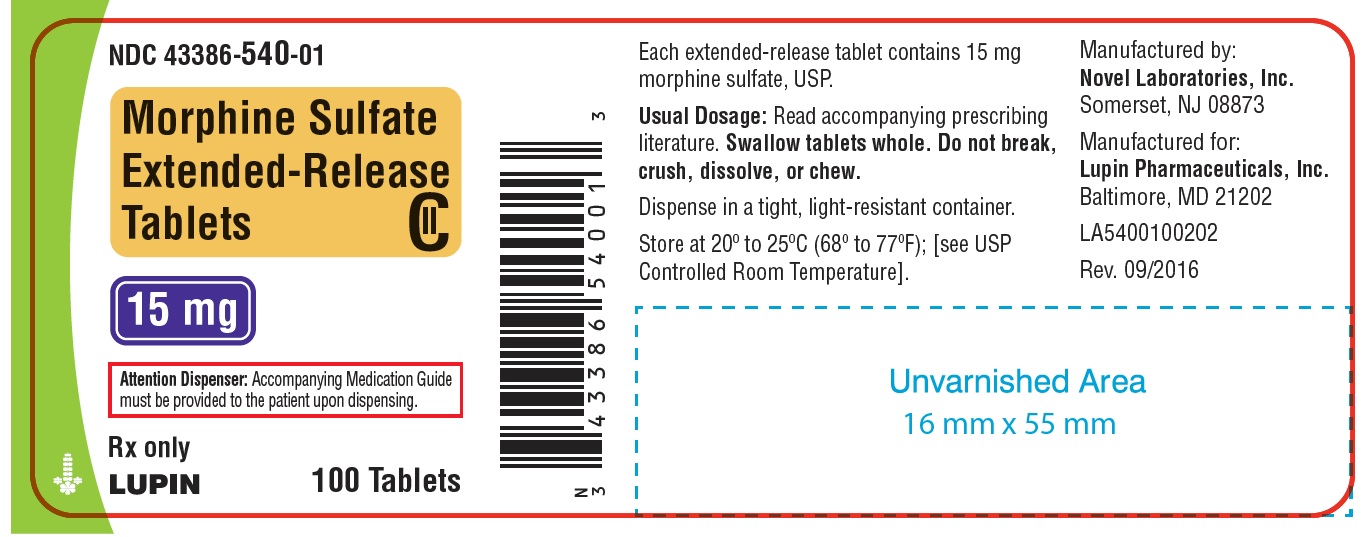
- Morphine Sulfate Extended-Release Tablets 15 mg
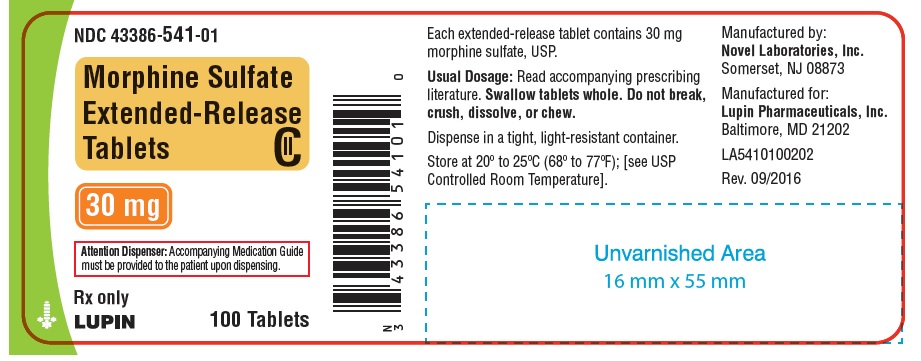
- Morphine Sulfate Extended-Release Tablets 30 mg
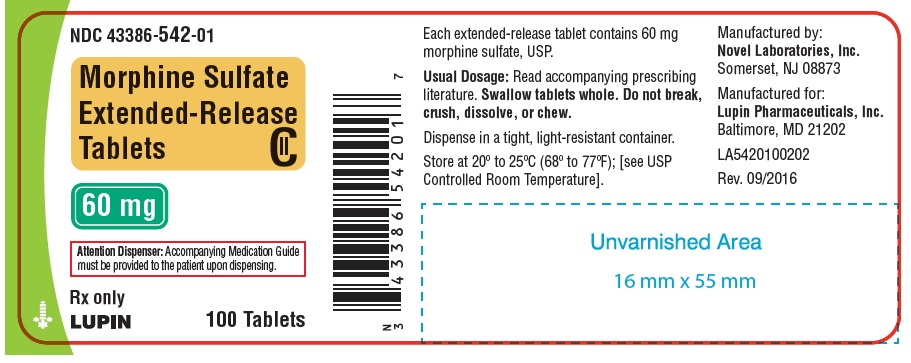
- Morphine Sulfate Extended-Release Tablets 60 mg
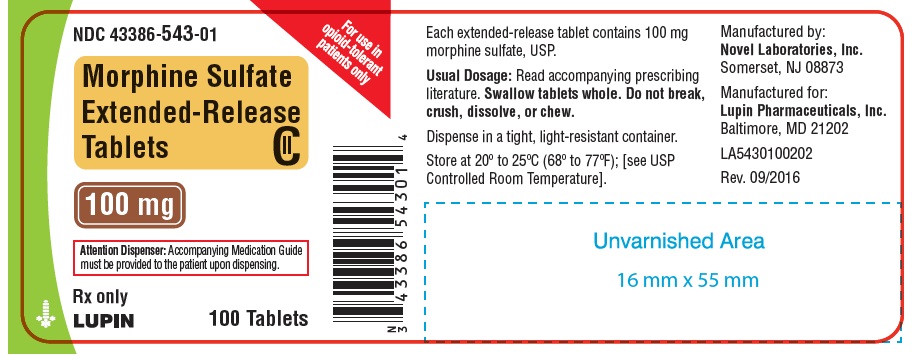
- Morphine Sulfate Extended-Release Tablets 100 mg
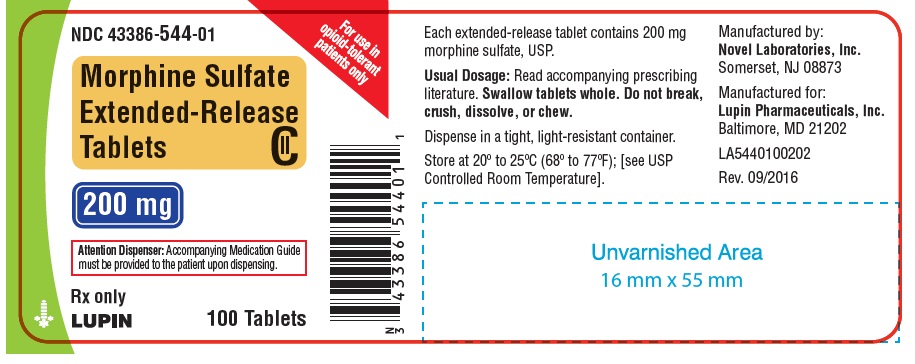
- Morphine Sulfate Extended-Release Tablets 200 mg
- Significant respiratory depression [see Warnings and Precautions (5.2)]
- Acute or severe bronchial asthma in an unmonitored setting or in the absence of resuscitative equipment [see Warnings and Precautions (5.5)]
- Concurrent use of monoamine oxidase inhibitors (MAOIs) or use of MAOIs within the last 14 days [see Warnings and Precautions (5.6), Drug Interactions (7)] .
- Known or suspected gastrointestinal obstruction, including paralytic ileus [see Warnings and Precautions (5.10)]
- Hypersensitivity (e.g., anaphylaxis) to morphine [see Adverse Reactions (6.2)]
- Addiction, Abuse, and Misuse [see Warnings and Precautions (5.1)]
- Life-Threatening Respiratory Depression[see Warnings and Precautions (5.2)]
- Neonatal Opioid Withdrawal Syndrome [see Warnings and Precautions (5.3)]
- Interactions with Benzodiazepine or Other CNS Depressants [see Warnings and Precautions (5.4)]
- Adrenal Insufficiency [see Warnings and Precautions (5.7)]
- Severe Hypotension [see Warnings and Precautions (5.8)]
- Gastrointestinal Adverse Reactions [see Warnings and Precautions (5.10)]
- Seizures [see Warnings and Precautions (5.11)]
- Withdrawal [see Warnings and Precautions (5.12)]
Morphine sulfate extended-release tablets is indicated for the management of pain severe enough to require daily, around-the-clock, long-term opioid treatment and for which alternative treatment options are inadequate.
Limitations of Use
Round, blue-colored, film-coated tablets, debossed "n 15" on one side and plain on the other side.
Round, lavender-colored, film-coated tablets, debossed "n 30" on one side and plain on the other side.
Round, orange-colored, film-coated tablets, debossed "n 60" on one side and plain on the other side.
Round, gray-colored, film-coated tablets, debossed "N 100" on one side and plain on the other side.
Capsule-shaped, green-colored, film-coated tablets, debossed "n 200" on one side and plain on the other side.
Morphine sulfate extended-release tablets are contraindicated in patients with:
The following serious adverse reactions are described, or described in greater detail, in other sections: