Osteoporosis Treatment Clinical Trial (MORE) — The safety of raloxifene in the treatment of osteoporosis was assessed in a large (7705 patients) multinational, placebo- controlled trial. Duration of treatment was 36 months, and 5129 postmenopausal women were exposed to raloxifene (2557 received 60 mg/day, and 2572 received 120 mg/day). The incidence of all-cause mortality was similar among groups: 23 (0.9%) placebo, 13 (0.5%) raloxifene-treated (60 mg), and 28 (1.1%) raloxifene 120 mg women died. Therapy was discontinued due to an adverse reaction in 10.9% of raloxifene-treated women and 8.8% of placebo-treated women.
Venous Thromboembolism: The most serious adverse reaction related to raloxifene was VTE (deep venous thrombosis, pulmonary embolism, and retinal vein thrombosis). During an average of study-drug exposure of 2.6 years, VTE occurred in about 1 out of 100 patients treated with raloxifene. Twenty-six raloxifene-treated women had a VTE compared to 11 placebo-treated women, the hazard ratio was 2.4 (95% confidence interval, 1.2, 4.5), and the highest VTE risk was during the initial months of treatment.
Common adverse reactions considered to be related to raloxifene therapy were hot flashes and leg cramps. Hot flashes occurred in about one in 10 patients on raloxifene hydrochloride tablets and were most commonly reported during the first 6 months of treatment and were not different from placebo thereafter. Leg cramps occurred in about one in 14 patients on raloxifene.
Placebo-Controlled Osteoporosis Prevention Clinical Trials — The safety of raloxifene has been assessed primarily in 12 Phase 2 and Phase 3 studies with placebo, estrogen, and estrogen-progestin therapy control groups. The duration of treatment ranged from 2 to 30 months, and 2036 women were exposed to raloxifene (371 patients received 10 to 50 mg/day, 828 received 60 mg/day, and 837 received from 120 to 600 mg/day).
Therapy was discontinued due to an adverse reaction in 11.4% of 581 raloxifene-treated women and 12.2% of 584 placebo-treated women. Discontinuation rates due to hot flashes did not differ significantly between raloxifene and placebo groups (1.7% and 2.2%, respectively).
Common adverse reactions considered to be drug-related were hot flashes and leg cramps. Hot flashes occurred in about one in four patients on raloxifene versus about one in six on placebo. The first occurrence of hot flashes was most commonly reported during the first 6 months of treatment.
Table 1 lists adverse reactions occurring in either the osteoporosis treatment or in five prevention placebo-controlled clinical trials at a frequency ≥2.0% in either group and in more raloxifene-treated women than in placebo-treated women. Adverse reactions are shown without attribution of causality. The majority of adverse reactions occurring during the studies were mild and generally did not require discontinuation of therapy.
Table 1: Adverse Reactions Occurring in Placebo-Controlled Osteoporosis Clinical Trials at a Frequency ≥2.0% and in More Raloxifene-Treated (60 mg Once Daily) Women than Placebo-Treated Womena |
|
|
| Treatment | Prevention |
Raloxifene
(N=2557)
% | Placebo
(N=2576)
% | Raloxifene
(N=581)
% | Placebo
(N=584)
% |
| Body as a Whole |
| Infection
| A
| A
| 15.1
| 14.6
|
| Flu Syndrome
| 13.5
| 11.4
| 14.6
| 13.5
|
| Headache
| 9.2
| 8.5
| A
| A
|
| Leg Cramps
| 7.0
| 3.7
| 5.9
| 1.9
|
| Chest Pain
| A
| A
| 4.0
| 3.6
|
| Fever
| 3.9
| 3.8
| 3.1
| 2.6
|
| Cardiovascular System |
| Hot Flashes
| 9.7
| 6.4
| 24.6
| 18.3
|
| Migraine
| A
| A
| 2.4
| 2.1
|
| Syncope
| 2.3
| 2.1
| B
| B
|
| Varicose Vein
| 2.2
| 1.5
| A
| A
|
| Digestive System |
| Nausea
| 8.3
| 7.8
| 8.8
| 8.6
|
| Diarrhea
| 7.2
| 6.9
| A
| A
|
| Dyspepsia
| A
| A
| 5.9
| 5.8
|
| Vomiting
| 4.8
| 4.3
| 3.4
| 3.3
|
| Flatulence
| A
| A
| 3.1
| 2.4
|
| Gastrointestinal Disorder
| A
| A
| 3.3
| 2.1
|
| Gastroenteritis
| B
| B
| 2.6
| 2.1
|
| Metabolic and Nutritional |
| Weight Gain
| A
| A
| 8.8
| 6.8
|
| Peripheral Edema
| 5.2
| 4.4
| 3.3
| 1.9
|
| Musculoskeletal System |
| Arthralgia
| 15.5
| 14.0
| 10.7
| 10.1
|
| Myalgia
| A
| A
| 7.7
| 6.2
|
| Arthritis
| A
| A
| 4.0
| 3.6
|
| Tendon Disorder
| 3.6
| 3.1
| A
| A
|
| Nervous System |
| Depression
| A
| A
| 6.4
| 6.0
|
| Insomnia
| A
| A
| 5.5
| 4.3
|
| Vertigo
| 4.1
| 3.7
| A
| A
|
| Neuralgia
| 2.4
| 1.9
| B
| B
|
| Hypesthesia
| 2.1
| 2.0
| B
| B
|
| Respiratory System |
| Sinusitis
| 7.9
| 7.5
| 10.3
| 6.5
|
| Rhinitis
| 10.2
| 10.1
| A
| A
|
| Bronchitis
| 9.5
| 8.6
| A
| A
|
| Pharyngitis
| 5.3
| 5.1
| 7.6
| 7.2
|
| Cough Increased
| 9.3
| 9.2
| 6.0
| 5.7
|
| Pneumonia
| A
| A
| 2.6
| 1.5
|
| Laryngitis
| B
| B
| 2.2
| 1.4
|
| Skin and Appendages |
| Rash
| A
| A
| 5.5
| 3.8
|
| Sweating
| 2.5
| 2.0
| 3.1
| 1.7
|
| Special Senses |
| Conjunctivitis
| 2.2
| 1.7
| A
| A
|
| Urogenital System |
| Vaginitis
| A
| A
| 4.3
| 3.6
|
| Urinary Tract Infection
| A
| A
| 4.0
| 3.9
|
| Cystitis
| 4.6
| 4.5
| 3.3
| 3.1
|
| Leukorrhea
| A
| A
| 3.3
| 1.7
|
| Uterine Disorderb, c | 3.3
| 2.3
| A
| A
|
| Endometrial Disorderb | B
| B
| 3.1
| 1.9
|
| Vaginal Hemorrhage
| 2.5
| 2.4
| A
| A
|
| Urinary Tract Disorder
| 2.5
| 2.1
| A
| A
|
Comparison of Raloxifene and Hormone Therapy — Raloxifene was compared with estrogen-progestin therapy in three clinical trials for prevention of osteoporosis. Table 2 shows adverse reactions occurring more frequently in one treatment group and at an incidence ≥2.0% in any group. Adverse reactions are shown without attribution of causality.
Table 2: Adverse Reactions Reported in the Clinical Trials for Osteoporosis Prevention with Raloxifene (60 mg Once Daily) and Continuous Combined or Cyclic Estrogen Plus Progestin (Hormone Therapy) at an Incidence ≥2.0% in any Treatment Groupa |
|
|
|
| Raloxifene
(N=317)
% | Hormone Therapy-Continuous Combinedb
(N=96)
% | Hormone Therapy-Cyclicc
(N=219)
% |
| Urogenital |
| Breast Pain
| 4.4
| 37.5
| 29.7
|
| Vaginal Bleedingd | 6.2
| 64.2
| 88.5
|
| Digestive |
| Flatulence
| 1.6
| 12.5
| 6.4
|
| Cardiovascular |
| Hot Flashes
| 28.7
| 3.1
| 5.9
|
| Body as a Whole |
| Infection
| 11.0
| 0
| 6.8
|
| Abdominal Pain
| 6.6
| 10.4
| 18.7
|
| Chest Pain
| 2.8
| 0
| 0.5
|
Breast Pain — Across all placebo-controlled trials, raloxifene was indistinguishable from placebo with regard to frequency and severity of breast pain and tenderness. Raloxifene was associated with less breast pain and tenderness than reported by women receiving estrogens with or without added progestin.
Gynecologic Cancers — Raloxifene-treated and placebo-treated groups had similar incidences of endometrial cancer and ovarian cancer.
Placebo-Controlled Trial of Postmenopausal Women at Increased Risk for Major Coronary Events (RUTH) — The safety of raloxifene (60 mg once daily) was assessed in a placebo-controlled multinational trial of 10,101 postmenopausal women (age range 55 to 92) with documented coronary heart disease (CHD) or multiple CHD risk factors. Median study drug exposure was 5.1 years for both treatment groups [see Clinical Studies (14.3)]. Therapy was discontinued due to an adverse reaction in 25% of 5044 raloxifene-treated women and 24% of 5057 placebo-treated women. The incidence per year of all-cause mortality was similar between the raloxifene (2.07%) and placebo (2.25%) groups.
Adverse reactions reported more frequently in raloxifene-treated women than in placebo-treated women included peripheral edema (14.1% raloxifene versus 11.7% placebo), muscle spasms/leg cramps (12.1% raloxifene versus 8.3% placebo), hot flashes (7.8% raloxifene versus 4.7% placebo), venous thromboembolic events (2.0% raloxifene versus 1.4% placebo), and cholelithiasis (3.3% raloxifene versus 2.6% placebo) [see Clinical Studies (14.3, 14.5)].
Tamoxifen-Controlled Trial of Postmenopausal Women at Increased Risk for Invasive Breast Cancer (STAR) — The safety of raloxifene 60 mg/day versus tamoxifen 20 mg/day over 5 years was assessed in 19,747 postmenopausal women (age range 35-83 years) in a randomized, double-blind trial. As of 31 December 2005, the median follow-up was 4.3 years. The safety profile of raloxifene was similar to that in the placebo-controlled raloxifene trials [see Clinical Studies (14.4)].
Renal Impairment — In the osteoporosis treatment and prevention trials, raloxifene concentrations in women with mild renal impairment are similar to women with normal creatinine clearance. When a single dose of 120 mg raloxifene HCl was administered to 10 renally impaired males [7 moderate impairment (CrCl = 31 to 50 mL/min); 3 severe impairment (CrCl ≤30 mL/min)] and to 10 healthy males (CrCl >80 mL/min), plasma raloxifene concentrations were 122% (AUC 0-∞) higher in renally impaired patients than those of healthy volunteers. Raloxifene should be used with caution in patients with moderate or severe renal impairment [see Warnings and Precautions (5.8) and Use in Specific Populations (8.6)].
Hepatic Impairment — The disposition of raloxifene was compared in 9 patients with mild (Child-Pugh Class A) hepatic impairment (total bilirubin ranging from 0.6 to 2 mg/dL) to 8 subjects with normal hepatic function following a single dose of 60 mg raloxifene HCl. Apparent
clearance of raloxifene was reduced 56% and the half-life of raloxifene was not altered in patients with mild hepatic impairment. Plasma raloxifene concentrations were approximately 150% higher than those in healthy volunteers and correlated with total bilirubin concentrations. The pharmacokinetics of raloxifene has not been studied in patients with moderate or severe hepatic impairment. Raloxifene should be used with caution in patients with hepatic impairment [see Warnings and Precautions (5.5) and Use in Specific Populations (8.7)].
Drug Interactions
Cholestyramine — Cholestyramine, an anion exchange resin, causes a 60% reduction in the absorption and enterohepatic cycling of raloxifene after a single dose. Although not specifically studied, it is anticipated that other anion exchange resins would have a similar effect [see Drug Interactions (7.1)].
Warfarin — In vitro, raloxifene did not interact with the binding of warfarin. The concomitant administration of raloxifene and warfarin, a coumarin derivative, has been assessed in a single-dose study. In this study, raloxifene had no effect on the pharmacokinetics of warfarin. However, a 10% decrease in prothrombin time was observed in the single-dose study. In the osteoporosis treatment trial, there were no clinically relevant effects of warfarin co-administration on plasma concentrations of raloxifene [see Drug Interactions (7.2)].
Other Highly Protein-Bound Drugs — In the osteoporosis treatment trial, there were no clinically relevant effects of co-administration of other highly protein-bound drugs (e.g., gemfibrozil) on plasma concentrations of raloxifene. In vitro, raloxifene did not interact with the binding of phenytoin, tamoxifen, or warfarin (see above) [see Drug Interactions (7.3)].
Ampicillin and Amoxicillin — Peak concentrations of raloxifene and the overall extent of absorption are reduced 28% and 14%, respectively, with co-administration of ampicillin. These reductions are consistent with decreased enterohepatic cycling associated with antibiotic reduction of enteric bacteria. However, the systemic exposure and the elimination rate of raloxifene were not affected. In the osteoporosis treatment trial, co-administration of amoxicillin had no discernible differences in plasma raloxifene concentrations [see Drug Interactions (7.5)].
Antacids — Concomitant administration of calcium carbonate or aluminum and magnesium hydroxide-containing antacids does not affect the systemic exposure of raloxifene [see Drug Interactions (7.5)].
Corticosteroids — The chronic administration of raloxifene in postmenopausal women has no effect on the pharmacokinetics of methylprednisolone given as a single oral dose [see Drug Interactions (7.5)].
Digoxin — Raloxifene has no effect on the pharmacokinetics of digoxin [see Drug Interactions (7.5)].
Cyclosporine — Concomitant administration of raloxifene with cyclosporine has not been studied.
Lipid - Lowering Agents — Concomitant administration of raloxifene with lipid-lowering agents has not been studied.
Carcinogenesis — In a 21-month carcinogenicity study in mice, there was an increased incidence of ovarian tumors in female animals given 9 to 242 mg/kg, which included benign and malignant tumors of granulosa/theca cell origin and benign tumors of epithelial cell origin. Systemic exposure (AUC) of raloxifene in this group was 0.3 to 34 times that in postmenopausal women administered a 60 mg dose. There was also an increased incidence of testicular interstitial cell tumors and prostatic adenomas and adenocarcinomas in male mice given 41 or 210 mg/kg (4.7 or 24 times the AUC in humans) and prostatic leiomyoblastoma in male mice given 210 mg/kg.
In a 2-year carcinogenicity study in rats, an increased incidence in ovarian tumors of granulosa/theca cell origin was observed in female rats given 279 mg/kg (approximately 400 times the AUC in humans). The female rodents in these studies were treated during their reproductive lives when their ovaries were functional and responsive to hormonal stimulation.
Mutagenesis — Raloxifene HCl was not genotoxic in any of the following test systems: the Ames test for bacterial mutagenesis with and without metabolic activation, the unscheduled DNA synthesis assay in rat hepatocytes, the mouse lymphoma assay for mammalian cell mutation, the chromosomal aberration assay in Chinese hamster ovary cells, the in vivo sister chromatid exchange assay in Chinese hamsters, and the in vivo micronucleus test in mice.
Impairment of Fertility — When male and female rats were given daily doses ≥5 mg/kg (≥0.8 times the human dose based on surface area, mg/m2) prior to and during mating, no pregnancies occurred. In male rats, daily doses up to 100 mg/kg (16 times the human dose based on surface area, mg/m2) for at least 2 weeks did not affect sperm production or quality or reproductive performance. In female rats, at doses of 0.1 to 10 mg/kg/day (0.02 to 1.6 times the human dose based on surface area, mg/m2), raloxifene disrupted estrous cycles and inhibited ovulation. These effects of raloxifene were reversible. In another study in rats in which raloxifene was given during the preimplantation period at doses ≥0.1 mg/kg (≥0.02 times the human dose based on surface area, mg/m2), raloxifene delayed and disrupted embryo implantation, resulting in prolonged gestation and reduced litter size. The reproductive and developmental effects observed in animals are consistent with the estrogen receptor activity of raloxifene.
Effect on Fracture Incidence
The effects of raloxifene on fracture incidence and BMD in postmenopausal women with osteoporosis were examined at 3 years in a large randomized, placebo-controlled, double-blind, multinational osteoporosis treatment trial (MORE). All vertebral fractures were diagnosed radiographically; some of these fractures also were associated with symptoms (i.e., clinical fractures). The study population consisted of 7705 postmenopausal women with osteoporosis as defined by: a) low BMD (vertebral or hip BMD at least 2.5 standard deviations below the mean value for healthy young women) without baseline vertebral fractures or b) one or more baseline vertebral fractures. Women enrolled in this study had a median age of 67 years (range 31 to 80) and a median time since menopause of 19 years.
Effect on Bone Mineral Density
Raloxifene 60 mg administered once daily, increased spine and hip BMD by 2 to 3%. Raloxifene decreased the incidence of the first vertebral fracture from 4.3% for placebo to 1.9% for raloxifene (relative risk reduction = 55%) and subsequent vertebral fractures from 20.2% for placebo to 14.1% for raloxifene (relative risk reduction = 30%) (see
Table 4). All women in the study received calcium (500 mg/day) and vitamin D (400 to 600 IU/day). Raloxifene reduced the incidence of vertebral fractures whether or not patients had a vertebral fracture upon study entry. The decrease in incidence of vertebral fracture was greater than could be accounted for by increase in BMD alone.
Table 4: Effect of Raloxifene on Risk of Vertebral Fractures
|
| Number of Patients | Absolute
Risk
Reduction
(ARR) | Relative
Risk
Reduction
(95% CI) |
Raloxifene | Placebo | | |
Fractures diagnosed radiographically
Patients with no baseline fracture a
Number (%) of patients with ≥ 1 new
vertebral fracture
| n= 1401
27 (1.9%)
| n= 1457
62 (4.3%)
| 2.4%
| 55%
(29%, 71%)
|
Patients with ≥ 1 baseline fracturea
Number (%) of patients with ≥ 1
new vertebral fracture
| n=858
121 (14.1%)
| n=853
169 (20.2%)
| 6.1%
| 30%
(14%, 44%)
|
Symptomatic vertebral fractures
All randomized patients
Number (%) of patients with ≥ 1
new clinical (painful) vertebral
fracture
| n=2557
47 (1.8%)
| n=2576
81 (3.1%)
| 1.3%
| 41%
(17%, 59%)
|
The mean percentage change in BMD from baseline for raloxifene was statistically significantly greater than for placebo at each skeletal site (see
Table 5).
Table 5: Raloxifene (60 mg Once Daily) Related Increases in BMDa for the Osteoporosis Treatment Study Expressed as Mean Percentage Increase vs. Placebob, c |
|
|
|
| Time |
| Site | 12 Months
% | 24 Months
% | 36 Months
% |
| Lumbar Spine
| 2.0
| 2.6
| 2.6
|
| Femoral Neck
| 1.3
| 1.9
| 2.1
|
| Ultradistal Radius
| NDd | 2.2
| NDd |
| Distal Radius
| NDd | 0.9
| NDd |
| Total Body
| NDd | 1.1
| NDd |
Discontinuation from the study was required when excessive bone loss or multiple incident vertebral fractures occurred. Such discontinuation was statistically significantly more frequent in the placebo group (3.7%) than in the raloxifene group (1.1%).
Bone Histology
Bone biopsies for qualitative and quantitative histomorphometry were obtained at baseline and after 2 years of treatment. There were 56 paired biopsies evaluable for all indices. In raloxifene-treated patients, there were statistically significant decreases in bone formation rate per tissue volume, consistent with a reduction in bone turnover. Normal bone quality was maintained; specifically, there was no evidence of osteomalacia, marrow fibrosis, cellular toxicity, or woven bone after 2 years of treatment.
Effect on Endometrium
Endometrial thickness was evaluated annually in a subset of the study population (1781 patients) for 3 years. Placebo-treated women had a 0.27 mm mean decrease from baseline in endometrial thickness over 3 years, whereas the raloxifene-treated women had a 0.06 mm mean increase. Patients in the osteoporosis treatment study were not screened at baseline or excluded for pre-existing endometrial or uterine disease. This study was not specifically designed to detect endometrial polyps. Over the 36 months of the study, clinically or histologically benign endometrial polyps were reported in 17 of 1999 placebo-treated women, 37 of 1948 raloxifene-
treated women, and in 31 of 2010 women treated with raloxifene HCl 120 mg/day. There was no difference between raloxifene- and placebo-treated women in the incidences of endometrial carcinoma, vaginal bleeding, or vaginal discharge.
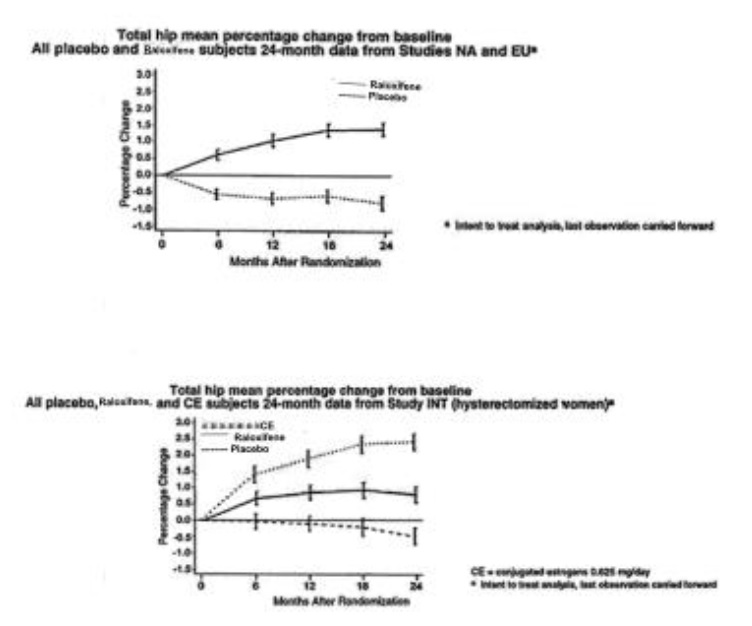
Effect on Bone Mineral Density
Compared with placebo, the increases in BMD for each of the three studies were statistically significant at 12 months and were maintained at 24 months (see
Table 6). The placebo groups lost approximately 1% of BMD over 24 months.
Table 6: Raloxifene (60 mg Once Daily) Related Increases in BMDa for the Three Osteoporosis Prevention Studies Expressed as Mean Percentage Increase vs . Placebob at 24 Monthsc |
|
|
|
|
| Study |
| Site | NAd
% | EUd
% | INTd, e
% |
| Total Hip
| 2.0
| 2.4
| 1.3
|
| Femoral Neck
| 2.1
| 2.5
| 1.6
|
| Trochanter
| 2.2
| 2.7
| 1.3
|
| Intertrochanter
| 2.3
| 2.4
| 1.3
|
| Lumbar Spine
| 2.0
| 2.4
| 1.8
|
Raloxifene also increased BMD compared with placebo in the total body by 1.3% to 2.0% and in Ward’s Triangle (hip) by 3.1% to 4.0%. The effects of raloxifene on forearm BMD were inconsistent between studies. In Study EU, raloxifene prevented bone loss at the ultradistal
radius, whereas in Study NA, it did not (see
Figure 1).
Figure 1 (Raloxifene Pi 02v1)
Effect on Endometrium
In placebo-controlled osteoporosis prevention trials, endometrial thickness was evaluated every
6 months (for 24 months) by transvaginal ultrasonography (TVU). A total of 2978 TVU
measurements were collected from 831 women in all dose groups. Placebo- treated women had a
0.04 mm mean increase from baseline in endometrial thickness over 2 years, whereas the
raloxifene-treated women had a 0.09 mm mean increase. Endometrial thickness measurements in
raloxifene-treated women were indistinguishable from placebo. There were no differences
between the raloxifene and placebo groups with respect to the incidence of reported vaginal
bleeding.
MORE Trial
The effect of raloxifene on the incidence of breast cancer was assessed as a secondary safety endpoint in a randomized, placebo-controlled, double-blind, multinational osteoporosis treatment trial in postmenopausal women [see Clinical Studies (14.1)]. After 4 years, raloxifene, 60 mg administered once daily, reduced the incidence of all breast cancers by 62%, compared with placebo (HR 0.38, 95% CI 0.22 to 0.67). Raloxifene reduced the incidence of invasive breast cancer by 71%, compared with placebo (ARR 3.1 per 1000 women-years); this was primarily due to an 80% reduction in the incidence of ER-positive invasive breast cancer in the raloxifene group compared with placebo. Table 7 presents efficacy and selected safety outcomes.
CORE Trial
The effect of raloxifene on the incidence of invasive breast cancer was evaluated for 4 additional years in a follow-up study conducted in a subset of postmenopausal women originally enrolled in the MORE osteoporosis treatment trial. Women were not re-randomized; the treatment assignment from the osteoporosis treatment trial was carried forward to this study. Raloxifene 60 mg administered once daily, reduced the incidence of invasive breast cancer by 56%, compared with placebo (ARR 3.0 per 1000 women-years); this was primarily due to a 63% reduction in the incidence of ER-positive invasive breast cancer in the raloxifene group compared with placebo. There was no reduction in the incidence of ER-negative breast cancer. In the osteoporosis treatment trial and the follow-up study, there was no difference in incidence of noninvasive breast cancer between the raloxifene and placebo groups. Table 7 presents efficacy and selected safety outcomes.
In a subset of postmenopausal women followed for up to 8 years from randomization in MORE to the end of CORE, raloxifene, 60 mg administered once daily, reduced the incidence of invasive breast cancer by 60% in women assigned raloxifene (N=1355) compared with placebo (N=1286) (HR 0.40, 95% CI 0.21, 0.77; ARR 1.95 per 1000 women-years); this was primarily due to a 65% reduction in the incidence of ER-positive invasive breast cancer in the raloxifene group compared with placebo.
Table 7: Raloxifene (60 mg Once Daily) vs . Placebo on Outcomes in Postmenopausal Women with Osteoporosis
|
|
|
|
|
|
| Outcomes | MORE
4 years | COREa
4 years |
Placebo
(N=2576) | Raloxifene
(N=2557) | HR
(95% CI)b | Placebo
(N=1286) | Raloxifene
(N=2725) | HR
(95% CI)b |
| n | IRb | n | IRb | | n | IRb | n | IRb | |
Invasivec
breast cancer
| 38
| 4.36
| 11
| 1.26
| 0.29
(0.15, 0.56)d | 20
| 5.41
| 19
| 2.43
| 0.44
(0.24, 0.83)d |
| ERb, c positive
| 29
| 3.33
| 6
| 0.69
| 0.20
(0.08, 0.49)
| 15
| 4.05
| 12
| 1.54
| 0.37
(0.17, 0.79)
|
| ERb, c negative
| 4
| 0.46
| 5
| 0.57
| 1.23
(0.33, 4.60)
| 3
| 0.81
| 6
| 0.77
| 0.95
(0.24, 3.79)
|
| ERb, c unknown
| 5
| 0.57
| 0
| 0.00
| N/Ab | 2
| 0.54
| 1
| 0.13
| N/Ab |
Noninvasivec, e
breast cancer
| 5
| 0.57
| 3
| 0.34
| 0.59
(0.14, 2.47)
| 2
| 0.54
| 5
| 0.64
| 1.18
(0.23, 6.07)
|
Clinical vertebral
fractures
| 107
| 12.27
| 62
| 7.08
| 0.57
(0.42, 0.78)
| N/Ab | N/Ab | N/Ab | N/Ab | N/Ab |
| Death
| 36
| 4.13
| 23
| 2.63
| 0.63
(0.38, 1.07)
| 29
| 7.76
| 47
| 5.99
| 0.77
(0.49, 1.23)
|
| Death due to stroke
| 6
| 0.69
| 3
| 0.34
| 0.49
(0.12, 1.98)
| 1
| 0.27
| 6
| 0.76
| 2.87
(0.35, 23.80)
|
| Stroke
| 56
| 6.42
| 43
| 4.91
| 0.76
(0.51, 1.14)
| 14
| 3.75
| 49
| 6.24
| 1.67
(0.92, 3.03)
|
| Deep vein thrombosis
| 8
| 0.92
| 20
| 2.28
| 2.50
(1.10, 5.68)
| 4
| 1.07
| 17
| 2.17
| 2.03
(0.68, 6.03)
|
| Pulmonary embolism
| 4
| 0.46
| 11
| 1.26
| 2.76
(0.88, 8.67)
| 0
| 0.00
| 9
| 1.15
| N/Ab |
| Endometrial and uterine cancerf | 5
| 0.74
| 5
| 0.74
| 1.01
(0.29, 3.49)
| 3
| 1.02
| 4
| 0.65
| 0.64
(0.14, 2.85)
|
| Ovarian cancer
| 6
| 0.69
| 3
| 0.34
| 0.49
(0.12, 1.95)
| 2
| 0.54
| 2
| 0.25
| 0.47
(0.07, 3.36)
|
| Hot flashes
| 151
| 17.31
| 237
| 27.06
| 1.61
(1.31, 1.97)
| 11
| 2.94
| 26
| 3.31
| 1.12
(0.55, 2.27)
|
| Peripheral edema
| 134
| 15.36
| 164
| 18.73
| 1.23
(0.98, 1.54)
| 30
| 8.03
| 61
| 7.77
| 0.96
(0.62, 1.49)
|
| Cholelithiasis
| 45
| 5.16
| 53
| 6.05
| 1.18
(0.79, 1.75)
| 12
| 3.21
| 35
| 4.46
| 1.39
(0.72, 2.67)
|
RUTH Trial
The effect of raloxifene on the incidence of invasive breast cancer was assessed in a randomized, placebo-controlled, double-blind, multinational study in 10,101 postmenopausal women at increased risk of coronary events. Women in this study had a median age of 67.6 years (range 55 to 92) and were followed for a median of 5.6 years (range 0.01 to 7.1). Eighty-four percent were White, 9.8% of women reported a first-degree relative with a history of breast cancer, and 41.4% of the women had a 5-year predicted risk of invasive breast cancer ≥1.66%, based on the modified Gail model.
Raloxifene 60 mg administered once daily, reduced the incidence of invasive breast cancer by 44% compared with placebo [absolute risk reduction (ARR) 1.2 per 1000 women-years]; this was primarily due to a 55% reduction in estrogen receptor (ER)-positive invasive breast cancer in the raloxifene group compared with placebo (ARR 1.2 per 1000 women-years). There was no reduction in ER-negative invasive breast cancer. Table 8 presents efficacy and selected safety outcomes.
Table 8: Raloxifene (60 mg Once Daily) vs . Placebo on Outcomes in Postmenopausal Women at Increased Risk for Major Coronary Events
|
|
|
|
|
|
|
| Outcomes | Placeboa
(N=5057) | Raloxifene a
(N=5044) | HR
(95% CI)b |
| n | IRb | n | IRb | |
| Invasive breast cancer
| 70
| 2.66
| 40
| 1.50
| 0.56 (0.38, 0.83)c |
| ERb positive
| 55
| 2.09
| 25
| 0.94
| 0.45 (0.28, 0.72)
|
| ERb negative
| 9
| 0.34
| 13
| 0.49
| 1.44 (0.61, 3.36)
|
| ERb unknown
| 6
| 0.23
| 2
| 0.07
| 0.33 (0.07, 1.63)
|
| Noninvasived breast cancer
| 5
| 0.19
| 11
| 0.41
| 2.17 (0.75, 6.24)
|
| Clinical vertebral fractures
| 97
| 3.70
| 64
| 2.40
| 0.65 (0.47, 0.89)
|
| Death
| 595
| 22.45
| 554
| 20.68
| 0.92 (0.82, 1.03)
|
| Death due to stroke
| 39
| 1.47
| 59
| 2.20
| 1.49 (1.00, 2.24)
|
| Stroke
| 224
| 8.60
| 249
| 9.46
| 1.10 (0.92, 1.32)
|
| Deep vein thrombosis
| 47
| 1.78
| 65
| 2.44
| 1.37 (0.94, 1.99)
|
| Pulmonary embolism
| 24
| 0.91
| 36
| 1.35
| 1.49 (0.89, 2.49)
|
| Endometrial and uterine cancere | 17
| 0.83
| 21
| 1.01
| 1.21 (0.64 - 2.30)
|
| Ovarian cancerf | 10
| 0.41
| 17
| 0.70
| 1.69 (0.78, 3.70)
|
| Hot flashes
| 241
| 9.09
| 397
| 14.82
| 1.68 (1.43, 1.97)
|
| Peripheral edema
| 583
| 22.00
| 706
| 26.36
| 1.22 (1.09, 1.36)
|
| Cholelithiasisg | 131
| 6.20
| 168
| 7.83
| 1.26 (1.01, 1.59)
|
The effect of raloxifene in reducing the incidence of invasive breast cancer was consistent among women above or below age 65 or with a 5-year predicted invasive breast cancer risk, based on the modified Gail model, <1.66%, or ≥1.66%.
STAR Trial
The effects of raloxifene 60 mg/day versus tamoxifen 20 mg/day over 5 years on reducing the incidence of invasive breast cancer were assessed in 19,747 postmenopausal women in a randomized, double-blind trial conducted in North America by the National Surgical Adjuvant Breast and Bowel Project and sponsored by the National Cancer Institute. Women in this study had a mean age of 58.5 years (range 35 to 83), a mean 5-year predicted invasive breast cancer risk of 4.03% (range 1.66 to 23.61%), and 9.1% had a history of lobular carcinoma in situ (LCIS). More than 93% of participants were White. As of 31 December 2005, the median time of follow-up was 4.3 years (range 0.07 to 6.50 years).
Raloxifene was not superior to tamoxifen in reducing the incidence of invasive breast cancer. The observed incidence rates of invasive breast cancer were raloxifene 4.4 and tamoxifen 4.3 per 1000 women per year. The results from a noninferiority analysis are consistent with raloxifene potentially losing up to 35% of the tamoxifen effect on reduction of invasive breast cancer. The effect of each treatment on invasive breast cancer was consistent when women were compared by baseline age, history of LCIS, history of atypical hyperplasia, 5-year predicted risk of breast cancer by the modified Gail model, or the number of relatives with a history of breast cancer. Fewer noninvasive breast cancers occurred in the tamoxifen group compared to the raloxifene group. Table 9 presents efficacy and selected safety outcomes.
Table 9: Raloxifene (60 mg Once Daily) vs . Tamoxifen (20 mg Once Daily) on Outcomes in Postmenopausal Women at Increased Risk for Invasive Breast Cancer
|
|
|
|
|
|
|
| Outcomes | Raloxifene
(N=9751) | Tamoxifen
(N=9736) | RR
(95% CI)a |
| n | IRa | n | IRa | |
| Invasive breast cancer
| 173
| 4.40
| 168
| 4.30
| 1.02 (0.82, 1.27)
|
| ERa positive
| 115
| 2.93
| 120
| 3.07
| 0.95 (0.73, 1.24)
|
| ERa negative
| 52
| 1.32
| 46
| 1.18
| 1.12 (0.74, 1.71)
|
| ERa unknown
| 6
| 0.15
| 2
| 0.05
| 2.98 (0.53, 30.21)
|
| Noninvasive breast cancerb | 83
| 2.12
| 60
| 1.54
| 1.38 (0.98, 1.95)
|
| DCISa | 47
| 1.20
| 32
| 0.82
| 1.46 (0.91, 2.37)
|
| LCISa | 29
| 0.74
| 23
| 0.59
| 1.26 (0.70, 2.27)
|
| Uterine cancerc | 23
| 1.21
| 37
| 1.99
| 0.61 (0.34, 1.05)
|
| Endometrial hyperplasiac | 17
| 0.90
| 100
| 5.42
| 0.17 (0.09, 0.28)
|
| Hysterectomyc | 92
| 4.84
| 246
| 13.25
| 0.37 (0.28, 0.47)
|
| Ovarian cancerd | 18
| 0.66
| 14
| 0.52
| 1.27 (0.60, 2.76)
|
| Ischemic heart diseasee | 138
| 3.50
| 125
| 3.19
| 1.10 (0.86, 1.41)
|
| Stroke
| 54
| 1.36
| 56
| 1.42
| 0.96 (0.65, 1.42)
|
| Deep vein thrombosis
| 67
| 1.69
| 92
| 2.35
| 0.72 (0.52, 1.00)
|
| Pulmonary embolism
| 38
| 0.96
| 58
| 1.47
| 0.65 (0.42, 1.00)
|
| Clinical vertebral fractures
| 58
| 1.46
| 58
| 1.47
| 0.99 (0.68, 1.46)
|
| Cataractsf | 343
| 10.34
| 435
| 13.19
| 0.78 (0.68, 0.91)
|
| Cataract surgeryf | 240
| 7.17
| 295
| 8.85
| 0.81 (0.68, 0.96)
|
| Death
| 104
| 2.62
| 109
| 2.76
| 0.95 (0.72, 1.25)
|
| Edemag | 741
| 18.66
| 664
| 16.83
| 1.11 (1.00, 1.23)
|
| Hot flashes
| 6748
| 169.91
| 7170
| 181.71
| 0.94 (0.90, 0.97)
|
You can ask your pharmacist or doctor for information about Raloxifene Hydrochloride Tablets USP, or call 1-888-375-3784.
Rx Only
Manufactured by:
ScieGen Pharmaceuticals, Inc.
Huappauge, NY 11788, USA
Manufactured for:
Dr. Reddy’s Laboratories Inc.
Princeton, New Jersey 08540, USA
Issued: 08/16