Lenalidomide Capsule
Product Images NDC 43598-511
View Photos of Packaging, Regulatory Labels, and Product Appearance
Product Visual Gallery
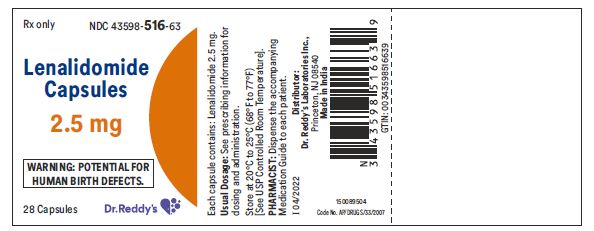
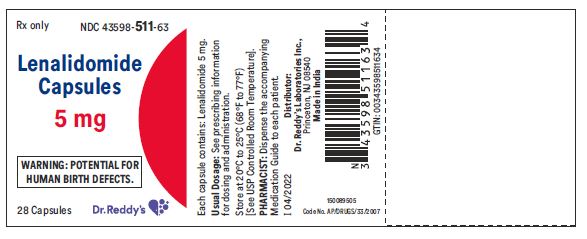
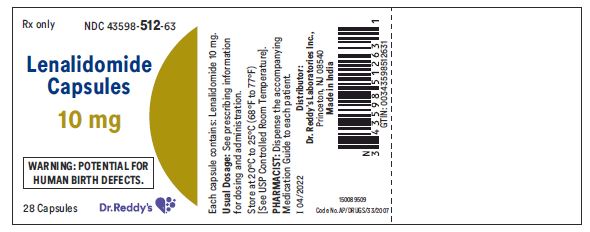
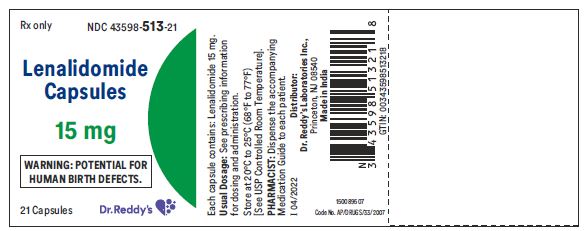
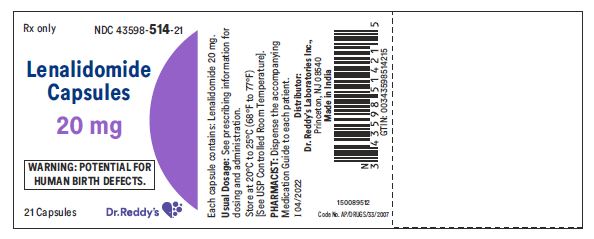
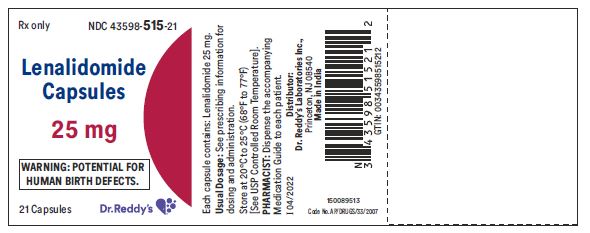
This gallery contains 15 technical images submitted to the FDA as part of the official labeling for Lenalidomide (NDC 43598-511). Unlike standard consumer photos, these assets often include clinical data figures, molecular chemical structures, and official manufacturer packaging layouts.
As provided by Dr. Reddy's Laboratories Inc., these visuals offer a comprehensive scientific overview of the product's physical and chemical identity, aiding pharmacists and researchers in product verification and study.
Product Images & Figures Index
Container2 (Container2)
Container3 (Container3)
Container4 (Container4)
Container5 (Container5)
Container6 (Container6)
Fig3 (Fig3)
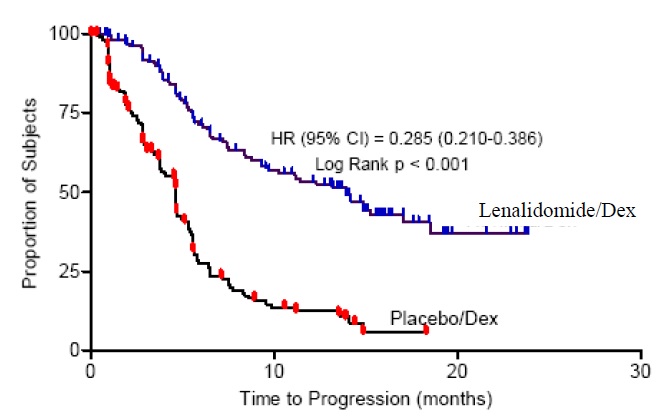
This is a clinical trial result. It includes the proportion of subjects who underwent treatment with Lenalidomide/Dex and Placebo/Dex. The results show the hazard ratio (HR) and the 95% confidence interval (CI) for time to progression (months) using Log Rank analysis. The HR for the Lenalidomide/Dex group was 0.285 (95% CI: 0.210-0.386) with a statistically significant p-value of less than 0.001. The time to progression graph is also provided.*
Fig4 (Fig4)
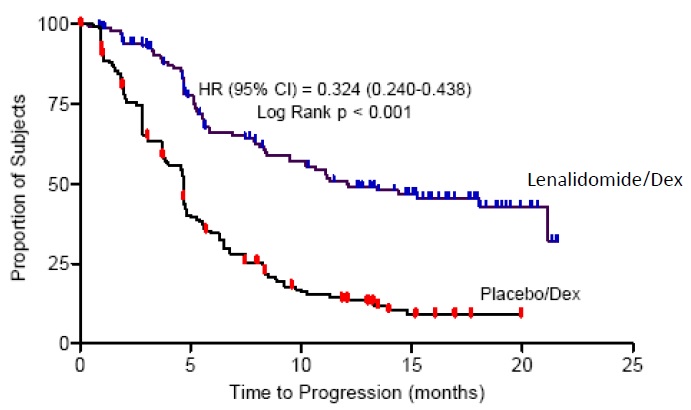
The text describes the results of a study comparing treatment with Lenalidomide/Dex versus Placebo/Dex. The proportion of subjects in each group is unclear. The study found that Lenalidomide/Dex significantly increased time to progression compared to Placebo/Dex. The hazard ratio for Lenalidomide/Dex vs Placebo/Dex is 0.324 with 95% confidence interval (0.240-0.438). The p-value for the difference between the two groups is less than 0.001. Time to progression is plotted over 25 months.*
Figure10 (Figure10)
Figure5 (Figure5)
Figure6 (Figure6)
Figure7 (Figure7)
Figure8 (Figure8)
Figure9 (Figure9)
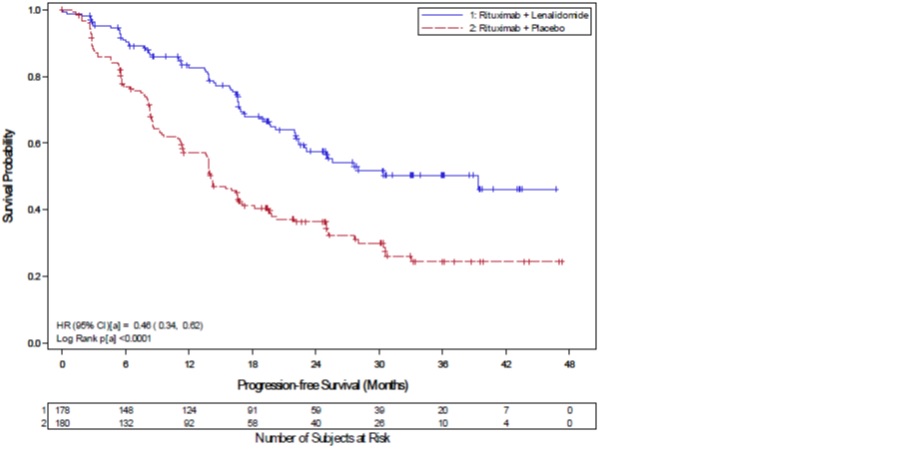
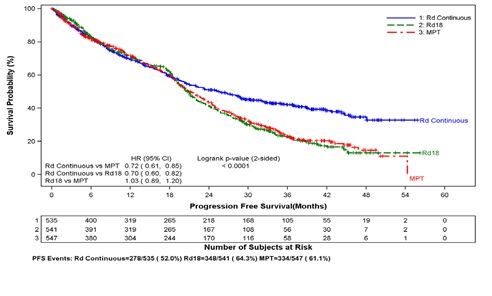
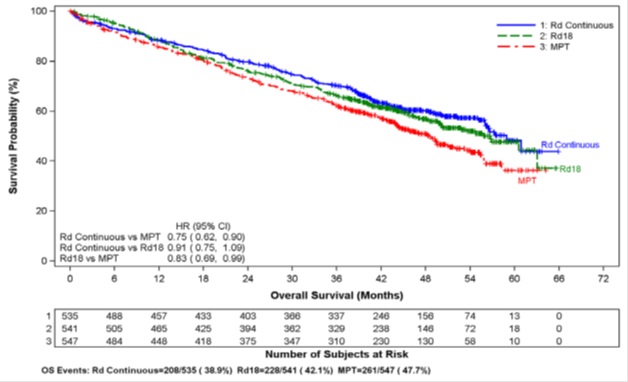
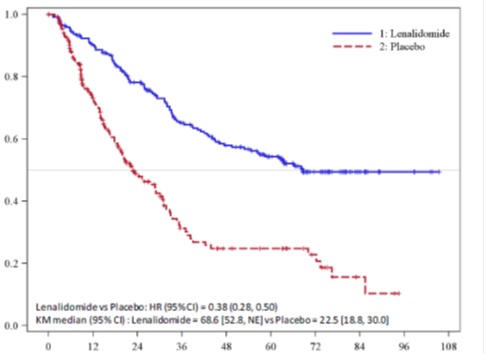
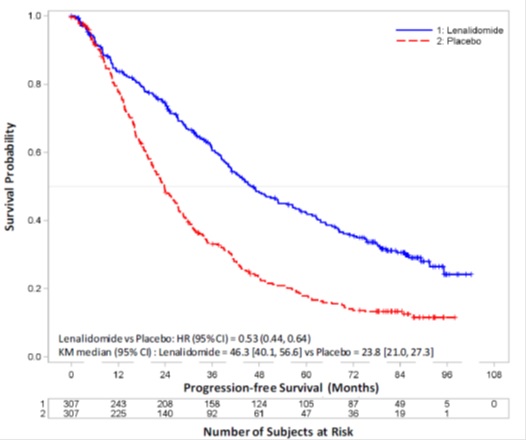
This text presents statistical data from a study comparing the survival probability of patients treated with Lenalidomide or placebo. The results show that Lenalidomide has a significantly higher survival rate. The text also includes a graph showing the progression-free survival in months and the number of subjects at risk.*
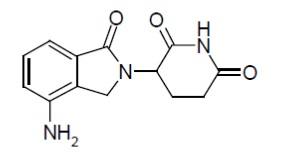
Structure (Structure)
* These product label images have been analyzed using experimental machine learning. Please verify findings with the primary label text.