Rivaroxaban Tablet
Product Images NDC 43598-981

View Photos of Packaging, Regulatory Labels, and Product Appearance

Product Visual Gallery

This gallery contains 8 technical images submitted to the FDA as part of the official labeling for Rivaroxaban (NDC 43598-981). Unlike standard consumer photos, these assets often include clinical data figures, molecular chemical structures, and official manufacturer packaging layouts.

As provided by Dr.reddy's Laboratories, Inc., these visuals offer a comprehensive scientific overview of the product's physical and chemical identity, aiding pharmacists and researchers in product verification and study.

FDA Label Image

Container4 (Container4)
Container4 (Container4)
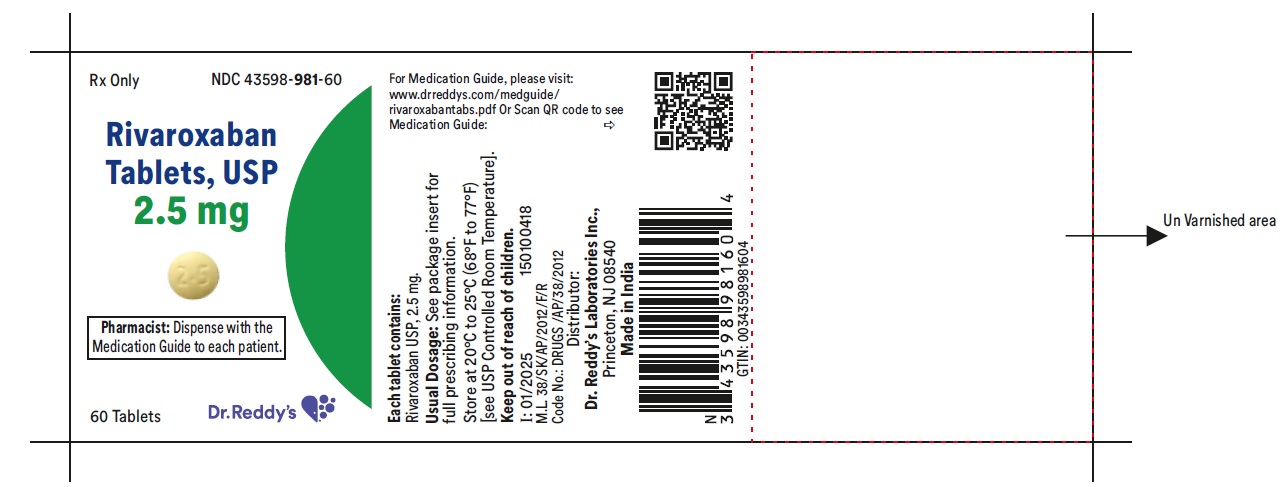
Label for Rivaroxaban Tablets USP 2.5 mg by Dr. Reddy's Laboratories, Inc. The label shows a round yellow tablet imprinted with '25'. It includes the NDC number 43598-981-60 and states a package size of 60 tablets. Directions for dosage and storage information are noted, along with a QR code linking to the Medication Guide. The product is identified as prescription-only and made in India.*
FDA Label Image

Figure10 (Figure10)

Figure10 (Figure10)
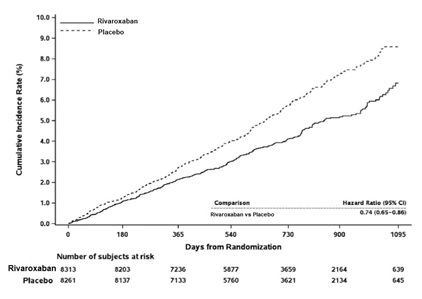
A line graph showing cumulative incidence rate (%) over time (days from randomization) comparing Rivaroxaban with placebo. The graph displays two curves: a solid line for Rivaroxaban and a dashed line for placebo, with the placebo group showing a higher incidence rate. Below the graph, a table presents the number of subjects at risk at various time points for each group. The comparison includes a hazard ratio of 0.74 with a 95% confidence interval (0.65-0.86).*
FDA Label Image

Figure11 (Figure11)

Figure11 (Figure11)
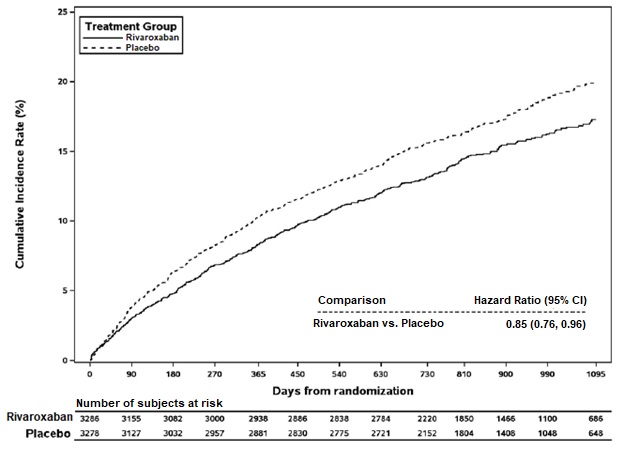
A cumulative incidence rate line graph comparing Rivaroxaban and placebo treatment groups over time in days from randomization, showing percentages on the y-axis up to 25%. The graph includes a table of subjects at risk for each group at various time points and a hazard ratio comparison of 0.85 (95% CI 0.76, 0.96) for Rivaroxaban versus placebo.*
FDA Label Image

Figure12 (Figure12)

Figure12 (Figure12)
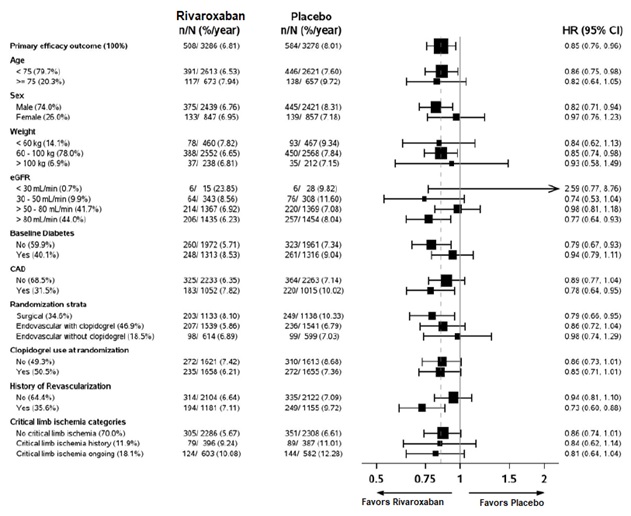
A forest plot chart showing hazard ratios (HR) and 95% confidence intervals comparing Rivaroxaban and placebo across various subgroups such as age, sex, weight, eGFR, baseline diabetes, CAD, randomization strata, clopidogrel use, history of revascularization, and critical limb ischemia categories. The horizontal axis presents the HR scale favoring either Rivaroxaban or placebo, with subgroup data points plotted accordingly.*
FDA Label Image

Figure2 (Figure2)

Figure2 (Figure2)
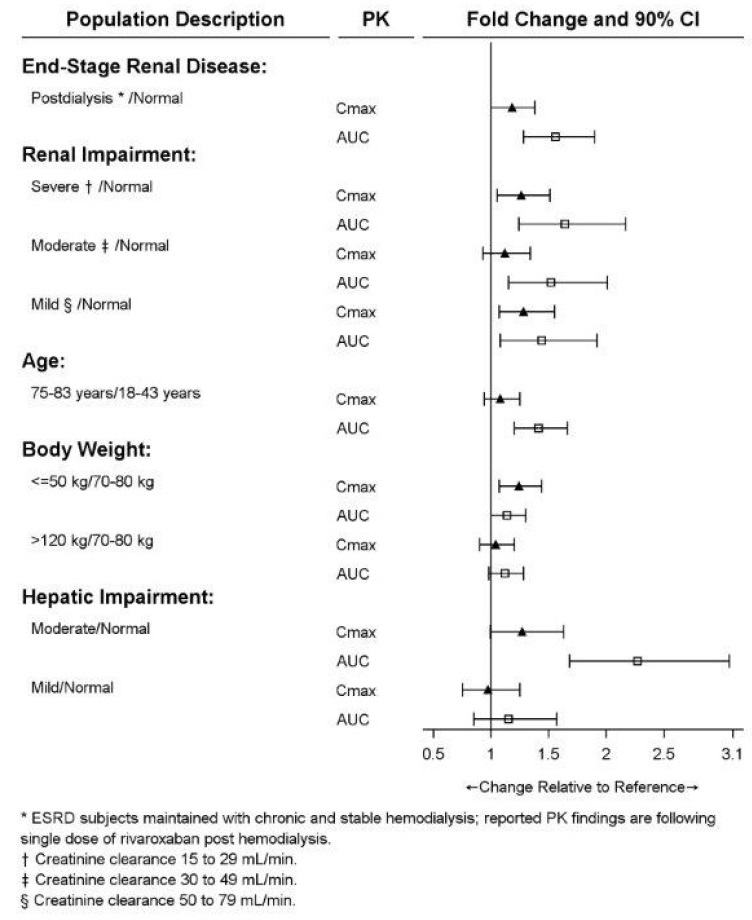
A chart depicting pharmacokinetic (PK) fold changes and 90% confidence intervals for Rivaroxaban across various populations. It compares Cmax and AUC values relative to normal controls in groups with end-stage renal disease, different degrees of renal and hepatic impairment, age ranges, and body weights.*
FDA Label Image

Figure3 (Figure3)

Figure3 (Figure3)
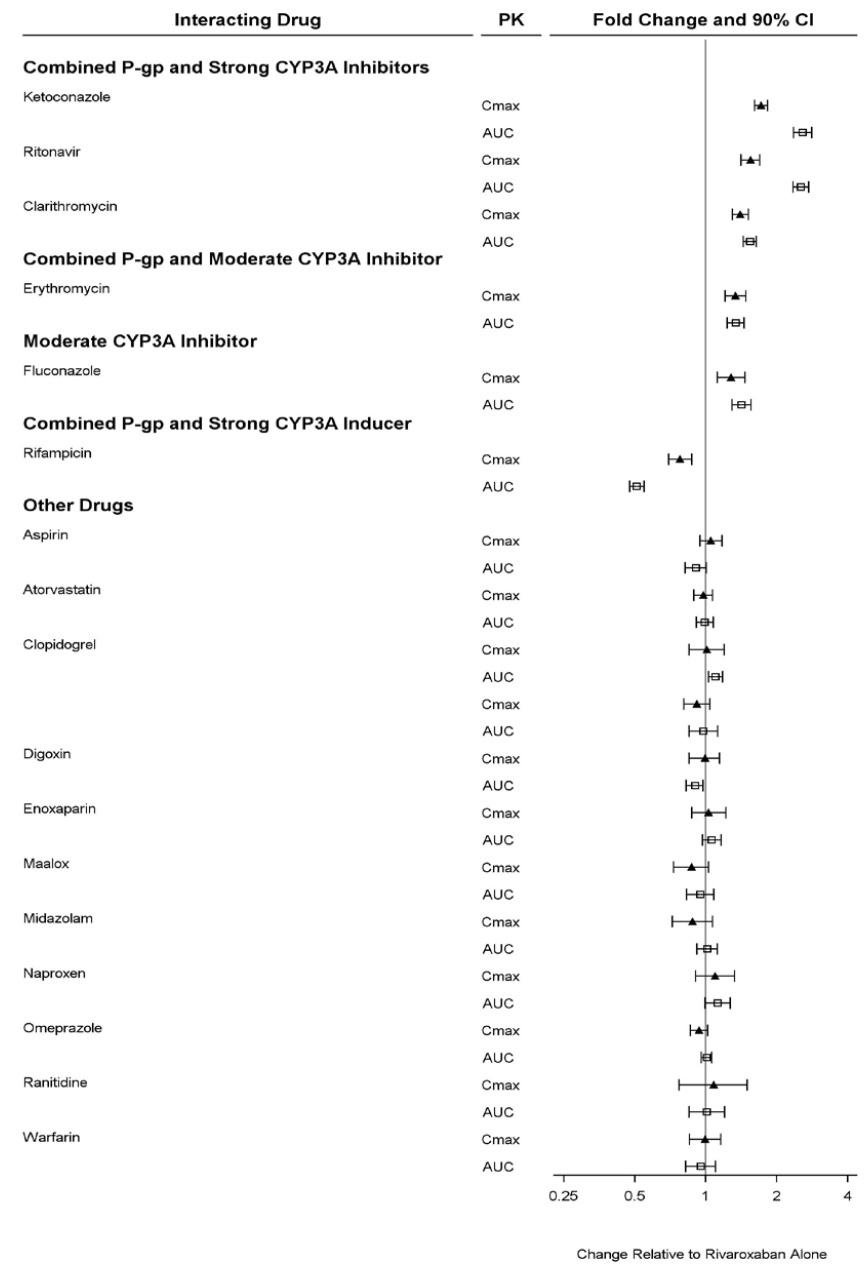
A forest plot chart showing the pharmacokinetic (PK) fold changes and 90% confidence intervals (CI) for rivaroxaban when coadministered with various interacting drugs. The chart is divided into categories including combined P-gp and strong CYP3A inhibitors, moderate CYP3A inhibitors, combined P-gp and strong CYP3A inducers, and other drugs, comparing Cmax and AUC values relative to rivaroxaban alone.*
FDA Label Image

Figure9 (Figure9)

Figure9 (Figure9)
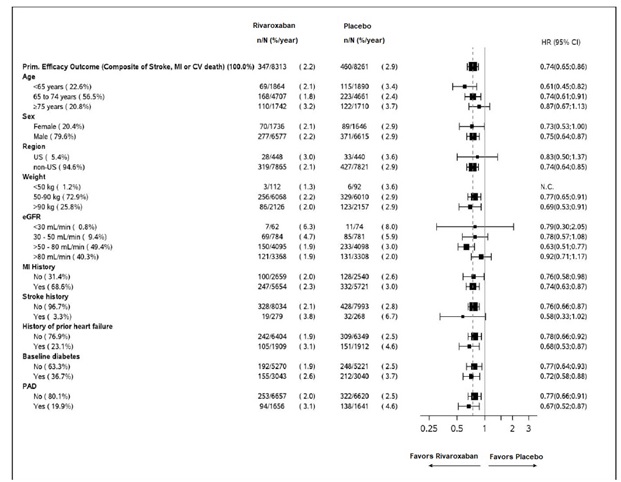
A forest plot comparing the efficacy outcomes of Rivaroxaban 2.5 mg oral tablets versus placebo. The chart displays hazard ratios and confidence intervals for various subgroups, including age, sex, region, weight, kidney function, medical history, and diabetes status, illustrating relative risk of stroke, myocardial infarction, or cardiovascular death.*
FDA Label Image

Stru (Stru)

Stru (Stru)
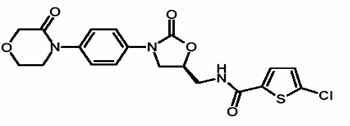
Chemical structure of rivaroxaban, showing the molecular arrangement of its atoms and bonds, including characteristic rings and functional groups as depicted in the image.*

* About these descriptions: Image descriptions on this page are generated by automated AI analysis of the product label images from the manufacturer's FDA label submission (SPL). They are provided for reference only and may contain errors or omissions. Always rely on the printed label itself and the official FDA labeling, and consult a pharmacist or healthcare professional with any questions about this product.