Escitalopram Oxalate Tablet
Product Images NDC 43602-475

View Photos of Packaging, Regulatory Labels, and Product Appearance

Product Visual Gallery

This gallery contains 14 technical images submitted to the FDA as part of the official labeling for Escitalopram Oxalate (NDC 43602-475). Unlike standard consumer photos, these assets often include clinical data figures, molecular chemical structures, and official manufacturer packaging layouts.

As provided by Ascent Pharmaceuticals, Inc, these visuals offer a comprehensive scientific overview of the product's physical and chemical identity, aiding pharmacists and researchers in product verification and study.

FDA Label Image

10mg-1000s (10mg 1000s)
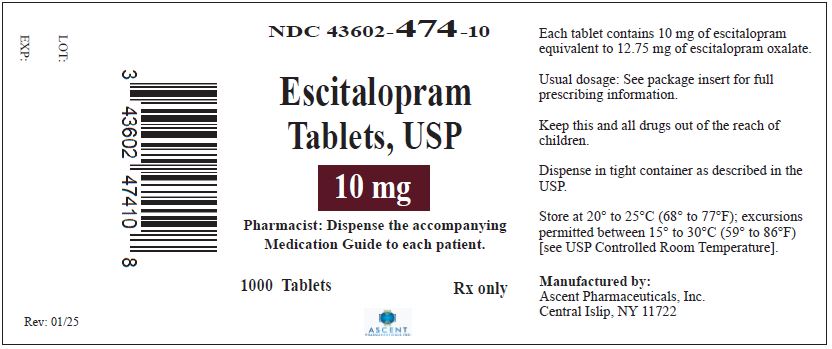
10mg-1000s (10mg 1000s)
Label for Escitalopram Tablets USP 10 mg by Ascent Pharmaceuticals, Inc. The label states 1000 tablets in the package for oral administration. It provides storage instructions, dosage guidance to consult the package insert, and notes each tablet contains 10 mg escitalopram equivalent to 12.75 mg escitalopram oxalate. The label includes the NDC number 43602-474-10 and indicates the product is prescription only.*
FDA Label Image

10mg-30s (10mg 30s)

10mg-30s (10mg 30s)
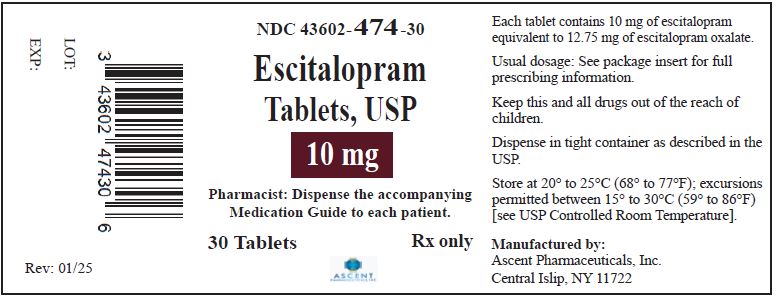
Label for Escitalopram Tablets, USP 10 mg, oral tablets by Ascent Pharmaceuticals, Inc. The label indicates a package size of 30 tablets, prescription only, with storage and dispensing instructions and a barcode.*
FDA Label Image

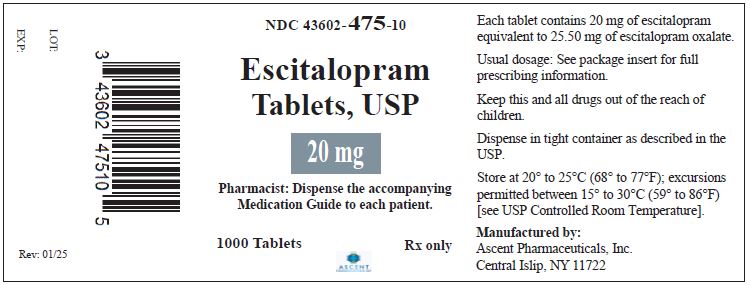
20mg-1000s (20mg 1000s)

20mg-1000s (20mg 1000s)
Label for Escitalopram Tablets USP 20 mg oral tablets. The label indicates a quantity of 1000 tablets, prescription only, and advises dispensing the accompanying Medication Guide. It includes storage instructions and manufacturer details for Ascent Pharmaceuticals, Inc.*
FDA Label Image

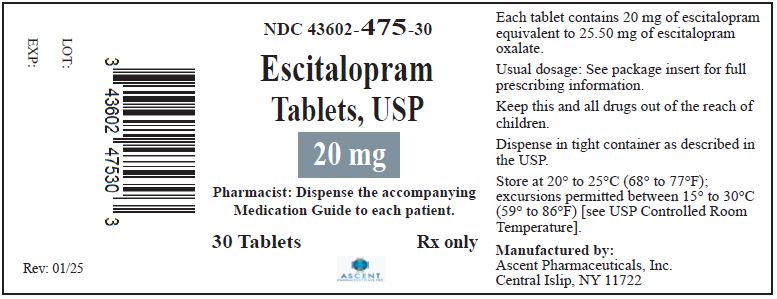
20mg-30s (20mg 30s)

20mg-30s (20mg 30s)
Label for Escitalopram Tablets, USP 20 mg, a prescription oral tablet manufactured by Ascent Pharmaceuticals, Inc. The label states the product contains 30 tablets and includes dosage strength, barcode, and storage instructions. It advises dispensing the medication guide to patients.*
FDA Label Image

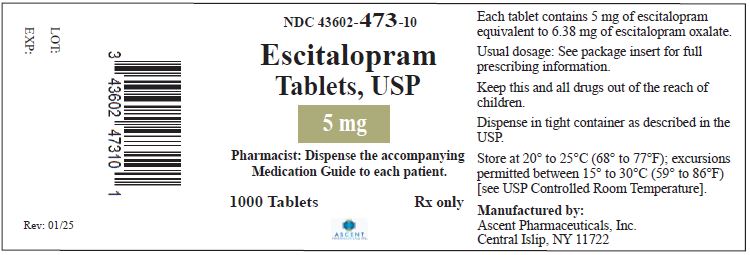
5mg-1000s (5mg 1000s)

5mg-1000s (5mg 1000s)
Label for Escitalopram Tablets, USP 5 mg oral tablets by Ascent Pharmaceuticals, Inc. The label indicates a package size of 1000 tablets and includes instructions for pharmacists to dispense the medication guide. It also provides storage conditions and a reminder to keep out of reach of children.*
FDA Label Image

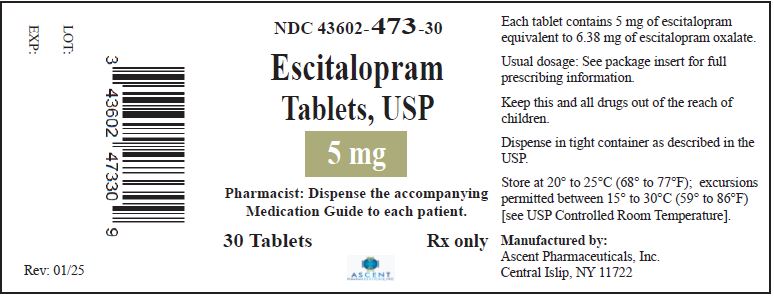
5mg-30s (5mg 30s)

5mg-30s (5mg 30s)
Label for Escitalopram Tablets, USP 5 mg by Ascent Pharmaceuticals, Inc. The label indicates 30 oral tablets per container, with instructions for pharmacists to dispense the Medication Guide. Storage and dispensing information along with NDC 43602-473-30 appears, including details on dosage and handling.*
FDA Label Image

7.1 (7.1)

7.1 (7.1)
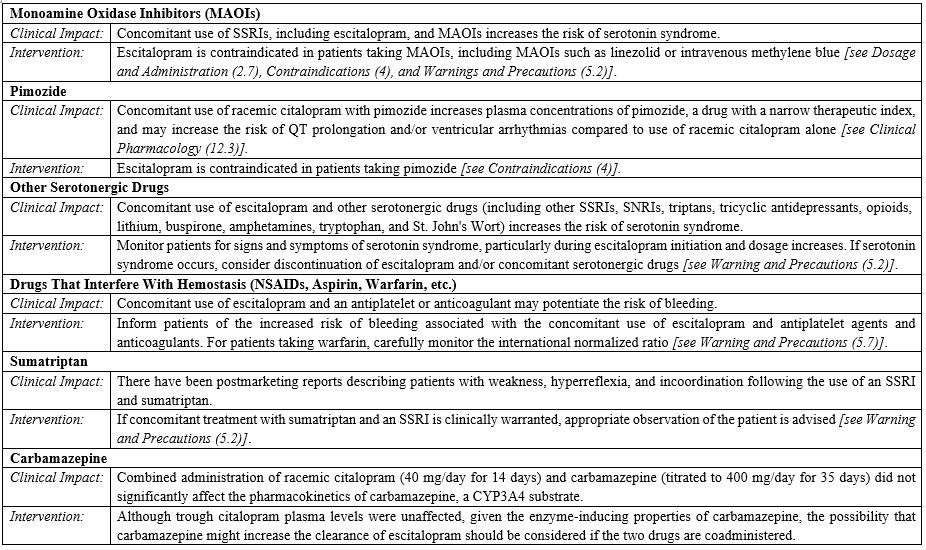
This text panel presents drug interaction information related to escitalopram, detailing clinical impacts and recommended interventions when used with various drugs such as Monoamine Oxidase Inhibitors (MAOIs), pimozide, other serotonergic drugs, anticoagulants, sumatriptan, and carbamazepine. It highlights warnings about serotonin syndrome risk, bleeding potential, and pharmacokinetic considerations.*
FDA Label Image

7.2 (7.2)

7.2 (7.2)
A data table titled 'Drugs Metabolized by CYP2D6' presenting clinical impact and intervention information about coadministration of escitalopram (20 mg/day for 21 days) with the antidepressant desipramine. It notes increased levels of desipramine and advises caution when coadministering escitalopram with CYP2D6-metabolized drugs.*
FDA Label Image

Structure (Struct)

Structure (Struct)
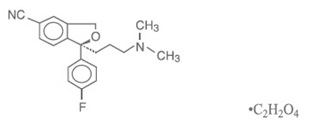
Chemical structure diagram of escitalopram oxalate, the active ingredient in ESCITALOPRAM OXALATE tablets by Ascent Pharmaceuticals, Inc. The structure shows key molecular components including cyano, fluorophenyl, and dimethylamino groups along with the oxalate moiety.*
FDA Label Image

Tab 2 (Tab 2)

Tab 2 (Tab 2)
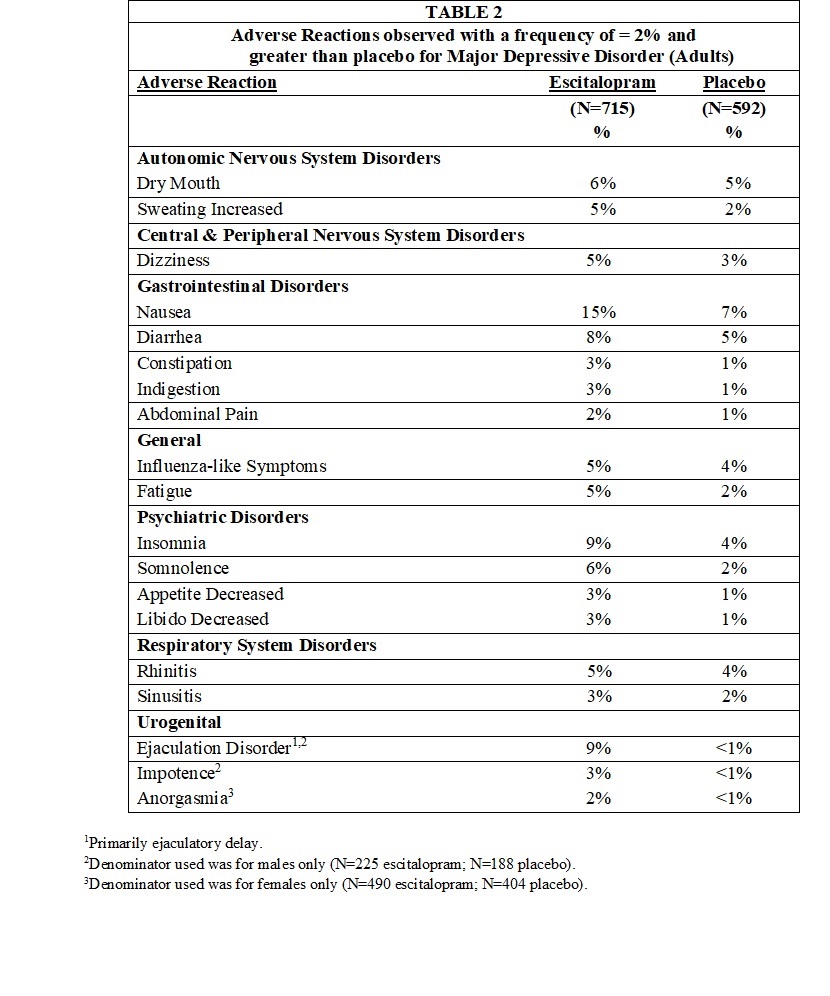
A data table titled 'Table 2' displaying adverse reactions with a frequency of 2% or greater for escitalopram versus placebo in adults with major depressive disorder. It lists categories such as Autonomic Nervous System Disorders, Central & Peripheral Nervous System Disorders, Gastrointestinal Disorders, General, Psychiatric Disorders, Respiratory System Disorders, and Urogenital, with corresponding percentages for each adverse reaction observed in patients taking escitalopram and placebo.*
FDA Label Image

Tab 4 (Tab 4)

Tab 4 (Tab 4)
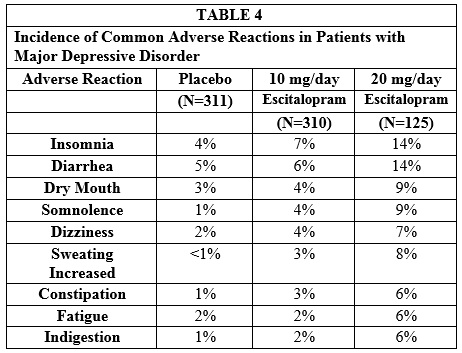
Table presenting the incidence of common adverse reactions in patients with major depressive disorder treated with escitalopram at 10 mg/day and 20 mg/day versus placebo. The reactions include insomnia, diarrhea, dry mouth, somnolence, dizziness, increased sweating, constipation, fatigue, and indigestion, with percentages listed for each treatment group and placebo.*
FDA Label Image

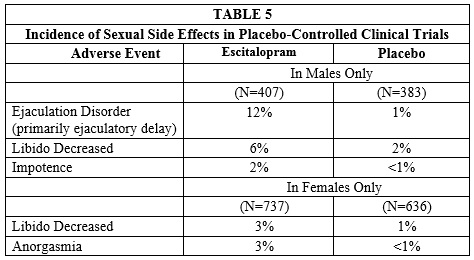
Tab 5 (Tab 5)

Tab 5 (Tab 5)
Table titled 'Incidence of Sexual Side Effects in Placebo-Controlled Clinical Trials' comparing the frequency of sexual adverse events between escitalopram and placebo groups, separately for males and females. For males (N=407 escitalopram, N=383 placebo), ejaculatory disorder, decreased libido, and impotence rates are shown. For females (N=737 escitalopram, N=636 placebo), decreased libido and anorgasmia rates are listed.*
FDA Label Image

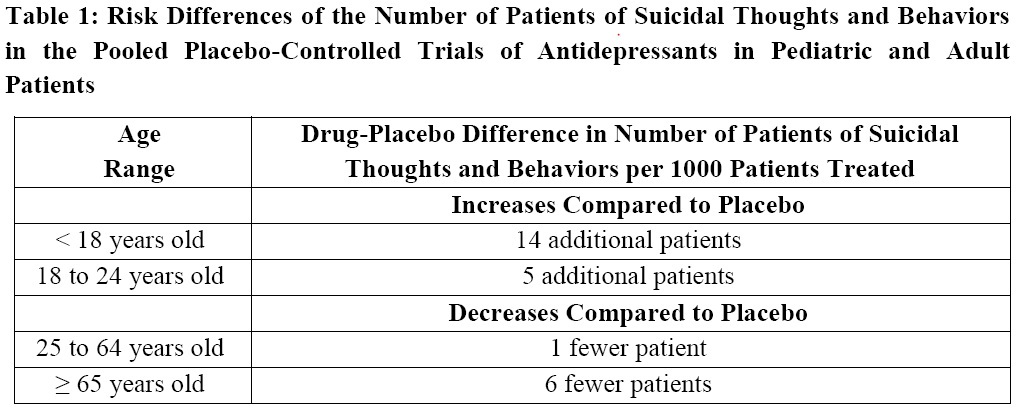
Table 1 (Table 1)

Table 1 (Table 1)
A data table titled 'Risk Differences of the Number of Patients of Suicidal Thoughts and Behaviors in the Pooled Placebo-Controlled Trials of Antidepressants in Pediatric and Adult Patients.' It shows drug-placebo differences per 1000 patients treated across four age ranges: under 18 years (14 additional patients), 18 to 24 years (5 additional patients), 25 to 64 years (1 fewer patient), and 65 years and older (6 fewer patients).*
FDA Label Image

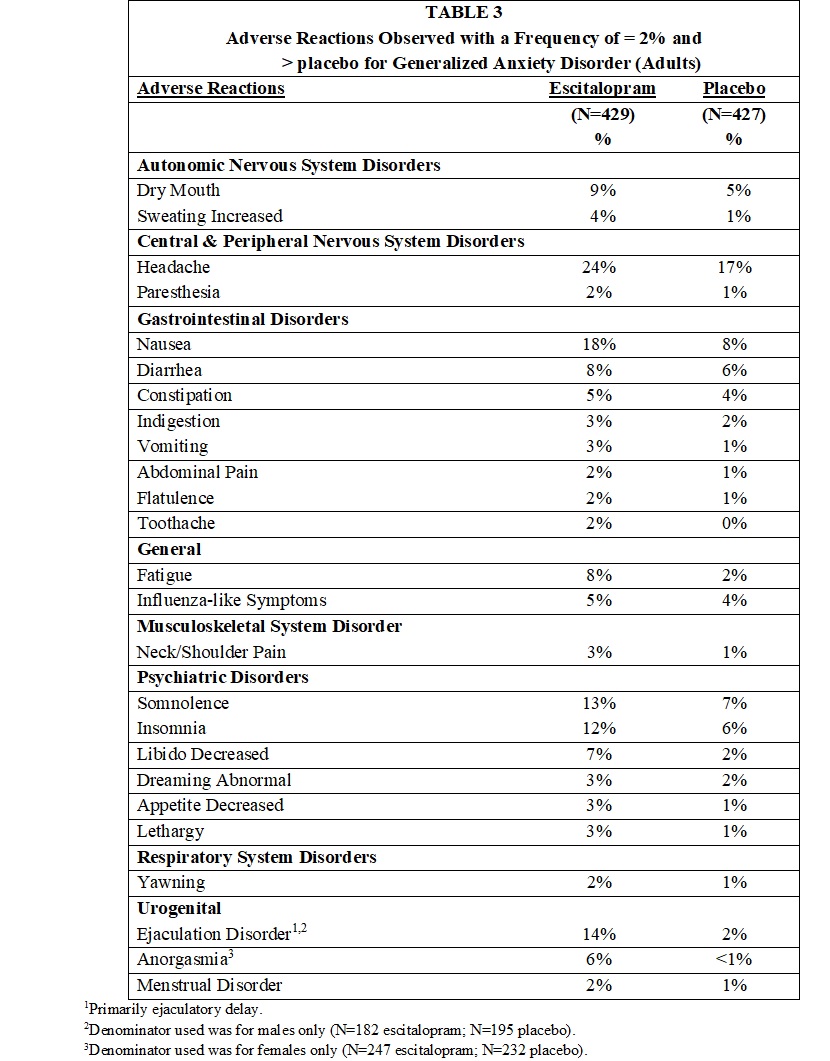
Tab 3 (Table 3)

Tab 3 (Table 3)
Table displaying adverse reactions with escitalopram compared to placebo in adults with generalized anxiety disorder. It lists reaction categories including autonomic nervous system, central & peripheral nervous systems, gastrointestinal, general, musculoskeletal, psychiatric, respiratory, and urogenital disorders, with percentage incidences for escitalopram and placebo groups.*

* About these descriptions: Image descriptions on this page are generated by automated AI analysis of the product label images from the manufacturer's FDA label submission (SPL). They are provided for reference only and may contain errors or omissions. Always rely on the printed label itself and the official FDA labeling, and consult a pharmacist or healthcare professional with any questions about this product.