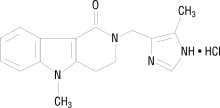
Patients With Irritable Bowel Syndrome:
Table 1 summarizes adverse reactions from 22 -repeat-dose studies in patients with IBS who were treated with 1 mg of alosetron hydrochloride twice daily for 8 to 24 weeks. The adverse reactions in
Table 1 were reported in 1% or more of patients who received alosetron hydrochloride and occurred more frequently on alosetron hydrochloride than on placebo. A statistically significant difference was observed for constipation in patients treated with alosetron hydrochloride compared to placebo (p<0.0001).
Table 1. Adverse Reactions Reported in ≥1% of Patients With Irritable Bowel Syndrome and More Frequently on Alosetron Hydrochloride 1 mg Twice Daily Than Placebo
| | Alosetron Hydrochloride
|
| Body System
| Placebo
| 1 mg twice daily
|
| Adverse Reaction
| (n = 2,363)
| (n = 8,328)
|
| Gastrointestinal
| | |
| Constipation
| 6%
| 29%
|
| Abdominal discomfort and pain
| 4%
| 7%
|
| Nausea
| 5%
| 6%
|
| Gastrointestinal discomfort and pain
| 3%
| 5%
|
| Abdominal distention
| 1%
| 2%
|
| Regurgitation and reflux
| 2%
| 2%
|
| Hemorrhoids
| 1%
| 2%
|
Gastrointestinal: Constipation is a frequent and dose-related side effect of treatment with alosetron hydrochloride
[see Warnings and Precautions (
5.1)]
. In clinical studies constipation was reported in approximately 29% of patients with IBS treated with alosetron hydrochloride 1 mg twice daily (n = 9,316). This effect was statistically significant compared to placebo (p<0.0001). Eleven percent (11%) of patients treated with alosetron hydrochloride 1 mg twice daily withdrew from the studies due to constipation. Although the number of patients with IBS treated with alosetron hydrochloride 0.5 mg twice daily is relatively small (n = 243), only 11% of those patients reported constipation and 4% withdrew from clinical studies due to constipation. Among the patients treated with alosetron hydrochloride 1 mg twice daily who reported constipation, 75% reported a single episode and most reports of constipation (70%) occurred during the first month of treatment, with the median time to first report of constipation onset of 8 days. Occurrences of constipation in clinical trials were generally mild to moderate in intensity, transient in nature, and resolved either spontaneously with continued treatment or with an interruption of treatment. However, serious complications of constipation have been reported in clinical studies and in postmarketing experience
[see
Boxed Warning and Warnings and Precautions (
5.1)]
. In Studies 1 and 2, 9% of patients treated with alosetron hydrochloride reported constipation and 4 consecutive days with no bowel movement
[see Clinical Studies (
14.2)]
. Following interruption of treatment, 78% of the affected patients resumed bowel movements within a 2-day period and were able to re-initiate treatment with alosetron hydrochloride.
Hepatic: A similar incidence in elevation of ALT (>2-fold) was seen in patients receiving alosetron hydrochloride or placebo (1.0% vs. 1.2%). A single case of hepatitis (elevated ALT, AST, alkaline phosphatase, and bilirubin) without jaundice in a patient receiving alosetron hydrochloride was reported in a 12-week study. A causal association with alosetron hydrochloride has not been established.
Long-Term Safety: Patient experience in controlled clinical trials is insufficient to estimate the incidence of ischemic colitis in patients taking alosetron hydrochloride for longer than 6 months.
Women With Severe Diarrhea-Predominant Irritable Bowel Syndrome:
Table 2 summarizes the gastrointestinal adverse reactions from 1 repeat-dose study in female patients with severe diarrhea-predominant IBS who were treated for 12 weeks. The adverse reactions in
Table 2 were reported in 3% or more of patients who received alosetron hydrochloride and occurred more frequently with alosetron hydrochloride than with placebo. Other events reported in 3% or more of patients who received alosetron hydrochloride and occurring more frequently with alosetron hydrochloride than with placebo included upper respiratory tract infection, viral gastroenteritis, muscle spasms, headaches, and fatigue.
Table 2. Gastrointestinal Adverse Reactions Reported in ≥3% of Women With Severe Diarrhea-Predominant Irritable Bowel Syndrome and More Frequently on Alosetron Hydrochloride Than Placebo
| | Alosetron Hydrochloride
| Alosetron Hydrochloride
| Alosetron Hydrochloride
|
| Adverse Reaction
| Placebo
| 0.5 mg once daily
| 1 mg once daily
| 1 mg twice daily
|
| (n = 176)
| (n = 175)
| (n = 172)
| (n = 176)
|
| Constipation
| 5%
| 9%
| 16%
| 19%
|
| Abdominal pain
| 3%
| 5%
| 6%
| 7%
|
| Diarrhea
| 2%
| 3%
| 2%
| 2%
|
Hemorrhoidal
hemorrhage
| 2%
| 3%
| 2%
| 2%
|
| Flatulence
| 2%
| 2%
| 1%
| 3%
|
| Hemorrhoids
| 2%
| 1%
| 1%
| 3%
|
Abdominal pain
upper
| 1%
| 3%
| 1%
| 1%
|
Adverse reactions reported in another study of 701 women with severe diarrhea-predominant IBS were similar to those shown in
Table 2. Gastrointestinal adverse reactions reported in 3% or more of patients who received alosetron hydrochloride and occurring more frequently with alosetron hydrochloride than with placebo included constipation (14% and 10% of patients taking alosetron hydrochloride 1 mg twice daily or 0.5 mg as needed, respectively, compared with 2% taking placebo), abdominal pain, nausea, vomiting, and flatulence. Other events reported in 3% or more of patients who received alosetron hydrochloride and occurring more frequently with alosetron hydrochloride than with placebo included nasopharyngitis, sinusitis, upper respiratory tract infection, urinary tract infection, viral gastroenteritis, and cough.
Constipation: Constipation was the most frequent adverse reaction among women with severe diarrhea-predominant IBS represented in
Table 2. There was a dose response in the groups treated with alosetron hydrochloride in the number of patients withdrawn due to constipation (2% on placebo, 5% on 0.5 mg once daily, 8% on 1 mg once daily, and 11% on 1 mg twice daily). Among these patients with severe diarrhea-predominant IBS treated with alosetron hydrochloride who reported constipation most (75%) reported one episode which occurred within the first 15 days of treatment and persisted for 4 to 5 days.
Other Events Observed During Clinical Evaluation of Alosetron hydrochloride: During its assessment in clinical trials, multiple and single doses of alosetron hydrochloride were administered, resulting in 11,874 subject exposures in 86 completed clinical studies. The conditions, dosages, and duration of exposure to alosetron hydrochloride varied between trials, and the studies included healthy male and female volunteers as well as male and female patients with IBS and other indications.
In the listing that follows, reported adverse reactions were classified using a standardized coding dictionary. Only those events that an investigator believed were possibly related to alosetron hydrochloride, occurred in at least 2 patients, and occurred at a greater frequency during treatment with alosetron hydrochloride than during placebo administration are presented. Serious adverse reactions occurring in at least 1 patient for whom an investigator believed there was reasonable possibility that the event was related to treatment with alosetron hydrochloride and occurring at a greater frequency in patients treated with alosetron hydrochloride than placebo-treated patients are also presented.
In the following listing, events are categorized by body system. Within each body system, events are presented in descending order of frequency. The following definitions are used:
infrequent adverse reactions are those occurring on one or more occasion in 1/100 to 1/1,000 patients;
rare adverse reactions are those occurring on one or more occasion in fewer than 1/1,000 patients.
Although the events reported occurred during treatment with alosetron hydrochloride, they were not necessarily caused by it.
Blood and Lymphatic: Rare: Quantitative red cell or hemoglobin defects, and hemorrhage.
Cardiovascular: Infrequent: Tachyarrhythmias.
Rare: Arrhythmias, increased blood pressure, and extrasystoles.
Drug Interaction, Overdose, and Trauma: Rare: Contusions and hematomas.
Ear, Nose, and Throat: Rare: Ear, nose, and throat infections; viral ear, nose, and throat infections; and laryngitis.
Endocrine and Metabolic: Rare: Disorders of calcium and phosphate metabolism, hyperglycemia, hypothalamus/pituitary hypofunction, hypoglycemia, and fluid disturbances.
Eye: Rare: Light sensitivity of eyes.
Gastrointestinal: Infrequent: Hyposalivation, dyspeptic symptoms, gastrointestinal spasms, ischemic colitis
[see Warnings and Precautions (
5.2)]
, and gastrointestinal lesions.
Rare: Abnormal tenderness, colitis, gastrointestinal signs and symptoms, proctitis, diverticulitis, positive fecal occult blood, hyperacidity, decreased gastrointestinal motility and ileus, gastrointestinal obstructions, oral symptoms, gastrointestinal intussusception, gastritis, gastroduodenitis, gastroenteritis, and ulcerative colitis.
Hepatobiliary Tract and Pancreas: Rare: Abnormal bilirubin levels and cholecystitis.
Lower Respiratory: Infrequent: Breathing disorders.
Musculoskeletal: Rare: Muscle pain; muscle stiffness, tightness and rigidity; and bone and skeletal pain.
Neurological: Infrequent: Hypnagogic effects.
Rare: Memory effects, tremors, dreams, cognitive function disorders, disturbances of sense of taste, disorders of equilibrium, confusion, sedation, and hypoesthesia.
Non-Site Specific: Infrequent: Malaise and fatigue, cramps, pain, temperature regulation disturbances.
Rare: Burning sensations, hot and cold sensations, cold sensations, and fungal infections.
Psychiatry: Infrequent: Anxiety.
Rare: Depressive moods.
Reproduction: Rare: Sexual function disorders, female reproductive tract bleeding and hemorrhage, reproductive infections, and fungal reproductive infections.
Skin: Infrequent: Sweating and urticaria.
Rare: Hair loss and alopecia; acne and folliculitis; disorders of sweat and sebum; allergic skin reaction; eczema; skin infections; dermatitis and dermatosis; and nail disorders.
Urology: Infrequent: Urinary frequency.
Rare: Bladder inflammation; polyuria and diuresis; and urinary tract hemorrhage.
Absorption: Alosetron was rapidly absorbed after oral administration with a mean absolute bioavailability of approximately 50% to 60% (approximate range, 30% to >90%). After administration of radiolabeled alosetron, only 1% of the dose was recovered in the feces as unchanged drug. Following oral administration of a 1 mg alosetron dose to young men, a peak plasma concentration of approximately 5 ng/mL occurred at 1 hour. In young women, the mean peak plasma concentration was approximately 9 ng/mL, with a similar time to peak.
Plasma concentrations were 30% to 50% lower and less variable in men compared to women given the same oral dose. Population pharmacokinetic analysis in IBS patients confirmed that alosetron concentrations were influenced by gender (27% lower in men).
Food Effects: Alosetron absorption is decreased by approximately 25% by co-administration with food, with a mean delay in time to peak concentration of 15 minutes
[see Dosage and Administration (
2.1)]
.
Distribution: Alosetron demonstrates a volume of distribution of approximately 65 to 95 L. Plasma protein binding is 82% over a concentration range of 20 to 4,000 ng/mL.
Metabolism and Elimination: Plasma concentrations of alosetron increase proportionately with increasing single oral doses up to 8 mg and more than proportionately at a single oral dose of 16 mg. Twice-daily oral dosing of alosetron does not result in accumulation. The terminal elimination half-life of alosetron is approximately 1.5 hours (plasma clearance is approximately 600 mL/min). Population pharmacokinetic analysis in patients with IBS confirmed that alosetron clearance is minimally influenced by doses up to 8 mg.
Renal elimination of unchanged alosetron accounts for only 13% of the dose. Renal clearance is approximately 112 mL/min.
A study with
14C-labeled alosetron in Caucasian males (n = 3) and females (n = 3) and an Asian male (n = 1) showed similar serum metabolite profiles. Unchanged alosetron was the major component in serum, with other metabolites being present at low concentrations, none amounting to more than 15% of the unmetabolized alosetron concentration. The circulating metabolites were identified as 6-hydroxy glucuronide, 6-hydroxy sulphate, 7-hydroxy sulphate, hydroxymethyl imidazole, and mono- and bis-oxygenated imidazole derivatives of alosetron. The metabolites are unlikely to contribute to the biological activity of alosetron. Of the circulating Phase I metabolites, only the hydroxymethyl imidazole has weak pharmacological activity, around 10-fold less potent than alosetron. Total recovery of radioactivity in the excreta was 85 ± 6%. The majority of the radiolabeled dose is excreted in the urine (74 ± 5%). The major urinary metabolites were the 6-hydroxy glucuronide and the mono- and bis-oxygenated imidazole derivatives of alosetron. 11 ± 4% of the radiolabeled dose was excreted in the feces with less than 1% of the dose being excreted as the unchanged alosetron.
Alosetron is metabolized by human microsomal cytochrome P450 (CYP), shown
in vitro to involve enzymes 2C9 (30%), 3A4 (18%), and 1A2 (10%). Non-CYP-mediated Phase I metabolic conversion also contributes to an extent of about 11%. However,
in vivo data suggest that CYP1A2 plays a more prominent role in alosetron metabolism (62 to 97% of alosetron clearance) based on correlation of alosetron clearance with
in vivo CYP1A2 activity measured by probe substrate, increased clearance induced by smoking, and inhibition of clearance by fluvoxamine
[see Contraindications (
4), Drug Interactions (
7)].
Studies in Non-Constipated Women with Irritable Bowel Syndrome: Studies 1 and 2 were conducted in non-constipated women with IBS meeting the Rome Criteria
1 for at least 6 months. Women with severe pain or a history of severe constipation were excluded. A 2-week run-in period established baseline IBS symptoms.
About two thirds of the women had diarrhea-predominant IBS. Compared with placebo, 10% to 19% more women with diarrhea-predominant IBS who received alosetron hydrochloride had adequate relief of IBS abdominal pain and discomfort during each month of the study.
Studies in Women With Severe Diarrhea-Predominant Irritable Bowel Syndrome: Alosetron hydrochloride is indicated only for women with severe diarrhea-predominant IBS
[see Indications and Usage (
1)]
. The efficacy of alosetron hydrochloride in this subset of the women studied in clinical trials is supported by prospective and retrospective analyses.
Prospective Analyses: Studies 3 and 4 were conducted in women with diarrhea-predominant IBS and bowel urgency on at least 50% of days at entry. Women receiving alosetron hydrochloride had significant increases over placebo (13% to 16%) in the median percentage of days with urgency control.
The lower gastrointestinal functions of stool consistency, stool frequency, and sense of incomplete evacuation were also evaluated by patients' daily reports. Stool consistency was evaluated on a scale of 1 to 5 (1 = very hard, 2 = hard, 3 = formed, 4 = loose, and 5 = watery). At baseline, average stool consistency was approximately 4 (loose) for both treatment groups. During the 12 weeks of treatment, the average stool consistency decreased to approximately 3.0 (formed) for patients who received alosetron hydrochloride and 3.5 for the patients who received placebo in the 2 studies.
At baseline, average stool frequency was approximately 3.2 per day for both treatment groups. During the 12 weeks of treatment, the average daily stool frequency decreased to approximately 2.1 and 2.2 for patients receiving alosetron hydrochloride and 2.7 and 2.8 for patients receiving placebo in the 2 studies.
There was no consistent effect upon the sense of incomplete evacuation during the 12 weeks of treatment for patients receiving alosetron hydrochloride as compared to patients receiving placebo in either study.
Study 5 was conducted in women with severe diarrhea-predominant IBS and 1 or more of the following: frequent and severe abdominal pain or discomfort, frequent bowel urgency or fecal incontinence, disability or restriction of daily activities due to IBS. To evaluate the proportion of patients who responded to treatment, patients were asked every 4 weeks to compare their IBS symptoms during the previous month of treatment with how they usually felt during the 3 months prior to the study using an ordered 7-point scale (substantially worse to substantially improved). A responder was defined as a subject who reported moderate or substantial improvement on this global improvement scale (GIS). At Week 12, all three groups receiving alosetron hydrochloride had significantly greater percentages of GIS responders compared to the placebo group (43% to 51% vs. 31%) using a Last Observation Carried Forward (LOCF) analysis. It should be noted that approximately 4% of subjects in each alosetron hydrochloride dose group who were classified as responders using this approach were observed only through week 4. At each of the 4 week intervals of the treatment phase, all three dosages of alosetron hydrochloride provided improvement in the average adequate relief rate of IBS pain and discomfort, stool consistency, stool frequency, and sense of urgency compared with placebo.
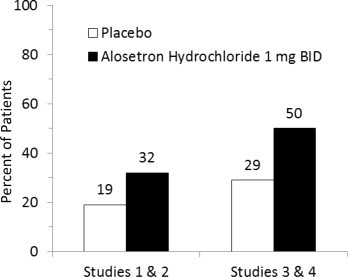
Retrospective Analyses: In analyses of patients from Studies 1 and 2 who had diarrhea-predominant IBS and indicated their baseline run-in IBS symptoms were severe at the start of the trial, alosetron hydrochloride provided greater adequate relief of IBS pain and discomfort than placebo. In further analyses of Studies 1 and 2, 57% of patients had urgency at baseline on 5 or more days per week. In this subset, 32% of patients on alosetron hydrochloride had urgency no more than 1 day in the last week of the trial, compared with 19% of patients on placebo.
In Studies 3 and 4, 66% of patients had urgency at baseline on 5 or more days per week. In this subset, 50% of patients on alosetron hydrochloride had urgency no more than 1 day in the last week of the trial, compared with 29% of patients on placebo. Moreover, in the same subset, 12% on alosetron hydrochloride had urgency no more than 2 days per week in any of the 12 weeks on treatment compared with 1% of placebo patients.
Figure 1. Percent of Patients With Urgency on >5 Days/Week at Baseline Who Improved to No More Than 1 Day in the Final Week
In Studies 1 and 2, patient-reported subjective outcomes related to IBS were assessed by questionnaires obtained at baseline and week 12. Patients in the more severe subset who received alosetron hydrochloride reported less difficulty sleeping, less tiredness, fewer eating problems, and less interference with social activities and work/main activities due to IBS symptoms or problems compared to those who received placebo. Change in the impact of IBS symptoms and problems on emotional and mental distress and on physical and sexual activity in women who received alosetron hydrochloride were not statistically different from those reported by women who received placebo.