Qlonilik Solution
FDA Label NDC 46287-085

Full FDA labeling including Indications, Dosage, Usage, and Precautions

Structured Product Label

The following Structured Product Label (SPL) was submitted to the FDA by Cmp Pharma, Inc. for the product Qlonilik (NDC 46287-085). This document serves as the official prescribing information, containing essential scientific data and clinical materials required for healthcare providers and patients.

This specific version of the label includes detailed information regarding 1 indications and usage, 2.1 recommended dosage, 2.2 administration instructions, 3 dosage forms and strengths, 4 contraindications, 5.1 bradycardia, cardiac conduction abnormalities, and symptomatic hypotension, 5.2 rebound hypertension, 5.3 sedation and somnolence, and other regulatory disclosures. Use the navigation below to review specific sections of the FDA submission.

1 Indications And Usage

QLONILIKTM (clonidine hydrochloride) oral solution is indicated for the treatment of hypertension, to lower blood pressure in adults. Lowering blood pressure reduces the risk of fatal and nonfatal cardiovascular events, primarily strokes and myocardial infarctions. These benefits have been seen in controlled trials of antihypertensive drugs from a wide variety of pharmacologic classes including this drug.

Control of high blood pressure should be part of comprehensive cardiovascular risk management, including, as appropriate, lipid control, diabetes management, antithrombotic therapy, smoking cessation, exercise, and limited sodium intake. Many patients will require more than one drug to achieve blood pressure goals. For specific advice on goals and management, see published guidelines, such as those of the American College of Cardiology/American Heart Association (ACC/AHA).

Numerous antihypertensive drugs, from a variety of pharmacologic classes and with different mechanisms of action, have been shown in randomized controlled trials to reduce cardiovascular morbidity and mortality, and it can be concluded that it is blood pressure reduction, and not some other pharmacologic property of the drugs, that is largely responsible for those benefits. The largest and most consistent cardiovascular outcome benefit has been a reduction in the risk of stroke, but reductions in myocardial infarction and cardiovascular mortality also have been seen regularly.

Elevated systolic or diastolic pressure causes increased cardiovascular risk, and the absolute risk increase per mmHg is greater at higher blood pressures, so that even modest reductions of severe hypertension can provide substantial benefit. Relative risk reduction from blood pressure reduction is similar across populations with varying absolute risk, so the absolute benefit is greater in patients who are at higher risk independent of their hypertension (for example, patients with diabetes or hyperlipidemia), and such patients would be expected to benefit from more aggressive treatment to a lower blood pressure goal.

Some antihypertensive drugs have smaller blood pressure effects (as monotherapy) in black patients, and many antihypertensive drugs have additional approved indications and effects (e.g., on angina, heart failure, or diabetic kidney disease). These considerations may guide selection of therapy.

QLONILIK may be employed alone or concomitantly with other antihypertensive agents.
Dosage should be individualized based on response. The recommended initial dosage is 0.1 mg orally twice daily (morning and bedtime).

Dosage can be titrated in increments of 0.1 mg per day at weekly intervals as necessary. Doses should be taken orally twice a day, with either an equal or higher split dosage taken at bedtime. The therapeutic doses most commonly employed have ranged from 0.2 mg to 0.6 mg per day, given in divided doses. Maximum recommended daily dose is 2.4 mg, but doses as high as this have rarely been employed.

2.2 Administration Instructions

A calibrated measuring device, such as an oral dosing syringe or oral dosing cup, is recommended to measure and deliver the prescribed dose accurately. A household teaspoon or tablespoon is not an adequate measuring device.

Administer QLONILIK with or without food [see Clinical Pharmacology (12.3)].

QLONILIK may be administered up to 4 hours before surgery and resume as soon as possible post-operatively [see Warnings and Precautions (5.2)].

3 Dosage Forms And Strengths

Oral Solution: 0.05 mg/mL clonidine hydrochloride; clear colorless solution with a raspberry flavor.

4 Contraindications

QLONILIK is contraindicated in patients with known hypersensitivity to clonidine.

5.1 Bradycardia, Cardiac Conduction Abnormalities, And Symptomatic Hypotension

Treatment with QLONILIK can cause bradycardia, cardiac conduction abnormalities, and symptomatic hypotension [see Adverse Reactions (6.1)].The sympatholytic action of clonidine may worsen sinus node dysfunction and atrioventricular (AV) block, especially in patients taking other sympatholytic drugs. There have been post-marketing reports of patients with conduction abnormalities and/or taking other sympatholytic drugs who developed severe bradycardia requiring intravenous (IV) atropine, IV isoproterenol, and temporary cardiac pacing while taking clonidine.

Titrate QLONILIK slowly in patients with a history of syncope, cardiac conduction abnormalities, and those with underlying conditions that may be worsened by hypotension and bradycardia; e.g., heart block, bradycardia, cardiovascular disease, vascular disease, cerebrovascular disease, or chronic renal failure. Monitor blood pressure and heart rate and adjust dosages accordingly in patients treated concomitantly with antihypertensives or other drugs that can reduce blood pressure or heart rate or increase the risk of syncope. Avoid the use of drugs that can affect the sinus node function or AV node conduction [see Drug Interactions (7)].

In patients who have a history of syncope or may have a condition that predisposes them to syncope, such as symptomatic hypotension, bradycardia, or dehydration, advise patients to avoid becoming dehydrated or overheated.

5.2 Rebound Hypertension

Abrupt discontinuation of QLONILIK can cause rebound hypertension with elevated plasma catecholamines, especially with higher doses or concomitant beta-blocker use. Symptoms of abrupt discontinuation include tachycardia, rapid blood pressure elevation, headache, nervousness, and agitation. Serious cases of hypertensive encephalopathy, stroke, and death have been reported after abrupt clonidine discontinuation. To reduce the risk of rebound hypertension, taper clonidine gradually over 2-4 days. If rebound hypertension occurs, reverse hypertensive crisis with oral clonidine or IV phentolamine. When discontinuing concurrent beta-blocker therapy, withdraw the beta-blocker several days before beginning clonidine taper.

Administration of QLONILIK should be continued up to 4 hours before surgery and resumed as soon as possible thereafter. Blood pressure should be carefully monitored during surgery and additional measures to control blood pressure should be available if required.

5.3 Sedation And Somnolence

QLONILIK may cause sedation. Patients who engage in potentially hazardous activities, such as operating machinery or driving, should be advised of possible sedative effects of clonidine. Avoid use with other central nervous system (CNS) depressants, as this combination may cause excessive drowsiness or sedation [see Drug Interactions (7)].

6 Adverse Reactions

Because clinical trials are conducted under widely varying conditions, adverse reaction rates observed in the clinical trials of a drug cannot be directly compared to rates in the clinical trials of another drug and may not reflect the rates observed in practice.

Most adverse effects are mild and tend to diminish with continued therapy. The most frequent (which appear to be dose-related) are dry mouth (40%), drowsiness (33%); dizziness (16%); constipation and sedation (10%, respectively).

The following less frequent adverse experiences have also been reported in patients receiving clonidine hydrochloride tablets, but in many cases patients were receiving concomitant medication and a causal relationship has not been established.

Body as a Whole: Fatigue, headache, pallor, malaise, weakness, and withdrawal syndrome.

Cardiovascular: Bradycardia, congestive heart failure, electrocardiographic abnormalities (i.e., sinus node arrest, junctional bradycardia, high degree AV block and arrhythmias), orthostatic symptoms, palpitations, syncope, and tachycardia.

Central Nervous System: Agitation, anxiety, delirium, hallucinations (including visual and auditory), insomnia, mental depression, behavioral changes, paresthesia, sleep disorder, and vivid dreams or nightmares.

Gastrointestinal: Anorexia, constipation, nausea, and vomiting.

Hematologic: Thrombocytopenia.

Hepatobiliary: Hepatitis and transaminitis.

Hypersensitivity: Angioedema, hives, pruritus, rash, and urticaria.

Metabolic: Transient elevation of blood glucose or serum creatine phosphokinase, and weight gain.

Musculoskeletal: Leg cramps and muscle or joint pain.

Ophthalmological: Accommodation disorder, blurred vision, burning of the eyes, decreased lacrimation, and dryness of eyes.

Renal and Urinary: Difficulty in micturition, nocturia, and urinary retention.

Reproductive System and Breast Disorders: Gynecomastia. erectile dysfunction, and loss of libido.

Vascular: Raynaud’s phenomenon.

7 Drug Interactions

The interactions of QLONILIK with co-administration of other drugs have not been studied. The drug interaction data provided in this section is based on oral immediate-release clonidine formulations. Table 1 displays clinically important drug interactions with QLONILIK.


Table 1: Clinically Important Drug Interactions with QLONILIK.

Antihypertensive drugs
Clinical Implication

Concomitant use of antihypertensive drugs with clonidine potentiates the hypotensive effects of clonidine [see Warnings and Precautions (5.1)].
Intervention

Monitor blood pressure and heart rate, and adjust dosage of QLONILIK accordingly in patients treated concomitantly with antihypertensives
CNS depressants
Clinical Implication
Concomitant use of CNS depressants with clonidine potentiates the sedating effects [see Warnings and Precautions (5.3)].
Intervention

Avoid concomitant use of CNS depressants with QLONILIK.
Drugs that affect sinus node function or AV node conduction (e.g., digitalis, calcium channel blockers, beta blockers)
Clinical Implication
Concomitant use of drugs that affect sinus node function or AV node conduction with clonidine potentiate bradycardia and risk of AV block[see Warnings and Precautions (5.1)].
Intervention
Avoid concomitant use of drugs that affect sinus node function or AV node conduction with QLONILIK.
Tricyclic antidepressants
Clinical Implication
Concomitant use of tricyclic antidepressants with clonidine can increase blood pressure and may counteract the hypotensive effects of clonidine.
Intervention
Monitor blood pressure and adjust dosage of QLONILIK as needed.

Other

Risk Summary
Prolonged experience with clonidine in pregnant women over several decades, based on published literature, including controlled trials, a retrospective cohort study and case reports, have not identified a drug associated risk of major birth defects, miscarriage, adverse maternal or fetal outcomes. In animal embryofetal studies, increased resorptions were seen in rats and mice administered oral clonidine hydrochloride from implantation through organogenesis at approximately 2 times the maximum recommended human dose (MRHD) (see Data).
The estimated background risk of major birth defects and miscarriage for the indicated population is unknown. All pregnancies have a background risk of birth defect, loss, or other adverse outcomes. In the U.S. general population, the estimated background risk of major birth defects and miscarriages in clinically recognized pregnancies is 2 to 4% and 15 to 20%, respectively.

Data
Animal Data
Oral administration of clonidine hydrochloride to pregnant rabbits during the period of embryo/fetal organogenesis at doses of up to 0.08 mg/kg/day (approximately 0.6 times the oral maximum recommended human dose [MRHD] of 2.4 mg/day on a mg/m2 basis) produced no developmental effects. In pregnant rats, however, doses as low as 0.015 mg/kg/day (~1/16 the oral MRHD on a mg/m2 basis) were associated with increased resorptions in a study in which dams were treated continuously from 2 months prior to mating and throughout gestation. Increased resorptions were not associated with treatment at the same or at higher dose levels when treatment of the dams was restricted to gestation days 6-15. Increases in resorptions were observed in both rats and mice at 0.5 mg/kg/day (2 and 1 times the MRHD on a mg/m2 basis in rats and mice, respectively) or higher when the animals were treated on gestation days 1-14; 0.5 mg/kg/day was the lowest dose employed in this study.

Based on published lactation studies, clonidine hydrochloride is present in human milk at relative infant doses ranging from 4.1 to 8.4% of the maternal weight-adjusted dosage. Although in most cases, there were no reported adverse effects in breastfed infants exposed to clonidine, there is one case report of sedation, hypotonia, and apnea in an infant exposed to clonidine through breast milk. If an infant is exposed to clonidine hydrochloride through breastmilk, monitor for symptoms of hypotension and bradycardia, such as sedation, lethargy, tachypnea and poor feeding (see Clinical Considerations). The developmental and health benefits of breastfeeding should be considered along with the mother’s clinical need for QLONILIK and any potential adverse effects on the breastfed child from clonidine or from the underlying maternal condition. Exercise caution when QLONILIK is administered to a nursing woman.

Clinical Considerations
Monitor breastfeeding infants exposed to QLONILIK through breast milk for symptoms of hypotension and/or bradycardia such as sedation, lethargy, tachypnea, and poor feeding.

Safety and effectiveness in pediatric patients have not been established.

8.6 Renal Impairment

The half-life of clonidine increases in patients with renal impairment [see Clinical Pharmacology (12.3)]. Patients with renal impairment may start from a lower dose. Since only a minimal amount of clonidine is removed during routine hemodialysis, there is no need to give supplemental QLONILIK following dialysis.

10 Overdosage

Hypertension may develop early and may be followed by hypotension, bradycardia, respiratory depression, hypothermia, drowsiness, decreased or absent reflexes, weakness, irritability and miosis. The frequency of CNS depression may be higher in pediatric patients than adults. Large overdoses may result in reversible cardiac conduction defects or dysrhythmias, apnea, coma and seizures. Signs and symptoms of overdose generally occur within 30 minutes to two hours after exposure. Dialysis is not likely to significantly enhance the elimination of clonidine.

11 Description

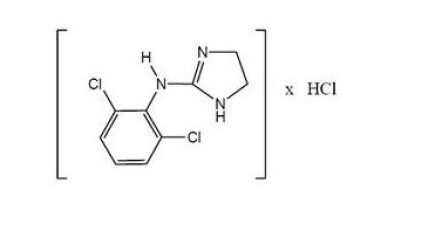
QLONILIK contains clonidine, a central alpha-2 adrenergic agonist, available as a solution for oral administration. Clonidine hydrochloride is an imidazoline derivative and exists as a mesomeric compound. The chemical name is 2-(2,6-dichlorophenylamino)-2-imidazoline hydrochloride. The molecular formula for clonidine hydrochloride is C9H9Cl2N3 ·HCl and the molecular weight is 266.55 g/mol. The following is the structural formula:

Chemical Structure (Qlonilik 01)

Chemical Structure (Qlonilik 01)

Clonidine hydrochloride USP is an odorless, bitter, white, crystalline substance soluble in water and alcohol.

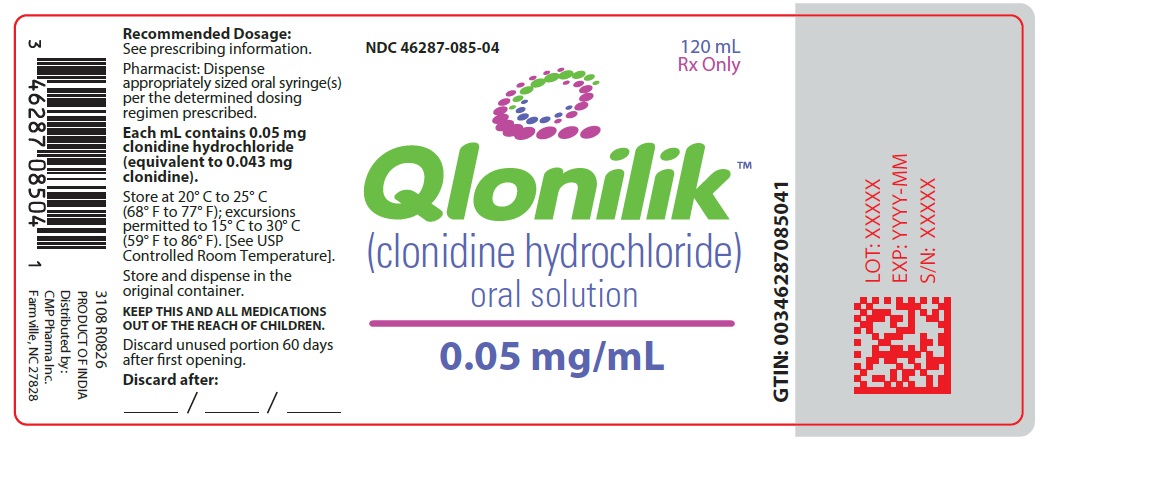
QLONILIKTM (clonidine hydrochloride) Oral Solution is a clear, colorless solution for oral administration. Each mL contains 0.05 mg clonidine hydrochloride (equivalent to 0.043 mg clonidine) and the following inactive ingredients: methylparaben, propylene glycol, propylparaben, purified water, raspberry flavor, sodium phosphate dibasic dihydrate, sodium phosphate monobasic dihydrate, and sucralose.

12.1 Mechanism Of Action

Clonidine stimulates alpha-adrenoreceptors in the brain stem. This action results in reduced sympathetic outflow from the central nervous system and in decreases in peripheral resistance, renal vascular resistance, heart rate, and blood pressure.

12.3 Pharmacokinetics

The pharmacokinetics of clonidine is dose-proportional in the range of 0.1 to 0.6 mg.

Absorption
The absolute bioavailability of clonidine following oral administration is 70% to 80%. The median (range) time to peak plasma concentrations (Tmax) following oral administration of 50 µg/mL QLONILIK solution under fasting condition was 2 hours (0.75 hour to 8 hours).

Effect of food
Food had no effect on plasma exposure of clonidine after administration of QLONILIK.

Distribution
Following intravenous administration, clonidine displays biphasic disposition with a distribution half-life of about 20 minutes. Clonidine crosses the placental barrier. 

Elimination
Elimination half-life ranges from 12 to 16 hour.

Metabolism
About 50% of the absorbed dose is metabolized in the liver. 

Excretion
Following oral administration, about 40% to 60% of the absorbed dose is recovered in the urine as unchanged drug in 24 hours. 

Specific Populations
Patients with Renal Impairment 
The half-life increases up to 41 hours in patients with severe impairment of renal function. Clonidine is minimally removed during hemodialysis.

13.1 Carcinogenesis, Mutagenesis, Impairment Of Fertility

Chronic dietary administration of clonidine was not carcinogenic to rats (132 weeks) or mice (78 weeks) dosed, respectively, at up to 2 or 1 times the MRHD on a mg/m2 basis.

There was no evidence of genotoxicity in the Ames test for mutagenicity or mouse micronucleus test for clastogenicity.

Fertility of female rats appeared to be affected at dose levels of 0.5 and 2.0 mg/kg/day (2 to 8 times the MRHD on a mg/m2 basis). Lower doses have not been adequately evaluated and a no adverse effect level could not be established.

16 How Supplied/Storage And Handling

QLONILIK (clonidine hydrochloride) Oral Solution, 0.05 mg/mL is a clear, colorless solution with a raspberry flavor filled in a white, opaque HDPE bottle with a child-resistant closure containing 120 mL of the oral solution.

NDC 46287-085-04

Store at 20°C to 25°C (68°F to 77°F); excursions permitted to 15°C to 30°C (59°F to 86°F) [see USP Controlled Room Temperature]. Store and dispense in the original container. Discard unused portion 60 days after first opening.

17 Patient Counseling Information

Sedation and Somnolence
Advise patients not to interrupt QLONILIK therapy without consulting their physician. They should be cautious of potential sedative effects, dizziness, or accommodation issues and avoid activities such as driving or operating machinery. Additionally, advise patients that the sedative effects may be increased by the use of alcohol, barbiturates, or other sedating drugs. [see Drug Interactions (7) and Warnings and Precautions (5.3)].

Rebound Hypertension
Advise patients not to discontinue Clonidine therapy without consulting their physician, as sudden cessation can cause symptoms like tachycardia, rapid blood pressure elevation, headache, nervousness and agitation. The risk is higher with higher doses or ongoing beta-blocker use. [see Warnings and Precautions (5.2)].
Bradycardia, cardiac conduction abnormalities, and symptomatic hypotension
Advise patients who have a history of syncope or may have a condition that predisposes them to syncope, such as symptomatic hypotension, bradycardia, or dehydration, to avoid becoming dehydrated or overheated.

Administration Information
Instruct patients or caregivers to use an oral dosing syringe or oral dosing cup to correctly measure the prescribed amount of medication. Inform patients that oral dosing syringes may be obtained from their pharmacy.

Distributed by:
CMP Pharma, Inc.
Farmville, NC 27828

3109 R0826

Principal Display Panel - Clonidine Hydrochloride Oral Solution, 0.05 Mg/Ml

120 mL

Rx only

NDC 46287-085-04

QLONILIK TM


(clonidine hydrochloride)

oral solution

0.05 mg/mL

Principal Display Panel (Bottle Label)

Principal Display Panel (Bottle Label)

* Please review the disclaimer below.