Rivastigmine Tartrate Capsule
Product Images NDC 46708-064

13 FDA label images from Alembic Pharmaceuticals Limited · Packaging, Regulatory Labels, and Product Appearance

Product Visual Gallery

This gallery contains 13 technical images submitted to the FDA as part of the official labeling for Rivastigmine Tartrate (NDC 46708-064). Unlike standard consumer photos, these assets often include clinical data figures, molecular chemical structures, and official manufacturer packaging layouts.

As provided by Alembic Pharmaceuticals Limited, these visuals offer a comprehensive scientific overview of the product's physical and chemical identity, aiding pharmacists and researchers in product verification and study.

FDA Label Image

Figure 1 (Rivastigmine Fig1)
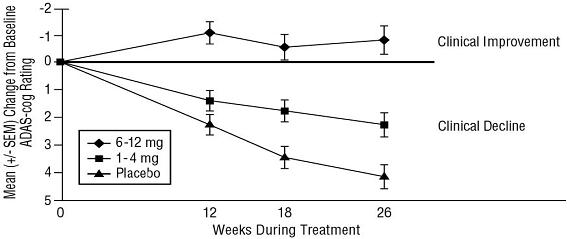
Figure 1 (Rivastigmine Fig1)
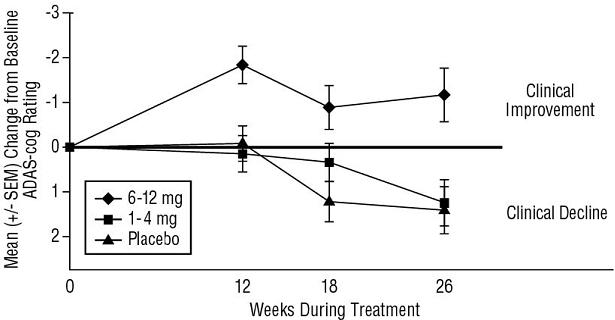
A line graph illustrating the mean change from baseline in ADAS-cog rating over 26 weeks of treatment. The x-axis shows weeks during treatment, and the y-axis indicates mean change with SEM. Three groups are compared: 6-12 mg, 1-4 mg, and placebo, showing clinical improvement or decline trends.*
FDA Label Image

Figure 2 (Rivastigmine Fig2)

Figure 2 (Rivastigmine Fig2)
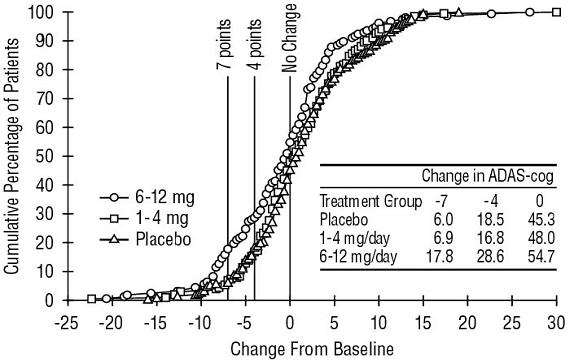
A cumulative percentage plot showing patient responses of three groups (6-12 mg, 1-4 mg, and placebo) with change from baseline on the x-axis and cumulative percentage of patients on the y-axis. Included is a small table summarizing the change in ADAS-cog scores for treatment groups and placebo.*
FDA Label Image

Figure 3 (Rivastigmine Fig3)

Figure 3 (Rivastigmine Fig3)
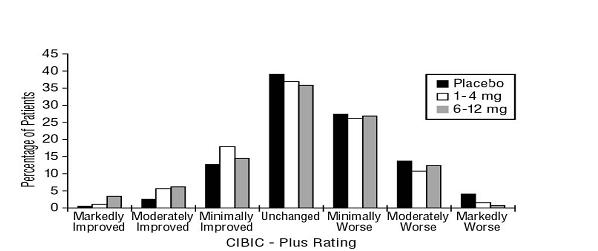
A bar chart comparing the percentage of patients by CIBIC-Plus Rating across three groups: Placebo, 1-4 mg, and 6-12 mg dosages. Categories range from "Markedly Improved" to "Markedly Worse," showing distribution of patient outcomes for each group.*
FDA Label Image

Figure 4 (Rivastigmine Fig4)

Figure 4 (Rivastigmine Fig4)
A line graph depicting mean change from baseline in ADAS-cog rating over 26 weeks of treatment. The graph compares three groups: 6-12 mg, 1-4 mg, and placebo. The vertical axis shows mean change with indications for clinical improvement and decline. The horizontal axis shows weeks during treatment at 0, 12, 18, and 26 weeks. Error bars represent standard error of the mean (SEM).*
FDA Label Image

Figure 5 (Rivastigmine Fig5)

Figure 5 (Rivastigmine Fig5)
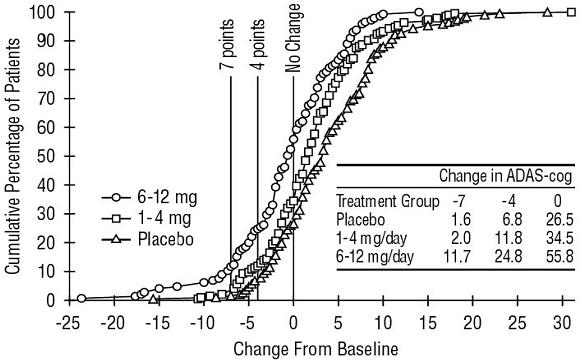
A cumulative percentage plot showing patients' change from baseline in ADAS-cog scores with treatment groups 6-12 mg, 1-4 mg, and placebo. The x-axis represents change from baseline, the y-axis the cumulative percentage of patients. The chart includes vertical lines at no change, 4 points, and 7 points improvement, with an inset table summarizing mean change in ADAS-cog scores for treatment and placebo groups.*
FDA Label Image

Figure 6 (Rivastigmine Fig6)

Figure 6 (Rivastigmine Fig6)
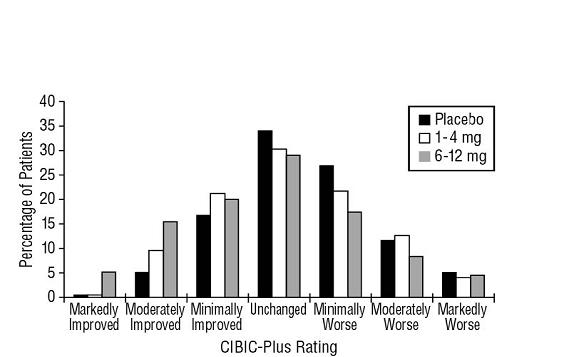
Bar chart depicting the percentage of patients categorized by CIBIC-Plus Rating outcomes (Markedly Improved to Markedly Worse), comparing three groups: Placebo, 1-4 mg Rivastigmine Tartrate, and 6-12 mg Rivastigmine Tartrate. The x-axis shows CIBIC-Plus Rating categories and the y-axis shows percentage of patients.*
FDA Label Image

Figure 7 (Rivastigmine Figure7)

Figure 7 (Rivastigmine Figure7)
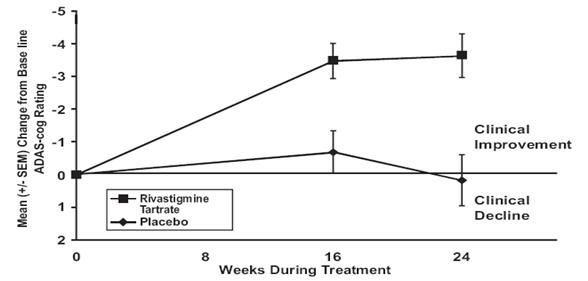
A line graph comparing clinical outcomes between Rivastigmine Tartrate and placebo over 24 weeks of treatment, showing mean change from baseline in ADAS-cog rating with error bars. The vertical axis ranges from clinical decline to improvement, and the horizontal axis indicates weeks during treatment.*
FDA Label Image

Figure 8 (Rivastigmine Figure8)

Figure 8 (Rivastigmine Figure8)
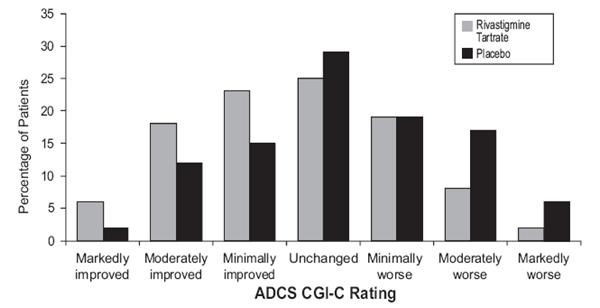
A bar chart illustrating the distribution of ADCS CGI-C Rating outcomes comparing Rivastigmine Tartrate to placebo. The vertical axis shows the percentage of patients, and the horizontal axis lists categories from "Markedly improved" to "Markedly worse." Bars represent patient percentages for each rating under Rivastigmine Tartrate (gray) and placebo (black) groups.*
FDA Label Image

1.5 mg 30's Bottle Pack (Rivastigmine mg15)

1.5 mg 30's Bottle Pack (Rivastigmine mg15)
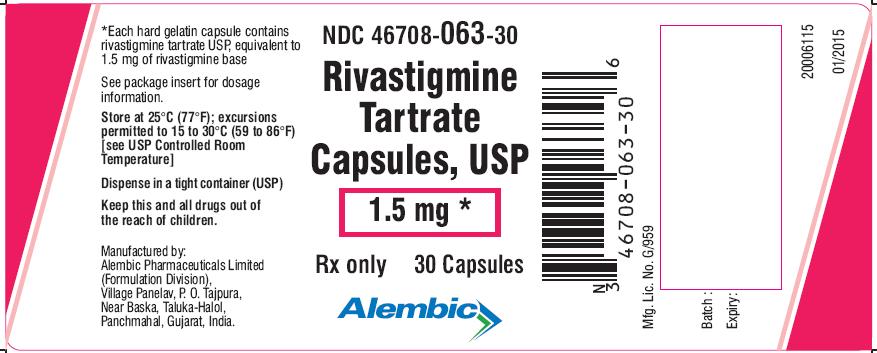
Rivastigmine Tartrate Capsules, USP 1.5 mg hard gelatin capsules label by Alembic Pharmaceuticals Limited. The label includes storage instructions, dosage information advisory, and packaging quantity of 30 capsules. It features the NDC code 46708-063-30 and emphasizes dispensing in a tight container and keeping out of children's reach.*
FDA Label Image

3 mg 30's Bottle Pack (Rivastigmine mg3)

3 mg 30's Bottle Pack (Rivastigmine mg3)
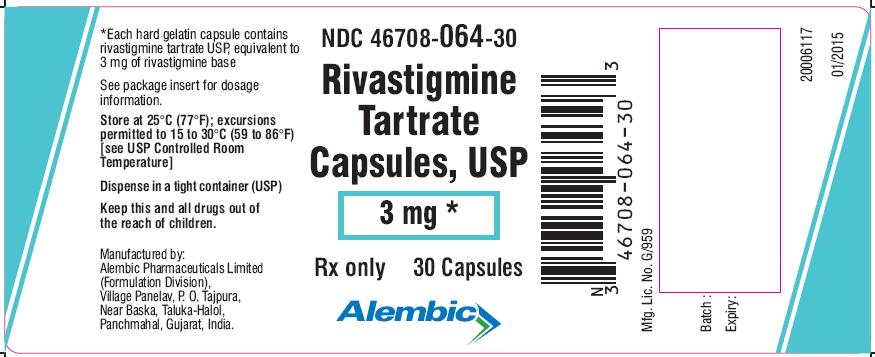
Rivastigmine Tartrate Capsules USP 3 mg label showing 30 capsules per container. The label includes the NDC number 46708-064-30, manufacturer Alembic Pharmaceuticals Limited, storage instructions, and warnings. The capsule strength is clearly marked as 3 mg on the front of the label.*
FDA Label Image

4.5 mg 30's Bottle Pack (Rivastigmine mg45)

4.5 mg 30's Bottle Pack (Rivastigmine mg45)
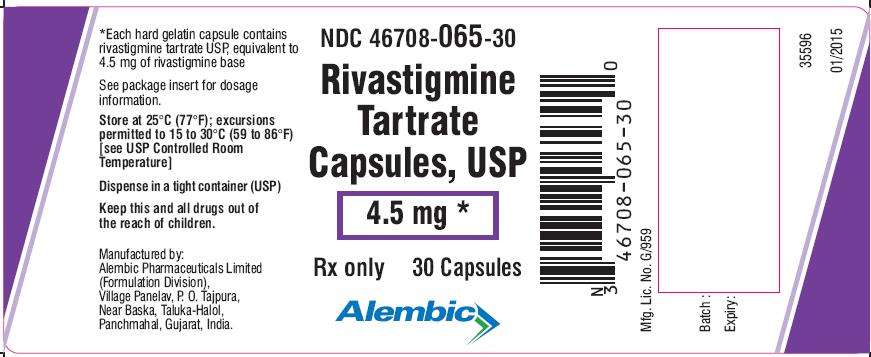
Label for Rivastigmine Tartrate Capsules USP 4.5 mg, supplied in a bottle of 30 capsules. The label states the active ingredient strength, storage instructions, manufacturer Alembic Pharmaceuticals Limited in Gujarat, India, and includes a barcode and NDC 46708-065-30. The label indicates the product is Rx only and provides brief handling instructions.*
FDA Label Image

6 mg 30's Bottle Pack (Rivastigmine mg6)

6 mg 30's Bottle Pack (Rivastigmine mg6)
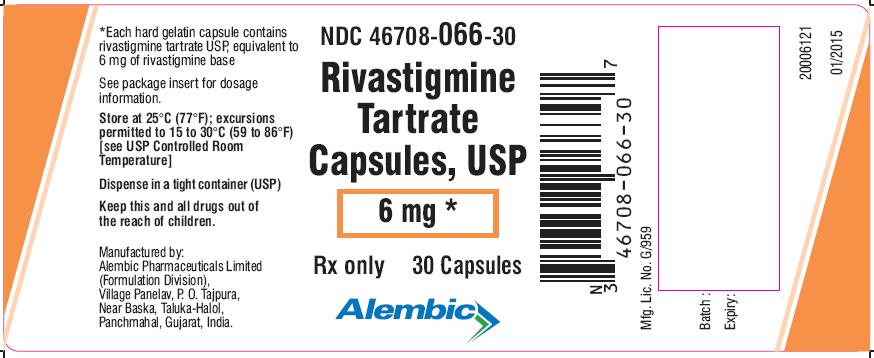
Rivastigmine Tartrate Capsules, USP 6 mg oral capsules, labeled as containing 30 capsules. The label includes storage instructions, manufacturer details (Alembic Pharmaceuticals Limited), and the NDC number 46708-066-30. The label also specifies the drug is prescription only and provides basic handling and safety warnings.*
FDA Label Image

Structure (Rivastigmine Structure)

Structure (Rivastigmine Structure)
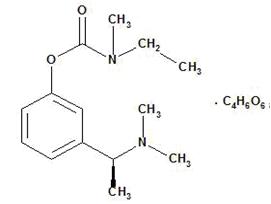
Chemical structure of Rivastigmine Tartrate showing the molecular arrangement of its active ingredient with labeled atoms and functional groups.*

* About these descriptions: Image descriptions on this page are generated by automated AI analysis of the product label images from the manufacturer's FDA label submission (SPL). They are provided for reference only and may contain errors or omissions. Always rely on the printed label itself and the official FDA labeling, and consult a pharmacist or healthcare professional with any questions about this product.