Duloxetine Hydrochloride Capsule, Delayed Release
Product Images NDC 46708-280
View Photos of Packaging, Regulatory Labels, and Product Appearance
Product Visual Gallery
This gallery contains 13 technical images submitted to the FDA as part of the official labeling for Duloxetine Hydrochloride (NDC 46708-280). Unlike standard consumer photos, these assets often include clinical data figures, molecular chemical structures, and official manufacturer packaging layouts.
As provided by Alembic Pharmaceuticals Limited, these visuals offer a comprehensive scientific overview of the product's physical and chemical identity, aiding pharmacists and researchers in product verification and study.
Product Images & Figures Index
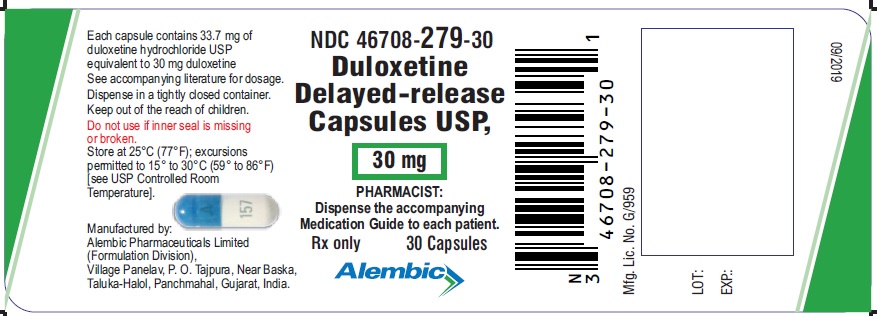
Duloxetine-30mg.jpg (Duloxetine 30mg)
Each capsule of this medication contains 337 mg of duloxetine hydrochloride, which is equivalent to 30 mg of duloxetine. The dosage information can be found in the accompanying literature. It is important to keep the medication in a tightly closed container and out of reach of children. If the inner seal is broken, the medication should not be used. The medication should be stored at a temperature of 25°C (77°F) with excursions allowed between 15° to 30°C (59° to 86°F). This medication is manufactured by Alembic Pharmaceuticals Limited in India and labeled with NDC 46708-279-30. The medication guide should be dispensed to each patient with this medication.*
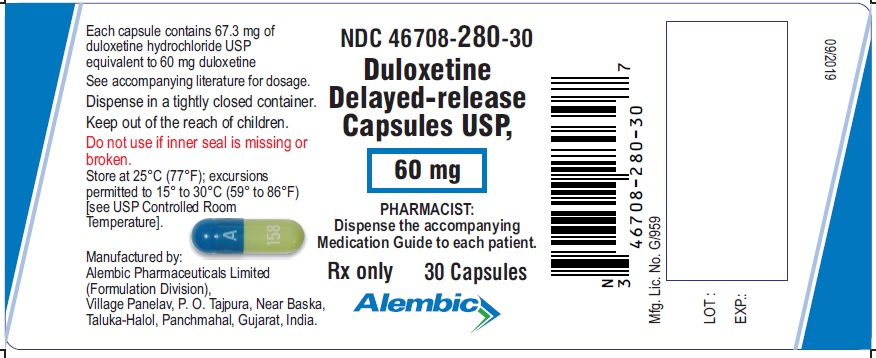
Duloxetine-60mg.jpg (Duloxetine 60mg)
Duloxetine Fig1
Duloxetine Fig10
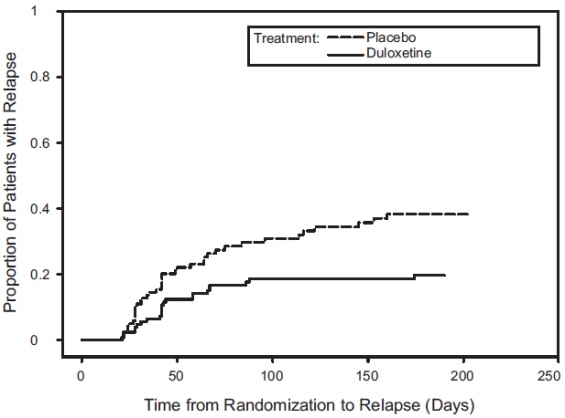
Figure 2 (Duloxetine Fig2)
The text represents a chart that displays the proportion of patients who experienced a relapse. The chart compares two treatments, placebo and Duloxetine. The x-axis shows the time from randomization to relapse in days, and the y-axis shows the proportion of patients. The chart has five bars representing relapse rates of 2%, 4%, 6%, and 8%. There is also a line marked as "pm" on the chart with a scale on the right that ranges from 50 to 300. Any additional information is not available due to incomplete data.*
Duloxetine Fig3
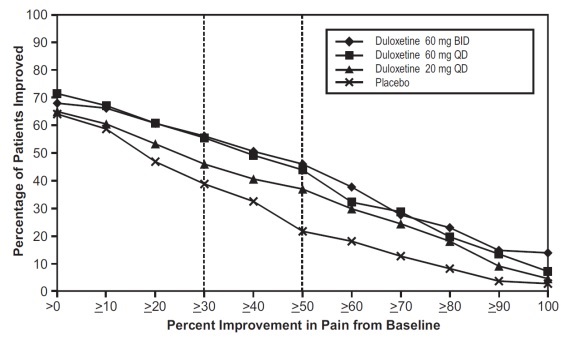
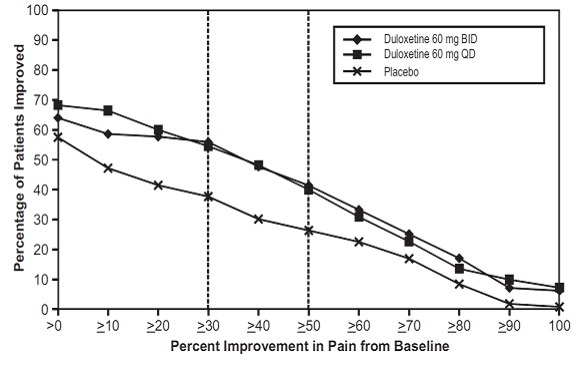
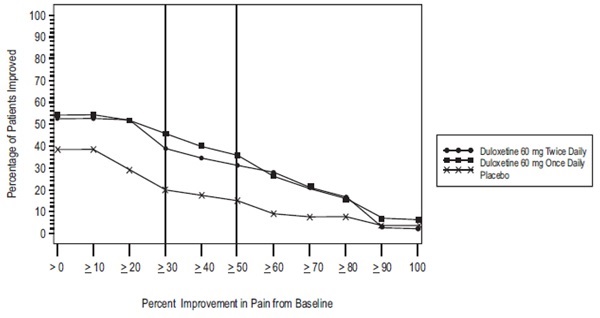
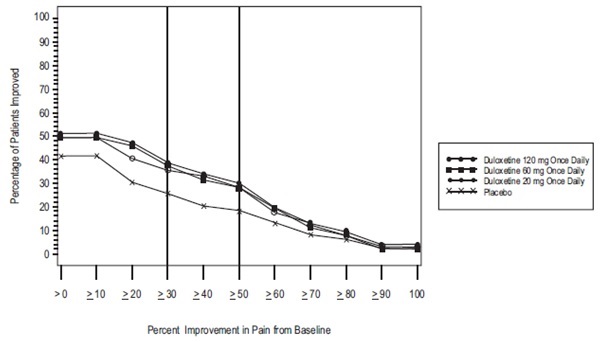
This is a table showing the different dosages of medication prescribed (Duweine and Duloseine). At the bottom, there is a graph depicting percentage improvement in pain from the baseline with increments of 10 displayed on the x-axis. The y-axis is the percentage of patients improved. The text is essentially a chart and therefore provides limited information.*
Duloxetine Fig4
Duloxetine Fig5
Duloxetine Fig6
Duloxetine Fig8
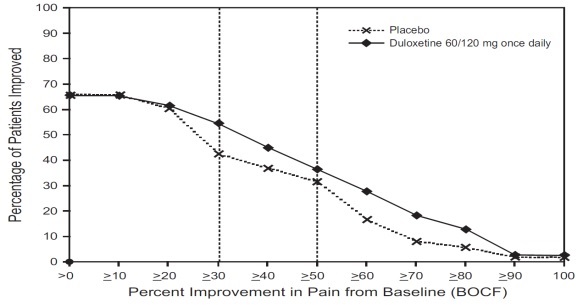
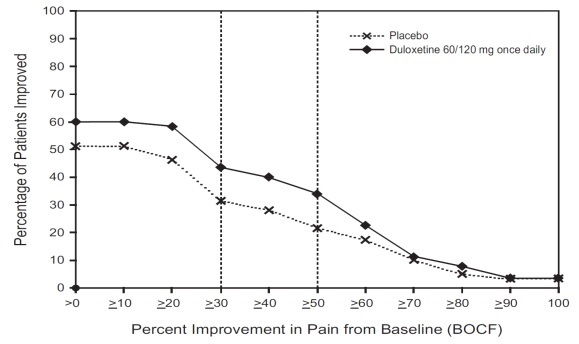
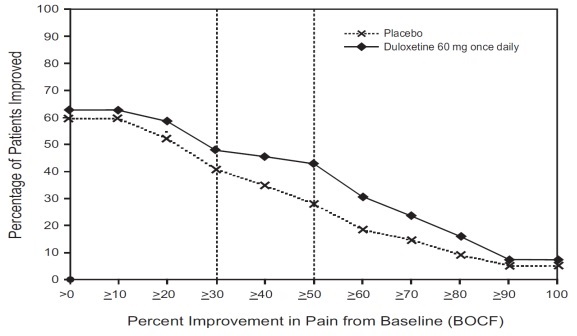
This is a chart that displays the percentage of patients' improvement in pain from their baseline condition. It compares the results between a Placebo group and a Duloxetine group, where the latter received 60-120 mg of medication once daily. The x-axis shows the range of percent improvement from 210 to 290, while the y-axis shows the number of patients.*
Duloxetine Fig9
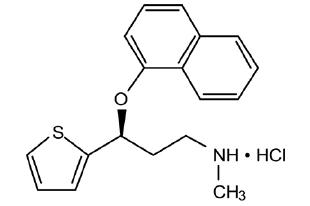
Duloxetine-structure (Duloxetine Structure)
* These product label images have been analyzed using experimental machine learning. Please verify findings with the primary label text.