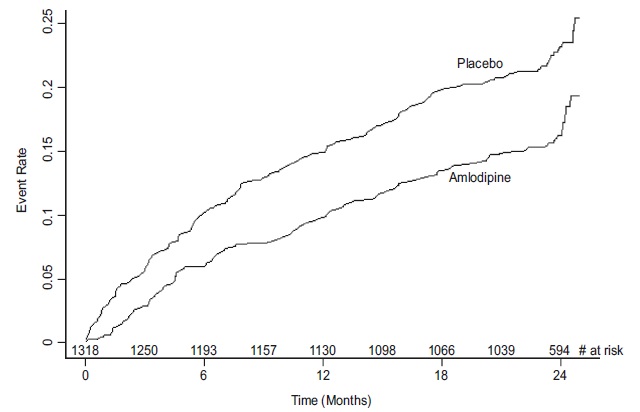
Because clinical trials are conducted under widely varying conditions, the adverse reaction rates observed in the clinical trials of a drug cannot be directly compared to rates in the clinical trials of another drug and may not reflect the rates observed in practice.
Amlodipine and Atorvastatin
Amlodipine and atorvastatin has been evaluated for safety in 1,092 patients in double-blind placebo-controlled studies treated for co-morbid hypertension and dyslipidemia. In general, treatment with amlodipine and atorvastatin was well tolerated. For the most part, adverse reactions have been mild or moderate in severity. In clinical trials with amlodipine and atorvastatin, no adverse reactions peculiar to this combination have been observed. Adverse reactions are similar in terms of nature, severity, and frequency to those reported previously with amlodipine and atorvastatin.
The following information is based on the clinical experience with amlodipine and atorvastatin.
Amlodipine
Amlodipine has been evaluated for safety in more than 11,000 patients in U.S. and foreign clinical trials. In general, treatment with amlodipine was well tolerated at doses up to 10 mg daily. Most adverse reactions reported during therapy with amlodipine were of mild or moderate severity. In controlled clinical trials directly comparing amlodipine (N=1,730) at doses up to 10 mg to placebo (N=1,250), discontinuation of amlodipine because of adverse reactions was required in only about 1.5% of patients and was not significantly different from placebo (about 1%). The most commonly reported side effects more frequent than placebo are dizziness and edema. The incidence (%) of side effects that occurred in a dose related manner are as follows:
| |
Amlodipine |
Placebo
N=520 |
| 2.5 mg
N=275 | 5 mg
N=296 | 10 mg
N=268 |
| Edema |
1.8 |
3 |
10.8 |
0.6 |
| Dizziness |
1.1 |
3.4 |
3.4 |
1.5 |
| Flushing |
0.7 |
1.4 |
2.6 |
0 |
| Palpitations |
0.7 |
1.4 |
4.5 |
0.6 |
Other adverse reactions that were not clearly dose related but were reported at an incidence greater than 1% in placebo-controlled clinical trials include the following:
| Amlodipine (%)
(N=1730)
| Placebo (%)
(N=1250)
|
|---|
Fatigue
| 4.5
| 2.8
|
Nausea
| 2.9
| 1.9
|
Abdominal Pain
| 1.6
| 0.3
|
Somnolence
| 1.4
| 0.6
|
Edema, flushing, palpitations, and somnolence appear to be more common in women than in men.
The following events occurred in < 1% but > 0.1% of patients treated with amlodipine in controlled clinical trials or under conditions of open trials or marketing experience where a causal relationship is uncertain; they are listed to alert the physician to a possible relationship:
Cardiovascular: arrhythmia (including ventricular tachycardia and atrial fibrillation), bradycardia, chest pain, peripheral ischemia, syncope, tachycardia, vasculitis.
Central and Peripheral Nervous System: hypoesthesia, neuropathy peripheral, paresthesia, tremor, vertigo.
Gastrointestinal: anorexia, constipation, dysphagia, diarrhea, flatulence, pancreatitis, vomiting, gingival hyperplasia.
General: allergic reaction, asthenia,2 back pain, hot flushes, malaise, pain, rigors, weight gain, weight decrease.
Musculoskeletal System: arthralgia, arthrosis, muscle cramps,2 myalgia.
Psychiatric: sexual dysfunction (male2 and female), insomnia, nervousness, depression, abnormal dreams, anxiety, depersonalization.
Respiratory System: dyspnea,2 epistaxis.
Skin and Appendages: angioedema, erythema multiforme, pruritus,2 rash,2 rash erythematous, rash maculopapular.
Special Senses: abnormal vision, conjunctivitis, diplopia, eye pain, tinnitus.
Urinary System: micturition frequency, micturition disorder, nocturia.
Autonomic Nervous System: dry mouth, sweating increased.
Metabolic and Nutritional: hyperglycemia, thirst.
Hemopoietic: leukopenia, purpura, thrombocytopenia.
2 These events occurred in less than 1% in placebo-controlled trials, but the incidence of these side effects was between 1% and 2% in all multiple dose studies.
Amlodipine therapy has not been associated with clinically significant changes in routine laboratory tests. No clinically relevant changes were noted in serum potassium, serum glucose, total TG, TC, HDL-C, uric acid, blood urea nitrogen, or creatinine.
Atorvastatin
In the atorvastatin placebo-controlled clinical trial database of 16,066 patients (8,755 atorvastatin vs. 7,311 placebo; age range 10 to 93 years, 39% female, 91% White, 3% Black or African American, 2% Asian, 4% other) with a median treatment duration of 53 weeks, the most common adverse reactions in patients treated with atorvastatin that led to treatment discontinuation and occurred at a rate greater than placebo were: myalgia (0.7%), diarrhea (0.5%), nausea (0.4%), alanine aminotransferase increase (0.4%), and hepatic enzyme increase (0.4%).
Table 2 summarizes adverse reactions, reported in ≥ 2% and at a rate greater than placebo in patients treated with atorvastatin (n=8,755), from seventeen placebo-controlled trials.
Table 2. Adverse Reactions Occurring in ≥ 2% in Patients Atorvastatin-Treated with any Dose and Greater than Placebo
Adverse Reaction
| % Placebo
N=7311
| % 10 mg
N=3908
| % 20 mg
N=188
| % 40 mg
N=604
| % 80 mg
N=4055
| % Any dose
N=8755
|
|---|
Nasopharyngitis
| 8.2
| 12.9
| 5.3
| 7
| 4.2
| 8.3
|
Arthralgia
| 6.5
| 8.9
| 11.7
| 10.6
| 4.3
| 6.9
|
Diarrhea
| 6.3
| 7.3
| 6.4
| 14.1
| 5.2
| 6.8
|
Pain in extremity
| 5.9
| 8.5
| 3.7
| 9.3
| 3.1
| 6
|
Urinary tract infection
| 5.6
| 6.9
| 6.4
| 8
| 4.1
| 5.7
|
Dyspepsia
| 4.3
| 5.9
| 3.2
| 6
| 3.3
| 4.7
|
Nausea
| 3.5
| 3.7
| 3.7
| 7.1
| 3.8
| 4
|
Musculoskeletal pain
| 3.6
| 5.2
| 3.2
| 5.1
| 2.3
| 3.8
|
Muscle spasms
| 3
| 4.6
| 4.8
| 5.1
| 2.4
| 3.6
|
Myalgia
| 3.1
| 3.6
| 5.9
| 8.4
| 2.7
| 3.5
|
Insomnia
| 2.9
| 2.8
| 1.1
| 5.3
| 2.8
| 3
|
Pharyngolaryngeal pain
| 2.1
| 3.9
| 1.6
| 2.8
| 0.7
| 2.3
|
Other adverse reactions reported in placebo-controlled trials include:
Body as a Whole: malaise, pyrexia
Digestive System: abdominal discomfort, eructation, flatulence, hepatitis, cholestasis
Musculoskeletal System: musculoskeletal pain, muscle fatigue, neck pain, joint swelling
Metabolic and Nutritional System: transaminases increase, liver function test abnormal, blood alkaline phosphatase increase, creatine phosphokinase increase, hyperglycemia
Nervous System: nightmare
Respiratory System: epistaxis
Skin and Appendages: urticaria
Special Senses: vision blurred, tinnitus
Urogenital System: white blood cells urine positive.
Elevations in Liver Enzyme Tests
Persistent elevations in serum transaminases, defined as more than 3 times the ULN and occurring on 2 or more occasions, occurred in 0.7% of patients who received atorvastatin in clinical trials. The incidence of these abnormalities was 0.2%, 0.2%, 0.6%, and 2.3% for 10, 20, 40, and 80 mg, respectively.
One patient in clinical trials developed jaundice. Increases in liver enzyme tests in other patients were not associated with jaundice or other clinical signs or symptoms. Upon dose reduction, drug interruption, or discontinuation, transaminase levels returned to or near pretreatment levels without sequelae. Eighteen of 30 patients with persistent liver enzyme elevations continued treatment with a reduced dose of atorvastatin.
Treating to New Targets Study (TNT)
In TNT, [see Clinical Studies (14.6)] 10,001 patients (age range 29 to 78 years, 19% female; 94% White, 3% Black or African American, 1% Asian, 2% other) with clinically evident CHD were treated with atorvastatin 10 mg daily (n=5,006) or atorvastatin 80 mg daily (n=4,995). In the high-dose atorvastatin group, there were more patients with serious adverse reactions (1.8%) and discontinuations due to adverse reactions (9.9%) as compared to the low-dose group (1.4%; 8.1%, respectively) during a median follow-up of 4.9 years. Persistent transaminase elevations (≥ 3 x ULN twice within 4 to 10 days) occurred in 1.3% of individuals with atorvastatin 80 mg and in 0.2% of individuals with atorvastatin 10 mg. Elevations of CK (≥ 10 x ULN) were higher in the high-dose atorvastatin group (0.3%) compared to the low-dose atorvastatin group (0.1%).
Stroke Prevention by Aggressive Reduction in Cholesterol Levels (SPARCL)
In SPARCL, 4,731 patients (age range 21 to 92 years, 40% female; 93% White, 3% Black or African American, 1% Asian, 3% other) without clinically evident CHD but with a stroke or transient ischemic attack (TIA) within the previous 6 months were treated with atorvastatin 80 mg (n=2,365) or placebo (n=2,366) for a median follow-up of 4.9 years. There was a higher incidence of persistent hepatic transaminase elevations (≥ 3 x ULN twice within 4 to 10 days) in the atorvastatin group (0.9%) compared to placebo (0.1%). Elevations of CK (> 10 x ULN) were rare, but were higher in the atorvastatin group (0.1%) compared to placebo (0.0%). Diabetes was reported as an adverse reaction in 6.1% of subjects in the atorvastatin group and 3.8% of subjects in the placebo group.
In a post-hoc analysis, atorvastatin 80 mg reduced the incidence of ischemic stroke (9.2% vs. 11.6%) and increased the incidence of hemorrhagic stroke (2.3% vs. 1.4%) compared to placebo. The incidence of fatal hemorrhagic stroke was similar between groups (17 atorvastatin vs. 18 placebo). The incidence of non-fatal hemorrhagic strokes was significantly greater in the atorvastatin group (38 non-fatal hemorrhagic strokes) as compared to the placebo group (16 non-fatal hemorrhagic strokes). Patients who entered the trial with a hemorrhagic stroke appeared to be at increased risk for hemorrhagic stroke (16% atorvastatin vs. 4% placebo).
Adverse Reactions from Clinical Studies of Atorvastatin in Pediatric Patients with HeFH
In a 26-week controlled study in pediatric patients with HeFH (ages 10 years to 17 years) (n=140, 31% female; 92% White, 1.6% Black or African American, 1.6% Asian, 4.8% other), the safety and tolerability profile of atorvastatin 10 to 20 mg daily, as an adjunct to diet to reduce total cholesterol, LDL-C, and apo B levels, was generally similar to that of placebo [see Use in Specific Populations (8.4) and Clinical Studies (14.11)].