Absorption
SUSTOL is an extended-release injection formulation of granisetron using a polymer-based drug delivery system. Following a single-dose administration in healthy subjects, granisetron is released from the polymer over an extended period of time and remains detectable in plasma for 7 days post-dose (Figure 1). A mean concentration of 3.5 ng/mL (range 0 to 14 ng/mL) was observed at 5 days post-dose [see Warnings and Precautions (5.3)].
Figure 1. Plasma Concentrations of Granisetron Over 7 Days after a Single Subcutaneous Injection of SUSTOL in Healthy Subjects  Image Of Figure 1 (Sustol 02) |
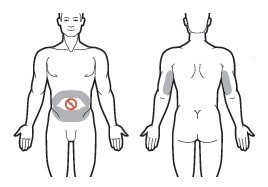
The granisetron pharmacokinetic parameters following injection of SUSTOL were similar between the abdomen and upper arm injection sites as shown in Table 3.
Table 3. Granisetron Pharmacokinetic Parameters Following a Single 10 mg Subcutaneous Injection of SUSTOL in Healthy Subjects by Injection Site Location| Parameter Values shown are mean ± SD, except for Tmax where median [range] are shown. | Injection Site Location |
|---|
Abdomen
N=113 | Upper Arm
N=113 |
|---|
| Cmax (ng/mL) | 9.8 ± 4.8 | 10.8 ± 4.6 |
| Tmax (hours) [range] | 12 [1 to 144] | 11 [1 to 120] |
| AUCinf, ng.h/mL | 680 ± 362 | 720 ± 366 |
In patients, peak plasma granisetron concentrations were delayed compared to healthy subjects with a median Tmax of approximately 24 hours.
Distribution
Plasma protein binding of granisetron is approximately 65% and granisetron distributes freely between plasma and red blood cells.
Metabolism
Published data suggests that granisetron is metabolized by CYP1A1 and CYP3A4. Granisetron metabolism involves N-demethylation and aromatic ring oxidation followed by conjugation.
Elimination
Metabolism: Following a single 10 mg subcutaneous injection of SUSTOL, the terminal elimination half-life of granisetron was approximately 24 hours and was comparable between healthy subjects and patients.
Granisetron clearance is predominantly by hepatic metabolism.
Excretion: Approximately 12% of a granisetron dose, following intravenous administration of granisetron hydrochloride, is eliminated unchanged in the urine in 48 hours. The remainder of the dose is excreted as metabolites, 49% in the urine and 34% in the feces.
Specific Populations
Age: Geriatric Population: In a pooled analysis of samples collected from 56 cancer patients in 3 clinical studies, the mean Cmax and mean AUC0-inf for granisetron following subcutaneous administration of a 10 mg dose of SUSTOL was 39% and 76% higher in patients 65 years of age and older than in patients less than 65 years of age. These pharmacokinetic differences are not considered clinically meaningful taking into consideration the small number of patients 65 years of age and older in the analysis (n = 16) and the high inter-patient variability.
Sex: In a pooled analysis of samples collected from 56 cancer patients in 3 clinical studies, the mean Cmax and mean AUC0-inf for granisetron following subcutaneous administration of a 10 mg dose of SUSTOL was 34% and 132% higher in males than in females. These pharmacokinetic differences are not considered meaningful taking into consideration the small number of males in the analysis (n = 13) and the high inter-patient variability.
Renal Impairment: The total clearance of granisetron was similar in patients with severe renal failure compared to patients with normal renal function following a single 40 mcg/kg intravenous dose of granisetron hydrochloride.
Breakdown products of the polymer vehicle in SUSTOL can be detected in urine of healthy subjects [see Clinical Pharmacology (12.5)]. There are no pharmacokinetic data regarding elimination of the polymer vehicle of SUSTOL in patients with renal impairment [see Dosage and Administration (2.3), Use in Specific Populations (8.6)].
Hepatic Impairment: The total clearance of granisetron was approximately 50% lower in patients with hepatic impairment (neoplastic liver disease) compared to patients with normal hepatic function following a single 40 mcg/kg intravenous dose of granisetron hydrochloride. The high inter-subject variability in the pharmacokinetic parameters of granisetron in patients with hepatic impairment limits the interpretation of these findings.
Drug Interaction Studies
Effect of Other Drugs on Granisetron
Granisetron is metabolized by the hepatic cytochrome P-450 drug-metabolizing enzymes CYP1A1 and CYP3A4. Inducers or inhibitors of CYP1A1 and CYP3A4 enzymes may affect the clearance and half-life of granisetron. In in vitro human microsomal studies, ketoconazole inhibited ring oxidation of granisetron. However, the potential for an in vivo pharmacokinetic interaction with ketoconazole is not known.
Phenobarbital: Administration of intravenous granisetron hydrochloride with phenobarbital, an enzyme inducer, resulted in a 25% increase in total plasma clearance of granisetron. The clinical significance of this interaction is not known.
Effect of Granisetron on Other Drugs
Granisetron does not induce or inhibit the cytochrome P-450 drug-metabolizing enzyme system in vitro. In addition, the in vitro activity of the cytochrome P-450 subfamily 3A4, which is involved in the metabolism of some narcotic analgesics, is not modified by granisetron.