Medi First Plus Allergy Relief Tablet, Film Coated
Product Images NDC 47682-913

View Photos of Packaging, Regulatory Labels, and Product Appearance

Product Visual Gallery

This gallery contains 2 technical images submitted to the FDA as part of the official labeling for Medi First Plus Allergy Relief (NDC 47682-913). Unlike standard consumer photos, these assets often include clinical data figures, molecular chemical structures, and official manufacturer packaging layouts.

As provided by Unifirst First Aid Corporation, these visuals offer a comprehensive scientific overview of the product's physical and chemical identity, aiding pharmacists and researchers in product verification and study.

FDA Label Image

Medi First Plus Allergy Relief Rev 2 10 22 Label
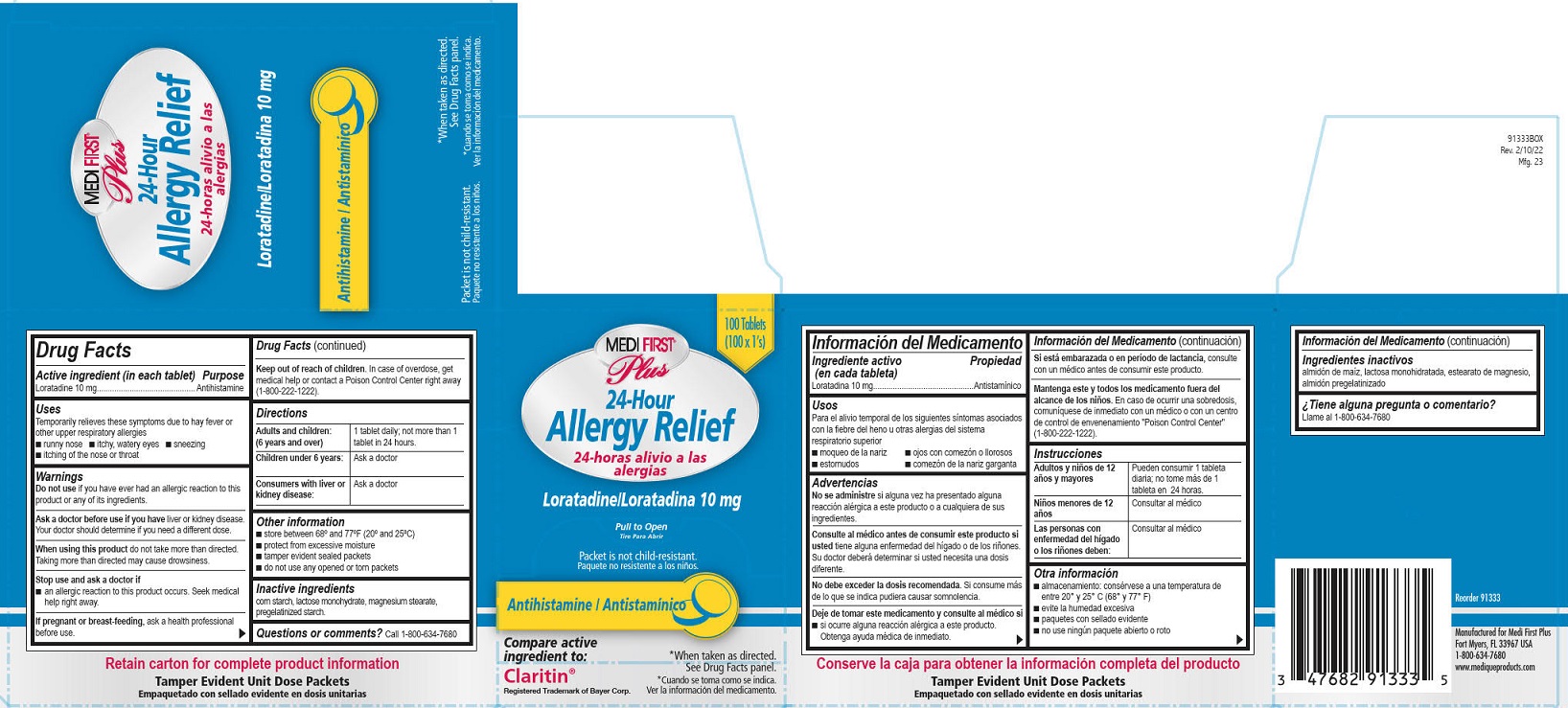
Medi First Plus Allergy Relief Rev 2 10 22 Label
This is a drug information label for 24-hour allergy relief medication containing Loratadine 10mg, an antihistamine. It provides instructions on how to use the medication, warns against overdosing and prolonged use, and contains information about inactive ingredients. It also provides a contact number for inquiries. The label emphasizes the drug's effectiveness and promises to provide relief from allergy symptoms for a period of 24 hours.*
FDA Label Image

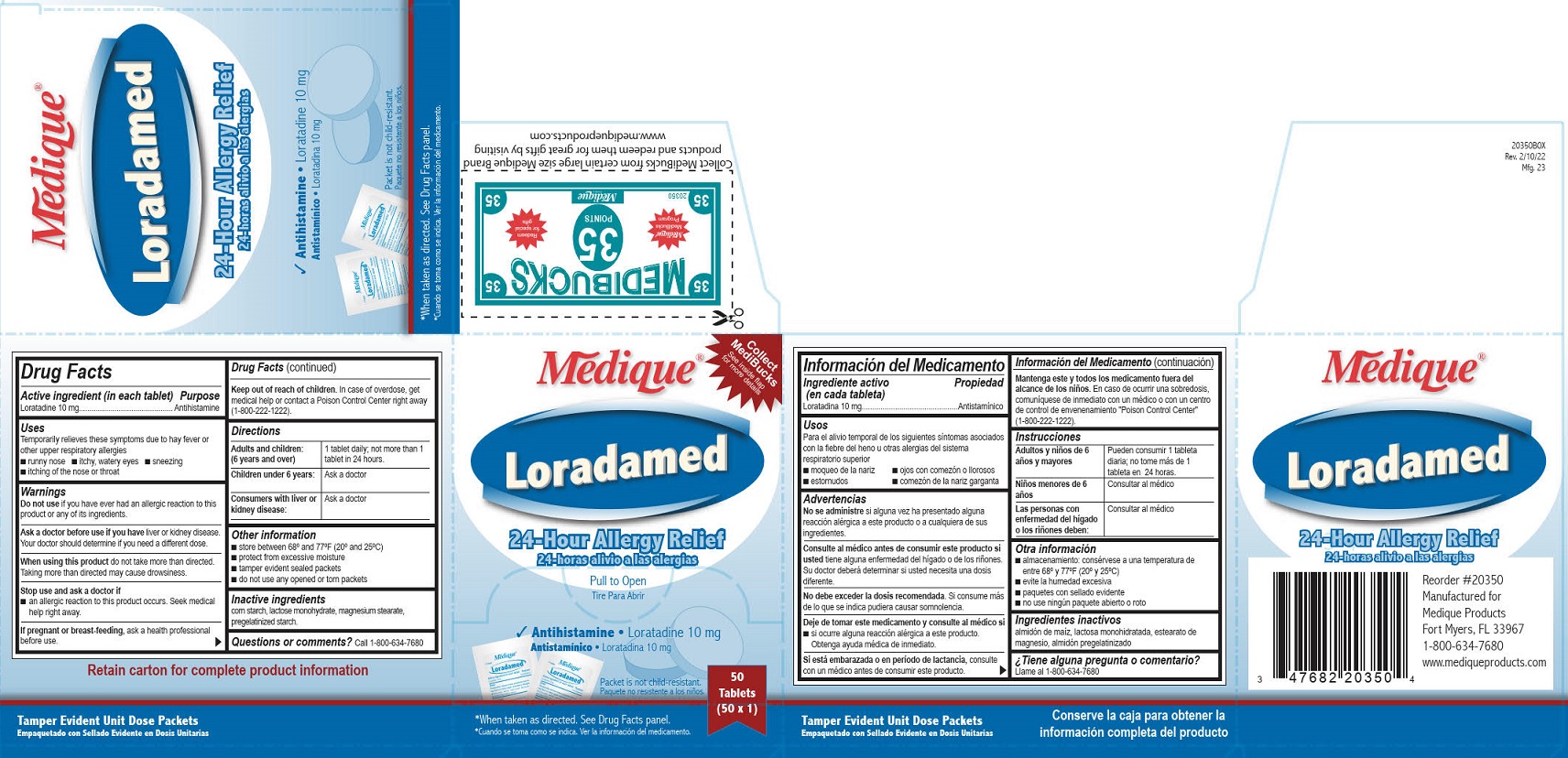
Medique Loratadine Rev 2 10 22 Label

Medique Loratadine Rev 2 10 22 Label
This is a description of a medication called Loratadine 10mg, which is an antihistamine used to treat symptoms associated with allergies such as sneezing, runny nose, and itchy eyes. It is intended for adults and children aged 6 years and older. The medication comes in tablet form, has inactive ingredients in its composition, and is packaged in tamper-evident unit-dose packets. The carton should be kept for complete medication information. If there are any questions or comments, contact the pharmaceutical company at the provided phone number. Note that some sections of the text are not readable, so the accuracy of the description may vary.*

* These product label images have been analyzed using experimental machine learning. Please verify findings with the primary label text.