Effects on the Central Nervous System
Hydrocodone produces respiratory depression by direct action on brain stem respiratory centers. The respiratory depression involves a reduction in the responsiveness of the brainstem respiratory centers to both increases in carbon dioxide tension and electrical stimulation. Hydrocodone causes miosis, even in total darkness. Pinpoint pupils are a sign of opioid overdose but are not pathognomonic (e.g., pontine lesions of hemorrhagic or ischemic origin may produce similar findings). Marked mydriasis rather than miosis may be seen with hypoxia in overdose situations [see Overdosage (10)].
Effects on the Gastrointestinal Tract and Other Smooth Muscle
Hydrocodone causes a reduction in motility associated with an increase in smooth muscle tone in the antrum of the stomach and duodenum. Digestion of food in the small intestine is delayed and propulsive contractions are decreased. Propulsive peristaltic waves in the colon are decreased, while tone is increased to the point of spasm, resulting in constipation. Other opioid-induced effects may include a reduction in biliary and pancreatic secretions, spasm of sphincter of Oddi, transient elevations in serum amylase, and opioid-induced esophageal dysfunction (OIED).
Effects on the Cardiovascular System
Hydrocodone produces peripheral vasodilation, which may result in orthostatic hypotension or syncope. Manifestations of histamine release and/or peripheral vasodilation may include pruritus, flushing, red eyes, sweating, and/or orthostatic hypotension.
Effects on the Endocrine System
Opioids inhibit the secretion of adrenocorticotropic hormone (ACTH), cortisol, and luteinizing hormone (LH) in humans [see Adverse Reactions (6.2)]. They also stimulate prolactin, growth hormone (GH) secretion, and pancreatic secretion of insulin and glucagon.
Use of opioids for an extended period of time may influence the hypothalamic-pituitary-gonadal axis, leading to androgen deficiency that may manifest as low libido, impotence, erectile dysfunction, amenorrhea, or infertility. The causal role of opioids in the clinical syndrome of hypogonadism is unknown because the various medical, physical, lifestyle, and psychological stressors that may influence gonadal hormone levels have not been adequately controlled for in studies conducted to date [see Adverse Reactions (6.2)].
Effects on the Immune System
In vitro and animal studies indicate that opioids have a variety of effects on immune functions, depending on the context in which they are used. The clinical significance of these findings is unknown. Overall, the effects of opioids appear to be modestly immunosuppressive.
Concentration—Efficacy Relationships
The minimum effective analgesic concentration will vary widely among patients, especially among patients who have been previously treated with opioid agonists. The minimum effective analgesic concentration of hydrocodone for any individual patient may increase over time due to an increase in pain, the development of a new pain syndrome, and/or the development of analgesic tolerance [see Dosage and Administration (2.1, 2.4)].
Concentration—Adverse Experience Relationships
There is a relationship between increasing hydrocodone plasma concentration and increasing frequency of adverse experiences such as nausea, vomiting, CNS effects, and respiratory depression. In opioid-tolerant patients, the situation may be altered by the development of tolerance to opioid-related adverse reactions [see Dosage and Administration (2.1, 2.3, 2.4)].
Absorption
As compared to immediate-release hydrocodone combination products, hydrocodone bitartrate extended-release capsules at similar daily doses results in similar overall exposure but with lower maximum concentrations. The half-life is also longer due to the prolonged duration of absorption. Based on the half-life of hydrocodone, steady-state should be obtained after 3 days of dosing. Following 7 days of dosing, AUC and Cmax increase approximately two-fold as compared to the first day of dosing. The pharmacokinetics of hydrocodone bitartrate extended-release capsules have been shown to be independent of dose up to a dose of 50 mg.
Hydrocodone bitartrate extended-release capsules exhibit peak plasma concentrations approximately 5 hours after dose administration.
Food Effects
Food has no significant effect on the extent of absorption of hydrocodone from hydrocodone bitartrate extended-release capsules. Although there was no evidence of dose dumping associated with this formulation under fasted and fed conditions, peak plasma concentration of hydrocodone increased by 27% when a hydrocodone bitartrate extended-release 20 mg capsule was administered with a high-fat meal.
Distribution
Although the extent of protein binding of hydrocodone in human plasma has not been definitively determined, structural similarities to related opioid analgesics suggest that hydrocodone is not extensively protein bound. As most agents in the 5-ring morphinan group of semi-synthetic opioids bind plasma protein to a similar degree (range 19% [hydromorphone] to 45% [oxycodone]), hydrocodone is expected to fall within this range.
Elimination
Metabolism
Hydrocodone exhibits a complex pattern of metabolism, including N-demethylation, O-demethylation, and 6-keto reduction to the corresponding 6-α-and 6-β-hydroxy metabolites. CYP3A4 mediated N-demethylation to norhydrocodone is the primary metabolic pathway of hydrocodone with a lower contribution from CYP2D6 mediated O-demethylation to hydromorphone. Hydromorphone is formed from the O-demethylation of hydrocodone and may contribute to the total analgesic effect of hydrocodone. Therefore, the formation of these and related metabolites can, in theory, be affected by other drugs [see Drug Interactions (7)]. Published in vitro studies have shown that N-demethylation of hydrocodone to form norhydrocodone can be attributed to CYP3A4 while O-demethylation of hydrocodone to hydromorphone is predominantly catalyzed by CYP2D6 and to a lesser extent by an unknown low affinity CYP enzyme.
Excretion
Hydrocodone and its metabolites are eliminated primarily in the kidneys, with a mean apparent plasma half-life after hydrocodone bitartrate extended-release capsules administration of approximately 8 hours.
Special Populations
Age: Geriatric Patients
No significant pharmacokinetic differences by age were observed based on population pharmacokinetic analysis.
Sex: No significant pharmacokinetic differences by sex were observed based on population pharmacokinetic analysis.
Hepatic Impairment
After a single dose of 20 mg hydrocodone bitartrate extended-release capsules in 20 patients with mild to moderate hepatic impairment based on Child-Pugh classifications, mean hydrocodone Cmax values were 25 ± 5 ng/mL, 24 ± 5 ng/mL, and 22 ± 3.3 ng/mL for moderate and mild impairment, and normal subjects, respectively. Mean hydrocodone AUC values were 509 ± 157 ng∙h/mL, 440 ± 124 ng∙h/mL, and 391 ± 74 ng∙h/mL for moderate and mild impairment, and normal subjects, respectively. Hydrocodone Cmax values were 8% to 10% higher in patients with mild or moderate hepatic impairment, respectively, while AUC values were 10% and 26% higher in patients with mild and moderate hepatic impairment, respectively. Severely impaired subjects were not studied [see Use in Specific Populations (8.6)].
Renal Impairment
After a single dose of 20 mg hydrocodone bitartrate extended-release capsules in 28 patients with mild, moderate, or severe renal impairment based on Cockcroft-Gault criteria, mean hydrocodone Cmax values were 26 ± 6.0 ng/mL, 28 ± 7.5 ng/mL, 21 ± 5.1 ng/mL and 19 ± 4.4 ng/mL for severe, moderate, mild renal impairment, and normal subjects, respectively. Mean hydrocodone AUC values were 487 ± 123 ng∙h/mL, 547 ± 184 ng∙h/mL, 391 ± 122 ng∙h/mL and 343 ± 105 ng∙h/mL for severe, moderate, mild renal impairment, and normal subjects, respectively. Hydrocodone Cmax values were 15%, 48%, and 41% higher and AUC values were 15%, 57% and 44% higher in patients with mild, moderate, and severe renal impairment, respectively [see Use in Specific Populations (8.7)].
Drug Interaction Studies
Interactions with Alcohol
The rate of absorption of hydrocodone bitartrate extended-release capsules 50 mg was affected by co-administration with 40% alcohol in the fasted state, as exhibited by an increase in peak hydrocodone concentrations (on average 2.4-fold increase with maximum increase of 3.9-fold in one subject) and a decrease in the time to peak concentrations. The extent of absorption was increased on average 1.2-fold with maximum increase of 1.7-fold in one subject with 40% alcohol [see Warnings and Precautions (5.3)].
Cytochrome P450 Enzymes
While comprehensive PK drug-drug interaction studies (other than alcohol) have not been performed in humans receiving hydrocodone, published in vitro and human PK studies indicate that conversion of hydrocodone to its primary metabolite, norhydrocodone and lesser metabolite, hydromorphone, is mediated by the cytochrome P450 enzyme system. N-demethylation of hydrocodone to form norhydrocodone is attributed to CYP3A4 and O-demethylation of hydrocodone to hydromorphone is predominantly catalyzed by CYP2D6 and to a lesser extent by an unknown low affinity CYP enzyme.
CYP3A4 Inhibitors and Inducers
An increase in CYP3A4 activity by initiation of CYP3A4 inhibiting drugs or discontinuation of CYP3A4 inducing drugs could alter the metabolic profile of hydrocodone causing a slowing of hydrocodone clearance, and lead to elevated hydrocodone concentrations and effects, which could be more pronounced with concomitant use of cytochrome P450 CYP3A4 inhibitors. Initiation of a CYP3A4 inducing drug can lower hydrocodone plasma levels and may induce an opioid-withdrawal syndrome [see Warnings and Precautions (5.6) and Drug Interactions (7)].
Carcinogenesis
Hydrocodone was evaluated for carcinogenic potential in rats and mice. In a two-year bioassay in rats, doses up to 30 mg/kg in males and 100 mg/kg in females were administered orally and no treatment-related neoplasms were observed (exposure is equivalent to 0.1 times and 0.6 times for males and females, respectively, the human hydrocodone dose of 100 mg/day based on AUC exposure comparisons). In a two-year bioassay in mice, doses up to 100 mg/kg in males and females were administered orally and no treatment-related neoplasms were observed (exposure is equivalent to 0.8 times and 1.5 times, respectively, the human hydrocodone dose of 100 mg/day based on AUC exposure comparisons).
Mutagenesis
Hydrocodone bitartrate was genotoxic in an in vitro chromosomal aberration assay in the presence of metabolic activation. No evidence of clastogenicity was observed in this assay in the absence of metabolic activation. No evidence of DNA damage was found in an in vivo comet assay in mouse liver. There was no evidence of genotoxic potential in an in vitro bacterial reverse mutation assay (Salmonella typhimurium and Escherichia coli) or in an assay for chromosomal aberrations (in vivo mouse bone marrow micronucleus assay).
Impairment of Fertility
In a fertility study, rats were administered once daily by oral gavage the vehicle or hydrocodone bitartrate at doses of 25 mg/kg/day, 75 mg/kg/day, and 100 mg/kg/day (equivalent to approximately 2, 7, and 10 times an adult human dose of 100 mg/day, on a mg/m2 basis). Male and female rats were dosed before cohabitation (up to 28 days), during the cohabitation and until gestation day 7 (females) or necropsy (males; 2 to 3 weeks post-cohabitation). Hydrocodone bitartrate did not affect reproductive function in males, although the weights of male reproductive organs were decreased at all doses. Doses of 25 mg/kg/day and greater in females reduced the rate at which females became pregnant which correlated with suppression of estrous cyclicity, thought to be due to increases in prolactin. In hydrocodone bitartrate-treated rats that became pregnant, at 25 mg/kg early embryonic development was unaffected (approximately 2 times the adult human daily dose of 100 mg/day on a mg/m2 basis). In rats, prolactin plays a unique role in the estrous cycle and the clinical relevance of the female rat reproductive findings is uncertain.
Placebo-Controlled Study in Opioid-Experienced Subjects with Moderate to Severe Chronic Lower Back Pain
A total of 510 subjects currently on chronic opioid therapy entered an open-label conversion and titration phase (up to 6 weeks) with hydrocodone bitartrate extended-release capsules dosed every 12 hours at an approximated equianalgesic dose of their pre-study opioid medication. For inadequately controlled pain, hydrocodone bitartrate extended-release capsules was increased by 10 mg per 12-hour dose, once every 3 to 7 days until a stabilized dose was identified, or a maximum dosage of 100 mg every 12 hours. There were 302 subjects (59%) randomized at a ratio of 1:1 into a 12-week double-blind treatment phase with their fixed stabilized dose of hydrocodone bitartrate extended-release capsules (40 mg to 200 mg daily taken as 20 mg to 100 mg, every 12 hours) or a matching placebo. Subjects randomized to placebo were given a blinded taper of hydrocodone bitartrate extended-release capsules according to a pre-specified tapering schedule. During the treatment phase, subjects were allowed to use rescue medication (hydrocodone 5 mg/500 mg acetaminophen) up to 2 doses (2 tablets) per day. There were 124 treated subjects (82%) that completed the 12-week treatment with hydrocodone bitartrate extended-release capsules and 59 subjects (39%) with placebo.
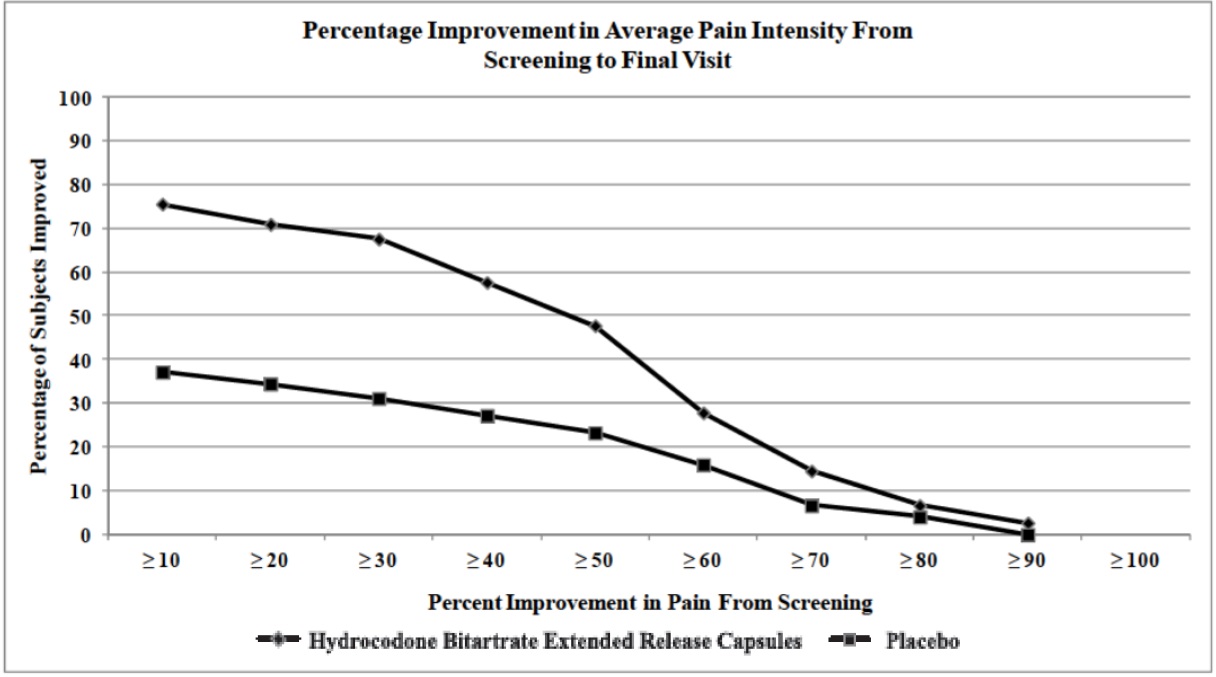
Hydrocodone bitartrate extended-release capsules provided greater analgesia compared to placebo. There was a significant difference in the mean changes from Baseline to Week 12 in average weekly pain intensity Numeric Rating Scale (NRS) scores between the two groups.
The percentage of subjects in each group who demonstrated improvement in their NRS pain score at End-of-Study, as compared to Screening is shown in the figure below. The figure is cumulative, so subjects whose change from Screening is, for example, 30% are also included at every level of improvement below 30%. Subjects who did not complete the study were classified as non-responders. Treatment with hydrocodone bitartrate extended-release capsules produced a greater number of responders, defined as subjects with at least a 30% improvement, as compared to placebo (67.5% vs. 31.1%).
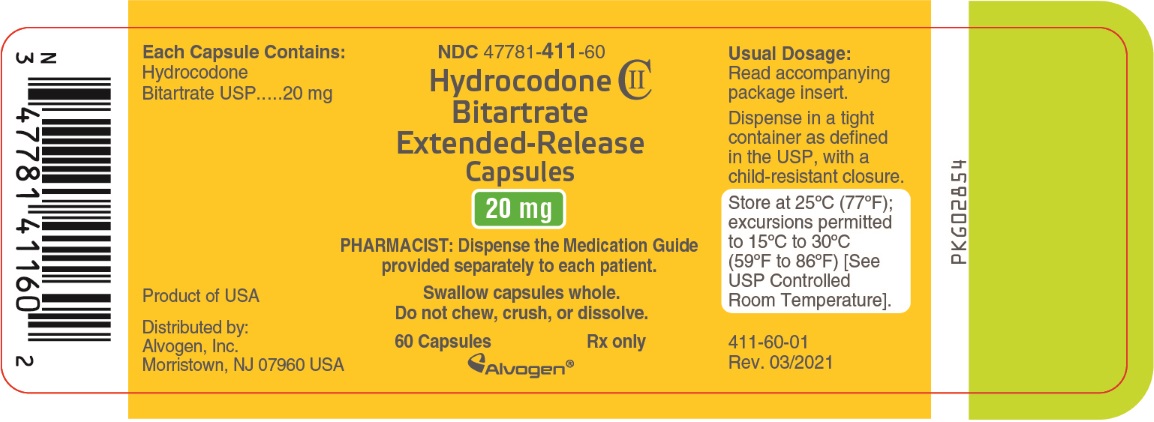
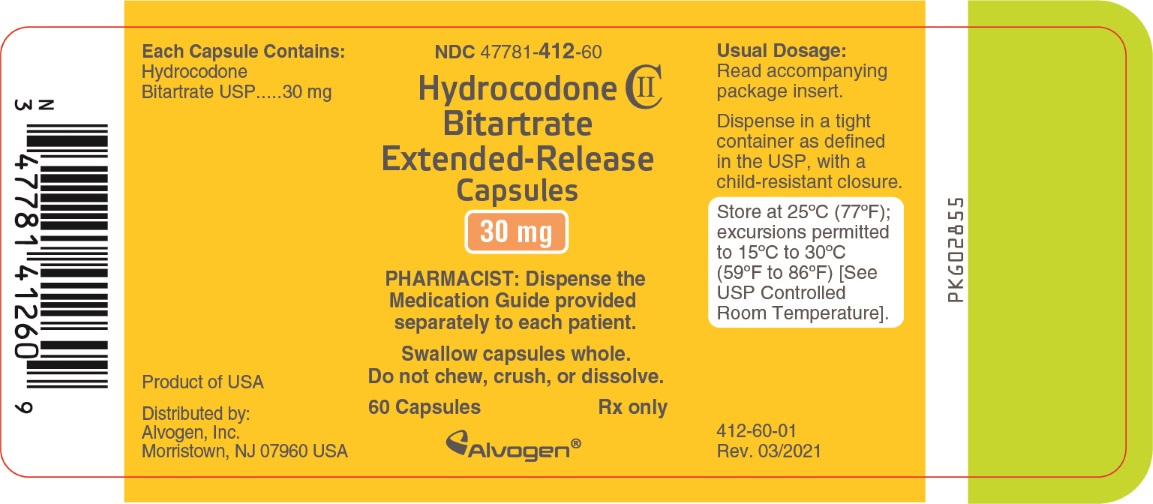
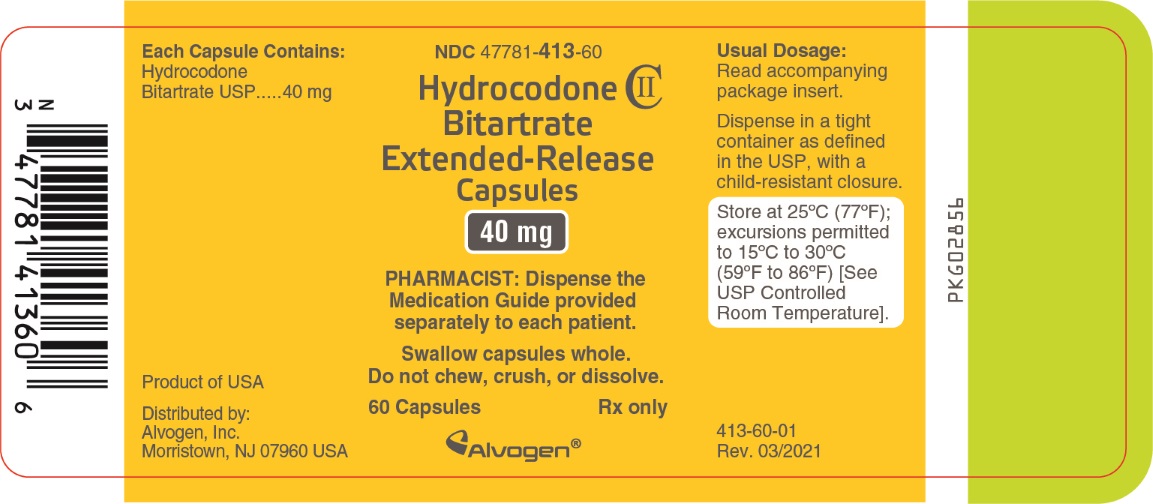
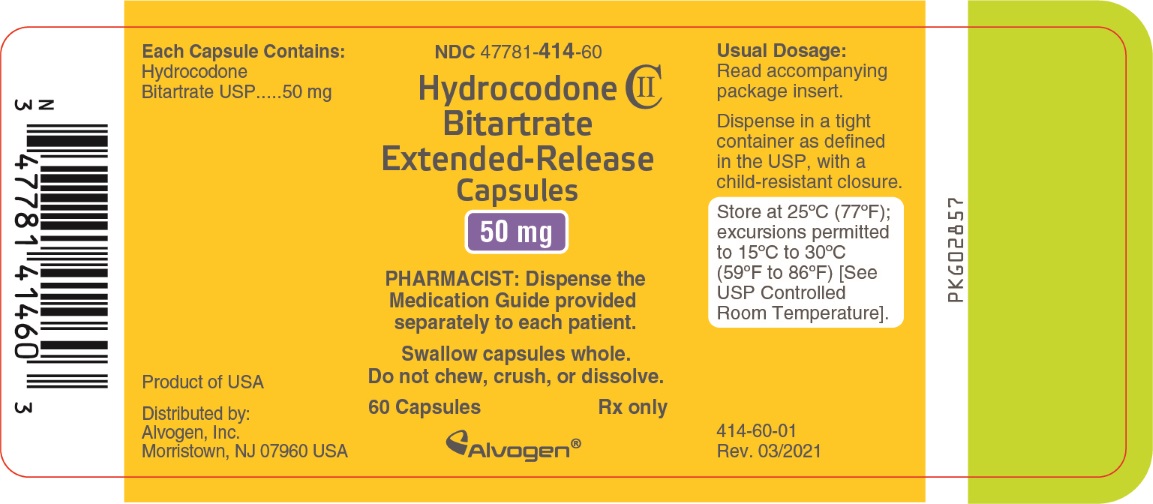
Product of USA
Distributed by:
Alvogen, Inc.
Morristown, NJ 07960 USA
PI409-07