Other
Addiction, Abuse, and Misuse
Fentanyl transdermal system exposes patients and other users to the risks of opioid addiction, abuse, and misuse, which can lead to overdose and death. Assess each patient's risk prior to prescribing fentanyl transdermal system, and monitor all patients regularly for the development of these behaviors and conditions [see Warnings and Precautions ( 5.1)].
Opioid Analgesic Risk Evaluation and Mitigation Strategy (REMS)
To ensure that the benefits of opioid analgesics outweigh the risks of addiction, abuse, and misuse, the Food and Drug Administration (FDA) has required a REMS for these products [see Warnings and Precautions (
5.2)]
. Under the requirements of the REMS, drug companies with approved opioid analgesic products must make REMS-compliant education programs available to healthcare providers. Healthcare providers are strongly encouraged to
- complete a REMS-compliant education program,
- counsel patients and/or their caregivers, with every prescription, on safe use, serious risks, storage, and disposal of these products,
- emphasize to patients and their caregivers the importance of reading the Medication Guide every time it is provided by their pharmacist, and
- consider other tools to improve patient, household, and community safety.
- Reserve concomitant prescribing of fentanyl transdermal system and benzodiazepines or other CNS depressants for use in patients for whom alternative treatment options are inadequate.
- Limit treatment to the minimum effective dosages and durations.
- Follow patients for signs and symptoms of respiratory depression and sedation.
- Because of the risks of addiction, abuse, and misuse with opioids, even at recommended doses, and because of the greater risks of overdose and death with extended-release/long-acting opioid formulations [see Warnings and Precautions ( 5.1)] , reserve fentanyl transdermal system for use in patients for whom alternative treatment options (e.g., non-opioid analgesics or immediate-release opioids) are ineffective, not tolerated, or would be otherwise inadequate to provide sufficient management of pain.
- Fentanyl transdermal system is not indicated as an as-needed (prn) analgesic.
- Patients should apply fentanyl transdermal system to intact, non-irritated, and non-irradiated skin on a flat surface such as the chest, back, flank, or upper arm. In young children and persons with cognitive impairment, adhesion should be monitored and the upper back is the preferred location to minimize the potential of inappropriate patch removal. Hair at the application site may be clipped (not shaved) prior to system application. If the site of fentanyl transdermal system application must be cleansed prior to application of the patch, do so with clear water. Do not use soaps, oils, lotions, alcohol, or any other agents that might irritate the skin or alter its characteristics. Allow the skin to dry completely prior to patch application.
- Patients should apply fentanyl transdermal system immediately upon removal from the sealed package. The patch must not be altered (e.g., cut) in any way prior to application. Fentanyl transdermal system should not be used if the pouch seal is broken or if the patch is cut or damaged.
- The transdermal system is pressed firmly in place with the palm of the hand for 30 seconds, making sure the contact is complete, especially around the edges.
- Each fentanyl transdermal system patch may be worn continuously for 72 hours. The next patch is applied to a different skin site after removal of the previous transdermal system.
- If problems with adhesion of the fentanyl transdermal system patch occur, the edges of the patch may be taped with first aid tape. If problems with adhesion persist, the patch may be overlayed with a transparent adhesive film dressing.
- If the patch falls off before 72 hours, dispose of it by folding in half and flushing down the toilet. A new patch may be applied to a different skin site.
- Patients (or caregivers who apply fentanyl transdermal system) should wash their hands immediately with soap and water after applying fentanyl transdermal system.
- Contact with unwashed or unclothed application sites can result in secondary exposure to fentanyl transdermal system and should be avoided. Examples of accidental exposure include transfer of a fentanyl transdermal system patch from an adult's body to a child while hugging, sharing the same bed as the patient, accidental sitting on a patch and possible accidental exposure of a caregiver's skin to the medication in the patch while applying or removing the patch.
- Instruct patients, family members, and caregivers to keep patches in a secure location out of the reach of children and of others for whom fentanyl transdermal system was not prescribed.
- avoid strenuous exertion that can increase body temperature while wearing the patch
- avoid exposing the fentanyl transdermal system application site and surrounding area to direct external heat sources including heating pads, electric blankets, sunbathing, heat or tanning lamps, saunas, hot tubs or hot baths, and heated water beds.
Life-threatening Respiratory Depression
Serious, life-threatening, or fatal respiratory depression may occur with use of fentanyl transdermal system. Monitor for respiratory depression, especially during initiation of fentanyl transdermal system or following a dose increase. Because of the risk of respiratory depression, fentanyl transdermal system is contraindicated for use as an as-needed analgesic, in non-opioid tolerant patients, in acute pain, and in postoperative pain [see Contraindications ( 4) and Warnings and Precautions ( 5.3)].
Accidental Exposure
Accidental exposure to even one dose of fentanyl transdermal system, especially in children, can result in a fatal overdose of fentanyl. Deaths due to an overdose of fentanyl have occurred when children and adults were accidentally exposed to fentanyl transdermal system. Strict adherence to the recommended handling and disposal instructions is of the utmost importance to prevent accidental exposure [see Warnings and Precautions ( 5.4)].
Neonatal Opioid Withdrawal Syndrome
Prolonged use of fentanyl transdermal system during pregnancy can result in neonatal opioid withdrawal syndrome, which may be life-threatening if not recognized and treated, and requires management according to protocols developed by neonatology experts. If opioid use is required for a prolonged period in a pregnant woman, advise the patient of the risk of neonatal opioid withdrawal syndrome and ensure that appropriate treatment will be available [see Warnings and Precautions ( 5.5)].
Cytochrome P450 3A4 Interaction
The concomitant use of fentanyl transdermal system with all cytochrome P450 3A4 inhibitors may result in an increase in fentanyl plasma concentrations, which could increase or prolong adverse drug effects and may cause potentially fatal respiratory depression. In addition, discontinuation of a concomitantly used cytochrome P450 3A4 inducer may result in an increase in fentanyl plasma concentration. Monitor patients receiving fentanyl transdermal system and any CYP3A4 inhibitor or inducer [see Warnings and Precautions ( 5.6) and Clinical Pharmacology ( 12.3)].
Risk of Increased Fentanyl Absorption with Application of External Heat
Exposure of the fentanyl transdermal system application site and surrounding area to direct external heat sources, such as heating pads or electric blankets, heat or tanning lamps, sunbathing, hot baths, saunas, hot tubs, and heated water beds may increase fentanyl absorption and has resulted in fatal overdose of fentanyl. Warn patients to avoid exposing the application site and surrounding area to direct external heat sources [see Warnings and Precautions ( 5.7)].
Risks from Concomitant Use with Benzodiazepines or Other CNS Depressants
Concomitant use of opioids with benzodiazepines or other central nervous system (CNS) depressants, including alcohol, may result in profound sedation, respiratory depression, coma, and death [see Warnings and Precautions ( 5.8), Drug Interactions ( 7)].
Limitations of Use
Application and Handling Instructions
Avoidance of Heat
Instruct patients to avoid exposing the fentanyl transdermal system application site and surrounding area to direct external heat sources, such as heating pads or electric blankets, heat or tanning lamps, sunbathing, hot baths, saunas, hot tubs, and heated water beds, while wearing the system [see Warnings and Precautions ( 5.7)] .
Patient Access to Naloxone for the Emergency Treatment of Opioid Overdose
Discuss the availability of naloxone for the emergency treatment of opioid overdose with the patient and caregiver and assess the potential need for access to naloxone, both when initiating and renewing treatment with fentanyl transdermal system. Inform patients and caregivers about the various ways to obtain naloxone as permitted by individual state naloxone dispensing and prescribing requirements or guidelines (e.g., by prescription, directly from a pharmacist, or as part of a community-based program). Educate patients and caregivers on how to recognize respiratory depression and emphasize the importance of calling 911 or getting emergency medical help, even if naloxone is administered [see Patient Counseling Information ( 17)].
Consider prescribing naloxone, based on the patient’s risk factors for overdose, such as concomitant use of CNS depressants, a history of opioid use disorder, or prior opioid overdose. However, the presence of risk factors for overdose should not prevent the proper management of pain in any given patient. Also consider prescribing naloxone if the patient has household members (including children) or other close contacts at risk for accidental exposure or overdose. If naloxone is prescribed, educate patients and caregivers on how to treat with naloxone [see Warnings and Precautions ( 5.1, 5.8), Patient Counseling Information ( 17)].
Patients with Chronic Pulmonary Disease
Fentanyl transdermal system-treated patients with significant chronic obstructive pulmonary disease or cor pulmonale, and those with a substantially decreased respiratory reserve, hypoxia, hypercapnia, or pre-existing respiratory depression are at increased risk of decreased respiratory drive including apnea, even at recommended dosages of fentanyl transdermal system [ see Warnings and Precautions ( 5.3)].
Elderly, Cachectic, or Debilitated Patients
Life-threatening respiratory depression is more likely to occur in elderly, cachectic, or debilitated patients because they may have altered pharmacokinetics or altered clearance compared to younger, healthier patients [see Warnings and Precautions ( 5.3)].
Monitor such patients closely, particularly when initiating and titrating fentanyl transdermal system and when fentanyl transdermal system is given concomitantly with other drugs that depress respiration [see Warnings and Precautions ( 5.3)] . Alternatively, consider the use of non-opioid analgesics in these patients.
Pediatrics
The safety of fentanyl transdermal system was evaluated in three open-label trials in 289 pediatric patients with chronic pain, 2 years of age through 18 years of age. Adverse reactions reported by ≥1% of fentanyl transdermal system-treated pediatric patients are shown in Table 5.
System/Organ Class Adverse Reaction | Fentanyl Transdermal System % (N=289) |
| Gastrointestinal disorders | |
| Vomiting | 34 |
| Nausea | 24 |
| Constipation | 13 |
| Diarrhea | 13 |
| Abdominal pain | 9 |
| Abdominal pain upper | 4 |
| Dry mouth | 2 |
| General disorders and administration site conditions | |
| Edema peripheral | 5 |
| Fatigue | 2 |
| Application site reaction | 1 |
| Asthenia | 1 |
| Immune system disorders | |
| Hypersensitivity | 3 |
| Metabolism and nutrition disorders | |
| Anorexia | 4 |
| Musculoskeletal and connective tissue disorders | |
| Muscle spasms | 2 |
| Nervous system disorders | |
| Headache | 16 |
| Somnolence | 5 |
| Dizziness | 2 |
| Tremor | 2 |
| Hypoesthesia | 1 |
| Psychiatric disorders | |
| Insomnia | 6 |
| Anxiety | 4 |
| Depression | 2 |
| Hallucination | 2 |
| Renal and urinary disorders | |
| Urinary retention | 3 |
| Respiratory, thoracic and mediastinal disorders | |
| Respiratory depression | 1 |
| Skin and subcutaneous tissue disorders | |
| Pruritus | 13 |
| Rash | 6 |
| Hyperhidrosis | 3 |
| Erythema | 3 |
Risk Summary
Prolonged use of opioid analgesics during pregnancy may cause neonatal opioid withdrawal syndrome [see Warnings and Precautions ( 5.5)] . Available data with fentanyl transdermal system in pregnant women are insufficient to inform a drug-associated risk for major birth defects and miscarriage.
In animal reproduction studies, fentanyl administration to pregnant rats during organogenesis was embryocidal at doses within the range of the human recommended dosing. When administered during gestation through lactation fentanyl administration to pregnant rats resulted in reduced pup survival and developmental delays at doses within the range of the human recommended dosing. No evidence of malformations were noted in animal studies completed to date [see Data] .
The estimated background risk of major birth defects and miscarriage for the indicated population is unknown. All pregnancies have a background risk of birth defect, loss, or other adverse outcomes. In the U.S. general population, the estimated background risk of major birth defects and miscarriage in clinically recognized pregnancies is 2-4% and 15-20%, respectively.
Clinical Considerations
Fetal/Neonatal Adverse Reactions
Prolonged use of opioid analgesics during pregnancy for medical or nonmedical purposes can result in physical dependence in the neonate and neonatal opioid withdrawal syndrome shortly after birth. Neonatal opioid withdrawal syndrome presents as irritability, hyperactivity and abnormal sleep pattern, high pitched cry, tremor, vomiting, diarrhea, and failure to gain weight. The onset, duration, and severity of neonatal opioid withdrawal syndrome vary based on the specific opioid used, duration of use, timing and amount of last maternal use, and rate of elimination of the drug by the newborn. Observe newborns for symptoms of neonatal opioid withdrawal syndrome and manage accordingly [see Warnings and Precautions ( 5.5)] .
Labor or Delivery
Opioids cross the placenta and may produce respiratory depression and psycho-physiologic effects in neonates. An opioid antagonist, such as naloxone, must be available for reversal of opioid-induced respiratory depression in the neonate. Fentanyl transdermal system is not recommended for use in pregnant women during or immediately prior to labor, when use of shorter-acting analgesics or other analgesic techniques are more appropriate. Opioid analgesics, including fentanyl transdermal system, can prolong labor through actions that temporarily reduce the strength, duration, and frequency of uterine contractions. However, this effect is not consistent and may be offset by an increased rate of cervical dilatation, which tends to shorten labor. Monitor neonates exposed to opioid analgesics during labor for signs of excess sedation and respiratory depression.
Data
Human Data
There are no adequate and well-controlled studies in pregnant women. Fentanyl transdermal system should be used during pregnancy only if the potential benefit justifies the potential risk to the fetus.
Chronic maternal treatment with fentanyl during pregnancy has been associated with transient respiratory depression, behavioral changes, or seizures characteristic of neonatal abstinence syndrome in newborn infants. Symptoms of neonatal respiratory or neurological depression were no more frequent than expected in most studies of infants born to women treated acutely during labor with intravenous or epidural fentanyl. Transient neonatal muscular rigidity has been observed in infants whose mothers were treated with intravenous fentanyl.
Animal Data
No evidence of malformations or adverse effects on the fetus was reported in a published study in which pregnant rats were administered fentanyl continuously via subcutaneously implanted osmotic minipumps at doses of 10, 100, or 500 mcg/kg/day starting 2-weeks prior to breeding and throughout pregnancy. The high dose was approximately 2 times the daily human dose administered by a 100 mcg/h patch on a mg/m 2 basis).
In contrast, the intravenous administration of fentanyl (0, 0.01, or 0.03 mg/kg) to pregnant rats from Gestation Day 6 to 18 suggested evidence of embryo-toxicity and a slight increase in mean delivery time in the 0.03 mg/kg/day group (0.1 times the human dose administered by a 100 mcg/h patch on a mg/m 2 basis). There was no clear evidence of teratogenicity noted.
Pregnant female New Zealand White rabbits were treated with fentanyl (0, 0.025, 0.1, 0.4 mg/kg) via intravenous infusion from day 6 to day 18 of pregnancy. Fentanyl produced a slight decrease in the body weight of the live fetuses at the high dose, which may be attributed to maternal toxicity. Under the conditions of the assay, there was no evidence for fentanyl induced adverse effects on embryo-fetal development at doses up to 0.4 mg/kg (approximately 3 times the daily human dose administered by a 100 mcg/hour patch on a mg/m 2 basis).
The potential effects of fentanyl on prenatal and postnatal development were examined in the rat model. Female Wistar rats were treated with 0, 0.025, 0.1, or 0.4 mg/kg/day fentanyl via intravenous infusion from Day 6 of pregnancy through 3 weeks of lactation. Fentanyl treatment (0.4 mg/kg/day) significantly decreased body weight in male and female pups and also decreased survival in pups at Day 4. Both the mid-dose and high-dose of fentanyl animals demonstrated alterations in some physical landmarks of development (delayed incisor eruption and eye opening) and transient behavioral development (decreased locomotor activity at Day 28 which recovered by Day 50). The mid-dose and the high-dose are 0.4 and 1.6 times the daily human dose administered by a 100 mcg/hour patch on a mg/m 2 basis.
Risk Summary
Fentanyl is excreted in human milk; therefore, fentanyl transdermal system is not recommended for use in nursing women because of the possibility of effects in their infants.
Because of the potential for serious adverse reactions, including excess sedation and respiratory depression in a breastfed infant, advise patients that breastfeeding is not recommended during treatment with fentanyl transdermal system.
Clinical Considerations
Monitor infants exposed to fentanyl transdermal system through breast milk for excess sedation and respiratory depression. Withdrawal symptoms can occur in breastfed infants when maternal administration of an opioid analgesic is stopped, or when breast-feeding is stopped.
Infertility
Due to effects of androgen deficiency, chronic use of opioids may cause reduced fertility in females and males of reproductive potential. It is not known whether these effects on fertility are reversible [see Adverse Reactions ( 6.2), Clinical Pharmacology ( 12.2), Nonclinical Toxicology ( 13.1)] .
Risks Specific to the Abuse of Fentanyl Transdermal System
Fentanyl transdermal system is intended for transdermal use only. Abuse of fentanyl transdermal system poses a risk of overdose and death. This risk is increased with concurrent abuse of fentanyl transdermal system with alcohol and other central nervous system depressants [see Warnings and Precautions ( 5.8), and Drug Interactions ( 7)] . Intentional compromise of the transdermal delivery system may result in the uncontrolled delivery of fentanyl and pose a significant risk to the abuser that could result in overdose and death [see Warnings and Precautions ( 5.1)] . Abuse may occur by applying the transdermal system in the absence of legitimate purpose, or by swallowing, snorting or injecting fentanyl extracted from the transdermal system.
Clinical Presentation
Acute overdose with fentanyl transdermal system can be manifested by respiratory depression, somnolence progressing to stupor or coma, skeletal muscle flaccidity, cold and clammy skin, constricted pupils, and in some cases, pulmonary edema, bradycardia, hypotension, partial or complete airway obstruction, atypical snoring, and death. Marked mydriasis rather than miosis may be seen with hypoxia in overdose situations [see Clinical Pharmacology ( 12.2)] .
Treatment of Overdose
Give primary attention to the reestablishment of a patent airway and institution of assisted or controlled ventilation, if needed. Employ other supportive measures (including oxygen and vasopressors) in the management of circulatory shock and pulmonary edema as indicated. Cardiac arrest or arrhythmias will require advanced life support techniques. Once stable, examine the patient and ensure that all fentanyl transdermal systems have been removed.
Opioid antagonists, such as naloxone are specific antidotes to respiratory depression resulting from opioid overdose. For clinically significant respiratory or circulatory depression secondary to opioid overdose, administer an opioid antagonist.
Because the duration of opioid reversal is expected to be less than the duration of action of fentanyl in fentanyl transdermal system, carefully monitor the patient until spontaneous respiration is reliably reestablished. After fentanyl transdermal system removal, serum fentanyl concentrations decline gradually, falling about 50% in approximately 20-27 hours. Therefore, management of an overdose must be monitored accordingly, at least 72 to 96 hours beyond the overdose.
In an individual physically dependent on opioids, administration of the recommended usual dosage of the antagonist will precipitate an acute withdrawal syndrome. The severity of the withdrawal symptoms experienced will depend on the degree of physical dependence and the dose of the antagonist administered. If a decision is made to treat serious respiratory depression in the physically dependent patient, administration of the antagonist should be initiated with care and by titration with smaller than usual doses of the antagonist.
Effects on the Central Nervous System
Fentanyl produces respiratory depression by direct action on brain stem respiratory centers. The respiratory depression involves a reduction in the responsiveness of the brain stem respiratory centers to both increases in carbon dioxide tension and electrical stimulation.
Fentanyl causes miosis, even in total darkness. Pinpoint pupils are a sign of opioid overdose but are not pathognomonic (e.g., pontine lesions of hemorrhagic or ischemic origins may produce similar findings). Marked mydriasis rather than miosis may be seen due to hypoxia in overdose situations.
In clinical trials of 357 non-opioid tolerant subjects treated with fentanyl transdermal system, 13 subjects experienced hypoventilation. Hypoventilation was manifested by respiratory rates of less than 8 breaths/minute or a pCO 2 greater than 55 mm Hg. In these studies, the incidence of hypoventilation was higher in nontolerant women (10) than in men (3) and in subjects weighing less than 63 kg (9 of 13). Although subjects with prior impaired respiration were not common in the trials, they had higher rates of hypoventilation. In addition, post-marketing reports have been received that describe opioid-naive postoperative patients who have experienced clinically significant hypoventilation and death with fentanyl transdermal system.
Hypoventilation can occur throughout the therapeutic range of fentanyl serum concentrations, especially for patients who have an underlying pulmonary condition or who receive concomitant opioids or other CNS drugs associated with hypoventilation. The use of fentanyl transdermal system is contraindicated in patients who are not tolerant to opioid therapy.
Effects on the Gastrointestinal Tract and Other Smooth Muscle
Fentanyl causes a reduction in motility associated with an increase in smooth muscle tone in the antrum of the stomach and duodenum. Digestion of food in the small intestine is delayed and propulsive contractions are decreased. Propulsive peristaltic waves in the colon are decreased, while tone is increased to the point of spasm, resulting in constipation. Other opioid-induced effects may include a reduction in biliary and pancreatic secretions, spasm of sphincter of Oddi, and transient elevations in serum amylase.
Effects on the Cardiovascular System
Fentanyl produces peripheral vasodilation, which may result in orthostatic hypotension or syncope. Manifestations of histamine release and/or peripheral vasodilation may include pruritus, flushing, red eyes, sweating, and/or orthostatic hypotension.
Histamine assays and skin wheal testing in clinical studies indicate that clinically significant histamine release rarely occurs with fentanyl administration. Clinical assays show no clinically significant histamine release in dosages up to 50 mcg/kg.
Effects on the Endocrine System
Opioids inhibit the secretion of adrenocorticotropic hormone (ACTH), cortisol, and luteinizing hormone (LH) in humans [see Adverse Reactions ( 6.2)] . They also stimulate prolactin, growth hormone (GH) secretion, and pancreatic secretion of insulin and glucagon.
Chronic use of opioids may influence the hypothalamic-pituitary-gonadal axis, leading to androgen deficiency that may manifest as low libido, impotence, erectile dysfunction, amenorrhea, or infertility. The causal role of opioids in the clinical syndrome of hypogonadism is unknown because the various medical, physical, lifestyle, and psychological stressors that may influence gonadal hormone levels have not been adequately controlled for in studies conducted to date [see Adverse Reactions ( 6.2)] .
Effects on the Immune System
Opioids have been shown to have a variety of effects on components of the immune system in in vitro and animal models. The clinical significance of these findings is unknown. Overall, the effects of opioids appear to be modestly immunosuppressive.
Concentration–Efficacy Relationships
The minimum effective analgesic concentration will vary widely among patients, especially among patients who have been previously treated with potent agonist opioids. The minimum effective analgesic concentration of fentanyl for any individual patient may increase over time due to an increase in pain, the development of a new pain syndrome, and/or the development of analgesic tolerance [see Dosage and Administration ( 2.1, 2.4)] .
Concentration–Adverse Reaction Relationships
There is a relationship between increasing fentanyl plasma concentration and increasing frequency of dose-related opioid adverse reactions such as nausea, vomiting, CNS effects, and respiratory depression. In opioid-tolerant patients, the situation may be altered by the development of tolerance to opioid-related adverse reactions [see Dosage and Administration ( 2.1, 2.3, 2.4)] .
Absorption
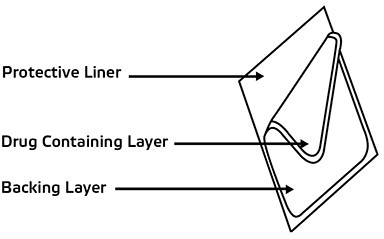
Fentanyl transdermal system is a drug-in-adhesive matrix designed formulation. Fentanyl is released from the matrix at a nearly constant amount per unit time. The concentration gradient existing between the matrix and the lower concentration in the skin, drives drug release. Fentanyl moves in the direction of the lower concentration at a rate determined by the matrix and the diffusion of fentanyl through the skin layers. While the actual rate of fentanyl delivery to the skin varies over the 72-hour application period, each system is labeled with a nominal flux which represents the average amount of drug delivered to the systemic circulation per hour across average skin.
While there is variation in dose delivered among patients, the nominal flux of the systems (12.5, 25, 37.5, 50, 75, and 100 mcg of fentanyl per hour) is sufficiently accurate as to allow individual titration of dosage for a given patient.
Following fentanyl transdermal system application, the skin under the system absorbs fentanyl, and a depot of fentanyl concentrates in the upper skin layers. Fentanyl then becomes available to the systemic circulation. Serum fentanyl concentrations increase gradually following initial fentanyl transdermal system application, generally leveling off between 12 and 24 hours and remaining relatively constant, with some fluctuation, for the remainder of the 72-hour application period. Peak serum concentrations of fentanyl generally occurred between 20 and 72 hours after initial application (see Table 7). Serum fentanyl concentrations achieved are proportional to the fentanyl transdermal system delivery rate. With continuous use, serum fentanyl concentrations continue to rise for the first two system applications. By the end of the second 72-hour application, a steady-state serum concentration is reached and is maintained during subsequent applications of a patch of the same size (see Figure 1). Patients reach and maintain a steady-state serum concentration that is determined by individual variation in skin permeability and body clearance of fentanyl.
After system removal, serum fentanyl concentrations decline gradually, falling about 50% in approximately 20-27 hours. Continued absorption of fentanyl from the skin accounts for a slower disappearance of the drug from the serum than is seen after an IV infusion, where the apparent half-life is approximately 7 (range 3-12) hours.
A clinical pharmacology study conducted in healthy adult subjects has shown that the application of heat over the fentanyl transdermal system increased mean overall fentanyl exposure by 120% and average maximum fentanyl level by 61%.
* C max values dose normalized from 4 x 12.5 mcg/h: Study 2003-038 in healthy volunteers | ||
** C max values: Study C-2002-048 dose proportionality study in healthy volunteers | ||
NOTE: After system removal there is continued systemic absorption from residual fentanyl in the skin so that serum concentrations fall 50%, on average, in approximately 20-27 hours. | ||
| Mean (SD) Time to Maximal Concentration Tmax (h) | Mean (SD) Maximal Concentration Cmax (ng/mL) | |
| Fentanyl Transdermal System 12 mcg/hour | 28.8 (13.7) | 0.38 (0.13) * |
| Fentanyl Transdermal System 25 mcg/hour | 31.7 (16.5) | 0.85 (0.26) ** |
| Fentanyl Transdermal System 50 mcg/hour | 32.8 (15.6) | 1.72 (0.53) ** |
| Fentanyl Transdermal System 75 mcg/hour | 35.8 (14.1) | 2.32 (0.86) ** |
| Fentanyl Transdermal System 100 mcg/hour | 29.9 (13.3) | 3.36 (1.28) ** |
Figure 1: Serum Fentanyl Concentrations Following Single and Multiple Applications of Fentanyl Transdermal System 100 mcg/h
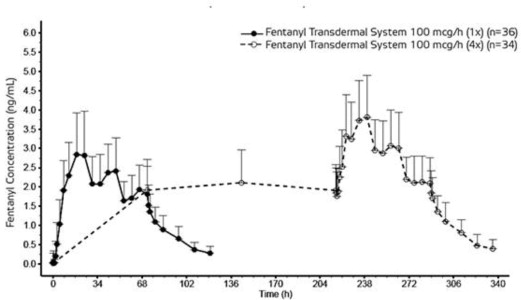
Figure 1 (Fen04 0006 03)
+ Estimated | |||
NOTE: Information on volume of distribution and half-life not available for renally impaired patients. | |||
| Clearance (L/h) Range [70 kg] | Volume of Distribution Vss (L/kg) Range | Half-Life t1/2 (h) Range | |
| Surgical Patients | 27-75 | 3-8 | 3-12 |
| Hepatically Impaired Patients | 3-80 + | 0.8-8 + | 4-12 + |
| Renally Impaired Patients | 30-78 | - | - |
Distribution
Fentanyl plasma protein binding capacity decreases with increasing ionization of the drug. Alterations in pH may affect its distribution between plasma and the central nervous system. Fentanyl accumulates in the skeletal muscle and fat and is released slowly into the blood. The average volume of distribution for fentanyl is 6 L/kg (range 3-8; N=8).
Elimination
Metabolism
Fentanyl is metabolized primarily via human cytochrome P450 3A4 isoenzyme system. In humans, the drug appears to be metabolized primarily by oxidative N-dealkylation to norfentanyl and other inactive metabolites that do not contribute materially to the observed activity of the drug.
Skin does not appear to metabolize fentanyl delivered transdermally. This was determined in a human keratinocyte cell assay and in clinical studies in which 92% of the dose delivered from the system was accounted for as unchanged fentanyl that appeared in the systemic circulation.
Excretion
Within 72 hours of IV fentanyl administration, approximately 75% of the dose is excreted in urine, mostly as metabolites with less than 10% representing unchanged drug. Approximately 9% of the dose is recovered in the feces, primarily as metabolites. Mean values for unbound fractions of fentanyl in plasma are estimated to be between 13 and 21%.
Specific Populations
Age: Geriatric Population
Data from intravenous studies with fentanyl suggest that the elderly patients may have reduced clearance and a prolonged half-life. Moreover elderly patients may be more sensitive to the active substance than younger patients. A study conducted with the fentanyl transdermal system patch in elderly patients demonstrated that fentanyl pharmacokinetics did not differ significantly from young adult subjects, although peak serum concentrations tended to be lower and mean half-life values were prolonged to approximately 34 hours. In this study, a single fentanyl transdermal system 100 mcg/hour patch was applied to a skin site on the upper outer arm in a group of healthy elderly Caucasians ≥65 years old (n=21, mean age 71 years) and worn for 72 hours. The mean C max and AUC ∞ values were approximately 8% lower and 7% higher, respectively, in the elderly subjects as compared with subjects 18 to 45 years old. Inter-subject variability in AUC ∞ was higher in elderly subjects than in healthy adult subjects 18 to 45 years (58% and 37%, respectively). The mean half-life value was longer in subjects ≥65 years old than in subjects 18 to 45 years old (34.4 hours versus 23.5 hours) [see Warnings and Precautions ( 5.10) and Use in Specific Populations ( 8.5)] .
Age: Pediatric Population
In 1.5 to 5 year old, non-opioid-tolerant pediatric patients, the fentanyl plasma concentrations were approximately twice as high as that of adult patients. In older pediatric patients, the pharmacokinetic parameters were similar to that of adults. However, these findings have been taken into consideration in determining the dosing recommendations for opioid-tolerant pediatric patients (2 years of age and older). For pediatric dosing information, refer to [see Dosage and Administration ( 2.3)] .
Hepatic Impairment
Information on the effect of hepatic impairment on the pharmacokinetics fentanyl transdermal system is limited. The pharmacokinetics of fentanyl transdermal system delivering 50 mcg/hour of fentanyl for 72 hours was evaluated in patients hospitalized for surgery. Compared to the controlled patients (n=8), C max and AUC in the patients with cirrhosis (n=9) increased 35% and 73%, respectively.
Because there is in-vitro and in-vivo evidence of extensive hepatic contribution to the elimination of fentanyl transdermal system, hepatic impairment would be expected to have significant effects on the pharmacokinetics of fentanyl transdermal system. Avoid use of fentanyl transdermal system in patients with severe hepatic impairment [see Dosage and Administration ( 2.5), Warnings and Precautions ( 5.16) and Use in Specific Populations ( 8.6)] .
Renal Impairment
Information on the effect of renal impairment on the pharmacokinetics of fentanyl transdermal system is limited. The pharmacokinetics of intravenous injection of 25 mcg/kg fentanyl was evaluated in patients (n=8) undergoing kidney transplantation. An inverse relationship between blood urea nitrogen level and fentanyl clearance was found.
Because there is in-vivo evidence of renal contribution to the elimination of fentanyl transdermal system, renal impairment would be expected to have significant effects on the pharmacokinetics of fentanyl transdermal system. Avoid the use of fentanyl transdermal system in patients with severe renal impairment [see Dosage and Administration ( 2.6), Warnings and Precautions ( 5.17) and Use in Specific Populations ( 8.7)] .
Drug Interaction Studies
CYP3A4 Inhibitors
Fentanyl is metabolized mainly via the human cytochrome P450 3A4 isoenzyme system (CYP3A4). The interaction between ritonavir, a CPY3A4 inhibitor, and fentanyl was investigated in eleven healthy volunteers in a randomized crossover study. Subjects received oral ritonavir or placebo for 3 days. The ritonavir dose was 200 mg three times a day on Day 1 and 300 mg three times a day on Day 2 followed by one morning dose of 300 mg on Day 3. On Day 2, fentanyl was given as a single IV dose at 5 mcg/kg two hours after the afternoon dose of oral ritonavir or placebo. Naloxone was administered to counteract the side effects of fentanyl. The results suggested that ritonavir might decrease the clearance of fentanyl by 67%, resulting in a 174% (range 52%-420%) increase in fentanyl AUC 0-∞. The concomitant use of transdermal fentanyl with all CYP3A4 inhibitors (such as ritonavir, ketoconazole, itraconazole, troleandomycin, clarithromycin, nelfinavir, nefazodone, amiodarone, amprenavir, aprepitant, diltiazem, erythromycin, fluconazole, fosamprenavir, verapamil, or grapefruit juice) may result in an increase in fentanyl plasma concentrations, which could increase or prolong adverse drug effects and may cause potentially fatal respiratory depression. Carefully monitor patients receiving fentanyl transdermal system and any CYP3A4 inhibitor for signs of respiratory depression for an extended period of time and adjust the dosage if warranted [see Boxed Warning and Warnings and Precautions ( 5.6), and Drug Interactions ( 7)] .
CYP3A4 Inducers
Co-administration with agents that induce CYP3A4 activity may reduce the efficacy of fentanyl transdermal system.
Carcinogenesis
In a two-year carcinogenicity study conducted in rats, fentanyl was not associated with an increased incidence of tumors at subcutaneous doses up to 33 mcg/kg/day in males or 100 mcg/kg/day in females (0.16 and 0.39 times the human daily exposure obtained via the 100 mcg/h patch based on AUC 0-24h comparison).
Mutagenesis
There was no evidence of mutagenicity in the Ames Salmonella mutagenicity assay, the primary rat hepatocyte unscheduled DNA synthesis assay, the BALB/c 3T3 transformation test, and the human lymphocyte and CHO chromosomal aberration in-vitro assays.
Impairment of Fertility
The potential effects of fentanyl on male and female fertility were examined in the rat model via two separate experiments. In the male fertility study, male rats were treated with fentanyl (0, 0.025, 0.1 or 0.4 mg/kg/day) via continuous intravenous infusion for 28 days prior to mating; female rats were not treated. In the female fertility study, female rats were treated with fentanyl (0, 0.025, 0.1 or 0.4 mg/kg/day) via continuous intravenous infusion for 14 days prior to mating until day 16 of pregnancy; male rats were not treated. Analysis of fertility parameters in both studies indicated that an intravenous dose of fentanyl up to 0.4 mg/kg/day to either the male or the female alone produced no effects on fertility (this dose is approximately 1.6 times the daily human dose administered by a 100 mcg/hour patch on a mg/m 2 basis). In a separate study, a single daily bolus dose of fentanyl was shown to impair fertility in rats when given in intravenous doses of 0.3 times the human dose for a period of 12 days.
Storage and Disposal
Because of the risks associated with accidental ingestion, misuse, and abuse, advise patients to store fentanyl transdermal system securely, out of sight and reach of children, and in a location not accessible by others, including visitors to the home [see Warnings and Precautions ( 5.1, 5.4), Drug Abuse and Dependence ( 9.2)] . Inform patients that leaving fentanyl transdermal system unsecured can pose a deadly risk to others in the home.
Advise patients and caregivers that when medicines are no longer needed, they should be disposed of promptly. Expired, unwanted, or unused fentanyl transdermal system should be disposed of by folding the patch so that the adhesive side of the patch adheres to itself, and immediately flushing down the toilet (if a drug take-back option is not readily available) [see Instructions for Use] . Inform patients that they can visit www.fda.gov/drugdisposal for a complete list of medicines recommended for disposal by flushing, as well as additional information on disposal of unused medicines.
Addiction, Abuse, and Misuse
Inform patients that the use of fentanyl transdermal system, even when taken as recommended, can result in addiction, abuse, and misuse, which can lead to overdose and death [see Warnings and Precautions ( 5.1)] . Instruct patients not to share fentanyl transdermal system with others and to take steps to protect fentanyl transdermal system from theft or misuse.
Life-Threatening Respiratory Depression
Inform patients of the risk of life-threatening respiratory depression, including information that the risk is greatest when starting fentanyl transdermal system or when the dosage is increased, and that it can occur even at recommended dosages.
Educate patients and caregivers on how to recognize respiratory depression and emphasize the importance of calling 911 or getting emergency medical help right away in the event of a known or suspected overdose [see Warnings and Precautions ( 5.3)] .
Patient Access to Naloxone for the Emergency Treatment of Opioid Overdose
Discuss with the patient and caregiver the availability of naloxone for the emergency treatment of opioid overdose, both when initiating and renewing treatment with DURAGESIC. Inform patients and caregivers about the various ways to obtain naloxone as permitted by individual state naloxone dispensing and prescribing requirements or guidelines (e.g., by prescription, directly from a pharmacist, or as part of a community-based program) [see Dosage and Administration ( 2.2), Warnings and Precautions ( 5.3)] .
Educate patients and caregivers on how to recognize the signs and symptoms of an overdose.
Explain to patients and caregivers that naloxone’s effects are temporary, and that they must call 911 or get emergency medical help right away in all cases of known or suspected opioid overdose, even if naloxone is administered [see Overdosage ( 10)] .
If naloxone is prescribed, also advise patients and caregivers:
• How to treat with naloxone, in the event of an opioid overdose
• To tell family and friends about their naloxone and to keep it in a place where family and friends can access it in an emergency
• To read the Patient Information (or other educational material) that will come with their naloxone. Emphasize the importance of doing this before an opioid emergency happens, so the patient and caregiver will know what to do.
Accidental Exposure
Inform patients that accidental exposure, especially in children, may result in respiratory depression or death [see Warnings and Precautions ( 5.4)] .
Fentanyl transdermal system can be accidentally transferred to children. Instruct patients to take special precautions to avoid accidental contact when holding or caring for children.
Instruct patients that, if the patch dislodges and accidentally sticks to the skin of another person, to immediately take the patch off, wash the exposed area with water and seek medical attention for the accidentally exposed individual as accidental exposure may lead to death or other serious medical problems.
Interactions with Benzodiazepines and Other CNS Depressants
Inform patients and caregivers that potentially fatal additive effects may occur if fentanyl transdermal system is used with benzodiazepines or other CNS depressants, including alcohol, and not to use these concomitantly unless supervised by a healthcare provider [see Warnings and Precautions ( 5.8), Drug Interactions ( 7)].
Serotonin Syndrome
Inform patients that opioids could cause a rare but potentially life-threatening condition resulting from concomitant administration of serotonergic drugs. Warn patients of the symptoms and signs of serotonin syndrome, and to seek medical attention right away if symptoms develop. Instruct patients to inform their healthcare providers if they are taking, or plan to take serotonergic medications [see Warnings and Precautions ( 5.11) and Drug Interactions ( 7)] .
MAOI Interaction
Inform patients to avoid taking fentanyl transdermal system while using any drugs that inhibit monoamine oxidase. Patients should not start MAOIs while taking fentanyl transdermal system [see Drug Interactions ( 7)] .
Adrenal Insufficiency
Inform patients that opioids could cause adrenal insufficiency, a potentially life-threatening condition. Adrenal insufficiency may present with non-specific symptoms and signs such as nausea, vomiting, anorexia, fatigue, weakness, dizziness, and low blood pressure. Advise patients to seek medical attention if they experience a constellation of these symptoms [see Warnings and Precautions ( 5.12)].
Important Administration Instructions
Advise patients never to change the dose of fentanyl transdermal system or the number of patches applied to the skin unless instructed to do so by the prescribing healthcare professional.
Important Discontinuation Instructions
In order to avoid developing withdrawal symptoms, instruct patients not to discontinue fentanyl transdermal system without first discussing a tapering plan with the prescriber [see Dosage and Administration ( 2.9)] .
Warnings About Heat
Warn patients of the potential for temperature-dependent increases in fentanyl release from the patch that could result in an overdose of fentanyl. Instruct patients to contact their healthcare provider if they develop a high fever. Instruct patients to:
Hypotension
Inform patients that fentanyl transdermal system may cause orthostatic hypotension and syncope. Instruct patients how to recognize symptoms of low blood pressure and how to reduce the risk of serious consequences should hypotension occur (e.g., sit or lie down, carefully rise from a sitting or lying position) [see Warnings and Precautions ( 5.13)] .
Anaphylaxis
Inform patients that anaphylaxis, including anaphylactic shock, has been reported with ingredients contained in fentanyl transdermal system. Advise patients how to recognize such a reaction and when to seek medical attention [see Contraindications ( 4), Adverse Reactions ( 6)] .
Pregnancy
Neonatal Opioid Withdrawal Syndrome
Inform female patients of reproductive potential that prolonged use of fentanyl transdermal system during pregnancy can result in neonatal opioid withdrawal syndrome, which may be life-threatening if not recognized and treated [see Warnings and Precautions ( 5.5), Use in Specific Populations ( 8.1)] .
Embryo-Fetal Toxicity
Inform female patients of reproductive potential that fentanyl transdermal system can cause fetal harm and to inform their healthcare provider of known or suspected pregnancy [see Use in Specific Populations ( 8.1)].
Lactation
Advise patients that breastfeeding is not recommended during treatment with fentanyl transdermal system [see Use in Specific Populations ( 8.2)] .
Infertility
Inform patients that chronic use of opioids may cause reduced fertility. It is not known whether these effects on fertility are reversible [see Use in Specific Populations ( 8.3)] .
Driving or Operating Heavy Machinery
Inform patients that fentanyl transdermal system may impair the ability to perform potentially hazardous activities such as driving a car or operating heavy machinery. Advise patients not to perform such tasks until they know how they will react to the medication [see Warnings and Precautions ( 5.21)] .
Constipation
Advise patients of the potential for severe constipation, including management instructions and when to seek medical attention [see Adverse Reactions ( 6), Clinical Pharmacology ( 12.2)] .
Manufactured by:
Kindeva Drug Delivery L.P.
St. Paul, MN 55107
Distributed by:
Alvogen, Inc.
Pine Brook, NJ 07058 USA
Revised: 03/2021 34-8727-1193-1