Levetiracetam Tablet, Film Coated
Product Images NDC 48433-052

View Photos of Packaging, Regulatory Labels, and Product Appearance

Product Visual Gallery

This gallery contains 12 technical images submitted to the FDA as part of the official labeling for Levetiracetam (NDC 48433-052). Unlike standard consumer photos, these assets often include clinical data figures, molecular chemical structures, and official manufacturer packaging layouts.

As provided by Safecor Health Llc, these visuals offer a comprehensive scientific overview of the product's physical and chemical identity, aiding pharmacists and researchers in product verification and study.

FDA Label Image

Figure 1: Responder Rate (≥ 50% Reduction From Baseline) In Study 1 (Image 01)
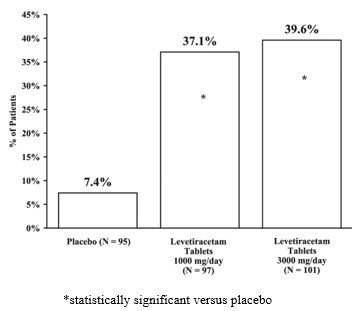
Figure 1: Responder Rate (≥ 50% Reduction From Baseline) In Study 1 (Image 01)
A vertical bar chart showing the percentage of patients experiencing a measured outcome. The bars compare Placebo (7.4%), Levetiracetam Tablets 1000 mg/day (37.1%), and Levetiracetam Tablets 3000 mg/day (39.6%), with both Levetiracetam groups marked as statistically significant versus placebo. The x-axis lists treatment groups; the y-axis shows percentage of patients from 0% to 45%.*
FDA Label Image

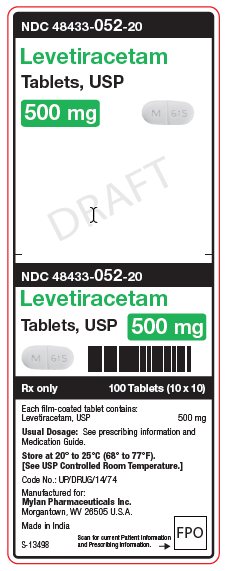
Levetiracetam 500 mg Tablets, Usp Unit Carton Label (Image 02)

Levetiracetam 500 mg Tablets, Usp Unit Carton Label (Image 02)
Levetiracetam 500 mg film-coated oral tablets packaging label. The label shows the product name, strength (500 mg), dosage form, and imprint on the tablet (M 615). The package contains 100 tablets (10 x 10). Manufacturer information includes Mylan Pharmaceuticals Inc., Morgantown, WV, USA, with storage instructions at controlled room temperature (20°C to 25°C).*
FDA Label Image

Unit Carton (Image 03)

Unit Carton (Image 03)
Levetiracetam 500 mg film-coated tablet carton label from Safecor Health LLC. The label features the UDL logo and includes cautionary statements about the packaging not being child resistant, for institutional use only, and instructions to keep out of reach of children. The label notes light resistance of the container and a window for the lot number and expiration date. Contact information and distributor details are also included.*
FDA Label Image

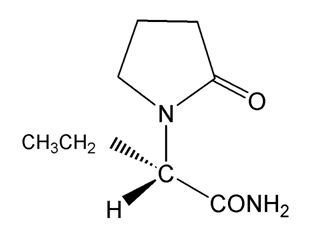
Levetiracetam Structural Formula (Image 05)

Levetiracetam Structural Formula (Image 05)
Chemical structure of levetiracetam, showing a pyrrolidone ring attached to an ethyl group and an amide functional group.*
FDA Label Image

Pedatric Patient Dose Calculation (Image 06)

Pedatric Patient Dose Calculation (Image 06)
A formula illustrating the calculation of total daily dose in mL per day as the product of daily dose in mg per kg per day and patient weight in kg, divided by a concentration of 100 mg/mL.*
FDA Label Image

Creatinine Clearance Calculation (Image 07)

Creatinine Clearance Calculation (Image 07)
A text panel displaying the formula to calculate Creatinine Clearance (CLCr). The formula involves age (years), weight (kg), serum creatinine (mg/dL), and includes an adjustment factor of 0.85 for female patients.*
FDA Label Image

Creatinine Clearance Bsa Calculation (Image 08)

Creatinine Clearance Bsa Calculation (Image 08)
A text panel showing the formula for calculating creatinine clearance (CLcr) in mL/min/1.73m² as the product of CLcr (mL/min) divided by body surface area (BSA) in m², multiplied by 1.73.*
FDA Label Image

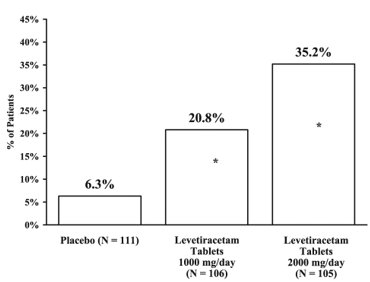
Figure 2: Responder Rate (≥ 50% Reduction From Baseline) In Study 2: Period A (Image 09)

Figure 2: Responder Rate (≥ 50% Reduction From Baseline) In Study 2: Period A (Image 09)
A bar chart showing the percentage of patients across three groups: placebo, levetiracetam 1000 mg/day tablets, and levetiracetam 2000 mg/day tablets. Percentages are 6.3% for placebo, 20.8% for 1000 mg/day, and 35.2% for 2000 mg/day levetiracetam tablets. Patient numbers for each group are indicated below the x-axis categories.*
FDA Label Image

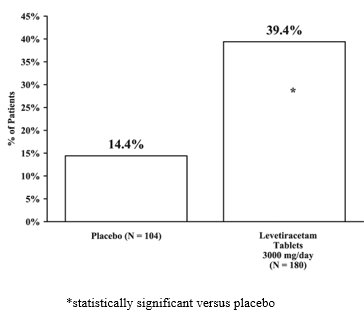
Figure 3: Responder Rate (≥ 50% Reduction From Baseline) In Study 3 (Image 10)

Figure 3: Responder Rate (≥ 50% Reduction From Baseline) In Study 3 (Image 10)
A bar graph comparing the percentage of patients between placebo (14.4%) and levetiracetam tablets 3000 mg/day (39.4%). The graph shows a statistically significant difference marked by an asterisk between the levetiracetam group and placebo group.*
FDA Label Image

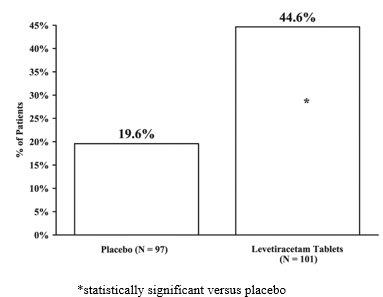
Figure 4: Responder Rate (≥ 50% Reduction From Baseline) In Study 4 (Image 11)

Figure 4: Responder Rate (≥ 50% Reduction From Baseline) In Study 4 (Image 11)
A bar chart comparing the percentage of patients for placebo (19.6%) versus Levetiracetam Tablets (44.6%). The chart notes a statistically significant difference marked by an asterisk between the two groups.*
FDA Label Image

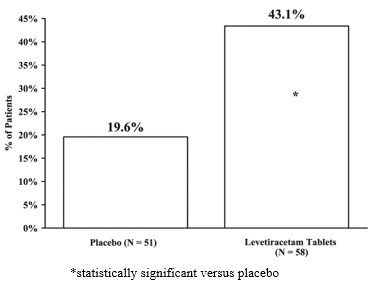
Figure 5: Responder Rate For All Patients Ages 1 Month To < 4 Years (≥ 50% Reduction From Baseline) In Study 5 (Image 12)

Figure 5: Responder Rate For All Patients Ages 1 Month To < 4 Years (≥ 50% Reduction From Baseline) In Study 5 (Image 12)
A bar chart comparing the percentage of patients between placebo and Levetiracetam tablets. The placebo group (N=51) shows 19.6% of patients, while the Levetiracetam tablets group (N=58) shows 43.1%, with a note indicating statistical significance versus placebo.*
FDA Label Image

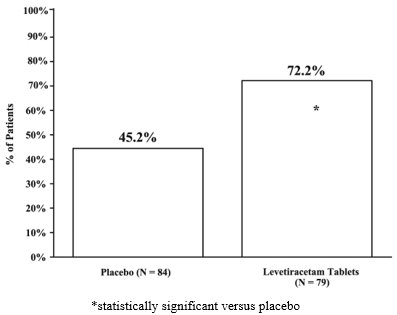
Figure 6: Responder Rate (≥ 50% Reduction From Baseline) In Pgtc Seizure Frequency Per Week In Study 7 (Image 13)

Figure 6: Responder Rate (≥ 50% Reduction From Baseline) In Pgtc Seizure Frequency Per Week In Study 7 (Image 13)
A bar chart comparing the percentage of patients between a placebo group (84 patients) and a levetiracetam tablets group (79 patients). The Levetericetam group shows a higher percentage (72.2%) compared to the placebo group (45.2%). The chart notes the difference as statistically significant versus placebo.*

* About these descriptions: Image descriptions on this page are generated by automated AI analysis of the product label images from the manufacturer's FDA label submission (SPL). They are provided for reference only and may contain errors or omissions. Always rely on the printed label itself and the official FDA labeling, and consult a pharmacist or healthcare professional with any questions about this product.