General
Do not use plastic containers in series connections. Such use could result in air embolism due to residual air being drawn from the primary container before administration of the fluid from the secondary container is completed.
Pressurizing intravenous solutions contained in flexible plastic containers to increase flow rates can result in air embolism if the residual air in the container is not fully evacuated prior to administration.
Use of a vented intravenous administration set with the vent in the open position could result in air embolism. Vented intravenous administration sets with the vent in the open position should not be used with flexible plastic containers.
Laboratory Tests
Clinical evaluation and periodic laboratory determinations are necessary to monitor changes in fluid balance, electrolyte concentrations and acid-base balance during prolonged parenteral therapy or whenever the condition of the patient warrants such evaluation.
DRUG INTERACTIONS
Caution must be exercised in the administration of 0.9% Sodium Chloride Injection, USP to patients receiving corticosteroids or corticotropin.
Carcinogenesis, Mutagenesis, Impairment of Fertility:
Studies have not been performed with Sodium Chloride Injection, USP to evaluate the potential for carcinogenesis, mutagenesis or impairment of fertility.
Pregnancy:
Teratogenic Effects
Pregnancy Category C
Animal reproduction studies have not been conducted with Sodium Chloride Injection, USP. It is also not known whether Sodium Chloride Injection, USP can cause fetal harm when administered to a pregnant woman or can affect reproduction capacity. Sodium Chloride Injection, USP should be given to a pregnant woman only if clearly needed.
Labor and Delivery
Studies have not been conducted to evaluate the effects of Sodium Chloride Injection, USP on labor and delivery. Caution should be exercised when administering this during during labor and delivery.
Nursing Mothers
It is not known whether this drug is excreted in human milk. Because many drugs are excreted in human milk, caution should be exercised when Sodium Chloride Injection, USP is administered to a nursing mother.
Pediatric Use
The use of Sodium Chloride Injection, USP in pediatric patients is based on clinical practice.
Plasma electrolyte concentrations should be closely monitored in the pediatric population as this population may have impaired ability to regulate fluids and electrolytes.
Geriatric Use
Clinical studies of Sodium Chloride Injection, USP did not include sufficient numbers of subjects aged 65 and over to determine whether they respond differently from younger subjects. Other reported clinical experience has not identified differences in responses between elderly and younger patients. In general, dose selection for an elderly patient should be cautious, usually starting at the low end of the dosing range, reflecting the greater frequency of decreased hepatic, renal, or cardiac function, and of concomitant disease or other drug therapy.
This drug is known to be substantially excreted by the kidney, and the risk of toxic reactions to this drug may be greater in patients with impaired renal function. Because elderly patients are more likely to have decreased renal function, care should be taken in dose selection, and it may be useful to monitor renal function.
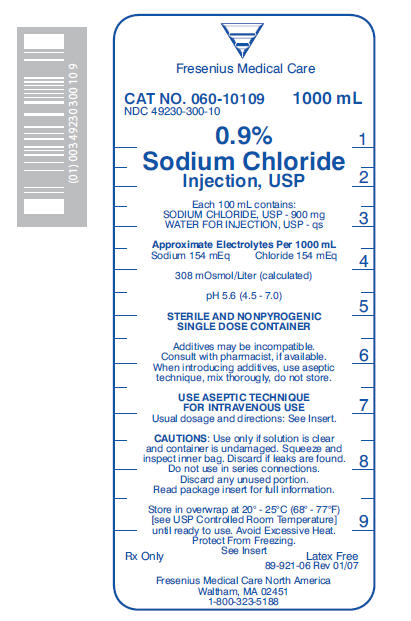
Do not administer unless solution is clear and container is undamaged. Discard unused portion.