Mechanism of Action
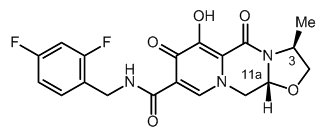
Cabotegravir inhibits HIV integrase by binding to the integrase active site and blocking the strand transfer step of retroviral deoxyribonucleic acid (DNA) integration which is essential for the HIV replication cycle. The mean 50% inhibitory concentration (IC50) value of cabotegravir in a strand transfer assay using purified recombinant HIV-1 integrase was 3.0 nM.
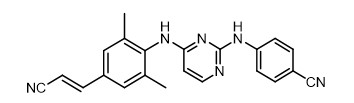
Rilpivirine is a diarylpyrimidine NNRTI of HIV-1 and inhibits HIV-1 replication by non-competitive inhibition of HIV-1 reverse transcriptase (RT). Rilpivirine does not inhibit the human cellular DNA polymerases α, β, and γ.
Antiviral Activity in Cell Culture
Cabotegravir exhibited antiviral activity against laboratory strains of HIV-1 (subtype B, n = 4) with mean 50 percent effective concentration (EC50) values of 0.22 nM to 1.7 nM in peripheral blood mononuclear cells (PBMCs) and 293 cells. Cabotegravir demonstrated antiviral activity in PBMCs against a panel of 24 HIV-1 clinical isolates (3 in each of group M subtypes A, B, C, D, E, F, and G and 3 in group O) with a median EC50 value of 0.19 nM (range: 0.02 nM to 1.06 nM, n = 24). The median EC50 value against subtype B clinical isolates was 0.05 nM (range: 0.02 to 0.50 nM, n = 3). Against clinical HIV-2 isolates, the median EC50 value was 0.12 nM (range: 0.10 nM to 0.14 nM, n = 4).
Rilpivirine exhibited activity against laboratory strains of wild-type HIV-1 in an acutely infected T-cell line with a median EC50 value for HIV-1IIIB of 0.73 nM (0.27 ng/mL). Rilpivirine demonstrated antiviral activity against a broad panel of HIV-1 group M (subtypes A, B, C, D, F, G, and H) primary isolates with EC50 values ranging from 0.07 nM to 1.01 nM (0.03 to 0.37 ng/mL) and was less active against group O primary isolates with EC50 values ranging from 2.88 to 8.45 nM (1.06 to 3.10 ng/mL).
In cell culture, cabotegravir was not antagonistic in combination with the NNRTI rilpivirine, or the nucleoside reverse transcriptase inhibitors (NRTIs) emtricitabine (FTC), lamivudine (3TC), or tenofovir disoproxil fumarate (TDF).
The antiviral activity of rilpivirine was not antagonistic when combined with the NNRTIs efavirenz, etravirine, or nevirapine; the NRTIs abacavir, didanosine, emtricitabine, lamivudine, stavudine, tenofovir, or zidovudine; the protease inhibitors amprenavir, atazanavir, darunavir, indinavir, lopinavir, nelfinavir, ritonavir, saquinavir, or tipranavir; the fusion inhibitor enfuvirtide; the CCR5 co-receptor antagonist maraviroc, or the INSTI raltegravir.
Resistance
Cell Culture: Cabotegravir-resistant viruses were selected during passage of HIV-1 strain IIIB in MT-2 cells in the presence of cabotegravir. Amino acid substitutions in integrase which emerged and conferred decreased susceptibility to cabotegravir included Q146L (fold change: 1.3 to 4.6), S153Y (fold change: 2.8 to 8.4), and I162M (fold change: 2.8). The integrase substitution T124A also emerged alone (fold change: 1.1 to 7.4 in cabotegravir susceptibility), in combination with S153Y (fold change: 3.6 to 6.6 in cabotegravir susceptibility), or I162M (2.8-fold change in cabotegravir susceptibility). Cell culture passage of virus harboring integrase substitutions Q148H, Q148K, or Q148R selected for additional substitutions (C56S, V72I, L74M, V75A, T122N, E138K, G140S, G149A, and M154I), with substituted viruses having reduced susceptibility to cabotegravir of 2.0-fold to 410-fold change. The combinations of E138K+Q148K and V72I+E138K+Q148K conferred the greatest reductions of 53-fold to 260-fold change and 410-fold change, respectively.
Rilpivirine-resistant strains were selected in cell culture starting from wild-type HIV-1 of different origins and subtypes as well as NNRTI-resistant HIV-1. The frequently observed amino acid substitutions that emerged and conferred decreased phenotypic susceptibility to rilpivirine included L100I; K101E; V106I and A; V108I; E138K and G, Q, R; V179F and I; Y181C and I; V189I; G190E; H221Y; F227C; and M230I and L.
Clinical Trials: In the pooled Phase 3 FLAIR and ATLAS trials, there were 7 confirmed virologic failures (2 consecutive HIV-1 RNA greater than or equal to 200 copies/mL) on cabotegravir plus rilpivirine (7/591, 1.2%) and 7 confirmed virologic failures on current antiretroviral regimen (7/591, 1.2%). Of the 7 virologic failures in the cabotegravir plus rilpivirine arm, 6 had post-baseline resistance data. All 6 had treatment-emergent NNRTI resistance-associated substitutions K101E, V108I, E138A, E138K, or H221H/L in reverse transcriptase, and 5 of them showed reduced phenotypic susceptibility to rilpivirine (range: 2.4-fold to 7.1-fold).
Additionally, 4 of the 6 (67%) cabotegravir plus rilpivirine virologic failures with post-baseline resistance data had treatment-emergent INSTI resistance-associated substitutions and reduced phenotypic susceptibility to cabotegravir (Q148R [n = 2; 5-fold and 9-fold decreased susceptibility to cabotegravir], G140R [n = 1; 7-fold decreased susceptibility to cabotegravir], or N155H [n = 1; 3-fold decreased susceptibility to cabotegravir]).
In comparison, 2 of the 7 (29%) virologic failures in the current antiretroviral regimen arm who had post-baseline resistance data had treatment-emergent resistance substitutions and phenotypic resistance to their antiretroviral drugs; both had treatment-emergent NRTI substitutions, M184V or I, which conferred resistance to emtricitabine or lamivudine in their regimen and one of them also had the treatment-emergent NNRTI resistance substitution G190S, conferring resistance to efavirenz in their regimen.
In other Phase 2 and 3 clinical trials (207966, LATTE and LATTE-2), virologic failures on cabotegravir plus rilpivirine also showed emergent genotypic and phenotypic cabotegravir and rilpivirine resistance (with emergent INSTI resistance-associated substitutions Q148R, N155H, E138K+Q148R, E138K+G140A+Q148R, G140S+Q148R, Q148R+N155H, and NNRTI resistance-associated substitutions K101E, K101E+E138A or K, K101E+M230L, K103N+K238T, K103N+E138G+K238T, E138K or Q, and Y188L).
Association of Subtype A1 and Baseline L74I Substitution in Integrase with Cabotegravir plus Rilpivirine Virologic Failure
Five of the 7 cabotegravir plus rilpivirine virologic failures in FLAIR and ATLAS had HIV‑1 subtype A1 and the integrase substitution L74I detected at baseline and failure timepoints. Subjects with subtype A1 infection whose virus did not have L74I at baseline did not experience virologic failure (Table 12). In addition, there was no detectable phenotypic resistance to cabotegravir conferred by the presence of L74I at baseline.
The other 2 virologic failures had subtype AG and did not have the integrase substitution L74I at baseline or at failure. Six of the virologic failures with subtype A1 and AG were from Russia where the prevalence of subtypes A, A1, and AG are high. Subtypes A, A1, and AG are uncommon in the United States.
The presence of the integrase substitution L74I in other subtypes, such as subtype B commonly seen in the United States, was not associated with virologic failure (Table 12). In contrast to the Phase 3 trials where all virologic failures were subtype A1 or AG, subtypes of the cabotegravir plus rilpivirine virologic failures in Phase 2 clinical trials included A1, A, B, and C.
Table 12. Rate of Virologic Failure in FLAIR Trial: Baseline Analysis (Subtypes A1 and B, and Presence of Integrase Substitution L74I)Patient Characteristics | Cabotegravir plus Rilpivirinea | Current Antiretroviral Regimenb |
Subtype A1 | 3/8 (38%) | 1/4 (25%) |
+L74I | 3/5 (60%) | 1/3 (33%) |
-L74I | 0/3 | 0/1 |
Subtype B | 0/174 | 2/174 (1%) |
+L74I | 0/12 | 0/11 |
-L74I | 0/153 | 2/150 (1%) |
Missing data | 0/9 | 0/13 |
Russia | 4/54 (7%) | 1/39 (3%) |
+L74I | 3/35 (9%) | 1/29 (3%) |
-L74I | 1/12 (8%) | 0/7 |
Missing data | 0/7 | 0/3 |
- a There were 4 virologic failures in the cabotegravir arm. One virologic failure in the cabotegravir arm had subtype AG.
b There were 3 virologic failures in the current antiretroviral regimen arm. Two virologic failures in the current antiretroviral regimen arm had subtype B. Cross-Resistance
Cabotegravir: Cross-resistance has been observed among INSTIs. Cabotegravir had reduced susceptibility (greater than 5-fold change) to recombinant HIV-1 strain NL432 viruses harboring the following integrase amino acid substitutions: G118R, Q148K, Q148R, T66K+L74M, E92Q+N155H, E138A+Q148R, E138K+Q148K/R, G140C+Q148R, G140S+Q148H/K/R, Y143H+N155H, and Q148R+N155H (range: 5.1-fold to 81-fold). The substitutions E138K+Q148K and Q148R+N155H conferred the greatest reductions in susceptibility of 81-fold and 61-fold, respectively.
Cabotegravir was active against viruses harboring the NNRTI substitutions K103N or Y188L, or the NRTI substitutions M184V, D67N/K70R/T215Y, or V75I/F77L/F116Y/Q151M.
Rilpivirine: Cross-resistance has been observed among NNRTIs. The single NNRTI substitutions K101P, Y181I, and Y181V conferred 52-, 15-, and 12-times fold change to rilpivirine, respectively. The K103N substitution did not show reduced susceptibility to rilpivirine by itself. Combinations of 2 or 3 NNRTI resistance-associated substitutions gave 3.7-fold to 554-fold change to rilpivirine in 38% and 66% of substitutions, respectively. Considering all available cell culture and clinical data, any of the following amino acid substitutions, when present at baseline, are likely to decrease the antiviral activity of rilpivirine: K101E and P; E138A, G, K, R, and Q; V179L; Y181C, I, and V; Y188L; H221Y; F227C; M230I and L, and the combination of L100I/K103N.