Sodium Phenylbutyrate Powder
SOE-dee-um fen-il-BUE-ti-rate
What is the most important information I should know about sodium phenylbutyrate powder?
Sodium phenylbutyrate powder is prescribed along with changes in diet for long-term treatment of urea cycle disorders. Sodium phenylbutyrate powder can only be obtained with a prescription from your doctor.
Sodium phenylbutyrate powder must be taken exactly as the doctor prescribes; do not increase or decrease the dose of this medication without the doctor's approval.
What are urea cycle disorders?
Urea cycle disorders include a group of diseases, each having a specific liver enzyme deficiency. Because they are inherited, other family members may be affected. These disorders vary in severity and may be first detected at various ages, from newborn infants to adults. They lead to increased amounts of ammonia in the blood, which may cause disturbed brain function and severe brain damage. Typical signs of the disease are decreased mental awareness, vomiting, combativeness, slurred speech, unstable gait, and unconsciousness. The diagnosis of urea cycle disorders requires special laboratory tests. These typical signs of the disease may recur after the diagnosis is made if the condition is not under control. If they do, the doctor should be notified immediately because this is a medical emergency. An infection can cause the condition to go out of control. Therefore, if a fever develops, the doctor should be seen immediately.
A patient or carrier of these disorders should wear a Medic Alert tag stating the diagnosis. In the event that the patient has a sudden, rapid accumulation of ammonia in the blood, and, therefore, in the brain, leading to unconsciousness, the doctor will be alerted to treat the disease properly.
Periodically, depending upon the severity of a particular patient's urea cycle disorder, it will be necessary to perform blood tests. These include plasma ammonia, plasma amino acid levels, and other more routine blood tests to evaluate nutritional status.
What is sodium phenylbutyrate powder?
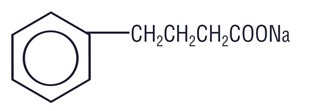
Sodium phenylbutyrate powder is a drug that helps to prevent ammonia from accumulating in the blood. Sodium phenylbutyrate powderaids the body in eliminating substances that produce ammonia. However, despite drug treatment, blood ammonia levels may become elevated periodically and there may be episodes of altered brain function in association with these ammonia elevations. Patients who have disease onset as newborns have a high incidence of mental retardation. Medical attention should be obtained as soon as signs appear (see above under "What are urea cycle disorders?"). Sodium phenylbutyrate powdermay be used as life-long therapy or as a temporary measure until liver transplantation is performed.
What diet should I or my child follow?
In addition to taking sodium phenylbutyrate powder, it is equally important that a prescribed diet be followed. Because there is great variability in the severity of urea cycle disorders, each patient's diet should be custom designed by a physician and a nutritionist. Because the diet is so important, it is recommended that the prescribed diet be discussed with a nutritionist who is familiar with urea cycle disorders.
Who should not take sodium phenylbutyrate powder?
Sodium phenylbutyrate powderis prescribed only for patients with urea cycle disorders. It is not to be used for any other reason. Keep the medication in a safe place where children cannot reach it.
What other medical conditions may also be present that could increase the risk of taking sodium phenylbutyrate powder?
Heart failure or decreased kidney function may lead to retention of the sodium content of sodium phenylbutyrate powderwith potentially serious consequences such as worsening heart failure, high blood pressure, and swelling. If these medical conditions are present, the doctor will determine if your child should take sodium phenylbutyrate powder.
How should I or my child take sodium phenylbutyrate powder?
The dose of sodium phenylbutyrate powderprescribed for adults and children is based upon the patient's weight or size. It is very important that the full amount prescribed for any 24-hour period be taken. If a dose is missed it should be administered as soon as possible that same day. The total daily dose should be administered in equally divided amounts with meals.
What medications should I or my child avoid or be cautious of taking while on sodium phenylbutyrate powder?
Patients with urea cycle disorders usually should not take Depakene® (valproic acid), a drug sometimes prescribed for seizure disorders, or Haldol® (haloperidol), a drug used to treat certain types of psychiatric or neurologic disorders. Both of these drugs have been reported to increase blood ammonia levels. Steroids may break down body protein, thereby increasing blood ammonia levels. The doctor should be consulted before administering medications containing steroids.
What medications may affect the way the body breaks down the drug?
Probenecid, a medication used to treat gout, may affect the way the kidneys excrete sodium phenylbutyrate powder (consult the doctor for details).
What are the most common side effects of sodium phenylbutyrate powder?
The most common side effect reported in premenopausal women taking sodium phenylbutyrate powderwas absent or irregular menstrual periods. Decreased appetite was reported in 4% of all people treated. Body odor and bad taste were each reported in 3% of all patients treated.
A breakdown product of sodium phenylbutyrate powder has been associated mainly with sleepiness and light-headedness. Because these symptoms may also be due to the urea cycle going out of control, a doctor should see the patient immediately if these symptoms occur, so the cause can be determined. Blood tests should be performed periodically for adverse effects and for levels of medication and its breakdown products.
Call your doctor for medical advice about the side effects. You may report side effects to FDA at 1-800-FDA-1088
How should sodium phenylbutyrate powder be stored?
Sodium phenylbutyrate powder should be stored in a tightly closed bottle at room temperature.
This leaflet provides a brief summary of the information available on sodium phenylbutyrate powder. The information here is incomplete and is not designed to take the place of your doctor's instructions. For more information, consult your physician or call Par Pharmaceutical at 1-800-828-9393.
Trademarks are the properties of their respective owners.
Dist. by:
Par Pharmaceutical
Chestnut Ridge, NY 10977 U.S.A.
Mfg. by:
Par Formulations Private Limited,
9/215, Pudupakkam, Kelambakkam - 603 103.
Made in India
Mfg. Lic. No.: TN00002121
OS006-01-74-01
Issued: 06/2017