Because clinical trials are conducted under widely varying conditions, the adverse reaction rates observed cannot be directly compared to rates in other trials and may not reflect the rates observed in clinical practice.
Hormone Receptor-Positive, HER2-Negative Breast Cancer
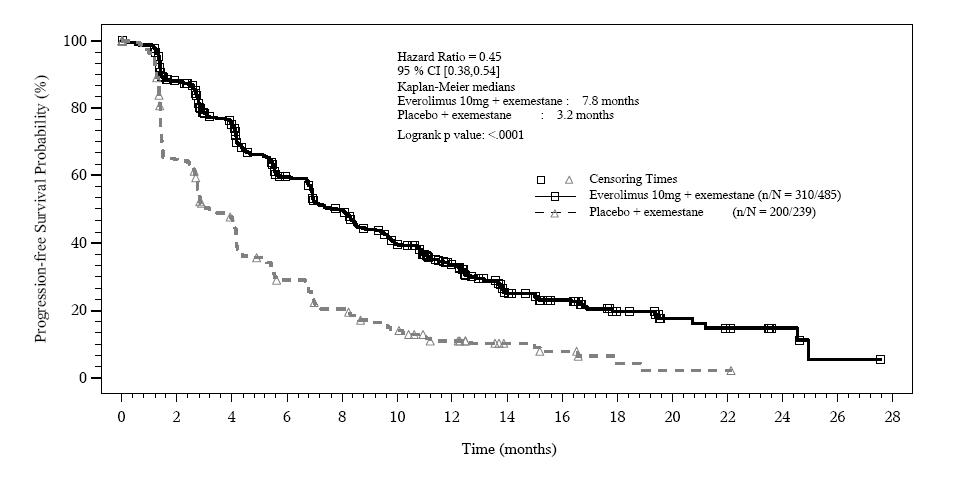
The safety of Everolimus tablets (10 mg orally once daily) in combination with exemestane (25 mg orally once daily) (n=485) versus placebo in combination with exemestane (n=239) was evaluated in a randomized, controlled trial (BOLERO-2) in patients with advanced or metastatic hormone receptor-positive, HER2-negative breast cancer. The median age of patients was 61 years (range 28 to 93 years), and 75% were White. The median follow-up was approximately 13 months.
The most common adverse reactions (incidence ≥ 30%) were stomatitis, infections, rash, fatigue, diarrhea, and decreased appetite. The most common Grade 3/4 adverse reactions (incidence ≥ 2%) were stomatitis, infections, hyperglycemia, fatigue, dyspnea, pneumonitis, and diarrhea. The most common laboratory abnormalities (incidence ≥ 50%) were hypercholesterolemia, hyperglycemia, increased aspartate transaminase (AST), anemia, leukopenia, thrombocytopenia, lymphopenia, increased alanine transaminase (ALT), and hypertriglyceridemia. The most common Grade 3-4 laboratory abnormalities (incidence ≥ 3%) were lymphopenia, hyperglycemia, anemia, hpokalemia, increased AST, increased ALT, and thrombocytopenia.
Fatal adverse reactions occurred in 2% of patients who received Everolimus. The rate of adverse reactions resulting in permanent discontinuation was 24% for the Everolimus arm. Dose adjustments (interruptions or reductions) occurred in 63% of patients in the Everolimus arm.
Adverse reactions reported with an incidence of ≥ 10% for patients receiving Everolimus versus placebo are presented in Table 6. Laboratory abnormalities are presented in Table 7. The median duration of treatment with Everolimus was 23.9 weeks; 33% were exposed to Everolimus for a period of ≥ 32 weeks.
Table 6: Adverse Reactions Reported in ≥ 10% of Patients with Hormone Receptor-Positive Breast Cancer inBOLERO-2
| Everolimus Tablets with Exemestane
N=482 | Placebo with Exemestane
N=238 |
| All grades | Grade 3-4 | All grades | Grade 3-4 |
| % | % | % | % |
Gastrointestinal |
Stomatitisa | 67 | 8d | 11 | 0.8 |
Diarrhea | 33 | 2 | 18 | 0.8 |
Nausea | 29 | 0.4 | 28 | 1 |
Vomiting | 17 | 1 | 12 | 0.8 |
Constipation | 14 | 0.4d | 13 | 0.4 |
Dry mouth | 11 | 0 | 7 | 0 |
General |
Fatigue | 36 | 4 | 27 | 1d |
Edema peripheral | 19 | 1d | 6 | 0.4d |
Pyrexia | 15 | 0.2d | 7 | 0.4d |
Asthenia | 13 | 2 | 4 | 0 |
Infections |
Infectionsb | 50 | 6 | 25 | 2d |
Investigations |
Weight loss | 25 | 1d | 6 | 0 |
Metabolism and nutrition |
Decreased appetite | 30 | 1d | 12 | 0.4d |
Hyperglycemia | 14 | 5 | 2 | 0.4d |
Musculoskeletal and connective tissue |
Arthralgia | 20 | 0.8d | 17 | 0 |
Back pain | 14 | 0.2d | 10 | 0.8d |
Pain in extremity | 9 | 0.4d | 11 | 2d |
Nervous system |
Dysgeusia | 22 | 0.2d | 6 | 0 |
Headache | 21 | 0.4d | 14 | 0 |
Psychiatric |
Insomnia | 13 | 0.2 d 0 | 8 | 0 0 |
Respiratory, thoracic and mediastinal |
Cough | 24 | 0.6 d | 12 | 0 |
Dyspnea | 21 | 4 | 11 | 1 |
Epistaxis | 17 | 0 | 1 | 0 |
Pneumonitisc | 19 | 4 | 0.4 | 0 |
Skin and subcutaneous tissue |
Rash | 39 | 1d | 6 | 0 |
Pruritus | 13 | 0.2d | 5 | 0 |
Alopecia | 10 | 0 | 5 | 0 |
Vascular |
Hot flush | 6 | 0 | 14 | 0 |
Grading according to NCI CTCAE Version 3.0 a Includes stomatitis, mouth ulceration, aphthous stomatitis, glossodynia, gingival pain, glossitis and lip ulceration. b Includes all reported infections including, but not limited to, urinary tract infections, respiratory tract (upper and lower) infections, skin infections, and gastrointestinal tract infections. cIncludes pneumonitis, interstitial lung disease, lung infiltration, and pulmonary fibrosis dNo Grade 4 adverse reactions were reported. |
Table 7: Selected Laboratory Abnormalities Reported in ≥ 10% of Patients with Hormone Receptor-Positive Breast Cancer in BOLERO-2
Laboratory parameter | Everolimus Tablets with exemestanea
N=482 | Placebo with exemestanea
N=238 |
| All grades | Grade 3-4 | All grades | Grade 3-4 |
| % | % | % | % |
Hematologya | | | | | | |
Anemia | 68 | 6 | 40 | 1 |
Leukopenia | 58 | 2b | 28 | 6 |
Thrombocytopenia | 54 | 3 | 5 | 0.4 |
Lymphopenia | 54 | 12 | 37 | 6 |
Neutropenia | 31 | 2b | 11 | 2 |
Chemistry | | | | | | |
Hypercholesterolemia | 70 | 1 | 38 | 2 |
Hyperglycemia | 69 | 9 | 44 | 1 |
Increased Aspartate transaminase (AST) | 69 | 4 | 45 | 3 |
Increased Alanine transaminase (ALT) | 51 | 4 | 29 | 5b |
Hypertriglyceridemia | 50 | 0.8b | 26 | 0 |
Hypoalbuminemia | 33 | 0.8b | 16 | 0.8b |
Hypokalemia | 29 | 4 | 7 | 1b |
Increased Creatinine | 24 | 2 | 13 | 0 |
Grading according to NCI CTCAE Version 3.0 aReflects corresponding adverse drug reaction reports of anemia, leukopenia, lymphopenia, neutropenia, and thrombocytopenia (collectively as pancytopenia), which occurred at lower frequency. bNo Grade 4 laboratory abnormalities were reported. |
| | | | | | | |
Topical Prophylaxis for Stomatitis
In a single arm study (SWISH; N = 92) in postmenopausal women with hormone receptor-positive, HER2-negative breast cancer beginning Everolimus Tablets (10 mg orally once daily) in combination with exemestane (25 mg orally once daily), patients started dexamethasone 0.5 mg/5mL alcohol-free mouthwash (10 mL swished for 2 minutes and spat, 4 times daily for 8 weeks) concurrently with Everolimus Tablets and exemestane. No food or drink was to be consumed for at least 1 hour after swishing and spitting the dexamethasone mouthwash. The primary objective of this study was to assess the incidence of Grade 2 to 4 stomatitis within 8 weeks. The incidence of Grade 2 to 4 stomatitis within 8 weeks was 2%, which was lower than the 33% reported in the BOLERO-2 trial. The incidence of Grade 1 stomatitis was 19%. No cases of Grade 3 or 4 stomatitis were reported. Oral candidiasis was reported in 2% of patients in this study compared to 0.2% in the BOLERO2 trial.
Coadministration of Everolimus Tablets and dexamethasone alcohol-free oral solution has not been studied in pediatric patients.
Pancreatic Neuroendocrine Tumors (PNET)
In a randomized, controlled trial (RADIANT-3) of Everolimus Tablets (n = 204) vs. placebo (n = 203) in patients with advanced PNET the median age of patients was 58 years (20 to 87 years), 79% were White, and 55% were male. Patients on the placebo arm could cross over to open-label Everolimus Tablets upon disease progression.
The most common adverse reactions (incidence ≥ 30%) were stomatitis, rash, diarrhea, fatigue, edema, abdominal pain, nausea, fever, and headache. The most common Grade 3-4 adverse reactions (incidence ≥ 5%) were stomatitis and diarrhea. The most common laboratory abnormalities (incidence ≥ 50%) were anemia, hyperglycemia, increased alkaline phosphatase, hypercholesterolemia, decreased bicarbonate, and increased AST. The most common Grade 3-4 laboratory abnormalities (incidence ≥ 3%) were hyperglycemia, lymphopenia, anemia, hypophosphatemia, increased alkaline phosphatase, neutropenia, increased AST, hypokalemia, and thrombocytopenia.
Deaths during double-blind treatment where an adverse reaction was the primary cause occurred in seven patients on Everolimus Tablets. Causes of death on the Everolimus Tablets arm included one case of each of the following: acute renal failure, acute respiratory distress, cardiac arrest, death (cause unknown), hepatic failure, pneumonia, and sepsis. After cross-over to open-label Everolimus Tablets, there were three additional deaths, one due to hypoglycemia and cardiac arrest in a patient with insulinoma, one due to myocardial infarction with congestive heart failure, and the other due to sudden death. The rate of adverse reactions resulting in permanent discontinuation was 20% for the Everolimus Tablets group. Dose delay or reduction was necessary in 61% of Everolimus Tablets patients. Grade 3/4 renal failure occurred in six patients in the Everolimus Tablets arm. Thrombotic events included five patients with pulmonary embolus in the Everolimus Tablets arm as well as three patients with thrombosis in the Everolimus Tablets arm.
Table 8 compares the incidence of adverse reactions reported with an incidence of ≥ 10% for patients receiving Everolimus Tablets vs. placebo. Laboratory abnormalities are summarized in Table 9. The median duration of treatment in patients who received Everolimus Tablets was 37 weeks.
In female patients aged 18 to 55 years, irregular menstruation occurred in 5 of 46 (11%) Everolimus Tablets -treated females.
Table 8: Adverse Reactions Reported in ≥ 10% of Patients with PNET in RADIANT-3
| Everolimus Tablets N = 204 | Placebo N = 203 |
| All Grades % | Grade 3-4 % | All Grades % | Grade3-4 % |
Gastrointestinal |
Stomatitisa | 70 | 7d | 20 | 0 |
Diarrheab | 50 | 6 | 25 | 3d |
Abdominal pain | 36 | 4d | 32 | 7 |
Nausea | 32 | 2d | 33 | 2d |
Vomiting | 29 | 1d | 21 | 2d |
Constipation | 14 | 0 | 13 | 0.5d |
Dry mouth | 11 | 0 | 4 | 0 |
General |
Fatigue/malaise | 45 | 4 | 27 | 3 |
Edema (general and peripheral) | 39 | 2 | 12 | 1d |
Fever | 31 | 1 | 13 | 0.5d |
Asthenia | 19 | 3d | 20 | 3d |
Infections |
Nasopharyngitis/rhinitis/ URI | 25 | 0 | 13 | 0 |
Urinary tract infection | 16 | 0 | 6 | 0.5d |
Investigations |
Weight loss | 28 | 0.5d | 11 | 0 |
Metabolism and nutrition |
Decreased appetite | 30 | 1d | 18 | 1d |
Diabetes mellitus | 10 | 2d | 0.5 | 0 |
Musculoskeletal and connective tissue |
Arthralgia | 15 | 1 | 7 | 0.5d |
Back pain | 15 | 1d | 11 | 1d |
Pain in extremity | 14 | 0.5d | 6 | 1d |
Muscle spasms | 10 | 0 | 4 | 0 |
Nervous System |
Headache/migraine | 30 | 0.5d | 15 | 1d |
Dysgeusia | 19 | 0 | 5 | 0 |
Dizziness | 12 | 0.5d | 7 | 0 |
Psychiatric |
Insomnia | 14 | 0 | 8 | 0 |
Respiratory, thoracic and mediastinal |
Cough/productive cough | 25 | 0.5d | 13 | 0 |
Epistaxis | 22 | 0 | 1 | 0 |
Dyspnea/dyspnea exertional | 20 | 3 | 7 | 0.5d |
Pneumonitisc | 17 | 4 | 0 | 0 |
Oropharyngeal pain | 11 | 0 | 6 | 0 |
Skin and subcutaneous |
Rash | 59 | 0.5 | 19 | 0 |
Nail disorders | 22 | 0.5 | 2 | 0 |
Pruritus/pruritus generalized | 21 | 0 | 13 | 0 |
Dry skin/xeroderma | 13 | 0 | 6 | 0 |
Vascular |
Hypertension | 13 | 1 | 6 | 1d |
Grading according to NCI CTCAE Version 3.0
aIncludes stomatitis, aphthous stomatitis, gingival pain/swelling/ulceration, glossitis, glossodynia, lip ulceration, mouth ulceration, tongue ulceration, and mucosal inflammation.
bIncludes diarrhea, enteritis, enterocolitis, colitis, defecation urgency, and steatorrhea.
cIncludes pneumonitis, interstitial lung disease, pulmonary fibrosis, and restrictive pulmonary disease.
dNo Grade 4 adverse reactions were reported
Table 9: Selected Laboratory Abnormalities Reported in ≥ 10% of Patients with PNET in RADIANT-3
Laboratory parameter | Everolimus Tablets N=204 | Placebo
N=203 |
| All grades | Grade 3-4 | All grades | Grade 3-4 |
| % | % | % | % |
Hematology |
Anemia | 86 | 15 | 63 | 1 |
Lymphopenia | 45 | 16 | 22 | 4 |
Thrombocytopenia | 45 | 3 | 11 | 0 |
Leukopenia | 43 | 2 | 13 | 0 |
Neutropenia | 30 | 4 | 17 | 2 |
Chemistry |
Hyperglycemia (fasting) | 75 | 17 | 53 | 6 |
Increased alkaline phosphatase | 74 | 8 | 66 | 8 |
Hypercholesterolemia | 66 | 0.5 | 22 | 0 |
Bicarbonate decreased | 56 | 0 | 40 | 0 |
Increased AST | 56 | 4 | 41 | 4 |
Increased ALT | 48 | 2 | 35 | 2 |
Hypophosphatemia | 40 | 10 | 14 | 3 |
Hypertriglyceridemia | 39 | 0 | 10 | 0 |
Hypocalcemia | 37 | 0.5 | 12 | 0 |
Hypokalemia | 23 | 4 | 5 | 0 |
Increased creatine | 19 | 2 | 14 | 0 |
Hyponatremia | 16 | 1 | 16 | 1 |
Hypoalbuminemia | 13 | 1 | 8 | 0 |
Hyperbilirubinemia | 10 | 1 | 14 | 2 |
Hyperkalemia | 7 | 0 | 10 | 0.5 |
Grading according to NCI CTCAE Version 3.0 |
Renal Cell Carcinoma (RCC)
The data described below reflect exposure to Everolimus Tablets (n = 274) and placebo (n = 137) in a randomized, controlled trial (RECORD-1) in patients with metastatic RCC who received prior treatment with sunitinib and/or sorafenib. The median age of patients was 61 years (27 to 85 years), 88% were White, and 78% were male. The median duration of blinded study treatment was 141 days (19 to 451 days) for patients receiving Everolimus Tablets.
The most common adverse reactions (incidence ≥ 30%) were stomatitis, infections, asthenia, fatigue, cough, and diarrhea. The most common Grade 3-4 adverse reactions (incidence ≥ 3%) were infections, dyspnea, fatigue, stomatitis, dehydration, pneumonitis, abdominal pain, and asthenia. The most common laboratory abnormalities (incidence ≥ 50%) were anemia, hypercholesterolemia, hypertriglyceridemia, hyperglycemia, lymphopenia, and increased creatinine. The most common Grade 3/4 laboratory abnormalities (incidence ≥ 3%) were lymphopenia, hyperglycemia, anemia, hypophosphatemia, and hypercholesterolemia.
Deaths due to acute respiratory failure (0.7%), infection (0.7%), and acute renal failure (0.4%) were observed on the Everolimus Tablets arm. The rate of adverse reactions resulting in permanent discontinuation was 14% for the Everolimus Tablets group. The most common adverse reactions leading to treatment discontinuation were pneumonitis and dyspnea. Infections, stomatitis, and pneumonitis were the most common reasons for treatment delay or dose reduction. The most common medical interventions required during Everolimus Tablets treatment were for infections, anemia, and stomatitis.
Adverse reactions reported with an incidence of ≥ 10% for patients receiving Everolimus Tablets versus placebo are presented in Table 12. Laboratory abnormalities are presented in Table 13.
Table 12: Adverse Reactions Reported in ≥ 10% of Patients with RCC and at a Higher Rate in Everolimus Tablets Arm than in the Placebo Arm in RECORD-1
| Everolimus Tablets N = 274 | Placebo N = 137 |
| All Grades % | Grade 3-4 % | All Grades % | Grade3-4 % |
Gastrointestinal |
Stomatitisa | 44 | 4 | 8 | 0 |
Diarrhea | 30 | 2d | 7 | 0 |
Nausea | 26 | 2d | 19 | 0 |
Vomiting | 20 | 2d | 12 | 0 |
Infectionsb | 37 | 10 | 18 | 2 |
General |
Asthenia | 33 | 4 | 23 | 4 |
Fatigue | 31 | 6d | 27 | 4 |
Edema peripheral | 25 | <1d | 8 | <1d |
Pyrexia | 20 | <1d | 9 | 0 |
Mucosal inflammation | 19 | 2d | 1 | 0 |
Respiratory, thoracic and mediastinal |
Cough | 30 | <1d | 16 | 0 |
Dyspnea | 24 | 8 | 15 | 3d |
Epistaxis | 18 | 0 | 0 | 0 |
Pneumonitisc | 14 | 4d | 0 | 0 |
Skin and subcutaneous tissue |
Rash | 29 | 1d | 7 | 0 |
Pruritus | 14 | <1d | 7 | 0 |
Dry skin | 13 | <1d | 5 | 0 |
Metabolism and nutrition |
Anorexia | 25 | 2d | 14 | <1d |
Nervous System |
Headache | 19 | 1 | 9 | <1d |
Dysgeusia | 10 | 0 | 2 | 0 |
Musculoskeletal and connective tissue |
Pain in extemity | 10 | 1d | 7 | 0 |
Grading according to NCI CTCAE Version 3.0 aStomatitis (including aphthous stomatitis),and mouth and tongue ulceration. bIncludes all reported infections including, but not limited to, respiratory tract (upper and lower) infections, urinary tract infections, and skin infections. cIncludes pneumonitis, interstitial lung disease, lung infiltration pulmonary, alveolar hemorrhage, pulmonary toxicity, and alveolitis. dNo Grade 4 adverse reactions were reported |
Other notable adverse reactions occurring more frequently with Everolimus Tablets than with placebo, but with an incidence of < 10% include:
Gastrointestinal: Abdominal pain (9%), dry mouth (8%), hemorrhoids (5%), dysphagia (4%)
General: Weight loss (9%), chest pain (5%), chills (4%), impaired wound healing (< 1%)
Respiratory, thoracic and mediastinal: Pleural effusion (7%), pharyngolaryngeal pain (4%), rhinorrhea (3%)
Skin and subcutaneous tissue: Hand-foot syndrome (reported as palmar-plantar erythrodysesthesia syndrome) (5%), nail disorder (5%), erythema (4%), onychoclasis (4%), skin lesion (4%), acneiform dermatitis (3%), angioedema (< 1%)
Metabolism and nutrition: Exacerbation of pre-existing diabetes mellitus (2%), new onset of diabetes mellitus (< 1%)
Psychiatric: Insomnia (9%)
Nervous system: Dizziness (7%), paresthesia (5%)
Ocular: Eyelid edema (4%), conjunctivitis (2%)
Vascular: Hypertension (4%), deep vein thrombosis (< 1%)
Renal and urinary: Renal failure (3%)
Cardiac: Tachycardia (3%), congestive cardiac failure (1%)
Musculoskeletal and connective tissue: Jaw pain (3%)
Hematologic: Hemorrhage (3%)
Table 13: Selected Laboratory Abnormalities Reported in Patients with RCC at a Higher Rate in Everolimus Arm than the Placebo Arm in RECORD-1
| Everolimus Tablets N = 274 | Placebo N = 137 |
| All Grades % | Grade 3-4 % | All Grades % | Grade3-4 % |
Hematologya |
Anemia | 92 | 13 | 79 | 6 |
Lymphopenia | 51 | 18 | 28 | 5b |
Thrombocytopenia | 23 | 1b | 2 | <1 |
Neutropenia | 14 | <1 | 4 | 0 |
Chemistry |
Hypercholesterolemia | 77 | 4b | 35 | 0 |
Hypertriglyceridemia | 73 | <1b | 34 | 0 |
Hyperglycemia | 57 | 16 | 25 | 2b |
Increased creatine increased | 50 | 2b | 34 | 0 |
Hypophophatemia | 37 | 6b | 8 | 0 |
Increased AST | 25 | 1 | 7 | 0 |
Increased ALT | 21 | 1b | 4 | 0 |
Hyperbilirubinemia | 3 | 1 | 2 | 0 |
Grading according to NCI CTCAE Version 3.0 aReflects corresponding adverse drug reaction reports of anemia, leukopenia, lymphopenia, neutropenia, and thrombocytopenia (collectively pancytopenia), which occurred at lower frequency. bNo Grade 4 laboratory abnormalities were reported |
Tuberous Sclerosis Complex (TSC)-Associated Renal Angiomyolipoma
The data described below are based on a randomized (2:1), double-blind, placebo-controlled trial (EXIST-2) of Everolimus Tablets in 118 patients with renal angiomyolipoma as a feature of TSC (n = 113) or sporadic lymphangioleiomyomatosis (n = 5). The median age of patients was 31 years (18 to 61 years), 89% were White, and 34% were male. The median duration of blinded study treatment was 48 weeks (2 to 115 weeks) for patients receiving Everolimus Tablets.
The most common adverse reaction reported for Everolimus Tablets (incidence ≥ 30%) was stomatitis. The most common Grade 3-4 adverse reactions (incidence ≥ 2%) were stomatitis and amenorrhea. The most common laboratory abnormalities (incidence ≥ 50%) were hypercholesterolemia, hypertriglyceridemia, and anemia. The most common Grade 3-4 laboratory abnormality (incidence ≥ 3%) was hypophosphatemia.
The rate of adverse reactions resulting in permanent discontinuation was 3.8% in the Everolimus-treated patients. Adverse reactions leading to permanent discontinuation in the Everolimus Tablets arm were hypersensitivity/angioedema/bronchospasm, convulsion, and hypophosphatemia. Dose adjustments (interruptions or reductions) due to adverse reactions occurred in 52% of Everolimus-treated patients. The most common adverse reaction leading to Everolimus Tablets dose adjustment was stomatitis.
Adverse reactions reported with an incidence of ≥ 10% for patients receiving Everolimus Tablets and occurring more frequently with Everolimus Tablets than with placebo are presented in Table 14. Laboratory abnormalities are presented in Table 15.
Table 14: Adverse Reactions Reported in ≥ 10% of Everolimus-Treated Patients with TSC- Associated Renal Angiomyolipoma in EXIST-2
| Everolimus Tablets N = 79 | Placebo N = 39 |
| All Grades % | Grade 3-4 % | All Grades % | Grade3-4 % |
Gastrointestinal |
Stomatitisa | 78 | 6b | 23 | 0 |
Vomiting | 15 | 0 | 5 | 0 |
Diarrhea | 14 | 0 | 5 | 0 |
General |
Peripheral edema | 13 | 0 | 8 | 0 |
Infections |
Upper respiratory tract infection | 11 | 0 | 5 | 0 |
Musculoskeletal and connective tissue |
Arthralgia | 13 | 0 | 5 | 0 |
Respiratory, thoracic and mediastinal |
Cough | 20 | 0 | 13 | 0 |
Skin and subcutaneous tissue |
Acne | 22 | 0 | 5 | 0 |
Grading according to NCI CTCAE Version 3.0 aIncludes stomatitis, aphthous stomatitis, mouth ulceration, gingival pain, glossitis, and glossodynia. bNo Grade 4 adverse reactions were reported. |
Amenorrhea occurred in 15% of Everolimus-treated females (8 of 52). Other adverse reactions involving the female reproductive system were menorrhagia (10%), menstrual irregularities (10%), and vaginal hemorrhage (8%).
The following additional adverse reactions occurred in less than 10% of Everolimus-treated patients: epistaxis (9%), decreased appetite (6%), otitis media (6%), depression (5%), abnormal taste (5%), increased blood luteinizing hormone (LH) levels (4%), increased blood follicle stimulating hormone (FSH) levels (3%), hypersensitivity (3%), ovarian cyst (3%), pneumonitis (1%), and angioedema (1%).
Table 15: Selected Laboratory Abnormalities Reported in Everolimus-Treated Patients with TSC-Associated Renal Angiomyolipoma in EXIST-2
| Everolimus Tablets N = 79 | Placebo N = 39 |
| All Grades % | Grade 3-4 % | All Grades % | Grade3-4 % |
Hematology |
Anemia | 61 | 0 | 49 | 0 |
Leukopenia | 37 | 0 | 21 | 0 |
Neutropenia | 25 | 1 | 26 | 0 |
Lymphopenia | 20 | 1a | 8 | 0 |
Thrombocytopenia | 19 | 0 | 3 | 0 |
Chemistry |
Hypercholesterolemia | 85 | 1a | 46 | 0 |
Hypertriglyceridemia | 52 | 0 | 10 | 0 |
Hypophosphatemia | 49 | 5a | 15 | 0 |
Increased alkaline phosphatase | 32 | 1a | 10 | 0 |
Increased AST | 23 | 1a | 8 | 0 |
Increased ALT | 20 | 1a | 15 | 0 |
Hyperglycemia (fasting) | 14 | 0 | 8 | 0 |
Grading according to NCI CTCAE Version 3.0 aNo Grade 4 laboratory abnormalities were reported |
Updated safety information from 112 patients treated with Everolimus Tablets for a median duration of 3.9 years identified the following additional adverse reactions and selected laboratory abnormalities: increased partial thromboplastin time (63%), increased prothrombin time (40%), decreased fibrinogen (38%), urinary tract infection (31%), proteinuria (18%), abdominal pain (16%), pruritus (12%), gastroenteritis (12%), myalgia (11%), and pneumonia (10%).
TSC-Associated Subependymal Giant Cell Astrocytoma (SEGA)
The data described below are based on a randomized (2:1), double-blind, placebo-controlled trial (EXIST-1) of Everolimus Tablets in 117 patients with SEGA and TSC. The median age of patients was 9.5 years (0.8 to 26 years), 93% were White, and 57% were male. The median duration of blinded study treatment was 52 weeks (24 to 89 weeks) for patients receiving Everolimus Tablets.
The most common adverse reactions reported for Everolimus Tablets (incidence ≥ 30%) were stomatitis and respiratory tract infection. The most common Grade 3-4 adverse reactions (incidence ≥ 2%) were stomatitis, pyrexia, pneumonia, gastroenteritis, aggression, agitation, and amenorrhea. The most common key laboratory abnormalities (incidence ≥ 50%) were hypercholesterolemia and elevated partial thromboplastin time. The most common Grade 3-4 laboratory abnormality (incidence ≥ 3%) was neutropenia.
There were no adverse reactions resulting in permanent discontinuation. Dose adjustments (interruptions or reductions) due to adverse reactions occurred in 55% of Everolimus-treated patients. The most common adverse reaction leading to Everolimus Tablets dose adjustment was stomatitis.
Adverse reactions reported with an incidence of ≥ 10% for patients receiving Everolimus Tablets and occurring more frequently with Everolimus Tablets than with placebo are reported in Table 16. Laboratory abnormalities are presented in Table 17.
Table 16: Adverse Reactions Reported in ≥ 10% of Everolimus-Treated Patients with TSC-Associated SEGA in EXIST-1
| Everolimus Tablets N = 78 | Placebo N = 39 |
| All Grades % | Grade 3-4 % | All Grades % | Grade3-4 % |
Gastrointestinal |
Stomatitisa | 62 | 9f | 26 | 3f |
Vomiting | 22 | 1f | 13 | 0 |
Diarrhea | 17 | 0 | 5 | 0 |
Constipation | 10 | 0 | 3 | 0 |
Infections |
Respiratory tract infectionb | 31 | 3 | 23 | 0 |
Gastroentheritisc | 10 | 5 | 3 | 0 |
Pharynigitis streptococcal | 10 | 0 | 3 | 0 |
General |
Pyrexia | 23 | 6f | 18 | 3f |
Fatigue | 14 | 0 | 3 | 0 |
Psychiatric |
Anxiety, aggression or other behavioral disturbanced | 21 | 5f | 3 | 0 |
Skin and subcutaneous tissue |
Rashe | 21 | 0 | 8 | 0 |
Acne | 10 | 0 | 5 | 0 |
Grading according to NCI CTCAE Version 3.0 aIncludes mouth ulceration, stomatitis, and lip ulceration bIncludes respiratory tract infection, upper respiratory tract infection, and respiratory tract infection viral cIncludes gastroenteritis, gastroenteritis viral, and gastrointestinal infection dIncludes agitation, anxiety, panic attack, aggression, abnormal behavior, and obsessive compulsive disorder eIncludes rash, rash generalized, rash macular, rash maculo-papular, rash papular, dermatitis allergic, and urticaria fNo Grade 4 adverse reactions were reported. |
Amenorrhea occurred in 17% of Everolimus-treated females aged 10 to 55 years (3 of 18). For this same group of Everolimus -treated females, the following menstrual abnormalities were reported: dysmenorrhea (6%), menorrhagia (6%), metrorrhagia (6%), and unspecified menstrual irregularity (6%).
The following additional adverse reactions occurred in less than 10% of Everolimus-treated patients: nausea (8%), pain in extremity (8%), insomnia (6%), pneumonia (6%), epistaxis (5%), hypersensitivity (3%), increased blood luteinizing hormone (LH) levels (1%), and pneumonitis (1%).
Table 17: Selected Laboratory Abnormalities Reported in Everolimus-Treated Patients with TSC-Associated SEGA in EXIST-1
| Everolimus Tablets N = 78 | Placebo N = 39 |
| All Grades % | Grade 3-4 % | All Grades % | Grade3-4 % |
Hematology |
Elevated partial thromboplastin time | 72 | 3a | 44 | 5a |
Neutropenia | 46 | 9a | 41 | 3a |
Anemia | 41 | 0 | 21 | 0 |
Chemistry |
Hypercholesterolemia | 81 | 0 | 39 | 0 |
Elevated aspartate transaminase (AST) | 33 | 0 | 0 | 0 |
Hypertriglycerimeia | 27 | 0 | 15 | 0 |
Elevated alanine transaminase (ALT) | 18 | 0 | 3 | 0 |
Hypophosphatemia | 9 | 1a | 3 | 0 |
Grading according to NCI CTCAE Version 3.0 aNo Grade 4 laboratory abnormalities were reported |
Updated safety information from 111 patients treated with Everolimus Tablets for a median duration of 47 months identified the following additional notable adverse reactions and key laboratory abnormalities: decreased appetite (14%), hyperglycemia (13%), hypertension (11%), urinary tract infection (9%), decreased fibrinogen (8%), cellulitis (6%), abdominal pain (5%), decreased weight (5%), elevated creatinine (5%), and azoospermia (1%).