Three randomized, double-blind, parallel-group, placebo-controlled, U.S. clinical trials were conducted in 980 adult and adolescent subjects (aged 12 years and older) with asthma to assess the efficacy and safety of Flovent HFA in the treatment of asthma. Fixed dosages of 88, 220, and 440 mcg twice daily (each dose administered as 2 inhalations of the 44-, 110-, and 220-mcg strengths, respectively) and 880 mcg twice daily (administered as 4 inhalations of the 220-mcg strength) were compared with placebo to provide information about appropriate dosing to cover a range of asthma severity. Subjects in these trials included those inadequately controlled with bronchodilators alone (Trial 1), those already receiving inhaled corticosteroids (Trial 2), and those requiring oral corticosteroid therapy (Trial 3). In all 3 trials, subjects were allowed to use VENTOLIN (albuterol, USP) Inhalation Aerosol as needed for relief of acute asthma symptoms. In Trials 1 and 2, other maintenance asthma therapies were discontinued.
Trial 1 enrolled 397 subjects with asthma inadequately controlled on bronchodilators alone. Flovent HFA was evaluated at dosages of 88, 220, and 440 mcg twice daily for 12 weeks. Baseline FEV1 values were similar across groups (mean 67% of predicted normal). All 3 dosages of Flovent HFA demonstrated a statistically significant improvement in lung function as measured by improvement in AM pre-dose FEV1 compared with placebo. This improvement was observed after the first week of treatment, and was maintained over the 12-week treatment period.
At Endpoint (last observation), mean change from baseline in AM pre-dose percent predicted FEV1 was greater in all 3 groups treated with FLOVENT HFA (9.0% to 11.2%) compared with the placebo group (3.4%). The mean differences between the groups treated with FLOVENT HFA 88, 220, and 440 mcg and the placebo group were statistically significant, and the corresponding 95% confidence intervals were (2.2%, 9.2%), (2.8%, 9.9%), and (4.3%, 11.3%), respectively.
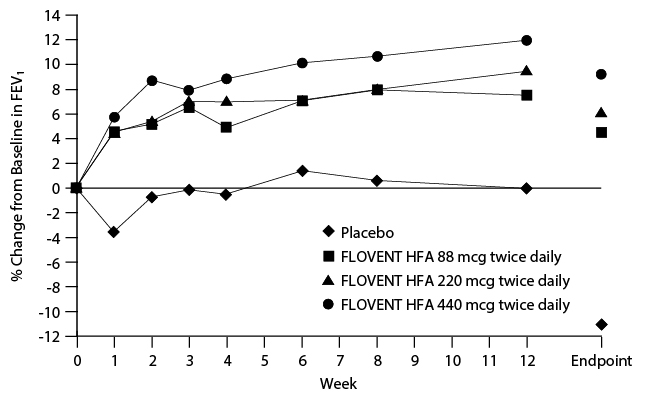
Figure 1 displays results of pulmonary function tests (mean percent change from baseline in FEV1 prior to AM dose) for the recommended starting dosage of FLOVENT HFA (88 mcg twice daily) and placebo from Trial 1. This trial used predetermined criteria for lack of efficacy (indicators of worsening asthma), resulting in withdrawal of more subjects in the placebo group. Therefore, pulmonary function results at Endpoint (the last evaluable FEV1 result, including most subjects’ lung function data) are also displayed.
Figure 1. A 12-Week Clinical Trial in Subjects Aged 12 Years and Older Inadequately Controlled on Bronchodilators Alone: Mean Percent Change from Baseline in FEV1 Prior to AM Dose (Trial 1)
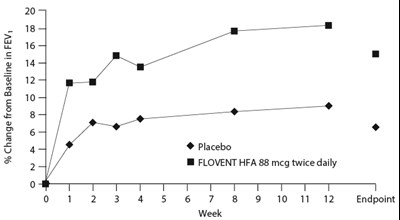
Figure 1. A 12-week Clinical Trial In Subjects Aged 12 Years And Older Inadequately Controlled On Bronchodilators Alone: Mean Percent Change From Baseline In Fev1 Prior To Am Dose (trial 1) (Floventhfa Spl Graphic 02)
In Trial 2, FLOVENT HFA at dosages of 88, 220, and 440 mcg twice daily was evaluated over 12 weeks of treatment in 415 subjects with asthma who were already receiving an inhaled corticosteroid at a daily dose within its recommended dose range in addition to as-needed albuterol. Baseline FEV1 values were similar across groups (mean 65% to 66% of predicted normal). All 3 dosages of FLOVENT HFA demonstrated a statistically significant improvement in lung function, as measured by improvement in FEV1, compared with placebo. This improvement was observed after the first week of treatment and was maintained over the 12-week treatment period. Discontinuations from the trial for lack of efficacy (defined by a pre-specified decrease in FEV1 or PEF, or an increase in use of VENTOLIN or nighttime awakenings requiring treatment with VENTOLIN) were lower in the groups treated with FLOVENT HFA (6% to 11%) compared with placebo (50%).
At Endpoint (last observation), mean change from baseline in AM pre-dose percent predicted FEV1 was greater in all 3 groups treated with FLOVENT HFA (2.2% to 4.6%) compared with the placebo group (-8.3%). The mean differences between the groups treated with FLOVENT HFA 88, 220, and 440 mcg and the placebo group were statistically significant, and the corresponding 95% confidence intervals were (7.1%, 13.8%), (8.2%, 14.9%), and (9.6%, 16.4%), respectively.
Figure 2 displays the mean percent change from baseline in FEV1 from Week 1 through Week 12. This trial also used predetermined criteria for lack of efficacy, resulting in withdrawal of more subjects in the placebo group; therefore, pulmonary function results at Endpoint are also displayed.
Figure 2. A 12-Week Clinical Trial in Subjects Aged 12 Years and Older Already Receiving Daily Inhaled Corticosteroids: Mean Percent Change from Baseline in FEV1 Prior to AM Dose (Trial 2)
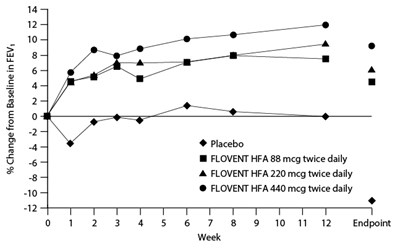
Figure 2. A 12-week Clinical Trial In Subjects Aged 12 Years And Older Already Receiving Daily Inhaled Corticosteroids: Mean Percent Change From Baseline In Fev1 Prior To Am Dose (trial 2) (Floventhfa Spl Graphic 03)
In both trials, use of VENTOLIN, AM and PM PEF, and asthma symptom scores showed numerical improvement with FLOVENT HFA compared with placebo.
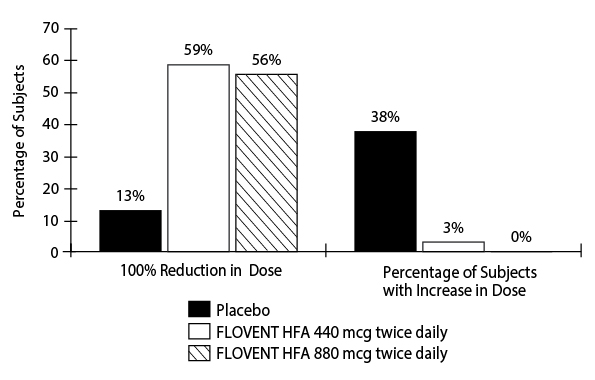
Trial 3 enrolled 168 subjects with asthma requiring oral prednisone therapy (average baseline daily prednisone dose ranged from 13 to 14 mg). FLOVENT HFA at dosages of 440 and 880 mcg twice daily was evaluated over a 16-week treatment period. Baseline FEV1 values were similar across groups (mean 59% to 62% of predicted normal). Over the course of the trial, subjects treated with either dosage of FLOVENT HFA required a statistically significantly lower mean daily oral prednisone dose (6 mg) compared with placebo-treated subjects (15 mg). Both dosages of FLOVENT HFA enabled a larger percentage of subjects (59% and 56% in the groups treated with FLOVENT HFA 440 and 880 mcg, respectively, twice daily) to eliminate oral prednisone as compared with placebo (13%) (see Figure 3). There was no efficacy advantage of FLOVENT HFA 880 mcg twice daily compared with 440 mcg twice daily. Accompanying the reduction in oral corticosteroid use, subjects treated with either dosage of FLOVENT HFA had statistically significantly improved lung function, fewer asthma symptoms, and less use of VENTOLIN Inhalation Aerosol compared with the placebo-treated subjects.
Figure 3. A 16-Week Clinical Trial in Subjects Aged 12 Years and Older Requiring Chronic Oral Prednisone Therapy: Change in Maintenance Prednisone Dose
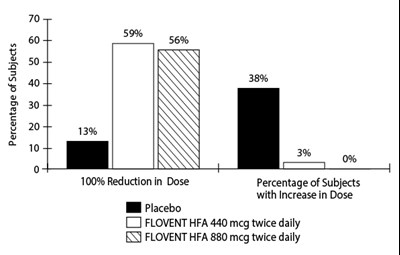
Figure 3. A 16-week Clinical Trial In Subjects Aged 12 Years And Older Requiring Chronic Oral Prednisone Therapy: Change In Maintenance Prednisone Dose (Floventhfa Spl Graphic 04)
Two long-term safety trials (Trial 4 and Trial 5) of ≥6 months’ duration were conducted in 507 adult and adolescent subjects with asthma. Trial 4 was designed to monitor the safety of 2 doses of FLOVENT HFA, while Trial 5 compared fluticasone propionate HFA with fluticasone propionate CFC. Trial 4 enrolled 182 subjects who were treated daily with low to high doses of inhaled corticosteroids, beta-agonists (short-acting [as needed or regularly scheduled] or long-acting), theophylline, inhaled cromolyn or nedocromil sodium, leukotriene receptor antagonists, or 5-lipoxygenase inhibitors at baseline. FLOVENT HFA at dosages of 220 and 440 mcg twice daily was evaluated over a 26-week treatment period in 89 and 93 subjects, respectively. Trial 5 enrolled 325 subjects who were treated daily with moderate to high doses of inhaled corticosteroids, with or without concurrent use of salmeterol or albuterol, at baseline. Fluticasone propionate HFA at a dosage of 440 mcg twice daily and fluticasone propionate CFC at a dosage of 440 mcg twice daily were evaluated over a 52-week treatment period in 163 and 162 subjects, respectively. Baseline FEV1 values were similar across groups (mean 81% to 84% of predicted normal). Throughout the 52-week treatment period, asthma control was maintained with both formulations of fluticasone propionate compared with baseline. In both trials, none of the subjects were withdrawn due to lack of efficacy.