1. Indications And Usage
TOUJEO is indicated to improve glycemic control in adults with diabetes mellitus.
The following Structured Product Label (SPL) was submitted to the FDA by A-s Medication Solutions for the product Toujeo (NDC 50090-2193). This document serves as the official prescribing information, containing essential scientific data and clinical materials required for healthcare providers and patients.
This specific version of the label includes detailed information regarding 1. indications and usage, other, 2.1 general dosing instructions, 2.3 starting dose in patients with either type 1 or type 2 diabetes already on insulin therapy, 2.4 important administration instructions, 3. dosage forms and strengths, 4. contraindications, 5.1 never share a toujeo solostar pen between patients, and other regulatory disclosures. Use the navigation below to review specific sections of the FDA submission.
TOUJEO is indicated to improve glycemic control in adults with diabetes mellitus.
Limitations of Use
TOUJEO is not recommended for the treatment of diabetic ketoacidosis.
Type 1 Diabetes:
Type 2 Diabetes:
Risk Factors for Hypoglycemia
The timing of hypoglycemia usually reflects the time-action profile of the administered insulin formulation.
As with all insulin preparations, the glucose lowering effect time course of TOUJEO may vary in different individuals or at different times in the same individual and depends on many conditions, including the area of injection as well as the injection site blood supply and temperature [see Clinical Pharmacology (12.2)]. Other factors which may increase the risk of hypoglycemia include changes in meal pattern (e.g., macronutrient content or timing of meals), changes in level of physical activity, or changes to co-administered medication [see Drug Interactions (7)]. Patients with renal or hepatic impairment may be at higher risk of hypoglycemia [see Use in Specific Populations (8.5, 8.6)].
Risk Mitigation Strategies for Hypoglycemia
Patients and caregivers must be educated to recognize and manage hypoglycemia. Self-monitoring of blood glucose plays an essential role in the prevention and management of hypoglycemia. In patients at higher risk for hypoglycemia and patients who have reduced symptomatic awareness of hypoglycemia, increased frequency of blood glucose monitoring is recommended. To minimize the risk of hypoglycemia do not administer TOUJEO intravenously, intramuscularly or in an insulin pump or dilute or mix TOUJEO with any other insulin products or solutions.
Hypoglycemia
Hypoglycemia is the most commonly observed adverse reaction in patients using insulin, including TOUJEO [See Warnings and Precautions (5.3)]. In the TOUJEO program, severe hypoglycemia was defined as an event requiring assistance of another person to administer a resuscitative action and documented symptomatic hypoglycemia was defined as an event with typical symptoms of hypoglycemia accompanied by a self-monitored or plasma glucose value equal to or less than 54 mg/dL.
The incidence of severe hypoglycemia in patients with type 1 diabetes receiving TOUJEO as part of a multiple daily injection regimen was 6.6% at 26 weeks. The incidence of documented symptomatic hypoglycemia was 69% at 26 weeks. There were no clinically important differences in hypoglycemia between TOUJEO and LANTUS among type 1 diabetes patients.
The incidence of severe hypoglycemia in patients with type 2 diabetes was 5% at 26 weeks in patients receiving TOUJEO as part of a multiple daily injection regimen, and 1.0% and 0.9% respectively at 26 weeks in the two studies where patients received TOUJEO as part of a basal-insulin only regimen. The incidence of documented symptomatic hypoglycemia in patients with type 2 diabetes receiving TOUJEO ranged from 8% to 37% at 26 weeks and the highest risk was again seen in patients receiving TOUJEO as part of a multiple daily injection regimen.
Insulin initiation and intensification of glucose control
Intensification or rapid improvement in glucose control has been associated with a transitory, reversible ophthalmologic refraction disorder, worsening of diabetic retinopathy, and acute painful peripheral neuropathy. However, long-term glycemic control decreases the risk of diabetic retinopathy and neuropathy.
Peripheral Edema
Insulin, including TOUJEO, may cause sodium retention and edema, particularly if previously poor metabolic control is improved by intensified insulin therapy.
Lipodystrophy
Long-term use of insulin, including TOUJEO, can cause lipoatrophy (depression in the skin) or lipohypertrophy (enlargement or thickening of tissue) in some patients and may affect insulin absorption [see Dosage and Administration (2.1)].
Weight gain
Weight gain has occurred with some insulin therapies including TOUJEO and has been attributed to the anabolic effects of insulin and the decrease in glucosuria.
Allergic Reactions
Some patients taking insulin therapy, including TOUJEO have experienced erythema, local edema, and pruritus at the site of injection. These conditions were usually self-limiting. Severe cases of generalized allergy (anaphylaxis) have been reported [See Warnings and Precautions (5.5)].
Cardiovascular Safety
No clinical studies to establish the cardiovascular safety of TOUJEO have been conducted. A cardiovascular outcomes trial, ORIGIN, has been conducted with LANTUS. It is unknown whether the results of ORIGIN can be applied to TOUJEO.
The Outcome Reduction with Initial Glargine Intervention trial (i.e., ORIGIN) was an open-label, randomized, 12,537 patient study that compared LANTUS to standard care on the time to first occurrence of a major adverse cardiovascular event (MACE). MACE was defined as the composite of CV death, nonfatal myocardial infarction and nonfatal stroke. The incidence of MACE was similar between LANTUS and standard care in ORIGIN [Hazard Ratio (95% CI) for MACE; 1.02 (0.94, 1.11)].
In the ORIGIN trial, the overall incidence of cancer (all types combined) [Hazard Ratio (95% CI); 0.99 (0.88, 1.11)] or death from cancer [Hazard Ratio (95% CI); 0.94 (0.77, 1.15)] was also similar between treatment groups.
Risk Summary
All pregnancies have a background risk of birth defects, loss, or other adverse outcome regardless of drug exposure. This background risk is increased in pregnancies complicated by hyperglycemia and may be decreased with good metabolic control. It is essential for patients with diabetes or a history of gestational diabetes to maintain good metabolic control before conception and throughout pregnancy. In patients with diabetes or gestational diabetes, insulin requirements may decrease during the first trimester, generally increase during the second and third trimesters, and rapidly decline after delivery. Careful monitoring of glucose control is essential in these patients. Therefore, female patients should be advised to tell their physicians if they intend to become, or if they become pregnant while taking TOUJEO.
Human data
There are no clinical studies of the use of TOUJEO in pregnant women. Because animal reproduction studies are not always predictive of human response, this drug should be used during pregnancy only if the potential benefit justifies the potential risk to the fetus.
Animal data
Subcutaneous reproduction and teratology studies have been performed with insulin glargine and regular human insulin in rats and Himalayan rabbits. Insulin glargine was given to female rats before mating, during mating, and throughout pregnancy at doses up to 0.36 mg/kg/day, which is approximately 50 times the recommended human subcutaneous starting dose of 0.2 Units/kg/day (0.007 mg/kg/day). In rabbits, doses of 0.072 mg/kg/day, which is approximately 10 times the recommended human subcutaneous starting dose of 0.2 Units/kg/day (0.007 mg/kg/day), were administered during organogenesis. The effects of insulin glargine did not generally differ from those observed with regular human insulin in rats or rabbits. However, in rabbits, five fetuses from two litters of the high-dose group exhibited dilation of the cerebral ventricles. Fertility and early embryonic development appeared normal.
Onset of Action
The pharmacodynamic profiles for TOUJEO given subcutaneously as a single dose of 0.4, 0.6, or 0.9 U/kg in a euglycemic clamp study in patients with type 1 diabetes showed that on average, the onset of action develops over 6 hours post-dose for all three single doses of TOUJEO.
Single Dose Pharmacodynamics
The pharmacodynamics for single 0.4, 0.6, and 0.9 U/kg doses of TOUJEO in 24 patients with type 1 diabetes mellitus was evaluated in a euglycemic clamp study. On a unit-to-unit basis, TOUJEO had a lower maximum (GIRmax) and 24 hour glucose lowering effect (GIR-AUC0–24) compared to LANTUS. The overall glucose lowering effect of TOUJEO 0.4 U/kg was 12% of the glucose lowering effect of an equivalent dose of LANTUS. Glucose lowering at least 30% of the effect of a single 0.4 U/kg dose of LANTUS was not observed until the single dose of TOUJEO exceeded 0.6 U/kg.
Multiple Once Daily Dose Pharmacodynamics
The pharmacodynamics of TOUJEO after 8 days of daily injection was evaluated in 30 patients with type 1 diabetes. At steady state, the 24 hour glucose lowering effect (GIR-AUC0–24) of TOUJEO 0.4 U/kg was approximately 27% lower with a different distribution profile than that of an equivalent dose of LANTUS [See Dosage and Administration (2), Warning and Precautions (5.2) and Clinical Pharmacology (12.3)]. The glucose lowering effect of a TOUJEO dose increased with each daily administration.
The pharmacodynamic profile for TOUJEO given subcutaneously as multiple once-daily subcutaneous injections of 0.4 U/kg in a euglycemic clamp study in patients with type 1 diabetes, is shown in Figure 1.
Figure 1: Glucose infusion rate in Patients with type 1 diabetes in multiple dose administration of TOUJEO

Figure 1 (Toujeo 02)
Glucose infusion rate: determined as amount of glucose infused to maintain constant plasma glucose levels.
Absorption and Bioavailability
The pharmacokinetic profiles for single 0.4, 0.6, and 0.9 U/kg doses of TOUJEO in 24 patients with type 1 diabetes mellitus was evaluated in a euglycemic clamp study. The median time to maximum serum insulin concentration was 12 (8–14), 12 (12–18), and 16 (12–20) hours, respectively. Mean serum insulin concentrations declined to the lower limit of quantitation of 5.02 µU/mL by 16, 28, and beyond 36 hours, respectively.
Steady state insulin concentrations are reached by at least 5 days of once daily subcutaneous administration of 0.4 U/kg to 0.6 U/kg doses of TOUJEO over 8 days in patients with type 1 diabetes mellitus.
After subcutaneous injection of TOUJEO, the intra-subject variability, defined as the coefficient of variation for the insulin exposure during 24 hours was 21.0% at steady state.
Elimination
After subcutaneous injection of TOUJEO in diabetic patients, insulin glargine is metabolized at the carboxyl terminus of the B-chain with formation of two active metabolites M1 (21A-Gly-insulin) and M2 (21A-Gly-des-30B-Thr-insulin). The in vitro activity of M1 and M2 were similar to that of human insulin.
Specific Populations
Age (Geriatric Population and Pediatric Population), Race, and Sex: Effect of age, race, and sex on the pharmacokinetics of TOUJEO has not been evaluated.
Obesity: Effect of BMI on the pharmacokinetics of TOUJEO has not been evaluated.
sanofi-aventis U.S. LLC
Bridgewater, NJ 08807
A SANOFI COMPANY
©2015 sanofi-aventis U.S. LLC
LANTUS, TOUJEO and SoloStar are registered trademarks of sanofi-aventis U.S. LLC.
Injection: 300 units per mL of insulin glargine available as a clear, colorless, solution in a 1.5 mL TOUJEO SoloStar disposable prefilled pen (450 Units/1.5 mL).
TOUJEO is contraindicated:
TOUJEO SoloStar disposable prefilled pens must never be shared between patients, even if the needle is changed. Pen sharing poses a risk for transmission of blood-borne pathogens.
Changes in insulin strength, manufacturer, type, or method of administration may affect glycemic control and predispose to hypoglycemia [see Warnings and Precautions (5.3)] or hyperglycemia. These changes should be made cautiously and only under close medical supervision, and the frequency of blood glucose monitoring should be increased. For patients with type 2 diabetes, dosage adjustments of concomitant oral anti-diabetic products may be needed.
On a unit to unit basis, TOUJEO has a lower glucose lowering effect than LANTUS [See Clinical Pharmacology (12.2)]. In clinical trials, patients who changed to TOUJEO from other basal insulins experienced higher average fasting plasma glucose levels in the first weeks of therapy compared to patients who were changed to LANTUS. To minimize the risk of hyperglycemia when initiating TOUJEO monitor glucose daily, titrate TOUJEO according to labeling instructions, and adjust co-administered glucose lowering therapies per standard of care [See Dosage and Administration (2.2, 2.3)]. Higher doses of TOUJEO were required to achieve similar levels of glucose control compared to LANTUS in clinical trials [see Clinical Studies (14.1)].
The onset of action of TOUJEO develops over 6 hours following an injection. In type 1 diabetes patients treated with IV insulin, consider the longer onset of action of TOUJEO before stopping IV insulin. The full glucose lowering effect may not be apparent for at least 5 days [See Dosage and Administration (2.2) and Clinical Pharmacology (12.2)].
Hypoglycemia is the most common adverse reaction associated with insulin, including TOUJEO. Severe hypoglycemia can cause seizures, may be life-threatening or cause death. Hypoglycemia can impair concentration ability and reaction time; this may place an individual and others at risk in situations where these abilities are important (e.g., driving, or operating other machinery). Hypoglycemia can happen suddenly and symptoms may differ in each individual and change over time in the same individual. Symptomatic awareness of hypoglycemia may be less pronounced in patients with longstanding diabetes, in patients with diabetic nerve disease, in patients using medications that block the sympathetic nervous system (e.g., beta-blockers) [See Drug Interactions (7)], or in patients who experience recurrent hypoglycemia.
Accidental mix-ups between basal insulin products and other insulins, particularly rapid-acting insulins, have been reported. To avoid medication errors between TOUJEO and other insulins, instruct patients to always check the insulin label before each injection.
Severe, life-threatening, generalized allergy, including anaphylaxis, can occur with insulin products, including TOUJEO. If hypersensitivity reactions occur, discontinue TOUJEO; treat per standard of care and monitor until symptoms and signs resolve [See Adverse Reactions (6)]. TOUJEO is contraindicated in patients who have had hypersensitivity reactions to insulin glargine or other of the excipients [See Contraindications (4)].
All insulin products, including TOUJEO, cause a shift in potassium from the extracellular to intracellular space, possibly leading to hypokalemia. Untreated hypokalemia may cause respiratory paralysis, ventricular arrhythmia, and death. Monitor potassium levels in patients at risk for hypokalemia if indicated (e.g., patients using potassium-lowering medications, patients taking medications sensitive to serum potassium concentrations).
Thiazolidinediones (TZDs), which are peroxisome proliferator-activated receptor (PPAR)-gamma agonists, can cause dose-related fluid retention, particularly when used in combination with insulin. Fluid retention may lead to or exacerbate heart failure. Patients treated with insulin, including TOUJEO, and a PPAR-gamma agonist should be observed for signs and symptoms of heart failure. If heart failure develops, it should be managed according to current standards of care, and discontinuation or dose reduction of the PPAR-gamma agonist must be considered.
The following adverse reactions are discussed elsewhere:
Because clinical trials are conducted under widely varying conditions, adverse reaction rates observed in the clinical trials of a drug cannot be directly compared to rates in the clinical trials of another drug, and may not reflect the rates actually observed in clinical practice.
The data in Table 1 reflect the exposure of 304 patients with type 1 diabetes to TOUJEO with mean exposure duration of 23 weeks. The type 1 diabetes population had the following characteristics: Mean age was 46 years and mean duration of diabetes was 21 years. Fifty five percent were male, 86% were Caucasian, 5 % were Black or African American and 5 % were Hispanic. At baseline, the mean eGFR was 82 mL/min/1.73m2 and 35% of patients had eGFR≥90 mL/min/1.73m2. The mean BMI was 28 kg/m2. HbA1c at baseline was greater or equal to 8% in 58% of patients.
The data in Table 2 reflect the exposure of 1242 patients with type 2 diabetes to TOUJEO with mean exposure duration of 25 weeks. The type 2 diabetes population had the following characteristics: Mean age was 59 years and mean duration of diabetes was 13 years. Fifty three percent were male, 88% were Caucasian, 7% were Black or African American and 17% were Hispanic. At baseline, mean eGFR was 79 mL/min/1.73m2 and 27% of patients had an eGFR≥90 mL/min/1.73m2. The mean BMI was 35 kg/m2. HbA1c at baseline was greater or equal to 8% in 66% of patients.
Common adverse reactions were defined as reactions occurring in ≥5% of the population studied.
Common adverse reactions occurring for TOUJEO-treated subjects during clinical trials in patients with type 1 diabetes mellitus and type 2 diabetes mellitus are listed in Table 1 and Table 2, respectively. Hypoglycemia is discussed in a dedicated subsection below.
| TOUJEO + mealtime insulin "mealtime insulin" refers to insulin glulisine, insulin lispro, or insulin aspart , %(n=304) | |
|---|---|
| Nasopharyngitis | 12.8 |
| Upper respiratory tract infection | 9.5 |
| TOUJEO one of the trials in type 2 diabetes included mealtime insulin , %(n=1,242) | |
|---|---|
| Nasopharyngitis | 7.1 |
| Upper respiratory tract infection | 5.7 |
As with all therapeutic proteins, there is potential for immunogenicity.
In a 6-month study of type 1 diabetes patients, 79% of patients who received TOUJEO once daily were positive for anti-insulin antibodies (AIA) at least once during the study, including 62% that were positive at baseline and 44% of patients who developed anti-drug antibody [i.e., anti-insulin glargine antibody (ADA)] during the study. Eighty percent of the AIA positive patients on TOUJEO with antibody test at baseline, remained AIA positive at month 6.
In two 6-month studies in type 2 diabetes patients, 25% of patients who received TOUJEO once daily were positive for AIA at least once during the study, including 42% who were positive at baseline and 20% of patients who developed ADA during the study. Ninety percent of the AIA positive patients on TOUJEO with antibody test at baseline, remained AIA positive at month 6.
The detection of antibody formation is highly dependent on the sensitivity and specificity of the assay and may be influenced by several factors such as: assay methodology, sample handling, timing of sample collection, concomitant medication, and underlying disease. For these reasons, comparison of the incidence of antibodies to TOUJEO with the incidence of antibodies in other studies or to other products, may be misleading.
The risk of hypoglycemia associated with TOUJEO use may be increased with antidiabetic agents, (ACE) inhibitors, angiotensin II receptor blocking agents, disopyramide, fibrates, fluoxetine, monoamine oxidase inhibitors, pentoxifylline, pramlintide, propoxyphene, salicylates, somatostatin analogs (e.g., octreotide), and sulfonamide antibiotics. Dose adjustment and increased frequency of glucose monitoring may be required when TOUJEO is co-administered with these drugs.
The glucose lowering effect of TOUJEO may be decreased when co-administered with atypical antipsychotics (e.g., olanzapine and clozapine), corticosteroids, danazol, diuretics, estrogens, glucagon, isonazid, niacin, oral contraceptives, phenothiazines, progestogens (e.g., in oral contraceptives), protease inhibitors, somatropin, sympathomimetic agents (e.g., albuterol, epinephrine, terbutaline) and thyroid hormones. Dose adjustment and increased frequency of glucose monitoring may be required when TOUJEO is co-administered with these drugs.
The glucose lowering effect of TOUJEO may be increased or decreased when co-administered with alcohol, beta-blockers, clonidine, and lithium salts. Pentamidine may cause hypoglycemia, which may sometimes be followed by hyperglycemia. Dose adjustment and increased frequency of glucose monitoring may be required when TOUJEO is co-administered with these drugs.
The signs and symptoms of hypoglycemia [see Warnings and Precautions (5.3)] may be blunted when beta-blockers, clonidine, guanethidine, and reserpine are co-administered with TOUJEO.
Endogenous insulin is present in human milk; it is unknown whether insulin glargine is excreted in human milk. Because many drugs, including human insulin, are excreted in human milk, caution should be exercised when TOUJEO is administered to a nursing woman. Use of TOUJEO is compatible with breastfeeding, but women with diabetes who are lactating may require adjustments of their insulin doses.
The safety and effectiveness of TOUJEO have not been established in pediatric patients.
In controlled clinical studies, 30 of 304 (9.8%) TOUJEO treated patients with type 1 diabetes and 327 of 1242 (26.3%) TOUJEO treated patients with type 2 diabetes were ≥65 years of age, among them 2.0 % of the patients with type 1 and 3.0% of the patients with type 2 diabetes were ≥75 years of age. No overall differences in effectiveness and safety were observed in the subgroup analyses across the age groups.
Nevertheless, caution should be exercised when TOUJEO is administered to geriatric patients. In elderly patients with diabetes, the initial dosing, dose increments, and maintenance dosage should be conservative to avoid hypoglycemia [See Warnings and Precautions (5.3), Adverse reactions (6) and Clinical Studies (14)].
The effect of hepatic impairment on the pharmacokinetics of TOUJEO has not been studied. Frequent glucose monitoring and dose adjustment may be necessary for TOUJEO in patients with hepatic impairment [See Warnings and Precautions (5.3)].
The effect of renal impairment on the pharmacokinetics of TOUJEO has not been studied. Some studies with human insulin have shown increased circulating levels of insulin in patients with renal failure. Frequent glucose monitoring and dose adjustment may be necessary for TOUJEO in patients with renal impairment [See Warnings and Precautions (5.3)].
No overall differences in effectiveness and safety were observed in subgroup analyses based on BMI.
Excess insulin administration may cause hypoglycemia and hypokalemia [see Warnings and Precautions (5.3, 5.6)]. Mild episodes of hypoglycemia can be treated with oral glucose. Adjustments in drug dosage, meal patterns, or physical activity level may be needed. More severe episodes of hypoglycemia with coma, seizure, or neurologic impairment may be treated with intramuscular/subcutaneous glucagon or concentrated intravenous glucose. Sustained carbohydrate intake and observation may be necessary because hypoglycemia may recur after apparent clinical recovery. Hypokalemia must be corrected appropriately.
TOUJEO (insulin glargine injection) is a long-acting insulin supplied as a sterile solution for subcutaneous injection containing 300 Units/mL of insulin glargine.
Insulin glargine is a human insulin analog produced by recombinant DNA technology utilizing a non-pathogenic laboratory strain of Escherichia coli (K12) as the production organism. Insulin glargine differs from human insulin in that the amino acid asparagine at position A21 is replaced by glycine and two arginines remain at the C-terminus of the B-chain. Chemically, insulin glargine is 21A-Gly-31B-32B-Di-Arg -human insulin and has the empirical formula C267H404N72O78S6 and a molecular weight of 6063. Insulin glargine has the following structural formula:
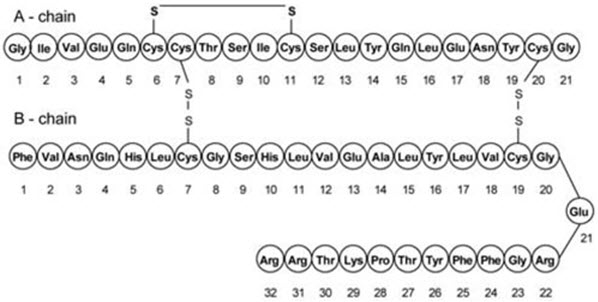
Chemical Structure (Toujeo 01)
Each milliliter of TOUJEO contains 300 Units (10.91 mg) insulin glargine dissolved in a clear aqueous fluid.
The 1.5 mL SoloStar disposable prefilled pen presentation contains the following inactive ingredients per mL: 90 mcg zinc, 2.7 mg m-cresol, 20 mg glycerol 85%, and water for injection.
The pH is adjusted by addition of aqueous solutions of hydrochloric acid and sodium hydroxide. TOUJEO has a pH of approximately 4. At pH 4, insulin glargine is completely soluble. After injection into the subcutaneous tissue, the acidic solution is neutralized, leading to formation of a precipitate from which small amounts of insulin glargine are slowly released.
The primary activity of insulin, including insulin glargine, is regulation of glucose metabolism. Insulin and its analogs lower blood glucose by stimulating peripheral glucose uptake, especially by skeletal muscle and fat, and by inhibiting hepatic glucose production. Insulin inhibits lipolysis and proteolysis, and enhances protein synthesis.
In mice and rats, standard two-year carcinogenicity studies with insulin glargine were performed at doses up to 0.455 mg/kg, which was for the rat approximately 65 times the recommended human subcutaneous starting dose of 0.2 Units/kg/day (0.007 mg/kg/day). The findings in female mice were not conclusive due to excessive mortality in all dose groups during the study. Histiocytomas were found at injection sites in male rats (statistically significant) and male mice (not statistically significant) in acid vehicle containing groups. These tumors were not found in female animals, in saline control, or insulin comparator groups using a different vehicle. The relevance of these findings to humans is unknown.
Insulin glargine was not mutagenic in tests for detection of gene mutations in bacteria and mammalian cells (Ames- and HGPRT-test) and in tests for detection of chromosomal aberrations (cytogenetics in vitro in V79 cells and in vivo in Chinese hamsters).
In a combined fertility and prenatal and postnatal study in male and female rats at subcutaneous doses up to 0.36 mg/kg/day, which was approximately 50 times the recommended human subcutaneous starting dose of 0.2 Units/kg/day (0.007 mg/kg/day), maternal toxicity due to dose-dependent hypoglycemia, including some deaths, was observed. Consequently, a reduction of the rearing rate occurred in the high-dose group only. Similar effects were observed with NPH insulin.
The safety and effectiveness of TOUJEO given once-daily was compared to that of once-daily LANTUS in open-label, randomized, active-control, parallel studies of up to 26 weeks in patients with type 1 diabetes mellitus and patients with type 2 diabetes mellitus (Tables 3 and 4). At trial end, the reduction in glycated hemoglobin (HbA1c) and fasting plasma glucose with TOUJEO titrated to goal was similar to that with LANTUS titrated to goal. At the end of the trial, depending on the patient population and concomitant therapy, patients were receiving a higher dose of TOUJEO than LANTUS.
In an open-label, controlled study (Study A), patients with type 1 diabetes (n=546), were randomized to basal-bolus treatment with TOUJEO or LANTUS and treated for 26 weeks. TOUJEO and LANTUS were administered once daily in the morning (time period covering from pre-breakfast until pre-lunch) or in the evening (time period defined as prior to the evening meal until at bedtime). A mealtime insulin analogue was administered before each meal. Mean age was 47.3 years and mean duration of diabetes was 21 years. 57% were male. 85.1% were Caucasian, 4.7% Black or African American. 4.7% were Hispanic. 32.2 percent of patients had GFR>90 mL/min/1.73m2. The mean BMI was approximately 27.6 kg/m2. At week 26, treatment with TOUJEO provided a mean reduction in HbA1c that met the pre-specified non-inferiority margin of 0.4% (Table 3). Patients treated with TOUJEO used 17.5% more basal insulin than patients treated with LANTUS. There were no clinically important differences in glycemic control when TOUJEO was administered once daily in the morning or in the evening. There were no clinically important differences in body weight between treatment groups.
| TOUJEO +mealtime insulin "mealtime insulin" refers to insulin glulisine, insulin lispro or insulin aspart | LANTUS + mealtime insulin | |
|---|---|---|
| Treatment duration | 26 weeks | |
| Treatment in combination with | Fast-acting insulin analogue | |
| Number of subjects treated (mITT mITT: Modified intention-to-treat ) | 273 | 273 |
| HbA1c | ||
| Baseline mean | 8.13 | 8.12 |
| Adjusted Mean change from baseline | -0.40 | -0.44 |
| Adjusted Mean difference Treatment difference: TOUJEO – LANTUS [95% Confidence Interval] | 0.04 [-0.10 to 0.18] | |
| Fasting Plasma Glucose mg/dL | ||
| Baseline mean | 186 | 199 |
| Adjusted Mean change from baseline | -17 | -20 |
| Adjusted Mean difference [95% Confidence Interval] | 3 [-10 to 16] | |
In a 26-week open-label, controlled study (study B, n=804), adults with type 2 diabetes were randomized to once daily treatment in the evening with either TOUJEO or LANTUS. Short-acting mealtime insulin analogues with or without metformin were also administered. The average age was 60 years. The majority of patients were White (92.3%) and 52.9% were male. 20.3 percent of patients had GFR>90mL/min/1.73m2. The mean BMI was approximately 36.6 kg/m2. At week 26, treatment with TOUJEO provided a mean reduction in HbA1c that met the pre-specified non-inferiority margin of 0.4% compared to LANTUS (Table 4). Patients treated with TOUJEO used 11% more basal insulin than patients treated with LANTUS. There were no clinically important differences in body weight between treatment groups.
In two open-label, controlled studies (n=1,670), adults with type 2 diabetes mellitus were randomized to either TOUJEO or LANTUS once daily for 26 weeks as part of a regimen of combination therapy with non-insulin anti-diabetic drugs. At the time of randomization, 808 patients were treated with basal insulin for more than 6 months (study C) and 862 patients were insulin-naïve (study D).
In Study C, the average age was 58.2 years. The majority of patients were White (93.8%) and 45.9% were male. 32.8 percent of patients had GFR>90mL/min/1.73m2. The mean BMI was approximately 34.8 kg/m2. At week 26, treatment with TOUJEO provided a mean reduction in HbA1c that met the pre-specified non-inferiority margin of 0.4% compared to LANTUS (Table 4). Patients treated with TOUJEO used 12% more basal insulin than patients treated with LANTUS. There were no clinically important differences in body weight between treatment groups.
In Study D, the average age was 57.7 years. The majority of patients were White (78%) and 57.7% were male. 29 percent of patients had GFR>90mL/min/1.73m2. The mean BMI was approximately 33 kg/m2. At week 26, treatment with TOUJEO provided a mean reduction in HbA1c that met the pre-specified non-inferiority margin compared to LANTUS (Table 4). Patients treated with TOUJEO used 15% more basal insulin than patients treated with LANTUS. There were no clinically important differences in body weight between treatment groups.
| Study B | Study C | Study D | ||||
|---|---|---|---|---|---|---|
| Treatment duration | 26 weeks | 26 weeks | 26 weeks | |||
| Treatment in combination with | Mealtime insulin analog+/-metformin | Non-insulin anti-diabetic drugs | ||||
| TOUJEO | LANTUS | TOUJEO | LANTUS | TOUJEO | LANTUS | |
| Number of patients treated m-ITT population: Modified intention-to-treat population | 404 | 400 | 403 | 405 | 432 | 430 |
| HbA1c | ||||||
| Baseline mean | 8.13 | 8.14 | 8.27 | 8.22 | 8.49 | 8.58 |
| Adjusted mean change from baseline | -0.90 | -0.87 | -0.73 | -0.70 | -1.42 | -1.46 |
| Adjusted mean difference Treatment difference: TOUJEO – LANTUS [95% Confidence interval] | -0.03 [-0.14 to 0.08] | -0.03 [-0.17 to 0.10] | 0.04 [-0.09 to 0.17] | |||
| Fasting Plasma Glucose (mg/dL) | ||||||
| Baseline mean | 157 | 160 | 149 | 142 | 179 | 184 |
| Adjusted mean change from baseline | -29 | -30 | -18 | -22 | -61 | -68 |
| Adjusted mean difference [95% Confidence interval] | 0.8 [-5 to 7] | 3 [-3 to 9] | 7 [2 to 12] | |||
Product: 50090-2193
NDC: 50090-2193-0 1.5 mL in a SYRINGE
See FDA-approved patient labeling (Instruction Leaflet)
General Counseling Information—Prior to treatment, patients should fully understand the risks and benefits of TOUJEO. Ensure that all patients receive the Instruction Leaflet prior to initiating TOUJEO therapy.
[see Warnings and Precautions (5.1)]
Advise patients that they must never share TOUJEO SoloStar pen with another person even if the needle is changed. Pen sharing poses a risk for transmission of blood-borne pathogens.
[see Warnings and Precautions (5.2), (5.3)]
Inform patients that hypoglycemia is the most common adverse reaction with insulin. Inform patients of the symptoms of hypoglycemia. Inform patients that the ability to concentrate and react may be impaired as a result of hypoglycemia. This may present a risk in situations where these abilities are especially important, such as driving or operating other machinery. Advise patients who have frequent hypoglycemia or reduced or absent warning signs of hypoglycemia to use caution when driving or operating machinery.
Advise patients that changes in insulin regimen can predispose to hyper- or hypoglycemia. Advise patients that changes in insulin regimen should be made under close medical supervision.
Inform patients that if they change to TOUJEO from other basal insulins they may experience higher average fasting plasma glucose levels in the first weeks of therapy. Advise patients to monitor glucose daily when initiating TOUJEO.
[see Warnings and Precautions (5.4)]
Instruct patients to always check the insulin label before each injection. The "300 Units/mL (U-300)" is highlighted in honey gold on the label of TOUJEO SoloStar disposable prefilled pen.
Inform patients that TOUJEO (insulin glargine 300 U/mL) contains 3 times as much insulin in 1 mL as standard insulin (100 U/mL).
Inform patients that the dose counter of TOUJEO SoloStar disposable prefilled pen shows the number of units of TOUJEO to be injected. No dose re-calculation is required.
Instruct patients to not re-use needles. A new needle must be attached before each injection. Re-use of needles increases the risk of blocked needles which may cause under-dosing or overdosing. In the event of blocked needle, the patients must follow the instructions described in Step 3 of the Instructions for Use.
Instruct Patients to never use a syringe to remove TOUJEO from the SoloStar disposable insulin prefilled pen.
TOUJEO must only be used if the solution is clear and colorless with no particles visible. Patients must be advised that TOUJEO must NOT be diluted or mixed with any other insulin or solution.
Patients should be instructed on self-management procedures including glucose monitoring, proper injection technique, and management of hypoglycemia and hyperglycemia. Patients must be instructed on handling of special situations such as intercurrent conditions (illness, stress, or emotional disturbances), an inadequate or skipped insulin dose, inadvertent administration of an increased insulin dose, inadequate food intake, and skipped meals.
Advise patients to inform their health care professional if they are pregnant or are contemplating pregnancy.
Refer patients to the TOUJEO "Patient Information" for additional information about the potential side effects of insulin therapy, including lipodystrophy (and the need to rotate injection sites within the same body region), weight gain, allergic reactions, and hypoglycemia.
See attached document at end of Full Prescribing Information.
| This Patient Information has been approved by the U.S. Food and Drug Administration | Approved: February 2015 Revised September 2015 |
| Patient Information TOUJEO (Too-Jay-o) (insulin glargine injection) for subcutaneous use, 300 Units/mL (U-300) | |
| Do not share your TOUJEO SoloStar pen with other people, even if the needle has been changed. You may give other people a serious infection, or get a serious infection from them. What is TOUJEO? TOUJEO is a long-acting man-made insulin used to control high blood sugar in adults with diabetes mellitus.
| |
| Who should not use TOUJEO? Do not use TOUJEO if you:
| |
| What should I tell my healthcare provider before using TOUJEO? Before using TOUJEO, tell your healthcare provider about all your medical conditions, including if you:
Before you start using TOUJEO, talk to your healthcare provider about low blood sugar and how to manage it. | |
How should I use TOUJEO?
| |
Your dose of TOUJEO may need to change because of:
| |
| What should I avoid while using TOUJEO? While using TOUJEO do not:
| |
| What are the possible side effects of TOUJEO? TOUJEO may cause serious side effects that can lead to death, including:
Get emergency medical help if you have: | |
| General information about the safe and effective use of TOUJEO. Medicines are sometimes prescribed for purposes other than those listed in a Patient Information leaflet. Do not use TOUJEO for a condition for which it was not prescribed. Do not give TOUJEO to other people, even if they have the same symptoms that you have. It may harm them. This Patient Information leaflet summarizes the most important information about TOUJEO. If you would like more information, talk with your healthcare provider. You can ask your pharmacist or healthcare provider for information about TOUJEO that is written for health professionals. For more information, go to www.TOUJEO.com or call 1-800-633-1610. | |
What are the ingredients in TOUJEO?
| |
| Manufactured By: sanofi-aventis U.S., LLC, Bridgewater, NJ 08807 | |
TOUJEO® SoloStar® (Too-Jay-o)
(insulin glargine injection)
1.5 mL disposable prefilled pen
Read this first
Do not share your TOUJEO SoloStar pen with other people, even if the needle has been changed. You may give other people a serious infection, or get a serious infection from them.
TOUJEO contains 300 units/mL insulin glargine
Important information
Learn to inject
Need help?
If you have any questions about your pen or about diabetes, ask your healthcare provider, go to www.Toujeo.com or call sanofi-aventis on 1-800-633-1610.
Extra items you will need:
Places to inject
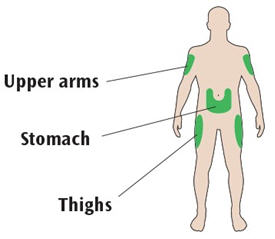
Figure (Toujeo 03)
Get to know your pen
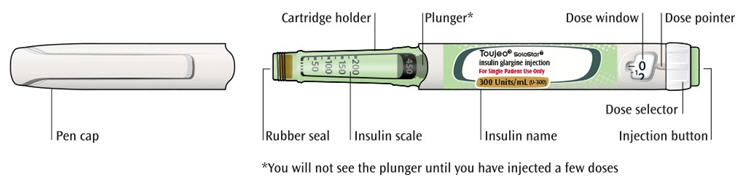
Figure (Toujeo 04)
Step 1: Check your pen
Take a new pen out of the refrigerator at least 1 hour before you inject. Cold insulin is more painful to inject.
1A Check the name and expiration date on the label of your pen.
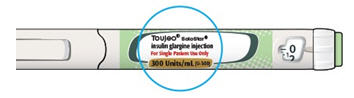
Figure (Toujeo 05)
1B Pull off the pen cap.

Figure (Toujeo 06)
1C Check that the insulin is clear.
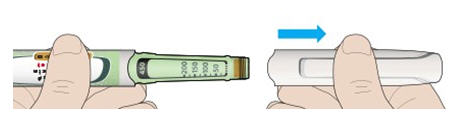
Figure (Toujeo 07)
1D Wipe the rubber seal with an alcohol swab.

Figure (Toujeo 08)
If you have other injector pens
Step 2: Attach a new needle
The brands listed are the registered trademarks of their respective owners and are not trademarks of sanofi-aventis U.S. LLC
from BD (such as BD Ultra-Fine®), Ypsomed (such as Clickfine®) or Owen Mumford (such as Unifine® Pentips®).2A Take a new needle and peel off the protective seal.
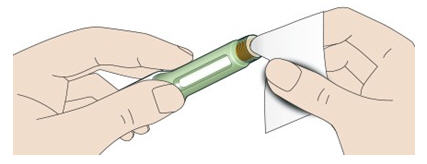
Figure (Toujeo 09)
2B Keep the needle straight and screw it onto the pen until fixed. Do not over-tighten.
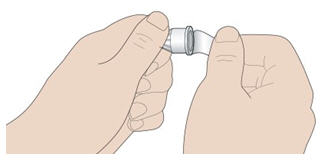
Figure (Toujeo 10)
2C Pull off the outer needle cap. Keep this for later.
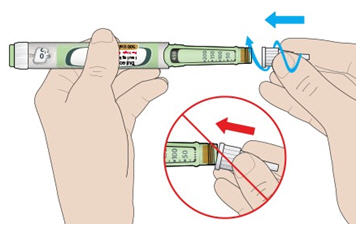
Figure (Toujeo 11)
2D Pull off the inner needle cap and throw away.
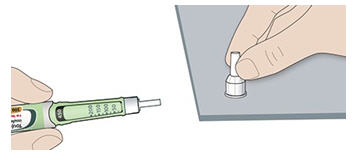
Figure (Toujeo 12)
Handling needles
Step 3: Do a safety test
Always do a safety test before each injection to:
3A Select 3 units by turning the dose selector until the dose pointer is at the mark between 2 and 4.
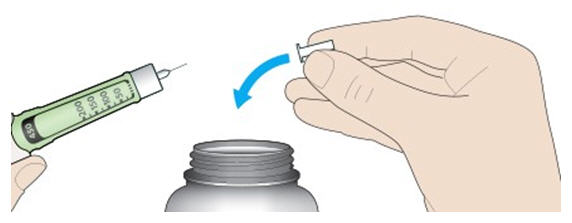
Figure (Toujeo 13)
3B Press the injection button all the way in.
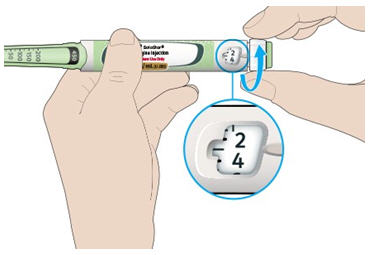
Figure (Toujeo 14)
If no insulin appears:
If you see air bubbles
Step 4: Select the dose
Do not select a dose or press the injection button without a needle attached. This may damage your pen.
4A Make sure a needle is attached and the dose is set to '0'.
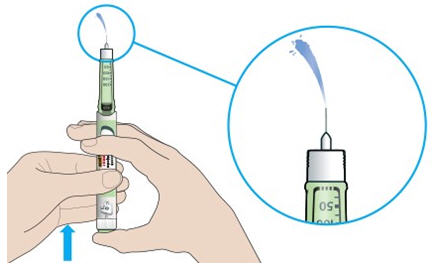
Figure (Toujeo 15)
4B Turn the dose selector until the dose pointer lines up with your dose.
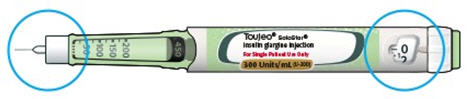
Figure (Toujeo 16)
How to read the dose window
Even numbers are shown in line with the dose pointer:
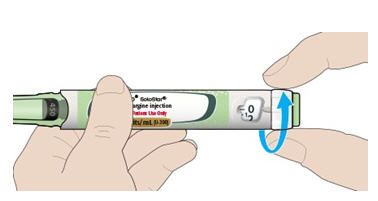
Figure (Toujeo 17)
Odd numbers are shown as a line between even numbers:
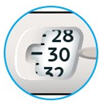
Figure (Toujeo 18)
Units of insulin in your pen
Step 5: Inject your dose
If you find it hard to press the injection button in, do not force it as this may break your pen. See the section below for help.
5A Choose a place to inject as shown in the picture above.
5B Push the needle into your skin as shown by your healthcare provider.
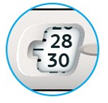
Figure (Toujeo 19)
5C Place your thumb on the injection button. Then press all the way in and hold.

Figure (Toujeo 20)
5D Keep the injection button held in and when you see "0" in the dose window, slowly count to 5.
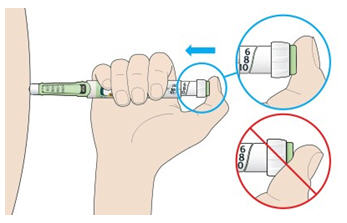
Figure (Toujeo 21)
5E After holding and slowly counting to 5, release the injection button. Then remove the needle from your skin.
If you find it hard to press the button in:
Step 6: Remove the needle
6A Grip the widest part of the outer needle cap. Keep the needle straight and guide it into the outer needle cap.
Then push firmly on.
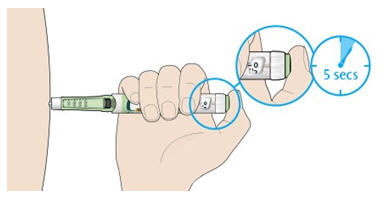
Figure (Toujeo 22)
6B Grip and squeeze the widest part of the outer needle cap. Turn your pen several times with your other hand to remove the needle.
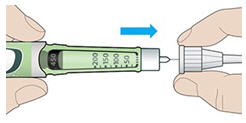
Figure (Toujeo 23)
6C Throw away the used needle in a puncture resistant container (see "Throwing your pen away" at the end of this Instructions for Use).
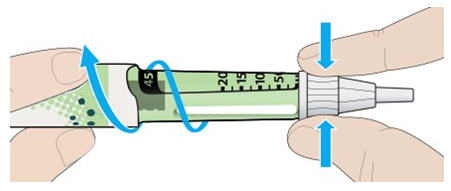
Figure (Toujeo 24)
6D Put the pen cap back on.
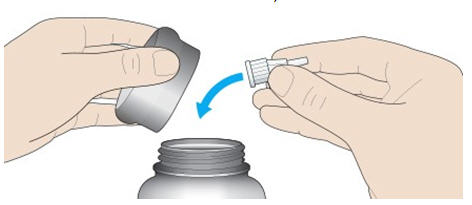
Figure (Toujeo 25)
Use by
How to store your pen
Before first use
After first use
How to care for your pen
Handle your pen with care
Protect your pen from dust and dirt
Throwing your pen away
This Instructions for Use has been approved by the U.S. Food and Drug Administration.
sanofi-aventis U.S. LLC
Bridgewater, NJ 08807
A SANOFI COMPANY
Date of Revision: September 2015
©2015 sanofi-aventis U.S. LLC
* Please review the disclaimer below.
