- the total daily dose of CONTRAVE does not exceed 360 mg of the bupropion component (i.e., four tablets per day)
- the daily dose is administered in divided doses (twice daily)
- the dose is escalated gradually
- no more than two tablets are taken at one time
- coadministration of CONTRAVE with high-fat meals is avoided [see Dosage and Administration (2.1) and Clinical Pharmacology (12.3)]
- if a dose is missed, a patient should wait until the next scheduled dose to resume the regular dosing schedule
Vulnerability to Opioid Overdose: CONTRAVE should not be administered to patients receiving chronic opioids, due to the naltrexone component, which is an opioid receptor antagonist [see Contraindications (4)]. If chronic opiate therapy is required, CONTRAVE treatment should be stopped. In patients requiring intermittent opiate treatment, CONTRAVE therapy should be temporarily discontinued and lower doses of opioids may be needed. Patients should be alerted that they may be more sensitive to opioids, even at lower doses, after CONTRAVE treatment is discontinued.
An attempt by a patient to overcome any naltrexone opioid blockade by administering large amounts of exogenous opioids is especially dangerous and may lead to a fatal overdose or life-threatening opioid intoxication (e.g., respiratory arrest, circulatory collapse). Patients should be told of the serious consequences of trying to overcome the opioid blockade.
Precipitated Opioid Withdrawal: The symptoms of spontaneous opioid withdrawal, which are associated with the discontinuation of opioid in a dependent individual, are uncomfortable, but they are not generally believed to be severe or necessitate hospitalization. However, when withdrawal is precipitated abruptly, the resulting withdrawal syndrome can be severe enough to require hospitalization. To prevent occurrence of either precipitated withdrawal in patients dependent on opioids or exacerbation of a pre-existing subclinical withdrawal symptoms, opioid-dependent patients, including those being treated for alcohol dependence, should be opioid-free (including tramadol) before starting CONTRAVE treatment. An opioid-free interval of a minimum of 7 to 10 days is recommended for patients previously dependent on short-acting opioids, and those patients transitioning from buprenorphine or methadone may need as long as two weeks. Patients should be made aware of the risks associated with precipitated withdrawal and encouraged to give an accurate account of last opioid use.
Common Adverse Reactions
Adverse reactions that were reported by greater than or equal to 2% of patients, and were more frequently reported by patients treated with CONTRAVE compared to placebo, are summarized in Table 3.
Table 3. Adverse Reactions Reported by Obese or Overweight Patients With an Incidence (%) of at Least 2% Among Patients Treated with CONTRAVE and More Common than with Placebo| Adverse Reaction | CONTRAVE
32 mg/360 mg
N=2545
% | Placebo
N=1515
% |
| Nausea | 32.5 | 6.7 |
| Constipation | 19.2 | 7.2 |
| Headache | 17.6 | 10.4 |
| Vomiting | 10.7 | 2.9 |
| Dizziness | 9.9 | 3.4 |
| Insomnia | 9.2 | 5.9 |
| Dry mouth | 8.1 | 2.3 |
| Diarrhea | 7.1 | 5.2 |
| Anxiety | 4.2 | 2.8 |
| Hot flush | 4.2 | 1.2 |
| Fatigue | 4.0 | 3.4 |
| Tremor | 4.0 | 0.7 |
| Upper abdominal pain | 3.5 | 1.3 |
| Viral gastroenteritis | 3.5 | 2.6 |
| Influenza | 3.4 | 3.2 |
| Tinnitus | 3.3 | 0.6 |
| Urinary tract infection | 3.3 | 2.8 |
| Hypertension | 3.2 | 2.2 |
| Abdominal pain | 2.8 | 1.4 |
| Hyperhidrosis | 2.6 | 0.6 |
| Irritability | 2.6 | 1.8 |
| Blood pressure increased | 2.4 | 1.5 |
| Dysgeusia | 2.4 | 0.7 |
| Rash | 2.4 | 2.0 |
| Muscle strain | 2.2 | 1.7 |
| Palpitations | 2.1 | 0.9 |
Other Adverse Reactions
The following additional adverse reactions were reported in less than 2% of patients treated with CONTRAVE but with an incidence at least twice that of placebo:
Cardiac Disorders: tachycardia, myocardial infarction
Ear and Labyrinth Disorders: vertigo, motion sickness
Gastrointestinal Disorders: lower abdominal pain, eructation, lip swelling, hematochezia, hernia
General Disorders and Administration Site Conditions: feeling jittery, feeling abnormal, asthenia, thirst, feeling hot
Hepatobiliary Disorders: cholecystitis
Infections and Infestations: pneumonia, staphylococcal infection, kidney infection
Investigations: increased blood creatinine, increased hepatic enzymes, decreased hematocrit
Metabolism and Nutrition Disorders: dehydration
Musculoskeletal and Connective Tissue Disorders: intervertebral disc protrusion, jaw pain
Nervous System Disorders: disturbance in attention, lethargy, intention tremor, balance disorder, memory impairment, amnesia, mental impairment, presyncope
Psychiatric Disorders: abnormal dreams, nervousness, dissociation (feeling spacey), tension, agitation, mood swings
Renal and Urinary Disorders: micturition urgency
Reproductive System and Breast Disorders: vaginal hemorrhage, irregular menstruation, erectile dysfunction, vulvovaginal dryness
Skin and Subcutaneous Tissue Disorders: alopecia
Psychiatric and Sleep Disorders
In the one-year controlled trials of CONTRAVE, the proportion of patients reporting one or more adverse reactions related to psychiatric and sleep disorders was higher in the CONTRAVE 32/360 mg group than the placebo group (22.2% and 15.5%, respectively). These events were further categorized into sleep disorders (13.8% CONTRAVE, 8.4% placebo), depression (6.3% CONTRAVE, 5.9% placebo), and anxiety (6.1% CONTRAVE, 4.4% placebo). Patients who were 65 years or older experienced more psychiatric and sleep disorder adverse reactions in the CONTRAVE group (28.6%) compared to placebo (6.3%), although the sample size in this subgroup was small (56 CONTRAVE, 32 placebo); the majority of these events were insomnia (10.7% CONTRAVE, 3.1% placebo) and depression (7.1% CONTRAVE, 3.1% placebo).
Neurocognitive Adverse Reactions
Adverse reactions involving attention, dizziness, and syncope occurred more often in individuals randomized to CONTRAVE 32/360 mg group compared to placebo (15.0% and 5.5%, respectively). The most common cognitive-related adverse reactions were attention disorders (2.5% CONTRAVE, 0.6% placebo). Adverse reactions involving dizziness and syncope were more common in patients treated with CONTRAVE (10.6%) than in placebo-treated patients (3.6%); dizziness accounted for almost all of these reported events (10.4% CONTRAVE, 3.4% placebo). Dizziness was the primary reason for discontinuation for 0.9% and 0.3% of patients in the CONTRAVE and placebo groups, respectively.
Increases in Serum Creatinine
In the one-year controlled trials of CONTRAVE, larger mean increases in serum creatinine from baseline to trial endpoint were observed in the CONTRAVE group compared with the placebo group (0.07 mg/dL and 0.01 mg/dL, respectively) as well as from baseline to the maximum value during follow-up (0.15 mg/dL and 0.07 mg/dL, respectively). Increases in serum creatinine that exceeded the upper limit of normal and were also greater than or equal to 50% higher than baseline occurred in 0.6% of subjects receiving CONTRAVE compared to 0.1% receiving placebo. The observed increase in serum creatinine may be the result of OCT2 inhibition [see Clinical Pharmacology (12.3)].
Metabolized by CYP2D6
In a clinical study, CONTRAVE (32 mg naltrexone/360 mg bupropion) daily was coadministered with a 50 mg dose of metoprolol (a CYP2D6 substrate). CONTRAVE increased metoprolol AUC and Cmax by approximately 4- and 2-fold, respectively, relative to metoprolol alone. Similar clinical drug interactions resulting in increased pharmacokinetic exposure of CYP2D6 substrates have also been observed with bupropion as a single agent with desipramine or venlafaxine.
Coadministration of CONTRAVE with drugs that are metabolized by CYP2D6 isozyme including certain antidepressants (SSRIs and many tricyclics), antipsychotics (e.g., haloperidol, risperidone and thioridazine), beta-blockers (e.g., metoprolol) and Type 1C antiarrhythmics (e.g., propafenone and flecainide), should be approached with caution and should be initiated at the lower end of the dose range of the concomitant medication. If CONTRAVE is added to the treatment regimen of a patient already receiving a drug metabolized by CYP2D6, the need to decrease the dose of the original medication should be considered, particularly for those concomitant medications with a narrow therapeutic index [see Clinical Pharmacology (12.3)].
Digoxin
Coadministration of CONTRAVE with digoxin may decrease plasma digoxin levels. Monitor plasma digoxin levels in patients treated concomitantly with CONTRAVE and digoxin [see Clinical Pharmacology (12.3)].
Inhibitors of CYP2B6: Ticlopidine and Clopidogrel: Concomitant treatment with these drugs can increase bupropion exposure but decrease hydroxybupropion exposure. During concomitant use with CYP2B6 inhibitors (e.g., ticlopidine or clopidogrel), the CONTRAVE daily dose should not exceed two tablets (one tablet each morning and evening) [see Dosage and Administration (2.5) and Clinical Pharmacology (12.3)].
Inducers of CYP2B6: Ritonavir, Lopinavir, and Efavirenz: Concomitant treatment with these drugs can decrease bupropion and hydroxybupropion exposure and may reduce efficacy. Avoiding concomitant use with ritonavir, lopinavir, or efavirenz is recommended [see Clinical Pharmacology (12.3)].
Pregnancy Category X
Risk Summary
CONTRAVE is contraindicated during pregnancy, because weight loss offers no potential benefit to a pregnant woman and may result in fetal harm. If this drug is used during pregnancy, or if the patient becomes pregnant while taking this drug, the patient should be apprised of the potential hazard of maternal weight loss to the fetus.
Clinical Considerations
A minimum weight gain, and no weight loss, is currently recommended for all pregnant women, including those who are already overweight or obese, due to the obligatory weight gain that occurs in maternal tissues during pregnancy.
Human Data
There are no adequate and well-controlled studies of CONTRAVE in pregnant women. In clinical studies, 21 (0.7%) of 3,024 women became pregnant while taking CONTRAVE: 11 carried to term and gave birth to a healthy infant, three had elective abortions, four had spontaneous abortions, and the outcome of three pregnancies were unknown.
Data from the international bupropion Pregnancy Registry (675 first trimester exposures) and a retrospective cohort study using the United Healthcare database (1,213 first trimester exposures) did not show an increased risk for malformations overall.
No increased risk for cardiovascular malformations overall has been observed after bupropion exposure during the first trimester. The prospectively observed rate of cardiovascular malformations in pregnancies with exposure to bupropion in the first trimester from the international Pregnancy Registry was 1.3% (9 cardiovascular malformations out of 675 first-trimester maternal bupropion exposures), which is similar to the background rate of cardiovascular malformations (approximately 1%). Data from the United Healthcare database and a case-control study (6,853 infants with cardiovascular malformations and 5,763 with non-cardiovascular malformations) from the National Birth Defects Prevention Study (NBDPS) did not show an increased risk for cardiovascular malformations overall after bupropion exposure during the first trimester.
Study findings on bupropion exposure during the first trimester and risk for left ventricular outflow tract obstruction (LVOTO) are inconsistent and do not allow conclusions regarding a possible association. The United Healthcare database lacked sufficient power to evaluate this association; the NBDPS found increased risk for LVOTO (n = 10; adjusted odds ratio [OR] = 2.6; 95% CI: 1.2, 5.7), and the Slone Epidemiology case control study did not find increased risk for LVOTO.
Study findings on bupropion exposure during the first trimester and risk for ventricular septal defect (VSD) are inconsistent and do not allow conclusions regarding a possible association. The Slone Epidemiology Study found an increased risk for VSD following first trimester maternal bupropion exposure (n = 17; adjusted OR = 2.5; 95% CI: 1.3, 5.0) but did not find increased risk for any other cardiovascular malformations studied (including LVOTO as above). The NBDPS and United Healthcare database study did not find an association between first trimester maternal bupropion exposure and VSD.
For the findings of LVOTO and VSD, the studies were limited by the small number of exposed cases, inconsistent findings among studies, and the potential for chance findings from multiple comparisons in case control studies.
Animal Data
Reproduction and developmental studies have not been conducted for the combined products naltrexone and bupropion in CONTRAVE. Safety margins were estimated using body surface area exposure (mg/m2) based on a body weight of 100 kg.
Separate studies with bupropion and naltrexone have been conducted in pregnant rats and rabbits.
Naltrexone administered orally has been shown to increase the incidence of early fetal loss in rats administered ≥30 mg/kg/day (180 mg/m2/day) and rabbits administered ≥60 mg/kg/day (720 mg/m2/day), doses at least 15 and 60 times, respectively, the maximum recommended human dose [MRHD] of the naltrexone component in CONTRAVE on a mg/m2 basis. There was no evidence of teratogenicity when naltrexone was administered orally to rats and rabbits during the period of major organogenesis at doses up to 200 mg/kg/day (approximately 100 and 200 times the recommended therapeutic dose, respectively, on a mg/m2 basis). Rats do not form appreciable quantities of the major human metabolite, 6-beta-naltrexol; therefore, the potential reproductive toxicity of the metabolite in rats is not known.
Bupropion was administered orally in studies conducted in rats and rabbits at doses up to 450 and 150 mg/kg/day, respectively (approximately 20 and 15 times the MRHD, respectively, of the bupropion component in CONTRAVE on a mg/m2 basis), during the period of organogenesis. No clear evidence of teratogenic activity was found in either species; however, in rabbits, slightly increased incidences of fetal malformations and skeletal variations were observed at the lowest dose tested (25 mg/kg/day, approximately 2 times the MRHD on a mg/m2 basis) and greater. Decreased fetal weights were seen at 50 mg/kg and greater (approximately 5 times the MRHD of the bupropion component in CONTRAVE on a mg/m2 basis). When rats were administered bupropion at oral doses of up to 300 mg/kg/day (approximately 15 times the MRHD of the bupropion component in CONTRAVE on a mg/m2 basis) prior to mating and throughout pregnancy and lactation, there were no apparent adverse effects on offspring development.
Humans
CONTRAVE (naltrexone HCl and bupropion HCl) has not been systematically studied in humans for its potential for abuse, tolerance, or physical dependence. However, in outpatient clinical studies of up to 56 weeks in duration, there was no evidence of euphoric drug intoxication, physical dependence, diversion, or abuse. There was no evidence of an abstinence syndrome following abrupt or tapered drug discontinuation after 56 weeks of double-blind, placebo-controlled, randomized treatment.
Naltrexone is a pure opioid antagonist. It does not lead to physical or psychological dependence. Tolerance to the opioid antagonistic effect is not known to occur.
Controlled clinical trials of bupropion (immediate-release formulation) conducted in normal volunteers, in subjects with a history of multiple drug abuse, and in depressed subjects showed some increase in motor activity and agitation/excitement. In a population of individuals experienced with drugs of abuse, a single dose of 400 mg of bupropion produced mild amphetamine-like activity as compared with placebo on the Morphine-Benzedrine Subscale of the Addiction Research Center Inventories (ARCI) and a score intermediate between placebo and amphetamine on the Liking Scale of the ARCI. These scales measure general feelings of euphoria and drug desirability.
Findings in clinical trials, however, are not known to reliably predict the abuse potential of drugs. Nonetheless, evidence from single-dose studies does suggest that the recommended daily dosage of bupropion when administered in divided doses is not likely to be significantly reinforcing to amphetamine or CNS stimulant abusers.
The inhalation of crushed tablets or injection of dissolved bupropion has been reported. Seizures and/or cases of death have been reported when bupropion has been administered intranasally or by parenteral injection. CONTRAVE (naltrexone HCl and bupropion HCl) extended-release tablets are intended for oral use only.
Animals
Studies in rodents and primates have shown that bupropion exhibits some pharmacologic actions common to psychostimulants. In rodents, it has been shown to increase locomotor activity, elicit a mild stereotyped behavioral response, and increased rates of responding in several schedule-controlled behavior paradigms. In primate models assessing the positive reinforcing effects of psychoactive drugs, bupropion was self-administered intravenously. In rats, bupropion produced amphetamine-like and cocaine-like discriminative stimulus effects in drug discrimination paradigms used to characterize the subjective effects of psychoactive drugs.
Human Experience
There is no clinical experience with overdosage with CONTRAVE. The maximum daily dose of CONTRAVE administered in clinical trials contained 50 mg naltrexone and 400 mg bupropion. The most serious clinical implications of CONTRAVE overdose are likely those related to overdose of bupropion.
Overdoses of up to 30 grams or more of bupropion (equivalent of up to 83 times the recommended daily dose of CONTRAVE 32 mg/360 mg) have been reported. Seizure was reported in approximately one third of all cases. Other serious reactions reported with overdoses of bupropion alone included hallucinations, loss of consciousness, sinus tachycardia, and ECG changes such as conduction disturbances (including QRS prolongation) or arrhythmias. Fever, muscle rigidity, rhabdomyolysis, hypotension, stupor, coma, and respiratory failure have been reported mainly when bupropion was part of multiple drug overdoses.
Although most patients recovered without sequelae, deaths associated with overdoses of bupropion alone have been reported in patients ingesting large doses of the drug. Multiple uncontrolled seizures, bradycardia, cardiac failure, and cardiac arrest prior to death were reported in these patients.
There is limited experience with overdose of naltrexone monotherapy in humans. In one study, subjects who received 800 mg naltrexone daily (equivalent to 25 times the recommended daily dose of CONTRAVE 32 mg/360 mg) for up to one week showed no evidence of toxicity.
Animal Experience
In the mouse, rat, and guinea pig, the oral LD50s for naltrexone were 1,100 to 1,550 mg/kg; 1,450 mg/kg; and 1,490 mg/kg; respectively. High doses of naltrexone (generally greater than or equal to 1,000 mg/kg) produced salivation, depression/reduced activity, tremors, and convulsions. Mortality in animals due to high-dose naltrexone administration usually was due to clonic-tonic convulsions and/or respiratory failure.
Overdosage Management
If over-exposure occurs, call your poison control center at 1-800-222-1222. There are no known antidotes for CONTRAVE. In case of an overdose, provide supportive care, including close medical supervision and monitoring. Consider the possibility of multiple drug overdose. Ensure an adequate airway, oxygenation, and ventilation. Monitor cardiac rhythm and vital signs. Induction of emesis is not recommended.
Absorption
Naltrexone
Following single oral administration of CONTRAVE (two 8 mg naltrexone/90 mg bupropion tablets) to healthy subjects, mean peak naltrexone concentration (Cmax) was 1.4 ng/mL, time to peak concentration (Tmax) was 2 hours, and extent of exposure (AUC0-inf) was 8.4 ng·hr/mL.
Bupropion
Following single oral administration of CONTRAVE (two 8 mg naltrexone/90 mg bupropion tablets) to healthy subjects, mean peak bupropion concentration (Cmax) was 168 ng/mL, time to peak concentration (Tmax) was three hours, and extent of exposure (AUC0-inf) was 1,607 ng·hr/mL.
Food Effect on Absorption
When CONTRAVE was administered with a high-fat meal, the AUC and Cmax for naltrexone increased 2.1-fold and 3.7-fold, respectively, and the AUC and Cmax for bupropion increased 1.4-fold and 1.8-fold, respectively. At steady state, the food effect increased AUC and Cmax for naltrexone by 1.7-fold and 1.9-fold, respectively, and increased AUC and Cmax for bupropion by 1.1-fold and 1.3-fold, respectively. Thus, CONTRAVE should not be taken with high-fat meals because of the resulting significant increases in bupropion and naltrexone systemic exposure.
Distribution
Naltrexone
Naltrexone is 21% plasma protein bound. The mean apparent volume of distribution at steady state for naltrexone (Vss/F) is 5,697 liters.
Bupropion
Bupropion is 84% plasma protein bound. The mean apparent volume of distribution at steady state for bupropion (Vss/F) is 880 liters.
Metabolism and Excretion
Naltrexone
The major metabolite of naltrexone is 6-beta-naltrexol. The activity of naltrexone is believed to be the result of both the parent and the 6-beta-naltrexol metabolite. Though less potent, 6-beta-naltrexol is eliminated more slowly and thus circulates at much higher concentrations than naltrexone. Naltrexone and 6-beta-naltrexol are not metabolized by cytochrome P450 enzymes and in vitro studies indicate that there is no potential for inhibition or induction of important isozymes.
Naltrexone and its metabolites are excreted primarily by the kidney (53% to 79% of the dose). Urinary excretion of unchanged naltrexone accounts for less than 2% of an oral dose. Urinary excretion of unchanged and conjugated 6-beta-naltrexol accounts for 43% of an oral dose. The renal clearance for naltrexone ranges from 30 to 127 mL/min, suggesting that renal elimination is primarily by glomerular filtration. The renal clearance for 6-beta-naltrexol ranges from 230 to 369 mL/min suggesting an additional renal tubular secretory mechanism. Fecal excretion is a minor elimination pathway.
Following single oral administration of CONTRAVE tablets to healthy subjects, mean elimination half-life (T1/2) was approximately 5 hours for naltrexone. Following twice daily administration of CONTRAVE, naltrexone did not accumulate and its kinetics appeared linear. However, in comparison to naltrexone, 6-beta-naltrexol accumulates to a larger extent (accumulation ratio ~3).
Bupropion
Bupropion is extensively metabolized with three active metabolites: hydroxybupropion, threohydrobupropion and erythrohydrobupropion. The metabolites have longer elimination half-lives than bupropion and accumulate to a greater extent. Following bupropion administration, more than 90% of the exposure is a result of metabolites. In vitro findings suggest that CYP2B6 is the principal isozyme involved in the formation of hydroxybupropion whereas cytochrome P450 isozymes are not involved in the formation of the other active metabolites. Bupropion and its metabolites inhibit CYP2D6. Plasma protein binding of hydroxybupropion is similar to that of bupropion (84%) whereas the other two metabolites have approximately half the binding.
Following oral administration of 200 mg of 14C-bupropion in humans, 87% and 10% of the radioactive dose were recovered in the urine and feces, respectively. The fraction of the oral dose of bupropion excreted unchanged was 0.5%, a finding consistent with the extensive metabolism of bupropion.
Following single oral administration of CONTRAVE tablets to healthy subjects, mean elimination half-life (T½) was approximately 21 hours for bupropion. Following twice daily administration of CONTRAVE, metabolites of bupropion, and to a lesser extent unchanged bupropion, accumulate and reach steady-state concentrations in approximately one week.
Specific Populations
Gender
Pooled analysis of CONTRAVE data suggested no clinically meaningful differences in the pharmacokinetic parameters of bupropion or naltrexone based on gender.
Race
Pooled analysis of CONTRAVE data suggested no clinically meaningful differences in the pharmacokinetic parameters of bupropion or naltrexone based on race.
Elderly
The pharmacokinetics of CONTRAVE have not been evaluated in the geriatric population. The effects of age on the pharmacokinetics of naltrexone or bupropion and their metabolites have not been fully characterized. An exploration of steady-state bupropion concentrations from several depression efficacy studies involving patients dosed in a range of 300 to 750 mg/day, on a three times daily schedule, revealed no relationship between age (18 to 83 years) and plasma concentration of bupropion. A single-dose pharmacokinetic study demonstrated that the disposition of bupropion and its metabolites in elderly subjects was similar to that of younger subjects. These data suggest there is no prominent effect of age on bupropion concentration; however, another pharmacokinetic study, single and multiple dose, has suggested that the elderly are at increased risk for accumulation of bupropion and its metabolites [see Use in Specific Populations (8.5)].
Smokers
Pooled analysis of CONTRAVE data revealed no meaningful differences in the plasma concentrations of bupropion or naltrexone in smokers compared with nonsmokers. The effects of cigarette smoking on the pharmacokinetics of bupropion were studied in 34 healthy male and female volunteers; 17 were chronic cigarette smokers and 17 were nonsmokers. Following oral administration of a single 150 mg dose of bupropion, there was no statistically significant difference in Cmax, half-life, Tmax, AUC, or clearance of bupropion or its active metabolites between smokers and nonsmokers.
Hepatic Impairment
Pharmacokinetic data are not available with CONTRAVE in patients with hepatic impairment. The following information is available for individual constituents:
Naltrexone
An increase in naltrexone AUC of approximately 5- and 10-fold in patients with compensated and decompensated liver cirrhosis, respectively, compared with subjects with normal liver function, has been reported. These data also suggest that alterations in naltrexone bioavailability are related to liver disease severity.
Bupropion
The effect of hepatic impairment on the pharmacokinetics of bupropion was characterized in two single-dose trials, one trial in patients with alcoholic liver disease and a second trial in patients with mild-to-severe cirrhosis.
The first trial showed that the half-life of hydroxybupropion was significantly longer in eight patients with alcoholic liver disease than in eight healthy volunteers (32±14 hours vs 21±5 hours, respectively). Although not statistically significant, the AUCs for bupropion and hydroxybupropion were more variable and tended to be greater (by 53% to 57%) in patients with alcoholic liver disease. The differences in half-life for bupropion and the other metabolites in the two patient groups were minimal.
The second trial demonstrated no statistically significant differences in the pharmacokinetics of bupropion and its active metabolites in nine subjects with mild-to-moderate hepatic cirrhosis compared with eight healthy volunteers. However, more variability was observed in some of the pharmacokinetic parameters for bupropion (AUC, Cmax, and Tmax) and its active metabolites (t½) in subjects with mild-to-moderate hepatic cirrhosis. In subjects with severe hepatic cirrhosis, significant alterations in the pharmacokinetics of bupropion and its metabolites were seen (Table 4).
Table 4. Pharmacokinetics of Bupropion and Metabolites in Patients With Severe Hepatic Cirrhosis: Ratio Relative to Healthy Matched Controls| * = Difference |
| Cmax | AUC | t½ | Tmax* |
| Bupropion | 1.69 | 3.12 | 1.43 | 0.5 h |
| Hydroxybupropion | 0.31 | 1.28 | 3.88 | 19 h |
| Threo/erythrohydrobupropion amino alcohol | 0.69 | 2.48 | 1.96 | 20 h |
The dose of CONTRAVE should be reduced in patients with hepatic impairment [see Dosage and Administration (2.3) and Use in Specific Populations (8.7)].
Renal Impairment
A single-dose pharmacokinetic study conducted for CONTRAVE, comparing subjects with mild (n=8), moderate (n=8) and severe (n=7) renal impairment to subjects with normal renal function (n=13), showed that renal impairment had no significant effect on the PK parameters of the parent drugs naltrexone and bupropion. However, systemic exposure (AUCinf) of some metabolites was increased in subjects with impairment of renal function [see Dosage and Administration (2.2) and Use in Specific Populations (8.6)].
Following a single-dose of 16 mg naltrexone /180 mg bupropion, AUCinf of 6-beta-naltrexol was approximately1.5-, 1.7-, and 2.2-fold higher in patients with mild, moderate and severe renal impairment, respectively. In patients with mild, moderate and severe renal impairment, AUC of bupropion metabolites threohydrobupropion and erythrohydrobupropion increased approximately 1.3-, 1.9-, and 1.7-fold and 1.2-, 1.8-, and 1.5-fold, respectively. No studies have been conducted for CONTRAVE in patients with end stage renal disease.
The following information is available for individual components.
In a study of seven patients with end-stage renal disease requiring dialysis, peak plasma concentrations of naltrexone were elevated at least 6-fold compared to healthy subjects. An inter-trial comparison between normal subjects and patients with end-stage renal failure demonstrated that the bupropion Cmax and AUC values were comparable in the two groups, whereas the hydroxybupropion and threohydrobupropion metabolites had a 2.3- and 2.8-fold increase, respectively, in AUC for patients with end-stage renal failure.
Drug Interactions
In Vitro Assessment of Drug Interactions
At therapeutically relevant concentrations, naltrexone and 6-beta-naltrexol are not major inhibitors of CYP isoforms CYP1A2, CYP2B6, CYP2C8, CYP2E1, CYP2C9, CYP2C19, CYP2D6 or CYP3A4. Both naltrexone and 6-beta-naltrexol are not major inducers of CYP isoforms CYP1A2, CYP2B6, or CYP3A4.
Bupropion and its metabolites (hydroxybupropion, erythrohydrobupropion, threohydrobupropion) are inhibitors of CYP2D6.
In vitro studies suggest that paroxetine, sertraline, norfluoxetine, fluvoxamine, and nelfinavir inhibit the hydroxylation of bupropion.
Bupropion (IC50 9.3 mcM) and its metabolites, hydroxybupropion (IC50 82 mcM) and threohydrobupropion and erythrohydrobupropion (1:1 mixture; IC50 7.8 mcM), inhibited the renal organic transporter OCT2 to a clinically relevant level.
Effects of Naltrexone/Bupropion on the Pharmacokinetics of Other Drugs
Drug interaction between CONTRAVE and CYP2D6 substrates (metoprolol) or other drugs (atorvastatin, glyburide, lisinopril, nifedipine, valsartan) has been evaluated. In addition, drug interaction between bupropion, a component of CONTRAVE, and CYP2D6 substrates (desipramine) or other drugs (citalopram, lamotrigine) has also been evaluated.
Table 5. Effect of Naltrexone/Bupropion Coadministration on Systemic Exposure of Other Drugs| Naltrexone/Bupropion Dosage | Coadministered Drug |
| Name and Dose Regimens | Change in Systemic Exposure |
| Initiate the following drugs at the lower end of the dose range during concomitant use with CONTRAVE [see Drug Interactions 7]: |
Bupropion
150 mg twice daily for 10 days | Desipramine
50 mg single dose | ↑5-fold AUC, ↑2-fold Cmax |
Bupropion
300 mg (as XL) once daily for 14 days | Citalopram
40 mg once daily for 14 days | ↑40% AUC, ↑30% Cmax |
Naltrexone/Bupropion
16 mg/180 mg twice daily for 7 days | Metoprolol
50 mg single dose | ↑4-fold AUC, ↑2-fold Cmax |
| No dose adjustment needed for the following drugs during concomitant use with CONTRAVE: |
Naltrexone/Bupropion
16 mg/180 mg single dose | Atorvastatin
80 mg single dose | No Effect |
Naltrexone/Bupropion
16 mg/180 mg single dose | Glyburide
6 mg single dose | No Effect |
Naltrexone/Bupropion
16 mg/180 mg single dose | Lisinopril
40 mg single dose | No Effect |
Naltrexone/Bupropion
16 mg/180 mg twice daily | Metformin
850 mg single dose | ↑23% AUC;
No effect on Cmax |
Naltrexone/Bupropion
16 mg/180 mg single dose | Nifedipine
90 mg single dose | No Effect |
Naltrexone/Bupropion
16 mg/180 mg single dose | Valsartan
320 mg single dose | No Effect |
Bupropion
150 mg twice daily for 12 days | Lamotrigine
100 mg single dose | No Effect |
Digoxin: Literature data showed that digoxin exposure was decreased when a single oral dose of 0.5 mg digoxin was administered 24 hours after a single oral dose of extended-release 150 mg bupropion in healthy volunteers.
Effects of Other Drugs on the Pharmacokinetics of Naltrexone/Bupropion
Drug interactions between CYP2B6 inhibitors (ticlopidine, clopidogrel, prasugrel), CYP2B6 inducers (ritonavir, lopinavir) and bupropion (one of the CONTRAVE components), or between other drugs (atorvastatin, glyburide, metoprolol, lisinopril, nifedipine, valsartan) and CONTRAVE have been evaluated. While not systematically studied, carbamazepine, phenobarbital, or phenytoin may induce the metabolism of bupropion.
Table 6. Effect of Coadministered Drugs on Systemic Exposure of Naltrexone/Bupropion| *Results were confounded by the food-effect due to oral glucose coadministered with the treatment. |
| Name and Dose Regimens | Coadministered Drug |
| CONTRAVE Components | Change in Systemic Exposure |
| Do not exceed one tablet twice daily dose of CONTRAVE with the following drugs: |
Ticlopidine
250 mg twice daily for 4 days | Bupropion
Hydroxybupropion | ↑85% AUC, ↑38% Cmax
↓84% AUC, ↓78% Cmax |
Clopidogrel
75 mg once daily for 4 days | Bupropion
Hydroxybupropion | ↑60% AUC, ↑40% Cmax
↓52% AUC, ↓50% Cmax |
| No dose adjustment needed for CONTRAVE with the following drugs: |
Atorvastatin
80 mg single dose | Naltrexone
6-beta naltrexol
Bupropion
Hydroxybupropion
Threohydrobupropion
Erythrohydrobupropion | No Effect
No Effect
No Effect
No Effect
No Effect
No Effect |
Lisinopril
40 mg single dose | Naltrexone
6-beta naltrexol
Bupropion
Hydroxybupropion
Threohydrobupropion
Erythrohydrobupropion | No Effect
No Effect
No Effect
No Effect
No Effect
No Effect |
Valsartan
320 mg single dose | Naltrexone
6-beta naltrexol
Bupropion
Hydroxybupropion
Threohydrobupropion
Erythrohydrobupropion | No Effect
No Effect
No Effect
↓14% AUC, No Effect on Cmax
No Effect
No Effect |
Cimetidine
800 mg single dose | Bupropion
Hydroxybupropion
Threo/Erythrohydrobupropion | No Effect
No Effect
↑16% AUC, ↑32% Cmax |
Citalopram
40 mg once daily for 14 days | Bupropion
Hydroxybupropion
Threohydrobupropion
Erythrohydrobupropion | No Effect
No Effect
No Effect
No Effect |
Metoprolol
50 mg single dose | Naltrexone
6-beta naltrexol
Bupropion
Hydroxybupropion
Threohydrobupropion
Erythrohydrobupropion | ↓25% AUC, ↓29% Cmax
No Effect
No Effect
No Effect
No Effect
No Effect |
Metformin
850 mg single dose | Bupropion
Hydroxybupropion
Threohydrobupropion
Erythrohydrobupropion
Naltrexone
6-beta naltrexol | No Effect
No Effect
No Effect
No Effect
No Effect
No Effect |
Nifedipine
90 mg single dose | Naltrexone
6-beta naltrexol
Bupropion
Hydroxybupropion
Threohydrobupropion
Erythrohydrobupropion | ↑24% AUC, ↑58% Cmax
No Effect
No Effect on AUC, ↑22% Cmax
No Effect
No Effect
No Effect |
Prasugrel
10 mg once daily for 6 days | Bupropion
Hydroxybupropion | ↑18% AUC, ↑14% Cmax
↓24%AUC, ↓32% Cmax |
| Use CONTRAVE with caution with the following drugs: |
Glyburide
6 mg single dose* | Naltrexone
6-beta naltrexol
Bupropion
Hydroxybupropion
Threohydrobupropion
Erythrohydrobupropion | ↑2-fold AUC, ↑2-fold Cmax
No Effect
↑36% AUC, ↑18% Cmax
↑22% AUC, ↑21% Cmax
No Effect on AUC, ↑15% Cmax
No Effect |
| Avoid concomitant use of CONTRAVE with following drugs: |
Ritonavir
100 mg twice daily for 17 days | Bupropion
Hydroxybupropion
Threohydrobupropion
Erythrohydrobupropion
| ↓22% AUC, ↓21 % Cmax
↓23% AUC, No Effect on Cmax
↓38% AUC, ↓39 % Cmax
↓48% AUC, ↓28 % Cmax |
| 600 mg twice daily for 8 days | Bupropion
Hydroxybupropion
Threohydrobupropion
Erythrohydrobupropion | ↓66% AUC, ↓62% Cmax
↓78% AUC, ↓42 % Cmax
↓50% AUC, ↓58% Cmax
↓68% AUC, ↓48 % Cmax |
Lopinavir/Ritonavir
400 mg/100 mg twice daily for 14 days | Bupropion
Hydroxybupropion | ↓57% AUC, ↓57% Cmax
↓50% AUC, ↓31% Cmax |
Efavirenz
600 mg once daily for 2 weeks | Bupropion
Hydroxybupropion | ↓55% AUC, ↓34% Cmax
No Effect on AUC, ↑50% Cmax |
Effect on Weight Loss and Weight Maintenance
Four 56-week multicenter, double-blind, placebo-controlled obesity trials (CONTRAVE Obesity Research, or COR-I, COR-II, COR-BMOD, and COR-Diabetes) were conducted to evaluate the effect of CONTRAVE in conjunction with lifestyle modification in 4,536 patients randomized to CONTRAVE or placebo. The COR-I, COR-II, and COR-BMOD trials enrolled patients with obesity (BMI 30 kg/m2 or greater) or overweight (BMI 27 kg/m2 or greater) and at least one comorbidity (hypertension or dyslipidemia). The COR-Diabetes trial enrolled patients with BMI greater than 27 kg/m2 with type 2 diabetes with or without hypertension and/or dyslipidemia.
Treatment was initiated with a three-week dose-escalation period followed by approximately 1 year of continued therapy. Patients were instructed to take CONTRAVE with food. COR-I and COR-II included a program consisting of a reduced-calorie diet resulting in an approximate 500 kcal/day decrease in caloric intake, behavioral counseling, and increased physical activity. COR-BMOD included an intensive behavioral modification program consisting of 28 group counseling sessions over 56 weeks as well as a prescribed diet and exercise regimen. COR-Diabetes evaluated patients with type 2 diabetes not achieving glycemic goal of a HbA1c less than 7% either with oral antidiabetic agents or with diet and exercise alone. Of the overall population from these four trials, 24% had hypertension, 54% had dyslipidemia at study entry, and 10% had type 2 diabetes.
Apart from COR-Diabetes, which only enrolled patients with type 2 diabetes, the demographic characteristics of patients were similar across all four trials. For the four trial populations combined, the mean age was 46 years, 83% were female, 77% were Caucasian, 18% were black, and 5% were other races. At baseline, mean BMI was 36 kg/m2 and mean waist circumference was 110 cm.
A substantial percentage of randomized patients withdrew from the trials prior to Week 56: 45% for the placebo group and 46% for the CONTRAVE group. The majority of these patients discontinued within the first 12 weeks of treatment. Approximately 24% of patients treated with CONTRAVE and 12% of patients treated with placebo discontinued treatment because of an adverse reaction [see Adverse Reactions (6.1)].
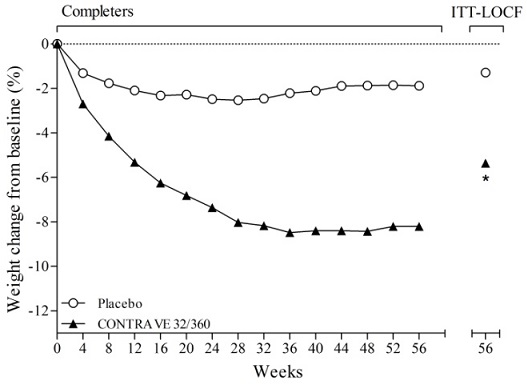
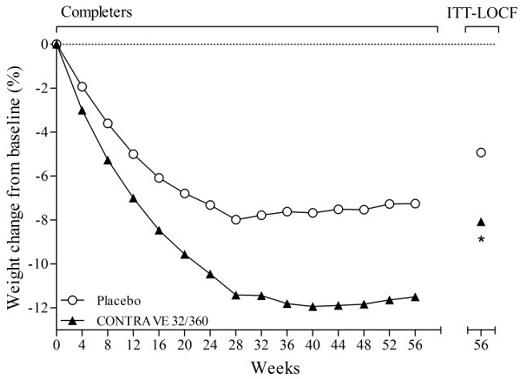
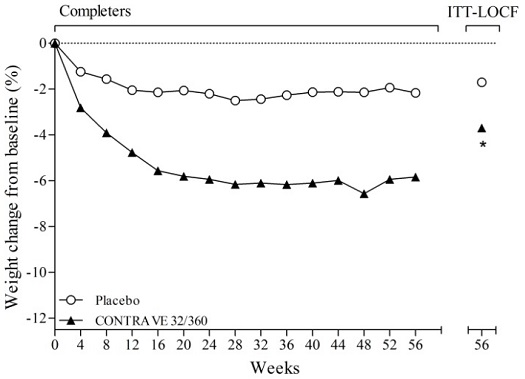
The co-primary endpoints were percent change from baseline body weight and the proportion of patients achieving at least a 5% reduction in body weight. In the 56-week COR-I trial, the mean change in body weight was -5.4% among patients assigned to CONTRAVE 32 mg/360 mg compared with -1.3% among patients assigned to placebo (Intent-To-Treat [ITT] population), as shown in Table 7 and Figure 1. In this trial, the achievement of at least a 5% reduction in body weight from baseline occurred more frequently for patients treated with CONTRAVE 32 mg/360 mg compared with placebo (42% vs 17%; Table 7). Results from COR-BMOD and COR-Diabetes are shown in Table 7 and Figures 2 and 3.
Table 7. Changes in Weight in 56-Week Trials with CONTRAVE (ITT/LOCF*)Type 1 error was controlled across all 3 endpoints
*Based on last observation carried forward (LOCF) in all randomized subjects who had a baseline body weight measurement and at least one post baseline body weight measurement during the defined treatment phase. All available body weight data during the double-blind treatment phase are included in the analysis, including data collected from subjects who discontinued study drug.
†Difference from placebo, p<0.001
‡Difference from placebo, p<0.01
|
| COR-I | COR-BMOD | COR-Diabetes |
CONTRAVE
32 mg/
360 mg | Placebo | CONTRAVE
32 mg/
360 mg | Placebo | CONTRAVE
32 mg/
360 mg | Placebo |
| N | 538 | 536 | 565 | 196 | 321 | 166 |
| Weight (kg) |
| Baseline mean (SD) | 99.8
(16.1) | 99.5
(14.4) | 100.3
(15.5) | 101.8
(15.0) | 104.2
(19.1) | 105.3
(16.9) |
| LS Mean % Change From Baseline (SE) | -5.4
(0.3) | -1.3
(0.3) | -8.1
(0.4) | -4.9
(0.6) | -3.7
(0.3) | -1.7
(0.4) |
| Difference from placebo (95% CI) | -4.1†
(-4.9, -3.3) | | -3.2†
(-4.5, -1.8) | | -2.0†
(-3.0, -1.0) | |
| Percentage of patients losing greater than or equal to 5% body weight | 42 | 17 | 57 | 43 | 36 | 18 |
| Risk difference vs placebo (95% CI) | 25†
(19, 30) | | 14†
(6, 22) | | 18†
(9, 25) | |
| Percentage of patients losing greater than or equal to 10% body weight | 21 | 7 | 35 | 21 | 15 | 5 |
| Risk difference vs placebo (95% CI) | 14†
(10, 18) | | 14†
(7, 21) | | 10‡
(4, 15) | |
The percentages of patients who achieved at least 5% or at least 10% body weight loss from baseline were greater among those assigned to CONTRAVE, compared with placebo, in all four obesity trials (Table 7).
Figure 1. Weight Loss Over Time in Completer
Population: COR-I Trial |
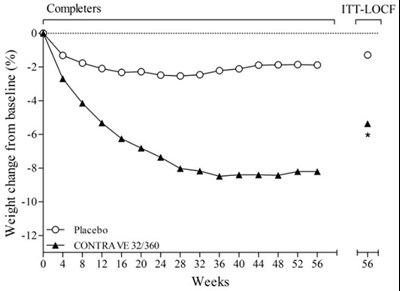 Figure 1 (Contrave Er 04) |
*p<0.001 vs placebo
COR-I trial: 50.1% in the placebo group and 49.2% in the CONTRAVE group discontinued study drug. |
Figure 2. Weight Loss Over Time in Completer
Population: COR-BMOD Trial |
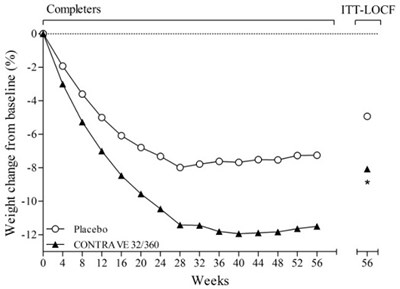 Figure 1 (Contrave Er 05) |
*p<0.001 vs placebo
COR-BMOD trial: 41.6% in the placebo group and 42.1% in the CONTRAVE group discontinued study drug. |
Figure 3. Weight Loss Over Time in Completer
Population: COR-Diabetes Trial |
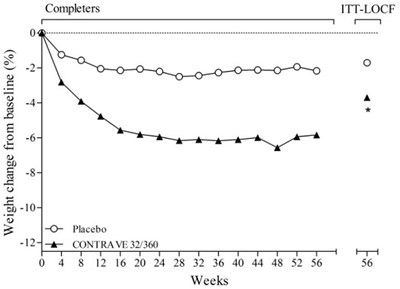 Figure 1 (Contrave Er 06) |
*p<0.001 vs placebo
COR-Diabetes trial: 41.2% in the placebo group and 47.8% in the CONTRAVE group discontinued study drug. |
Effect on Cardiovascular and Metabolic Parameters
Changes in cardiovascular and metabolic parameters associated with obesity are presented for COR-I and COR-BMOD (Table 8). Changes in mean blood pressure and heart rate are further described elsewhere [see Warnings and Precautions (5.5)].
Table 8. Change in Markers of Cardiovascular and Metabolic Parameters from Baseline in 56 Week Trials with CONTRAVE 32 mg/360 mg (COR-I and COR-BMOD)*Q1: first quartile; Q3: third quartile
*Based on last observation carried forward (LOCF) while on study drug
†Hodges-Lehmann estimate of treatment difference
‡Statistically significant vs placebo (p<0.001) based on the pre-specified closed testing procedure method for controlling Type I error |
| Parameter | COR-I | COR-BMOD |
| CONTRAVE
32 mg/360 mg
N=471 | Placebo
N=511 | CONTRAVE
minus Placebo
(LS Mean) | CONTRAVE
32 mg/360 mg
N=482 | Placebo
N=193 | CONTRAVE
minus Placebo
(LS Mean) |
| Triglycerides, mg/dL |
| Baseline median (Q1, Q3) | 113
(86, 158) | 112
(78, 157) | -10.7† | 110
(78, 162) | 103
(76, 144) | -9.9† |
| Median % change | -11.6 | 1.7 | -17.8 | -7.4 |
| HDL-C, mg/dL |
| Baseline mean (SD) | 51.9
(13.6) | 52.0
(13.6) | 7.2 | 53.6
(13.5) | 55.3
(12.9) | 6.6 |
| LS Mean % change (SE) | 8.0
(0.9) | 0.8
(0.9) | 9.4
(1.0) | 2.8
(1.6) |
| LDL-C, mg/dL |
| Baseline mean (SD) | 118.8
(32.6) | 119.7
(34.8) | -1.5 | 109.5
(27.5) | 109.2
(27.3) | -2.9 |
| LS Mean % change (SE) | -2.0
(1.0) | -0.5
(1.1) | 7.1
(1.4) | 10.0
(2.2) |
| Waist circumference, cm |
| Baseline mean (SD) | 108.8
(11.3) | 110.0
(12.2) | -3.8‡ | 109.3
(11.4) | 109.0
(11.8) | -3.2‡ |
| LS Mean change (SE) | -6.2
(0.4) | -2.5
(0.4) | -10.0
(0.5) | -6.8
(0.8) |
| Heart rate, bpm |
| Baseline mean (SD) | 72.1
(8.7) | 71.8
(8.0) | 1.2 | 70.7
(8.3) | 70.4
(9.0) | 0.9 |
| LS Mean change (SE) | 1.0
(0.3) | -0.2
(0.3) | 1.1
(0.4) | 0.2
(0.5) |
| Systolic blood pressure, mmHg |
| Baseline mean (SD) | 118.9
(9.8) | 119.0
(9.8) | 1.8 | 116.9
(9.9) | 116.7
(10.9) | 2.6 |
| LS Mean change (SE) | -0.1
(0.4) | -1.9
(0.4) | -1.3
(0.5) | -3.9
(0.7) |
| Diastolic blood pressure, mmHg |
| Baseline mean (SD) | 77.1
(7.2) | 77.3
(6.6) | 0.9 | 78.2
(7.2) | 77.2
(7.4) | 1.4 |
| LS Mean change (SE) | 0.0
(0.3) | -0.9
(0.3) | -1.4
(0.3) | -2.8
(0.5) |
Effect of CONTRAVE on Cardiometabolic Parameters and Anthropometry in Patients with Type 2 Diabetes Mellitus
Changes in glycemic control observed from baseline to Week 56 among patients with type 2 diabetes and obesity assigned to either CONTRAVE 32 mg/360 mg or placebo are shown in Table 9.
Table 9. Changes in Cardiometabolic Parameters and Waist Circumference in Patients with Type 2 Diabetes Mellitus in a 56 Week Trial with CONTRAVE 32 mg/360 mg (COR-Diabetes)Based on last observation carried forward (LOCF) while on study drug
*Statistically significant vs placebo (p<0.001) based on the pre-specified closed testing procedure method for controlling Type I error
†Values are baseline median (first and third quartiles), median % change, and the Hodges-Lehmann estimate of the median treatment difference
|
| CONTRAVE
32 mg/360 mg
N=265 | Placebo
N=159 | CONTRAVE
minus Placebo
(LS Mean) |
| Baseline | Change from
Baseline
(LS Mean) | Baseline | Change from
Baseline
(LS Mean) |
| HbA1c (%) | 8.0 | -0.6 | 8.0 | -0.1 | -0.5* |
| Fasting Glucose (mg/dL) | 160.0 | -11.9 | 163.9 | -4.0 | -7.9 |
| Waist Circumference (cm) | 115.6 | -5.0 | 114.3 | -2.9 | -2.1 |
| Systolic blood pressure (mmHg) | 125.0 | 0.0 | 124.5 | -1.1 | 1.2 |
| Diastolic blood pressure (mmHg) | 77.5 | -1.1 | 77.4 | -1.5 | 0.4 |
| Heart rate (bpm) | 72.9 | 0.7 | 73.1 | -0.2 | 0.9 |
| Baseline | % Change
from Baseline
(LS Mean) | Baseline | % Change
from Baseline
(LS Mean) | CONTRAVE
minus Placebo
(LS Mean) |
| Triglycerides (mg/dL)† | 147 (98, 200) | -7.7 | 168 (114, 236) | -8.6 | -3.3 |
| HDL Cholesterol (mg/dL) | 46.2 | 7.4 | 46.1 | -0.2 | 7.6 |
| LDL Cholesterol (mg/dL) | 100.2 | 2.4 | 101.0 | 4.2 | -1.9 |
Effect on Body Composition
In a subset of 124 patients (79 CONTRAVE, 45 placebo), body composition was measured using dual energy X-ray absorptiometry (DEXA). The DEXA assessment showed that mean total body fat mass decreased by 4.7 kg (11.7%) in the CONTRAVE group vs 1.4 kg (4.3%) in the placebo group at Week 52/LOCF (treatment difference, -3.3 kg [-7.4%], p<0.01).