Tresiba Injection, Solution
Product Images NDC 50090-3491

65 FDA label images from A-s Medication Solutions · Packaging, Regulatory Labels, and Product Appearance

Product Visual Gallery

This gallery contains 65 technical images submitted to the FDA as part of the official labeling for Tresiba (NDC 50090-3491). Unlike standard consumer photos, these assets often include clinical data figures, molecular chemical structures, and official manufacturer packaging layouts.

As provided by A-s Medication Solutions, these visuals offer a comprehensive scientific overview of the product's physical and chemical identity, aiding pharmacists and researchers in product verification and study.

Product Images & Figures Index

FDA Label Image

Figure 1: Structural Formula Of Tresiba (Image 01)
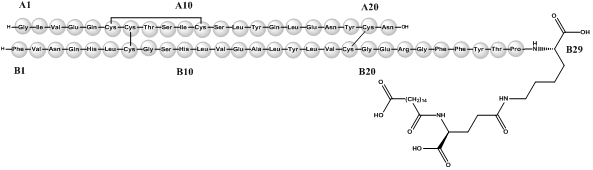
Figure 1: Structural Formula Of Tresiba (Image 01)
Chemical structure diagram of insulin degludec, showing the amino acid sequence and molecular components relevant to the active ingredient in Tresiba injection solution.*
FDA Label Image

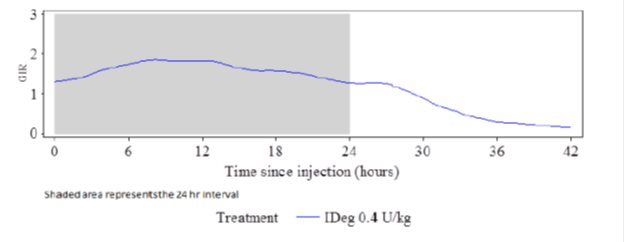
Figure 2: Mean Gir Profile For 0.4 U/kg Dose Of Tresiba (steady State) In Patients With Type 1 Diabetes Mellitus (Image 02)

Figure 2: Mean Gir Profile For 0.4 U/kg Dose Of Tresiba (steady State) In Patients With Type 1 Diabetes Mellitus (Image 02)
A line graph depicting GIR (glucose infusion rate) over time since injection in hours for insulin degludec 0.4 U/kg treatment. The x-axis represents time from 0 to 42 hours, and the y-axis represents GIR from 0 to 3. A shaded area indicates the 24-hour interval post-injection where GIR remains elevated before declining.*
FDA Label Image

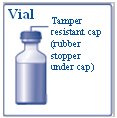
Vial Ifu-1 (Image 03)

Vial Ifu-1 (Image 03)
Illustration of a vial labeled with a tamper-resistant cap, featuring a rubber stopper under the cap. The vial is shown in a simple graphic style highlighting the cap and stopper components.*
FDA Label Image

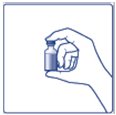
Vial Ifu-2 (Image 04)

Vial Ifu-2 (Image 04)
An instructional illustration showing a hand holding a vial, demonstrating how to hold the vial during preparation or administration of an injection.*
FDA Label Image

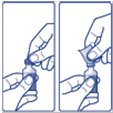
Vial Ifu-figure A,b (Image 05)

Vial Ifu-figure A,b (Image 05)
An instructional illustration showing the steps of attaching or removing a cap or needle from a pen injection device by hand. The images depict hand movements manipulating a small cylindrical object, relevant for subcutaneous injection administration.*
FDA Label Image

Vial Ifu-figure C (Image 06)

Vial Ifu-figure C (Image 06)
An instructional illustration showing the preparation of a syringe by attaching a cap or needle, featuring a hand holding the syringe and an inset detail of the syringe tip. This likely relates to the proper use or administration technique for Tresiba 200 U/mL injection, solution for subcutaneous use.*
FDA Label Image

Vial Ifu-figure D (Image 07)

Vial Ifu-figure D (Image 07)
An instructional illustration showing a hand holding a device with an arrow pointing downward, likely demonstrating the connection of a needle or attachment to a Tresiba (insulin degludec) injection pen for subcutaneous administration.*
FDA Label Image

Vial Ifu-figure E (Image 08)

Vial Ifu-figure E (Image 08)
An instructional diagram showing a person removing a cap from an injection pen or vial using their thumb and fingers, indicated by an arrow pointing downward to demonstrate the action.*
FDA Label Image

Vial Ifu-figure F (Image 09)

Vial Ifu-figure F (Image 09)
Illustration showing a hand holding a Tresiba insulin degludec injection pen, demonstrating the step of attaching or removing a needle by pressing down and twisting. This instructional image supports correct use of the subcutaneous injection device for Tresiba 200 U/mL.*
FDA Label Image

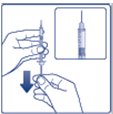
Vial Ifu-figure G (Image 10)

Vial Ifu-figure G (Image 10)
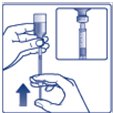
An instructional illustration showing a hand holding an injection pen device vertically with the needle pointing down towards a syringe. The other hand is positioned underneath, seemingly to catch the liquid or to prepare for injection. This image likely demonstrates the steps or method for drawing insulin degludec Tresiba injection into a syringe before administration.*
FDA Label Image

Vial Ifu-figure H (Image 11)

Vial Ifu-figure H (Image 11)
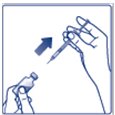
An instructional illustration showing how to prepare a dose using a syringe or pen device. The image depicts a hand holding the device, turning or adjusting a dial or cap, with an inset close-up of the device's tip or plunger. The instructions appear to demonstrate drawing or setting the medication before injection.*
FDA Label Image

Vial Ifu-figure I (Image 12)

Vial Ifu-figure I (Image 12)
An instructional illustration showing a hand holding a syringe or injection pen with the other hand removing or preparing to insert a cap or needle cover. The image indicates the step of handling the injection device, possibly related to the Tresiba insulin degludec injection preparation.*
FDA Label Image

Vial Ifu-figure J (Image 13)

Vial Ifu-figure J (Image 13)
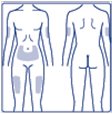
An instructional illustration showing front and back views of a human body with highlighted areas for subcutaneous injection sites in the thighs and abdomen.*
FDA Label Image

Vial Ifu-figure K (Image 14)

Vial Ifu-figure K (Image 14)
An instructional illustration showing a hand holding an injection pen and another hand with an arrow indicating the injection site on the skin. The image visually guides the subcutaneous injection technique, relevant to Tresiba (insulin degludec) injection, solution 200 U/mL.*
FDA Label Image

Vial Ifu-figure L (Image 15)

Vial Ifu-figure L (Image 15)
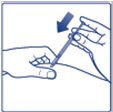
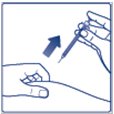
An instructional illustration showing the subcutaneous injection technique. It depicts a hand holding a syringe positioned above the skin of a forearm, with an arrow indicating the injection direction into the skin.*
FDA Label Image

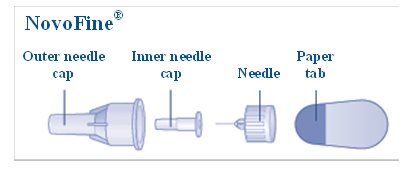
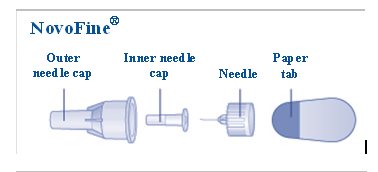
Figure A: Novofine Needle Components (Image 16)

Figure A: Novofine Needle Components (Image 16)
An illustration labeled 'NovoFine®' showing the components of a needle assembly. It depicts four parts from left to right: outer needle cap, inner needle cap, needle, and paper tab, each clearly labeled.*
FDA Label Image

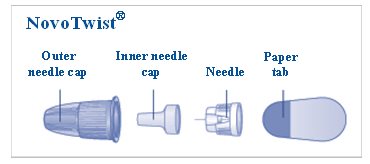
Figure A: Novotwist Needle Components (Image 17)

Figure A: Novotwist Needle Components (Image 17)
An instructional illustration showing components of a NovoTwist pen needle: outer needle cap, inner needle cap, needle, and paper tab, labeled individually from left to right.*
FDA Label Image

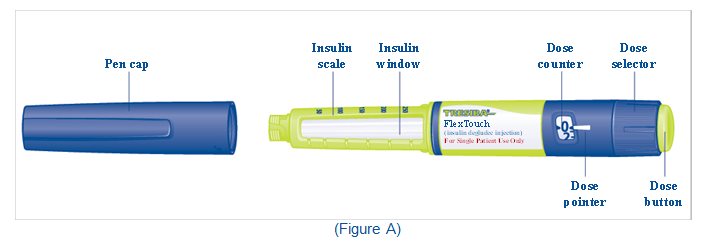
Figure A: Tresiba Flextouch Pen Components (Image 18)

Figure A: Tresiba Flextouch Pen Components (Image 18)
Illustration showing the labeled parts of a Tresiba FlexTouch insulin pen, 200 U/mL, injection solution. The diagram identifies the pen cap, insulin scale, insulin window, dose counter, dose pointer, dose selector, and dose button, detailing components for patient use of the subcutaneous injection device.*
FDA Label Image

100 U/ml Ifu (Figure B)

100 U/ml Ifu (Figure B)
An instructional illustration showing hands holding an injection pen. One hand is turning or adjusting a dial or cap on the pen, indicated by an arrow pointing clockwise. The image appears to demonstrate how to prepare or adjust the insulin injection pen before use.*
FDA Label Image

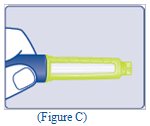
100 U/ml Ifu (Figure C)

100 U/ml Ifu (Figure C)
An instructional illustration showing a close-up of a hand holding a Tresiba injection pen. The image highlights the pen's dosing window or dose selector area, demonstrating dose preparation with the insulin degludec injection pen for subcutaneous use.*
FDA Label Image

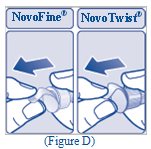
100 U/ml Ifu (Figure D)

100 U/ml Ifu (Figure D)
An instructional illustration showing two panels labeled NovoFine and NovoTwist. Both depict a hand pressing the cap off of an insulin pen needle, indicated by leftward arrows. The figure demonstrates proper removal technique for needle caps associated with these devices.*
FDA Label Image

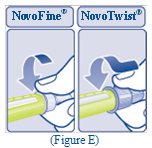
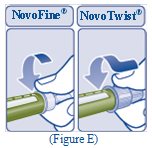
100 U/ml Ifu (Figure E)

100 U/ml Ifu (Figure E)
An instructional diagram showing the user attaching a NovoFine needle and a NovoTwist needle to a syringe or pen device for subcutaneous injection. The image illustrates the twisting and pushing motions. No text other than the needle brand names NovoFine and NovoTwist are visible.*
FDA Label Image

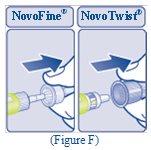
100 U/ml Ifu (Figure F)

100 U/ml Ifu (Figure F)
An instructional illustration showing the assembly steps for a NovoFine or NovoTwist needle onto a syringe or pen device. The graphic includes directional arrows indicating how to attach the needle securely.*
FDA Label Image

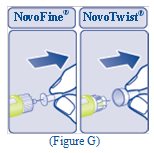
100 U/ml Ifu (Figure G)

100 U/ml Ifu (Figure G)
An instructional illustration showing the proper use of NovoFine and NovoTwist needles for subcutaneous injection. The images depict hands pulling the cover off the needle before administration, with arrows indicating the direction to remove the needle caps, supporting correct preparation technique for injection devices.*
FDA Label Image

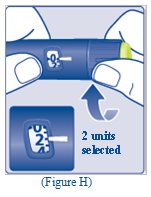
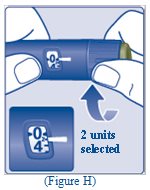
100 U/ml Ifu (Figure H)

100 U/ml Ifu (Figure H)
An instructional illustration showing a hand holding a Tresiba insulin degludec injection pen, adjusting the dose selector to 2 units. The image includes a close-up inset depicting the dose window displaying the number 2, indicating two units have been selected.*
FDA Label Image

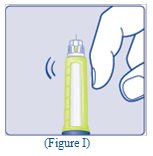
100 U/ml Ifu (Figure I)

100 U/ml Ifu (Figure I)
An instructional illustration showing a hand holding a Pen Injector, likely used for subcutaneous injection. The image highlights the Pen Injector in yellow, suggesting motion or action, which may depict how to handle or prepare the device for injection.*
FDA Label Image

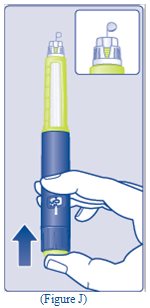
100 U/ml Ifu (Figure J)

100 U/ml Ifu (Figure J)
An instructional illustration showing a hand holding a Tresiba injection pen with a focus on removing the yellow safety cap by pulling it upward. A magnified inset highlights the safety cap prior to removal. This image demonstrates part of the preparation steps for the Tresiba insulin degludec 200 U/mL injection pen.*
FDA Label Image

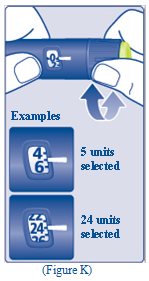
100 U/ml Ifu (Figure K)

100 U/ml Ifu (Figure K)
An instructional diagram showing a close-up of a Tresiba insulin pen dose selector. The image illustrates how to turn the dose dial to select insulin units, displaying examples of 5 units and 24 units selected on the dose window. The diagram emphasizes dose selection mechanism for the insulin degludec injection pen.*
FDA Label Image

100 U/ml Ifu (Figure L)

100 U/ml Ifu (Figure L)
An illustration showing a close-up of a pen-type injector with measurement markings indicating approximate units of insulin remaining. The pen is partially filled, with text noting "Example Approx. 200 units left," demonstrating the dosage measurement for Tresiba injection, solution, 200 U/mL.*
FDA Label Image

100 U/ml Ifu (Figure M)

100 U/ml Ifu (Figure M)
An instructional illustration showing front and back views of a human figure with recommended subcutaneous injection sites highlighted, including upper arms, abdomen, and thighs.*
FDA Label Image

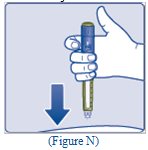
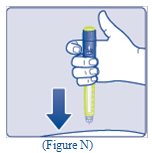
100 U/ml Ifu (Figure N)

100 U/ml Ifu (Figure N)
An instructional illustration showing a hand holding a Tresiba insulin degludec injection pen device. The image depicts the user gripping the pen with thumb and fingers, and a downward pointing arrow indicates an action, likely pressing the pen to inject or prime the device before subcutaneous injection.*
FDA Label Image

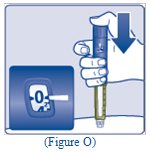
100 U/ml Ifu (Figure O)

100 U/ml Ifu (Figure O)
An instructional illustration showing a hand holding a syringe and injecting insulin subcutaneously into the skin, indicated by an arrow pointing downward. A device with a window displaying the number '-0-' is shown alongside the injection, suggesting a step in the preparation or administration process for Tresiba (insulin degludec) injection.*
FDA Label Image

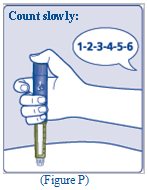
100 U/ml Ifu (Figure P)

100 U/ml Ifu (Figure P)
An instructional illustration showing a hand holding a vial with measurement markings, with a speech bubble counting slowly from 1 to 6. The image appears to demonstrate a step in preparing an injection, likely indicating the recommended timing or pace for drawing up the medication.*
FDA Label Image

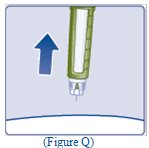
100 U/ml Ifu (Figure Q)

100 U/ml Ifu (Figure Q)
Instructional diagram depicting the removal of the cap from a Tresiba injection pen before use. The image shows the pen with an upward-pointing arrow indicating the direction to pull the cap off, relevant for subcutaneous administration of insulin degludec 200 U/mL solution.*
FDA Label Image

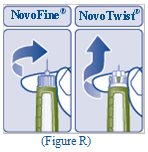
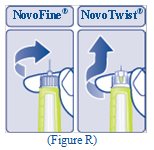
100 U/ml Ifu (Figure R)

100 U/ml Ifu (Figure R)
An instructional illustration labeled 'Figure R' showing two steps of a device operation. The first panel depicts a finger pressing on a component labeled 'NovoFine,' with a rightward arrow. The second panel depicts a finger lifting a component labeled 'NovoTwist' upward, indicating device manipulation for injection use.*
FDA Label Image

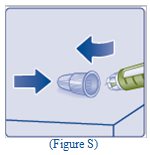
100 U/ml Ifu (Figure S)

100 U/ml Ifu (Figure S)
An instructional illustration showing how to connect a needle to a syringe or pen device. The image depicts a needle positioned near the device with arrows indicating these two parts should be pushed together.*
FDA Label Image

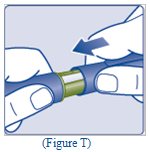
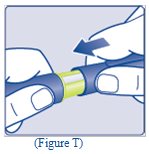
100 U/ml Ifu (Figure T)

100 U/ml Ifu (Figure T)
An instructional illustration showing two hands manipulating a small cylindrical component, likely part of an injection device or pen. One hand is holding the component steady while the other is rotating or removing a colored cap or ring, demonstrating proper handling technique for assembly or preparation.*
FDA Label Image

Qr Code 100 Units/ml (Image 38)

FDA Label Image

Flextouch U100 (Image 39)

Flextouch U100 (Image 39)
Label panel for Tresiba FlexTouch (insulin degludec injection) 100 units/mL subcutaneous injection. The label features the brand name Tresiba prominently, specifies the dosage strength, and includes a note to read before first use. The labeler is A-S Medication Solutions, with the Novo Nordisk logo at the bottom right.*
FDA Label Image

Figure A: Novofine Needle Components (Image 40)

Figure A: Novofine Needle Components (Image 40)
An illustration showing the components of a NovoFine needle set, including the outer needle cap, inner needle cap, needle, and paper tab. The graphic visually disassembles the parts in sequence from left to right.*
FDA Label Image

Figure A: Novotwist Needle Components (Image 41)

Figure A: Novotwist Needle Components (Image 41)
An instructional illustration showing components of the NovoTwist system, including the outer needle cap, inner needle cap, needle, and paper tab. The image visually identifies each component in a sequential layout.*
FDA Label Image

Figure A: Tresiba Flextouch U200 Pen Components (Image 42)

Figure A: Tresiba Flextouch U200 Pen Components (Image 42)
An illustration showing the components of a Tresiba 200 U/mL insulin degludec injection pen. Parts labeled include the pen cap, insulin scale, insulin window, dose counter, dose selector, dose pointer, and dose button, indicating how to use and dose the pen accurately.*
FDA Label Image

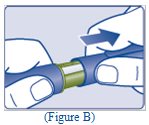
200 U/ml Ifu Figure B (Image 43)

200 U/ml Ifu Figure B (Image 43)
An instructional illustration showing hands removing a green needle cap from an injection pen. The image demonstrates the proper technique for preparing the insulin pen before injection, indicated as Figure B.*
FDA Label Image

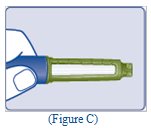
200 U/ml Ifu Figure C (Image 44)

200 U/ml Ifu Figure C (Image 44)
An instructional illustration labeled as Figure C showing a close-up of a mechanical insulin pen with a visible dose window and a pen tip, likely demonstrating the dosing mechanism or injection step for insulin degludec injection, solution.*
FDA Label Image

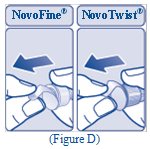
200 U/ml Ifu Figure D (Image 45)

200 U/ml Ifu Figure D (Image 45)
An instructional diagram labeled 'Figure D' showing hands demonstrating the use of a NovoFine and NovoTwist device, specifically illustrating the step of twisting or preparing the needle cap for injection.*
FDA Label Image

200 U/ml Ifu Figure E (Image 46)

200 U/ml Ifu Figure E (Image 46)
An instructional illustration showing how to use NovoFine and NovoTwist needles. It depicts hands attaching a needle to an injection pen by twisting and securing the needle in place, with directional arrows guiding the steps.*
FDA Label Image

200 U/ml Ifu Figure F (Image 47)

200 U/ml Ifu Figure F (Image 47)
An instructional illustration showing the steps to attach a NovoFine needle to a NovoTwist device for subcutaneous injection. The image uses arrows to indicate the direction for connecting the needle to the pen.*
FDA Label Image

200 U/ml Ifu Figure G (Image 48)

200 U/ml Ifu Figure G (Image 48)
An instructional diagram showing two sequential steps for connecting a NovoFine needle to a NovoTwist pen-injector. The first step illustrates aligning and pushing the needle onto the pen, and the second step demonstrates twisting the needle to secure it in place before injection.*
FDA Label Image

200 U/ml Ifu Figure H (Image 49)

200 U/ml Ifu Figure H (Image 49)
An instructional illustration showing a hands-on view of a Tresiba insulin degludec injection pen with a dose selector indicating 2 units selected. The image depicts adjusting the dose on the pen by rotating the dial, with a close-up inset emphasizing the 2-unit dose selection.*
FDA Label Image

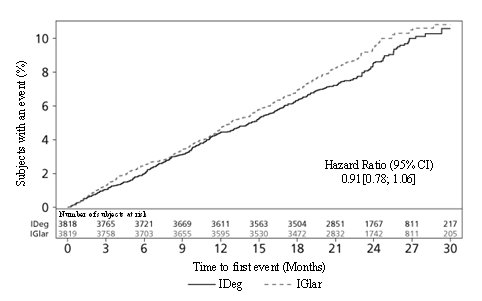
Figure 3 (Image 52)

Figure 3 (Image 52)
A Kaplan-Meier curve chart comparing the percentage of subjects experiencing an event over time (in months) between two groups, IDeg (solid line) and IGlar (dashed line). The x-axis represents time to first event up to 30 months, and the y-axis shows the percentage of subjects with an event. Numbers at risk are listed below the timeline, and a hazard ratio with 95% confidence interval is displayed on the graph.*
FDA Label Image

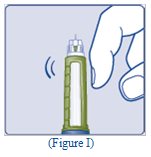
200 U/ml Ifu Figure I (Image 53)

200 U/ml Ifu Figure I (Image 53)
An instructional diagram showing a hand tapping the top of an injection pen device, likely to remove air bubbles before subcutaneous injection. The pen is vertically oriented with a visible cartridge inside.*
FDA Label Image

200 U/ml Ifu Figure J (Image 54)

200 U/ml Ifu Figure J (Image 54)
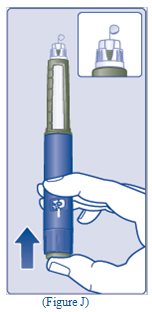
An instructional illustration showing a hand holding a Tresiba (insulin degludec) injection pen with the dosing button being pushed upwards. The inset highlights the pen needle cap removal.*
FDA Label Image

200 U/ml Ifu Figure K (Image 55)

200 U/ml Ifu Figure K (Image 55)
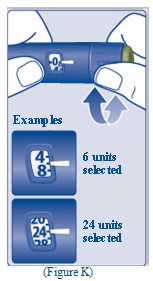
An instructional diagram demonstrating the dosage selection mechanism on a Tresiba insulin degludec injection pen. It shows close-up views of the dose selector dial with numeric options for 6 units and 24 units being selected, highlighting how units of insulin are adjusted on the device.*
FDA Label Image

200 U/ml Ifu Figure L (Image 56)

200 U/ml Ifu Figure L (Image 56)
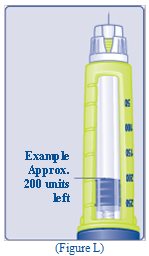
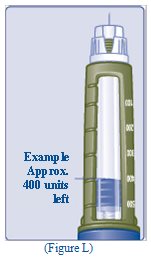
An instructional illustration showing a close-up of an insulin injection pen cartridge labeled with volume markings and a note indicating an example of approximately 400 units left. The cartridge is partially filled with solution and capped with a needle attached at the top.*
FDA Label Image

200 U/ml Ifu Figure M (Image 57)

200 U/ml Ifu Figure M (Image 57)
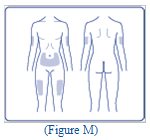
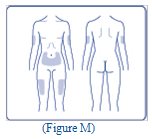
An instructional diagram showing front and back views of an adult human figure highlighting common injection sites for subcutaneous administration. Marked areas include the abdomen, the front and outer sides of the thighs, and the upper buttocks.*
FDA Label Image

200 U/ml Ifu Figure N (Image 58)

200 U/ml Ifu Figure N (Image 58)
An instructional illustration showing a hand holding a Tresiba 200 U/mL injection pen vertically. An arrow points downward below the pen, indicating the direction for administering or preparing the injection.*

FDA Label Image

200 U/ml Ifu Figure O (Image 59)

200 U/ml Ifu Figure O (Image 59)
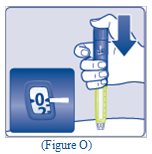
An instructional illustration depicting a hand holding an injection pen, positioned for subcutaneous injection. A downward arrow indicates the direction for pressing or injecting. The inset shows a close-up of the injection pen dial set to '0' units, implying dose adjustment or readiness to inject.*
FDA Label Image

200 U/ml Ifu Figure P (Image 60)

200 U/ml Ifu Figure P (Image 60)
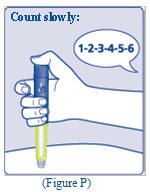
An instructional diagram showing a hand holding an insulin pen, with a speech bubble instructing to count slowly from 1 to 6. The image likely illustrates a step in the subcutaneous injection process for Tresiba insulin degludec 200 U/mL.*
FDA Label Image

200 U/ml Ifu Figure Q (Image 61)

200 U/ml Ifu Figure Q (Image 61)
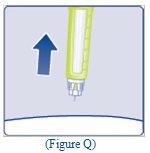
An instructional diagram illustrating how to use the Tresiba injection pen. It shows an upward arrow indicating the direction to pull or remove the cap or cover from the pen needle before injection.*
FDA Label Image

200 U/ml Ifu Figure R (Image 62)

200 U/ml Ifu Figure R (Image 62)
Illustration showing the use of NovoFine and NovoTwist needles for injection. The left side depicts attaching a NovoFine needle by twisting it onto the pen, while the right side shows lifting or removing a NovoTwist needle by pulling it straight off the pen. Both images highlight needle attachment and removal methods for the injection device.*
FDA Label Image

200 U/ml Ifu Figure S (Image 63)

200 U/ml Ifu Figure S (Image 63)
An instructional illustration depicting the process of attaching a needle cap to a syringe or pen injector, with arrows indicating the direction of assembly for proper use.*
FDA Label Image

200 U/ml Ifu Figure T (Image 64)

200 U/ml Ifu Figure T (Image 64)
An instructional illustration showing hands peeling off a protective cap or strip, suggesting a step in preparing or using a device related to the product Tresiba (insulin degludec) injection for subcutaneous use.*
FDA Label Image

Qr Code 200 Units/ml Ifu (Image 65)

FDA Label Image

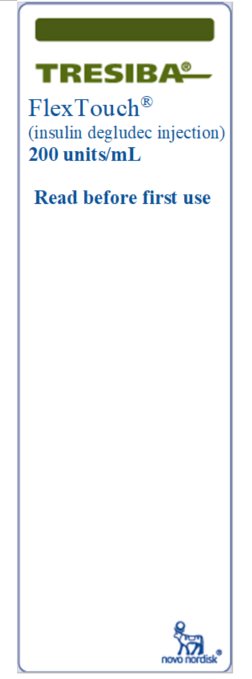
Tresiba 200 Units/ml (Image 66)

Tresiba 200 Units/ml (Image 66)
Label for Tresiba FlexTouch insulin degludec injection 200 units/mL. The label instructs to read before first use and displays the Novo Nordisk logo at the bottom right. The text is mainly green and blue on a white background.*
FDA Label Image

Label Image (Lbl500903491)

Label Image (Lbl500903491)
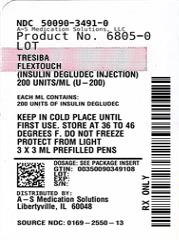
Tresiba FlexTouch injection pen label for insulin degludec 200 units/mL by A-S Medication Solutions. The label indicates each milliliter contains 200 units of insulin degludec. It includes storage instructions to keep the product refrigerated at 36 to 46 degrees F, do not freeze, and protect from light. The package contains 3 prefilled pens, each 3 mL. The product NDC is 50090-3491-0.*

* About these descriptions: Image descriptions on this page are generated by automated AI analysis of the product label images from the manufacturer's FDA label submission (SPL). They are provided for reference only and may contain errors or omissions. Always rely on the printed label itself and the official FDA labeling, and consult a pharmacist or healthcare professional with any questions about this product.