Xarelto Tablet, Film Coated
Product Images NDC 50090-3625

34 FDA label images from A-s Medication Solutions · Packaging, Regulatory Labels, and Product Appearance

Product Visual Gallery

This gallery contains 34 technical images submitted to the FDA as part of the official labeling for Xarelto (NDC 50090-3625). Unlike standard consumer photos, these assets often include clinical data figures, molecular chemical structures, and official manufacturer packaging layouts.

As provided by A-s Medication Solutions, these visuals offer a comprehensive scientific overview of the product's physical and chemical identity, aiding pharmacists and researchers in product verification and study.

FDA Label Image

Figure 1 (Xarelto 01)
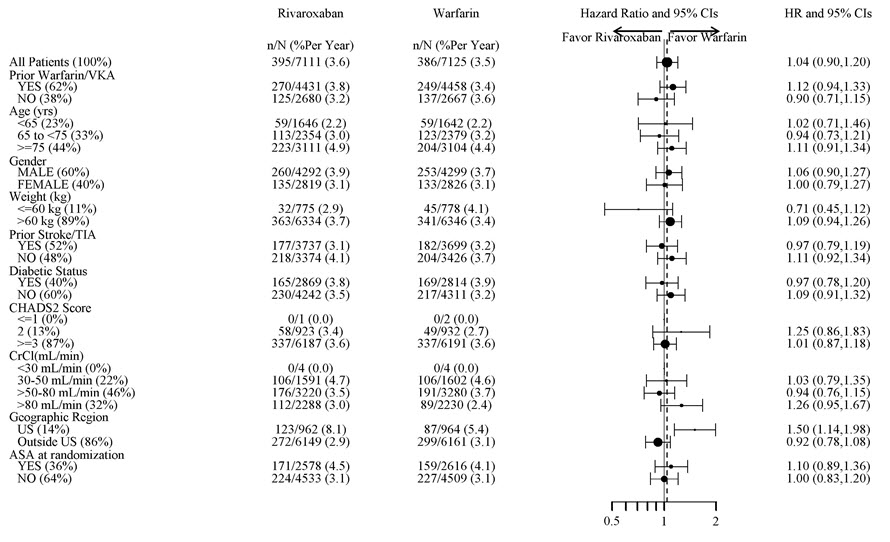
Figure 1 (Xarelto 01)
A forest plot comparing hazard ratios and 95% confidence intervals for rivaroxaban versus warfarin across multiple patient subgroups, including prior warfarin use, age, gender, weight, prior stroke/TIA, diabetic status, CHADS2 score, kidney function, geographic region, and aspirin use at randomization. The plot visually indicates which treatment is favored in each subgroup based on hazard ratios centered around 1.0.*
FDA Label Image

Chemical Structure (Xarelto 02)

Chemical Structure (Xarelto 02)
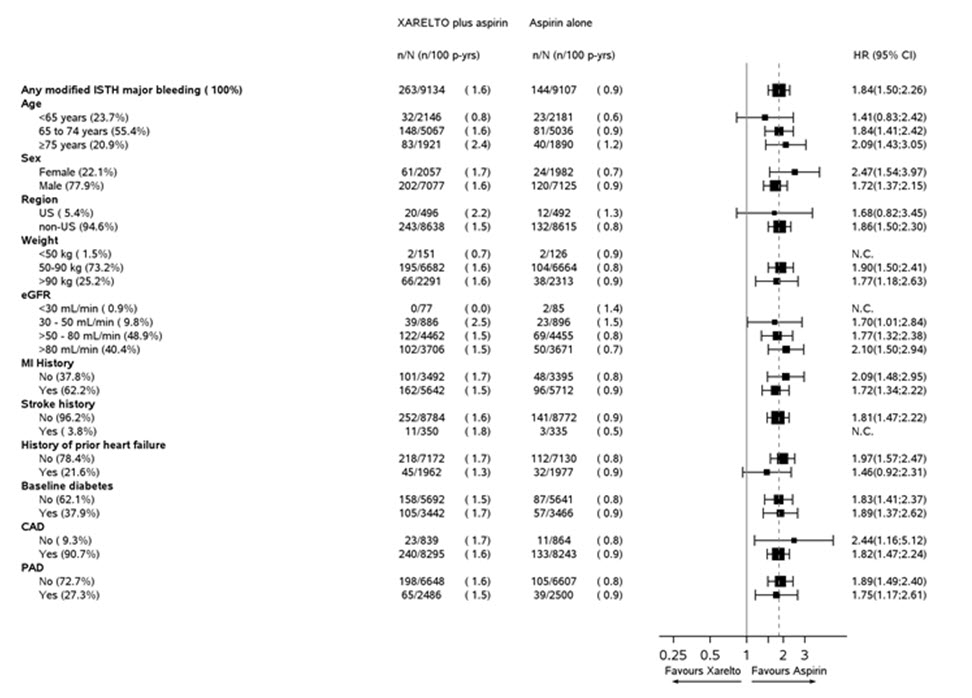
A forest plot chart comparing major modified ISTH bleeding rates between Xarelto plus aspirin and aspirin alone across various subgroups including age, sex, region, weight, eGFR, MI history, stroke history, heart failure, diabetes, CAD, and PAD. The chart displays hazard ratios with 95% confidence intervals and sample sizes for each subgroup, showing the relative risk favoring either Xarelto or aspirin.*
FDA Label Image

Figure 2 (Xarelto 03)

Figure 2 (Xarelto 03)
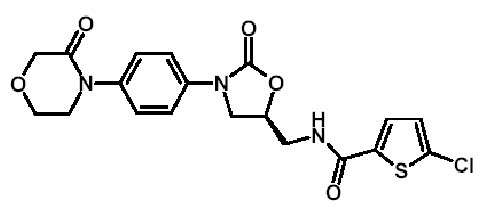
Chemical structure of rivaroxaban, the active ingredient in Xarelto 10 mg film-coated tablets by A-S Medication Solutions.*
FDA Label Image

Figure 3 (Xarelto 04)

Figure 3 (Xarelto 04)
A pharmacokinetic (PK) chart showing fold change and 90% confidence intervals for rivaroxaban under different population conditions, including end-stage renal disease, renal impairment, age, body weight, and hepatic impairment. Data compare Cmax and AUC levels relative to reference values, illustrating drug exposure variations across these groups.*
FDA Label Image

Figure 4 (Xarelto 05)

Figure 4 (Xarelto 05)
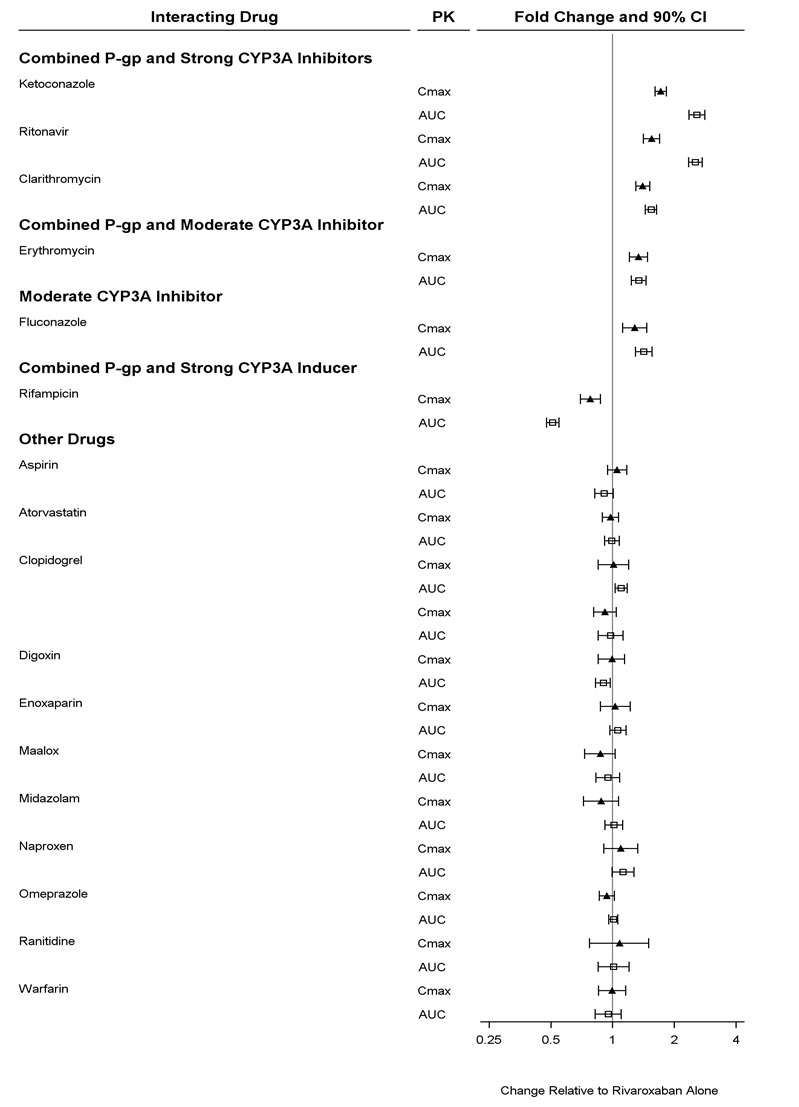
A pharmacokinetic (PK) chart showing fold change and 90% confidence intervals (CI) for various interacting drugs relative to rivaroxaban alone. It categorizes drugs into combined P-gp and strong CYP3A inhibitors, moderate inhibitors/inducers, and other drugs, displaying their effects on Cmax and AUC values.*
FDA Label Image

Figure 5 (Xarelto 06)

Figure 5 (Xarelto 06)
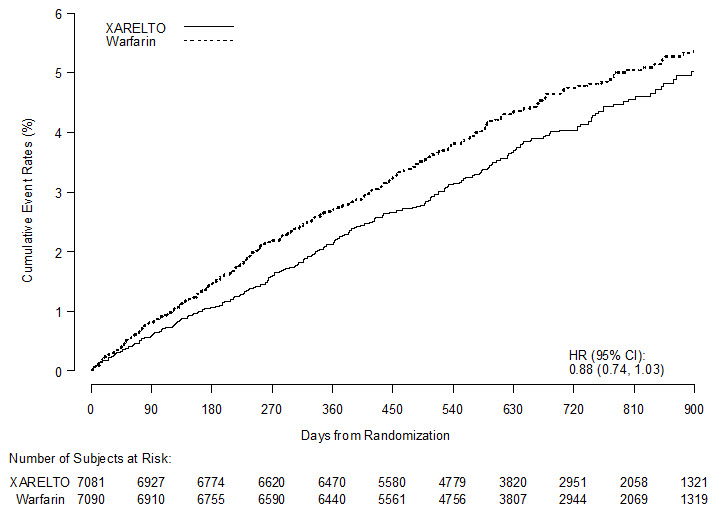
A line graph comparing cumulative event rates (%) over days from randomization between Xarelto and Warfarin. The horizontal axis represents days up to 900, and the vertical axis shows cumulative event rates from 0 to 6%. Solid and dashed lines represent Xarelto and Warfarin, respectively, with number of subjects at risk and hazard ratio details also included.*
FDA Label Image

Figure 6 (Xarelto 07)

Figure 6 (Xarelto 07)
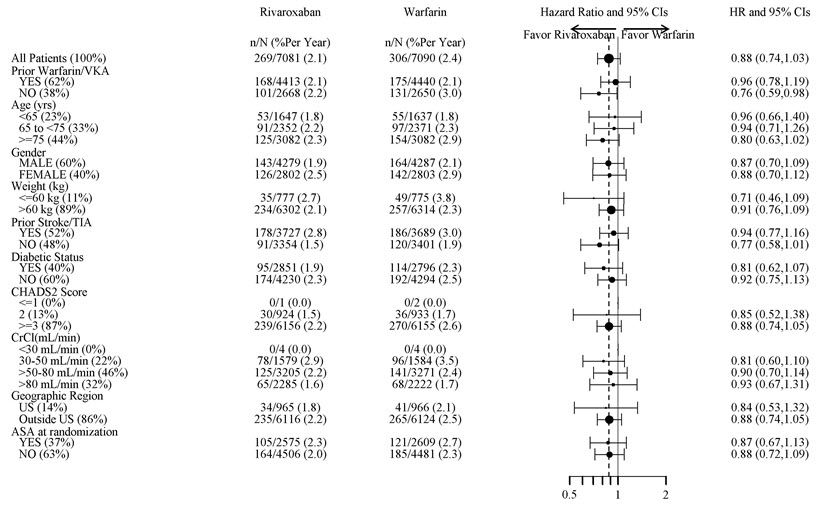
A data table comparing clinical outcomes between rivaroxaban and warfarin across various patient subgroups. It includes event counts and percentages per year, categorized by prior warfarin use, age, gender, weight, stroke history, diabetic status, CHADS2 score, creatinine clearance, geographic region, and ASA use at randomization. Accompanying the table is a hazard ratio plot with 95% confidence intervals showing comparative risk favoring rivaroxaban or warfarin.*
FDA Label Image

Figure 7 (Xarelto 08)

Figure 7 (Xarelto 08)
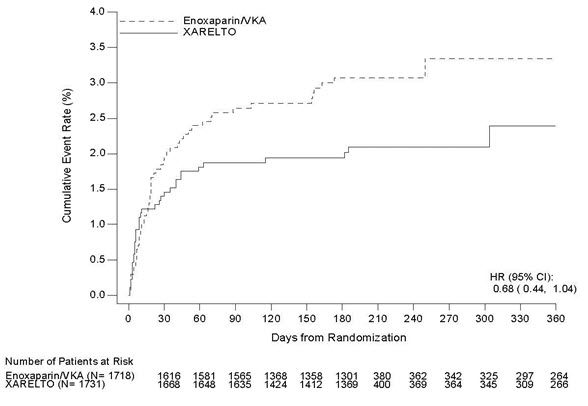
A line graph comparing cumulative event rates (%) over days from randomization (0 to 360 days) between two treatments: Xarelto and Enoxaparin/VKA. The graph includes patient numbers at risk at various time points and a hazard ratio (HR) with confidence interval (CI) noted on the chart.*
FDA Label Image

Figure 8 (Xarelto 09)

Figure 8 (Xarelto 09)
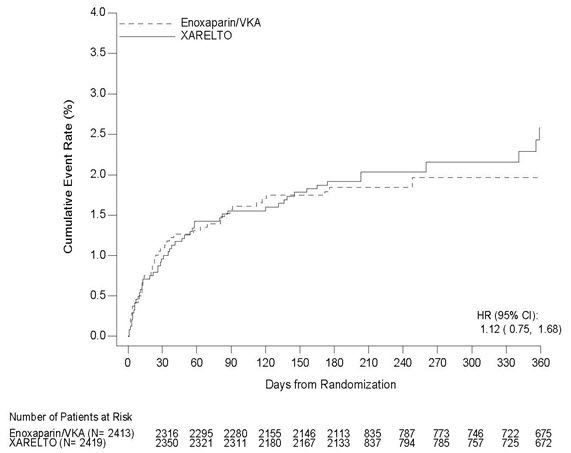
A cumulative event rate line graph comparing Enoxaparin/VKA and Xarelto over 360 days from randomization. The vertical axis shows cumulative event rate in percentage, while the horizontal axis shows days. A table below lists the number of patients at risk for both groups at various time points.*
FDA Label Image

Figure 9 (Xarelto 10)

Figure 9 (Xarelto 10)
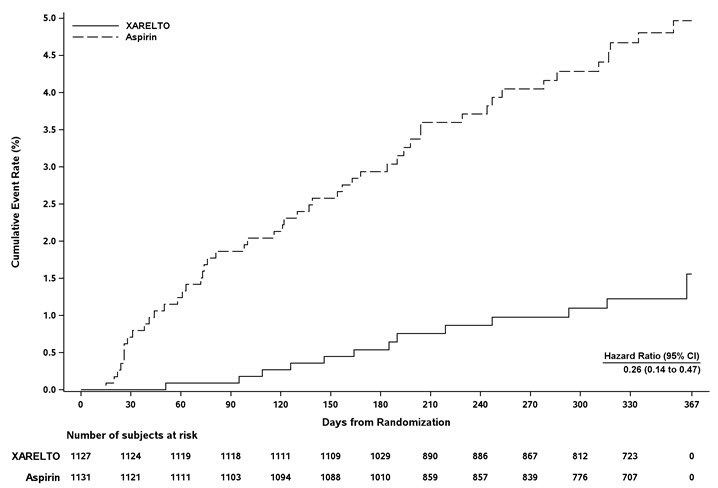
A line graph comparing the cumulative event rates over 367 days from randomization between Xarelto and Aspirin. The Xarelto group shows a lower event rate than the Aspirin group, with data on subjects at risk presented below the x-axis. A hazard ratio with 95% confidence interval is displayed in the bottom right corner.*
FDA Label Image

Figure 10 (Xarelto 11)

Figure 10 (Xarelto 11)
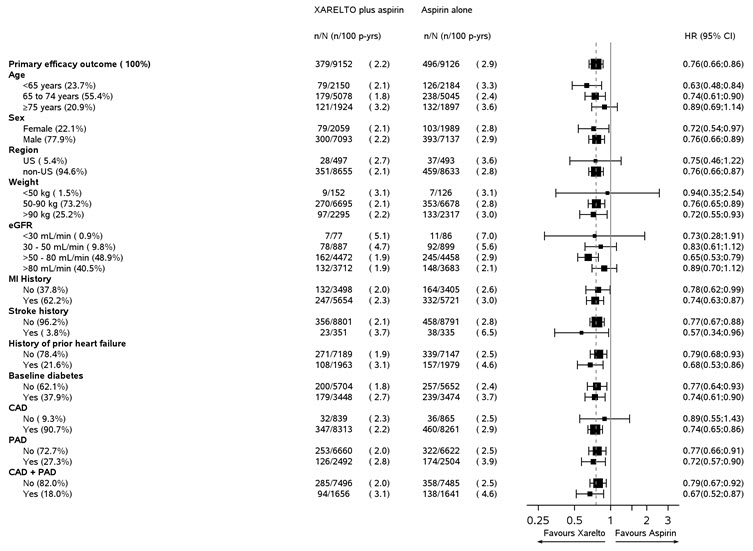
A forest plot chart comparing primary efficacy outcomes between Xarelto (rivaroxaban) plus aspirin versus aspirin alone. The chart presents hazard ratios (HR) with 95% confidence intervals (CI) across various subgroups including age, sex, region, weight, eGFR, myocardial infarction history, stroke history, heart failure history, diabetes status, coronary artery disease, and peripheral artery disease. The plot visually indicates the comparative effectiveness of treatments in each subgroup.*
FDA Label Image

Figure 11 (Xarelto 12)

Figure 11 (Xarelto 12)
A cumulative probability line graph comparing Xarelto + Aspirin versus Aspirin alone over approximately 1095 days. The x-axis shows days from randomization, and the y-axis shows cumulative probability in percentage. Two lines represent Xarelto + Aspirin (solid) and Aspirin (dashed). Below the x-axis are numbers of subjects at risk for both groups at different time points. A hazard ratio of 0.76 (95% CI 0.66-0.86) is indicated for Xarelto + Aspirin versus Aspirin.*
FDA Label Image

Figure 12 (Xarelto 13)

Figure 12 (Xarelto 13)
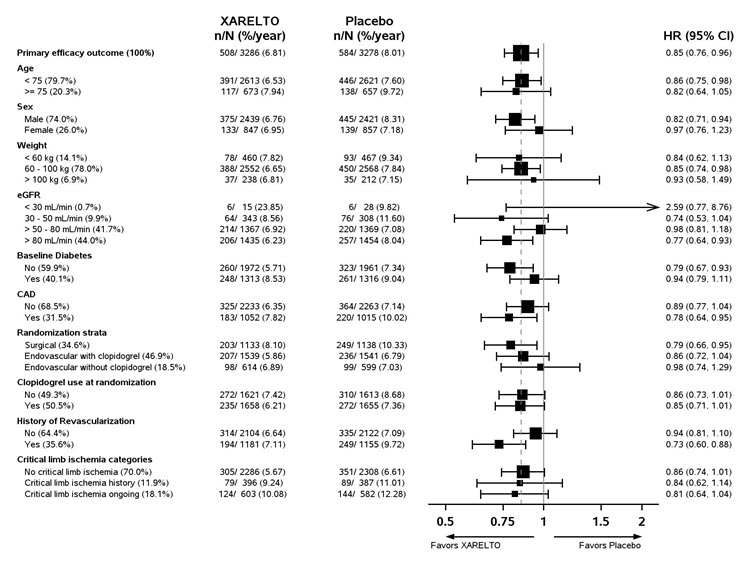
A forest plot comparing the primary efficacy outcomes of Xarelto (rivaroxaban) versus placebo across various subgroups including age, sex, weight, eGFR, baseline diabetes, CAD, randomization strata, clopidogrel use, history of revascularization, and critical limb ischemia categories. The plot displays hazard ratios with 95% confidence intervals, visually indicating the effect favoring Xarelto or placebo for each subgroup.*
FDA Label Image

Image (Xarelto 14)

Image (Xarelto 14)
An illustration of a syringe with a purple barrel and plunger, featuring measurement markings for volume in milliliters. The scale includes distinct colored bands corresponding to specific volume levels from 0.4 mL to 5 mL.*
FDA Label Image

Image (Xarelto 15)

FDA Label Image

Image (Xarelto 16)

Image (Xarelto 16)
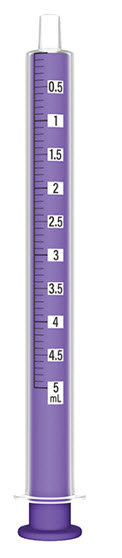
An illustration of a purple oral syringe with clear measurement markings from 0.5 mL to 5 mL in increments of 0.5 mL. The syringe is designed for precise liquid medication dosing.*
FDA Label Image

Image (Xarelto 17)

Image (Xarelto 17)
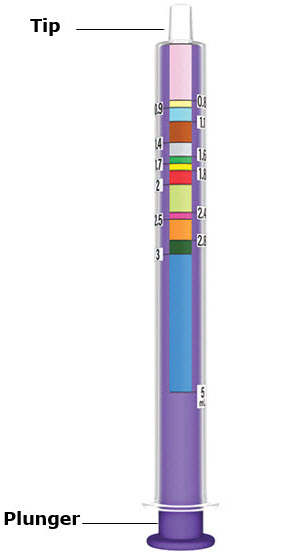
An instructional illustration of a purple oral syringe used for precise liquid medication dosing. The syringe shows a clear barrel with colorful dosing lines and markings, a white tip for attachment, and a purple plunger at the base. It is labeled at the tip and plunger ends.*
FDA Label Image

Image (Xarelto 18)

Image (Xarelto 18)
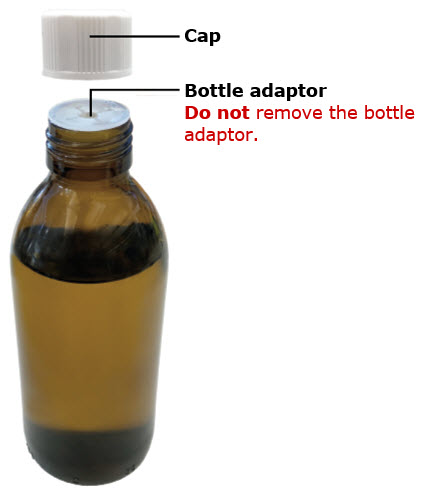
An instructional diagram showing a brown glass bottle with a white cap separated above it. The diagram labels the 'Cap' and the 'Bottle adaptor' inside the bottle neck, with a warning in red text stating 'Do not remove the bottle adaptor.'*
FDA Label Image

Image (Xarelto 19)

Image (Xarelto 19)
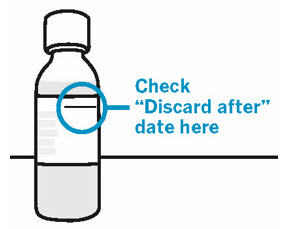
An instructional illustration of a prescription medication bottle with a label area highlighted, indicating where to check for the 'Discard after' date on the bottle, guiding proper medication use and disposal.*
FDA Label Image

Image (Xarelto 20)

Image (Xarelto 20)
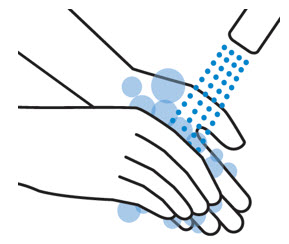
An instructional illustration depicting handwashing with soap and water. It shows two hands together under a faucet with water droplets flowing, emphasizing cleaning with lathered soap bubbles.*
FDA Label Image

Image (Xarelto 21)

Image (Xarelto 21)
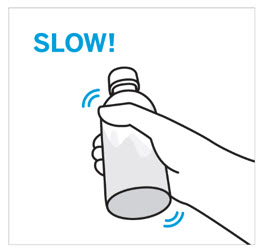
An instructional illustration showing a hand holding a bottle with the word 'SLOW!' in blue text at the top left, indicating the bottle should be shaken slowly before use.*
FDA Label Image

Image (Xarelto 22)

Image (Xarelto 22)
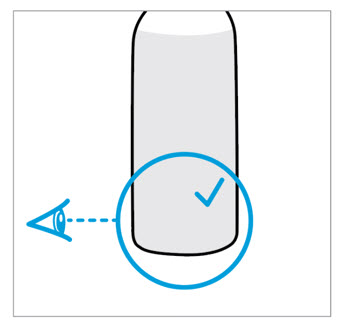
An instructional diagram showing a hand holding a tablet bottle viewed in a way that highlights the bottom of the bottle with a checkmark indicating correct orientation or inspection.*
FDA Label Image

Image (Xarelto 23)

Image (Xarelto 23)
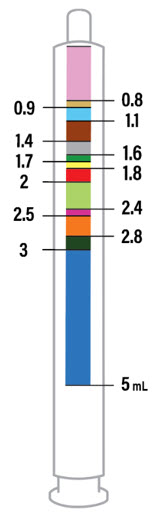
An illustration of a syringe filled with liquid, marked with volume graduations from 0.8 mL up to 5 mL. The syringe shows distinct colored bands at various volume levels, likely indicating dosing measurements or volume intervals.*
FDA Label Image

Image (Xarelto 24)

Image (Xarelto 24)
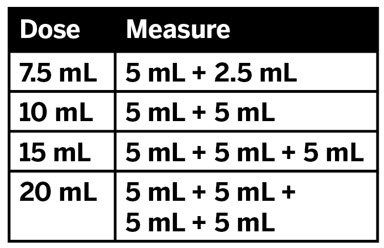
A data table displaying volume dose measurements, showing how different total doses in milliliters (7.5, 10, 15, and 20 mL) are composed by combining smaller 5 mL and 2.5 mL increments. It details the measured volumes required to reach each dose amount.*
FDA Label Image

Image (Xarelto 25)

Image (Xarelto 25)
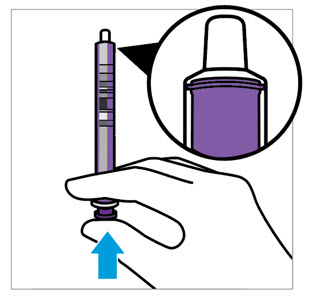
An instructional diagram showing a hand holding a syringe. The focus is on the syringe plunger being pressed or removed, indicated by a blue arrow pointing at the plunger. The inset highlights the syringe top, which is purple. This image appears to illustrate part of a syringe usage or preparation step.*
FDA Label Image

Image (Xarelto 26)

Image (Xarelto 26)
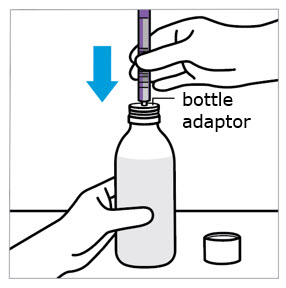
An instructional illustration showing a hand inserting a dropper or a similar dispensing device labeled as 'bottle adaptor' into the neck of a bottle held by another hand, with a downward arrow indicating the direction to insert the adaptor. A bottle cap is placed beside the bottle on a flat surface.*
FDA Label Image

Image (Xarelto 27)

Image (Xarelto 27)
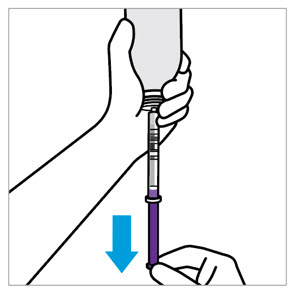
An instructional illustration depicting a pair of hands preparing a syringe by pulling down the plunger with an arrow indicating downward movement. The syringe is partially filled with liquid and is held vertically.*
FDA Label Image

Image (Xarelto 28)

FDA Label Image

Image (Xarelto 29)

Image (Xarelto 29)
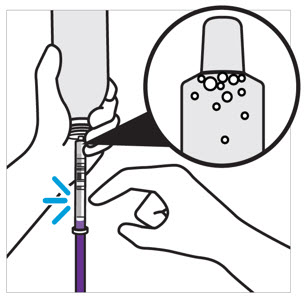
An instructional diagram showing a hand pressing the plunger of a syringe-like device, with a magnified inset highlighting small bubbles inside the barrel. The illustration appears to demonstrate a step in preparing an injection by expelling air bubbles.*
FDA Label Image

Image (Xarelto 30)

Image (Xarelto 30)
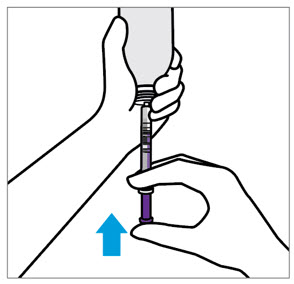
Illustration showing two hands interacting with a medical syringe. One hand stabilizes and holds the top of the syringe, while the other hand pushes the plunger upwards, indicated by a blue arrow pointing up beneath the plunger, suggesting an upward motion.*
FDA Label Image

Image (Xarelto 31)

Image (Xarelto 31)
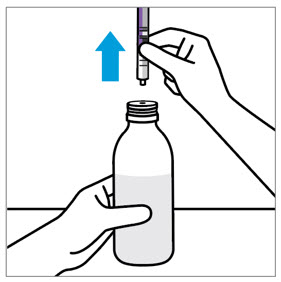
An instructional illustration showing a hand holding a bottle and another hand inserting a dropper or similar device vertically into the bottle. The image indicates an upward movement with a blue arrow.*
FDA Label Image

Image (Xarelto 32)

Image (Xarelto 32)
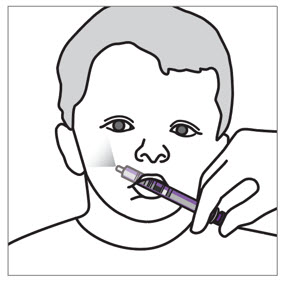
An instructional illustration showing the administration of oral medication to a child's mouth using a dropper or syringe. The image focuses on positioning the device near the child's mouth for accurate dosing.*
FDA Label Image

Image (Xarelto 33)

Image (Xarelto 33)
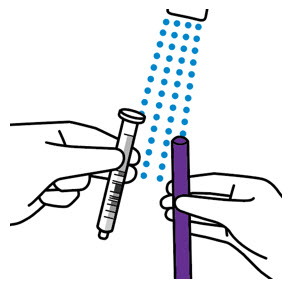
An instructional illustration showing a hand holding a vial or tube while another hand holds a purple stick or device underneath a showerhead with water droplets falling, suggesting a rinsing or washing step.*
FDA Label Image

Label Image (Lbl500903625)

Label Image (Lbl500903625)
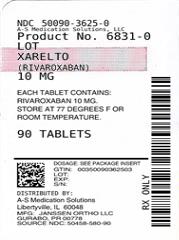
Xarelto 10 mg film-coated tablets by A-S Medication Solutions. The label shows the proprietary name Xarelto, the generic name rivaroxaban, strength 10 mg, oral tablets, and a package count of 90 tablets. Storage instructions indicate to keep at 77 degrees Fahrenheit or room temperature. The label includes NDC 50090-3625 and a QR code for dosage information.*

* About these descriptions: Image descriptions on this page are generated by automated AI analysis of the product label images from the manufacturer's FDA label submission (SPL). They are provided for reference only and may contain errors or omissions. Always rely on the printed label itself and the official FDA labeling, and consult a pharmacist or healthcare professional with any questions about this product.