Limitations of Use
INVOKANA is not recommended in patients with type 1 diabetes mellitus or for the treatment of diabetic ketoacidosis.
Pool of Placebo-Controlled Trials
The data in Table 1 is derived from four 26-week placebo-controlled trials where INVOKANA was used as monotherapy in one trial and as add-on therapy in three trials. These data reflect exposure of 1,667 patients to INVOKANA and a mean duration of exposure to INVOKANA of 24 weeks. Patients received INVOKANA 100 mg (N=833), INVOKANA 300 mg (N=834) or placebo (N=646) once daily. The mean age of the population was 56 years and 2% were older than 75 years of age. Fifty percent (50%) of the population was male and 72% were Caucasian, 12% were Asian, and 5% were Black or African American. At baseline the population had diabetes for an average of 7.3 years, had a mean HbA1C of 8.0% and 20% had established microvascular complications of diabetes. Baseline renal function was normal or mildly impaired (mean eGFR 88 mL/min/1.73 m2).
Table 1 shows common adverse reactions associated with the use of INVOKANA. These adverse reactions were not present at baseline, occurred more commonly on INVOKANA than on placebo, and occurred in at least 2% of patients treated with either INVOKANA 100 mg or INVOKANA 300 mg.
Table 1: Adverse Reactions From Pool of Four 26−Week Placebo-Controlled Studies Reported in ≥ 2% of INVOKANA-Treated PatientsThe four placebo-controlled trials included one monotherapy trial and three add-on combination trials with metformin, metformin and sulfonylurea, or metformin and pioglitazone.
| Note: Percentages were weighted by studies. Study weights were proportional to the harmonic mean of the three treatment sample sizes. |
| Adverse Reaction | Placebo
N=646 | INVOKANA
100 mg
N=833 | INVOKANA
300 mg
N=834 |
| Urinary tract infections Urinary tract infections include the following adverse reactions: Urinary tract infection, Cystitis, Kidney infection, and Urosepsis. | 3.8% | 5.9% | 4.4% |
| Increased urination Increased urination includes the following adverse reactions: Polyuria, Pollakiuria, Urine output increased, Micturition urgency, and Nocturia. | 0.7% | 5.1% | 4.6% |
| Thirst Thirst includes the following adverse reactions: Thirst, Dry mouth, and Polydipsia. | 0.1% | 2.8% | 2.4% |
| Constipation | 0.9% | 1.8% | 2.4% |
| Nausea | 1.6% | 2.1% | 2.3% |
| N=312 | N=425 | N=430 |
| Female genital mycotic infections Female genital mycotic infections include the following adverse reactions: Vulvovaginal candidiasis, Vulvovaginal mycotic infection, Vulvovaginitis, Vaginal infection, Vulvitis, and Genital infection fungal. | 2.8% | 10.6% | 11.6% |
| Vulvovaginal pruritus | 0.0% | 1.6% | 3.2% |
| N=334 | N=408 | N=404 |
| Male genital mycotic infections Male genital mycotic infections include the following adverse reactions: Balanitis or Balanoposthitis, Balanitis candida, and Genital infection fungal. | 0.7% | 4.2% | 3.8% |
Abdominal pain was also more commonly reported in patients taking INVOKANA 100 mg (1.8%), 300 mg (1.7%) than in patients taking placebo (0.8%).
Pool of Placebo- and Active-Controlled Trials
The occurrence of adverse reactions for INVOKANA was evaluated in patients participating in placebo- and active-controlled trials and in an integrated analysis of two cardiovascular trials.
The types and frequency of common adverse reactions observed in the pool of eight clinical trials (which reflect an exposure of 6,177 patients to INVOKANA) were consistent with those listed in Table 1. Percentages were weighted by studies. Study weights were proportional to the harmonic mean of the three treatment sample sizes. In this pool, INVOKANA was also associated with the adverse reactions of fatigue (1.8%, 2.2%, and 2.0% with comparator, INVOKANA 100 mg, and INVOKANA 300 mg, respectively) and loss of strength or energy (i.e., asthenia) (0.6%, 0.7%, and 1.1% with comparator, INVOKANA 100 mg, and INVOKANA 300 mg, respectively).
In the pool of eight clinical trials, the incidence rate of pancreatitis (acute or chronic) was 0.1%, 0.2%, and 0.1% receiving comparator, INVOKANA 100 mg, and INVOKANA 300 mg, respectively.
In the pool of eight clinical trials, hypersensitivity-related adverse reactions (including erythema, rash, pruritus, urticaria, and angioedema) occurred in 3.0%, 3.8%, and 4.2% of patients receiving comparator, INVOKANA 100 mg, and INVOKANA 300 mg, respectively. Five patients experienced serious adverse reactions of hypersensitivity with INVOKANA, which included 4 patients with urticaria and 1 patient with a diffuse rash and urticaria occurring within hours of exposure to INVOKANA. Among these patients, 2 patients discontinued INVOKANA. One patient with urticaria had recurrence when INVOKANA was re-initiated.
Photosensitivity-related adverse reactions (including photosensitivity reaction, polymorphic light eruption, and sunburn) occurred in 0.1%, 0.2%, and 0.2% of patients receiving comparator, INVOKANA 100 mg, and INVOKANA 300 mg, respectively.
Other adverse reactions occurring more frequently on INVOKANA than on comparator were:
Lower Limb Amputation
An approximately 2-fold increased risk of lower limb amputations associated with INVOKANA use was observed in CANVAS and CANVAS-R, two randomized, placebo-controlled trials evaluating patients with type 2 diabetes who had either established cardiovascular disease or were at risk for cardiovascular disease. Patients in CANVAS and CANVAS-R were followed for an average of 5.7 and 2.1 years, respectively [see Clinical Studies (14.2)]. The amputation data for CANVAS and CANVAS-R are shown in Tables 2 and 3, respectively [see Warnings and Precautions (5.1)].
Table 2: CANVAS Amputations | Placebo
N=1441 | INVOKANA
100 mg
N=1445 | INVOKANA
300 mg
N=1441 | INVOKANA
(Pooled)
N=2886 |
|---|
| Note: Incidence is based on the number of patients with at least one amputation, and not the total number of amputation events. A patient's follow-up is calculated from Day 1 to the first amputation event date. Some patients had more than one amputation. |
| Patients with an amputation, n (%) | 22 (1.5) | 50 (3.5) | 45 (3.1) | 95 (3.3) |
| Total amputations | 33 | 83 | 79 | 162 |
Amputation incidence rate
(per 1000 patient-years) | 2.8 | 6.2 | 5.5 | 5.9 |
| Hazard Ratio (95% CI) | -- | 2.24 (1.36, 3.69) | 2.01 (1.20, 3.34) | 2.12 (1.34, 3.38) |
Table 3: CANVAS-R Amputations | Placebo
N=2903 | INVOKANA
100 mg
(with up-titration to 300 mg)
N=2904 |
|---|
| Note: Incidence is based on the number of patients with at least one amputation, and not the total number of amputation events. A patient's follow-up is calculated from Day 1 to the first amputation event date. Some patients had more than one amputation. |
| Patients with an amputation, n (%) | 25 (0.9) | 45 (1.5) |
| Total amputations | 36 | 59 |
Amputation incidence rate
(per 1000 patient-years) | 4.2 | 7.5 |
| Hazard Ratio (95% CI) | -- | 1.80 (1.10, 2.93) |
Renal Cell Carcinoma
In the CANVAS trial (mean duration of follow-up of 5.7 years) [see Clinical Studies (14.2)], the incidence of renal cell carcinoma was 0.15% (2/1331) and 0.29% (8/2716) for placebo and INVOKANA, respectively, excluding patients with less than 6 months of follow-up, less than 90 days of treatment, or a history of renal cell carcinoma. A causal relationship to INVOKANA could not be established due to the limited number of cases.
Volume Depletion-Related Adverse Reactions
INVOKANA results in an osmotic diuresis, which may lead to reductions in intravascular volume. In clinical trials, treatment with INVOKANA was associated with a dose-dependent increase in the incidence of volume depletion-related adverse reactions (e.g., hypotension, postural dizziness, orthostatic hypotension, syncope, and dehydration). An increased incidence was observed in patients on the 300 mg dose. The three factors associated with the largest increase in volume depletion-related adverse reactions were the use of loop diuretics, moderate renal impairment (eGFR 30 to less than 60 mL/min/1.73 m2), and age 75 years and older (Table 4) [see Dosage and Administration (2.3), Warnings and Precautions (5.2), and Use in Specific Populations (8.5 and 8.6)].
Table 4: Proportion of Patients With at Least One Volume Depletion-Related Adverse Reaction (Pooled Results from 8 Clinical Trials)| Baseline Characteristic | Comparator Group Includes placebo and active-comparator groups
% | INVOKANA 100 mg
% | INVOKANA 300 mg
% |
|---|
| Overall population | 1.5% | 2.3% | 3.4% |
| 75 years of age and older Patients could have more than 1 of the listed risk factors | 2.6% | 4.9% | 8.7% |
| eGFR less than 60 mL/min/1.73 m2 | 2.5% | 4.7% | 8.1% |
| Use of loop diuretic | 4.7% | 3.2% | 8.8% |
Falls
In a pool of nine clinical trials with mean duration of exposure to INVOKANA of 85 weeks, the proportion of patients who experienced falls was 1.3%, 1.5%, and 2.1% with comparator, INVOKANA 100 mg, and INVOKANA 300 mg, respectively. The higher risk of falls for patients treated with INVOKANA was observed within the first few weeks of treatment.
Impairment in Renal Function
Initiation of INVOKANA is associated with a dose-dependent increase in serum creatinine and a concomitant fall in estimated GFR (Table 5) [see Warnings and Precautions (5.4)]. The effect on eGFR was observed to reverse after treatment discontinuation suggesting acute hemodynamic changes may play a role in the renal function changes observed with INVOKANA.
Table 5: Changes in Serum Creatinine and eGFR Associated with INVOKANA in the Pool of Four Placebo-Controlled Trials and Moderate Renal Impairment Trial | Placebo
N=646 | INVOKANA
100 mg
N=833 | INVOKANA
300 mg
N=834 |
| Pool of Four Placebo-Controlled Trials | Baseline | Creatinine (mg/dL) | 0.84 | 0.82 | 0.82 |
| eGFR (mL/min/1.73 m2) | 87.0 | 88.3 | 88.8 |
| Week 6 Change | Creatinine (mg/dL) | 0.01 | 0.03 | 0.05 |
| eGFR (mL/min/1.73 m2) | -1.6 | -3.8 | -5.0 |
| End of Treatment Change Week 26 in mITT LOCF population | Creatinine (mg/dL) | 0.01 | 0.02 | 0.03 |
| eGFR (mL/min/1.73 m2) | -1.6 | -2.3 | -3.4 |
| Placebo
N=90 | INVOKANA
100 mg
N=90 | INVOKANA
300 mg
N=89 |
| Moderate Renal Impairment Trial | Baseline | Creatinine (mg/dL) | 1.61 | 1.62 | 1.63 |
| eGFR (mL/min/1.73 m2) | 40.1 | 39.7 | 38.5 |
| Week 3 Change | Creatinine (mg/dL) | 0.03 | 0.18 | 0.28 |
| eGFR (mL/min/1.73 m2) | -0.7 | -4.6 | -6.2 |
| End of Treatment Change | Creatinine (mg/dL) | 0.07 | 0.16 | 0.18 |
| eGFR (mL/min/1.73 m2) | -1.5 | -3.6 | -4.0 |
In the pool of four placebo-controlled trials where patients had normal or mildly impaired baseline renal function, the proportion of patients who experienced at least one event of significant renal function decline, defined as an eGFR below 80 mL/min/1.73 m2 and 30% lower than baseline, was 2.1% with placebo, 2.0% with INVOKANA 100 mg, and 4.1% with INVOKANA 300 mg. At the end of treatment, 0.5% with placebo, 0.7% with INVOKANA 100 mg, and 1.4% with INVOKANA 300 mg had a significant renal function decline.
Patients with moderate renal impairment at baseline experience larger mean changes in eGFR relative to patients with normal or mildly impaired renal function. In a trial in patients with moderate renal impairment with a baseline eGFR of 30 to less than 50 mL/min/1.73 m2 (mean baseline eGFR 39 mL/min/1.73 m2) [see Clinical Studies (14.1)], the proportion of patients who experienced at least one event of significant renal function decline, defined as an eGFR 30% lower than baseline, was 6.9%, 18%, and 22.5% with placebo, INVOKANA 100 mg, and INVOKANA 300 mg, respectively. At the end of treatment, 4.6%, 3.4%, and 2.2% of patients treated with placebo, INVOKANA 100 mg, and INVOKANA 300 mg, respectively, had a significant renal function decline.
Genital Mycotic Infections
In the pool of four placebo-controlled clinical trials, female genital mycotic infections (e.g., vulvovaginal mycotic infection, vulvovaginal candidiasis, and vulvovaginitis) occurred in 2.8%, 10.6%, and 11.6% of females treated with placebo, INVOKANA 100 mg, and INVOKANA 300 mg, respectively. Patients with a history of genital mycotic infections were more likely to develop genital mycotic infections on INVOKANA. Female patients who developed genital mycotic infections on INVOKANA were more likely to experience recurrence and require treatment with oral or topical antifungal agents and anti-microbial agents. In females, discontinuation due to genital mycotic infections occurred in 0% and 0.7% of patients treated with placebo and INVOKANA, respectively [see Warnings and Precautions (5.8)].
In the pool of four placebo-controlled clinical trials, male genital mycotic infections (e.g., candidal balanitis, balanoposthitis) occurred in 0.7%, 4.2%, and 3.8% of males treated with placebo, INVOKANA 100 mg, and INVOKANA 300 mg, respectively. Male genital mycotic infections occurred more commonly in uncircumcised males and in males with a prior history of balanitis or balanoposthitis. Male patients who developed genital mycotic infections on INVOKANA were more likely to experience recurrent infections (22% on INVOKANA versus none on placebo), and require treatment with oral or topical antifungal agents and anti-microbial agents than patients on comparators. In males, discontinuations due to genital mycotic infections occurred in 0% and 0.5% of patients treated with placebo and INVOKANA, respectively.
In the pooled analysis of 8 controlled trials, phimosis was reported in 0.3% of uncircumcised male patients treated with INVOKANA and 0.2% required circumcision to treat the phimosis [see Warnings and Precautions (5.8)].
Hypoglycemia
In all clinical trials, hypoglycemia was defined as any event regardless of symptoms, where biochemical hypoglycemia was documented (any glucose value below or equal to 70 mg/dL). Severe hypoglycemia was defined as an event consistent with hypoglycemia where the patient required the assistance of another person to recover, lost consciousness, or experienced a seizure (regardless of whether biochemical documentation of a low glucose value was obtained). In individual clinical trials [see Clinical Studies (14.1)], episodes of hypoglycemia occurred at a higher rate when INVOKANA was co-administered with insulin or sulfonylureas (Table 6) [see Warnings and Precautions (5.6)].
Table 6: Incidence of HypoglycemiaNumber of patients experiencing at least one event of hypoglycemia based on either biochemically documented episodes or severe hypoglycemic events in the intent-to-treat population
in Controlled Clinical StudiesMonotherapy
(26 weeks) | Placebo
(N=192) | INVOKANA 100 mg
(N=195) | INVOKANA 300 mg
(N=197) |
| Overall [N (%)] | 5 (2.6) | 7 (3.6) | 6 (3.0) |
In Combination with Metformin
(26 weeks) | Placebo + Metformin
(N=183) | INVOKANA 100 mg + Metformin
(N=368) | INVOKANA 300 mg + Metformin
(N=367) |
| Overall [N (%)] | 3 (1.6) | 16 (4.3) | 17 (4.6) |
| Severe [N (%)] Severe episodes of hypoglycemia were defined as those where the patient required the assistance of another person to recover, lost consciousness, or experienced a seizure (regardless of whether biochemical documentation of a low glucose value was obtained) | 0 (0) | 1 (0.3) | 1 (0.3) |
In Combination with Metformin
(52 weeks) | Glimepiride + Metformin
(N=482) | INVOKANA 100 mg + Metformin
(N=483) | INVOKANA 300 mg + Metformin
(N=485) |
| Overall [N (%)] | 165 (34.2) | 27 (5.6) | 24 (4.9) |
| Severe [N (%)] | 15 (3.1) | 2 (0.4) | 3 (0.6) |
In Combination with Sulfonylurea
(18 weeks) | Placebo + Sulfonylurea
(N=69) | INVOKANA 100 mg + Sulfonylurea
(N=74) | INVOKANA 300 mg + Sulfonylurea
(N=72) |
| Overall [N (%)] | 4 (5.8) | 3 (4.1) | 9 (12.5) |
In Combination with Metformin + Sulfonylurea
(26 weeks) | Placebo + Metformin + Sulfonylurea
(N=156) | INVOKANA 100 mg + Metformin + Sulfonylurea
(N=157) | INVOKANA 300 mg + Metformin + Sulfonylurea
(N=156) |
| Overall [N (%)] | 24 (15.4) | 43 (27.4) | 47 (30.1) |
| Severe [N (%)] | 1 (0.6) | 1 (0.6) | 0 |
In Combination with Metformin + Sulfonylurea
(52 weeks) | Sitagliptin + Metformin + Sulfonylurea
(N=378) | | INVOKANA 300 mg + Metformin + Sulfonylurea
(N=377) |
| Overall [N (%)] | 154 (40.7) | | 163 (43.2) |
| Severe [N (%)] | 13 (3.4) | | 15 (4.0) |
In Combination with Metformin + Pioglitazone
(26 weeks) | Placebo + Metformin + Pioglitazone
(N=115) | INVOKANA 100 mg + Metformin + Pioglitazone
(N=113) | INVOKANA 300 mg + Metformin + Pioglitazone
(N=114) |
| Overall [N (%)] | 3 (2.6) | 3 (2.7) | 6 (5.3) |
In Combination with Insulin
(18 weeks) | Placebo
(N=565) | INVOKANA 100 mg
(N=566) | INVOKANA 300 mg
(N=587) |
| Overall [N (%)] | 208 (36.8) | 279 (49.3) | 285 (48.6) |
| Severe [N (%)] | 14 (2.5) | 10 (1.8) | 16 (2.7) |
Bone Fracture
In the CANVAS trial [see Clinical Studies (14.2)], the incidence rates of all adjudicated bone fracture were 1.09, 1.59, and 1.79 events per 100 patient-years of follow-up to placebo, INVOKANA 100 mg, and INVOKANA 300 mg, respectively. The fracture imbalance was observed within the first 26 weeks of therapy and remained through the end of the trial. Fractures were more likely to be low trauma (e.g., fall from no more than standing height), and affect the distal portion of upper and lower extremities [see Warnings and Precautions (5.10)].
Laboratory and Imaging Tests
Increases in Serum Potassium
In a pooled population of patients (N=723) with moderate renal impairment (eGFR 45 to less than 60 mL/min/1.73 m2), increases in serum potassium to greater than 5.4 mEq/L and 15% above baseline occurred in 5.3%, 5.0%, and 8.8% of patients treated with placebo, INVOKANA 100 mg, and INVOKANA 300 mg, respectively. Severe elevations (greater than or equal to 6.5 mEq/L) occurred in 0.4% of patients treated with placebo, no patients treated with INVOKANA 100 mg, and 1.3% of patients treated with INVOKANA 300 mg.
In these patients, increases in potassium were more commonly seen in those with elevated potassium at baseline. Among patients with moderate renal impairment, approximately 84% were taking medications that interfere with potassium excretion, such as potassium-sparing diuretics, angiotensin-converting-enzyme inhibitors, and angiotensin-receptor blockers [see Warnings and Precautions (5.4) and Use in Specific Populations (8.6)].
Increases in Serum Magnesium
Dose-related increases in serum magnesium were observed early after initiation of INVOKANA (within 6 weeks) and remained elevated throughout treatment. In the pool of four placebo-controlled trials, the mean percent change in serum magnesium levels was 8.1% and 9.3% with INVOKANA 100 mg and INVOKANA 300 mg, respectively, compared to -0.6% with placebo. In a trial of patients with moderate renal impairment [see Clinical Studies (14.1)], serum magnesium levels increased by 0.2%, 9.2%, and 14.8% with placebo, INVOKANA 100 mg, and INVOKANA 300 mg, respectively.
Increases in Serum Phosphate
Dose-related increases in serum phosphate levels were observed with INVOKANA. In the pool of four placebo controlled trials, the mean percent change in serum phosphate levels were 3.6% and 5.1% with INVOKANA 100 mg and INVOKANA 300 mg, respectively, compared to 1.5% with placebo. In a trial of patients with moderate renal impairment [see Clinical Studies (14.1)], the mean serum phosphate levels increased by 1.2%, 5.0%, and 9.3% with placebo, INVOKANA 100 mg, and INVOKANA 300 mg, respectively.
Increases in Low-Density Lipoprotein Cholesterol (LDL-C) and non-High-Density Lipoprotein Cholesterol (non-HDL-C)
In the pool of four placebo-controlled trials, dose-related increases in LDL-C with INVOKANA were observed. Mean changes (percent changes) from baseline in LDL-C relative to placebo were 4.4 mg/dL (4.5%) and 8.2 mg/dL (8.0%) with INVOKANA 100 mg and INVOKANA 300 mg, respectively. The mean baseline LDL-C levels were 104 to 110 mg/dL across treatment groups [see Warnings and Precautions (5.11)].
Dose-related increases in non-HDL-C with INVOKANA were observed. Mean changes (percent changes) from baseline in non-HDL-C relative to placebo were 2.1 mg/dL (1.5%) and 5.1 mg/dL (3.6%) with INVOKANA 100 mg and 300 mg, respectively. The mean baseline non-HDL-C levels were 140 to 147 mg/dL across treatment groups.
Increases in Hemoglobin
In the pool of four placebo-controlled trials, mean changes (percent changes) from baseline in hemoglobin were -0.18 g/dL (-1.1%) with placebo, 0.47 g/dL (3.5%) with INVOKANA 100 mg, and 0.51 g/dL (3.8%) with INVOKANA 300 mg. The mean baseline hemoglobin value was approximately 14.1 g/dL across treatment groups. At the end of treatment, 0.8%, 4.0%, and 2.7% of patients treated with placebo, INVOKANA 100 mg, and INVOKANA 300 mg, respectively, had hemoglobin above the upper limit of normal.
Decreases in Bone Mineral Density
Bone mineral density (BMD) was measured by dual-energy X-ray absorptiometry in a clinical trial of 714 older adults (mean age 64 years) [see Clinical Studies (14.1)]. At 2 years, patients randomized to INVOKANA 100 mg and INVOKANA 300 mg had placebo-corrected declines in BMD at the total hip of 0.9% and 1.2%, respectively, and at the lumbar spine of 0.3% and 0.7%, respectively. Additionally, placebo-adjusted BMD declines were 0.1% at the femoral neck for both INVOKANA doses and 0.4% at the distal forearm for patients randomized to INVOKANA 300 mg. The placebo-adjusted change at the distal forearm for patients randomized to INVOKANA 100 mg was 0%.
Rifampin: Co-administration of canagliflozin with rifampin, a nonselective inducer of several UGT enzymes, including UGT1A9, UGT2B4, decreased canagliflozin area under the curve (AUC) by 51%. This decrease in exposure to canagliflozin may decrease efficacy. If an inducer of these UGTs (e.g., rifampin, phenytoin, phenobarbital, ritonavir) must be co-administered with INVOKANA (canagliflozin), consider increasing the dose to 300 mg once daily if patients are currently tolerating INVOKANA 100 mg once daily, have an eGFR greater than 60 mL/min/1.73 m2, and require additional glycemic control. Consider other antihyperglycemic therapy in patients with an eGFR of 45 to less than 60 mL/min/1.73 m2 receiving concurrent therapy with a UGT inducer and require additional glycemic control [see Dosage and Administration (2.4) and Clinical Pharmacology (12.3)].
Risk Summary
Based on animal data showing adverse renal effects, INVOKANA is not recommended during the second and third trimesters of pregnancy.
Limited data with INVOKANA in pregnant women are not sufficient to determine a drug-associated risk for major birth defects or miscarriage. There are risks to the mother and fetus associated with poorly controlled diabetes in pregnancy [see Clinical Considerations].
In animal studies, adverse renal pelvic and tubule dilatations that were not reversible were observed in rats when canagliflozin was administered during a period of renal development corresponding to the late second and third trimesters of human pregnancy, at an exposure 0.5-times the 300 mg clinical dose, based on AUC.
The estimated background risk of major birth defects is 6–10% in women with pre-gestational diabetes with a HbA1C >7 and has been reported to be as high as 20–25% in women with a HbA1C >10. The estimated background risk of miscarriage for the indicated population is unknown. In the U.S. general population, the estimated background risk of major birth defects and miscarriage in clinically recognized pregnancies is 2–4% and 15–20%, respectively.
Clinical Considerations
Disease-associated maternal and/or embryo/fetal risk
Poorly controlled diabetes in pregnancy increases the maternal risk for diabetic ketoacidosis, pre-eclampsia, spontaneous abortions, preterm delivery, stillbirth and delivery complications. Poorly controlled diabetes increases the fetal risk for major birth defects, stillbirth, and macrosomia related morbidity.
Animal Data
Canagliflozin dosed directly to juvenile rats from postnatal day (PND) 21 until PND 90 at doses of 4, 20, 65, or 100 mg/kg increased kidney weights and dose dependently increased the incidence and severity of renal pelvic and tubular dilatation at all doses tested. Exposure at the lowest dose was greater than or equal to 0.5-times the 300 mg clinical dose, based on AUC. These outcomes occurred with drug exposure during periods of renal development in rats that correspond to the late second and third trimester of human renal development. The renal pelvic dilatations observed in juvenile animals did not fully reverse within a 1-month recovery period.
In embryo-fetal development studies in rats and rabbits, canagliflozin was administered for intervals coinciding with the first trimester period of organogenesis in humans. No developmental toxicities independent of maternal toxicity were observed when canagliflozin was administered at doses up to 100 mg/kg in pregnant rats and 160 mg/kg in pregnant rabbits during embryonic organogenesis or during a study in which maternal rats were dosed from gestation day (GD) 6 through PND 21, yielding exposures up to approximately 19-times the 300 mg clinical dose, based on AUC.
Risk Summary
There is no information regarding the presence of INVOKANA in human milk, the effects on the breastfed infant, or the effects on milk production. Canagliflozin is present in the milk of lactating rats [see Data]. Since human kidney maturation occurs in utero and during the first 2 years of life when lactational exposure may occur, there may be risk to the developing human kidney.
Because of the potential for serious adverse reactions in a breastfed infant, advise women that use of INVOKANA is not recommended while breastfeeding.
Data
Animal Data
Radiolabeled canagliflozin administered to lactating rats on day 13 post-partum was present at a milk/plasma ratio of 1.40, indicating that canagliflozin and its metabolites are transferred into milk at a concentration comparable to that in plasma. Juvenile rats directly exposed to canagliflozin showed a risk to the developing kidney (renal pelvic and tubular dilatations) during maturation.
Cardiac Electrophysiology
In a randomized, double-blind, placebo-controlled, active-comparator, 4-way crossover trial, 60 healthy subjects were administered a single oral dose of canagliflozin 300 mg, canagliflozin 1,200 mg (4 times the maximum recommended dose), moxifloxacin, and placebo. No meaningful changes in QTc interval were observed with either the recommended dose of 300 mg or the 1,200 mg dose.
Absorption
The mean absolute oral bioavailability of canagliflozin is approximately 65%. Co-administration of a high-fat meal with canagliflozin had no effect on the pharmacokinetics of canagliflozin; therefore, INVOKANA may be taken with or without food. However, based on the potential to reduce postprandial plasma glucose excursions due to delayed intestinal glucose absorption, it is recommended that INVOKANA be taken before the first meal of the day [see Dosage and Administration (2.2)].
Distribution
The mean steady-state volume of distribution of canagliflozin following a single intravenous infusion in healthy subjects was 83.5 L, suggesting extensive tissue distribution. Canagliflozin is extensively bound to proteins in plasma (99%), mainly to albumin. Protein binding is independent of canagliflozin plasma concentrations. Plasma protein binding is not meaningfully altered in patients with renal or hepatic impairment.
Metabolism
O-glucuronidation is the major metabolic elimination pathway for canagliflozin, which is mainly glucuronidated by UGT1A9 and UGT2B4 to two inactive O-glucuronide metabolites.
CYP3A4-mediated (oxidative) metabolism of canagliflozin is minimal (approximately 7%) in humans.
Excretion
Following administration of a single oral [14C] canagliflozin dose to healthy subjects, 41.5%, 7.0%, and 3.2% of the administered radioactive dose was recovered in feces as canagliflozin, a hydroxylated metabolite, and an O-glucuronide metabolite, respectively. Enterohepatic circulation of canagliflozin was negligible.
Approximately 33% of the administered radioactive dose was excreted in urine, mainly as O-glucuronide metabolites (30.5%). Less than 1% of the dose was excreted as unchanged canagliflozin in urine. Renal clearance of canagliflozin 100 mg and 300 mg doses ranged from 1.30 to 1.55 mL/min.
Mean systemic clearance of canagliflozin was approximately 192 mL/min in healthy subjects following intravenous administration.
Specific Populations
Renal Impairment
A single-dose, open-label trial evaluated the pharmacokinetics of canagliflozin 200 mg in subjects with varying degrees of renal impairment (classified using the MDRD-eGFR formula) compared to healthy subjects.
Renal impairment did not affect the Cmax of canagliflozin. Compared to healthy subjects (N=3; eGFR greater than or equal to 90 mL/min/1.73 m2), plasma AUC of canagliflozin was increased by approximately 15%, 29%, and 53% in subjects with mild (N=10), moderate (N=9), and severe (N=10) renal impairment, respectively, (eGFR 60 to less than 90, 30 to less than 60, and 15 to less than 30 mL/min/1.73 m2, respectively), but was similar for ESRD (N=8) subjects and healthy subjects.
Increases in canagliflozin AUC of this magnitude are not considered clinically relevant. The pharmacodynamic response to canagliflozin declines with increasing severity of renal impairment [see Contraindications (4) and Warnings and Precautions (5.4)].
Canagliflozin was negligibly removed by hemodialysis.
Hepatic Impairment
Relative to subjects with normal hepatic function, the geometric mean ratios for Cmax and AUC∞ of canagliflozin were 107% and 110%, respectively, in subjects with Child-Pugh class A (mild hepatic impairment) and 96% and 111%, respectively, in subjects with Child-Pugh class B (moderate hepatic impairment) following administration of a single 300 mg dose of canagliflozin.
These differences are not considered to be clinically meaningful. There is no clinical experience in patients with Child-Pugh class C (severe) hepatic impairment [see Use in Specific Populations (8.7)].
Pharmacokinetic Effects of Age, Body Mass Index (BMI)/Weight, Gender and Race
Based on the population PK analysis with data collected from 1526 subjects, age, body mass index (BMI)/weight, gender, and race do not have a clinically meaningful effect on the pharmacokinetics of canagliflozin [see Use in Specific Populations (8.5)].
Drug Interaction Studies
In Vitro Assessment of Drug Interactions
Canagliflozin did not induce CYP450 enzyme expression (3A4, 2C9, 2C19, 2B6, and 1A2) in cultured human hepatocytes. Canagliflozin did not inhibit the CYP450 isoenzymes (1A2, 2A6, 2C19, 2D6, or 2E1) and weakly inhibited CYP2B6, CYP2C8, CYP2C9, and CYP3A4 based on in vitro studies with human hepatic microsomes. Canagliflozin is a weak inhibitor of P-gp.
Canagliflozin is also a substrate of drug transporters P-glycoprotein (P-gp) and MRP2.
In Vivo Assessment of Drug Interactions
Table 7: Effect of Co−Administered Drugs on Systemic Exposures of Canagliflozin| Co-Administered Drug | Dose of Co-Administered Drug Single dose unless otherwise noted | Dose of Canagliflozin | Geometric Mean Ratio
(Ratio With/Without Co-Administered Drug)
No Effect = 1.0 |
|---|
| AUC AUCinf for drugs given as a single dose and AUC24h for drugs given as multiple doses
(90% CI) | Cmax
(90% CI) |
|---|
| QD = once daily; BID = twice daily |
| See Drug Interactions (7.1) for the clinical relevance of the following: |
| Rifampin | 600 mg QD for 8 days | 300 mg | 0.49
(0.44; 0.54) | 0.72
(0.61; 0.84) |
| No dose adjustments of INVOKANA required for the following: |
| Cyclosporine | 400 mg | 300 mg QD for 8 days | 1.23
(1.19; 1.27) | 1.01
(0.91; 1.11) |
| Ethinyl estradiol and levonorgestrel | 0.03 mg ethinyl estradiol and 0.15 mg levonorgestrel | 200 mg QD for 6 days | 0.91
(0.88; 0.94) | 0.92
(0.84; 0.99) |
| Hydrochlorothiazide | 25 mg QD for 35 days | 300 mg QD for 7 days | 1.12
(1.08; 1.17) | 1.15
(1.06; 1.25) |
| Metformin | 2,000 mg | 300 mg QD for 8 days | 1.10
(1.05; 1.15) | 1.05
(0.96; 1.16) |
| Probenecid | 500 mg BID for 3 days | 300 mg QD for 17 days | 1.21
(1.16; 1.25) | 1.13
(1.00; 1.28) |
Table 8: Effect of Canagliflozin on Systemic Exposure of Co-Administered Drugs| Co-Administered Drug | Dose of Co-Administered Drug Single dose unless otherwise noted | Dose of Canagliflozin | Geometric Mean Ratio
(Ratio With/Without Co-Administered Drug)
No Effect = 1.0 |
|---|
| AUC AUCinf for drugs given as a single dose and AUC24h for drugs given as multiple doses
(90% CI) | Cmax
(90% CI) |
|---|
| QD = once daily; BID = twice daily; INR = International Normalized Ratio |
| See Drug Interactions (7.2) for the clinical relevance of the following: |
| Digoxin | 0.5 mg QD first day followed by 0.25 mg QD for 6 days | 300 mg QD for 7 days | Digoxin | 1.20
(1.12; 1.28) | 1.36
(1.21; 1.53) |
| No dose adjustments of co-administered drug required for the following: |
| Acetaminophen | 1,000 mg | 300 mg BID for 25 days | Acetaminophen | 1.06 AUC0–12h
(0.98; 1.14) | 1.00
(0.92; 1.09) |
| Ethinyl estradiol and levonorgestrel | 0.03 mg ethinyl estradiol and 0.15 mg levonorgestrel | 200 mg QD for 6 days | ethinyl estradiol | 1.07
(0.99; 1.15) | 1.22
(1.10; 1.35) |
| Levonorgestrel | 1.06
(1.00; 1.13) | 1.22
(1.11; 1.35) |
| Glyburide | 1.25 mg | 200 mg QD for 6 days | Glyburide | 1.02
(0.98; 1.07) | 0.93
(0.85; 1.01) |
| 3-cis-hydroxy-glyburide | 1.01
(0.96; 1.07) | 0.99
(0.91; 1.08) |
| 4-trans-hydroxy-glyburide | 1.03
(0.97; 1.09) | 0.96
(0.88; 1.04) |
| Hydrochlorothiazide | 25 mg QD for 35 days | 300 mg QD for 7 days | Hydrochlorothiazide | 0.99
(0.95; 1.04) | 0.94
(0.87; 1.01) |
| Metformin | 2,000 mg | 300 mg QD for 8 days | Metformin | 1.20
(1.08; 1.34) | 1.06
(0.93; 1.20) |
| Simvastatin | 40 mg | 300 mg QD for 7 days | Simvastatin | 1.12
(0.94; 1.33) | 1.09
(0.91; 1.31) |
| simvastatin acid | 1.18
(1.03; 1.35) | 1.26
(1.10; 1.45) |
| Warfarin | 30 mg | 300 mg QD for 12 days | (R)-warfarin | 1.01
(0.96; 1.06) | 1.03
(0.94; 1.13) |
| (S)-warfarin | 1.06
(1.00; 1.12) | 1.01
(0.90; 1.13) |
| INR | 1.00
(0.98; 1.03) | 1.05
(0.99; 1.12) |
Carcinogenesis
Carcinogenicity was evaluated in 2-year studies conducted in CD1 mice and Sprague-Dawley rats. Canagliflozin did not increase the incidence of tumors in mice dosed at 10, 30, or 100 mg/kg (less than or equal to 14 times exposure from a 300 mg clinical dose).
Testicular Leydig cell tumors, considered secondary to increased luteinizing hormone (LH), increased significantly in male rats at all doses tested (10, 30, and 100 mg/kg). In a 12-week clinical trial, LH did not increase in males treated with canagliflozin.
Renal tubular adenoma and carcinoma increased significantly in male and female rats dosed at 100 mg/kg, or approximately 12-times exposure from a 300 mg clinical dose. Also, adrenal pheochromocytoma increased significantly in males and numerically in females dosed at 100 mg/kg. Carbohydrate malabsorption associated with high doses of canagliflozin was considered a necessary proximal event in the emergence of renal and adrenal tumors in rats. Clinical trials have not demonstrated carbohydrate malabsorption in humans at canagliflozin doses of up to 2-times the recommended clinical dose of 300 mg.
Mutagenesis
Canagliflozin was not mutagenic with or without metabolic activation in the Ames assay. Canagliflozin was mutagenic in the in vitro mouse lymphoma assay with but not without metabolic activation. Canagliflozin was not mutagenic or clastogenic in an in vivo oral micronucleus assay in rats and an in vivo oral Comet assay in rats.
Impairment of Fertility
Canagliflozin had no effects on the ability of rats to mate and sire or maintain a litter up to the high dose of 100 mg/kg (approximately 14 times and 18 times the 300 mg clinical dose in males and females, respectively), although there were minor alterations in a number of reproductive parameters (decreased sperm velocity, increased number of abnormal sperm, slightly fewer corpora lutea, fewer implantation sites, and smaller litter sizes) at the highest dosage administered.
Monotherapy
A total of 584 patients with type 2 diabetes inadequately controlled on diet and exercise participated in a 26-week double-blind, placebo-controlled trial to evaluate the efficacy and safety of INVOKANA. The mean age was 55 years, 44% of patients were men, and the mean baseline eGFR was 87 mL/min/1.73 m2. Patients taking other antihyperglycemic agents (N=281) discontinued the agent and underwent an 8-week washout followed by a 2-week, single-blind, placebo run-in period. Patients not taking oral antihyperglycemic agents (N=303) entered the 2-week, single-blind, placebo run-in period directly. After the placebo run-in period, patients were randomized to INVOKANA 100 mg, INVOKANA 300 mg, or placebo, administered once daily for 26 weeks.
At the end of treatment, INVOKANA 100 mg and 300 mg once daily resulted in a statistically significant improvement in HbA1C (p<0.001 for both doses) compared to placebo. INVOKANA 100 mg and 300 mg once daily also resulted in a greater proportion of patients achieving an HbA1C less than 7%, in significant reduction in fasting plasma glucose (FPG), in improved postprandial glucose (PPG), and in percent body weight reduction compared to placebo (see Table 9). Statistically significant (p<0.001 for both doses) mean changes from baseline in systolic blood pressure relative to placebo were -3.7 mmHg and -5.4 mmHg with INVOKANA 100 mg and 300 mg, respectively.
Table 9: Results from 26-Week Placebo-Controlled Clinical Study with INVOKANA as MonotherapyIntent-to-treat population using last observation in study prior to glycemic rescue therapy
| Efficacy Parameter | Placebo
(N=192) | INVOKANA
100 mg
(N=195) | INVOKANA
300 mg
(N=197) |
|---|
| HbA1C (%) |
| Baseline (mean) | 7.97 | 8.06 | 8.01 |
| Change from baseline (adjusted mean) | 0.14 | -0.77 | -1.03 |
| Difference from placebo (adjusted mean) (95% CI) Least squares mean adjusted for baseline value and stratification factors | | -0.91 p<0.001
(-1.09; -0.73) | -1.16
(-1.34; -0.99) |
| Percent of Patients Achieving HbA1C < 7% | 21 | 45 | 62 |
| Fasting Plasma Glucose (mg/dL) |
| Baseline (mean) | 166 | 172 | 173 |
| Change from baseline (adjusted mean) | 8 | -27 | -35 |
| Difference from placebo (adjusted mean) (95% CI) | | -36
(-42; -29) | -43
(-50; -37) |
| 2-hour Postprandial Glucose (mg/dL) |
| Baseline (mean) | 229 | 250 | 254 |
| Change from baseline (adjusted mean) | 5 | -43 | -59 |
| Difference from placebo (adjusted mean) (95% CI) | | -48
(-59.1; -37.0) | -64
(-75.0; -52.9) |
| Body Weight | |
| Baseline (mean) in kg | 87.5 | 85.9 | 86.9 |
| % change from baseline (adjusted mean) | -0.6 | -2.8 | -3.9 |
| Difference from placebo (adjusted mean) (95% CI) | | -2.2
(-2.9; -1.6) | -3.3
(-4.0; -2.6) |
Add-on Combination Therapy with Metformin
A total of 1,284 patients with type 2 diabetes inadequately controlled on metformin monotherapy (greater than or equal to 2,000 mg/day, or at least 1,500 mg/day if higher dose not tolerated) participated in a 26-week, double-blind, placebo- and active-controlled trial to evaluate the efficacy and safety of INVOKANA in combination with metformin. The mean age was 55 years, 47% of patients were men, and the mean baseline eGFR was 89 mL/min/1.73 m2. Patients already on the required metformin dose (N=1009) were randomized after completing a 2-week, single-blind, placebo run-in period. Patients taking less than the required metformin dose or patients on metformin in combination with another antihyperglycemic agent (N=275) were switched to metformin monotherapy (at doses described above) for at least 8 weeks before entering the 2-week, single-blind, placebo run-in. After the placebo run-in period, patients were randomized to INVOKANA 100 mg, INVOKANA 300 mg, sitagliptin 100 mg, or placebo, administered once daily as add-on therapy to metformin.
At the end of treatment, INVOKANA 100 mg and 300 mg once daily resulted in a statistically significant improvement in HbA1C (p<0.001 for both doses) compared to placebo when added to metformin. INVOKANA 100 mg and 300 mg once daily also resulted in a greater proportion of patients achieving an HbA1C less than 7%, in significant reduction in fasting plasma glucose (FPG), in improved postprandial glucose (PPG), and in percent body weight reduction compared to placebo when added to metformin (see Table 10). Statistically significant (p<0.001 for both doses) mean changes from baseline in systolic blood pressure relative to placebo were -5.4 mmHg and -6.6 mmHg with INVOKANA 100 mg and 300 mg, respectively.
Table 10: Results from 26-Week Placebo-Controlled Clinical Study of INVOKANA in Combination with MetforminIntent-to-treat population using last observation in study prior to glycemic rescue therapy
| Efficacy Parameter | Placebo + Metformin
(N=183) | INVOKANA 100 mg + Metformin
(N=368) | INVOKANA 300 mg + Metformin
(N=367) |
|---|
| HbA1C (%) |
| Baseline (mean) | 7.96 | 7.94 | 7.95 |
| Change from baseline (adjusted mean) | -0.17 | -0.79 | -0.94 |
| Difference from placebo (adjusted mean) (95% CI) Least squares mean adjusted for baseline value and stratification factors | | -0.62 p<0.001
(-0.76; -0.48) | -0.77
(-0.91; -0.64) |
| Percent of patients achieving HbA1C < 7% | 30 | 46 | 58 |
| Fasting Plasma Glucose (mg/dL) |
| Baseline (mean) | 164 | 169 | 173 |
| Change from baseline (adjusted mean) | 2 | -27 | -38 |
| Difference from placebo (adjusted mean) (95% CI) | | -30
(-36; -24) | -40
(-46; -34) |
| 2-hour Postprandial Glucose (mg/dL) |
| Baseline (mean) | 249 | 258 | 262 |
| Change from baseline (adjusted mean) | -10 | -48 | -57 |
| Difference from placebo (adjusted mean) (95% CI) | | -38
(-49; -27) | -47
(-58; -36) |
| Body Weight |
| Baseline (mean) in kg | 86.7 | 88.7 | 85.4 |
| % change from baseline (adjusted mean) | -1.2 | -3.7 | -4.2 |
| Difference from placebo (adjusted mean) (95% CI) | | -2.5
(-3.1; -1.9) | -2.9
(-3.5; -2.3) |
Initial Combination Therapy with Metformin
A total of 1,186 patients with type 2 diabetes inadequately controlled with diet and exercise participated in a 26-week double-blind, active-controlled, parallel-group, 5-arm, multicenter trial to evaluate the efficacy and safety of initial therapy with INVOKANA in combination with metformin XR. The median age was 56 years, 48% of patients were men, and the mean baseline eGFR was 87.6 mL/min/1.73 m2. The median duration of diabetes was 1.6 years, and 72% of patients were treatment naïve. After completing a 2-week single-blind placebo run-in period, patients were randomly assigned for a double-blind treatment period of 26 weeks to 1 of 5 treatment groups (Table 11). The metformin XR dose was initiated at 500 mg/day for the first week of treatment and then increased to 1000 mg/day. Metformin XR or matching placebo was up-titrated every 2–3 weeks during the next 8 weeks of treatment to a maximum daily dose of 1500 to 2000 mg/day, as tolerated; about 90% of patients reached 2000 mg/day.
At the end of treatment, INVOKANA 100 mg and INVOKANA 300 mg in combination with metformin XR resulted in a statistically significant greater improvement in HbA1C compared to their respective INVOKANA doses (100 mg and 300 mg) alone or metformin XR alone.
Table 11: Results from 26-Week Active-Controlled Clinical Study of INVOKANA Alone or INVOKANA as Initial Combination Therapy with MetforminIntent-to-treat population
| Efficacy Parameter | Metformin XR
(N=237) | INVOKANA 100 mg
(N=237) | INVOKANA 300 mg
(N=238) | INVOKANA 100 mg + Metformin XR
(N=237) | INVOKANA 300 mg + Metformin XR
(N=237) |
|---|
| HbA1C (%) |
| Baseline (mean) | 8.81 | 8.78 | 8.77 | 8.83 | 8.90 |
| Change from baseline (adjusted mean) There were 121 patients without week 26 efficacy data. Analyses addressing missing data gave consistent results with the results provided in this table. | -1.30 | -1.37 | -1.42 | -1.77 | -1.78 |
| Difference from canagliflozin 100 mg (adjusted mean) (95% CI) Least squares mean adjusted for covariates including baseline value and stratification factor | | | | -0.40 Adjusted p=0.001 for superiority
(-0.59, -0.21) | |
| Difference from canagliflozin 300 mg (adjusted mean) (95% CI) | | | | | -0.36
(-0.56, -0.17) |
| Difference from metformin XR (adjusted mean) (95% CI) | | -0.06 Adjusted p=0.001 for non-inferiority
(-0.26, 0.13) | -0.11
(-0.31, 0.08) | -0.46
(-0.66, -0.27) | -0.48
(-0.67, -0.28) |
| Percent of patients achieving HbA1C < 7% | 38 | 34 | 39 | 47 Adjusted p<0.05 | 51 |
INVOKANA Compared to Glimepiride, Both as Add-on Combination With Metformin
A total of 1,450 patients with type 2 diabetes inadequately controlled on metformin monotherapy (greater than or equal to 2,000 mg/day, or at least 1,500 mg/day if higher dose not tolerated) participated in a 52-week, double-blind, active-controlled trial to evaluate the efficacy and safety of INVOKANA in combination with metformin.
The mean age was 56 years, 52% of patients were men, and the mean baseline eGFR was 90 mL/min/1.73 m2. Patients tolerating maximally required metformin dose (N=928) were randomized after completing a 2-week, single-blind, placebo run-in period. Other patients (N=522) were switched to metformin monotherapy (at doses described above) for at least 10 weeks, then completed a 2-week single-blind run-in period. After the 2-week run-in period, patients were randomized to INVOKANA 100 mg, INVOKANA 300 mg, or glimepiride (titration allowed throughout the 52-week trial to 6 or 8 mg), administered once daily as add-on therapy to metformin.
As shown in Table 12 and Figure 1, at the end of treatment, INVOKANA 100 mg provided similar reductions in HbA1C from baseline compared to glimepiride when added to metformin therapy. INVOKANA 300 mg provided a greater reduction from baseline in HbA1C compared to glimepiride, and the relative treatment difference was -0.12% (95% CI: −0.22; −0.02). As shown in Table 12, treatment with INVOKANA 100 mg and 300 mg daily provided greater improvements in percent body weight change, relative to glimepiride.
Table 12: Results from 52−Week Clinical Study Comparing INVOKANA to Glimepiride in Combination with MetforminIntent-to-treat population using last observation in study prior to glycemic rescue therapy
| Efficacy Parameter | INVOKANA 100 mg + Metformin
(N=483) | INVOKANA 300 mg + Metformin
(N=485) | Glimepiride (titrated) + Metformin
(N=482) |
|---|
| HbA1C (%) |
| Baseline (mean) | 7.78 | 7.79 | 7.83 |
| Change from baseline (adjusted mean) | -0.82 | -0.93 | -0.81 |
| Difference from glimepiride (adjusted mean) (95% CI) Least squares mean adjusted for baseline value and stratification factors | -0.01 INVOKANA + metformin is considered non-inferior to glimepiride + metformin because the upper limit of this confidence interval is less than the pre-specified non-inferiority margin of < 0.3%.
(-0.11; 0.09) | -0.12
(-0.22; -0.02) | |
| Percent of patients achieving HbA1C < 7% | 54 | 60 | 56 |
| Fasting Plasma Glucose (mg/dL) |
| Baseline (mean) | 165 | 164 | 166 |
| Change from baseline (adjusted mean) | -24 | -28 | -18 |
| Difference from glimepiride (adjusted mean) (95% CI) | -6
(-10; -2) | -9
(-13; -5) | |
| Body Weight |
| Baseline (mean) in kg | 86.8 | 86.6 | 86.6 |
| % change from baseline (adjusted mean) | -4.2 | -4.7 | 1.0 |
| Difference from glimepiride (adjusted mean) (95% CI) | -5.2 p<0.001
(-5.7; -4.7) | -5.7
(-6.2; -5.1) | |
| Figure 1: Mean HbA1C Change at Each Time Point (Completers) and at Week 52 Using Last Observation Carried Forward (mITT Population) |
|---|
|
Add-on Combination Therapy With Sulfonylurea
A total of 127 patients with type 2 diabetes inadequately controlled on sulfonylurea monotherapy participated in an 18-week, double-blind, placebo-controlled sub-study to evaluate the efficacy and safety of INVOKANA in combination with sulfonylurea. The mean age was 65 years, 57% of patients were men, and the mean baseline eGFR was 69 mL/min/1.73 m2. Patients treated with sulfonylurea monotherapy on a stable protocol-specified dose (greater than or equal to 50% maximal dose) for at least 10 weeks completed a 2-week, single-blind, placebo run-in period. After the run-in period, patients with inadequate glycemic control were randomized to INVOKANA 100 mg, INVOKANA 300 mg, or placebo, administered once daily as add-on to sulfonylurea.
As shown in Table 13, at the end of treatment, INVOKANA 100 mg and 300 mg daily provided statistically significant (p<0.001 for both doses) improvements in HbA1C relative to placebo when added to sulfonylurea. INVOKANA 300 mg once daily compared to placebo resulted in a greater proportion of patients achieving an HbA1C less than 7%, (33% vs 5%), greater reductions in fasting plasma glucose (-36 mg/dL vs +12 mg/dL), and greater percent body weight reduction (-2.0% vs -0.2%).
Table 13: Results from 18-Week Placebo−Controlled Clinical Study of INVOKANA in Combination with SulfonylureaIntent-to-treat population using last observation in study prior to glycemic rescue therapy
| Efficacy Parameter | Placebo + Sulfonylurea
(N=45) | INVOKANA 100 mg + Sulfonylurea
(N=42) | INVOKANA 300 mg + Sulfonylurea
(N=40) |
|---|
| HbA1C (%) |
| Baseline (mean) | 8.49 | 8.29 | 8.28 |
| Change from baseline (adjusted mean) | 0.04 | -0.70 | -0.79 |
| Difference from placebo (adjusted mean) (95% CI) Least squares mean adjusted for baseline value | | -0.74 p<0.001
(-1.15; -0.33) | -0.83
(-1.24; -0.41) |
Add-on Combination Therapy With Metformin and Sulfonylurea
A total of 469 patients with type 2 diabetes inadequately controlled on the combination of metformin (greater than or equal to 2,000 mg/day or at least 1,500 mg/day if higher dose not tolerated) and sulfonylurea (maximal or near-maximal effective dose) participated in a 26-week, double-blind, placebo-controlled trial to evaluate the efficacy and safety of INVOKANA in combination with metformin and sulfonylurea. The mean age was 57 years, 51% of patients were men, and the mean baseline eGFR was 89 mL/min/1.73 m2. Patients already on the protocol-specified doses of metformin and sulfonylurea (N=372) entered a 2-week, single-blind, placebo run-in period. Other patients (N=97) were required to be on a stable protocol-specified dose of metformin and sulfonylurea for at least 8 weeks before entering the 2-week run-in period. Following the run-in period, patients were randomized to INVOKANA 100 mg, INVOKANA 300 mg, or placebo, administered once daily as add-on to metformin and sulfonylurea.
At the end of treatment, INVOKANA 100 mg and 300 mg once daily resulted in a statistically significant improvement in HbA1C (p<0.001 for both doses) compared to placebo when added to metformin and sulfonylurea. INVOKANA 100 mg and 300 mg once daily also resulted in a greater proportion of patients achieving an HbA1C less than 7%, in a significant reduction in fasting plasma glucose (FPG), and in percent body weight reduction compared to placebo when added to metformin and sulfonylurea (see Table 14).
Table 14: Results from 26-Week Placebo-Controlled Clinical Study of INVOKANA in Combination with Metformin and SulfonylureaIntent-to-treat population using last observation in study prior to glycemic rescue therapy
| Efficacy Parameter | Placebo + Metformin and Sulfonylurea
(N=156) | INVOKANA 100 mg + Metformin and Sulfonylurea
(N=157) | INVOKANA 300 mg + Metformin and Sulfonylurea
(N=156) |
|---|
| HbA1C (%) |
| Baseline (mean) | 8.12 | 8.13 | 8.13 |
| Change from baseline (adjusted mean) | -0.13 | -0.85 | -1.06 |
| Difference from placebo (adjusted mean) (95% CI) Least squares mean adjusted for baseline value and stratification factors | | -0.71 p<0.001
(-0.90; -0.52) | -0.92
(-1.11; -0.73) |
| Percent of patients achieving A1C < 7% | 18 | 43 | 57 |
| Fasting Plasma Glucose (mg/dL) |
| Baseline (mean) | 170 | 173 | 168 |
| Change from baseline (adjusted mean) | 4 | -18 | -31 |
| Difference from placebo (adjusted mean) (95% CI) | | -22
(-31; -13) | -35
(-44; -25) |
| Body Weight |
| Baseline (mean) in kg | 90.8 | 93.5 | 93.5 |
| % change from baseline (adjusted mean) | -0.7 | -2.1 | -2.6 |
| Difference from placebo (adjusted mean) (95% CI) | | -1.4
(-2.1; -0.7) | -2.0
(-2.7; -1.3) |
Add-on Combination Therapy With Metformin and Sitagliptin
A total of 217 patients with type 2 diabetes inadequately controlled on the combination of metformin (greater than or equal to 1,500 mg/day) and sitagliptin 100 mg/day (or equivalent fixed-dose combination) participated in a 26-week, double-blind, placebo-controlled trial to evaluate the efficacy and safety of INVOKANA in combination with metformin and sitagliptin. The mean age was 57 years, 58% of patients were men, 73% of patients were Caucasian, 15% were Asian, and 12% were Black or African-American. The mean baseline eGFR was 90 mL/min/1.73 m2 and the mean baseline BMI was 32 kg/m2. The mean duration of diabetes was 10 years. Eligible patients entered a 2-week, single-blind, placebo run-in period and were subsequently randomized to INVOKANA 100 mg or placebo, administered once daily as add-on to metformin and sitagliptin. Patients with a baseline eGFR of 70 mL/min/1.73 m2 or greater who were tolerating INVOKANA 100 mg and who required additional glycemic control (fasting finger stick 100 mg/dL or greater at least twice within 2 weeks) were up-titrated to INVOKANA 300 mg. While up-titration occurred as early as Week 4, most (90%) patients randomized to INVOKANA were up-titrated to INVOKANA 300 mg by 6 to 8 weeks.
At the end of 26 weeks, INVOKANA resulted in a statistically significant improvement in HbA1C (p<0.001) compared to placebo when added to metformin and sitagliptin.
Table 15: Results from 26−Week Placebo-Controlled Clinical Study of INVOKANA in Combination with Metformin and Sitagliptin| Efficacy Parameter | Placebo + Metformin and Sitagliptin
(N=108To preserve the integrity of randomization, all randomized patients were included in the analysis. The patient who was randomized once to each arm was analyzed on INVOKANA. ) | INVOKANA + Metformin and Sitagliptin
(N=109) |
|---|
| HbA1C (%) |
| Baseline (mean) | 8.40 | 8.50 |
| Change from baseline (adjusted mean) | -0.03 | -0.83 |
| Difference from placebo (adjusted mean) (95% CI) Early treatment discontinuation before week 26, occurred in 11.0% and 24.1% of INVOKANA and placebo patients, respectively. Estimated using a multiple imputation method modeling a "wash-out" of the treatment effect for patients having missing data who discontinued treatment. Missing data was imputed only at week 26 and analyzed using ANCOVA. | | -0.81 p<0.001
(-1.11; -0.51) |
| Percent of patients achieving HbA1C < 7% Patients without week 26 efficacy data were considered as non-responders when estimating the proportion achieving HbA1c < 7%. | 9 | 28 |
| Fasting Plasma Glucose (mg/dL) Estimated using a multiple imputation method modeling a "wash-out" of the treatment effect for patients having missing data who discontinued treatment. A mixed model for repeated measures was used to analyze the imputed data. |
| Baseline (mean) | 180 | 185 |
| Change from baseline (adjusted mean) | -3 | -28 |
| Difference from placebo (adjusted mean) (95% CI) | | -25
(-39; -11) |
INVOKANA Compared to Sitagliptin, Both as Add-on Combination Therapy With Metformin and Sulfonylurea
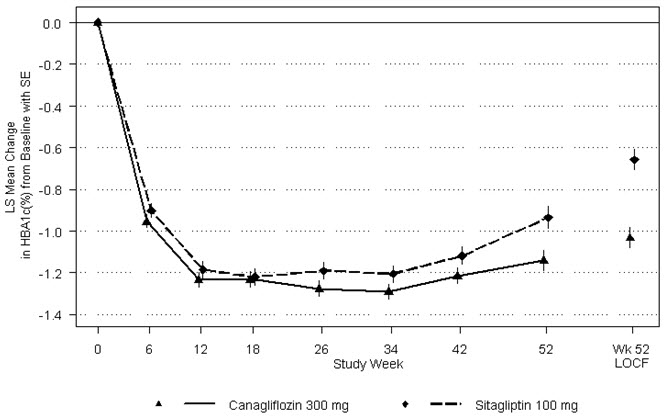
A total of 755 patients with type 2 diabetes inadequately controlled on the combination of metformin (greater than or equal to 2,000 mg/day or at least 1,500 mg/day if higher dose not tolerated) and sulfonylurea (near-maximal or maximal effective dose) participated in a 52-week, double-blind, active-controlled trial to compare the efficacy and safety of INVOKANA 300 mg versus sitagliptin 100 mg in combination with metformin and sulfonylurea. The mean age was 57 years, 56% of patients were men, and the mean baseline eGFR was 88 mL/min/1.73 m2. Patients already on protocol-specified doses of metformin and sulfonylurea (N=716) entered a 2-week single-blind, placebo run-in period. Other patients (N=39) were required to be on a stable protocol-specified dose of metformin and sulfonylurea for at least 8 weeks before entering the 2-week run-in period. Following the run-in period, patients were randomized to INVOKANA 300 mg or sitagliptin 100 mg as add-on to metformin and sulfonylurea.
As shown in Table 16 and Figure 2, at the end of treatment, INVOKANA 300 mg provided greater HbA1C reduction compared to sitagliptin 100 mg when added to metformin and sulfonylurea (p<0.05). INVOKANA 300 mg resulted in a mean percent change in body weight from baseline of -2.5% compared to +0.3% with sitagliptin 100 mg. A mean change in systolic blood pressure from baseline of -5.06 mmHg was observed with INVOKANA 300 mg compared to +0.85 mmHg with sitagliptin 100 mg.
Table 16: Results from 52-Week Clinical Study Comparing INVOKANA to Sitagliptin in Combination with Metformin and SulfonylureaIntent-to-treat population using last observation in study prior to glycemic rescue therapy
| Efficacy Parameter | INVOKANA 300 mg + Metformin and Sulfonylurea
(N=377) | Sitagliptin 100 mg + Metformin and Sulfonylurea
(N=378) |
|---|
| HbA1C (%) |
| Baseline (mean) | 8.12 | 8.13 |
| Change from baseline (adjusted mean) | -1.03 | -0.66 |
| Difference from sitagliptin (adjusted mean) (95% CI) Least squares mean adjusted for baseline value and stratification factors | -0.37 INVOKANA + metformin + sulfonylurea is considered non-inferior to sitagliptin + metformin + sulfonylurea because the upper limit of this confidence interval is less than the pre-specified non-inferiority margin of < 0.3%.
(-0.50; -0.25) | |
| Percent of patients achieving HbA1C < 7% | 48 | 35 |
| Fasting Plasma Glucose (mg/dL) |
| Baseline (mean) | 170 | 164 |
| Change from baseline (adjusted mean) | -30 | -6 |
| Difference from sitagliptin (adjusted mean) (95% CI) | -24
(-30; -18) | |
| Body Weight |
| Baseline (mean) in kg | 87.6 | 89.6 |
| % change from baseline (adjusted mean) | -2.5 | 0.3 |
| Difference from sitagliptin (adjusted mean) (95% CI) | -2.8 p<0.001
(-3.3; -2.2) | |
Figure 2: Mean HbA1C Change at Each Time Point (Completers) and at Week 52 Using Last Observation Carried Forward (mITT Population)
Add-on Combination Therapy With Metformin and Pioglitazone
A total of 342 patients with type 2 diabetes inadequately controlled on the combination of metformin (greater than or equal to 2,000 mg/day or at least 1,500 mg/day if higher dose not tolerated) and pioglitazone (30 or 45 mg/day) participated in a 26-week, double-blind, placebo-controlled trial to evaluate the efficacy and safety of INVOKANA in combination with metformin and pioglitazone. The mean age was 57 years, 63% of patients were men, and the mean baseline eGFR was 86 mL/min/1.73 m2. Patients already on protocol-specified doses of metformin and pioglitazone (N=163) entered a 2-week, single-blind, placebo run-in period. Other patients (N=181) were required to be on stable protocol-specified doses of metformin and pioglitazone for at least 8 weeks before entering the 2-week run-in period. Following the run-in period, patients were randomized to INVOKANA 100 mg, INVOKANA 300 mg, or placebo, administered once daily as add-on to metformin and pioglitazone.
At the end of treatment, INVOKANA 100 mg and 300 mg once daily resulted in a statistically significant improvement in HbA1C (p<0.001 for both doses) compared to placebo when added to metformin and pioglitazone. INVOKANA 100 mg and 300 mg once daily also resulted in a greater proportion of patients achieving an HbA1C less than 7%, in significant reduction in fasting plasma glucose (FPG) and in percent body weight reduction compared to placebo when added to metformin and pioglitazone (see Table 17). Statistically significant (p<0.05 for both doses) mean changes from baseline in systolic blood pressure relative to placebo were -4.1 mmHg and -3.5 mmHg with INVOKANA 100 mg and 300 mg, respectively.
Table 17: Results from 26-Week Placebo-Controlled Clinical Study of INVOKANA in Combination with Metformin and PioglitazoneIntent-to-treat population using last observation in study prior to glycemic rescue therapy
| Efficacy Parameter | Placebo + Metformin and Pioglitazone
(N=115) | INVOKANA 100 mg + Metformin and Pioglitazone
(N=113) | INVOKANA 300 mg + Metformin and Pioglitazone
(N=114) |
|---|
| HbA1C (%) |
| Baseline (mean) | 8.00 | 7.99 | 7.84 |
| Change from baseline (adjusted mean) | -0.26 | -0.89 | -1.03 |
| Difference from placebo (adjusted mean) (95% CI) Least squares mean adjusted for baseline value and stratification factors | | -0.62 p<0.001
(-0.81; -0.44) | -0.76
(-0.95; -0.58) |
| Percent of patients achieving HbA1C < 7% | 33 | 47 | 64 |
| Fasting Plasma Glucose (mg/dL) |
| Baseline (mean) | 164 | 169 | 164 |
| Change from baseline (adjusted mean) | 3 | -27 | -33 |
| Difference from placebo (adjusted mean) (95% CI) | | -29
(-37; -22) | -36
(-43; -28) |
| Body Weight |
| Baseline (mean) in kg | 94.0 | 94.2 | 94.4 |
| % change from baseline (adjusted mean) | -0.1 | -2.8 | -3.8 |
| Difference from placebo (adjusted mean) (95% CI) | | -2.7
(-3.6; -1.8) | -3.7
(-4.6; -2.8) |
Add-On Combination Therapy With Insulin (With or Without Other Antihyperglycemic Agents)
A total of 1,718 patients with type 2 diabetes inadequately controlled on insulin greater than or equal to 30 units/day or insulin in combination with other antihyperglycemic agents participated in an 18-week, double-blind, placebo-controlled substudy of a cardiovascular trial to evaluate the efficacy and safety of INVOKANA in combination with insulin. The mean age was 63 years, 66% of patients were men, and the mean baseline eGFR was 75 mL/min/1.73 m2. Patients on basal, bolus, or basal/bolus insulin for at least 10 weeks entered a 2-week, single-blind, placebo run-in period. Approximately 70% of patients were on a background basal/bolus insulin regimen. After the run-in period, patients were randomized to INVOKANA 100 mg, INVOKANA 300 mg, or placebo, administered once daily as add-on to insulin. The mean daily insulin dose at baseline was 83 units, which was similar across treatment groups.
At the end of treatment, INVOKANA 100 mg and 300 mg once daily resulted in a statistically significant improvement in HbA1C (p<0.001 for both doses) compared to placebo when added to insulin. INVOKANA 100 mg and 300 mg once daily also resulted in a greater proportion of patients achieving an HbA1C less than 7%, in significant reductions in fasting plasma glucose (FPG), and in percent body weight reductions compared to placebo (see Table 18). Statistically significant (p<0.001 for both doses) mean changes from baseline in systolic blood pressure relative to placebo were -2.6 mmHg and -4.4 mmHg with INVOKANA 100 mg and 300 mg, respectively.
Table 18: Results from 18-Week Placebo-Controlled Clinical Study of INVOKANA in Combination with Insulin ≥ 30 Units/Day (With or Without Other Oral Antihyperglycemic Agents)Intent-to-treat population using last observation in study prior to glycemic rescue therapy
| Efficacy Parameter | Placebo + Insulin
(N=565) | INVOKANA 100 mg + Insulin
(N=566) | INVOKANA 300 mg + Insulin
(N=587) |
|---|
| HbA1C (%) |
| Baseline (mean) | 8.20 | 8.33 | 8.27 |
| Change from baseline (adjusted mean) | 0.01 | -0.63 | -0.72 |
| Difference from placebo (adjusted mean) (95% CI) Least squares mean adjusted for baseline value and stratification factors | | -0.65 p<0.001
(-0.73; -0.56) | -0.73
(-0.82; -0.65) |
| Percent of patients achieving HbA1C < 7% | 8 | 20 | 25 |
| Fasting Plasma Glucose (mg/dL) |
| Baseline | 169 | 170 | 168 |
| Change from baseline (adjusted mean) | 4 | -19 | -25 |
| Difference from placebo (adjusted mean) (97.5% CI) | | -23
(-29; -16) | -29
(-35; -23) |
| Body Weight |
| Baseline (mean) in kg | 97.7 | 96.9 | 96.7 |
| % change from baseline (adjusted mean) | 0.1 | -1.8 | -2.3 |
| Difference from placebo (adjusted mean) (97.5% CI) | | -1.9
(-2.2; -1.6) | -2.4
(-2.7; -2.1) |
Study in Patients Ages 55 to 80
A total of 714 type 2 diabetes patients ages 55 to 80 years and inadequately controlled on current diabetes therapy (either diet and exercise alone or in combination with oral or parenteral agents) participated in a 26-week, double-blind, placebo-controlled trial to evaluate the efficacy and safety of INVOKANA in combination with current diabetes treatment. The mean age was 64 years, 55% of patients were men, and the mean baseline eGFR was 77 mL/min/1.73 m2. Patients were randomized in a 1:1:1 ratio to the addition of INVOKANA 100 mg, INVOKANA 300 mg, or placebo, administered once daily. At the end of treatment, INVOKANA provided statistically significant improvements from baseline relative to placebo in HbA1C (p<0.001 for both doses) of -0.57% (95% CI: -0.71%; -0.44%) for INVOKANA 100 mg and -0.70% (95% CI: -0.84%; -0.57%) for INVOKANA 300 mg. [see Use in Specific Populations (8.5)].
Moderate Renal Impairment
A total of 269 patients with type 2 diabetes and a baseline eGFR of 30 mL/min/1.73 m2 to less than 50 mL/min/1.73 m2 inadequately controlled on current diabetes therapy participated in a 26-week, double-blind, placebo-controlled clinical trial to evaluate the efficacy and safety of INVOKANA in combination with current diabetes treatment (diet or antihyperglycemic agent therapy, with 95% of patients on insulin and/or sulfonylurea). The mean age was 68 years, 61% of patients were men, and the mean baseline eGFR was 39 mL/min/1.73 m2. Patients were randomized in a 1:1:1 ratio to the addition of INVOKANA 100 mg, INVOKANA 300 mg, or placebo, administered once daily.
At the end of treatment, INVOKANA 100 mg and INVOKANA 300 mg daily provided greater reductions in HbA1C relative to placebo (-0.30% [95% CI: -0.53%; -0.07%] and -0.40%, [95% CI: -0.64%; -0.17%], respectively) [see Warnings and Precautions (5.4), Adverse Reactions (6.1), and Use in Specific Populations (8.6)].
Lower Limb Amputation
Inform patients that INVOKANA is associated with an increased risk of amputations. Counsel patients about the importance of routine preventative foot care. Instruct patients to monitor for new pain or tenderness, sores or ulcers, or infections involving the leg or foot and to seek medical advice immediately if such signs or symptoms develop [see Boxed Warning and Warnings and Precautions (5.1)].
Hypotension
Inform patients that symptomatic hypotension may occur with INVOKANA and advise them to contact their doctor if they experience such symptoms [see Warnings and Precautions (5.2)]. Inform patients that dehydration may increase the risk for hypotension, and to have adequate fluid intake.
Ketoacidosis
Inform patients that ketoacidosis is a serious life-threatening condition. Cases of ketoacidosis have been reported during use of INVOKANA. Instruct patients to check ketones (when possible) if symptoms consistent with ketoacidosis occur even if blood glucose is not elevated. If symptoms of ketoacidosis (including nausea, vomiting, abdominal pain, tiredness, and labored breathing) occur, instruct patients to discontinue INVOKANA and seek medical advice immediately [see Warnings and Precautions (5.3)].
Acute Kidney Injury
Inform patients that acute kidney injury has been reported during use of INVOKANA. Advise patients to seek medical advice immediately if they have reduced oral intake (such as due to acute illness or fasting) or increased fluid losses (such as due to vomiting, diarrhea, or excessive heat exposure), as it may be appropriate to temporarily discontinue INVOKANA use in those settings [see Warnings and Precautions (5.4)].
Serious Urinary Tract Infections
Inform patients of the potential for urinary tract infections, which may be serious. Provide them with information on the symptoms of urinary tract infections. Advise them to seek medical advice if such symptoms occur [see Warnings and Precautions (5.5)].
Necrotizing Fasciitis of the Perineum (Fournier's Gangrene)
Inform patients that necrotizing infections of the perineum (Fournier's gangrene) have occurred with INVOKANA. Counsel patients to promptly seek medical attention if they develop pain or tenderness, redness, or swelling of the genitals or the area from the genitals back to the rectum, along with a fever above 100.4°F or malaise [see Warnings and Precautions (5.7)].
Genital Mycotic Infections in Females (e.g., Vulvovaginitis)
Inform female patients that vaginal yeast infection may occur and provide them with information on the signs and symptoms of vaginal yeast infection. Advise them of treatment options and when to seek medical advice [see Warnings and Precautions (5.8)].
Genital Mycotic Infections in Males (e.g., Balanitis or Balanoposthitis)
Inform male patients that yeast infection of penis (e.g., balanitis or balanoposthitis) may occur, especially in uncircumcised males and patients with prior history. Provide them with information on the signs and symptoms of balanitis and balanoposthitis (rash or redness of the glans or foreskin of the penis). Advise them of treatment options and when to seek medical advice [see Warnings and Precautions (5.8)].
Hypersensitivity Reactions
Inform patients that serious hypersensitivity reactions, such as urticaria, rash, anaphylaxis, and angioedema, have been reported with INVOKANA. Advise patients to report immediately any signs or symptoms suggesting allergic reaction, and to discontinue drug until they have consulted prescribing physicians [see Warnings and Precautions (5.9)].
Bone Fracture
Inform patients that bone fractures have been reported in patients taking INVOKANA. Provide them with information on factors that may contribute to fracture risk [see Warnings and Precautions (5.10)].
Pregnancy
Advise pregnant women, and females of reproductive potential of the potential risk to a fetus with treatment with INVOKANA [see Use in Specific Populations (8.1)]. Instruct females of reproductive potential to report pregnancies to their physicians as soon as possible.
Lactation
Advise women that breastfeeding is not recommended during treatment with INVOKANA [see Use in Specific Populations (8.2)].
Laboratory Tests
Inform patients that due to its mechanism of action, patients taking INVOKANA will test positive for glucose in their urine [see Drug Interactions (7.3)].
Missed Dose
If a dose is missed, advise patients to take it as soon as it is remembered unless it is almost time for the next dose, in which case patients should skip the missed dose and take the medicine at the next regularly scheduled time. Advise patients not to take two doses of INVOKANA at the same time.
Active ingredient made in Belgium
Manufactured for:
Janssen Pharmaceuticals, Inc.
Titusville, NJ 08560
Finished product manufactured by:
Janssen Ortho LLC
Gurabo, PR 00778
Or
Janssen Cilag SpA
Latina, Italy
Licensed from Mitsubishi Tanabe Pharma Corporation
© 2013 Janssen Pharmaceutical Companies