Xarelto Tablet, Film Coated
Product Images NDC 50090-4468

View Photos of Packaging, Regulatory Labels, and Product Appearance

Product Visual Gallery

This gallery contains 13 technical images submitted to the FDA as part of the official labeling for Xarelto (NDC 50090-4468). Unlike standard consumer photos, these assets often include clinical data figures, molecular chemical structures, and official manufacturer packaging layouts.

As provided by A-s Medication Solutions, these visuals offer a comprehensive scientific overview of the product's physical and chemical identity, aiding pharmacists and researchers in product verification and study.

FDA Label Image

Label Image (Lbl500904468)

FDA Label Image

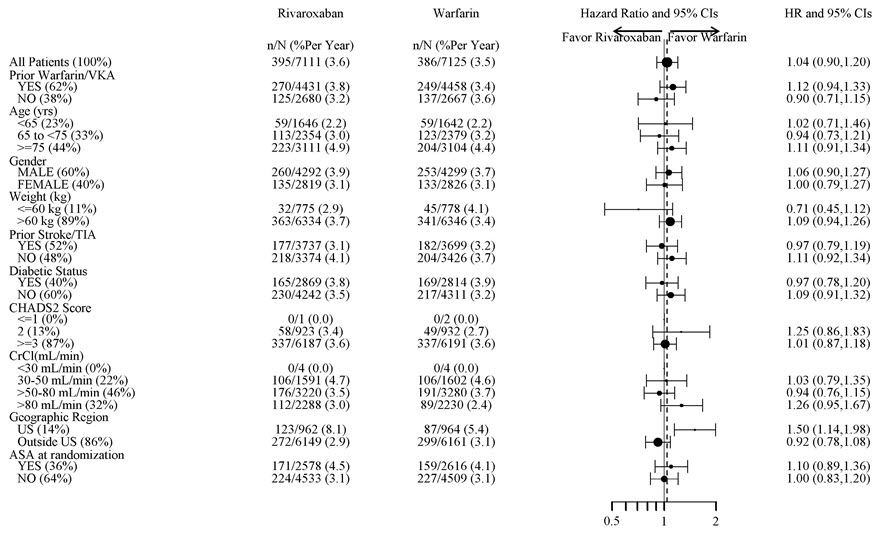
Figure 1 (Xarelto 01)

Figure 1 (Xarelto 01)
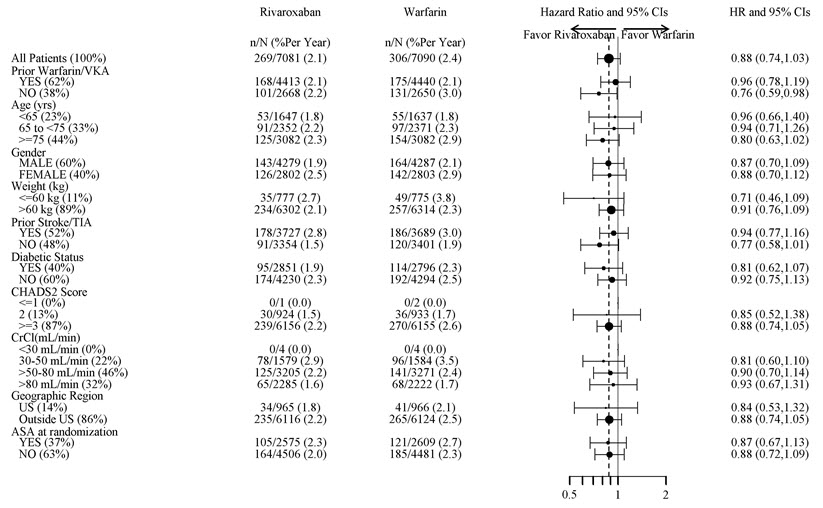
This is a table showing the hazard ratio and 95% CIs for patients receiving rivaroxaban versus warfarin in different subgroups based on demographics and medical history. The table includes the number of patients, rates of events per year, and the hazard ratio with corresponding confidence intervals.*
FDA Label Image

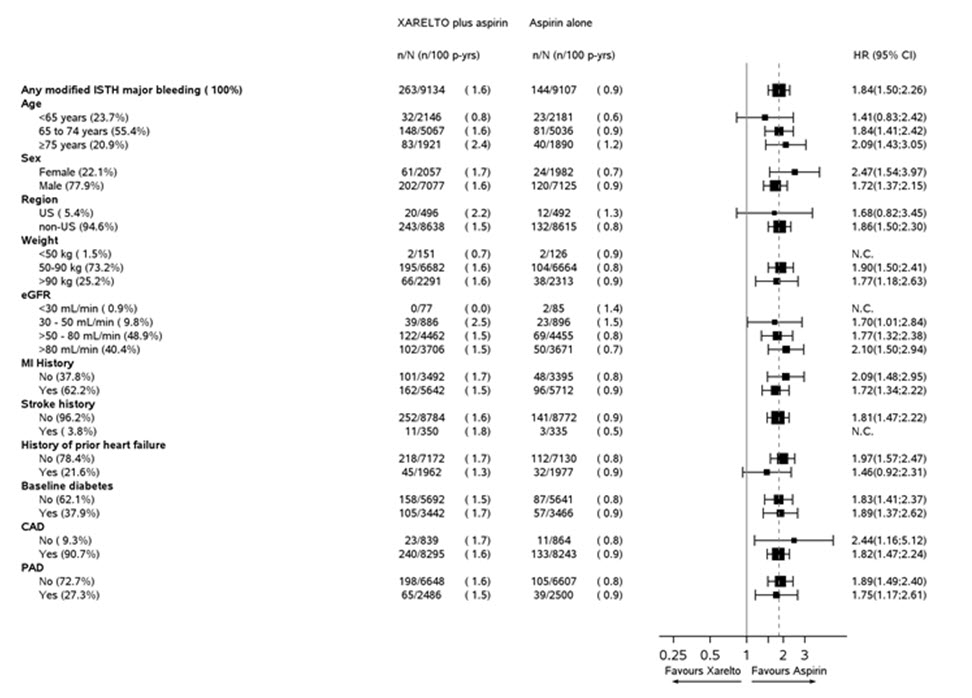
Figure 2 (Xarelto 02)

Figure 2 (Xarelto 02)
This is a table of statistical data that seems to represent a clinical study. The medication XARELTO used together with aspirin is compared to aspirin alone, evaluating the cases of major bleeding in patients with different characteristics (age, weight, medical history, etc.). The table is not informative as output.*
FDA Label Image

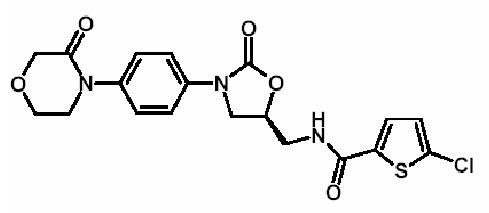
Chemical Structure (Xarelto 03)

FDA Label Image

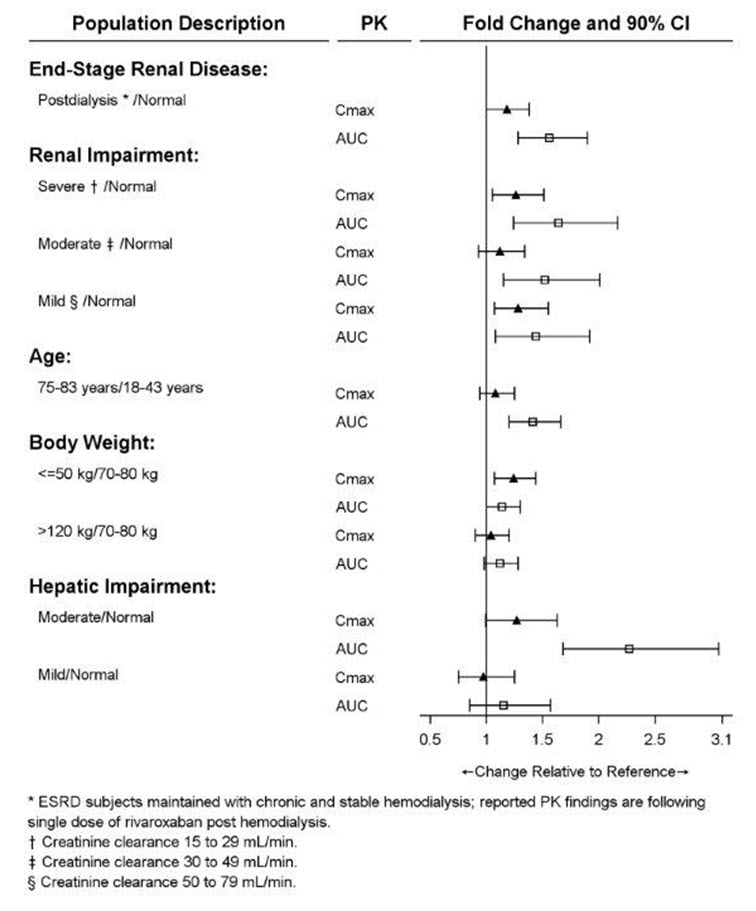
Figure 3 (Xarelto 04)

Figure 3 (Xarelto 04)
This text appears to be a table with several variables and their corresponding values for different populations. The variables include population description, PK fold change, 90% confidence interval, AUC, age, body weight, and hepatic impairment. However, the meaning and relevance of these variables are unclear without further context.*
FDA Label Image

Figure 4 (Xarelto 05)

Figure 4 (Xarelto 05)
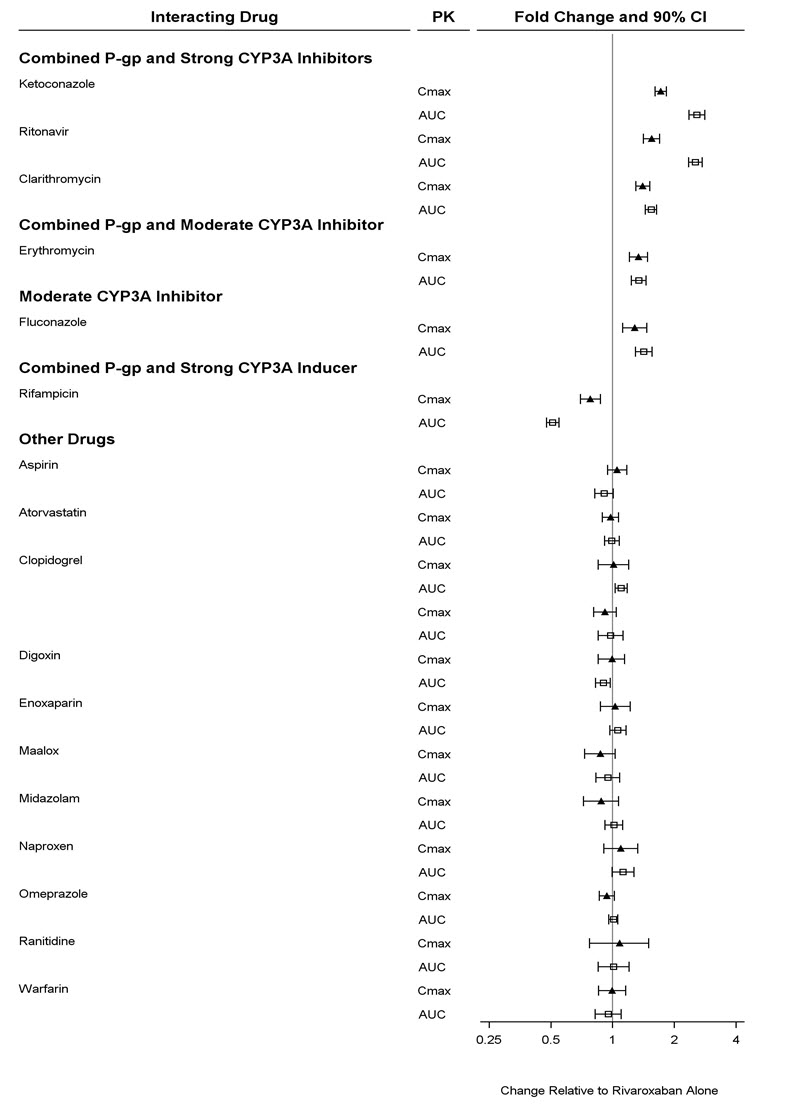
The text represents a table that shows the interaction of drugs with certain inhibitors and inducers with a PK Fold Change and 90% Confidence Interval. The drugs listed in the table are classified into different categories based on the inhibitors and inducers they are combined with. These categories include Combined P-gp, Strong CYP3A Inhibitors, Moderate CYP3A Inhibitor, Strong CYP3A Inducer, and Other Drugs. The data in the table is presented as AUC (Area Under the Curve) and Cmax (maximal concentrations) with relative changes to Rivaroxaban Alone. The table also has time points of 0.25, 0.5, 1, 2, and 4.*
FDA Label Image

Figure 5 (Xarelto 06)

Figure 5 (Xarelto 06)
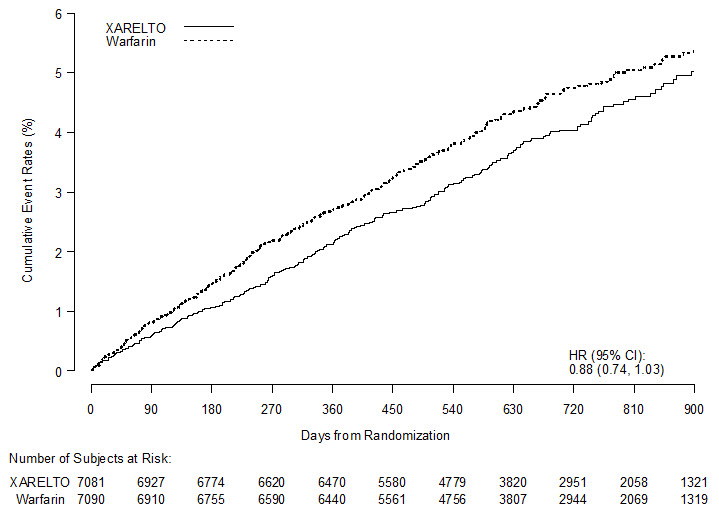
This is a table showing the cumulative event rates, HR (hazard ratio), and number of subjects at risk for XARELTO and Warfarin. The days from randomization are also shown on the horizontal axis. Not Available.*
FDA Label Image

Figure 6 (Xarelto 07)

FDA Label Image

Figure 7 (Xarelto 08)

Figure 7 (Xarelto 08)
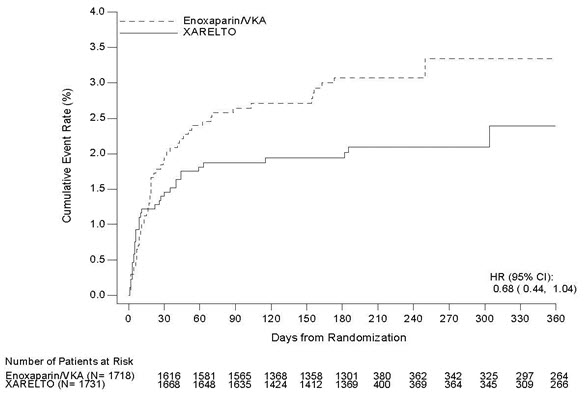
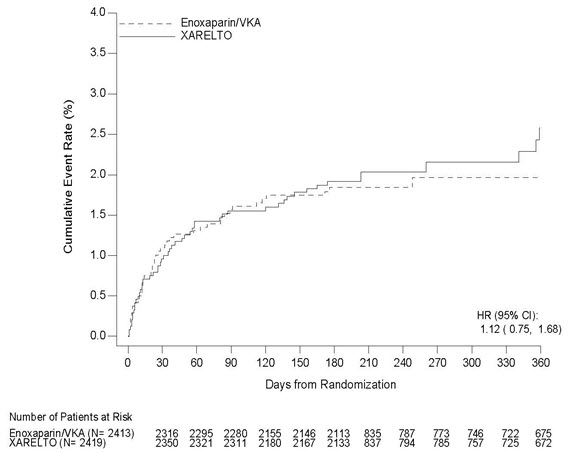
The given text is a chart containing the Cumulative Event Rate graph for EnoxaparisVKA and XARELTO for different days from Randomization. The Number of Patients at Risk for the given study is also provided. The text seems to be a part of a scientific or medical document.*
FDA Label Image

Figure 8 (Xarelto 09)

FDA Label Image

Figure 9 (Xarelto 10)

Figure 9 (Xarelto 10)
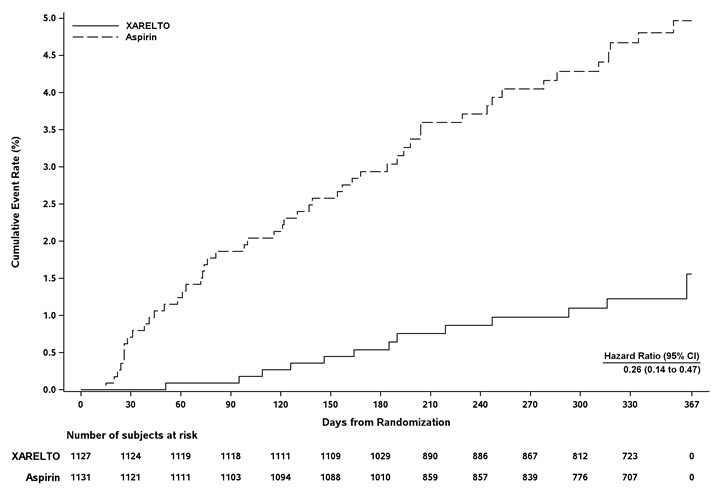
This appears to be a graph representing a cumulative event rate over time for two treatments (XARELTO and Aspirin). The X-axis shows the number of days from randomization while the Y-axis shows the cumulative event rate in percentage. The graph seems to indicate that XARELTO has a lower cumulative event rate compared to Aspirin. The hazard ratio is 0.85. There is also a table showing the number of subjects at risk for XARELTO and aspirin. The rest of the text is not readable.*
FDA Label Image

Figure 10 (Xarelto 11)

FDA Label Image

Figure 11 (Xarelto 12)

Figure 11 (Xarelto 12)
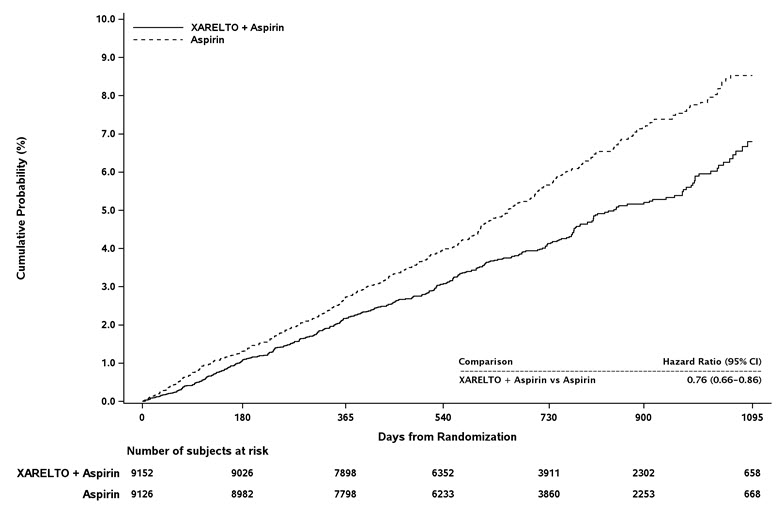
This appears to be a medical chart displaying statistics related to the use of XARELTO versus aspirin for a period of up to one year. The chart includes a cumulative probability graph, a comparison of hazard ratios, and the number of subjects at risk over time. It is likely used by medical professionals to evaluate the effectiveness of the medications.*

* These product label images have been analyzed using experimental machine learning. Please verify findings with the primary label text.