.insulin Aspart Protamine And Insulin Aspart Injection, Suspension
Product Images NDC 50090-4959

48 FDA label images from A-s Medication Solutions · Packaging, Regulatory Labels, and Product Appearance

Product Visual Gallery

This gallery contains 48 technical images submitted to the FDA as part of the official labeling for .insulin Aspart Protamine And Insulin Aspart (NDC 50090-4959). Unlike standard consumer photos, these assets often include clinical data figures, molecular chemical structures, and official manufacturer packaging layouts.

As provided by A-s Medication Solutions, these visuals offer a comprehensive scientific overview of the product's physical and chemical identity, aiding pharmacists and researchers in product verification and study.

Product Images & Figures Index

FDA Label Image

Molecular Chain Of Insulin Aspart. (Image 01)
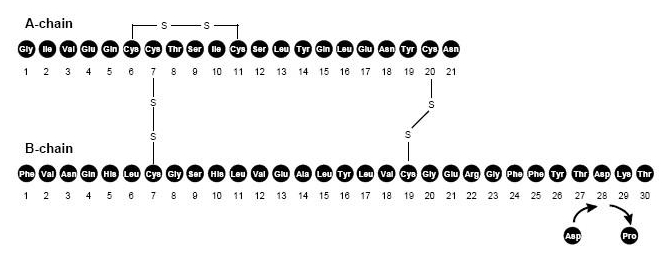
Molecular Chain Of Insulin Aspart. (Image 01)
Chemical structure diagram showing the amino acid sequences and disulfide bonds of insulin aspart's A-chain and B-chain. Each chain's amino acids are labeled in order with connections highlighting key cysteine linkages and modifications in the peptide structure.*
FDA Label Image

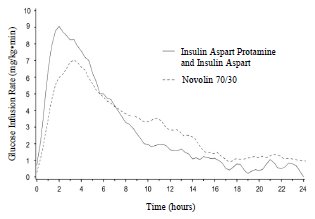
Figure 2 (Image 02)

Figure 2 (Image 02)
A line graph comparing the glucose infusion rate (mg/kg/min) over 24 hours for Insulin Aspart Protamine and Insulin Aspart versus Novolin 70/30. The x-axis represents time in hours, and the y-axis represents glucose infusion rate, illustrating the pharmacodynamic profiles of both insulin formulations.*
FDA Label Image

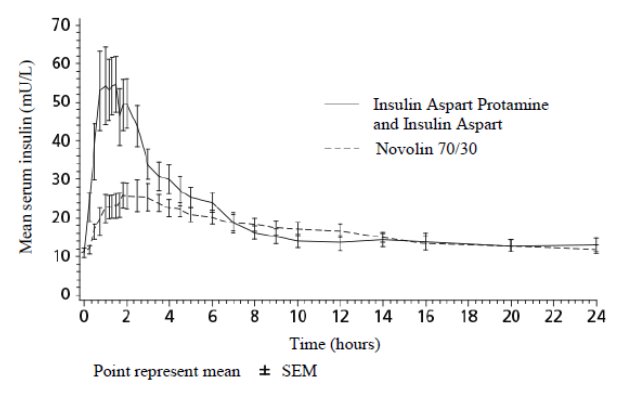
Figure 3 (Image 03)

Figure 3 (Image 03)
A line graph comparing mean serum insulin levels (mU/L) over 24 hours for Insulin Aspart Protamine and Insulin Aspart versus Novolin 70/30. The x-axis shows time in hours and the y-axis shows mean serum insulin. Data points represent means with SEM indicated, showing peak insulin levels occurring within the first few hours and declining thereafter for both products.*
FDA Label Image

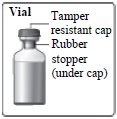
Vial Figure (Image 04)

Vial Figure (Image 04)
Illustration of a vial with labeled components showing a tamper resistant cap and a rubber stopper located under the cap.*
FDA Label Image

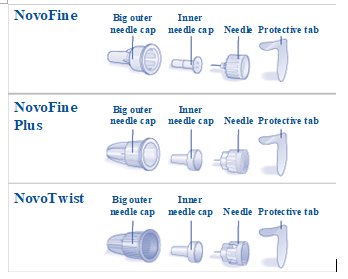
Needle Components. (Image 05)

Needle Components. (Image 05)
An instructional diagram showing the components of three different needle types: NovoFine, NovoFine Plus, and NovoTwist. Each needle type is broken down into four labeled parts: big outer needle cap, inner needle cap, needle, and protective tab.*
FDA Label Image

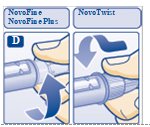
Figure D: Screw Needle On. (Image 06)

Figure D: Screw Needle On. (Image 06)
An instructional diagram showing steps for preparing or using an injection device. The left side shows the needle cap being removed from a NovoFine or NovoFine Plus needle, while the right side shows attaching a NovoTwist needle to an injector pen by twisting it on.*
FDA Label Image

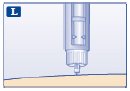
Figure L (Image 07)

Figure L (Image 07)
Illustration showing a syringe with a needle positioned for subcutaneous injection, depicted as being inserted into the skin. This image likely relates to the administration method for Insulin Aspart Protamine and Insulin Aspart injection suspension.*
FDA Label Image

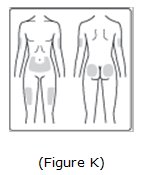
Image Of Possible Injection Sites. (Image 09)

Image Of Possible Injection Sites. (Image 09)
An anatomical illustration showing front and back views of a human torso. The diagrams highlight recommended subcutaneous injection sites for insulin administration on the abdomen and the outer upper thighs and buttocks.*
FDA Label Image

Important (Image 10)

FDA Label Image

Important (Image 11)

FDA Label Image

Important (Image 12)

FDA Label Image

Important (Image 13)

FDA Label Image

Important (Image 14)

FDA Label Image

Important (Image 15)

FDA Label Image

Important (Image 16)

FDA Label Image

Important (Image 17)

FDA Label Image

Important (Image 18)

FDA Label Image

Important (Image 19)

FDA Label Image

Important (Image 20)

FDA Label Image

Important (Image 21)

FDA Label Image

Important (Image 22)

FDA Label Image

Important (Image 23)

FDA Label Image

Important (Image 24)

FDA Label Image

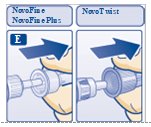
Figure E: Pull Off Outer Needle Cap. (Image 25)

Figure E: Pull Off Outer Needle Cap. (Image 25)
An instructional illustration demonstrating the use of the NovoFine and NovoTwist needles for subcutaneous injection. The image shows hands handling the needles with an emphasis on the proper twisting and attaching technique for each needle type.*
FDA Label Image

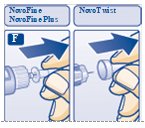
Figure F: Pull Off Inner Needle Cap. (Image 26)

Figure F: Pull Off Inner Needle Cap. (Image 26)
Instructional illustration showing how to use the NovoFine and NovoTwist needles. The two-panel image demonstrates the proper way to handle and prepare these injection needles before use, with hand positioning and the needle cap removal process.*
FDA Label Image

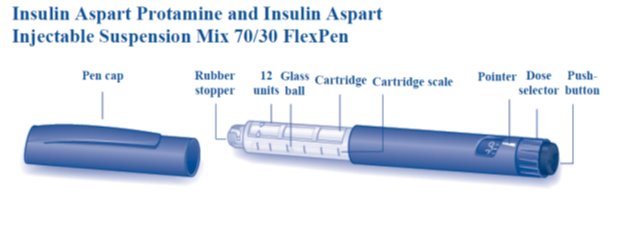
Flexpen Overview (Image 27)

Flexpen Overview (Image 27)
Illustration of an Insulin Aspart Protamine and Insulin Aspart Injectable Suspension Mix 70/30 FlexPen showing its components labeled from left to right: pen cap, rubber stopper, 12 units glass ball, cartridge, cartridge scale, pointer, dose selector, and push-button.*
FDA Label Image

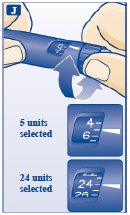
Figure J (Image 28)

Figure J (Image 28)
An instructional illustration showing how to select insulin dose on a pen device. It includes a close-up of the dose window displaying 5 units selected and another displaying 24 units selected, demonstrating the dosage selection process by turning the pen dial with fingers.*
FDA Label Image

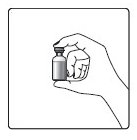
Hand & Vial Figure (Image 36)

Hand & Vial Figure (Image 36)
An instructional illustration showing a hand holding a vial, likely demonstrating the proper grip for handling an insulin vial.*
FDA Label Image

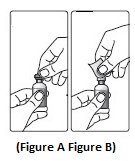
Figure A & Figure B (Image 37)

Figure A & Figure B (Image 37)
Illustration showing two steps of preparing a vial for use: Figure A depicts removing the vial's cap by hand, and Figure B shows the vial with the cap fully removed, held by the thumb and forefinger.*
FDA Label Image

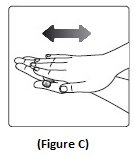
Figure C (Image 38)

Figure C (Image 38)
Illustration depicting a hand with an arrow indicating a horizontal motion or direction, shown in a simple line drawing style. The figure is labeled as 'Figure C' below the image.*
FDA Label Image

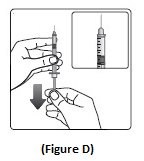
Figure D (Image 39)

Figure D (Image 39)
Instructional diagram showing a hand holding a syringe, pressing the plunger down to expel air. The image includes a close-up inset of the syringe's scale. This illustration is related to the preparation or administration of the insulin aspart injection suspension.*
FDA Label Image

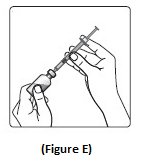
Figure E (Image 40)

Figure E (Image 40)
An instructional illustration labeled Figure E shows a pair of hands manipulating a syringe, demonstrating the process of drawing or preparing an injection dose. The image focuses on proper handling technique for injection preparation.*
FDA Label Image

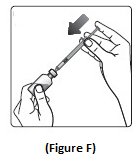
Figure F (Image 41)

Figure F (Image 41)
Illustration showing a hand holding a syringe with its plunger being pulled back to draw liquid medication from a vial, indicated by a downward arrow. This instructional diagram is related to the preparation of an injection, likely for subcutaneous administration.*
FDA Label Image

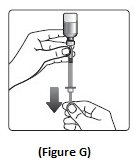
Figure G (Image 42)

Figure G (Image 42)
An instructional illustration showing a hand holding a vial upside down while pulling a plunger on a syringe, indicating the step of drawing medication from a vial into the syringe.*
FDA Label Image

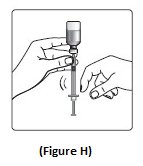
Figure H (Image 43)

Figure H (Image 43)
An instructional illustration showing a hand drawing a liquid into a syringe from a vial, depicting part of the preparation process for an injection. The image includes a vial held upside down and a syringe with its needle inserted into the vial.*
FDA Label Image

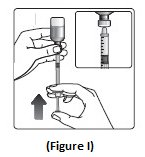
Figure I (Image 44)

Figure I (Image 44)
Illustration showing a hand holding a vial and drawing insulin aspart protamine and insulin aspart injection suspension into a syringe. The inset highlights the syringe barrel with measurement markings, indicating the preparation of a subcutaneous injection.*
FDA Label Image

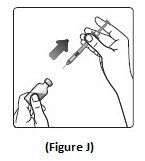
Figure J (Image 45)

Figure J (Image 45)
Instructional illustration labeled 'Figure J' showing a hand removing the cap from a vial with the other hand holding a syringe. The image demonstrates proper preparation steps for administering an injection.*
FDA Label Image

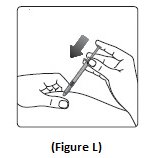
Figure L (Image 47)

Figure L (Image 47)
An instructional black-and-white line drawing showing two hands preparing an injection. One hand holds a syringe with an arrow pointing downward on the plunger, while the other hand supports the syringe body, indicating how to press or adjust the plunger before administration. The image is labeled as Figure L.*
FDA Label Image

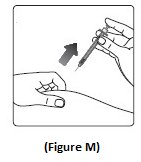
Figure M (Image 48)

Figure M (Image 48)
An instructional diagram labeled as Figure M showing a hand holding a syringe above a forearm, indicating the correct technique for subcutaneous injection with an upward arrow suggesting the syringe withdrawal or injection direction.*
FDA Label Image

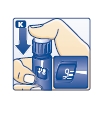
Pull Off The Pen Cap. (Image 50)

Pull Off The Pen Cap. (Image 50)
Instructional illustration showing how to remove the protective cap from a syringe. The image depicts a hand gripping the syringe and pulling the cap off to prepare for injection.*
FDA Label Image

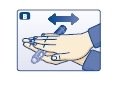
Roll The Pen Between Your Palms. (Image 51)

Roll The Pen Between Your Palms. (Image 51)
Instructional illustration depicting how to prepare an injection using a syringe, showing the hand holding the syringe with arrows indicating movement or positioning steps.*
FDA Label Image

Move The Pen Up And Down. (Image 52)

Move The Pen Up And Down. (Image 52)
An instructional illustration showing hand movements for preparing an injection. The sequence demonstrates rotating the hand and the vial or syringe from a vertical to a horizontal position, indicated by curved arrows labeled 1 and 2.*
FDA Label Image

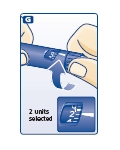
Turn The Dose Selector To 2 Units. (Image 56)

Turn The Dose Selector To 2 Units. (Image 56)
An instructional illustration showing a hand adjusting a dial on an injection pen to select a dose. The dial displays "2" units selected, indicating the dose amount for administering insulin aspart.*
FDA Label Image

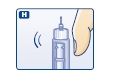
Tap The Needle. (Image 57)

Tap The Needle. (Image 57)
Illustration showing a finger pressing the plunger of a syringe, with a droplet of liquid emerging from the needle tip, indicating the process of expelling air or checking for a clear flow before injection.*
FDA Label Image

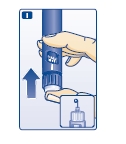
Press The Push-button. (Image 58)

Press The Push-button. (Image 58)
An instructional illustration depicting a hand holding and preparing an insulin pen injector. The pen is shown with an upward arrow, indicating the removal of the cap. A close-up inset shows the pen needle being attached to the pen body. This relates to the subcutaneous injection use of Insulin Aspart Protamine and Insulin Aspart.*
FDA Label Image

Press The Push Button To Inject. (Image 60)

Press The Push Button To Inject. (Image 60)
An instructional illustration showing a hand holding a vial of insulin, with an arrow pointing downward indicating a mixing or shaking motion. This image demonstrates how to prepare the insulin suspension for injection.*
FDA Label Image

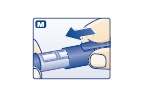
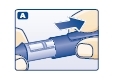
Replace The Pen Cap. (Image 62)

Replace The Pen Cap. (Image 62)
An instructional illustration showing a person holding a syringe or pen injector used for medication. The hand is depicted pushing or sliding a blue component with an arrow indicating the direction of movement, likely demonstrating how to prepare or use the injection device for insulin aspart protamine and insulin aspart suspension.*
FDA Label Image

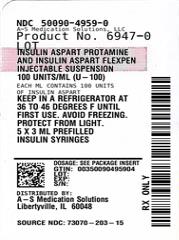
Label Image (Lbl500904959)

Label Image (Lbl500904959)
.Insulin Aspart Protamine and Insulin Aspart Injection, Suspension, 100 units/mL strength, supplied by A-S Medication Solutions. The label includes dosing and storage instructions, indicating it contains 5 prefilled syringes of 3 mL each. The product is for subcutaneous use and requires refrigeration.*

* About these descriptions: Image descriptions on this page are generated by automated AI analysis of the product label images from the manufacturer's FDA label submission (SPL). They are provided for reference only and may contain errors or omissions. Always rely on the printed label itself and the official FDA labeling, and consult a pharmacist or healthcare professional with any questions about this product.