Donepezil Hydrochloride Tablet, Film Coated
Product Images NDC 50090-6329

View Photos of Packaging, Regulatory Labels, and Product Appearance

Product Visual Gallery

This gallery contains 15 technical images submitted to the FDA as part of the official labeling for Donepezil Hydrochloride (NDC 50090-6329). Unlike standard consumer photos, these assets often include clinical data figures, molecular chemical structures, and official manufacturer packaging layouts.

As provided by A-s Medication Solutions, these visuals offer a comprehensive scientific overview of the product's physical and chemical identity, aiding pharmacists and researchers in product verification and study.

FDA Label Image

Fig-1 (Donepezil Figure 1)
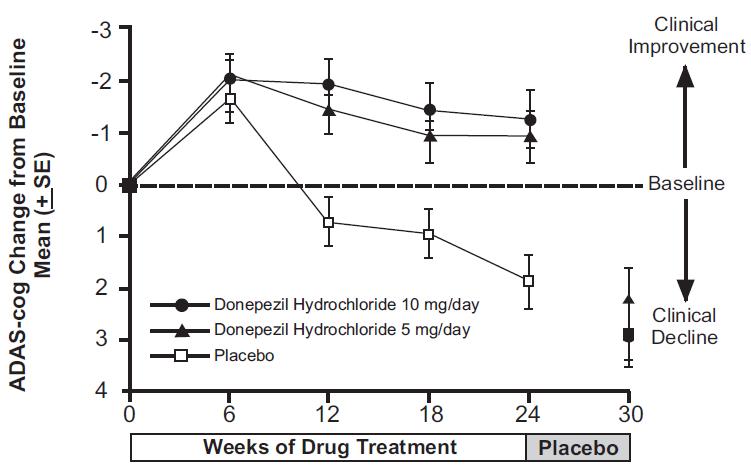
Fig-1 (Donepezil Figure 1)
A line graph showing ADAS-cog change from baseline (mean ± SE) over 24 weeks of drug treatment for Donepezil Hydrochloride 10 mg/day, Donepezil Hydrochloride 5 mg/day, and placebo groups. The vertical axis indicates clinical improvement above baseline and clinical decline below baseline, with time in weeks shown on the horizontal axis. The graph compares cognitive outcomes among the treatments over time.*
FDA Label Image

Fig-10 (Donepezil Figure 10)

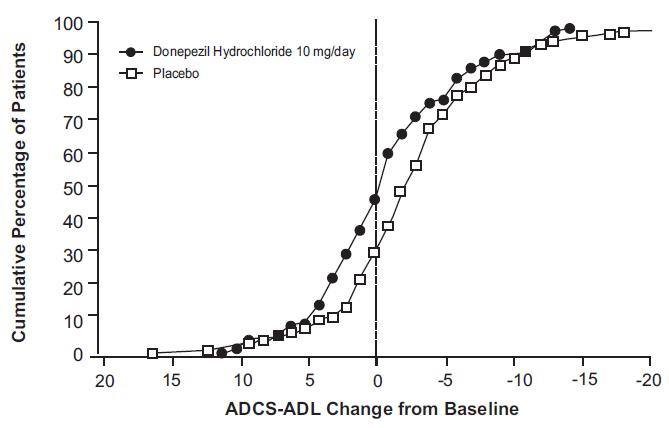
Fig-10 (Donepezil Figure 10)
A cumulative percentage of patients graph comparing Donepezil Hydrochloride 10 mg/day with placebo. The horizontal axis shows ADCS-ADL change from baseline, ranging from 20 to -20, and the vertical axis shows the cumulative percentage of patients from 0% to 100%. The Donepezil group is represented with filled circles and the placebo group with open squares, illustrating the distribution of patient responses over the change in ADCS-ADL scores.*
FDA Label Image

Fig-11 (Donepezil Figure 11)

Fig-11 (Donepezil Figure 11)
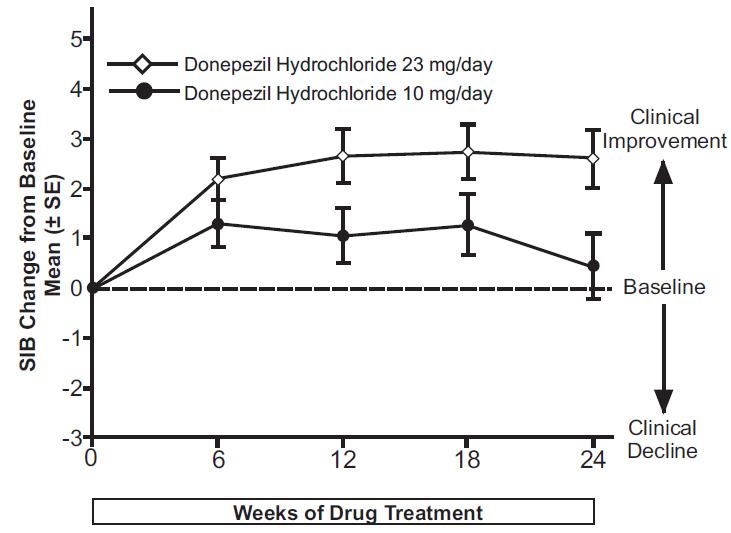
A line graph showing SIB (Severe Impairment Battery) change from baseline mean (± SE) over 24 weeks of drug treatment for Donepezil Hydrochloride. Two dosage groups, 10 mg/day and 23 mg/day, are compared with the 23 mg/day group showing a higher clinical improvement over time compared to 10 mg/day. The graph indicates clinical improvement above baseline and clinical decline below baseline.*
FDA Label Image

Fig-12 (Donepezil Figure 12)

Fig-12 (Donepezil Figure 12)
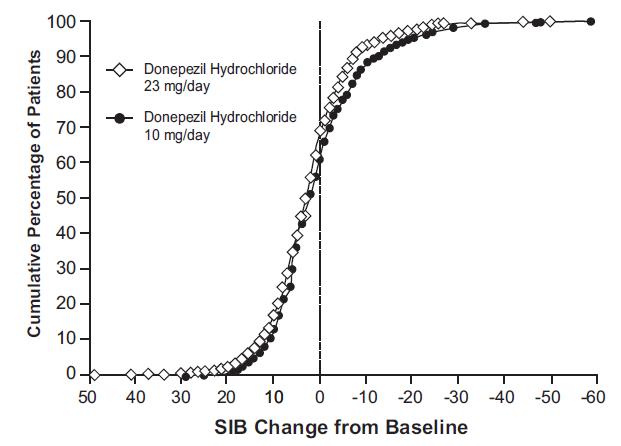
A line graph showing cumulative percentage of patients versus SIB Change from Baseline for Donepezil Hydrochloride at 10 mg/day and 23 mg/day doses. The graph compares two dosage groups with data points represented by circles and diamonds, indicating changes from baseline on a horizontal axis spanning positive and negative values.*
FDA Label Image

Fig-13 (Donepezil Figure 13)

Fig-13 (Donepezil Figure 13)
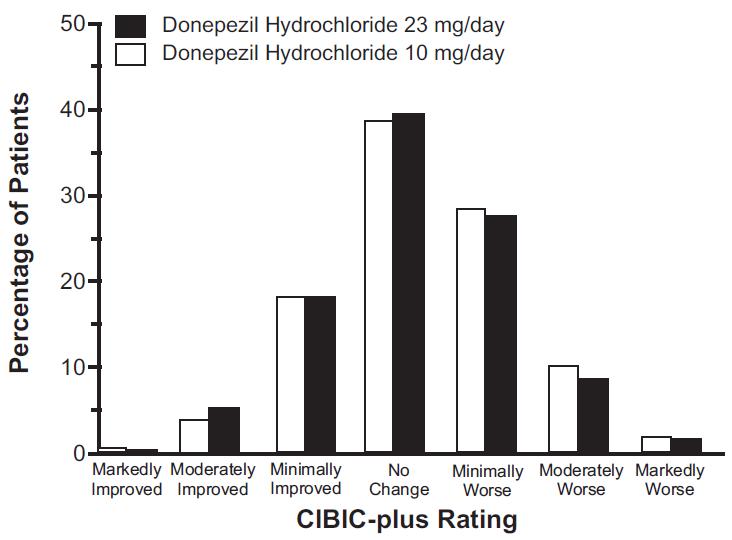
A bar chart comparing percentage of patients by CIBIC-plus rating for Donepezil Hydrochloride at 10 mg/day and 23 mg/day doses. Categories range from Markedly Improved to Markedly Worse, showing no change as the most common outcome at both doses.*
FDA Label Image

Fig-2 (Donepezil Figure 2)

Fig-2 (Donepezil Figure 2)
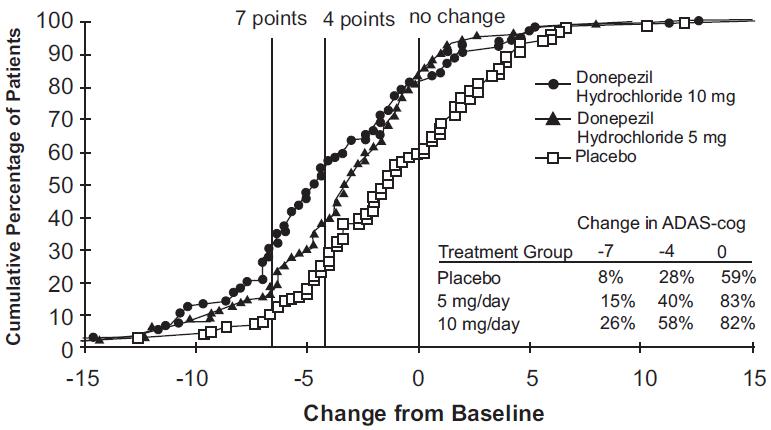
A cumulative percentage of patients line chart showing change from baseline on the x-axis and cumulative percentage of patients on the y-axis. The graph compares Donepezil Hydrochloride 5 mg and 10 mg doses against placebo, illustrating patient response changes measured by ADAS-cog scores, with markers for 7 points, 4 points improvement, and no change. The legend and a table detail treatment groups and corresponding percentages of patients experiencing different levels of cognitive change.*
FDA Label Image

Fig-3 (Donepezil Figure 3)

Fig-3 (Donepezil Figure 3)
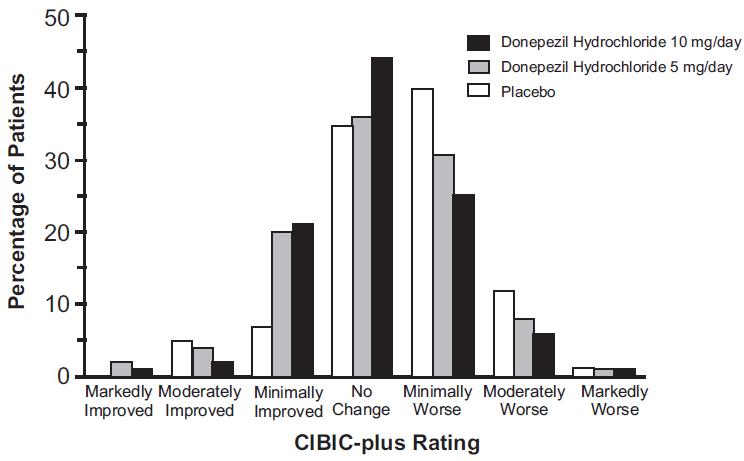
A bar graph depicting the percentage of patients by CIBIC-plus Rating categories ranging from Markedly Improved to Markedly Worse. The graph compares three groups: Donepezil Hydrochloride 10 mg/day, Donepezil Hydrochloride 5 mg/day, and Placebo. The y-axis shows percentages, while the x-axis displays the different patient rating categories.*
FDA Label Image

Fig-4 (Donepezil Figure 4)

Fig-4 (Donepezil Figure 4)
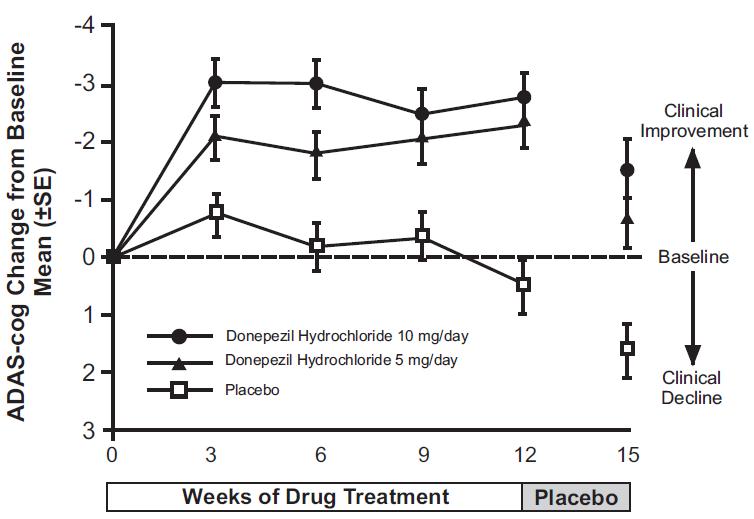
A line graph showing ADAS-cog change from baseline mean (±SE) over 15 weeks of drug treatment. It compares Donepezil Hydrochloride 10 mg/day, 5 mg/day, and placebo groups, with clinical improvement indicated above baseline and clinical decline below. The graph highlights cognitive changes during treatment.*
FDA Label Image

Fig-5 (Donepezil Figure 5)

Fig-5 (Donepezil Figure 5)
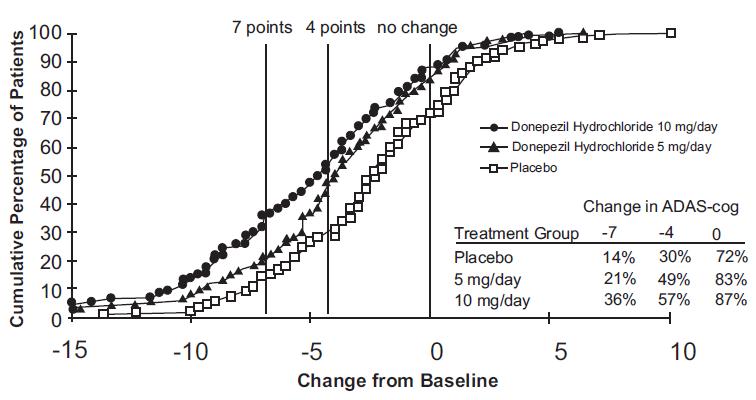
A cumulative percentage of patients chart showing change from baseline on the ADAS-cog scale. The plot compares Donepezil Hydrochloride 10 mg/day, 5 mg/day, and placebo groups, illustrating patient response to treatment doses versus placebo over varying changes in score, with percentages annotated and key thresholds marked at 7 points, 4 points, and no change.*
FDA Label Image

Fig-6 (Donepezil Figure 6)

Fig-6 (Donepezil Figure 6)
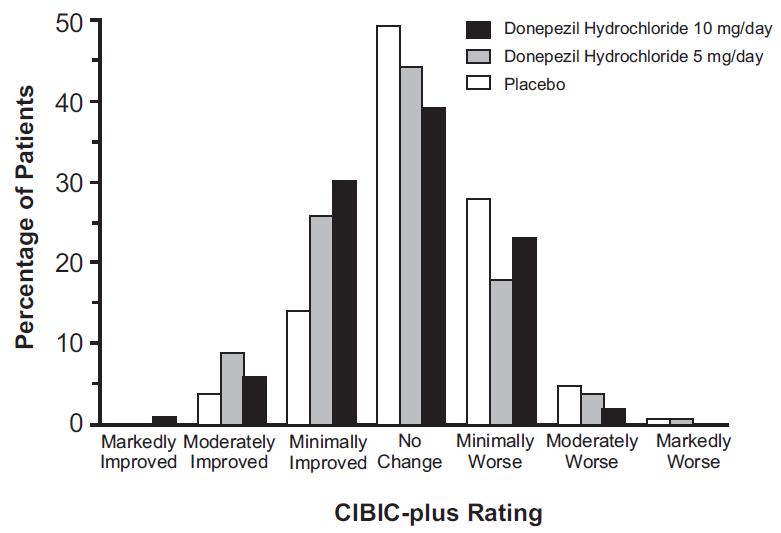
A bar chart depicting the percentage of patients with different CIBIC-plus ratings categorized by treatment groups: Donepezil Hydrochloride 10 mg/day, Donepezil Hydrochloride 5 mg/day, and Placebo. Ratings range from markedly improved to markedly worse, showing the distribution of patient responses for each treatment dose and placebo.*
FDA Label Image

Fig-7 (Donepezil Figure 7)

Fig-7 (Donepezil Figure 7)
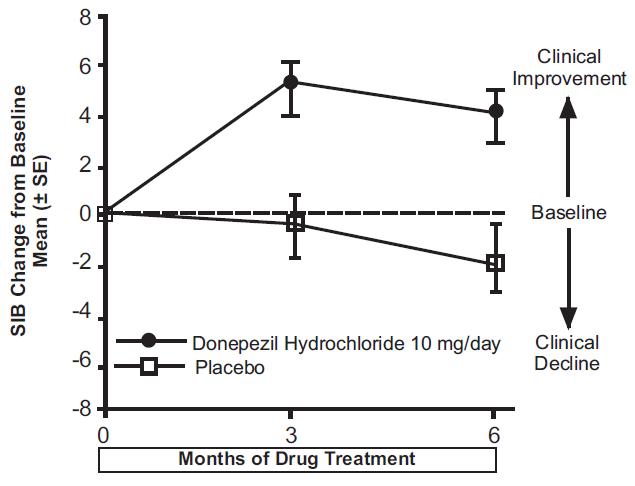
Line graph showing SIB (Severe Impairment Battery) score change from baseline over 6 months of drug treatment comparing Donepezil Hydrochloride 10 mg/day and placebo. The y-axis represents mean change from baseline, with clinical improvement above zero and clinical decline below. The graph shows Donepezil group with positive change (improvement) up to 6 months and placebo group showing decline.*
FDA Label Image

Fig-8 (Donepezil Figure 8)

Fig-8 (Donepezil Figure 8)
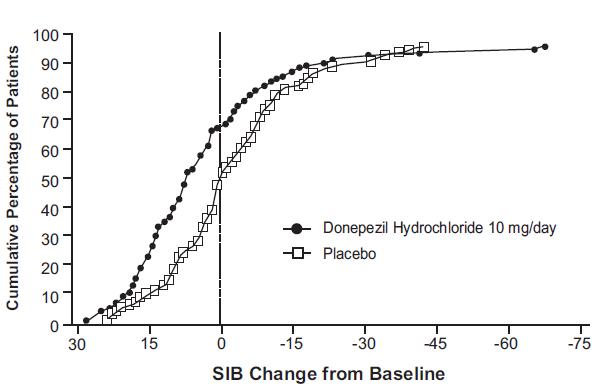
A cumulative percentage graph comparing patients receiving Donepezil Hydrochloride 10 mg/day versus placebo. The x-axis represents SIB (Severe Impairment Battery) change from baseline, and the y-axis shows cumulative percentage of patients. Data points for Donepezil Hydrochloride are marked with filled circles, while placebo data are marked with open squares.*
FDA Label Image

Fig-9 (Donepezil Figure 9)

Fig-9 (Donepezil Figure 9)
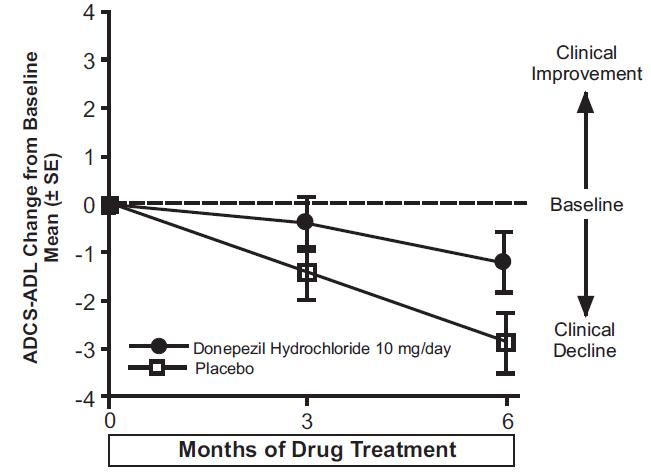
A line graph showing ADCS-ADL change from baseline mean (± SE) over 0, 3, and 6 months of drug treatment comparing Donepezil Hydrochloride 10 mg/day and placebo. The vertical axis measures clinical improvement or decline, with baseline at zero; Donepezil shows less decline than placebo across the time points.*
FDA Label Image

Str (Donepezil Str)

Str (Donepezil Str)
Chemical structure of Donepezil Hydrochloride showing its molecular framework including methoxy groups, piperidine ring, and the hydrochloride component.*
FDA Label Image

Label Image (Lbl500906329)

Label Image (Lbl500906329)
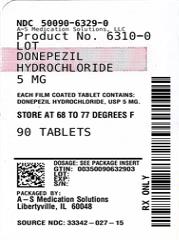
Donepezil Hydrochloride 5 mg film-coated tablets labeled by A-S Medication Solutions. The label indicates each coated tablet contains 5 mg Donepezil Hydrochloride, with a package quantity of 90 tablets. Storage instructions specify to store at 68 to 77 degrees Fahrenheit. The label includes the NDC 50090-6329-0 and a QR code.*

* About these descriptions: Image descriptions on this page are generated by automated AI analysis of the product label images from the manufacturer's FDA label submission (SPL). They are provided for reference only and may contain errors or omissions. Always rely on the printed label itself and the official FDA labeling, and consult a pharmacist or healthcare professional with any questions about this product.