Duloxetine Capsule, Delayed Release
Product Images NDC 50090-6406

View Photos of Packaging, Regulatory Labels, and Product Appearance

Product Visual Gallery

This gallery contains 11 technical images submitted to the FDA as part of the official labeling for Duloxetine (NDC 50090-6406). Unlike standard consumer photos, these assets often include clinical data figures, molecular chemical structures, and official manufacturer packaging layouts.

As provided by A-s Medication Solutions, these visuals offer a comprehensive scientific overview of the product's physical and chemical identity, aiding pharmacists and researchers in product verification and study.

FDA Label Image

Structure (C5b0f981 45c3 4e15 B712 984b4a4f6a57 01)
Structure (C5b0f981 45c3 4e15 B712 984b4a4f6a57 01)
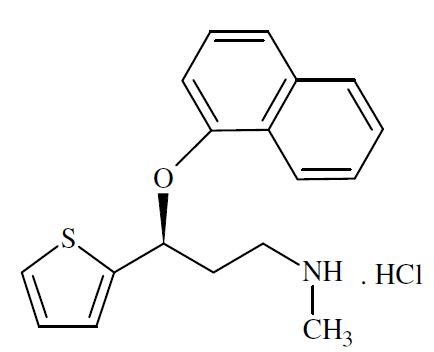
Chemical structure of Duloxetine hydrochloride, showing its fused bicyclic and thiophene rings, an oxygen atom, and an amine group with hydrochloride salt.*
FDA Label Image

Figure 1 (C5b0f981 45c3 4e15 B712 984b4a4f6a57 02)

Figure 1 (C5b0f981 45c3 4e15 B712 984b4a4f6a57 02)
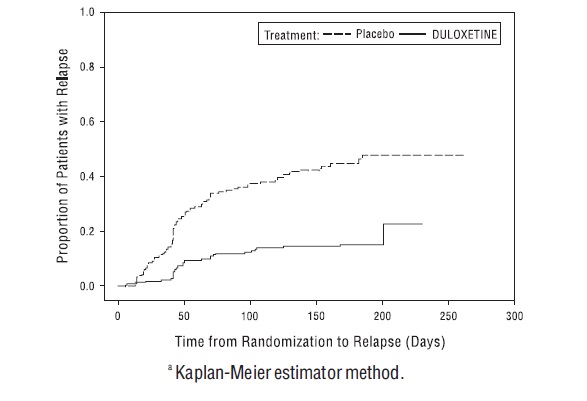
A Kaplan-Meier curve graph depicting the proportion of patients with relapse over time (days) from randomization. The graph compares two treatment groups: Placebo (dashed line) and Duloxetine (solid line), showing the relapse proportion trends up to 200 days.*
FDA Label Image

Figure 2 (C5b0f981 45c3 4e15 B712 984b4a4f6a57 03)

Figure 2 (C5b0f981 45c3 4e15 B712 984b4a4f6a57 03)
A Kaplan-Meier curve chart displaying the proportion of patients with relapse over time (days) from randomization, comparing placebo and duloxetine treatment groups. The x-axis shows time from 0 to 300 days, and the y-axis shows the proportion of patients with relapse from 0.0 to 1.0. The graph indicates duloxetine has a lower relapse proportion compared to placebo over the study period.*
FDA Label Image

Figure 1 (C5b0f981 45c3 4e15 B712 984b4a4f6a57 04)

Figure 1 (C5b0f981 45c3 4e15 B712 984b4a4f6a57 04)
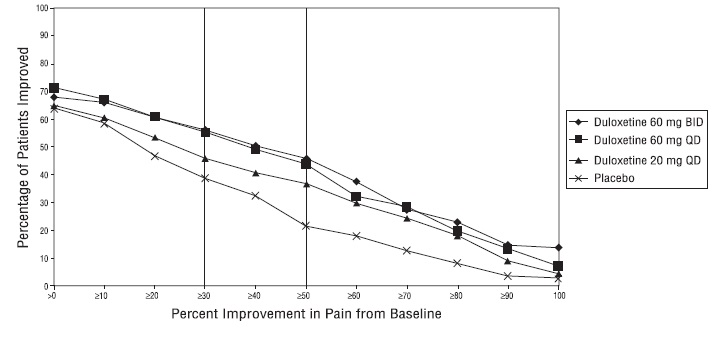
A line graph depicting the percentage of patients improved by percent improvement in pain from baseline. It compares results for Duloxetine 60 mg twice daily (BID), Duloxetine 60 mg once daily (QD), Duloxetine 20 mg once daily (QD), and placebo, showing trends in patient improvement across different pain reduction percentages.*
FDA Label Image

Figure 2 (C5b0f981 45c3 4e15 B712 984b4a4f6a57 05)

Figure 2 (C5b0f981 45c3 4e15 B712 984b4a4f6a57 05)
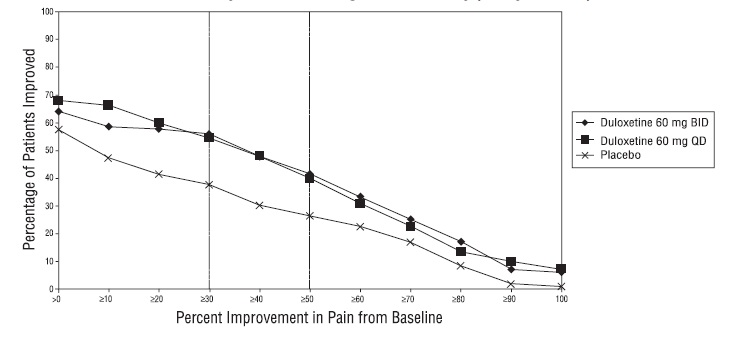
A line graph depicting the percentage of patients improved versus percent improvement in pain from baseline. It compares three groups: Duloxetine 60 mg BID, Duloxetine 60 mg QD, and placebo, showing trends in patient improvement across various pain reduction percentages.*
FDA Label Image

Fig 5 (C5b0f981 45c3 4e15 B712 984b4a4f6a57 06)

Fig 5 (C5b0f981 45c3 4e15 B712 984b4a4f6a57 06)
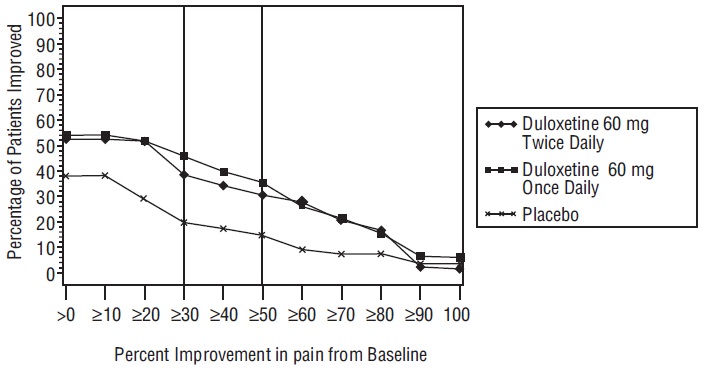
A line graph showing the percentage of patients improved relative to percent improvement in pain from baseline. It compares three groups: Duloxetine 60 mg twice daily, Duloxetine 60 mg once daily, and placebo, with the y-axis representing percentage of patients improved and the x-axis representing percent improvement in pain from baseline.*
FDA Label Image

Fig 6 (C5b0f981 45c3 4e15 B712 984b4a4f6a57 07)

Fig 6 (C5b0f981 45c3 4e15 B712 984b4a4f6a57 07)
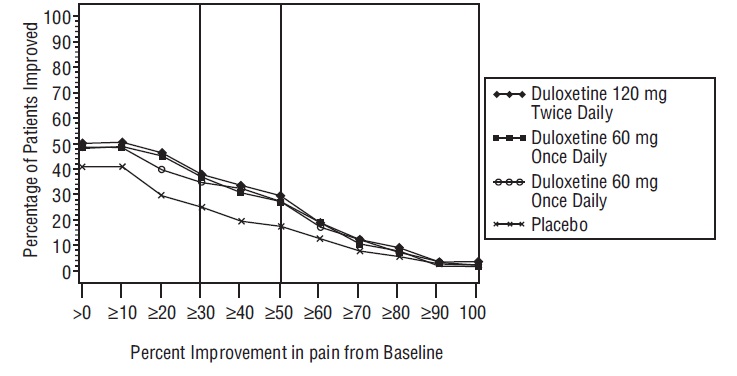
A line graph showing the percentage of patients improved relative to percent improvement in pain from baseline. The graph compares four groups: Duloxetine 120 mg twice daily, Duloxetine 60 mg once daily (two series), and placebo. The x-axis measures percent improvement in pain, and the y-axis indicates the percentage of patients improved.*
FDA Label Image

Figure 8 (C5b0f981 45c3 4e15 B712 984b4a4f6a57 08)

Figure 8 (C5b0f981 45c3 4e15 B712 984b4a4f6a57 08)
A line graph comparing the percentage of patients improved by percent improvement in pain from baseline (BOCF) between placebo and Duloxetine 60/120 mg once daily. The x-axis shows percent improvement in pain from 0 to 100, and the y-axis shows the percentage of patients improved from 0 to 100. Duloxetine consistently shows a higher percentage of patients improved compared to placebo across the range.*
FDA Label Image

Figure 9 (C5b0f981 45c3 4e15 B712 984b4a4f6a57 09)

Figure 9 (C5b0f981 45c3 4e15 B712 984b4a4f6a57 09)
A line graph comparing the percentage of patients improved by percent improvement in pain from baseline (BOCF) between placebo and Duloxetine 60 mg once daily. The x-axis shows percent improvement in pain, and the y-axis shows the percentage of patients improved. Two lines represent placebo and Duloxetine, with Duloxetine generally showing higher patient improvement percentages.*
FDA Label Image

Figure 10 (C5b0f981 45c3 4e15 B712 984b4a4f6a57 10)

Figure 10 (C5b0f981 45c3 4e15 B712 984b4a4f6a57 10)
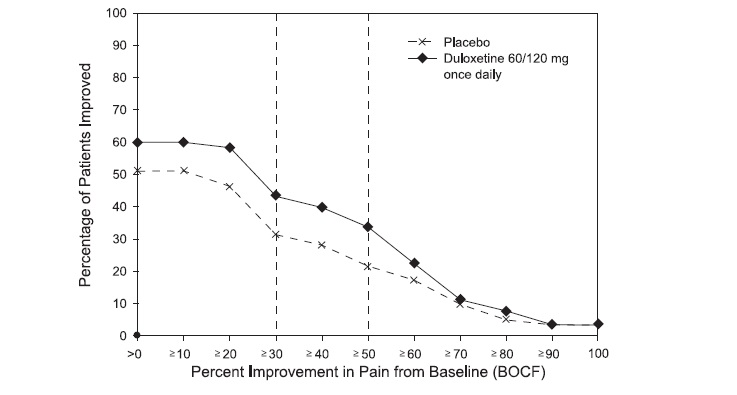
A line graph comparing the percentage of patients improved with Duloxetine 60/120 mg once daily versus placebo. The x-axis represents percent improvement in pain from baseline (BOCF) from greater than 0 to 100, and the y-axis shows the percentage of patients improved from 0 to 100%. Two lines illustrate response rates, with Duloxetine generally showing higher patient improvement percentages across pain improvement levels compared to placebo.*
FDA Label Image

Label Image (Lbl500906406)

Label Image (Lbl500906406)
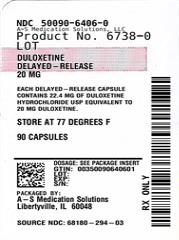
Duloxetine 20 mg delayed-release capsules label from A-S Medication Solutions. The label indicates oral dosage form with 90 capsules per package. It specifies storage instructions at 77 degrees Fahrenheit. The NDC is 50090-6406-0, and the label is marked as prescription only (RX).*

* About these descriptions: Image descriptions on this page are generated by automated AI analysis of the product label images from the manufacturer's FDA label submission (SPL). They are provided for reference only and may contain errors or omissions. Always rely on the printed label itself and the official FDA labeling, and consult a pharmacist or healthcare professional with any questions about this product.