- Has not been studied in patients with a history of pancreatitis [see Warnings and Precautions (5.2)]. Consider other antidiabetic therapies in patients with a history of pancreatitis.
- Should not be used in patients with type 1 diabetes mellitus.
- Has not been studied in patients with severe gastrointestinal disease, including severe gastroparesis and is therefore not recommended in these patients [see Warnings and Precautions (5.6)].
Adverse Reactions in the Clinical Trials in Adults with Type 2 Diabetes Mellitus
Pool of Adult Placebo-Controlled Trials for TRULICITY 0.75 mg and 1.5 mg Doses
The data in Table 1 are derived from a pool of placebo-controlled trials and include 1,670 adult patients with type 2 diabetes mellitus exposed to TRULICITY with a mean duration of exposure of 23.8 weeks [see Clinical Studies (14)]. The mean age of patients was 56 years, 1% were 75 years or older and 53% were male. The population was 69% White, 7% Black or African American, 13% Asian; 30% were of Hispanic or Latino ethnicity. At baseline, the population had diabetes for an average of 8 years, a mean HbA1c of 8.0%, and 2.5% of the population reported retinopathy. Baseline estimated renal function was normal or mildly impaired (eGFR ≥60 mL/min/1.73 m2) in 96%.
Table 1 shows adverse reactions, excluding hypoglycemia, occurring in ≥5% of TRULICITY treated adult patients and more commonly than placebo in a pool of placebo-controlled trials.
Table 1: Adverse Reactions in Pool of Placebo-Controlled Trials That Occurred in ≥5% of TRULICITY-Treated Adult Patients with Type 2 Diabetes Mellitusa Includes diarrhea, fecal volume increased, frequent bowel movements. |
b Includes retching, vomiting, vomiting projectile. |
c Includes abdominal discomfort, abdominal pain, abdominal pain lower, abdominal pain upper, abdominal tenderness, gastrointestinal pain. |
d Includes fatigue, asthenia, malaise. |
Note: Percentages reflect the number of patients that reported at least 1 treatment-emergent occurrence of the adverse reaction. |
| Adverse Reaction | Placebo
(N=568)
% | TRULICITY 0.75 mg
(N=836)
% | TRULICITY 1.5 mg
(N=834)
% |
| Nausea | 5.3 | 12.4 | 21.1 |
| Diarrheaa | 6.7 | 8.9 | 12.6 |
| Vomitingb | 2.3 | 6.0 | 12.7 |
| Abdominal Painc | 4.9 | 6.5 | 9.4 |
| Decreased Appetite | 1.6 | 4.9 | 8.6 |
| Dyspepsia | 2.3 | 4.1 | 5.8 |
| Fatigued | 2.6 | 4.2 | 5.6 |
Gastrointestinal Adverse Reactions
In the pool of placebo-controlled trials, gastrointestinal (GI) adverse reactions occurred more frequently among patients who received TRULICITY compared to patients who received placebo (placebo 21%, 0.75 mg 32%, 1.5 mg 41%). A higher percentage of patients who received TRULICITY 0.75 mg (1.3%) and TRULICITY 1.5 mg (3.5%) discontinued treatment due to GI adverse reactions than patients who received placebo (0.2%). Investigators graded the severity of GI adverse reactions that occurred in those treated with 0.75 mg and 1.5 mg of TRULICITY as “mild” in 58% and 48% of cases, respectively, “moderate” in 35% and 42% of cases, respectively, or “severe” in 7% and 11% of cases, respectively.
The following GI adverse reactions were reported more frequently in TRULICITY-treated patients than placebo -treated patients (frequencies listed, respectively, as: placebo; 0.75 mg; 1.5 mg): constipation (0.7%, 3.9%, 3.7%), flatulence (1.4%, 1.4%, 3.4%), abdominal distension (0.7%, 2.9%, 2.3%), gastroesophageal reflux disease (0.5%, 1.7%, 2.0%), and eructation (0.2%, 0.6%, 1.6%).
Adult Dose Ranging Trial for TRULICITY 3 mg and 4.5 mg Doses
Table 2 shows adverse reactions occurring ≥5% in any of the treatment groups through 36 weeks in a clinical trial with 1842 adult patients with type 2 diabetes mellitus treated with TRULICITY 1.5 mg, 3 mg, or 4.5 mg subcutaneously once weekly as an add-on to metformin [see Clinical Studies (14.3)]. The adverse reaction profile is consistent with previous clinical trials in adults.
Table 2: Adverse Reactions That Occurred in ≥5% of TRULICITY-treated Adult Patients with Type 2 Diabetes Mellitus in a Clinical Trial through 36 Weeksaa Percentages reflect the number of patients that reported at least 1 treatment-emergent occurrence of the adverse reaction. |
| Adverse Reaction | TRULICITY 1.5 mg
(N=612)
% | TRULICITY 3 mg
(N=616)
% | TRULICITY 4.5 mg
(N=614)
% |
| Nausea | 13.4 | 15.6 | 16.4 |
| Diarrhea | 7.0 | 11.4 | 10.7 |
| Vomiting | 5.6 | 8.3 | 9.3 |
| Dyspepsia | 2.8 | 5.0 | 2.6 |
Other Adverse Reactions in Adults
Hypoglycemia
Table 3 summarizes the incidence of hypoglycemia in the placebo-controlled clinical studies in adult patients with type 2 diabetes mellitus: episodes with a glucose level <54 mg/dL with or without symptoms, and severe hypoglycemia, defined as an episode requiring the assistance of another person to actively administer carbohydrate, glucagon, or other resuscitative actions.
Table 3: Incidence (%) of Hypoglycemia in Adult Patients with Type 2 Diabetes Mellitus in Placebo-Controlled Trials | Placebo | TRULICITY 0.75 mg | TRULICITY 1.5 mg |
| Add-on to Metformin |
| (26 weeks) | N=177 | N=302 | N=304 |
Hypoglycemia with a
glucose level
<54 mg/dL | 0 | 0.3 | 0.7 |
| Severe hypoglycemia | 0 | 0 | 0 |
| Add-on to Metformin + Pioglitazone |
| (26 weeks) | N=141 | N=280 | N=279 |
Hypoglycemia with a
glucose level <54 mg/dL | 1.4 | 2.1 | 0 |
| Severe hypoglycemia | 0 | 0 | 0 |
| Add-on to Glimepiride |
| (24 weeks) | N=60 | - | N=239 |
Hypoglycemia with a
glucose level <54 mg/dL | 0 | - | 3.3 |
| Severe hypoglycemia | 0 | - | 0 |
| In Combination with Insulin Glargine ± Metformin |
| (28 weeks) | N=150 | - | N=150 |
Hypoglycemia with a
glucose level <54 mg/dL | 9.3 | - | 14.7 |
| Severe hypoglycemia | 0 | - | 0.7 |
| Add-on to SGLT2i ± Metformin |
| (24 weeks) | N=140 | N=141 | N=142 |
Hypoglycemia with a
glucose level <54 mg/dL | 0.7 | 0.7 | 0.7 |
| Severe hypoglycemia | 0 | 0.7 | 0 |
Hypoglycemia was more frequent when TRULICITY was used in combination with a sulfonylurea or insulin than when used with non-secretagogues. In a 78-week adult clinical trial, hypoglycemia (glucose level <54 mg/dL) occurred in 20% and 21% of patients when TRULICITY 0.75 mg and 1.5 mg, respectively, were co-administered with a sulfonylurea. Severe hypoglycemia occurred in 0% and 0.7% of patients when TRULICITY 0.75 mg and 1.5 mg, respectively, were co-administered with a sulfonylurea. In a 52-week adult clinical trial, hypoglycemia (glucose level <54 mg/dL) occurred in 77% and 69% of patients when TRULICITY 0.75 mg and 1.5 mg, respectively, were co-administered with prandial insulin. Severe hypoglycemia occurred in 2.7% and 3.4% of patients when TRULICITY 0.75 mg and 1.5 mg, respectively, were co-administered with prandial insulin. Refer to Table 3 for the incidence of hypoglycemia in patients treated in combination with basal insulin glargine.
In the clinical trial with adult patients on TRULICITY 1.5 mg, TRULICITY 3 mg, or TRULICITY 4.5 mg once weekly, as add-on to metformin, incidences of hypoglycemia (glucose level <54 mg/dL) through 36 weeks were 1.1%, 0.3%, and 1.1%, respectively, and incidences of severe hypoglycemia were 0.2%, 0%, and 0.2%, respectively.
Cholelithiasis and Cholecystitis
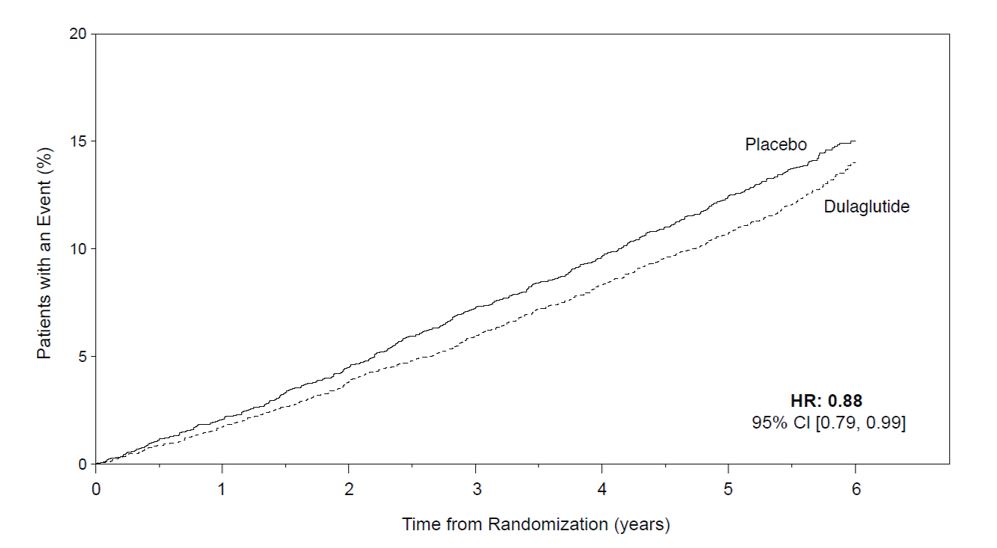
In a cardiovascular outcomes trial in adult patients with type 2 diabetes mellitus and established cardiovascular (CV) disease or multiple cardiovascular risk factors with a median follow up of 5.4 years [see Clinical Studies 14.5], cholelithiasis occurred at a rate of 0.62/100 patient-years in TRULICITY-treated patients and 0.56/100 patient-years in placebo-treated patients after adjusting for prior cholecystectomy. Serious events of acute cholecystitis were reported in 0.5% and 0.3% of patients on TRULICITY and placebo respectively.
Heart Rate Increase and Tachycardia-Related Adverse Reactions
In adult patients, TRULICITY 0.75 mg and 1.5 mg resulted in a mean increase in heart rate (HR) of 2-4 beats per minute (bpm).
Adverse reactions of sinus tachycardia were reported more frequently in patients exposed to TRULICITY. Sinus tachycardia was reported in 3.0%, 2.8%, and 5.6% of patients treated with placebo, TRULICITY 0.75 mg and TRULICITY 1.5 mg, respectively. Persistence of sinus tachycardia (reported at more than 2 visits) was reported in 0.2%, 0.4% and 1.6% of patients treated with placebo, TRULICITY 0.75 mg and TRULICITY 1.5 mg, respectively. Episodes of sinus tachycardia, associated with a concomitant increase from baseline in heart rate of ≥15 beats per minute, were reported in 0.7%, 1.3% and 2.2% of patients treated with placebo, TRULICITY 0.75 mg and TRULICITY 1.5 mg, respectively.
Hypersensitivity
Systemic hypersensitivity adverse reactions, sometimes severe (e.g., severe urticaria, systemic rash, facial edema, lip swelling), occurred in 0.5% of adult patients on TRULICITY in clinical studies.
Injection-site Reactions
In the placebo-controlled studies in adults, injection-site reactions (e.g., injection-site rash, erythema) were reported in 0.5% of TRULICITY-treated patients and in 0.0% of placebo-treated patients.
PR Interval Prolongation and Adverse Reactions of First-Degree Atrioventricular (AV) Block
A mean increase from baseline in PR interval of 2-3 milliseconds was observed in TRULICITY-treated adult patients in contrast to a mean decrease of 0.9 milliseconds in placebo-treated patients. The adverse reaction of first-degree AV block occurred more frequently in patients treated with TRULICITY than placebo (0.9%, 1.7% and 2.3% for placebo, TRULICITY 0.75 mg and TRULICITY 1.5 mg, respectively). On electrocardiograms, a PR interval increase to at least 220 milliseconds was observed in 0.7%, 2.5% and 3.2% of patients treated with placebo, TRULICITY 0.75 mg and TRULICITY 1.5 mg, respectively.
Amylase and Lipase Increase
Adult patients exposed to TRULICITY had mean increases from baseline in lipase and/or pancreatic amylase of 14% to 20%, while placebo-treated patients had mean increases of up to 3%.
Adverse Reactions in the Clinical Trial of Pediatric Patients 10 Years of Age and Older with Type 2 Diabetes Mellitus
TRULICITY was administered to 150 pediatric patients 10 years of age and older with type 2 diabetes mellitus for a mean duration of 41.3 weeks [see Clinical Studies (14.6)]. The mean age was 14.5 years and 71% of patients were female. Overall, 55% were White, 15% were Black or African American, 12% were Asian, 10% were American Indian or Alaska Native, 5% were other races, and 3% had unknown race. Additionally, 55% were Hispanic or Latino, 42% were not Hispanic or Latino, and 3% had unknown ethnicity. At baseline, the mean duration of type 2 diabetes mellitus was 2 years, mean HbA1c was 8.1%, mean weight was 90.5 kg and mean BMI was 34.1 kg/m2.
The safety profile in pediatric patients treated with TRULICITY 0.75 mg and 1.5 mg subcutaneously once-weekly was consistent with that described above for adult patients with type 2 diabetes mellitus with the exception of injection site reactions. In pediatric patients, the incidence of injection site reactions was 3.9% (2 patients) in the TRULICITY 0.75 mg group, 3.8% (2 patients) in the TRULICITY 1.5 mg group, and 2.0% (1 patient) in the placebo group.
Risk Summary
Limited data with TRULICITY in pregnant women are not sufficient to determine a drug-associated risk for major birth defects and miscarriage. There are clinical considerations regarding the risks of poorly controlled diabetes in pregnancy [see Clinical Considerations]. Based on animal reproduction studies, there may be risks to the fetus from exposure to dulaglutide during pregnancy. TRULICITY should be used during pregnancy only if the potential benefit justifies the potential risk to the fetus.
In pregnant rats administered dulaglutide during organogenesis, early embryonic deaths, fetal growth reductions, and fetal abnormalities occurred at systemic exposures at least 6-times human exposure at the maximum recommended human dose (MRHD) of 4.5 mg/week. In pregnant rabbits administered dulaglutide during organogenesis, major fetal abnormalities occurred at 5-times human exposure at the MRHD. Adverse embryo/fetal effects in animals occurred in association with decreased maternal weight and food consumption attributed to the pharmacology of dulaglutide [see Data].
The estimated background risk of major birth defects is 6–10% in women with pre-gestational diabetes with an HbA1c >7% and has been reported to be as high as 20–25% in women with an HbA1c >10%. The estimated background risk of miscarriage for the indicated population is unknown. In the U.S. general population, the estimated background risk of major birth defects and miscarriage in clinically recognized pregnancies is 2–4% and 15–20%, respectively.
Clinical Considerations
Disease-associated maternal and/or embryo/fetal risk
Poorly controlled diabetes in pregnancy increases the maternal risk for diabetic ketoacidosis, pre-eclampsia, spontaneous abortions, preterm delivery and delivery complications. Poorly controlled diabetes increases the fetal risk for major birth defects, stillbirth, and macrosomia-related morbidity.
Data
Animal Data
Pregnant rats given subcutaneous doses of 0.49, 1.63, or 4.89 mg/kg dulaglutide every 3 days during organogenesis had systemic exposures 2-, 6-, and 18-times human exposure at the maximum recommended human dose (MRHD) of 4.5 mg/week, respectively, based on plasma area under the time-concentration curve (AUC) comparison. Reduced fetal weights associated with decreased maternal food intake and decreased weight gain attributed to the pharmacology of dulaglutide were observed at ≥1.63 mg/kg. Irregular skeletal ossifications and increases in post-implantation loss also were observed at 4.89 mg/kg.
In pregnant rabbits given subcutaneous doses of 0.04, 0.12, or 0.41 mg/kg dulaglutide every 3 days during organogenesis, systemic exposures in pregnant rabbits were 0.5-, 2-, and 5-times human exposure at the MRHD, based on plasma AUC comparison. Fetal visceral malformation of lung lobular agenesis and skeletal malformations of the vertebrae and/or ribs were observed in conjunction with decreased maternal food intake and decreased weight gain attributed to the pharmacology of dulaglutide at 0.41 mg/kg.
In a prenatal-postnatal study in F0 maternal rats given subcutaneous doses of 0.2, 0.49, or 1.63 mg/kg every third day from implantation through lactation, systemic exposures in pregnant rats were 1-, 2-, and 7-times human exposure at the MRHD, based on plasma AUC comparison. F1 pups from F0 maternal rats given 1.63 mg/kg dulaglutide had statistically significantly lower mean body weight from birth through postnatal day 63 for males and postnatal day 84 for females. F1 offspring from F0 maternal rats receiving 1.63 mg/kg dulaglutide had decreased forelimb and hindlimb grip strength and males had delayed balano-preputial separation. Females had decreased startle response. These physical findings may relate to the decreased size of the offspring relative to controls as they appeared at early postnatal assessments but were not observed at a later assessment. F1 female offspring of the F0 maternal rats given 1.63 mg/kg of dulaglutide had a longer mean escape time and a higher mean number of errors relative to concurrent control during 1 of 2 trials in the memory evaluation portion of the Biel water maze. These findings occurred in conjunction with decreased F0 maternal food intake and decreased weight gain attributed to the pharmacologic activity at 1.63 mg/kg. The human relevance of these memory deficits in the F1 female rats is not known.
Risk Summary
There are no data on the presence of dulaglutide in human milk, the effects on the breastfed infant, or the effects on milk production. The presence of dulaglutide in milk of treated lactating animals was not determined. The developmental and health benefits of breastfeeding should be considered along with the mother's clinical need for TRULICITY and any potential adverse effects on the breastfed infant from TRULICITY or from the underlying maternal condition.
Fasting and Postprandial Glucose
In a clinical pharmacology study in patients with type 2 diabetes mellitus, treatment with once weekly TRULICITY resulted in a reduction of fasting and 2-hour PPG concentrations, and postprandial serum glucose incremental AUC, when compared to placebo (-25.6 mg/dL, -59.5 mg/dL, and -197 mg*h/dL, respectively); these effects were sustained after 6 weeks of dosing with the 1.5 mg dose.
First- and Second-Phase Insulin Secretion
Both first- and second-phase insulin secretion were increased in patients with type 2 diabetes treated with TRULICITY compared with placebo.
Insulin and Glucagon Secretion
TRULICITY stimulates glucose-dependent insulin secretion and reduces glucagon secretion. Treatment with TRULICITY 0.75 mg and 1.5 mg once weekly increased fasting insulin from baseline at Week 26 by 35.38 and 17.50 pmol/L, respectively, and C-peptide concentration by 0.09 and 0.07 nmol/L, respectively, in a monotherapy trial. In the same trial, fasting glucagon concentration was reduced by 1.71 and 2.05 pmol/L from baseline with TRULICITY 0.75 mg and 1.5 mg, respectively.
Gastric Motility
Dulaglutide causes a delay of gastric emptying. The delay in gastric emptying is dose-dependent but is attenuated with adequate dose escalation to higher doses of TRULICITY. The delay is largest after the first dose and diminishes with subsequent doses.
Cardiac Electrophysiology (QTc)
The effect of dulaglutide on cardiac repolarization was tested in a thorough QTc study. Dulaglutide did not produce QTc prolongation at doses of 4 and 7 mg. The maximum recommended dose is 4.5 mg once weekly.
Specific Populations
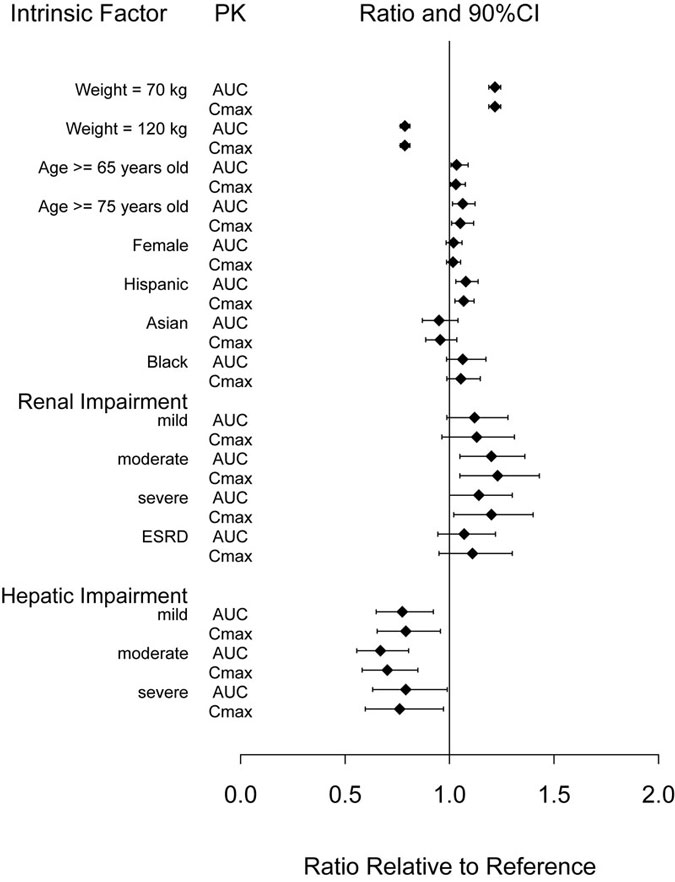
The intrinsic factors of age (≥ 65 years), sex, race, ethnicity, body weight, or renal or hepatic impairment did not have a clinically relevant effect on the PK of dulaglutide as shown in Figure 1.
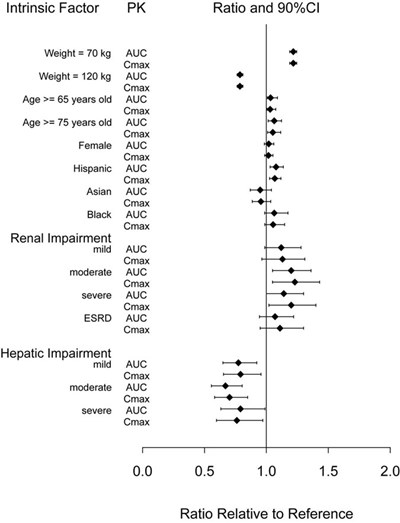
Figure 1 (Trulicity Pi F1 V2)
Abbreviations: AUC = area under the time-concentration curve; CI = confidence interval; Cmax = maximum concentration; ESRD = end-stage renal disease; PK = pharmacokinetics.
Note: Reference values for weight, age, gender, and race comparisons are 93 kg, 56 years old, male, and white, respectively; reference groups for renal and hepatic impairment data are subjects with normal renal and hepatic function from the respective clinical pharmacology studies. The weight values shown in the plot (70 and 120 kg) are the 10th and 90th percentiles of weight in the PK population.
Figure 1: Impact of intrinsic factors on dulaglutide pharmacokinetics.
Pediatric Patients
A population pharmacokinetic analysis was conducted for dulaglutide 0.75 mg and 1.5 mg using data from 128 pediatric patients 10 years of age and older with type 2 diabetes mellitus. The AUC in pediatric patients was approximately 37% lower than that in adult patients. However, this difference was not determined to be clinically meaningful.
Patients with Renal Impairment
Dulaglutide systemic exposure was increased by 20, 28, 14 and 12% for mild, moderate, severe, and ESRD renal impairment sub-groups, respectively, compared to subjects with normal renal function. The corresponding values for increase in Cmax were 13, 23, 20 and 11%, respectively (Figure 1). Additionally, in a 52 week clinical trial in patients with type 2 diabetes mellitus and moderate to severe renal impairment, the PK behavior of TRULICITY 0.75 mg and 1.5 mg once weekly was similar to that demonstrated in previous clinical studies [see Warning and Precautions (5.5), Use in Specific Populations (8.6)].
Patients with Hepatic Impairment
Dulaglutide systemic exposure decreased by 23, 33 and 21% for mild, moderate and severe hepatic impairment groups, respectively, compared to subjects with normal hepatic function, and Cmax was decreased by a similar magnitude (Figure 1) [see Use in Specific Populations (8.7)].
Drug Interaction Studies
The potential effect of co-administered medications on the PK of dulaglutide 1.5 mg and vice versa was studied in several single- and multiple-dose studies in healthy subjects, patients with type 2 diabetes mellitus, and patients with hypertension.
Potential for Dulaglutide to Influence the Pharmacokinetics of Other Drugs
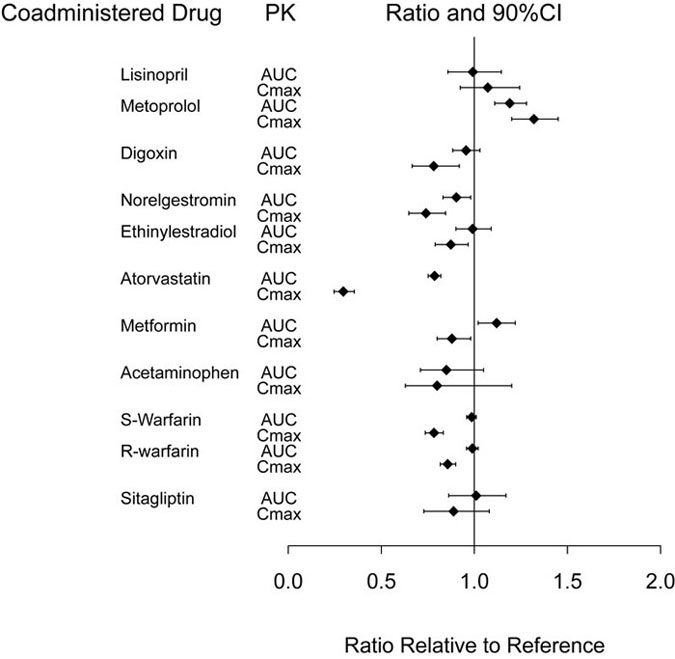
Dulaglutide slows gastric emptying and, as a result, may reduce the extent and rate of absorption of orally co-administered medications. In clinical pharmacology studies, dulaglutide at a dose of 1.5 mg did not affect the absorption of the tested orally administered medications to any clinically relevant degree. The delay in gastric emptying is dose-dependent but is attenuated with the recommended dose escalation to higher doses of TRULICITY [see Dosage and Administration (2.1), Drug Interactions (7.1)]. The delay is largest after the first dose and diminishes with subsequent doses. PK measures indicating the magnitude of these interactions are presented in Figure 2.
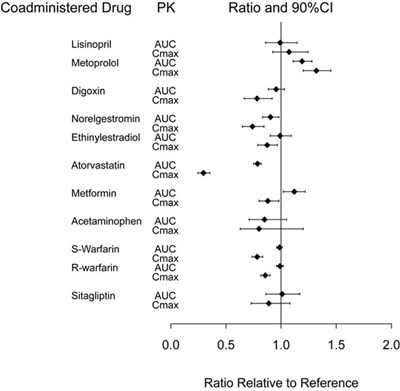
Figure 2 (Trulicity Pi F2 V2)
Abbreviations: AUC = area under the time-concentration curve; CI = confidence interval; Cmax = maximum concentration; PK = pharmacokinetics.
Note: Reference group is co-administered medication given alone.
Figure 2: Impact of dulaglutide 1.5 mg on the pharmacokinetics of co-administered medications.
Potential for Co-administered Drugs to Influence the Pharmacokinetics of Dulaglutide
In a clinical pharmacology study, the co-administration of a single dose of 1.5 mg dulaglutide with steady-state dose of 100 mg sitagliptin caused an increase in dulaglutide AUC and Cmax of approximately 38% and 27%, which is not considered clinically relevant.
Sitagliptin-Controlled Trial (Add-on to Metformin)
In this placebo-controlled, double-blind trial with primary endpoint at 52 weeks, 972 adult patients were randomized to placebo, TRULICITY 0.75 mg once weekly, TRULICITY 1.5 mg once weekly, or sitagliptin 100 mg/day (after 26 weeks, patients in the placebo treatment group received blinded sitagliptin 100 mg/day for the remainder of the trial), all as add-on to metformin. Randomization occurred after an 11-week lead-in period to allow for a metformin titration period, followed by a 6-week glycemic stabilization period. Patients had a mean age of 54 years; mean duration of type 2 diabetes of 7 years; 48% were male; race: White, Black and Asian were 53%, 4% and 27%, respectively; and 24% of the trial population were in the US.
At the 26-week placebo-controlled time point, the HbA1c change was 0.1%, -1.0%, -1.2%, and -0.6% for placebo, TRULICITY 0.75 mg, TRULICITY 1.5 mg, and sitagliptin, respectively. The percentage of patients who achieved HbA1c <7.0% was 22%, 56%, 62% and 39% for placebo, TRULICITY 0.75 mg, TRULICITY 1.5 mg, and sitagliptin, respectively. At 26 weeks, there was a mean weight reduction of 1.4 kg, 2.7 kg, 3.0 kg, and 1.4 kg for placebo, TRULICITY 0.75 mg, TRULICITY 1.5 mg, and sitagliptin, respectively. There was a mean reduction of fasting glucose of 9 mg/dL, 35 mg/dL, 41 mg/dL, and 18 mg/dL for placebo, TRULICITY 0.75 mg, TRULICITY 1.5 mg, and sitagliptin, respectively.
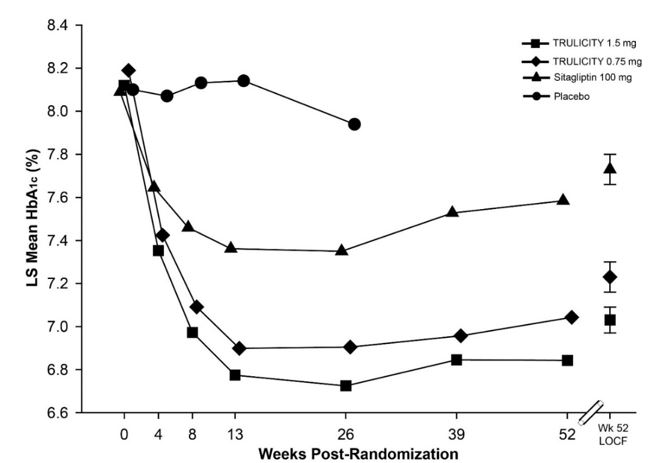
Treatment with TRULICITY 0.75 mg and 1.5 mg once weekly resulted in a statistically significant reduction in HbA1c compared to placebo (at 26 weeks) and compared to sitagliptin (at 26 and 52 weeks), all in combination with metformin (Table 5 and Figure 3).
Table 5: Results at Week 52 of TRULICITY Compared to Sitagliptin used as Add-On to Metformin in Adult Patients with Type 2 Diabetes MellitusaAbbreviations: HbA1c = hemoglobin A1c. |
a All ITT patients randomized after the dose-finding portion of the trial. Last observation carried forward (LOCF) was used to impute missing data. At Week 52 primary efficacy was missing for 15%, 19%, and 20% of individuals randomized to TRULICITY 0.75 mg, TRULICITY 1.5 mg and sitagliptin, respectively. |
b Least-squares (LS) mean adjusted for baseline value and other stratification factors. |
‡ Patients included in the analysis are a subset of the ITT population that had at least one post-baseline assessment. The primary analysis included 276, 277, and 270 individuals randomized to TRULICITY 0.75 mg, TRULICITY 1.5 mg and sitagliptin, respectively. |
†† Multiplicity adjusted 1-sided p-value <0.001, for superiority of TRULICITY compared to sitagliptin, assessed only for HbA1c. |
## p<0.001 TRULICITY compared to sitagliptin, assessed only for HbA1c <7.0%. |
| 52-Week Primary Time Point |
TRULICITY
0.75 mg | TRULICITY
1.5 mg | Sitagliptin
100 mg |
| Intent-to-Treat (ITT) Population (N)‡ | 281 | 279 | 273 |
| HbA1c (%) (Mean) |
| Baseline | 8.2 | 8.1 | 8.0 |
| Change from baselineb | -0.9 | -1.1 | -0.4 |
| Difference from sitagliptinb (95% CI) | -0.5 (-0.7, -0.3)†† | -0.7 (-0.9, -0.5)†† | - |
| Percentage of patients HbA1c <7.0% | 49## | 59## | 33 |
| Fasting Plasma Glucose (mg/dL) (Mean) |
| Baseline | 174 | 173 | 171 |
| Change from baselineb | -30 | -41 | -14 |
| Difference from sitagliptinb (95% CI) | -15 (-22, -9) | -27 (-33, -20) | - |
| Body Weight (kg) (Mean) |
| Baseline | 85.5 | 86.5 | 85.8 |
| Change from baselineb | -2.7 | -3.1 | -1.5 |
| Difference from sitagliptinb (95% CI) | -1.2 (-1.8, -0.6) | -1.5 (-2.1, -0.9) | - |
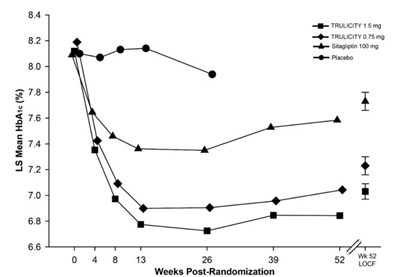
Figure 3 (Trulicity Pi F3 V3)
Mean HbA1c adjusted for baseline HbA1c and country. |
| Number of patients with observed data |
| Placebo | 139 | 108 | |
| TRULICITY 0.75 mg | 281 | 258 | 238 |
| TRULICITY 1.5 mg | 279 | 249 | 225 |
| Sitagliptin | 273 | 241 | 219 |
Figure 3: Adjusted Mean HbA1c at each Time Point (ITT, MMRM) and at Week 52 (ITT, LOCF) in Adult Patients with Type 2 Diabetes Mellitus
Dosage Ranging Trial of TRULICITY 1.5, 3 mg, and 4.5 mg (Add-on to Metformin)
In this parallel-arm, double-blind trial with primary endpoint at 36 weeks, a total of 1842 adult patients were randomized 1:1:1 to TRULICITY 1.5 mg, TRULICITY 3 mg, or TRULICITY 4.5 mg once weekly, all as add-on to metformin (NCT03495102).
Following randomization, all patients received TRULICITY 0.75 mg once weekly. The dose was increased every 4 weeks to the next higher dose until the patients reached their assigned dose (1.5 mg, 3 mg, or 4.5 mg). Patients were to remain on the assigned study dose for the duration of the trial.
Patients had a mean age of 57.1 years; a mean duration of type 2 diabetes of 7.6 years; 51.2% were male; race: White, Black, and Asian were 85.8%, 4.5%, and 2.4%, respectively; and 27.6% of the trial population was in the US.
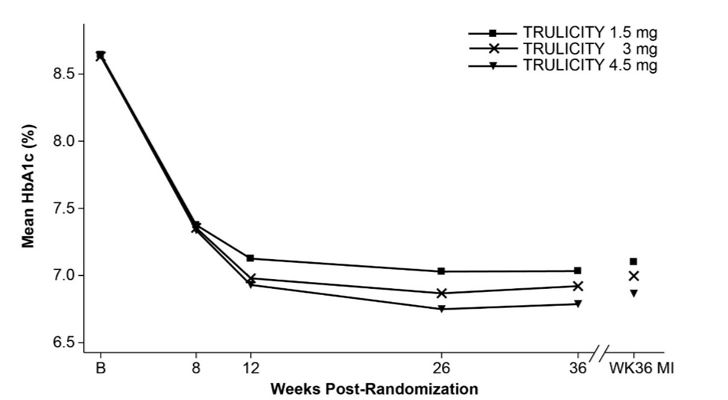
At 36 weeks, treatment with TRULICITY 4.5 mg resulted in a statistically significant reduction in HbA1c and in body weight compared to TRULICITY 1.5 mg (Table 6 and Figure 4).
Table 6. Results at Week 36 of TRULICITY 1.5 mg Compared to 3 mg and 4.5 mg as Add-On to Metformin in Adult Patients with Type 2 Diabetes MellitusaAbbreviations: HbA1c = hemoglobin A1c |
a Intent-to-treat population. At Week 36, primary efficacy was missing for 7%, 7%, and 6% of individuals treated with TRULICITY 1.5 mg, TRULICITY 3 mg, and TRULICITY 4.5 mg, respectively. |
b Least-squares mean adjusted for baseline value and other stratification factors. Missing data were imputed using multiple imputation. |
c Patients with missing HbA1c data at Week 36 were considered as not achieving HbA1c target. |
^ p=0.0001 for superiority compared to TRULICITY 1.5 mg, overall type I error controlled. |
^^ p<0.0001 for superiority compared to TRULICITY 1.5 mg, overall type I error controlled. |
| 36-Week Primary Time Point |
TRULICITY
1.5 mg | TRULICITY
3 mg | TRULICITY
4.5 mg |
| Intent-to-Treat (ITT) Population (N) | 612 | 616 | 614 |
| HbA1c (%) (Mean) |
| Baseline | 8.6 | 8.6 | 8.6 |
| Change from baselineb | -1.5 | -1.6 | -1.8 |
| Difference from 1.5 mgb (95% CI) | | -0.1 (-0.2, 0.0) | -0.2 (-0.4, -0.1) ^ |
| Percentage of patients HbA1c <7.0%c | 50 | 56 | 62 |
| Fasting Serum Glucose (mg/dL) (Mean) |
| Baseline | 185 | 184 | 183 |
| Change from baselineb | -45 | -46 | -51 |
| Difference from 1.5 mgb (95% CI) | | - 2 (-7, 3) | -6 (-11, -2) |
| Body Weight (kg) (Mean) |
| Baseline | 95.5 | 96.3 | 95.4 |
| Change from baselineb | -3.0 | -3.8 | -4.6 |
| Difference from 1.5 mgb (95% CI) | | -0.9 (-1.4, -0.4) | -1.6 (-2.2, -1.1) ^^ |
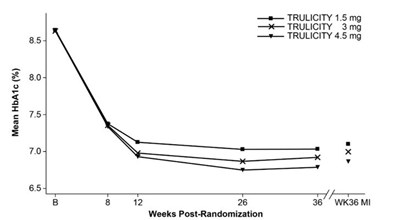
Figure 4 (Trulicity Pi F4 V3)
Observed mean HbA1c at scheduled visits and retrieved dropout multiple imputation (MI) based estimate at week 36. |
| Number of patients with observed data |
| | | |
| TRULICITY 1.5 mg | 612 | | 567 |
| TRULICITY 3 mg | 616 | | 572 |
| TRULICITY 4.5 mg | 614 | | 575 |
Figure 4: Mean HbA1c at each Time Point (ITT) and at Week 36 (ITT, MI)
Placebo-Controlled Trial (Add-on to Sulfonylurea)
In this 24-week placebo-controlled, double-blind trial, 299 adult patients were randomized to and received placebo or once weekly TRULICITY 1.5 mg, both as add-on to glimepiride. Patients had a mean age of 58 years; mean duration of type 2 diabetes of 8 years; 44% were male; race: White, Black, and Asian were 83%, 4%, and 2%, respectively; and 24% of the trial population were in the US.
At 24 weeks, treatment with once weekly TRULICITY 1.5 mg resulted in a statistically significant reduction in HbA1c compared to placebo (Table 7).
Table 7: Results at Week 24 of TRULICITY Compared to Placebo as Add-On to Glimepiride in Adult Patients with Type 2 Diabetes MellitusaAbbreviations: HbA1c = hemoglobin A1c. |
a Intent-to-treat population. Data post-onset of rescue therapy are treated as missing. At Week 24 primary efficacy was missing for 10% and 12% of individuals randomized to TRULICITY 1.5 mg and placebo, respectively. |
b Least-squares mean from ANCOVA adjusted for baseline value and other stratification factors. Placebo multiple imputation, with respect to the baseline values, was used to model a wash-out of the treatment effect for patients having missing Week 24 data. |
c Patients with missing HbA1c data at Week 24 were considered as non-responders. |
†† p<0.001 for superiority of TRULICITY 1.5 mg compared to placebo, overall type I error controlled. |
| 24-Week Primary Time Point |
| Placebo | TRULICITY
1.5 mg |
| Intent-to-Treat (ITT) Population (N) | 60 | 239 |
| HbA1c (%) (Mean) |
| Baseline | 8.4 | 8.4 |
| Change from baselineb | -0.3 | -1.3 |
| Difference from placebob (95% CI) | | -1.1 (-1.4, -0.7)†† |
| Percentage of patients HbA1c <7.0%c | 17 | 50†† |
| Fasting Serum Glucose (mg/dL) (Mean) |
| Baseline | 175 | 178 |
| Change from baselineb | 2 | -28 |
| Difference from placebob (95% CI) | | -30 (-44, -15)†† |
| Body Weight (kg) (Mean) |
| Baseline | 89.5 | 84.5 |
| Change from baselineb | -0.2 | -0.5 |
| Difference from placebob (95% CI) | | -0.4 (-1.2, 0.5) |
Placebo- and Exenatide-Controlled Trial (Add-on to Metformin and Thiazolidinedione)
In this placebo-controlled trial with primary endpoint at 26 weeks, 976 adult patients were randomized to and received placebo, TRULICITY 0.75 mg once weekly, TRULICITY 1.5 mg once weekly, or exenatide 10 mcg BID, all as add-on to maximally tolerated doses of metformin (≥1500 mg per day) and pioglitazone (up to 45 mg per day). Exenatide treatment group assignment was open-label while the treatment assignments to placebo, TRULICITY 0.75 mg, and TRULICITY 1.5 mg were blinded. After 26 weeks, patients in the placebo treatment group were randomized to either TRULICITY 0.75 mg once weekly or TRULICITY 1.5 mg once weekly to maintain blinding. Randomization occurred after a 12-week lead-in period; during the initial 4 weeks of the lead-in period, patients were titrated to maximally tolerated doses of metformin and pioglitazone; this was followed by an 8-week glycemic stabilization period prior to randomization. Patients randomized to exenatide started at a dose of 5 mcg BID for 4 weeks and then were escalated to 10 mcg BID. Patients had a mean age of 56 years; mean duration of type 2 diabetes of 9 years; 58% were male; race: White, Black and Asian were 74%, 8% and 3%, respectively; and 81% of the trial population were in the US.
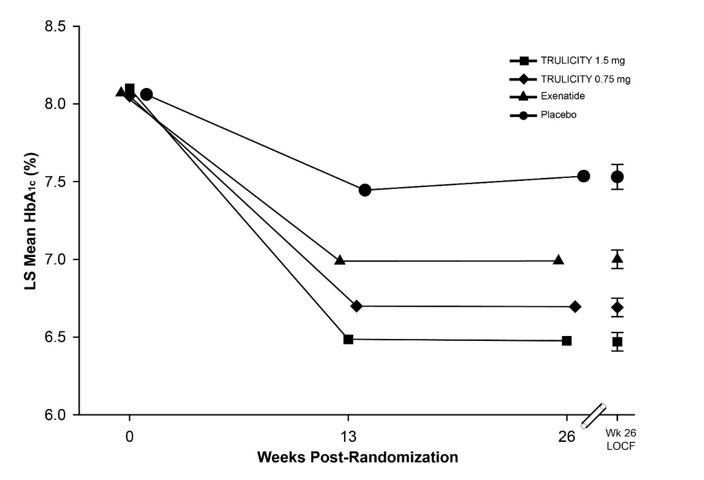
Treatment with TRULICITY 0.75 mg and 1.5 mg once weekly resulted in a statistically significant reduction in HbA1c compared to placebo (at 26 weeks) and compared to exenatide at 26 weeks (Table 8 and Figure 5). Over the 52-week trial period, the percentage of patients who required glycemic rescue was 8.9% in the TRULICITY 0.75 mg once weekly + metformin and pioglitazone treatment group, 3.2% in the TRULICITY 1.5 mg once weekly + metformin and pioglitazone treatment group, and 8.7% in the exenatide BID + metformin and pioglitazone treatment group.
Table 8: Results at Week 26 of TRULICITY Compared to Placebo and Exenatide, All as Add-On to Metformin and Thiazolidinedione in Adult Patients with Type 2 Diabetes MellitusaAbbreviations: BID = twice daily; HbA1c = hemoglobin A1c. |
a Intent-to-treat population. Last observation carried forward (LOCF) was used to impute missing data. Data post-onset of rescue therapy are treated as missing. At Week 26, primary efficacy was missing for 23%, 10%, 7% and 12% of individuals randomized to placebo, TRULICITY 0.75 mg, TRULICITY 1.5 mg, and exenatide, respectively. |
b Least-squares (LS) mean adjusted for baseline value and other stratification factors. |
‡ Patients included in the analysis are a subset of the ITT population that had at least one post-baseline assessment. The primary analysis included 119, 269, 271 and 266 individuals randomized to placebo, TRULICITY 0.75 mg, TRULICITY 1.5 mg, and exenatide, respectively. |
‡‡ Multiplicity adjusted 1-sided p-value <0.001, for superiority of TRULICITY compared to placebo, assessed only for HbA1c. |
†† Multiplicity adjusted 1-sided p-value <0.001, for superiority of TRULICITY compared to exenatide, assessed only for HbA1c. |
** p<0.001 TRULICITY compared to placebo, assessed only for HbA1c <7.0%. |
## p<0.001 TRULICITY compared to exenatide, assessed only for HbA1c <7.0%. |
| 26-Week Primary Time Point |
| Placebo | TRULICITY
0.75 mg | TRULICITY
1.5 mg | Exenatide
10 mcg BID |
| Intent-to-Treat (ITT) Population (N)‡ | 141 | 280 | 279 | 276 |
| HbA1c (%) (Mean) |
| Baseline | 8.1 | 8.1 | 8.1 | 8.1 |
| Change from baselineb | -0.5 | -1.3 | -1.5 | -1.0 |
| Difference from placebob (95% CI) | - | -0.8 (-1.0, -0.7)‡‡ | -1.1 (-1.2, -0.9)‡‡ | - |
| Difference from exenatideb (95% CI) | - | -0.3 (-0.4, -0.2)†† | -0.5 (-0.7, -0.4)†† | - |
| Percentage of patients HbA1c <7.0% | 43 | 66**, ## | 78**, ## | 52 |
| Fasting Serum Glucose (mg/dL) (Mean) |
| Baseline | 166 | 159 | 162 | 164 |
| Change from baselineb | -5 | -34 | -42 | -24 |
| Difference from placebob (95% CI) | - | -30 (-36, -23) | -38 (-45, -31) | - |
| Difference from exenatideb (95% CI) | - | -10 (-15, -5) | -18 (-24, -13) | - |
| Body Weight (kg) (Mean) |
| Baseline | 94.1 | 95.5 | 96.2 | 97.4 |
| Change from baselineb | 1.2 | 0.2 | -1.3 | -1.1 |
| Difference from placebob (95% CI) | - | -1.0 (-1.8, -0.3) | -2.5 (-3.3, -1.8) | - |
| Difference from exenatideb (95% CI) | - | 1.3 (0.6, 1.9) | -0.2 (-0.9, 0.4) | - |
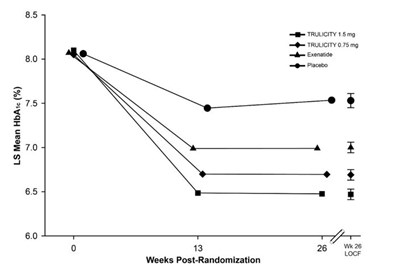
Figure 5 (Trulicity Pi F5 V2)
Mean HbA1c adjusted for baseline HbA1c and country. |
| Number of patients with observed data |
| Placebo | 141 | | 108 |
| TRULICITY 0.75 mg | 280 | | 251 |
| TRULICITY 1.5 mg | 279 | | 259 |
| Exenatide | 276 | | 242 |
Figure 5: Adjusted Mean HbA1c at Each Time Point (ITT, MMRM) and at Week 26 (ITT, LOCF)
Placebo-Controlled Trial (Add-on to SGLT2i, with or without Metformin)
In this 24-week placebo-controlled, double-blind trial, 423 adult patients were randomized to and received TRULICITY 0.75 mg, TRULICITY 1.5 mg, or placebo, as add-on to sodium-glucose co-transporter 2 inhibitor (SGLT2i) therapy (96% with and 4% without metformin). Trulicity was administered once weekly, and SGLT2i was administered according to the local country label. Patients had a mean age of 57 years; mean duration of type 2 diabetes of 9.4 years; 50% were male; race: White, Black, and Asian were 89%, 3%, and 0.2%, respectively; and 21% of the trial population was in the US.
At 24 weeks, treatment with once weekly TRULICITY 0.75 mg and 1.5 mg resulted in a statistically significant reduction from baseline in HbA1c compared to placebo (Table 9).
The mean baseline body weight was 90.5, 91.1, and 92.9 kg in the placebo, TRULICITY 0.75 mg, and TRULICITY 1.5 mg groups, respectively. The mean changes from baseline in body weight at Week 24 were -2.0, -2.5, and -2.9 kg for placebo, TRULICITY 0.75 mg, and TRULICITY 1.5 mg, respectively. The difference from placebo (95% CI) was -0.9 kg (-1.7, -0.1) for TRULICITY 1.5 mg.
Table 9: Results at Week 24 of TRULICITY as Add-on to SGLT2i in Adult Patients with Type 2 Diabetes MellitusaAbbreviations: HbA1c = hemoglobin A1c; SGLT2i = sodium-glucose co-transporter-2 inhibitors. |
a Intent-to-treat population. At Week 24, primary efficacy was missing for 3%, 4%, and 6% of individuals treated with placebo, TRULICITY 0.75 mg, and TRULICITY 1.5 mg, respectively. |
b Least-squares mean adjusted for baseline value and other stratification factors. Placebo multiple imputation, using baseline and 24-week values from the placebo arm, was applied to model a washout of the treatment effect for patients missing 24-week values (HbA1c, fasting serum glucose, and body weight). |
c Patients with missing HbA1c data at Week 24 were considered as non-responders. |
†† p<0.001 for superiority of TRULICITY compared to placebo, overall type I error controlled. |
| 24-Week Primary Time Point |
| Placebo | TRULICITY
0.75 mg | TRULICITY
1.5 mg |
| Intent-to-Treat (ITT) Population (N) | 140 | 141 | 142 |
| HbA1c (%) (Mean) |
| Baseline | 8.1 | 8.1 | 8.0 |
| Change from baselineb | -0.6 | -1.2 | -1.3 |
| Difference from placebob (95% CI) | - | -0.7 (-0.8, -0.5)†† | -0.8 (-0.9, -0.6)†† |
| Percentage of patients HbA1c <7.0%c | 31 | 59†† | 67†† |
| Fasting Serum Glucose (mg/dL) (Mean) |
| Baseline | 153 | 162 | 161 |
| Change from baselineb | -6 | -25 | -30 |
| Difference from placebob (95% CI) | - | -19 (-25, -13) | -24 (-30, -18)†† |
Insulin Glargine Controlled Trial (Add-on to Metformin and Sulfonylurea)
In this open-label comparator trial (double-blind with respect to TRULICITY dose assignment) with primary endpoint at 52 weeks, 807 adult patients were randomized to and received TRULICITY 0.75 mg once weekly, TRULICITY 1.5 mg once weekly, or insulin glargine once daily, all as add-on to maximally tolerated doses of metformin and glimepiride. Randomization occurred after a 10-week lead-in period; during the initial 2 weeks of the lead-in period, patients were titrated to maximally tolerated doses of metformin and glimepiride. This was followed by a 6- to 8-week glycemic stabilization period prior to randomization.
Patients randomized to insulin glargine were started on a dose of 10 units once daily. Insulin glargine dose adjustments occurred twice weekly for the first 4 weeks of treatment based on self-measured fasting plasma glucose (FPG), followed by once weekly titration through Week 8 of treatment, utilizing an algorithm that targeted a fasting plasma glucose of <100 mg/dL. Only 24% of patients were titrated to goal at the 52-week primary endpoint. The dose of glimepiride could be reduced or discontinued after randomization (at the discretion of the investigator) in the event of persistent hypoglycemia. The dose of glimepiride was reduced or discontinued in 28%, 32%, and 29% of patients randomized to TRULICITY 0.75 mg, TRULICITY 1.5 mg, and glargine.
Patients had a mean age of 57 years; mean duration of type 2 diabetes of 9 years; 51% were male; race: White, Black and Asian were 71%, 1% and 17%, respectively; and 0% of the trial population were in the US.
Treatment with TRULICITY once weekly resulted in a reduction in HbA1c from baseline at 52 weeks when used in combination with metformin and sulfonylurea (Table 10). The difference in observed effect size between TRULICITY 0.75 mg and 1.5 mg, respectively, and glargine in this trial excluded the pre-specified non-inferiority margin of 0.4%.
Table 10: Results at Week 52 of TRULICITY Compared to Insulin Glargine, Both as Add-on to Metformin and Sulfonylurea in Adult Patients with Type 2 Diabetes MellitusaAbbreviations: HbA1c = hemoglobin A1c. |
a Intent-to-treat population. Last observation carried forward (LOCF) was used to impute missing data. Data post-onset of rescue therapy are treated as missing. At Week 52, primary efficacy was missing for 17%, 13% and 12% of individuals randomized to TRULICITY 0.75 mg, TRULICITY 1.5 mg and glargine, respectively. |
b Least-squares (LS) mean adjusted for baseline value and other stratification factors. |
‡ Patients included in the analysis are a subset of the ITT population that had at least one post-baseline assessment. The primary analysis included 267, 263 and 259 individuals randomized to TRULICITY 0.75 mg, TRULICITY 1.5 mg, and glargine, respectively. |
| 52-Week Primary Time Point |
TRULICITY
0.75 mg | TRULICITY
1.5 mg | Insulin Glargine |
| Intent-to-Treat (ITT) Population (N)‡ | 272 | 273 | 262 |
| HbA1c (%) (Mean) |
| Baseline | 8.1 | 8.2 | 8.1 |
| Change from baselineb | -0.8 | -1.1 | -0.6 |
| Fasting Serum Glucose (mg/dL) (Mean) |
| Baseline | 161 | 165 | 163 |
| Change from baselineb | -16 | -27 | -32 |
| Difference from insulin glargineb (95% CI) | 16 (9, 23) | 5 (-2, 12) | - |
| Body Weight (kg) (Mean) |
| Baseline | 86.4 | 85.2 | 87.6 |
| Change from baselineb | -1.3 | -1.9 | 1.4 |
| Difference from insulinb (95% CI) | -2.8 (-3.4, -2.2) | -3.3 (-3.9, -2.7) | - |
Placebo-Controlled Trial (Add-on to Basal Insulin, with or without Metformin)
In this 28-week placebo-controlled, double-blind trial, 300 adult patients were randomized to placebo or once weekly TRULICITY 1.5 mg, as add-on to titrated basal insulin glargine (with or without metformin). Patients had a mean age of 60 years; mean duration of type 2 diabetes of 13 years; 58% were male; race: White, Black, and Asian were 94%, 4%, and 0.3%, respectively; and 20% of the trial population was in the US.
The mean starting dose of insulin glargine was 37 units/day for patients receiving placebo and 41 units/day for patients receiving TRULICITY 1.5 mg. At randomization, the initial insulin glargine dose in patients with HbA1c <8.0% was reduced by 20%.
At 28 weeks, treatment with once weekly TRULICITY 1.5 mg resulted in a statistically significant reduction in HbA1c compared to placebo (Table 11).
Table 11: Results at Week 28 of TRULICITY Compared to Placebo as Add-On to Basal Insulin in Adult Patients with Type 2 Diabetes MellitusaAbbreviations: HbA1c = hemoglobin A1c. |
a Intent-to-treat population. At Week 28, primary efficacy was missing for 12% and 8% of individuals randomized to placebo and TRULICITY 1.5 mg, respectively. |
b Least-squares mean from ANCOVA adjusted for baseline value and other stratification factors. Placebo multiple imputation, with respect to baseline values, was used to model a wash-out of the treatment effect for patients having missing Week 28 data. |
c Patients with missing HbA1c data at Week 28 were considered as non-responders. |
†† p<0.001 for superiority of TRULICITY 1.5 mg compared to placebo, overall type I error controlled. |
† p≤0.005 for superiority of TRULICITY 1.5 mg compared to placebo, overall type I error controlled. |
| 28-Week Primary Time Point |
| Placebo | TRULICITY
1.5 mg |
| Intent-to-Treat (ITT) Population (N) | 150 | 150 |
| HbA1c (%) (Mean) |
| Baseline | 8.3 | 8.4 |
| Change from baselineb | -0.7 | -1.4 |
| Difference from placebob (95% CI) | | -0.7 (-0.9, -0.5)†† |
| Percentage of patients HbA1c <7.0%c | 33 | 67†† |
| Fasting Serum Glucose (mg/dL) (Mean) |
| Baseline | 156 | 157 |
| Change from baselineb | -30 | -44 |
| Difference from placebob (95% CI) | | -14 (-23, -4)† |
| Body Weight (kg) (Mean) |
| Baseline | 92.6 | 93.3 |
| Change from baselineb | 0.8 | -1.3 |
| Difference from placebob (95% CI) | | -2.1 (-2.9, -1.4)†† |
Insulin Glargine-Controlled Trial (Combination with Prandial Insulin, with or without Metformin)
In this open-label comparator trial (double-blind with respect to TRULICITY dose assignment) with primary endpoint at 26 weeks, 884 adult patients on 1 or 2 insulin injections per day were enrolled. Randomization occurred after a 9-week lead-in period; during the initial 2 weeks of the lead-in period, patients continued their pre-trial insulin regimen but could be initiated and/or up-titrated on metformin, based on investigator discretion; this was followed by a 7-week glycemic stabilization period prior to randomization.
At randomization, patients discontinued their pre-trial insulin regimen and were randomized to TRULICITY 0.75 mg once weekly, TRULICITY 1.5 mg once weekly, or insulin glargine once daily, all in combination with prandial insulin lispro 3 times daily, with or without metformin. Insulin lispro was titrated in each arm based on preprandial and bedtime glucose, and insulin glargine was titrated to a fasting plasma glucose goal of <100 mg/dL. Only 36% of patients randomized to glargine were titrated to the fasting glucose goal at the 26-week primary timepoint.
Patients had a mean age of 59 years; mean duration of type 2 diabetes of 13 years; 54% were male; race: White, Black and Asian were 79%, 10% and 4%, respectively; and 33% of the trial population were in the US.
Treatment with TRULICITY 0.75 mg and 1.5 mg once weekly resulted in a reduction in HbA1c from baseline. The difference in observed effect size between TRULICITY 0.75 mg and 1.5 mg, respectively, and glargine in this trial excluded the pre-specified non-inferiority margin of 0.4% (Table 12).
Table 12: Results at Week 26 of TRULICITY Compared to Insulin Glargine, Both in Combination with Insulin Lispro in Adult Patients with Type 2 Diabetes MellitusaAbbreviation: HbA1c = hemoglobin A1c |
a Intent-to-treat population. Last observation carried forward (LOCF) was used to impute missing data. Data post-onset of rescue therapy are treated as missing. At Week 26, primary efficacy was missing for 14%, 15%, and 14% of individuals randomized to TRULICITY 0.75 mg, TRULICITY 1.5 mg and glargine, respectively. |
b Least-squares (LS) mean adjusted for baseline value and other stratification factors. |
‡ Patients included in the analysis are a subset of the ITT population that had at least one post-baseline assessment. The primary analysis included 275, 273 and 276 individuals randomized to TRULICITY 0.75 mg, TRULICITY 1.5 mg, and glargine, respectively. |
| 26-Week Primary Time Point |
TRULICITY
0.75 mg | TRULICITY
1.5 mg | Insulin Glargine |
| Intent-to-Treat (ITT) Population (N)‡ | 293 | 295 | 296 |
| HbA1c (%) (Mean) |
| Baseline | 8.4 | 8.5 | 8.5 |
| Change from baselineb | -1.6 | -1.6 | -1.4 |
| Fasting Serum Glucose (mg/dL) (Mean) |
| Baseline | 150 | 157 | 154 |
| Change from baselineb | 4 | -5 | -28 |
| Difference from insulin glargineb (95% CI) | 32 (24, 41) | 24 (15, 32) | - |
| Body Weight (kg) (Mean) |
| Baseline | 91.7 | 91.0 | 90.8 |
| Change from baselineb | 0.2 | -0.9 | 2.3 |
| Difference from insulin glargineb (95% CI) | -2.2 (-2.8, -1.5) | -3.2 (-3.8, -2.6) | - |