Finasteride Tablet, Film Coated
Product Images NDC 50090-6940
View Photos of Packaging, Regulatory Labels, and Product Appearance
Product Visual Gallery
This gallery contains 7 technical images submitted to the FDA as part of the official labeling for Finasteride (NDC 50090-6940). Unlike standard consumer photos, these assets often include clinical data figures, molecular chemical structures, and official manufacturer packaging layouts.
As provided by A-s Medication Solutions, these visuals offer a comprehensive scientific overview of the product's physical and chemical identity, aiding pharmacists and researchers in product verification and study.
Figure 2 Percent Of Patients Having Surgery For Bph, Including Turp (Finasteride Fig2)
Percent of Patients Having Surgery for BPH, Including TURP
This figure shows the percentage of patients who underwent surgery for benign prostatic hyperplasia (BPH), including transurethral resection of the prostate (TURP). The graph displays the data over a period of 48 months, with observation time intervals of 4 months each. The x-axis represents the observation time in months, while the y-axis represents the percentage of patients. The graph compares the surgical rates between two groups: one group receiving Finasteride treatment and the other receiving a placebo. At the beginning of the observation period, both groups had a surgical rate of around 5%. As time progressed, the surgical rate in the placebo group increased to about 15%, while the Finasteride group maintained a lower surgical rate of approximately 10%. The numbers below the graph represent the cumulative number of surgical events and the number of patients at risk per year in each group. This data suggests that treatment with Finasteride may delay or reduce the need for surgery in patients with BPH.*
Figure3 (Finasteride Fig3)
Figure 3 shows the percentage of patients who developed acute urinary retention, both spontaneously and precipitated. The graph depicts the observation time in months and the cumulative number of events in the placebo group and the finasteride group. The data suggests that finasteride may reduce the risk of developing acute urinary retention.*
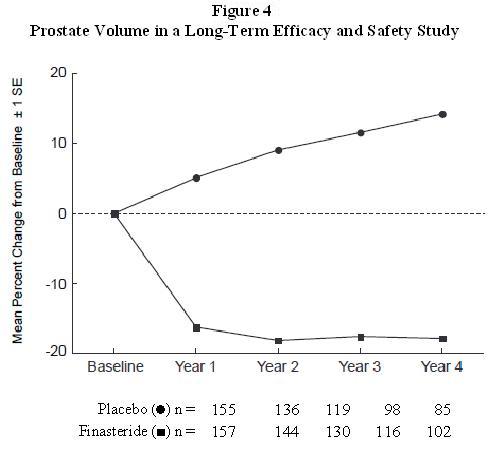
Figure4 (Finasteride Fig4)
Figure5 (Finasteride Fig5)
Chemical Structure (Finasteride Str)
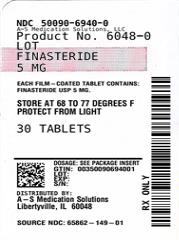
Label Image (Lbl500906940)
* These product label images have been analyzed using experimental machine learning. Please verify findings with the primary label text.