Valsartan And Hydrochlorothiazide Tablet, Film Coated
Product Images NDC 50090-7443

View Photos of Packaging, Regulatory Labels, and Product Appearance

Product Visual Gallery

This gallery contains 7 technical images submitted to the FDA as part of the official labeling for Valsartan And Hydrochlorothiazide (NDC 50090-7443). Unlike standard consumer photos, these assets often include clinical data figures, molecular chemical structures, and official manufacturer packaging layouts.

As provided by A-s Medication Solutions, these visuals offer a comprehensive scientific overview of the product's physical and chemical identity, aiding pharmacists and researchers in product verification and study.

FDA Label Image

C:\users\ra\desktop\1.jpg (5a5eca60 Figure 01)
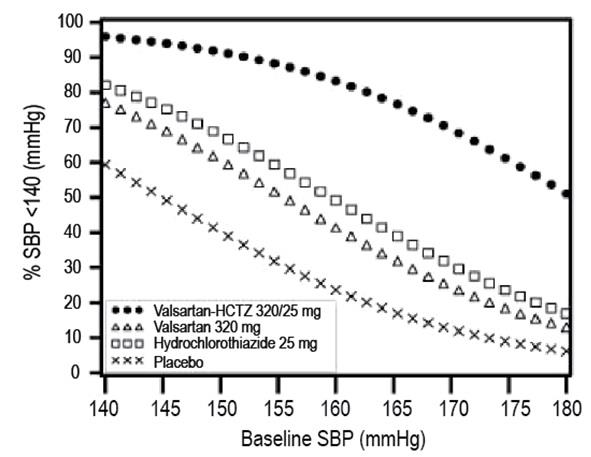
C:\users\ra\desktop\1.jpg (5a5eca60 Figure 01)
A line graph showing the percentage of patients with systolic blood pressure (SBP) less than 140 mmHg plotted against baseline SBP values ranging from 140 to 180 mmHg. The graph compares four groups: Valsartan-HCTZ 320/25 mg (dotted line with circles), Valsartan 320 mg (line with triangles), Hydrochlorothiazide 25 mg (line with squares), and placebo (line with crosses). The percentage of patients with SBP less than 140 decreases as baseline SBP increases for all groups, with the combination treatment having the highest percentage response across the range.*
FDA Label Image

C:\users\ra\desktop\2.jpg (5a5eca60 Figure 02)

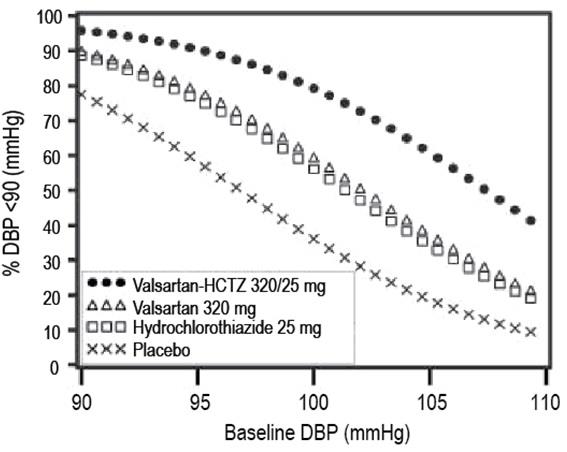
C:\users\ra\desktop\2.jpg (5a5eca60 Figure 02)
A line graph showing the percentage of patients with diastolic blood pressure (DBP) below 90 mmHg plotted against baseline DBP levels ranging from 90 to 110 mmHg. Four treatment groups are compared: Valsartan-HCTZ 320/25 mg, Valsartan 320 mg, Hydrochlorothiazide 25 mg, and Placebo. The graph displays higher efficacy for the combination treatment in achieving DBP <90 mmHg at various baseline DBP levels.*
FDA Label Image

C:\users\ra\desktop\3.jpg (5a5eca60 Figure 03)

C:\users\ra\desktop\3.jpg (5a5eca60 Figure 03)
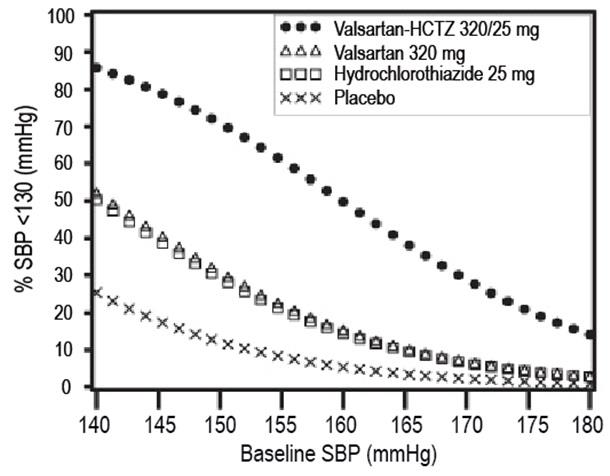
A line graph comparing the percentage of patients with systolic blood pressure (SBP) under 130 mmHg against baseline SBP (mmHg) for four groups: Valsartan-HCTZ 320/25 mg, Valsartan 320 mg, Hydrochlorothiazide 25 mg, and Placebo. Each group is represented by different markers and shows variation in response across the baseline SBP range of 140 to 180 mmHg.*
FDA Label Image

C:\users\ra\desktop\4.jpg (5a5eca60 Figure 04)

C:\users\ra\desktop\4.jpg (5a5eca60 Figure 04)
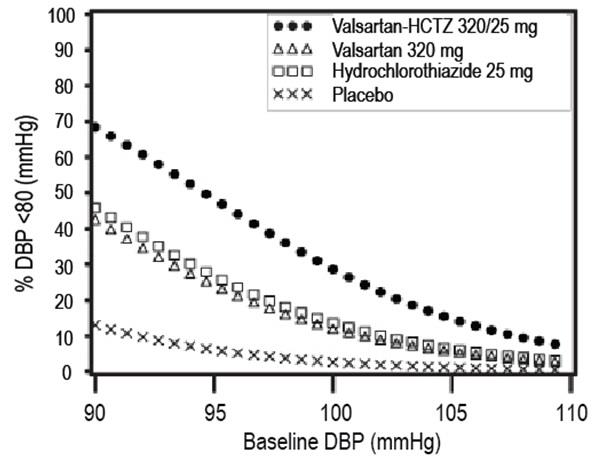
A line graph showing the percentage of patients with diastolic blood pressure (DBP) less than 80 mmHg plotted against baseline DBP (mmHg). The graph compares four groups: Valsartan-HCTZ 320/25 mg, Valsartan 320 mg, Hydrochlorothiazide 25 mg, and Placebo, each represented by distinct symbols. The Valsartan-HCTZ group shows the highest percentage of patients achieving DBP below 80 mmHg across baseline DBP values.*
FDA Label Image

C:\users\ra\desktop\5.jpg (5a5eca60 Figure 05)

C:\users\ra\desktop\5.jpg (5a5eca60 Figure 05)
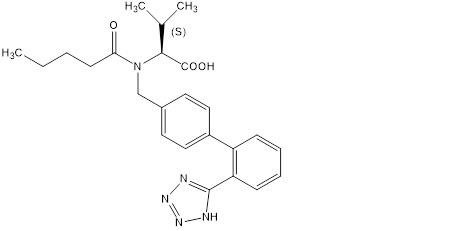
Chemical structure of valsartan, an active ingredient in the combination drug valsartan and hydrochlorothiazide used in oral tablet form.*
FDA Label Image

C:\users\ra\desktop\6.jpg (5a5eca60 Figure 06)

C:\users\ra\desktop\6.jpg (5a5eca60 Figure 06)
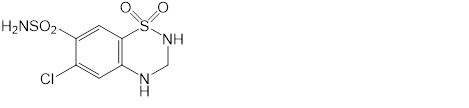
Chemical structure diagram of the active ingredient shown, illustrating a chlorinated benzene ring with sulfonamide and other functional groups attached. This corresponds to one of the components in valsartan and hydrochlorothiazide tablets.*
FDA Label Image

Label Image (Lbl500907443)

Label Image (Lbl500907443)
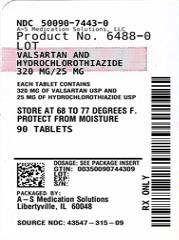
The label for VALSARTAN AND HYDROCHLOROTHIAZIDE tablets, film coated, showing strength as 320 mg/25 mg per tablet. The label specifies storage instructions to keep at 68 to 77 degrees Fahrenheit and to protect from moisture. Packaged by A-S Medication Solutions, Libertyville, IL, it includes the product NDC 50090-7443 and states the package contains 90 tablets.*

* About these descriptions: Image descriptions on this page are generated by automated AI analysis of the product label images from the manufacturer's FDA label submission (SPL). They are provided for reference only and may contain errors or omissions. Always rely on the printed label itself and the official FDA labeling, and consult a pharmacist or healthcare professional with any questions about this product.