Spiriva Capsule
Product Images NDC 50090-7645

View Photos of Packaging, Regulatory Labels, and Product Appearance

Product Visual Gallery

This gallery contains 29 technical images submitted to the FDA as part of the official labeling for Spiriva (NDC 50090-7645). Unlike standard consumer photos, these assets often include clinical data figures, molecular chemical structures, and official manufacturer packaging layouts.

As provided by A-s Medication Solutions, these visuals offer a comprehensive scientific overview of the product's physical and chemical identity, aiding pharmacists and researchers in product verification and study.

FDA Label Image

Label Image (Lbl500907645)

Label Image (Lbl500907645)
Spiriva HandiHaler 18 mcg capsule package label showing tiotropium bromide inhalation powder capsules. The label displays product and lot numbers, storage instructions to keep between 30 and 85 degrees Fahrenheit, packaging details stating 30 capsules in 3 blister cards with 10 capsules each, and manufacturer information for A-S Medication Solutions, Libertyville, IL 60048. The NDC is 50090-7645-0.*
FDA Label Image

Chemical Structure (Spiriva 01)

Chemical Structure (Spiriva 01)
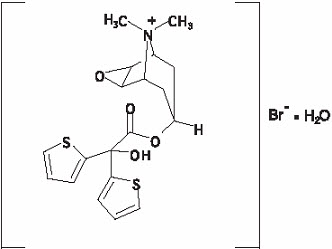
Chemical structure diagram of tiotropium bromide, the active ingredient in Spiriva HandiHaler 18 ug capsules. The diagram shows the arrangement of atoms including nitrogen, oxygen, sulfur, and bromide ion with associated water molecules.*
FDA Label Image

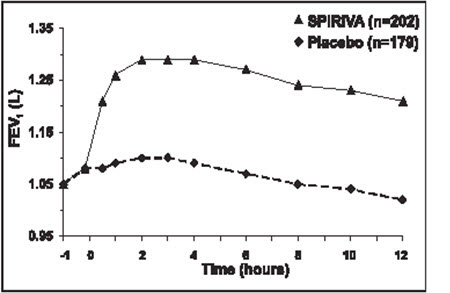
Figure 1 (Spiriva 02)

Figure 1 (Spiriva 02)
A line graph comparing FEV1 (L) over time (hours) between Spiriva (n=202) and placebo (n=179). Spiriva shows a rapid increase in FEV1 peaking around 1-3 hours, then a gradual decline, while placebo shows a relatively flat and lower FEV1 throughout 12 hours.*
FDA Label Image

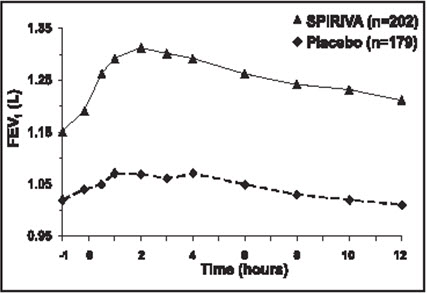
Figure 1 (Spiriva 03)

Figure 1 (Spiriva 03)
A line graph comparing FEV1 (L) over time (hours) for Spiriva HandiHaler 18 ug capsules versus placebo. The graph shows two groups: Spiriva (n=202) and placebo (n=179) with FEV1 values tracked from 0 to 12 hours, indicating changes in lung function post-administration.*
FDA Label Image

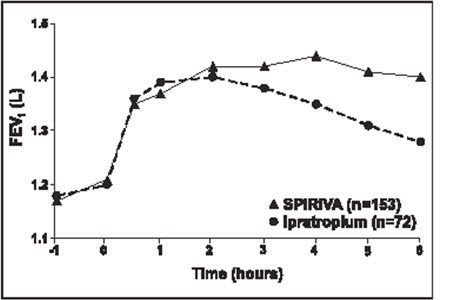
Figure 2 (Spiriva 04)

Figure 2 (Spiriva 04)
A line graph comparing FEV1 (L) measurements over time (hours) for Spiriva and Ipratropium groups. The x-axis represents time in hours from -1 to 6, and the y-axis shows FEV1 values ranging from 1.1 to 1.5 liters. Spiriva data points are shown as triangles, and Ipratropium as circles with a dashed line, illustrating changes in lung function after administration.*
FDA Label Image

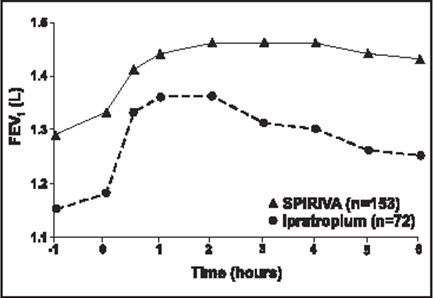
Figure 2 (Spiriva 05)

Figure 2 (Spiriva 05)
A line graph comparing FEV1 (L) over time in hours between Spiriva and Ipratropium groups. Spiriva shows higher FEV1 values throughout the 6-hour period with data points marked by triangles for Spiriva and circles for Ipratropium, including sample sizes of 153 and 72, respectively.*
FDA Label Image

Figure 3 (Spiriva 06)

Figure 3 (Spiriva 06)
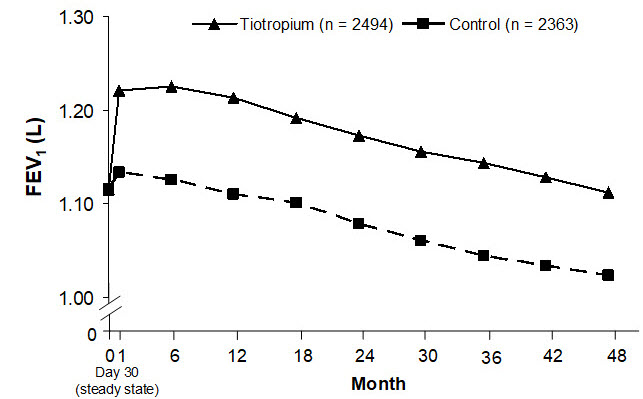
A line graph comparing FEV1 (L) over 48 months between patients treated with Tiotropium and a control group. The graph shows measurements at multiple time points, with Tiotropium represented by a solid line with triangles and Control by a dashed line with squares. The x-axis represents time in months and the y-axis shows FEV1 in liters.*
FDA Label Image

Figure (Spiriva 07)

Figure (Spiriva 07)
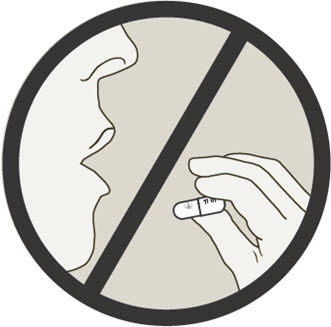
An instructional illustration showing a person about to swallow a capsule by mouth, crossed out by a diagonal line. The image indicates that the capsule should not be swallowed orally.*
FDA Label Image

Figure (Spiriva 08)

FDA Label Image

Figure (Spiriva 09)

Figure (Spiriva 09)
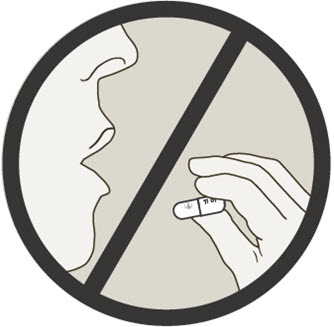
An instructional illustration showing a person opening their mouth and a hand holding a capsule. The image is split diagonally, indicating that the capsule should not be ingested orally by swallowing.*
FDA Label Image

Figure A (Spiriva 10)

Figure A (Spiriva 10)
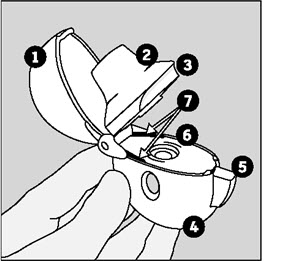
An instructional line drawing showing a hand holding a Spiriva HandiHaler device with its top open, labeled with numbers 1 through 7 pointing to various parts of the device. This diagram appears to illustrate components or steps related to the use of the Spiriva HandiHaler capsule inhalation device.*
FDA Label Image

Figure B (Spiriva 11)

Figure B (Spiriva 11)
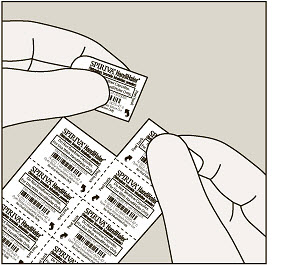
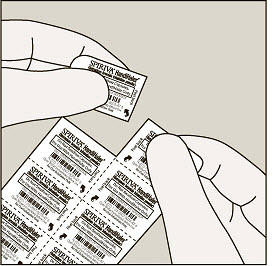
An instructional illustration showing hands handling a blister pack of Spiriva HandiHaler capsules. One hand is peeling a capsule from the blister pack, demonstrating how to access the medication for oral inhalation delivery.*
FDA Label Image

Figure C (Spiriva 12)

Figure C (Spiriva 12)
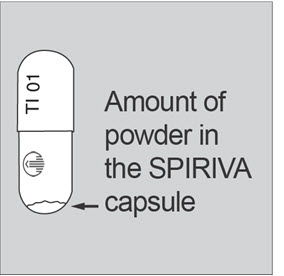
Close-up image of a Spiriva HandiHaler capsule marked with 'TI 01.' The capsule is labeled to indicate the amount of powder it contains. This capsule is used for oral inhalation and contains the active ingredient tiotropium bromide, strength 18 micrograms, manufactured by A-S Medication Solutions.*
FDA Label Image

Figure D (Spiriva 13)

Figure D (Spiriva 13)
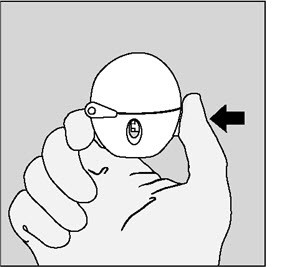
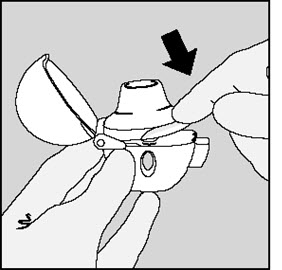
An instructional illustration showing a hand holding a circular inhaler device with a mouthpiece, with an arrow pointing toward the device indicating a step to open or prepare it for use. This likely relates to usage instructions for Spiriva HandiHaler capsules and inhalation device.*
FDA Label Image

Figure E (Spiriva 14)

Figure E (Spiriva 14)
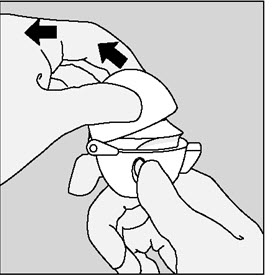
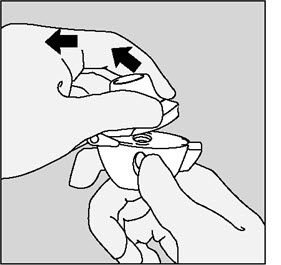
An instructional illustration showing hands opening the Spiriva HandiHaler device by lifting the mouthpiece in an upward motion as indicated by arrows. This diagram depicts how to prepare the inhaler for use with the capsule inside.*
FDA Label Image

Figure F (Spiriva 15)

Figure F (Spiriva 15)
An instructional illustration showing a person using a Spiriva HandiHaler device. It depicts one hand holding the device while the other hand removes a capsule by pulling upward, indicated by arrows. The image demonstrates proper handling of the inhalation capsule for administration.*
FDA Label Image

Figure G (Spiriva 16)

Figure G (Spiriva 16)
An instructional illustration showing hands peeling a single capsule unit from a blister pack of Spiriva HandiHaler capsules. The capsules are individually sealed in the blister sheet, each labeled with the product name and strength.*
FDA Label Image

Figure H (Spiriva 17)

Figure H (Spiriva 17)
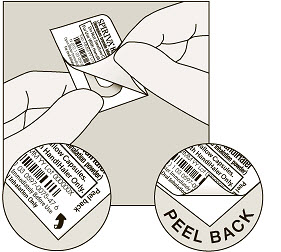
Instructional illustration showing hands peeling back a label covering a capsule container. Two close-up views display the peel-back label with product information for Spiriva HandiHaler capsules, including strength and usage notes. The labels emphasize that the capsules are for inhalation only.*
FDA Label Image

Figure I (Spiriva 18)

Figure I (Spiriva 18)
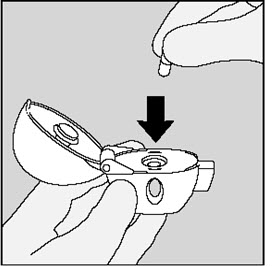
An instructional illustration showing a hand holding a Spiriva HandiHaler device with its capsule chamber open. A drop is being placed into the chamber, indicated by a downward arrow pointing to the capsule area, demonstrating how to load medication for inhalation.*
FDA Label Image

Figure J (Spiriva 19)

Figure J (Spiriva 19)
An instructional diagram showing a hand placing a capsule into the chamber of a Spiriva HandiHaler device. The device is depicted open with a hinged cover, and a bold arrow indicates the placement of the capsule inside for use.*
FDA Label Image

Figure K (Spiriva 20)

Figure K (Spiriva 20)
An instructional illustration showing a hand holding a Spiriva HandiHaler device. The image depicts the proper positioning and a close-up on how to open or operate the device, with arrows indicating directional movement for use.*
FDA Label Image

Figure L (Spiriva 21)

Figure L (Spiriva 21)
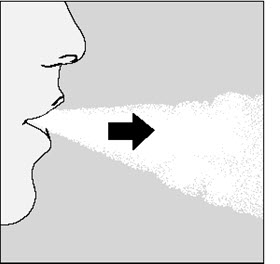
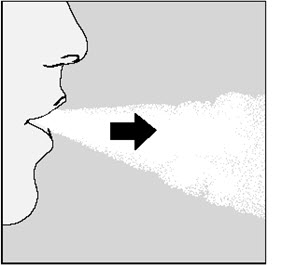
An instructional illustration showing a side profile of a person's face exhaling or blowing out air, depicted by an arrow pointing forward from the mouth. This image likely represents the action of breathing out during inhalation use.*
FDA Label Image

Figure M (Spiriva 22)

Figure M (Spiriva 22)
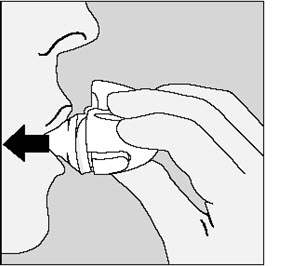
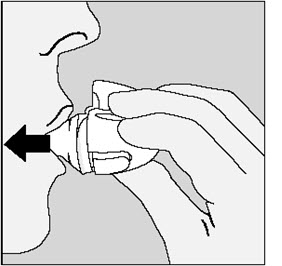
An instructional illustration showing a person using a respiratory inhalation device. The person holds the mouthpiece of the inhaler to their lips, preparing to inhale, indicated by an arrow pointing outward.*
FDA Label Image

Figure N (Spiriva 23)

Figure N (Spiriva 23)
Illustration of a person's side profile exhaling or blowing out, depicted with an arrow pointing forward from the mouth, indicating a breath or airflow direction. This type of image is commonly used to demonstrate inhalation or breathing techniques.*
FDA Label Image

Figure O (Spiriva 24)

Figure O (Spiriva 24)
Black and white instructional illustration showing a person holding a Spiriva HandiHaler device to their mouth. The person is inhaling by drawing air through the device, indicated by a left-pointing arrow coming from the inhaler toward the mouth.*
FDA Label Image

Figure P (Spiriva 25)

Figure P (Spiriva 25)
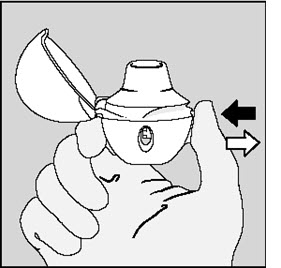
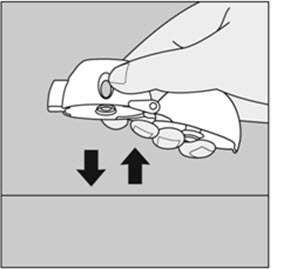
Illustration showing a hand holding a Spiriva HandiHaler device. The image depicts pressing or squeezing a component of the device with two black arrows pointing upward and downward, indicating a mechanical action likely related to capsule insertion or activation for inhalation use.*
FDA Label Image

Figure Q (Spiriva 26)

Figure Q (Spiriva 26)
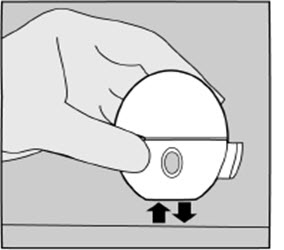
Illustration showing a hand holding a Spiriva HandiHaler device, with arrows indicating pressing or activation steps at the bottom of the device to open or release the capsule inside for inhalation use.*
FDA Label Image

Figure R (Spiriva 27)

Figure R (Spiriva 27)
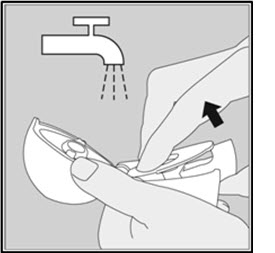
Illustration showing hands holding a Spiriva HandiHaler device with a capsule inside. One hand is pressing a thumb on the capsule holder, indicating interaction with the device. A faucet dispensing water droplets is depicted above, suggesting washing or rinsing instructions related to the device.*
FDA Label Image

Figure (Spiriva 28)

* About these descriptions: Image descriptions on this page are generated by automated AI analysis of the product label images from the manufacturer's FDA label submission (SPL). They are provided for reference only and may contain errors or omissions. Always rely on the printed label itself and the official FDA labeling, and consult a pharmacist or healthcare professional with any questions about this product.