Sertraline Hydrochloride Tablet
Product Images NDC 50090-7691
View Photos of Packaging, Regulatory Labels, and Product Appearance
Product Visual Gallery
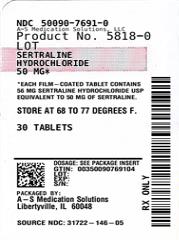
This gallery contains 6 technical images submitted to the FDA as part of the official labeling for Sertraline Hydrochloride (NDC 50090-7691). Unlike standard consumer photos, these assets often include clinical data figures, molecular chemical structures, and official manufacturer packaging layouts.
As provided by A-s Medication Solutions, these visuals offer a comprehensive scientific overview of the product's physical and chemical identity, aiding pharmacists and researchers in product verification and study.
Product Images & Figures Index
Image Description (Struct)
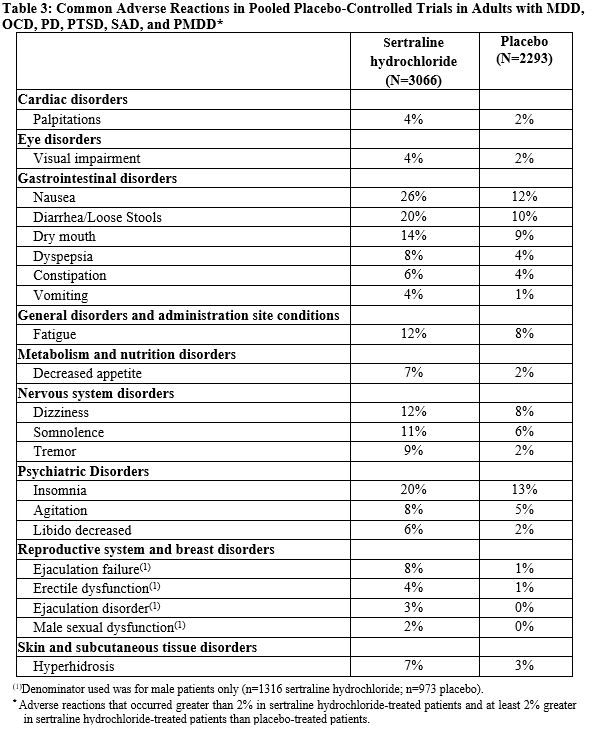
Table 3 (Table 3)
The text provides a table displaying common adverse reactions in pooled placebo-controlled trials in adults with various conditions such as MDD, OCD, PD, PTSD, SAD, and PMDD compared between Sertraline hydrochloride and Placebo. Adverse reactions include categories such as cardiac disorders (Palpitations), eye disorders (Visual impairment), gastrointestinal disorders (Nausea, Diarrhea/Loose Stools), general disorders (Fatigue), metabolism and nutrition disorders (Decreased appetite), nervous system disorders (Dizziness, Somnolence), psychiatric disorders (Insomnia, Agitation, Libido decreased), reproductive system and breast disorders (Ejaculation failure, Erectile dysfunction), and skin and subcutaneous tissue disorders (Hyperhidrosis). The table also specifies the percentages of these adverse reactions in the sertraline hydrochloride (N=2293) and placebo (N=3066) groups. The denominator used for male patients only is specified for certain adverse reactions. The adverse reactions mentioned occurred more than 2% in sertraline hydrochloride-treated patients and were at least 2% greater than in placebo-treated patients.*
Table1 (Table1)
This text provides the recommended daily dosage of sertraline hydrochloride for patients with major depressive disorder (MDD), obsessive-compulsive disorder (OCD), panic disorder (PD), post-traumatic stress disorder (PTSD), and social anxiety disorder (SAD). It outlines the starting dose and therapeutic range for adults and pediatric patients under different indications. The starting dose for MDD is 50mg, for OCD it is 50-200mg, and for pediatric patients with OCD the recommended dosage ranges from 50-200mg depending on the age group.*
Table2 (Table2)
This is a table showing the risk differences of the number of cases of suicidal thoughts or behaviors in placebo-controlled trials of antidepressants in pediatric and adult patients. The table indicates that in patients under 18 years old, there were 14 additional patients with suicidal thoughts or behaviors compared to placebo. In the age range of 18-24, there were 5 additional patients. However, in the age range of 25-64, there was 1 fewer patient, and in patients 65 and over, there were 6 fewer patients.*
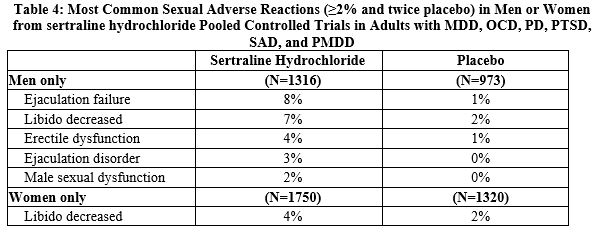
Image Description (Table4)
This text is a summary of the most common sexual adverse reactions found in men taking Sertraline Hydrochloride compared to placebo in controlled clinical trials involving adults with various conditions like Major Depressive Disorder (MDD), Obsessive-Compulsive Disorder (OCD), Panic Disorder (PD), Post-Traumatic Stress Disorder (PTSD), Social Anxiety Disorder (SAD), and Premenstrual Dysphoric Disorder (PMDD). The adverse reactions reported in men taking Sertraline Hydrochloride included ejaculation failure, decreased libido, erectile dysfunction, ejaculation disorder, and male sexual dysfunction. For women taking Sertraline Hydrochloride, only one common adverse reaction was observed - decreased libido.*
* These product label images have been analyzed using experimental machine learning. Please verify findings with the primary label text.