Levetiracetam Tablet, Film Coated
Product Images NDC 50090-7775

View Photos of Packaging, Regulatory Labels, and Product Appearance

Product Visual Gallery

This gallery contains 8 technical images submitted to the FDA as part of the official labeling for Levetiracetam (NDC 50090-7775). Unlike standard consumer photos, these assets often include clinical data figures, molecular chemical structures, and official manufacturer packaging layouts.

As provided by A-s Medication Solutions, these visuals offer a comprehensive scientific overview of the product's physical and chemical identity, aiding pharmacists and researchers in product verification and study.

FDA Label Image

Label Image (Lbl500907775)
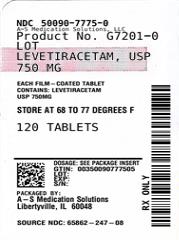
Label Image (Lbl500907775)
This is a description of a product with the name "RaceTan" containing 750 mg in 120 tablets. It appears to be a supplement or medication, likely for human consumption.*
FDA Label Image

Figure 1: Responder Rate (≥50% Reduction From Baseline) In Study 1 (Levetiracetam Fig1)

Figure 1: Responder Rate (≥50% Reduction From Baseline) In Study 1 (Levetiracetam Fig1)
This is a description of Figure 1 from a study showing Responder Rate with a 250% Reduction from Baseline. The graph includes different percentages ranging from 0% to 39.6%, with a statistically significant data point versus placebo mentioned at the end of the text.*
FDA Label Image

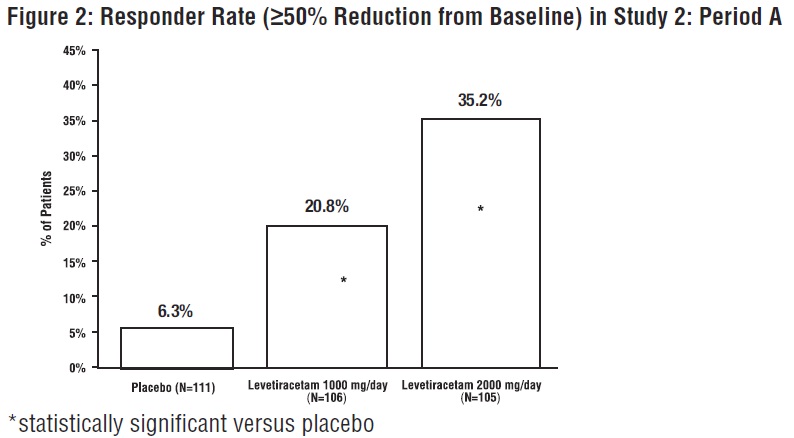
Figure 2: Responder Rate (≥50% Reduction From Baseline) In Study 2: Period A (Levetiracetam Fig2)

Figure 2: Responder Rate (≥50% Reduction From Baseline) In Study 2: Period A (Levetiracetam Fig2)
This data table presents the Responder Rate (250% Reduction from Baseline) in Study 2 for Period A. The table shows the percentages of patients showing a response to treatment with placebo, Levetiracetam 1000 mg/day, and Levetiracetam 2000 mg/day. It indicates a statistically significant difference in responder rates between the treatment groups and placebo.*
FDA Label Image

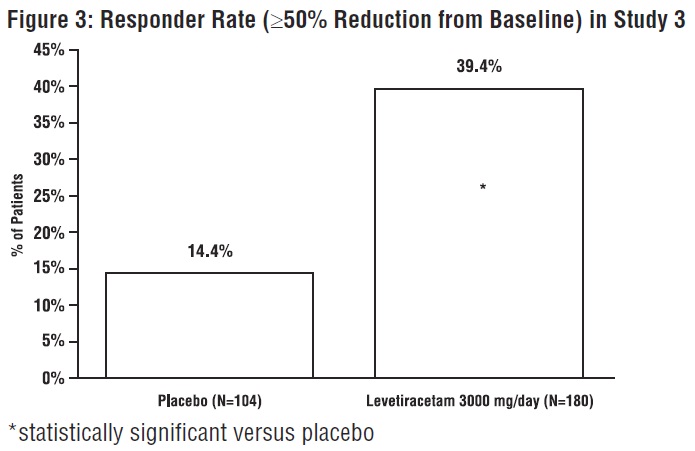
Figure 3: Responder Rate (≥50% Reduction From Baseline) In Study 3 (Levetiracetam Fig3)

Figure 3: Responder Rate (≥50% Reduction From Baseline) In Study 3 (Levetiracetam Fig3)
This is a figure showing responder rates (>50% Reduction from Baseline) in Study 3. The percentages depicted are 45% for Levetiracetam 3000 mg/day and 39.4% for Placebo. Additionally, it is noted that Levetiracetam 3000 mg/day was statistically significant versus placebo.*
FDA Label Image

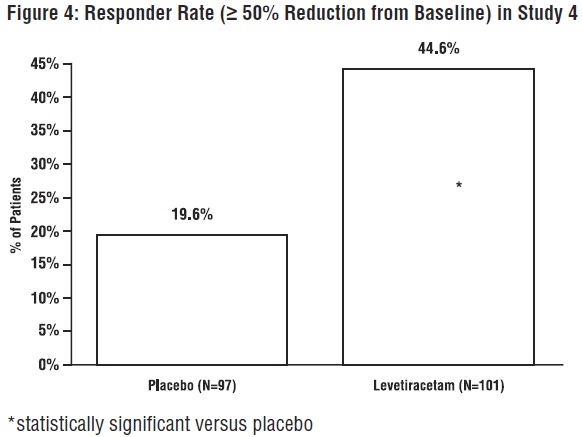
Figure 4: Responder Rate (≥ 50% Reduction From Baseline) In Study 4 (Levetiracetam Fig4)

Figure 4: Responder Rate (≥ 50% Reduction From Baseline) In Study 4 (Levetiracetam Fig4)
This text provides information on the Responder Rate (50% Reduction from Baseline) in Study 4, comparing the percentages for the groups receiving Placebo (97 participants) and Levetiracetam (101 participants). The results show that Levetiracetam had a statistically significant difference compared to Placebo.*
FDA Label Image

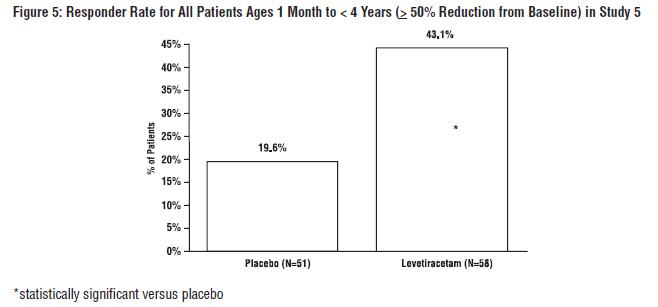
Figure 5: Responder Rate For All Patients Ages 1 Month To < 4 Years (≥ 50% Reduction From Baseline) In Study 5 (Levetiracetam Fig5)

Figure 5: Responder Rate For All Patients Ages 1 Month To < 4 Years (≥ 50% Reduction From Baseline) In Study 5 (Levetiracetam Fig5)
The provided text shows Figure 5, displaying the Responder Rate for all patients between 1 month to less than 4 years of age, with a greater than 50% reduction from baseline in Study 5. The data indicates that Lovetracatam exhibited a statistically significant result compared to the placebo, with a rate of 190.6% for Placeto and 451 for Lovetracatam.*
FDA Label Image

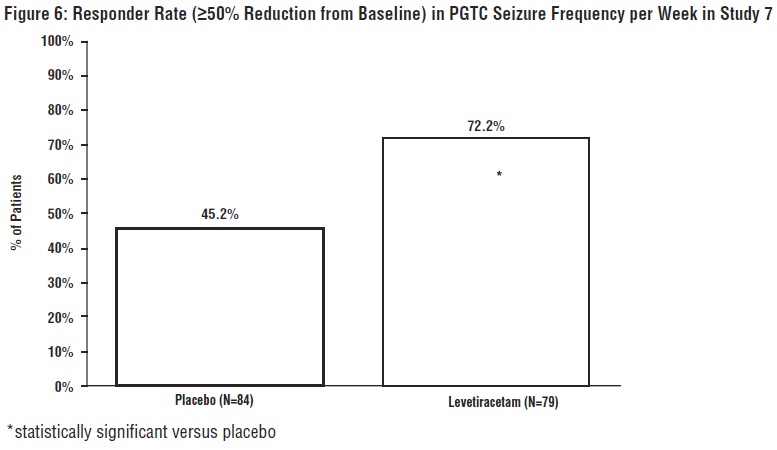
Figure 6: Responder Rate (≥50% Reduction From Baseline) In Pgtc Seizure Frequency Per Week In Study 7 (Levetiracetam Fig6)

Figure 6: Responder Rate (≥50% Reduction From Baseline) In Pgtc Seizure Frequency Per Week In Study 7 (Levetiracetam Fig6)
This chart shows the Responder Rate (250% Reduction from Baseline) in Primary Generalized Tonic-Clonic (PGTC) Seizure Frequency per Week in Study 7. The data compares the percentage of patients who achieved a significant reduction in seizures between a group taking placebo and another group taking Levetiracetam. The results indicate that Levetiracetam had a statistically significant impact on reducing PGTC seizure frequency compared to the placebo.*
FDA Label Image

Chemical Structure (Levetiracetam Str)

* These product label images have been analyzed using experimental machine learning. Please verify findings with the primary label text.