Product Images Duloxetine
View Photos of Packaging, Labels & Appearance
- figure1 - duloxetine fig1
- figure10 - duloxetine fig10
- figure2 - duloxetine fig2
- figure3 - duloxetine fig3
- figure4 - duloxetine fig4
- figure5 - duloxetine fig5
- figure6 - duloxetine fig6
- figure7 - duloxetine fig7
- figure8 - duloxetine fig8
- figure9 - duloxetine fig9
- structure - duloxetine structure
- Label Image - lbl500907812
Product Label Images
The following 12 images provide visual information about the product associated with Duloxetine NDC 50090-7812 by A-s Medication Solutions, such as packaging, labeling, and the appearance of the drug itself. This resource could be helpful for medical professionals, pharmacists, and patients seeking to verify medication information and ensure they have the correct product.
figure1 - duloxetine fig1
This is a table displaying the number of patients with relapse over time for the treatment groups of placebo and duloxetine. The x-axis represents the time from randomization to relapse in days, while the y-axis shows the number of patients. The data seems to be measured at different time intervals up to 250 days.*
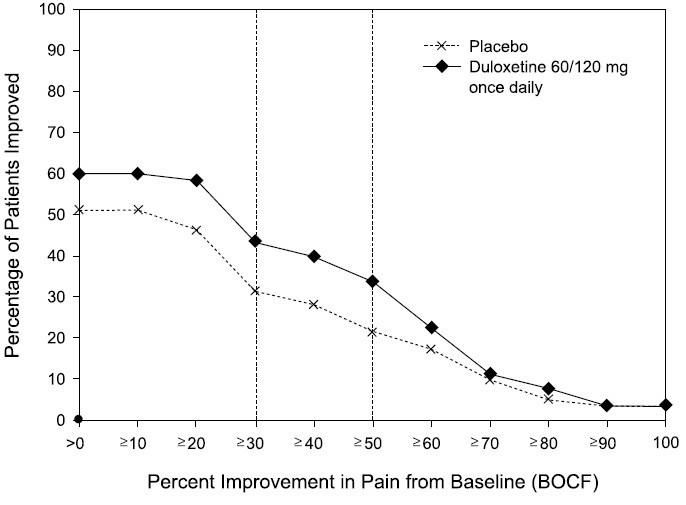
figure10 - duloxetine fig10
This is a description of a clinical trial comparing a placebo with Duloxetine 60/120 mg once daily for pain management. The text also shows a graph indicating the percentage improvement in pain from baseline for different time intervals.*
figure2 - duloxetine fig2
This is a graph showing the proportion of patients experiencing a relapse over time after randomization into two different treatments: placebo and duloxetine. The x-axis represents the time in days from randomization to relapse, and the y-axis shows the proportion of patients experiencing relapse. The graph indicates that duloxetine may be associated with a lower relapse rate compared to the placebo.*
figure3 - duloxetine fig3
This text provides information on the percentage of patients improved with different doses of Duloxetine (60 mg BID, 60 mg QD, and 20 mg QD) compared to Placebo. It also mentions percent improvement in pain from the baseline.*
figure4 - duloxetine fig4
The text mentions the percentage of patients improved and the percent improvement in pain from baseline for different doses of Duloxetine and a placebo. This information is likely from a study or clinical trial evaluating the effectiveness of Duloxetine in managing pain.*
figure5 - duloxetine fig5
This text provides a comparison of the percentage of patients who improved using different treatments: Duloxetine 60mg twice daily, Duloxetine 60mg once daily, and placebo. The data includes the percent improvement in pain from the baseline.*
figure7 - duloxetine fig7
Percentage of Patients Improved by taking Duloxetine 60 mg Once Daily compared to Placebo. The chart shows the percent improvement in pain from baseline, with a high of 100%, followed by varying degrees of improvement ranging from 10% to 90%.*
figure8 - duloxetine fig8
This description appears to mention a medication dosage of Duloxetine 60/120 mg once daily for a certain use. The text also includes information on placebo and a measure of pain improvement.*
figure9 - duloxetine fig9
This text includes information about a study comparing Duloxetine 60 mg once daily with a placebo in terms of pain improvement. The study shows data in terms of percent improvement in pain from baseline. The text also mentions different points in time for assessment (210, 220, 230, etc.). The study appears to be evaluating the effectiveness of Duloxetine compared to a placebo in treating pain.*
* The product label images have been analyzed using a combination of traditional computing and machine learning techniques. It should be noted that the descriptions provided may not be entirely accurate as they are experimental in nature. Use the information in this page at your own discretion and risk.