Terazosin Capsule
Product Images NDC 50090-7851
View Photos of Packaging, Regulatory Labels, and Product Appearance
Product Visual Gallery
This gallery contains 12 technical images submitted to the FDA as part of the official labeling for Terazosin (NDC 50090-7851). Unlike standard consumer photos, these assets often include clinical data figures, molecular chemical structures, and official manufacturer packaging layouts.
As provided by A-s Medication Solutions, these visuals offer a comprehensive scientific overview of the product's physical and chemical identity, aiding pharmacists and researchers in product verification and study.
Product Images & Figures Index
Image (98351704 9ff8 4c54 A2c2 E2841873d658 02)
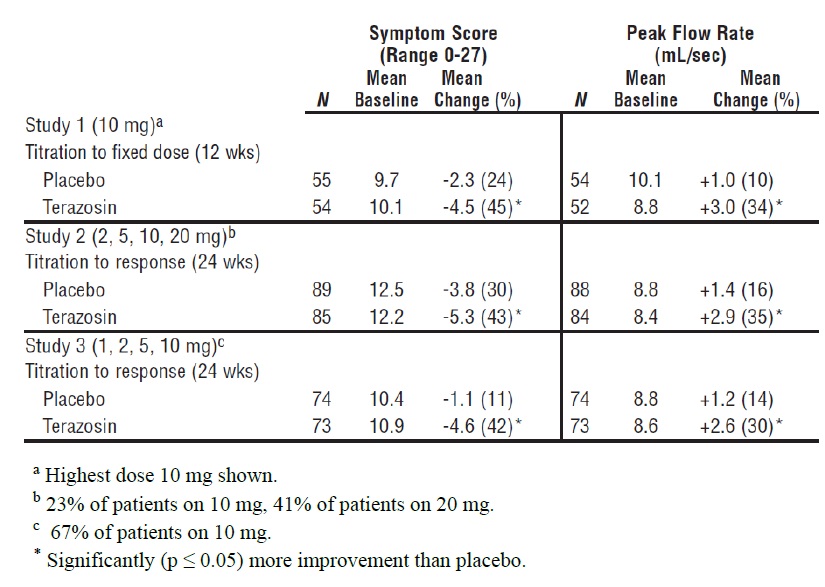
This document presents the evaluation of Symptom Score and Peak Flow Rate data for different studies comparing the effects of a medication called Terazosin at various doses against a Placebo. The results show changes in Peak Flow Rate and Symptom Score over specific durations, showcasing percentage changes and mean values at different doses of Terazosin. The document also highlights the highest dose tested (10mg) and the distribution of patients across different dose levels. Moreover, it indicates a statistically significant improvement with Terazosin compared to Placebo in certain scenarios.*
Image (98351704 9ff8 4c54 A2c2 E2841873d658 03)
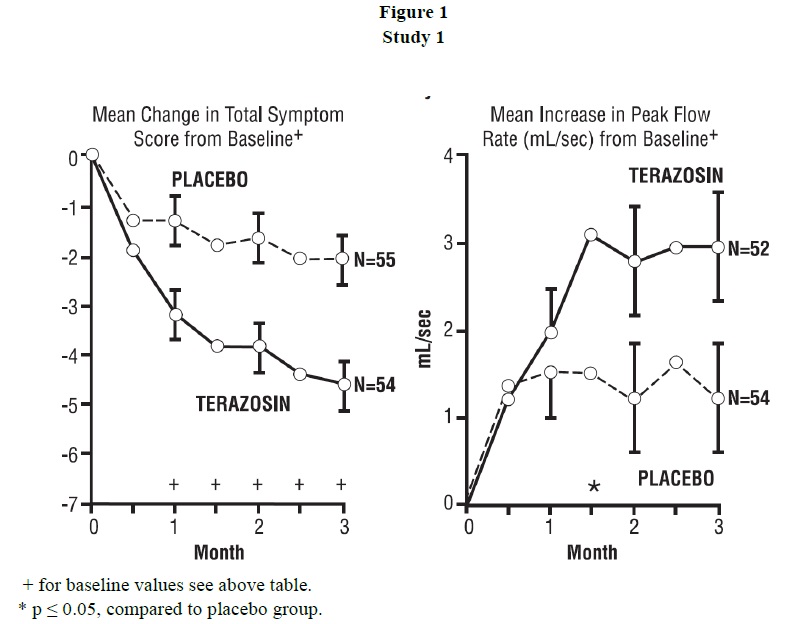
This text provides a summary of a study comparing the effects of placebo and terazosin on total symptom score changes and peak flow rate increase. The study involved two groups, placebo, and terazosin, with differing sample sizes. The results were measured over a period of three months. The data shows a significant difference in mean change in total symptom score and peak flow rate between the two groups, with the terazosin group showing a statistically significant increase.*
Image (98351704 9ff8 4c54 A2c2 E2841873d658 04)
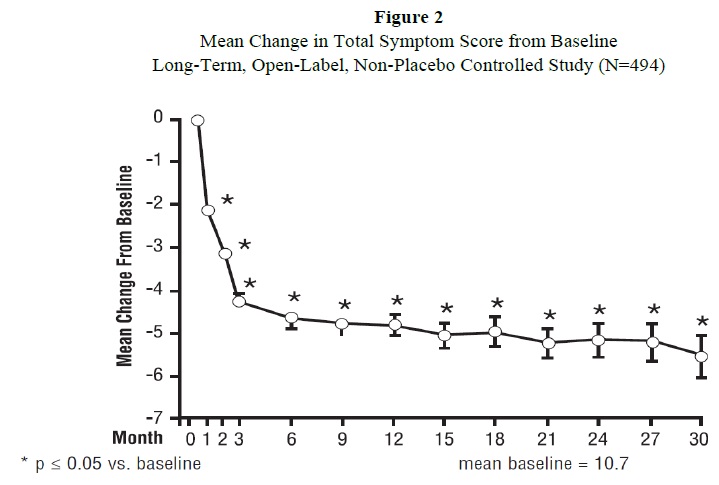
This text provides information on the mean change in total symptom score from baseline in a long-term, open-label, non-placebo controlled study involving 494 participants. The data is presented at various time points ranging from 0 to 30 months, with a clear indication of statistical significance (* p <0.05 vs. baseline mean baseline = 10.7).*
Image (98351704 9ff8 4c54 A2c2 E2841873d658 05)
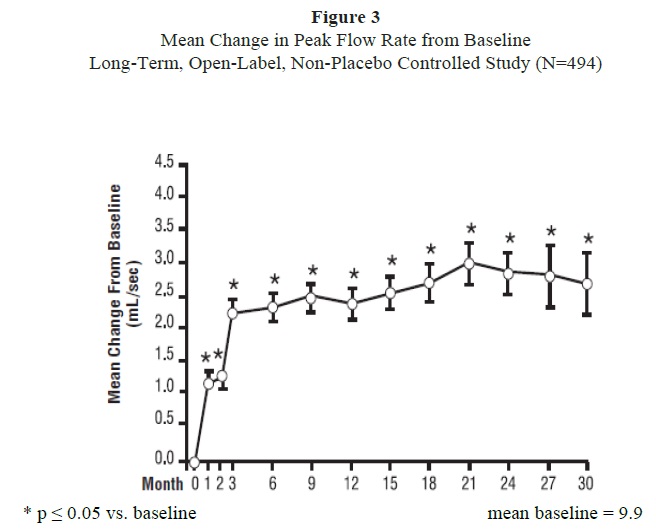
This is a description of a study's Figure 3 showing the mean change in peak flow rate from baseline in a long-term, open-label, non-placebo controlled study involving 494 individuals. The graph displays the mean change in peak flow rate (in mL/sec) over time intervals ranging from 0 to 30 months. The comparison is made against a baseline mean of 9.9, and significant differences are denoted with *p<0.05.*
Image (98351704 9ff8 4c54 A2c2 E2841873d658 06)
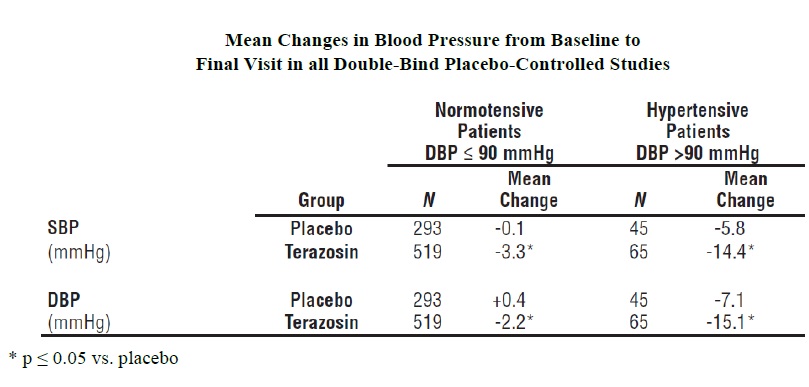
This is a comparison of mean changes in blood pressure from baseline to final visit in double-blind placebo-controlled studies for normotensive and hypertensive patients. The data shows the mean changes in systolic blood pressure (SBP) and diastolic blood pressure (DBP) for patients with DBP levels below and above 90 mmHg. Terazosin had significant reductions in DBP compared to placebo in both normotensive and hypertensive patients according to the statistical significance denoted by *p<0.05.*
Image (98351704 9ff8 4c54 A2c2 E2841873d658 07)
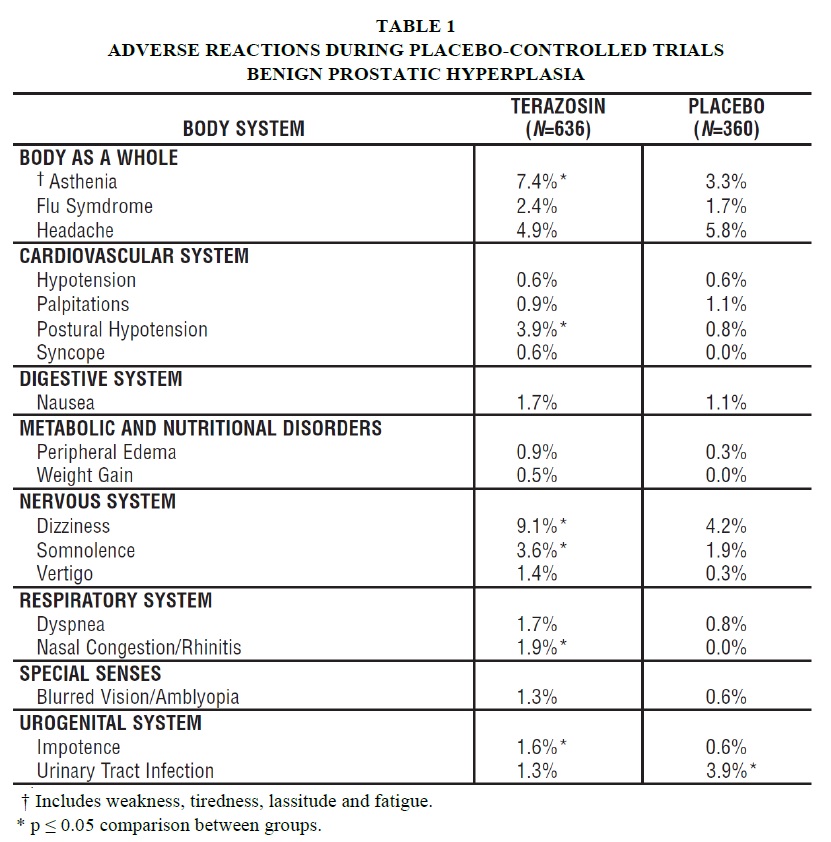
This is a table presenting adverse reactions during placebo-controlled trials for Benign Prostatic Hyperplasia with the drug Terazosin. The table compares the frequency of various adverse reactions between the Terazosin and Placebo groups. Adverse reactions include symptoms related to different body systems such as Body as a Whole, Cardiovascular System, Nervous System, and Urogenital System. Some common adverse reactions noted include asthenia, headache, hypotension, dizziness, and impotence. The table also highlights the percentage comparison between groups for each adverse reaction.*
Image (98351704 9ff8 4c54 A2c2 E2841873d658 08)
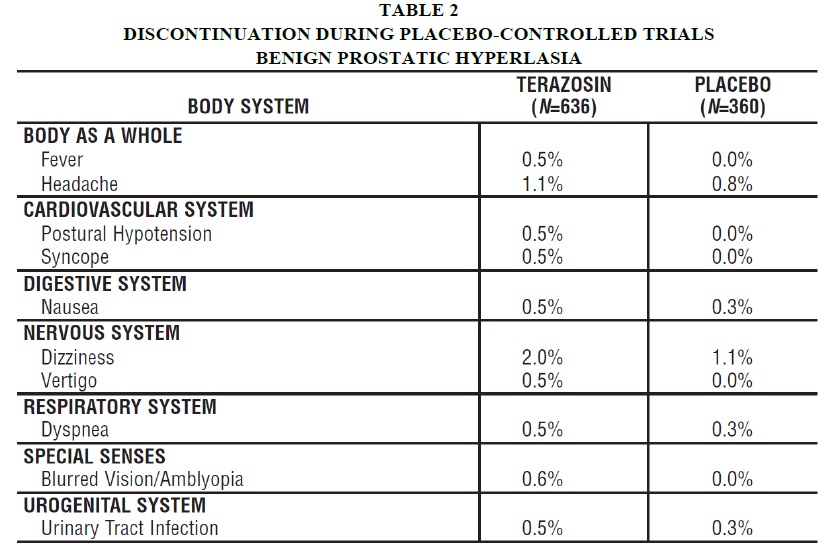
This is a table showing the disconinuation rates during placebo-controlled trials for benign prostatic hyperplasia, comparing the effects of terazosin and placebo. Various side effects such as fever, headache, postural hypotension, nausea, dizziness, and urinary tract infection were monitored. Overall, the data suggests that terazosin had higher discontinuation rates for certain side effects compared to placebo.*
Image (98351704 9ff8 4c54 A2c2 E2841873d658 09)
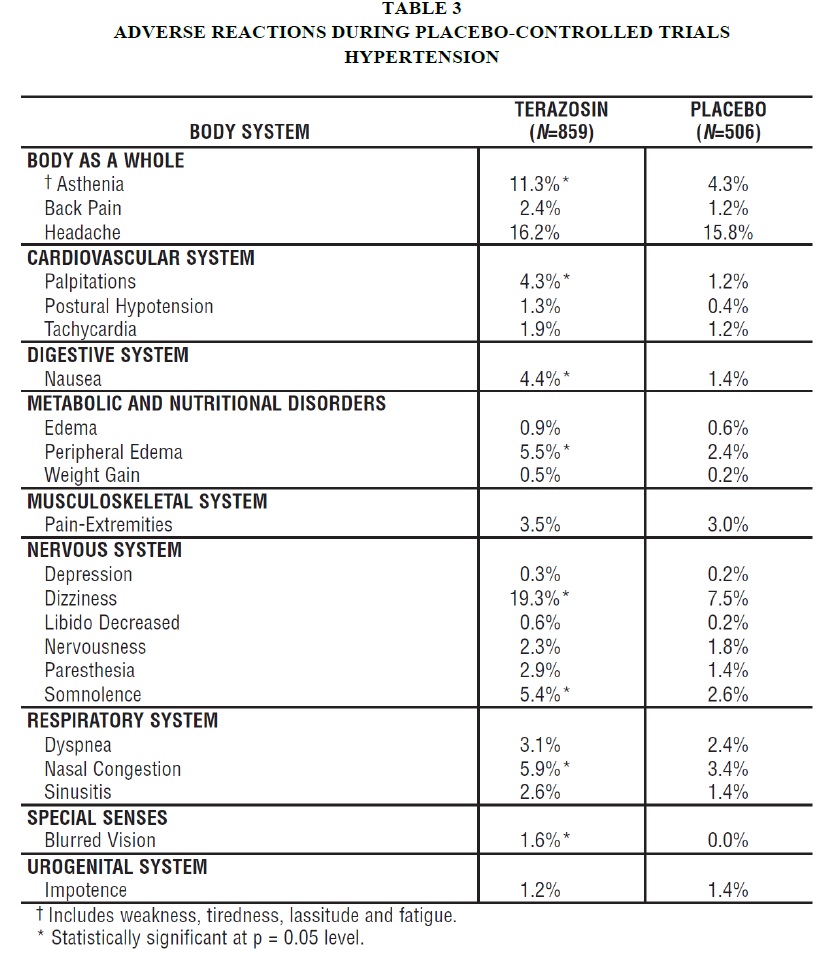
This table provides information on adverse reactions observed during placebo-controlled trials of Terazosin, a medication used for hypertension. The data includes percentages of adverse reactions such as asthenia, headaches, palpitations, dizziness, and nasal congestion among others. The table helps in understanding the potential side effects associated with using Terazosin for hypertension treatment.*
Image (98351704 9ff8 4c54 A2c2 E2841873d658 10)
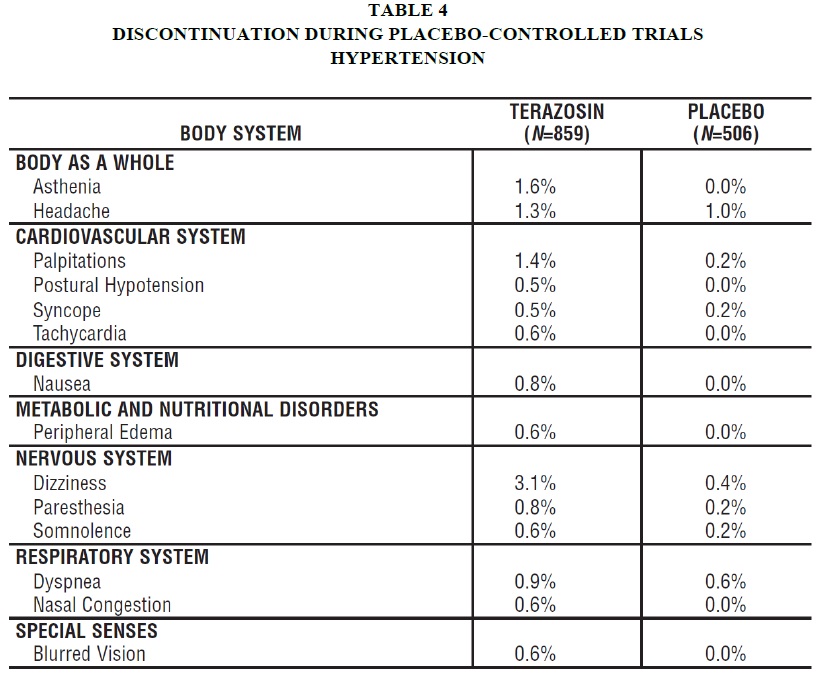
This is a table showing the discontinuation rates of patients in placebo-controlled trials of terazosin for hypertension. The table lists the percentage of patients who discontinued the medication due to various side effects in different body systems, such as headaches, palpitations, dizziness, and blurred vision. The data provides valuable insights into the tolerability and safety profile of terazosin compared to placebo.*
Image (98351704 9ff8 4c54 A2c2 E2841873d658 12)
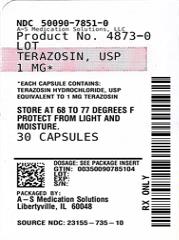
Label Image (Lbl500907851)
* These product label images have been analyzed using experimental machine learning. Please verify findings with the primary label text.