Rizafilm
FDA Label NDC 50090-8038

Full FDA labeling including Indications, Dosage, Usage, and Precautions

Structured Product Label

The following Structured Product Label (SPL) was submitted to the FDA by A-s Medication Solutions for the product Rizafilm (NDC 50090-8038). This document serves as the official prescribing information, containing essential scientific data and clinical materials required for healthcare providers and patients.

This specific version of the label includes detailed information regarding 1 indications and usage, 2.1 dosing information in adults, 2.2 dosing information in pediatric patients (6 to 17 years of age), 2.3 administration of rizafilm oral films, 3 dosage forms and strengths, 4 contraindications, 5 warnings and precautions, 5.1 myocardial ischemia, myocardial infarction, and prinzmetal's angina, and other regulatory disclosures. Use the navigation below to review specific sections of the FDA submission.

1 Indications And Usage

RizaFilm™ is indicated for the acute treatment of migraine with or without aura in adults and in pediatric patients 6 to 17 years of age.

Limitations of Use

  • RizaFilm should only be used where a clear diagnosis of migraine has been established. If a patient has no response for the first migraine attack treated with RizaFilm, the diagnosis of migraine should be reconsidered before RizaFilm is administered to treat any subsequent attacks.
  • RizaFilm is not indicated for the preventive treatment of migraine.
  • Safety and effectiveness of RizaFilm have not been established for cluster headache.

2.1 Dosing Information In Adults

The recommended dose of RizaFilm in adults is 10 mg administered on the tongue. The maximum cumulative dose that may be given in 24 hours is 30 mg, with doses separated by at least 2 hours. The safety of treating, on average, more than four headaches in a 30-day period has not been established.

2.2 Dosing Information In Pediatric Patients (6 To 17 Years Of Age)

Dosing in pediatric patients is based on the patient's body weight. The recommended dose of RizaFilm is 5 mg in patients weighing less than 40 kg (88 lb), and 10 mg in patients weighing 40 kg (88 lb) or more administered on the tongue.

The efficacy and safety of treatment with more than one dose of RizaFilm within 24 hours in pediatric patients 6 to 17 years of age have not been established.

2.3 Administration Of Rizafilm Oral Films

For RizaFilm oral films, administration with liquid is not necessary. Oral films are packaged individually in child-resistant aluminum pouches with a tear notch. To open the pouch, fold on the dotted line and tear open at the notch. Place the oral film on the tongue, where it will disintegrate within approximately two minutes and can be swallowed with saliva.

3 Dosage Forms And Strengths

RizaFilm 10 mg oral films are white to off-white, rectangular strips of 2.2 cm x 2.75 cm with a blue identifier “RIZA10” on one side.

RizaFilm 5 mg oral films are white to off-white, rectangular strips of 1.1 cm x 1.375 cm with a blue identifier “RZ5” on one side.

4 Contraindications

RizaFilm is contraindicated in patients with:

5 Warnings And Precautions

5.1 Myocardial Ischemia, Myocardial Infarction, And Prinzmetal's Angina

RizaFilm should not be given to patients with ischemic or vasospastic coronary artery disease. There have been rare reports of serious cardiac adverse reactions, including acute myocardial infarction, occurring within a few hours following administration of rizatriptan benzoate. Some of these reactions occurred in patients without known coronary artery disease (CAD). 5-HT1 agonists, including RizaFilm may cause coronary artery vasospasm (Prinzmetal's Angina), even in patients without a history of CAD.

Perform a cardiovascular evaluation in triptan-naïve patients who have multiple cardiovascular risk factors (e.g., increased age, diabetes, hypertension, smoking, obesity, strong family history of CAD) before receiving RizaFilm. If there is evidence of CAD or coronary artery vasospasm, RizaFilm is contraindicated. For patients with multiple cardiovascular risk factors who have a negative cardiovascular evaluation, consider administering the first RizaFilm dose in a medically supervised setting and performing an electrocardiogram (ECG) immediately following RizaFilm administration. For such patients, consider periodic cardiovascular evaluation in intermittent long-term users of RizaFilm.

5.2 Arrhythmias

Life-threatening disturbances of cardiac rhythm, including ventricular tachycardia and ventricular fibrillation leading to death, have been reported within a few hours following the administration of 5-HT1 agonists. Discontinue RizaFilm if these disturbances occur. RizaFilm is contraindicated in patients with Wolff-Parkinson-White syndrome or arrhythmias associated with other cardiac accessory conduction pathway disorder.

5.3 Chest, Throat, Neck, And/Or Jaw Pain/Tightness/Pressure

Sensations of tightness, pain, pressure, and heaviness in the precordium, throat, neck, and jaw commonly occur after treatment with rizatriptan, the active moiety in RizaFilm, and are usually noncardiac in origin. However, perform a cardiac evaluation if these patients are at a high cardiac risk. The use of RizaFilm is contraindicated in patients with CAD and those with Prinzmetal's variant angina.

5.4 Cerebrovascular Events

Cerebral hemorrhage, subarachnoid hemorrhage, and stroke have occurred in patients treated with 5-HT1 agonists, and some have resulted in fatalities. In a number of cases, it appears possible that the cerebrovascular events were primary, the 5-HT1 agonist having been administered in the incorrect belief that the symptoms experienced were a consequence of migraine, when they were not. Also, patients with migraine may be at increased risk of certain cerebrovascular events (e.g., stroke, hemorrhage, transient ischemic attack). Discontinue RizaFilm if a cerebrovascular event occurs.

Before treating headaches in patients not previously diagnosed with migraine or in patients who present with atypical symptoms, exclude other potentially serious neurological conditions. RizaFilm is contraindicated in patients with a history of stroke or transient ischemic attack.

5.5 Other Vasospasm Reactions

5-HT 1 agonists, including RizaFilm, may cause non-coronary vasospastic reactions, such as peripheral vascular ischemia, gastrointestinal vascular ischemia and infarction (presenting with abdominal pain and bloody diarrhea), splenic infarction, and Raynaud’s syndrome. In patients who experience symptoms or signs suggestive of non-coronary vasospasm reaction following the use of any 5-HT 1 agonist, rule out the suspected vasospasm reaction before receiving additional RizaFilm doses.

Transient and permanent blindness and significant partial vision loss have been reported with the use of 5-HT 1 agonists. Since visual disorders may be part of a migraine attack, a causal relationship between these events and the use of 5-HT 1 agonists has not been clearly established.

5.6 Hypersensitivity Reactions

Hypersensitivity reactions, including angioedema and anaphylaxis, have occurred in patients receiving rizatriptan, the active moiety in RizaFilm. Such reactions can be life-threatening or fatal. In general, anaphylactic reactions to drugs are more likely to occur in individuals with a history of sensitivity to multiple allergens. RizaFilm is contraindicated in patients with a history of hypersensitivity reaction to rizatriptan.

5.7 Medication Overuse Headache

Overuse of acute migraine drugs (e.g., ergotamine, triptans, opioids, or a combination of drugs for 10 or more days per month) may lead to exacerbation of headache (medication overuse headache). Medication overuse headache may present as migraine-like daily headaches, or as a marked increase in the frequency of migraine attacks. Detoxification of patients, including withdrawal of the overused drugs, and treatment of withdrawal symptoms (which often includes a transient worsening of headache) may be necessary.

5.8 Serotonin Syndrome

Serotonin syndrome may occur with triptans, including RizaFilm, particularly during coadministration with selective serotonin reuptake inhibitors (SSRIs), serotonin norepinephrine reuptake inhibitors (SNRIs), tricyclic antidepressants (TCAs), and MAO inhibitors [see Drug Interactions (7.5) ]. Serotonin syndrome symptoms may include mental status changes (e.g., agitation, hallucinations, coma), autonomic instability (e.g., tachycardia, labile blood pressure, hyperthermia), neuromuscular aberrations (e.g., hyperreflexia, incoordination) and/or gastrointestinal symptoms (e.g., nausea, vomiting, diarrhea). The onset of symptoms can occur within minutes to hours of receiving a new or a greater dose of a serotonergic medication. RizaFilm treatment should be discontinued if serotonin syndrome is suspected [see Drug Interactions (7.4) and Patient Counseling Information (17) ].

5.9 Increase In Blood Pressure

Significant elevation in blood pressure, including hypertensive crisis with acute impairment of organ systems, has been reported on rare occasions in patients with and without a history of hypertension receiving 5-HT1 agonists, including rizatriptan benzoate. In healthy young adult male and female patients who received maximal doses of rizatriptan benzoate (10 mg every 2 hours for 3 doses), slight increases in blood pressure (approximately 2-3 mmHg) were observed. RizaFilm is contraindicated in patients with uncontrolled hypertension [see Contraindications (4) ].

6 Adverse Reactions

The following serious adverse reactions are discussed in more detail in other sections of the labeling:

6.1 Clinical Trials Experience

Because clinical studies are conducted under widely varying conditions, adverse reaction rates observed in the clinical studies of a drug cannot be directly compared to rates in the clinical studies of another drug and may not reflect the rates observed in practice.

The studies described below were conducted with rizatriptan benzoate tablets; adverse reactions with RizaFilm are expected to be similar to rizatriptan benzoate tablets.

Adults

Incidence in Controlled Clinical Trials

Adverse reactions to rizatriptan benzoate were assessed in controlled clinical trials that included over 3700 adult patients who received single or multiple doses of rizatriptan benzoate tablets. The most common adverse reactions during treatment with rizatriptan benzoate (≥5% in either treatment group and greater than placebo) were asthenia/fatigue, somnolence, pain/pressure sensation, dizziness, and nausea.

Table 1 lists the adverse reactions (incidence ≥2% and greater than placebo) after a single dose of rizatriptan benzoate in adults.

Table 1: Incidence (≥2% and Greater than Placebo) of Adverse Reactions After a Single Dose of Rizatriptan Benzoate Tablets or Placebo in Adults

% of Patients

Adverse Reactions

Rizatriptan

Benzoate

5 mg

(N=977)

%

Rizatriptan

Benzoate

10 mg

(N=1167)

%

Placebo

(N=627)

%

Atypical Sensations

4

5

4

Paresthesia

3

4

<2

Pain and other Pressure Sensations

6

9

3

Chest Pain:

tightness/pressure and/or heaviness

<2

3

1

Pain, location unspecified

3

3

<2

Neck/throat/jaw:

pain/tightness/pressure

<2

2

1

Regional Pain:

tightness/pressure and/or heaviness

<1

2

0

Digestive

9

13

8

Nausea

4

6

4

Dry Mouth

3

3

1

Neurological

14

20

11

Dizziness

4

9

5

Somnolence

4

8

4

Headache

<2

2

<1

Other

Asthenia/fatigue

4

7

2

The frequencies of adverse reactions in clinical trials did not increase when up to three doses were taken within 24 hours. Adverse reaction frequencies were also unchanged by concomitant use of drugs commonly taken for migraine prophylaxis, oral contraceptives, or analgesics. The incidences of adverse reactions were not affected by age or gender. There were insufficient data to assess the impact of race on the incidence of adverse reactions.

Pediatric Patients 6 To 17 Years Of Age

Incidence in Controlled Clinical Trials in Pediatric Patients

Adverse reactions to rizatriptan benzoate orally disintegrating tablets were assessed in a controlled clinical trial for the acute treatment of migraine (Study 7) that included a total of 1382 pediatric patients (including those 6-17 years of age), of which 977 (72%) were administered at least one dose of study treatment (rizatriptan benzoate orally disintegrating tablets and/or placebo) [see Clinical Studies (14.2)]. The incidence of adverse reactions reported for pediatric patients in the acute clinical trial was similar in patients who received rizatriptan benzoate tablets to those who received placebo. The adverse reaction pattern in pediatric patients is expected to be similar to that in adults.

6.2 Postmarketing Experience

The following adverse reactions have been identified during postapproval use of rizatriptan. Because these reactions are reported voluntarily from a population of uncertain size, it is not always possible to reliably estimate their frequency or establish a causal relationship to drug exposure.

Neurological/Psychiatric: Seizure.

General: Allergic conditions including anaphylaxis/anaphylactoid reaction, angioedema, wheezing, and toxic epidermal necrolysis [see Contraindications (4)].

Special Senses: Dysgeusia.

7.1 Propranolol

Because propranolol increases the exposure of rizatriptan and dosage adjustment is not possible with RizaFilm, concomitant use of RizaFilm with propranolol is contraindicated [see Contraindications (4) and Clinical Pharmacology (12.3)] .

7.2 Ergot-Containing Drugs

Ergot-containing drugs have been reported to cause prolonged vasospastic reactions. Because these effects may be additive, use of ergotamine-containing or ergot-type medications (like dihydroergotamine or methysergide) and RizaFilm within 24 hours is contraindicated [ see Contraindications (4)].

7.3 Other 5-Ht 1 Agonists

Because their vasospastic effects may be additive, co-administration of RizaFilm and other 5-HT 1 agonists within 24 hours of each other is contraindicated [ see Contraindications (4) ].

7.4 Ssris/Snris And Serotonin Syndrome

Cases of serotonin syndrome have been reported during co-administration of triptans and selective serotonin reuptake inhibitors (SSRIs) or serotonin norepinephrine reuptake inhibitors (SNRIs) [see Warnings and Precautions (5.7)] .

7.5 Monoamine Oxidase Inhibitors

Because of an increase in the systemic exposure of rizatriptan and its metabolite, RizaFilm is contraindicated in patients taking MAO-A inhibitors and non-selective MAO inhibitors [see Contraindications (4) and Clinical Pharmacology (12.3)] .

8.1 Pregnancy

Risk Summary

Available human data on the use of rizatriptan in pregnant women are not sufficient to draw conclusions about drug-associated risk for major birth defects and miscarriage.

In animal studies, developmental toxicity was observed following oral administration of rizatriptan during pregnancy (decreased fetal body weight in rats) or throughout pregnancy and lactation (increased mortality, decreased body weight, and neurobehavioral impairment in rat offspring) at maternal plasma exposures greater than that expected at therapeutic doses in humans [see Animal Data].

In the U.S. general population, the estimated background risk of major birth defects and miscarriage in clinically recognized pregnancies is 2% to 4% and 15% to 20%, respectively. The reported rate of major birth defects among deliveries to women with migraine range from 2.2% to 2.9% and the reported rate of miscarriage was 17%, which are similar to rates reported in women without migraine.

8.2 Lactation

Risk Summary

There are no data on the presence of rizatriptan or any active metabolites in human milk or on the effects of rizatriptan on the breastfed infant, or milk production.

Rizatriptan was excreted in rat milk, with levels in milk approximately 6 times those in maternal plasma.

The developmental and health benefits of breastfeeding should be considered along with the mother’s clinical need for RizaFilm and any potential adverse effects on the breastfed infant from RizaFilm or the underlying maternal condition.

8.4 Pediatric Use

The safety and effectiveness of RizaFilm for the acute treatment of migraine have been established in pediatric patients 6 years of age and older based on an adequate and well-controlled study with rizatriptan benzoate tablets [see Clinical Studies (14.2)].

The incidence of adverse reactions reported for pediatric patients in the acute clinical trial was similar in patients who received rizatriptan benzoate tablets to those who received placebo. The adverse reaction pattern in pediatric patients is expected to be similar to that in adults.

Safety and effectiveness of RizaFilm in pediatric patients under 6 years of age and weighing less than 40 kg have not been established.

8.5 Geriatric Use

Clinical studies of rizatriptan benzoate did not include sufficient numbers of subjects aged 65 and over to determine whether they respond differently from younger subjects. Other reported clinical experience has not identified differences in responses between the elderly and younger patients.

The pharmacokinetics of rizatriptan were similar in elderly (aged ≥65 years) and younger adults (n=17) [see Clinical Pharmacology (12.3) ].

Geriatric patients who have cardiovascular risk factors (e.g., diabetes, hypertension, smoking, obesity, strong family history of coronary artery disease) should have a cardiovascular evaluation before receiving RizaFilm [see Warnings and Precautions (5.1) ].

10 Overdosage

No overdoses of rizatriptan benzoate were reported during clinical trials in adults.

Some adult patients who received 40 mg of rizatriptan benzoate either in a single dose or as two doses with a 2-hour interdose interval had dizziness and somnolence.

In a clinical pharmacology study in which 12 adult subjects received rizatriptan benzoate, at total cumulative doses of 80 mg (given within four hours), two of the subjects experienced syncope, dizziness, bradycardia including third degree AV block, vomiting, and/or incontinence.

In the long-term, open label study, involving 606 treated pediatric migraineurs 12 to 17 years of age (of which 432 were treated for at least 12 months), 151 patients (25%) took two 10-mg doses of Rizatriptan Benzoate Orally Disintegrating Tablets within a 24-hour period. Adverse reactions for 3 of these patients included abdominal discomfort, fatigue, and dyspnea.

In addition, based on the pharmacology of rizatriptan benzoate, hypertension or myocardial ischemia could occur after overdosage. Gastrointestinal decontamination, (i.e., gastric lavage followed by activated charcoal) should be considered in patients suspected of an overdose with RizaFilm. Clinical and electrocardiographic monitoring should be continued for at least 12 hours, even if clinical symptoms are not observed.

The effects of hemo- or peritoneal dialysis on serum concentrations of rizatriptan are unknown.

11 Description

RizaFilm contains rizatriptan benzoate, a selective 5-hydroxytryptamine 1B/1D (5-HT 1B/1D) receptor agonist.

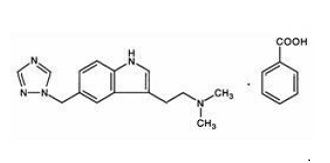
Rizatriptan benzoate is described chemically as: N,N-dimethyl-5-(1 H-1,2,4-triazol-1-ylmethyl)-1 H-indole-3-ethanamine monobenzoate and its structural formula is:

Structure (Structure)

Structure (Structure)

Its empirical formula is C 15H 19N 5•C 7H 6O 2, representing a molecular weight of the free base of 269.4. Rizatriptan benzoate is a white to off-white, crystalline solid that is soluble in water at about 42 mg per mL (expressed as free base) at 25°C.

RizaFilm oral film is available for oral administration in a 5 mg and 10 mg strength (equivalent to 7.265 mg and 14.53 mg rizatriptan benzoate respectively). Each oral film contains the following inactive ingredients: ammonium glycyrrhizate, butylated hydroxytoluene, copovidone, cupric chloride, ethylcellulose, FD&C Blue No. 1, hydroxypropyl cellulose, isopropyl alcohol, levomenthol, methyl ethyl ketone, sodium acetate, sucralose, titanium dioxide, and triacetin.

12.1 Mechanism Of Action

Rizatriptan binds with high affinity to human cloned 5-HT 1B/1D receptors. RizaFilm presumably exerts its therapeutic effects in the treatment of migraine headache by binding to 5-HT 1B/1D receptors located on intracranial blood vessels and sensory nerves of the trigeminal system.

12.2 Pharmacodynamics

Blood Pressure: Significant elevation in blood pressure, including hypertensive crisis, has been reported in patients treated with rizatriptan, with and without a history of hypertension [see Warnings and Precautions (5.9) ].

Drug Interactions

Drug Interactions

Monoamine Oxidase Inhibitors: In a drug interaction study, when rizatriptan benzoate 10 mg tablets were administered to subjects (n=12) receiving concomitant therapy with the selective, reversible MAO-A inhibitor, moclobemide 150 mg three times a day, there were mean increases in rizatriptan AUC and C max of 119% and 41%, respectively; and the AUC of the active N-monodesmethyl metabolite of rizatriptan was increased more than 400%. The interaction would be expected to be greater with irreversible MAO inhibitors [see Contraindications (4) and Drug Interactions (7.5)]. No pharmacokinetic interaction is anticipated in patients receiving selective MAO-B inhibitors.

Propranolol: In a study of concurrent administration of propranolol 240 mg/day and a single dose of rizatriptan 10 mg in healthy adult subjects (n=11), mean plasma AUC for rizatriptan was increased by 70%, and a four-fold increase was observed in one subject [see Contraindications (4) and Drug Interactions (7.1) ]. The AUC of the active N-monodesmethyl metabolite of rizatriptan was not affected by propranolol.

Nadolol/Metoprolol: In a drug interactions study, effects of multiple doses of nadolol 80 mg or metoprolol 100 mg every 12 hours on the pharmacokinetics of a single dose of 10 mg rizatriptan were evaluated in healthy subjects (n=12). No pharmacokinetic interactions were observed.

Paroxetine: In a study of the interaction between the selective serotonin reuptake inhibitor (SSRI) paroxetine 20 mg/day for two weeks and a single dose of rizatriptan benzoate tablet 10 mg in healthy subjects (n=12), neither the plasma concentrations of rizatriptan nor its safety profile were affected by paroxetine [see Warnings and Precautions (5.7) , Drug Interactions (7.4) , and Patient Counseling Information (17) ].

Oral Contraceptives: In a study of concurrent administration of an oral contraceptive during 6 days of administration of rizatriptan (10-30 mg/day) in healthy female volunteers (n=18), rizatriptan did not affect plasma concentrations of ethinyl estradiol or norethindrone.

13.1 Carcinogenesis, Mutagenesis, Impairment Of Fertility

14 Clinical Studies

The studies described below establishing effectiveness for the acute treatment of migraine with or without aura were conducted with rizatriptan benzoate tablets. The efficacy of RizaFilm is based on a relative bioavailability study comparing RizaFilm 10 mg oral film to rizatriptan benzoate 10 mg tablets [see Clinical Pharmacology (12.3) ].

14.1 Adults

The efficacy of rizatriptan benzoate tablets was established in four multicenter, randomized, placebo-controlled trials. Patients enrolled in these studies were primarily female (84%) and Caucasian (88%), with a mean age of 40 years (range of 18 to 71). Patients were instructed to treat a moderate to severe headache. Headache response, defined as a reduction of moderate or severe headache pain to no or mild headache pain, was assessed for up to 2 hours (Study 1) or up to 4 hours after dosing (Studies 2, 3, and 4). Associated symptoms of nausea, photophobia, and phonophobia and maintenance of response up to 24 hours post-dose were evaluated. A second dose of rizatriptan benzoate tablets was allowed 2 to 24 hours after dosing for treatment of recurrent headache in Studies 1 and 2. Additional analgesics and/or antiemetics were allowed 2 hours after initial treatment for rescue in all four studies.

In all studies, the percentage of patients achieving headache response 2 hours after treatment was significantly greater in patients who received rizatriptan 10 mg compared to those who received placebo. Doses greater than 10 mg were associated with an increased incidence of adverse effects. The results from the four controlled studies are summarized in Table 2.

Table 2: Response Rates 2 Hours Following Treatment of Initial Headaches in Studies 1, 2, 3, and 4
StudyPlaceboRizatriptan tablets 5mgRizatriptan tablets 10mg
135% (n=304)62%* (n=458)71% *,† (n=456)
2**37% (n=82)-77% * (n=320)
323% (n=80)63%* (n=352)-
440% (n=159)60%* (n=164)67%* (n=385)

*p-value <0.05 in comparison with placebo.

† p-value <0.05 in comparison with 5 mg

**Results for initial headache only.

Comparisons of drug performance based upon results obtained in different clinical trials may not be reliable. Because studies are conducted at different times, with different samples of patients, by different investigators, employing different criteria and/or different interpretations of the same criteria, under different conditions (dose, dosing regimen, etc.), quantitative estimates of treatment response and the timing of response may be expected to vary considerably from study to study.

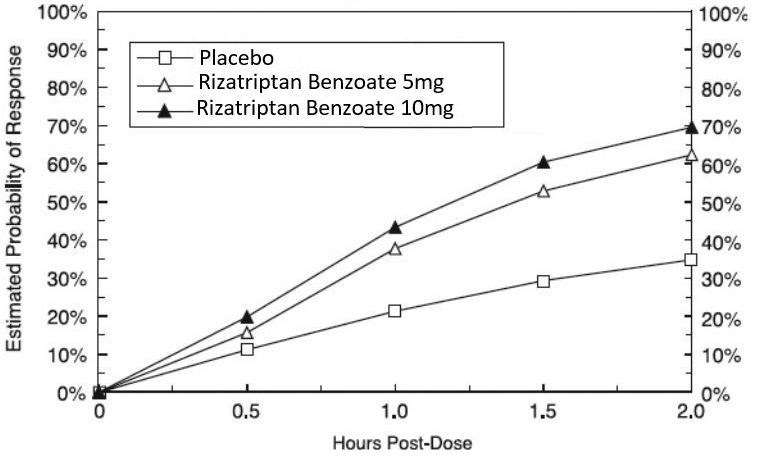
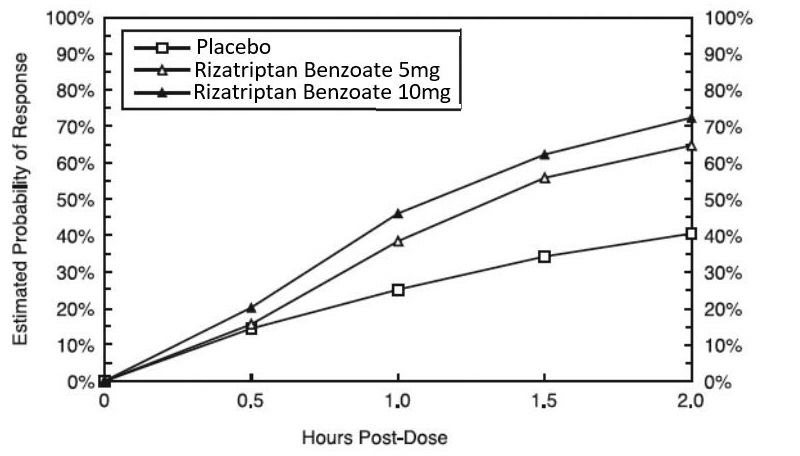
The estimated probability of achieving an initial headache response within 2 hours following treatment in pooled Studies 1, 2, 3, and 4 is depicted in Figure 1.

Figure 1: Estimated Probability of Achieving an Initial Headache Response by 2 Hours in Pooled Studies 1, 2, 3, and 4*

Figure1 (Fig1)

Figure1 (Fig1)

* Figure 1 shows the Kaplan-Meier plot of the probability over time of obtaining headache response (no or mild pain) following treatment with rizatriptan benzoate tablets or placebo. The averages displayed are based on pooled data from 4 placebo-controlled, outpatient trials providing evidence of efficacy (Studies 1, 2, 3, and 4). Patients taking additional treatment or not achieving headache response before 2 hours were censored at 2 hours.

For patients with migraine-associated photophobia, phonophobia, and nausea at baseline, there was a decreased incidence of these symptoms following administration of rizatriptan benzoate tablets compared to placebo.

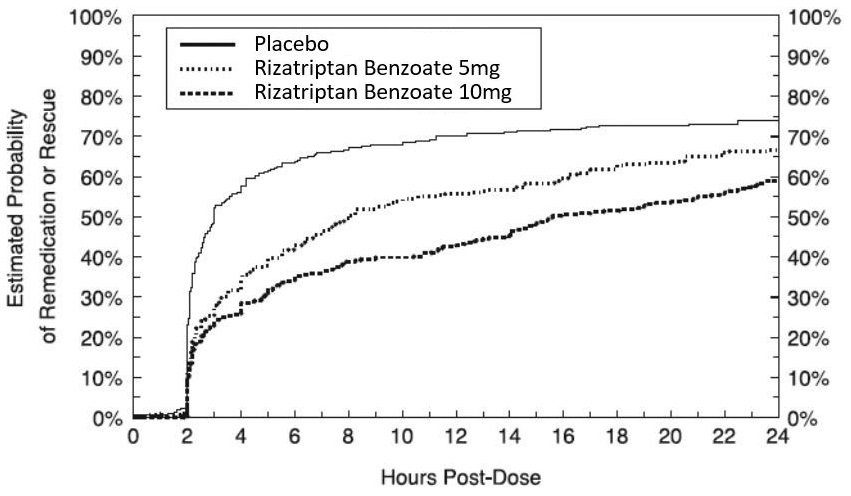
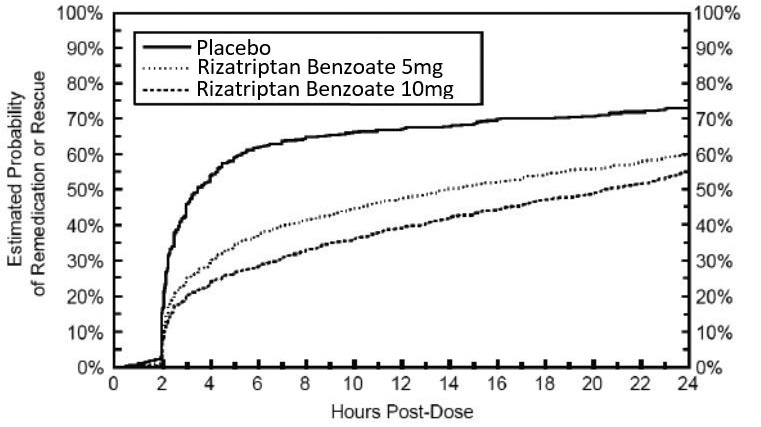
Two to 24 hours following the initial dose of study treatment, patients were allowed to use additional treatment for pain response in the form of a second dose of study treatment or other medication. The estimated probability of patients taking a second dose or other medication for migraine over the 24 hours following the initial dose of study treatment is summarized in Figure 2.

Figure 2: Estimated Probability of Patients Taking a Second Dose of Rizatriptan Benzoate Tablets or Other Medication for Migraines Over the 24 Hours Following the Initial Dose of Study Treatment in Pooled Studies 1, 2, 3, and 4*

Figure2 (Fig2)

Figure2 (Fig2)

* This Kaplan-Meier plot is based on data obtained in 4 placebo-controlled outpatient clinical trials (Studies 1, 2, 3, and 4). Patients not using additional treatments were censored at 24 hours. The plot includes both patients who had headache response at 2 hours and those who had no response to the initial dose. Remedication was not allowed within 2 hours post-dose.

Efficacy was unaffected by the presence of aura; by the gender, or age of the patient; or by concomitant use of common migraine prophylactic drugs (e.g., beta-blockers, calcium channel blockers, tricyclic antidepressants) or oral contraceptives. In two additional similar studies, efficacy was unaffected by relationship to menses. There were insufficient data to assess the impact of race on efficacy.

14.2 Pediatric Patients 6 To 17 Years Of Age

The efficacy of rizatriptan benzoate orally disintegrating tablets in pediatric patients 6 to 17 years of age was evaluated in a multicenter, randomized, double-blind, placebo-controlled, parallel-group clinical trial (Study 7). Patients had to have at least a 6-month history of migraine attacks (with or without aura) usually lasting 3 hours or more (when untreated). The patient population was historically non-responsive to NSAIDs and acetaminophen therapy.

Patients were instructed to treat a single migraine attack with headache pain of moderate to severe intensity. The treatment phase of the study had two stages. Stage 1 was used to identify placebo non-responders, who then entered into Stage 2, in which patients were randomized to rizatriptan benzoate orally disintegrating tablets or placebo. Using a weight-based dosing strategy, patients 20 kg to <40 kg (44 lb to <88 lb) received rizatriptan benzoate orally disintegrating tablets 5 mg or placebo, and patients ≥40 kg (88 lb) received rizatriptan benzoate orally disintegrating tablets 10 mg or placebo.

The mean age for the studied patient population was 13 years. Sixty-one percent of the patients were Caucasian, and fifty-six percent of the patients were female. The percentage of patients achieving the primary efficacy endpoint of no headache pain at 2 hours after treatment was significantly greater in patients who received rizatriptan benzoate orally disintegrating tablets, compared with those who received placebo (33% vs. 24%). Study 7 results are summarized in Table 4.

Table 4: Response Rates 2 Hours Following Treatment of Initial Headache in Pediatric Patients (including 12 to 17 Years of Age) in Study 7
EndpointPlaceboRizatriptan
orally disintegrating
tablets
p-Value
No headache pain at
2 hours post-dose
24%
(n/m = 94/388)
33%
(n/m = 126/382)
0.01
n = Numbr of evaluable patients with no headache pain at 2 hours post dose.m = Number of evaluable patients in population.

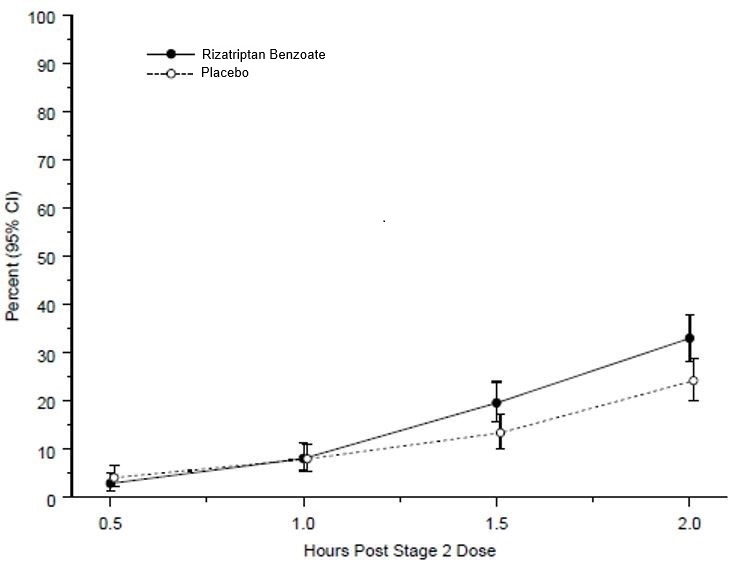
The observed percentage of pediatric patients achieving no headache pain within 2 hours following initial treatment with rizatriptan benzoate orally disintegrating tablets is shown in Figure 5.

Figure 5: Observed Percentage of Patients Reporting No Headache Pain by 2 Hours Post Dose in Study 7
Figure5 (Fig5)

Figure5 (Fig5)

The prevalence of the exploratory endpoints of absence of migraine-associated symptoms (nausea, photophobia, and phonophobia) at 2 hours after taking the dose was not statistically significantly different between patients who received rizatriptan benzoate orally disintegrating tablets and those who received placebo.

Patient Information

RizaFilm™ (ri’ zah film)

rizatriptan

oral film

What is RIZAFILM?

  • RizaFilm is a prescription medicine that belongs to a class of medicines called Triptans. RizaFilm is available as oral films.
  • RizaFilm is used to treat migraine attacks with or without aura in adults and in children 6 to 17 years of age.
  • RizaFilm is not to be used to prevent migraine attacks.
  • It is not known if RizaFilm is safe and effective for the treatment of cluster headaches.
  • It is not known if RizaFilm is safe and effective in children under 6 years of age.
  • Do not take RizaFilm if you:

    • have or have had heart problems.
    • have or have had a stroke or a transient ischemic attack (TIA).
    • have or have had blood vessel problems including ischemic bowel disease, or narrowing of blood vessels in your legs, arms, and stomach, or kidney (peripheral vascular disease)
    • have uncontrolled high blood pressure.
    • have taken other Triptan medicines in the last 24 hours.
    • have taken ergot-containing medicines in the last 24 hours.
    • have hemiplegic or basilar migraines.
    • take a monoamine oxidase (MAO) inhibitor or have taken a MAO inhibitor within the last 2 weeks.
    • take propranolol.
    • are allergic to rizatriptan or any of the ingredients in RizaFilm. See the end of this leaflet for a complete list of ingredients in RizaFilm.
    • Talk to your doctor before taking this medicine if you have any of the conditions listed above or if you are not sure if you take any of these medicines.

      Before you take RizaFilm, tell your doctor about all of your medical conditions, including if you:

      • have or have had heart problems, high blood pressure, chest pain, or shortness of breath.
      • have any risk factors for heart problems or blood vessel problems such as:
      • o high blood pressure.
        o high cholesterol.
        o smoking.
        o obesity.
        o diabetes.
        o family history of heart problems.
        o you are post-menopausal.

        • have kidney or liver problems.
        • are pregnant or plan to become pregnant. It is not known if RizaFilm will harm your unborn baby. If you become pregnant while taking RizaFilm, talk to your healthcare provider.
        • are breastfeeding or plan to breastfeed. It is not known if RizaFilm passes into your breast milk. Talk to your healthcare provider about the best way to feed your baby if you take RizaFilm.
        • Tell your doctor about all the medicines you take, including prescription and over-the-counter medicines, vitamins, and herbal supplements.

          RizaFilm and other medicines may affect each other causing side effects. RizaFilm may affect the way other medicines work, and other medicines may affect how RizaFilm works.

          Especially tell your doctor if you take:

          • propranolol containing medicines such as Inderal, Inderal LA, or Innopran XL
          • medicines used to treat mood disorders, including selective serotonin reuptake inhibitors (SSRIs) or serotonin norepinephrine reuptake inhibitors (SNRIs).
          • Ask your doctor or pharmacist for a list of these medicines, if you are not sure.

            Know the medicines you take. Keep a list of them to show your doctor and pharmacist when you get a new medicine.

            How should I take RizaFilm?

            • Take RizaFilm exactly as your doctor tells you to take it.
            • Your doctor will tell you how much RizaFilm to take and when to take it.
            • To take RizaFilm:
              o Leave RizaFilm oral film in the aluminum pouch it comes in until you are ready to take it.
              o When you are ready to take it:
              o Remove the oral film from the aluminum pouch by folding the pouch on the dotted line and tearing it open at the tear notch.
              o Place the oral film on the tongue.
              o The oral film will disintegrate in about 2 minutes and can be swallowed with saliva. No liquid is required to take the oral film.
            • If your headache comes back after your first RizaFilm dose:
              o For adults: a second dose may be taken at least 2 hours after the first dose. Do not take more than 30 mg of RizaFilm in a 24-hour period (for example, do not take more than 3 10-mg oral films in a 24-hour period).
              o For children 6 to 17 years of age: It is not known if taking more than 1 dose of RizaFilm in 24 hours is safe and effective. Talk to your doctor about what to do if your headache does not go away or comes back.
            • If you take too much RizaFilm, call your doctor or go to the nearest hospital emergency room right away.
            • What should I avoid while taking RizaFilm?

              RizaFilm may cause dizziness, weakness, or fainting. If you have these symptoms, do not drive a car, use machinery, or do anything that needs you to be alert.

              What are the possible side effects of RizaFilm?

              RizaFilm may cause serious side effects. Call your doctor or go to the nearest hospital emergency room right away if you think you are having any of the serious side effects of RizaFilm including:

              • heart attack and other heart problems. Symptoms of a heart attack may include:
                o chest discomfort in the center of your chest that lasts for more than a few minutes or that goes away and comes back
                o chest discomfort that feels like uncomfortable pressure, squeezing, fullness or pain
                o pain or discomfort in your arms, back, neck, jaw or stomach
                o shortness of breath with or without chest discomfort
                o breaking out in a cold sweat
                o nausea or vomiting
                o feeling lightheaded
                • stroke. Symptoms of a stroke may include the following sudden symptoms:
                  o numbness or weakness in your face, arm or leg, especially on one side of your body
                  o confusion, problems speaking or understanding
                  o problems seeing in 1 or both of your eyes
                  o problems walking, dizziness, loss of balance or coordination
                  o severe headache with no known cause
                  • blood vessel problems. Symptoms of blood vessel problems may include:
                    o stomach pain
                    o bloody diarrhea
                    o vision problems
                    o coldness and numbness of hands and feet
                    • allergic reactions. Allergic reactions that can lead to death have happened in people who take rizatriptan, an ingredient in RizaFilm. Symptoms of an allergic reaction may include:
                      o swelling of your face, eyes, lips, mouth, or tongue
                      o trouble breathing
                      o hives (itchy bumps)
                      • medication overuse headache. Some people who use too much migraine medicine, such as RizaFilm, for 10 or more days each month may have worse headaches (medication overuse headache). If your headaches get worse, your healthcare provider may decide to stop your treatment with RizaFilm.
                        • serotonin syndrome. A condition called serotonin syndrome can happen when Triptan medicines such as RizaFilm are taken with certain other medicines. Symptoms of serotonin syndrome may include:
                          o agitation
                          o hallucinations
                          o coma
                          o fast heartbeat
                          o fast changes in your blood pressure
                          o increased body temperature
                          o muscle spasm
                          o loss of coordination
                          o nausea, vomiting or diarrhea
                          • increased blood pressure
                          • The most common side effects of RizaFilm in adults include:

                            • having a lack of energy
                            • feeling sleepy or tired
                            • pain or pressure in your chest or throat
                            • dizziness
                            • nausea
                            • Adverse reactions in children are expected to be similar to those in adults.

                              Tell your doctor if you have any side effect that bothers you or that does not go away.

                              If you take RizaFilm too often, this may result in you getting chronic (lasting a long time) headaches. In such cases, you should contact your doctor, as you may have to stop taking RizaFilm.

                              These are not all the possible side effects of RizaFilm. For more information, ask your doctor or pharmacist.

                              Call your doctor for medical advice about side effects. You may report side effects to Gensco Pharma at 1-866-608-6284 or FDA at 1-800-FDA-1088.

                              How should I store RizaFilm?

                              • Store RizaFilm at room temperature between 68°F to 77°F (20°C to 25°C).
                              • Keep RizaFilm in its aluminum pouch until you are ready to take it.
                              • Keep RizaFilm and all medicines out of the reach of children.

                                General information about the safe and effective use of RizaFilm.

                                Medicines are sometimes prescribed for purposes other than those listed in a Patient Information leaflet. Do not use RizaFilm for a condition for which it was not prescribed. Do not give RizaFilm to other people, even if they have the same symptoms that you have. It may harm them.

                                You can ask your pharmacist or doctor for information about RizaFilm that is written for health professionals.

                                What are the ingredients in RizaFilm

                                Active ingredient in RizaFilm: rizatriptan.

                                Inactive ingredients in RizaFilm: ammonium glycyrrhizate, butylated hydroxytoluene, copovidone, cupric chloride, ethylcellulose, FD&C Blue No. 1, hydroxypropyl cellulose, isopropyl alcohol, levomenthol, methyl ethyl ketone, sodium acetate, sucralose, titanium dioxide, and triacetin.

* Please review the disclaimer below.