Weeks 0 to 16 (ECZTRA 1, ECZTRA 2, and ECZTRA 3):
Table 1 summarizes the adverse reactions identified in the pool of 3 trials (ECZTRA 1, ECZTRA 2, and ECZTRA 3) and that occurred at a rate of at least 1% in the ADBRY 300 mg every other week monotherapy group, and in the ADBRY 300 mg every other week + TCS study, all at a higher rate than placebo during the first 16 weeks of treatment.
Table 1: Adverse Reactions Occurring in ≥1% of the ADBRY Monotherapy Group or the ADBRY + TCS Group in the Atopic Dermatitis Trials through Week 16| Adverse Reaction | ADBRY Monotherapy Pooled analysis of ECZTRA 1 and ECZTRA 2. | ADBRY + TCS Analysis of ECZTRA 3 where subjects were on background TCS therapy. |
|---|
| ADBRY 300 mg Q2W ADBRY 600 mg at Week 0, followed by 300 mg every other week.
N=1180
n (%) | PLACEBO
N=388
n (%) | ADBRY 300 mg Q2W + TCS
N=243
n (%) | PLACEBO + TCS
N=123
n (%) |
|---|
| Upper respiratory tract infections Upper respiratory tract infections cluster includes upper respiratory tract infection, viral upper respiratory tract infection, pharyngitis, and nasopharyngitis; mainly reported as common cold. | 281(23.8) | 79 (20.4) | 73 (30.0) | 19 (15.4) |
| Conjunctivitis Conjunctivitis cluster includes conjunctivitis and allergic conjunctivitis. | 88 (7.5) | 12 (3.1) | 33 (13.6) | 6 (4.9) |
| Injection site reactions Injection site reactions cluster includes pain, erythema, and swelling. | 87 (7.4) | 16 (4.1) | 27 (11.1) | 1 (0.8) |
| Eosinophilia Eosinophilia cluster includes eosinophilia and eosinophil count increased. | 17 (1.4) | 2 (0.5) | 3 (1.2) | 0 |
In the monotherapy trials (ECZTRA 1 and ECZTRA 2) through Week 16, the proportion of subjects who discontinued treatment due to adverse reactions was 0.7% in the ADBRY 300 mg every other week group and 0% of the placebo group. In the concomitant TCS trial (ECZTRA 3) through Week 16, the proportion of subjects who discontinued treatment due to adverse reactions was 0.8% in the ADBRY 300 mg every other week +TCS group and 0% of the placebo + TCS group. The most common adverse reactions leading to discontinuation in the ADBRY group compared to the placebo group were injection site reaction (0.3% v. 0) and eosinophilia (0.3% v. 0) in ECZTRA 1 and ECZTRA 2; and injection site reaction (0.4% v. 0) and conjunctivitis (0.4% v. 0) in ECZTRA 3.
Safety Weeks 16-52 (ECZTRA 1 and ECZTRA 2) and Weeks 16-32 (ECZTRA 3):
The safety profile of ADBRY 300 mg every other week with or without TCS during maintenance treatment was consistent with that in the initial 16-week treatment period. In addition, the frequency of adverse reactions with ADBRY 300 mg every other week and every 4 weeks in ECZTRA 1 and ECZTRA 2 was 44% and 34%, respectively, and 43% and 26% with ADBRY 300 mg + TCS every other week and every 4 weeks in ECZTRA 3, respectively.
Specific Adverse Reactions
Conjunctivitis and Keratitis
Conjunctivitis, including allergic conjunctivitis, was reported in 7.5% of subjects treated with ADBRY 300 mg every other week (29 events per 100 subject-years of exposure) and in 3.1% of subjects treated with placebo (12 events per 100 subject-years of exposure) in the initial treatment period of up to 16 weeks in the pool of 5 trials. In the ADBRY group, 126 subjects reported 145 events of conjunctivitis, with 114 events resolved at the end of initial treatment period. Conjunctivitis led to discontinuation of treatment in 2 subjects.
During the maintenance treatment period of the monotherapy trials (ECZTRA 1 and ECZTRA 2) from 16 to 52 weeks, conjunctivitis was reported in 8.9% of subjects treated with ADBRY 300 mg every other week (20 events per 100 subject-years of exposure) and in 6.3% of subjects treated with ADBRY 300 mg every 4 weeks (14 events per 100 subject-years of exposure) compared to 7.7% of subjects treated with ADBRY 300 mg every other week in the initial treatment period (30 events per 100 subject-years of exposure). Conjunctivitis (including no serious events, 1 severe event, and 1 event that led to discontinuation) was reported in 24 subjects in the combined (every other week and every 4 weeks) ADBRY groups. A similar pattern was seen during the continuation treatment period of an additional 16 weeks in the ADBRY combination ECZTRA 3.
Keratitis (including keratoconjunctivitis) was reported in 0.5% of subjects treated with ADBRY and 0% treated with placebo during the initial treatment period of up to 16 weeks in the pool of 5 trials. Keratitis (including 1 ulcerative keratitis) was reported in 0.2% of subjects treated with ADBRY (0.9 events per 100 subject-years of exposure) and 0.2% of subjects treated with placebo (0.6 events per 100 subject-years of exposure). Keratoconjunctivitis (including 1 atopic keratoconjunctivitis) was reported in 0.3% of subjects treated with ADBRY (1.2 events per 100 subject-years of exposure), and in no subjects treated with placebo. In the ADBRY group, 9 subjects reported 10 events of keratitis or keratoconjunctivitis, with 5 events resolved during the trial following the initial treatment period. None of the events were serious or led to treatment discontinuation.
During the maintenance treatment period of the monotherapy trials (ECZTRA 1 and ECZTRA 2) from 16 to 52 weeks in the ADBRY 300 mg every other week group, keratitis was reported in 1 (0.6%) subject (ulcerative, severe, resolved after discontinuation) at an exposure-adjusted event rate of 1.2 per 100 subject-years, and keratoconjunctivitis (not serious or severe, resolved, not led to discontinuation) was reported in 3 (1.9%) subjects (3.6 events per 100 subject-years of exposure). No events of keratitis or keratoconjunctivitis was reported in ADBRY every 4 weeks or placebo groups, compared to keratitis event rate of 2 per 100 subject-years for ADBRY 300 mg every other week in the initial treatment period.
In the continuation treatment period of ECZTRA 3 (from 16 to 32 weeks), there were no additional events of keratitis reported for subjects randomized to ADBRY 300 mg + TCS.
Eosinophil Counts
ADBRY-treated subjects had a greater mean initial increase from baseline in eosinophil count compared to subjects treated with placebo. The mean and median increases in blood eosinophils from baseline to Week 4 were 190 and 100 cells/mcL, respectively. The increase in the ADBRY-treated subjects declined to baseline level with continued treatment. Eosinophilia (> 5000 cells/mcL) in the initial treatment period of up to 16 weeks was reported in 1.2% in the ADBRY-treated subjects and 0.3% in the placebo-treated subjects. The safety profile for subjects with eosinophilia was comparable to the safety profile for all subjects included in the pool of 5 atopic dermatitis trials.
Risk Summary
There are limited data from the use of ADBRY in pregnant women to inform a drug-associated risk of adverse developmental outcomes. Human IgG antibodies are known to cross the placental barrier; therefore, ADBRY may be transmitted from the mother to the developing fetus.
In an enhanced pre-and post-natal developmental study, no adverse developmental effects were observed in offspring born to pregnant monkeys after intravenous administration of tralokinumab-ldrm during organogenesis through parturition at doses up to 10 times the maximum recommended human dose (MRHD).
The background risk of major birth defects and miscarriage for the indicated population is unknown. All pregnancies have a background risk of birth defect, loss or other adverse outcomes. In the U.S. general population, the estimated background risk of major birth defects and miscarriage in clinically recognized pregnancies is 2% to 4% and 15% to 20%, respectively.
Data
Animal Data
In a pre- and post-natal development study, intravenous doses up to 100 mg/kg tralokinumab-ldrm were administered to pregnant cynomolgus monkeys once every week from gestation day 20 to parturition. No maternal or developmental toxicity was observed at doses up to 100 mg/kg/week (10 times the MRHD on a mg/kg basis of 10 mg/kg/week).
In an enhanced pre- and post-natal development study, intravenous doses up to 100 mg/kg tralokinumab-ldrm (10 times the MRHD on a mg/kg basis of 10 mg/kg/week) were administered to pregnant cynomolgus monkeys once every week from the beginning of organogenesis to parturition. No treatment-related adverse effects on embryofetal toxicity or malformations, or on morphological, functional, or immunological development were observed in the infants from birth through 6 months of age.
Risk Summary
There are no data on the presence of tralokinumab-ldrm in human milk, the effects on the breastfed infant, or the effects on milk production. Maternal IgG is present in breast milk. The effects of local gastrointestinal exposure and limited systemic exposure to ADBRY on the breastfed infant are unknown. The development and health benefits of breastfeeding should be considered along with the mother's clinical need for ADBRY and any potential adverse effects on the breastfed child from ADBRY or from the underlying maternal condition.
Immune Response to Non-live Vaccines during Treatment
Immune responses to non-live vaccines were assessed in a trial in which adult subjects with atopic dermatitis were treated with an initial dose of 600 mg (four 150 mg injections) followed by 300 mg every other week administered as subcutaneous injection. After 12 weeks of ADBRY administration, subjects were vaccinated with a combined tetanus, diphtheria, and acellular pertussis vaccine, and a meningococcal vaccine. Antibody responses were assessed 4 weeks later. Antibody response to tetanus, diphtheria, acellular pertussis, and a meningococcal vaccine was similar in tralokinumab-ldrm treated and placebo treated subjects. Immune responses to other vaccines were not assessed.
Absorption
The absolute bioavailability of tralokinumab-ldrm was estimated to be 76%. The time to maximum tralokinumab-ldrm concentrations (tmax) was 5 to 8 days after administration.
Distribution
The volume of distribution of tralokinumab-ldrm was estimated to be approximately 4.2 L.
Elimination
The half-life of tralokinumab-ldrm was 3 weeks and systemic clearance was estimated to be 0.149 L/day.
Metabolism
Tralokinumab-ldrm is expected to be metabolized into small peptides by catabolic pathways.
Specific Populations
No clinically significant differences in the pharmacokinetics of tralokinumab-ldrm were observed based on age (ranged from 18 – 92 years), sex, mild to moderate renal impairment, or mild hepatic impairment. The effect of severe renal impairment or moderate to severe hepatic impairment on the pharmacokinetics of tralokinumab-ldrm is unknown.
Body Weight
The exposure of tralokinumab-ldrm decreases with increasing body weight. After 300 mg dose every 4 weeks, the median tralokinumab-ldrm exposure (AUC) of subjects with body weight of above 100 kg is expected to be 1.46-fold lower than that of subjects weighing below 100 kg [see Dosage and Administration (2.2)].
Drug Interaction Studies
Drug interactions with ADBRY has not been assessed.
Clinical Response at Week 16 (ECZTRA 1, ECZTRA 2, and ECZTRA 3)
The results of the ADBRY monotherapy trials (ECZTRA 1 and ECZTRA 2) and the ADBRY with TCS trial (ECZTRA 3) are presented in Table 2.
Table 2: Efficacy Results of ADBRY With or Without TCS at Week 16 (ECZTRA 1, ECZTRA 2, and ECZTRA 3) in Subjects with Moderate-to-Severe AD | ECZTRA 1 | ECZTRA 2 | ECZTRA 3 |
|---|
| ADBRY
300 mg every other week | Placebo | ADBRY
300 mg every other week | Placebo | ADBRY
300 mg every other week + TCS | Placebo + TCS |
|---|
| Abbreviations: AD = Atopic Dermatitis CI = Confidence Interval. |
| Note: Difference and 95% CI are based on the CMH test stratified by region and baseline IGA score. |
| Number of subjects randomized and dosed (FAS) Full Analysis Set (FAS) includes all subjects randomized and dosed. | 601 | 197 | 577 | 193 | 243 | 123 |
| IGA 0 or 1 Responders was defined as a subject with an IGA 0 or 1 ("clear" or "almost clear"). ,Subjects who received rescue treatment or with missing data were considered as non-responders. | 16% | 7% | 21% | 9% | 38% | 27% |
| Difference from Placebo (95% CI) | 9%
(4%, 13%) | 12%
(7%, 17%) | 11%
(1%, 21%) |
| EASI-75 | 25% | 13% | 33% | 10% | 56% | 37% |
| Difference from Placebo (95% CI) | 12%
(6%, 18%) | 22%
(17%, 28%) | 20%
(9%, 30%) |
| Number of subjects with baseline Worst Daily Pruritus NRS (weekly average) score ≥4 | 594 | 194 | 563 | 192 | 240 | 123 |
| Worst Daily Pruritus NRS (≥4 point reduction) | 20% | 10% | 25% | 9% | 46% | 35% |
| Difference from Placebo (95% CI) | 10%
(4%, 15%) | 16%
(11%, 21%) | 11%
(1%, 22%) |
A higher proportion of subjects in the ADBRY 300 mg every other week arm achieved EASI-90 compared to placebo in the three pivotal trials.
Examination of age, gender, race, body weight, and previous treatment, including immunosuppressants, did not identify differences in response to ADBRY 300 mg every other week among these subgroups.
Monotherapy Trials (ECZTRA 1 and ECZTRA 2) – Maintenance Period (Week 16-52)
In ECZTRA 1, 179 ADBRY 300 mg every other week responders (IGA 0/1 or EASI-75) were re-randomized (and dosed) at Week 16 to ADBRY 300 mg every other week (68 subjects), ADBRY 300 mg every 4 weeks (76 subjects) or placebo (35 subjects). Among these subjects, 39 subjects in ADBRY 300 mg every other week arm, 36 subjects in ADBRY 300 mg every 4 weeks arm and 19 subjects in placebo arm were IGA 0/1 responders at Week 16. Maintenance of IGA 0/1 response at Week 52 was as follows: 20 subjects (51%) in the every other week arm, 14 subjects (39%) in the every 4 weeks arm and 9 subjects (47%) in the placebo arm. Among the re-randomized subjects, 47 subjects in ADBRY 300 mg every other week arm, 57 subjects in ADBRY 300 mg every 4 weeks arm and 30 subjects in placebo arm were EASI-75 responders at Week 16. Maintenance of EASI-75 response at Week 52 was as follows: 28 subjects (60%) in the every other week arm, 28 subjects (49%) in the every 4 weeks arm and 10 subjects (33%) in the placebo arm.
In ECZTRA 2, 218 ADBRY 300 mg every other week responders (IGA 0/1 or EASI-75) were re-randomized (and dosed) at Week 16 to ADBRY 300 mg every other week (90 subjects), ADBRY 300 mg every 4 weeks (84 subjects) or placebo (44 subjects). Among these subjects, 53 subjects in ADBRY 300 mg every other week arm, 44 subjects in ADBRY 300 mg every 4 weeks arm and 26 subjects in placebo arm were IGA 0/1 responders at Week 16. Maintenance of IGA 0/1 response at Week 52 was as follows: 32 subjects (60%) in the every other week arm, 22 subjects (50%) in the every 4 weeks arm and 6 subjects (23%) in the placebo arm. Among the re-randomized subjects, 76 subjects in ADBRY 300 mg every other week arm, 69 subjects in ADBRY 300 mg every 4 weeks arm and 40 subjects in placebo arm were EASI-75 responders at Week 16. Maintenance of EASI-75 response at Week 52 was as follows: 43 subjects (57%) in the every other week arm, 38 subjects (55%) in the every 4 weeks arm and 8 subjects (20%) in the placebo arm.
Concomitant TCS Trial (ECZTRA 3) – Maintenance Period (Week 16-32)
In ECZTRA 3, 131 ADBRY 300 mg every other week + TCS responders (IGA 0/1 or EASI-75) were re-randomized (and dosed) at Week 16 to ADBRY 300 mg every other week + TCS (65 subjects) or ADBRY 300 mg every 4 weeks + TCS (66 subjects). Among these subjects, 45 subjects in ADBRY 300 mg every other week + TCS arm and 46 subjects in ADBRY 300 mg every 4 weeks + TCS arm were IGA 0/1 responders at Week 16. Maintenance of IGA 0/1 response at Week 32 was as follows: 40 subjects (89%) in the every other week arm and 35 subjects (76%) every 4 weeks arm. Among the re-randomized subjects, 65 subjects in ADBRY 300 mg every other week arm and 62 subjects in ADBRY 300 mg every 4 weeks arm were EASI-75 responders at Week 16. Maintenance of EASI-75 response at Week 32 was as follows: 60 subjects (92%) in the every other week arm and 56 subjects (90%) in the every 4 weeks arm.
How Supplied
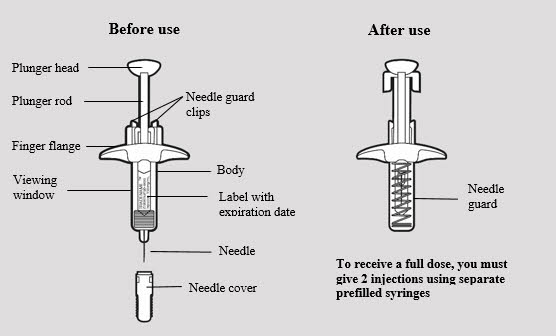
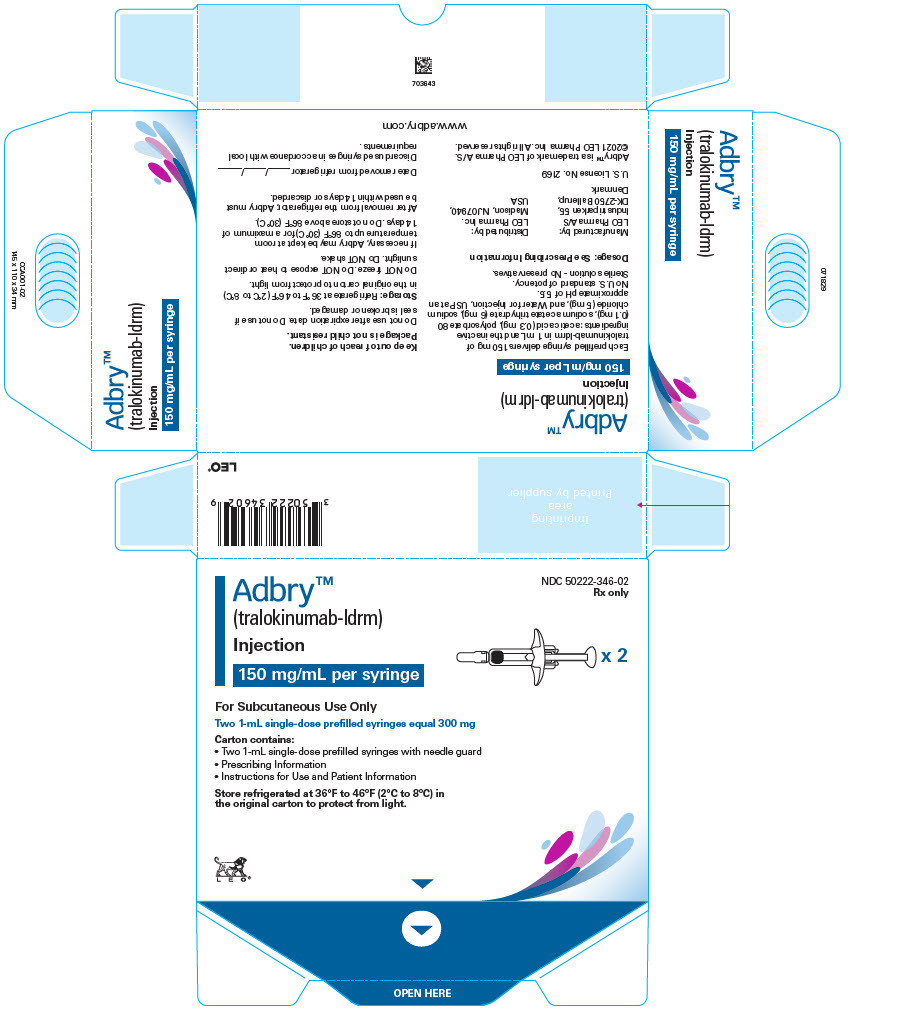
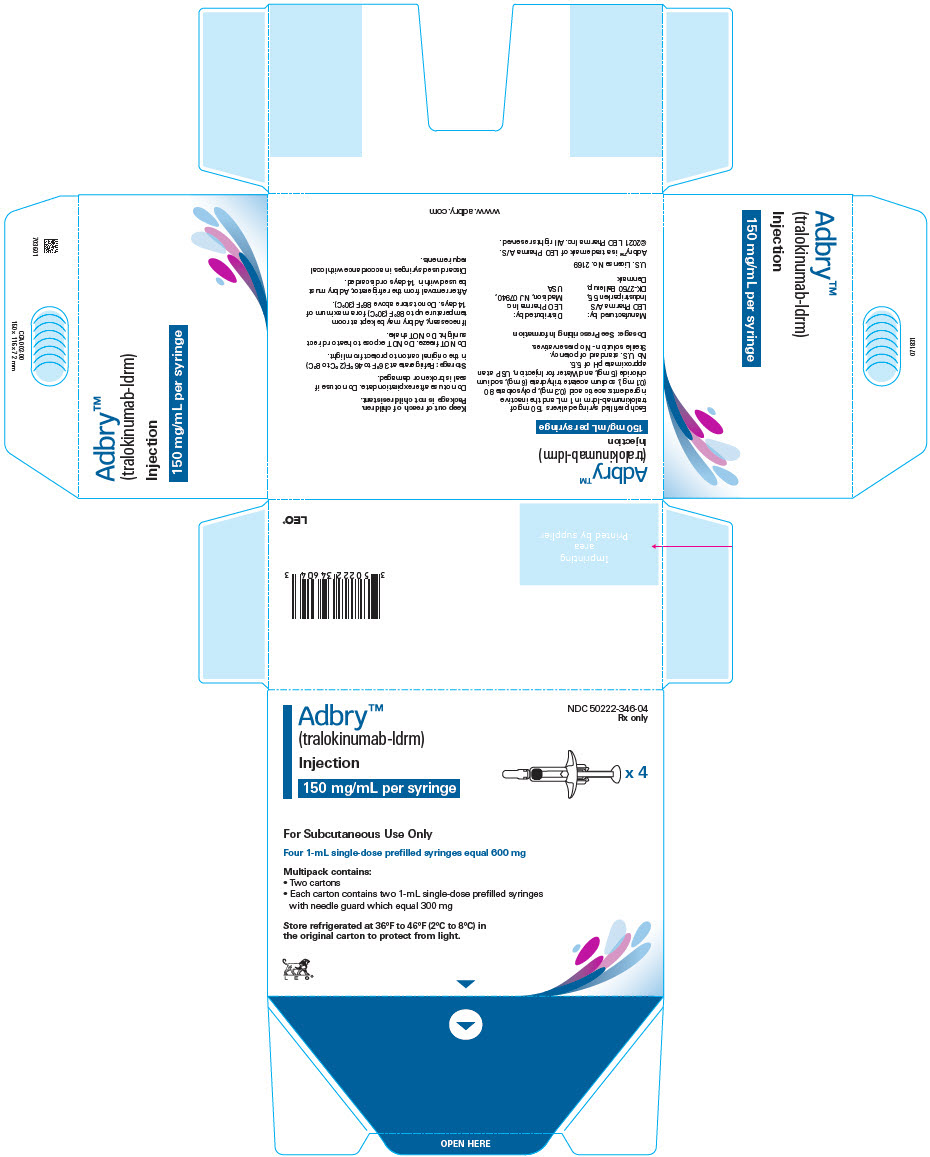
ADBRY (tralokinumab-ldrm) injection is a sterile, clear to opalescent, colorless to pale yellow solution, supplied in single-dose prefilled syringe with a 27-gauge, ½ inch needle and a needle guard.
Each prefilled syringe delivers 150 mg/mL of ADBRY.
ADBRY is available in pack sizes containing 2 or 4 prefilled syringes with needle guard.
| Pack Size | NDC # |
|---|
| Two cartons (multipack) containing 4 prefilled syringes | NDC 50222-346-04 |
| One carton containing 2 prefilled syringes | NDC 50222-346-02 |
Administration Instructions
Instruct patients or caregivers:
- to perform the first self-injection under the supervision and guidance of a qualified healthcare provider for proper training in subcutaneous injection technique.
- to inject the full dose of ADBRY.
- to follow sharps disposal recommendations [see Instructions for Use].
Hypersensitivity
Advise patients to discontinue ADBRY and to seek immediate medical attention if they experience any symptoms of systemic hypersensitivity reactions [see Warnings and Precautions (5.1)].
Conjunctivitis and Keratitis
Advise patients to consult their healthcare provider if new onset or worsening eye symptoms develop [see Adverse Reactions (6.1)].
Risk of Infection with Live Vaccines
Advise patients that ADBRY may increase the risk of infection following administration of live vaccines and that vaccination with live vaccines is not recommended during ADBRY treatment. Instruct patients to inform the healthcare provider that they are taking ADBRY prior to a potential vaccination [see Warnings and Precautions (5.4)].
Manufactured by:
LEO Pharma A/S
Industriparken 55
Ballerup, Denmark DK-2750
U.S. License No. 2169
Distributed by:
LEO Pharma Inc.
Madison, NJ 07940, USA
ADBRY™ is a trademark of LEO Pharma A/S.
© 2021 LEO Pharma Inc. All rights reserved.