Other
Gastrointestinal Perforations: The incidence of gastrointestinal perforation, some fatal, in patients receiving Avastin ranges from 0.3% to 3%. Discontinue Avastin in patients who develop gastrointestinal perforation [see Warnings and Precautions (5.1)].
Surgery and Wound Healing Complications: The incidence of wound healing and surgical complications, including serious and fatal complications, is increased in patients receiving Avastin. Discontinue Avastin in patients who develop wound healing complications that require medical intervention. Withhold Avastin at least 28 days prior to elective surgery. Do not administer Avastin for at least 28 days after surgery, and until the wound is fully healed [see Warnings and Precautions (5.2)].
Hemorrhages: Severe or fatal hemorrhage, including hemoptysis, gastrointestinal bleeding, hematemesis, CNS hemorrhage, epistaxis, and vaginal bleeding occur up to 5-fold more frequently in patients receiving Avastin. Do not administer Avastin to patients with a recent history of hemoptysis. Discontinue in patients who develop Grade 3-4 hemorrhage [see Warnings and Precautions (5.3)].
Limitation of Use: Avastin is not indicated for adjuvant treatment of colon cancer [see Clinical Studies (14.2)].
Platinum Resistant
The recommended dose is 10 mg/kg intravenously every 2 weeks in combination with paclitaxel, pegylated liposomal doxorubicin, or topotecan (every week).
The recommended dose is 15 mg/kg intravenously every 3 weeks in combination with topotecan (every 3 weeks).
Platinum Sensitive
The recommended dose is 15 mg/kg intravenously every 3 weeks, in combination with carboplatin and paclitaxel for 6 to 8 cycles, followed by Avastin 15 mg/kg every 3 weeks as a single agent until disease progression.
The recommended dose is 15 mg/kg intravenously every 3 weeks, in combination with carboplatin and gemcitabine for 6 to 10 cycles, followed by Avastin 15 mg/kg every 3 weeks as a single agent until disease progression.
Administration
- Administer as an intravenous infusion.
- First infusion: Administer infusion over 90 minutes.
- Subsequent infusions: Administer second infusion over 60 minutes if first infusion is tolerated. Administer all subsequent infusions over 30 minutes if second infusion over 60 minutes is tolerated.
- Use appropriate aseptic technique.
- Parenteral drug products should be inspected visually for particulate matter and discoloration prior to administration.
- Withdraw necessary amount of Avastin and dilute in a total volume of 100 mL of 0.9% Sodium Chloride Injection, USP. DO NOT ADMINISTER OR MIX WITH DEXTROSE SOLUTION.
- Discard any unused portion left in a vial, as the product contains no preservatives.
- Store diluted Avastin solution at 2–8°C (36–46°F) for up to 8 hours.
- No incompatibilities between Avastin and polyvinylchloride or polyolefin bags have been observed.
- Day 1: Paclitaxel 135 mg/m2 over 24 hours, Day 2: cisplatin 50 mg/m2 with Avastin;
- Day 1: Paclitaxel 175 mg/m2 over 3 hours, Day 2: cisplatin 50 mg/m2 with Avastin;
- Day 1: Paclitaxel 175 mg/m2 over 3 hours with cisplatin 50 mg/m2 with Avastin;
- Day 1: Paclitaxel 175 mg/m2 over 3 hours with Avastin, Days 1-3: topotecan IV 0.75 mg/m2 over 30 minutes
Preparation
Platinum-Resistant Recurrent Epithelia Ovarian, Fallopian Tube, or Primary Peritoneal Cancer
The safety of Avastin was evaluated in 179 patients who received at least one dose of Avastin in a multicenter, open-label study (MO22224) in which patients were randomized (1:1) to Avastin with chemotherapy or chemotherapy alone in patients with platinum resistant, recurrent epithelial ovarian, fallopian tube, or primary peritoneal cancer that recurred within < 6 months from the most recent platinum based therapy. Patients were randomized to receive Avastin (10 mg/kg every 2 weeks or 15 mg/kg every 3 weeks). Patients had received no more than 2 prior chemotherapy regimens. The trial excluded patients with evidence of recto-sigmoid involvement by pelvic examination or bowel involvement on CT scan or clinical symptoms of bowel obstruction. Patients were treated until disease progression or unacceptable toxicity. Forty percent of patients on the chemotherapy alone arm received Avastin alone upon progression. The demographics of the safety population were similar to the demographics of the efficacy population. Adverse reactions are presented in Table 2.
| Adverse Reaction NCI-CTC version 3 | Avastin with Chemotherapy (N=179) | Chemotherapy (N=181) |
|---|---|---|
| Blood and lymphatic system disorders | ||
| Neutropenia | 31% | 25% |
| General disorders | ||
| Mucosal inflammation | 13% | 6% |
| Infections | ||
| Infection | 11% | 4% |
| Nervous system disorders | ||
| Peripheral sensory neuropathy | 18% | 7% |
| Renal and urinary disorders | ||
| Proteinuria | 12% | 0.6% |
| Respiratory, thoracic and mediastinal disorders | ||
| Epistaxis | 5% | 0% |
| Skin and subcutaneous tissue disorders | ||
| Palmar-plantar erythrodysaesthesia | 11% | 5% |
| Vascular disorders | ||
| Hypertension | 19% | 6% |
Grade 3-4 adverse reactions occurring at a higher incidence ( ≥ 2%) in 179 patients receiving Avastin with chemotherapy compared to 181 patients receiving chemotherapy alone were hypertension (6.7% vs. 1.1%) and palmar-plantar erythrodysaesthesia syndrome (4.5% vs. 1.7%).
Platinum-Sensitive Recurrent Epithelial Ovarian, Fallopian Tube, or Primary Peritoneal Cancer
The safety of Avastin was evaluated in 247 patients who received at least one dose of Avastin in a double-blind study (AVF4095g) in patients with platinum sensitive recurrent epithelial ovarian, fallopian tube or primary peritoneal cancer. Patients were randomized (1:1) to receive Avastin (15 mg/kg) or placebo every 3 weeks with carboplatin and gemcitabine for 6 to 10 cycles followed by Avastin or placebo alone until disease progression or unacceptable toxicity. The demographics of the safety population were similar to the demographics of the efficacy population. Adverse reactions are presented in Table 3.
| Adverse Reaction NCI-CTC version 3 | Avastin with Carboplatin and Gemcitabine (N=247) | Placebo with Carboplatin and Gemcitabine (N=233) |
|---|---|---|
| Blood and lymphatic system disorders | ||
| Thrombocytopenia | 58% | 51% |
| Gastrointestinal disorders | ||
| Nausea | 72% | 66% |
| Diarrhea | 38% | 29% |
| Stomatitis | 15% | 7% |
| Hemorrhoids | 8% | 3% |
| Gingival bleeding | 7% | 0% |
| General disorders | ||
| Fatigue | 82% | 75% |
| Mucosal inflammation | 15% | 10% |
| Infections | ||
| Sinusitis | 15% | 9% |
| Injury and procedural complications | ||
| Contusion | 17% | 9% |
| Musculoskeletal and connective tissue disorders | ||
| Arthralgia | 28% | 19% |
| Back pain | 21% | 13% |
| Nervous system disorders | ||
| Headache | 49% | 30% |
| Dizziness | 23% | 17% |
| Psychiatric disorders | ||
| Insomnia | 21% | 15% |
| Renal and urinary disorders | ||
| Proteinuria | 20% | 3% |
| Respiratory, thoracic and mediastinal disorders | ||
| Epistaxis | 55% | 14% |
| Dyspnea | 30% | 24% |
| Cough | 26% | 18% |
| Oropharyngeal pain | 16% | 10% |
| Dysphonia | 13% | 3% |
| Rhinorrhea | 10% | 4% |
| Sinus congestion | 8% | 2% |
| Vascular disorders | ||
| Hypertension | 42% | 9% |
Grade 3–4 adverse reactions occurring at a higher incidence (≥ 2%) in patients receiving Avastin with chemotherapy compared to placebo with chemotherapy were: thrombocytopenia (40% vs. 34%), nausea (4% vs. 1.3%), fatigue (6% vs. 4%), headache (4% vs. 0.9%), proteinuria (10% vs. 0.4%), dyspnea (4% vs. 1.7%), epistaxis (5% vs. 0.4%), and hypertension (17% vs. 0.9%).
The safety of Avastin was evaluated in an open-label, controlled study, GOG-0213, in 325 patients with platinum-sensitive recurrent epithelial ovarian, fallopian tube, or primary peritoneal cancer, who have not received more than one previous regimen of chemotherapy. Patients were randomized (1:1) to receive carboplatin and paclitaxel for 6 to 8 cycles or Avastin (15 mg/kg every 3 weeks) with carboplatin and paclitaxel for 6 to 8 cycles followed by Avastin as a single agent until disease progression or unacceptable toxicity. The demographics of the safety population were similar to the demographics of the efficacy population. Adverse reactions are presented in Table 4.
| Adverse Reaction NCI-CTC version 3 | Avastin with Carboplatin and Paclitaxel (N=325) | Carboplatin and Paclitaxel (N=332) |
|---|---|---|
| Gastrointestinal disorders | ||
| Diarrhea | 39% | 32% |
| Abdominal pain | 33% | 28% |
| Vomiting | 33% | 25% |
| Stomatitis | 33% | 16% |
| Metabolism and nutrition disorders | ||
| Decreased appetite | 35% | 25% |
| Hyperglycemia | 31% | 24% |
| Hypomagnesemia | 27% | 17% |
| Hyponatremia | 17% | 6% |
| Weight decreased | 15% | 4% |
| Hypocalcemia | 12% | 5% |
| Hypoalbuminemia | 11% | 6% |
| Hyperkalemia | 9% | 3% |
| Musculoskeletal and connective tissue disorders | ||
| Arthralgia | 45% | 30% |
| Myalgia | 29% | 18% |
| Pain in extremity | 25% | 14% |
| Back pain | 17% | 10% |
| Muscular weakness | 13% | 8% |
| Neck pain | 9% | 0% |
| Respiratory, thoracic and mediastinal disorders | ||
| Epistaxis | 33% | 2% |
| Dyspnea | 30% | 25% |
| Cough | 30% | 17% |
| Rhinitis allergic | 17% | 4% |
| Nasal mucosal disorder | 14% | 3% |
| Nervous system disorders | ||
| Headache | 38% | 20% |
| Dysarthria | 14% | 2% |
| Dizziness | 13% | 8% |
| Hepatic Disorders | ||
| Aspartate aminotransferase increased | 15% | 9% |
| Skin and subcutaneous tissue disorders | ||
| Exfoliative rash | 23% | 16% |
| Nail disorder | 10% | 2% |
| Dry skin | 7% | 2% |
| Vascular disorders | ||
| Hypertension | 42% | 3% |
| Renal and urinary disorders | ||
| Proteinuria | 17% | 1% |
| Blood creatinine increased | 13% | 5% |
| General disorders | ||
| Chest pain | 8% | 2% |
| Infections | ||
| Sinusitis | 7% | 2% |
Grade 3–4 adverse reactions occurring at a higher incidence (≥ 2%) in patients receiving Avastin with chemotherapy compared to chemotherapy alone were: hypertension (11% vs. 0.6%), fatigue (8% vs. 3%), febrile neutropenia (6% vs. 3%), proteinuria (8% vs. 0%), abdominal pain (6% vs. 0.9%), hyponatremia (4% vs. 0.9%), headache (3% vs. 0.9%), and pain in extremity (3% vs. 0%).
Metastatic Renal Cell Carcinoma (mRCC)
The safety of Avastin was evaluated in 337 patients who received at least one dose of Avastin in a multicenter, double-blind study (BO17705) in patients with metastatic renal cell carcinoma. Patients who had undergone a nephrectomy were randomized (1:1) to receive either Avastin (10 mg/kg every 2 weeks) or placebo with interferon alfa. Patients were treated until disease progression or unacceptable toxicity. The demographics of the safety population were similar to the demographics of the efficacy population.
Grade 3-5 adverse reactions occurring at a higher incidence ( >2%) were fatigue (13% vs. 8%), asthenia (10% vs. 7%), proteinuria (7% vs. 0%), hypertension (6% vs. 1%; including hypertension and hypertensive crisis), and hemorrhage (3% vs. 0.3%; including epistaxis, small intestinal hemorrhage, aneurysm ruptured, gastric ulcer hemorrhage, gingival bleeding, hemoptysis, hemorrhage intracranial, large intestinal hemorrhage, respiratory tract hemorrhage, and traumatic hematoma). Adverse reactions are presented in Table 5.
| Adverse Reaction NCI-CTC version 3 | Avastin with Interferon Alfa (N=337) | Placebo with Interferon Alfa (N=304) |
|---|---|---|
| Gastrointestinal disorders | ||
| Diarrhea | 21% | 16% |
| General disorders and administration site conditions | ||
| Fatigue | 33% | 27% |
| Metabolism and nutrition disorders | ||
| Decreased appetite | 36% | 31% |
| Weight decreased | 20% | 15% |
| Musculoskeletal and connective tissue disorders | ||
| Myalgia | 19% | 14% |
| Back pain | 12% | 6% |
| Nervous system disorders | ||
| Headache | 24% | 16% |
| Renal and urinary disorders | ||
| Proteinuria | 20% | 3% |
| Respiratory, thoracic and mediastinal disorders | ||
| Epistaxis | 27% | 4% |
| Dysphonia | 5% | 0% |
| Vascular disorders | ||
| Hypertension | 28% | 9% |
The following adverse reactions were reported at a 5-fold greater incidence in patients receiving Avastin with interferon-alfa compared to patients receiving placebo with interferon-alfa and not represented in Table 3: gingival bleeding (13 patients vs. 1 patient); rhinitis (9 vs. 0); blurred vision (8 vs. 0); gingivitis (8 vs. 1); gastroesophageal reflux disease (8 vs. 1); tinnitus (7 vs. 1); tooth abscess (7 vs. 0); mouth ulceration (6 vs. 0); acne (5 vs. 0); deafness (5 vs. 0); gastritis (5 vs. 0); gingival pain (5 vs. 0) and pulmonary embolism (5 vs. 1).
Persistent, Recurrent, or Metastatic Cervical Cancer
The safety of Avastin was evaluated in 218 patients who received at least one dose of Avastin in a multicenter study (GOG-0240) in patients with persistent, recurrent, or metastatic cervical cancer. Patients were randomized (1:1:1:1) to receive paclitaxel and cisplatin with or without Avastin (15 mg/kg every 3 weeks), or paclitaxel and topotecan with or without Avastin (15 mg/kg every 3 weeks). The demographics of the safety population were similar to the demographics of the efficacy population. Adverse reactions are presented in Table 6.
| Adverse Reaction NCI-CTC version 3 | Avastin with Chemotherapy (N=218) | Chemotherapy (N=222) |
|---|---|---|
| Metabolism and nutrition disorders | ||
| Decreased appetite | 34% | 26% |
| Hyperglycemia | 26% | 19% |
| Hypomagnesemia | 24% | 15% |
| Weight Decreased | 21% | 7% |
| Hyponatremia | 19% | 10% |
| Hypoalbuminemia | 16% | 11% |
| General disorders | ||
| Fatigue | 80% | 75% |
| Edema Peripheral | 15% | 22% |
| Infections and infestations | ||
| Urinary Tract Infection | 22% | 14% |
| Infection | 10% | 5% |
| Vascular disorders | ||
| Hypertension | 29% | 6% |
| Thrombosis | 10% | 3% |
| Nervous system disorders | ||
| Headache | 22% | 13% |
| Dysarthria | 8% | 1% |
| Gastrointestinal disorders | ||
| Stomatitis | 15% | 10% |
| Proctalgia | 6% | 1% |
| Anal fistula | 6% | 0.0% |
| Blood and lymphatic system disorders | ||
| Neutropenia | 12% | 6% |
| Lymphopenia | 12% | 5% |
| Psychiatric disorders | ||
| Anxiety | 17% | 10% |
| Reproductive system and breast disorders | ||
| Pelvic pain | 14% | 8% |
| Respiratory, thoracic and mediastinal disorders | ||
| Epistaxis | 17% | 1% |
| Renal and urinary disorders | ||
| Blood Creatinine Increased | 16% | 10% |
| Proteinuria | 10% | 3% |
Grade 3–4 adverse reactions occurring at a higher incidence (≥ 2%) in 218 patients receiving Avastin with chemotherapy compared to 222 patients receiving chemotherapy alone were abdominal pain (12% vs. 10%), hypertension (11% vs. 0.5%), thrombosis (8% vs. 3%), diarrhea (6% vs. 3%), anal fistula (4% vs. 0%), proctalgia (3% vs. 0%), urinary tract infection (8% vs. 6%), cellulitis (3% vs. 0.5%), fatigue (14% vs. 10%), hypokalemia (7% vs. 4%), hyponatremia (4% vs. 1%), dehydration (4% vs. 0.5%), neutropenia (8% vs. 4%), lymphopenia (6% vs. 3%), back pain (6% vs. 3%), and pelvic pain (6% vs. 1%).
Metastatic Colorectal Cancer (mCRC)
The safety of Avastin was evaluated in 392 patients who received at least one dose of Avastin in a double-blind, active-controlled study (AVF2107g), which compared Avastin (5 mg/kg every 2 weeks) with bolus-IFL to placebo with bolus IFL in patients with mCRC. Patients were randomized (1:1:1) to placebo with bolus IFL, Avastin with bolus IFL, or Avastin with 5 fluorouracil and leucovorin. The demographics of the safety population were similar to the demographics of the efficacy population.
All Grade 3–4 adverse reactions and selected Grade 1–2 adverse reactions (i.e., hypertension, proteinuria, thromboembolic events) were collected in the entire study population. Adverse reactions are presented in Table 7.
| Adverse Reaction NCI-CTC version 3 | Avastin with IFL (N=392) | Placebo with IFL (N=396) |
|---|---|---|
| General disorders | ||
| Asthenia | 10% | 7% |
| Pain | 8% | 5% |
| Vascular disorders | ||
| Hypertension | 12% | 2% |
| Deep Vein Thrombosis | 9% | 5% |
| Intra-Abdominal Thrombosis | 3% | 1% |
| Syncope | 3% | 1% |
| Gastrointestinal disorders | ||
| Diarrhea | 34% | 25% |
| Abdominal Pain | 8% | 5% |
| Constipation | 4% | 2% |
| Blood and lymphatic disorders | ||
| Leukopenia | 37% | 31% |
| Neutropenia | 21% | 14% |
The safety of Avastin was evaluated in 521 patients in an open-label, active-controlled study (E3200). Patients who were previously treated with irinotecan and fluorouracil for initial therapy for metastatic colorectal cancer. Patients were randomized (1:1:1) to FOLFOX4, Avastin (10 mg/kg every 2 weeks prior to FOLFOX4 on Day 1) with FOLFOX4, or Avastin alone (10 mg/kg every 2 weeks). Avastin was continued until disease progression or unacceptable toxicity.
The demographics of the safety population were similar to the demographics of the efficacy population. The most frequent adverse reactions (selected Grade 3–5 non-hematologic and Grade 4–5 hematologic) occurring at a higher incidence (≥ 2%) in patients receiving Avastin with FOLFOX4 compared to FOLFOX4 alone were fatigue (19% vs. 13%), diarrhea (18% vs. 13%), sensory neuropathy (17% vs. 9%), nausea (12% vs. 5%), vomiting (11% vs. 4%), dehydration (10% vs. 5%), hypertension (9% vs. 2%), abdominal pain (8% vs. 5%), hemorrhage (5% vs. 1%), other neurological (5% vs. 3%), ileus (4% vs. 1%) and headache (3% vs. 0%). These data are likely to under-estimate the true adverse event rates due to the reporting mechanisms.
First-Line Non Squamous Non Small Cell Lung Cancer (NSCLC)
The safety of Avastin was evaluated as first-line treatment in 422 patients with unresectable NSCLC who received at least one dose of Avastin in an active-controlled, open-label, multicenter trial (E4599). Chemotherapy naïve patients with locally advanced, metastatic or recurrent non–squamous NSCLC were randomized (1:1) to receive six 21 day cycles of paclitaxel and carboplatin with or without Avastin (15 mg/kg every 3 weeks). After completion or upon discontinuation of chemotherapy, patients randomized to receive Avastin continued to receive Avastin alone until disease progression or until unacceptable toxicity. The trial excluded patients with predominant squamous histology (mixed cell type tumors only), CNS metastasis, gross hemoptysis (1/2 teaspoon or more of red blood), unstable angina, or receiving therapeutic anticoagulation. The demographics of the safety population were similar to the demographics of the efficacy population.
Only Grade 3-5 non hematologic and Grade 4-5 hematologic adverse reactions were collected. Grade 3-5 non hematologic and Grade 4-5 hematologic adverse reactions occurring at a higher incidence (≥ 2%) in patients receiving Avastin with paclitaxel and carboplatin compared with patients receiving chemotherapy alone were neutropenia (27% vs. 17%), fatigue (16% vs. 13%), hypertension (8% vs. 0.7%), infection without neutropenia (7% vs. 3%), venous thromboembolism (5% vs. 3%), febrile neutropenia (5% vs. 2%), pneumonitis/pulmonary infiltrates (5% vs. 3%), infection with Grade 3 or 4 neutropenia (4% vs. 2%), hyponatremia (4% vs. 1%), headache (3% vs. 1%) and proteinuria (3% vs. 0%).
Recurrent Glioblastoma
EORTC 26101 was a multicenter, randomized, open-label study in patients with recurrent GBM following radiotherapy and temozolomide of whom 278 patients received at least one dose of Avastin and are considered safety evaluable. Patients were randomized (2:1) to receive Avastin (10 mg/kg every 2 weeks) with lomustine or lomustine alone until disease progression or unacceptable toxicity. The demographics of the safety population were similar to the demographics of the efficacy population. In the Avastin with lomustine arm, 22% of patients discontinued treatment due to adverse reactions compared with 10% of patients in the lomustine arm. In patients receiving Avastin with lomustine, the adverse reaction profile was similar to that observed in other approved indications.
Risk Summary
Avastin may cause fetal harm based on findings from animal studies and its mechanism of action. [see Clinical Pharmacology (12.1)]. Limited postmarketing reports describe cases of fetal malformations with use of Avastin in pregnancy; however, these reports are insufficient to determine drug associated risks. In animal reproduction studies, intravenous administration of bevacizumab to pregnant rabbits every 3 days during organogenesis at doses approximately 1 to 10 times the clinical dose of 10 mg/kg produced fetal resorptions, decreased maternal and fetal weight gain and multiple congenital malformations including corneal opacities and abnormal ossification of the skull and skeleton including limb and phalangeal defects [see Data]. Furthermore, animal models link angiogenesis and VEGF and VEGFR-2 to critical aspects of female reproduction, embryofetal development, and postnatal development. Advise pregnant women of the potential risk to a fetus.
The background risk of major birth defects and miscarriage for the indicated population is unknown. In the U.S. general population, the estimated background risk of major birth defects and miscarriage in clinically recognized pregnancies is 2% to 4% and 15% to 20%, respectively.
Data
Animal Data
Pregnant rabbits dosed with 10 mg/kg to 100 mg/kg bevacizumab (approximately 1 to 10 times the clinical dose of 10 mg/kg) every three days during the period of organogenesis (gestation day 6–18) exhibited decreases in maternal and fetal body weights and increased number of fetal resorptions. There were dose-related increases in the number of litters containing fetuses with any type of malformation (42% for the 0 mg/kg dose, 76% for the 30 mg/kg dose, and 95% for the 100 mg/kg dose) or fetal alterations (9% for the 0 mg/kg dose, 15% for the 30 mg/kg dose, and 61% for the 100 mg/kg dose). Skeletal deformities were observed at all dose levels, with some abnormalities including meningocele observed only at the 100 mg/kg dose level. Teratogenic effects included: reduced or irregular ossification in the skull, jaw, spine, ribs, tibia and bones of the paws; fontanel, rib and hindlimb deformities; corneal opacity; and absent hindlimb phalanges.
Risk Summary
No data are available regarding the presence of bevacizumab in human milk, the effects on the breast fed infant, or the effects on milk production. Human IgG is present in human milk, but published data suggest that breast milk antibodies do not enter the neonatal and infant circulation in substantial amounts. Because of the potential for serious adverse reactions in breastfed infants from bevacizumab, advise women not to breastfeed during treatment with Avastin and for 6 months following the final dose.
Contraception
Females
Avastin may cause fetal harm when administered to a pregnant woman. [see Use in Specific Populations (8.1).] Advise female of reproductive potential to use effective contraception during treatment with Avastin and for 6 months after the last dose of Avastin.
Infertility
Females
Avastin increases the risk of ovarian failure and may impair fertility. Inform females of reproductive potential of the risk of ovarian failure prior to the first-dose of Avastin. Long-term effects of Avastin on fertility are not known.
In a clinical study of 179 premenopausal women randomized to receive chemotherapy with or without Avastin, the incidence of ovarian failure was higher in patients who received Avastin with chemotherapy (34%) compared patients who received chemotherapy alone (2%). After discontinuing Avastin with chemotherapy, recovery of ovarian function occurred in 22% of these patients. [see Warnings and Precautions (5.11), Adverse Reactions (6.1).]
Animal Data
Juvenile cynomolgus monkeys with open growth plates exhibited physeal dysplasia following 4 to 26 weeks exposure at 0.4 to 20 times the recommended human dose (based on mg/kg and exposure). The incidence and severity of physeal dysplasia were dose-related and were partially reversible upon cessation of treatment.
Distribution
The mean (% coefficient of variation [CV%]) central volume of distribution is 2.9 (22%) L.
Elimination
The mean (CV%) clearance is 0.23 (33) L/day. The estimated half-life is 20 days (11 to 50 days).
Specific Populations
The clearance of bevacizumab varied by body weight, sex, and tumor burden. After correcting for body weight, males had a higher bevacizumab clearance (0.26 L/day vs. 0.21 L/day) and a larger central volume of distribution (3.2 L vs. 2.7 L) than females. Patients with higher tumor burden (at or above median value of tumor surface area) had a higher bevacizumab clearance (0.25 L/day vs. 0.20 L/day) than patients with tumor burdens below the median. In AVF2107g, there was no evidence of lesser efficacy (hazard ratio for overall survival) in males or patients with higher tumor burden treated with Avastin as compared to females and patients with low tumor burden. Based on data in specific populations, no dose adjustments for Avastin are needed.
Study AVF2107g
In a double-blind, active-controlled study [AVF2107g (NCT00109070)], 923 patients were randomized (1:1:1) to placebo with bolus-IFL (irinotecan 125 mg/m2, 5-fluorouracil 500 mg/m2, and leucovorin 20 mg/m2 given once weekly for 4 weeks every 6 weeks), Avastin (5 mg/kg every 2 weeks) with bolus-IFL, or Avastin (5 mg/kg every 2 weeks) with 5-fluorouracil and leucovorin. Enrollment to the Avastin with 5-fluorouracil and leucovorin arm was discontinued after enrollment of 110 patients in accordance with the protocol-specified adaptive design. Avastin was continued until disease progression or unacceptable toxicity or for a maximum of 96 weeks. The main outcome measure was overall survival (OS).
The median age was 60 years; 60% were male, 79% were White, 57% had an ECOG performance status of 0, 21% had a rectal primary and 28% received prior adjuvant chemotherapy. The dominant site of disease was extra-abdominal in 56% of patients and was the liver in 38% of patients.
The addition of Avastin improved survival across subgroups defined by age (< 65 years, ≥ 65 years) and sex. Results are presented in Table 8 and Figure 1.
| Efficacy Parameter | Avastin with bolus-IFL (N=402) | Placebo with bolus-IFL (N=411) |
|---|---|---|
| Overall Survival | ||
| Median (months) | 20.3 | 15.6 |
| Hazard ratio (95% CI) | 0.66 (0.54, 0.81) | |
| p-value by stratified log rank test. | < 0.001 | |
| Progression Free Survival | ||
| Median (months) | 10.6 | 6.2 |
| Hazard ratio (95% CI) | 0.54 (0.45, 0.66) | |
| p-value | < 0.0001 | |
| Overall Response Rate | ||
| Rate (%) | 45% | 35% |
| p-value by χ2 test | < 0.01 | |
| Duration of Response | ||
| Median (months) | 10.4 | 7.1 |
| Figure 1: Kaplan-Meier Curves for Duration of Survival in Metastatic Colorectal Cancer in Study AVF2107g |
 Figure 1 (Avastin 01) |
Among the 110 patients randomized to Avastin with 5-fluorouracil and leucovorin, median OS was 18.3 months, median progression-free survival (PFS) was 8.8 months, overall response rate (ORR) was 39%, and median duration of response was 8.5 months.
Study E3200
E3200 (NCT00025337) was a randomized, open-label, active-controlled study in 829 patients who were previously treated with irinotecan and 5-fluorouracil for initial therapy for metastatic disease or as adjuvant therapy. Patients were randomized (1:1:1) to FOLFOX4 (Day 1: oxaliplatin 85 mg/m2 and leucovorin 200 mg/m2 concurrently, then 5-fluorouracil 400 mg/m2 bolus followed by 600 mg/m2 continuously; Day 2: leucovorin 200 mg/m2, then 5-fluorouracil 400 mg/m2 bolus followed by 600 mg/m2 continuously; every 2 weeks), Avastin (10 mg/kg every 2 weeks prior to FOLFOX4 on Day 1) with FOLFOX4, or Avastin alone (10 mg/kg every 2 weeks). Avastin was continued until disease progression or unacceptable toxicity. The main outcome measure was OS.
The Avastin alone arm was closed to accrual after enrollment of 244 of the planned 290 patients following a planned interim analysis by the data monitoring committee based on evidence of decreased survival compared to FOLFOX4 alone.
The median age was 61 years; 60% were male, 87% were White, 49% had an ECOG performance status of 0, 26% received prior radiation therapy, and 80% received prior adjuvant chemotherapy, 99% received prior irinotecan with or without 5-fluorouracil for metastatic disease, and 1% received prior irinotecan and 5-fluorouracil as adjuvant therapy.
The addition of Avastin to FOLFOX4 resulted in significantly longer survival as compared to FOLFOX4 alone; median OS was 13.0 months vs. 10.8 months [hazard ratio (HR) 0.75 (95% CI: 0.63, 0.89), p-value of 0.001 stratified log rank test] with clinical benefit seen in subgroups defined by age (< 65 years, ≥ 65 years) and sex. PFS and ORR based on investigator assessment were higher in patients receiving Avastin with FOLFOX4.
Study TRC-0301
The activity of Avastin with 5-fluorouracil (as bolus or infusion) and leucovorin was evaluated in a single arm study [TRC-0301 (NCT00066846)] enrolling 339 patients with mCRC with disease progression following both irinotecan- and oxaliplatin-based chemotherapy. Seventy-three percent of patients received concurrent bolus 5-fluorouracil and leucovorin. One objective partial response was verified in the first 100 evaluable patients for an ORR of 1% (95% CI: 0%, 5.5%).
Study ML18147
ML18147 (NCT00700102) was a prospective, randomized, open-label, multinational, controlled study in 820 patients with histologically confirmed mCRC who had progressed on a first-line Avastin containing regimen. Patients were excluded if they progressed within 3 months of initiating first-line chemotherapy and if they received Avastin for less than 3 consecutive months in the first-line setting. Patients were randomized (1:1) within 3 months after discontinuing Avastin as first-line therapy to receive fluoropyrimidine-irinotecan- or fluoropyrimidine-oxaliplatin-based chemotherapy with or without Avastin (5 mg/kg every 2 weeks or 7.5 mg/kg every 3 weeks). The choice of second-line therapy was contingent upon first-line chemotherapy. Second-line therapy was administered until progressive disease or unacceptable toxicity. The main outcome measure was OS. A secondary outcome measure was ORR.
The median age was 63 years (21 to 84 years); 64% were male, 52% had an ECOG performance status of 1, 44% had an ECOG performance status of 0, 58% received irinotecan-based therapy as first-line treatment, 55% progressed on first-line treatment within 9 months, and 77% received their last dose of Avastin as first-line treatment within 42 days of being randomized. Second-line chemotherapy regimens were generally balanced between each arm.
The addition of Avastin to fluoropyrimidine-based chemotherapy resulted in a statistically significant prolongation of OS and PFS. There was no significant difference in ORR. Results are presented in Table 9 and Figure 2.
| Efficacy Parameter | Avastin with Chemotherapy (N=409) | Chemotherapy (N=411) |
|---|---|---|
| Overall Survival p = 0.0057 by unstratified log rank test. | ||
| Median (months) | 11.2 | 9.8 |
| Hazard ratio (95% CI) | 0.81 (0.69, 0.94) | |
| Progression-Free Survival p-value < 0.0001 by unstratified log rank test. | ||
| Median (months) | 5.7 | 4.0 |
| Hazard ratio (95% CI) | 0.68 (0.59, 0.78) | |
| Figure 2: Kaplan-Meier Curves for Duration of Survival in Metastatic Colorectal Cancer in Study ML18147 |
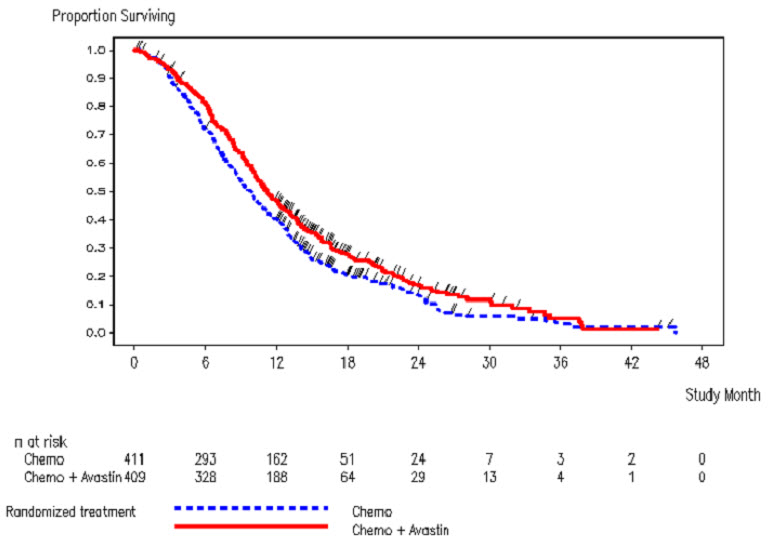 Figure 2 (Avastin 02) |
Study E4599
The safety and efficacy of Avastin as first-line treatment of patients with locally advanced, metastatic, or recurrent non–squamous NSCLC was studied in a single, large, randomized, active-controlled, open-label, multicenter study [E4599 (NCT00021060)]. A total of 878 chemotherapy-naïve patients with locally advanced, metastatic or recurrent non–squamous NSCLC were randomized (1:1) to receive six 21-day cycles of paclitaxel (200 mg/m2) and carboplatin (AUC 6) with or without Avastin 15 mg/kg. After completing or discontinuing chemotherapy, patients randomized to receive Avastin continued to receive Avastin alone until disease progression or until unacceptable toxicity. The trial excluded patients with predominant squamous histology (mixed cell type tumors only), CNS metastasis, gross hemoptysis (1/2 teaspoon or more of red blood), unstable angina, or receiving therapeutic anticoagulation. The main outcome measure was duration of survival.
The median age was 63 years; 54% were male, 43% were ≥ 65 years, and 28% had ≥ 5% weight loss at study entry. Eleven percent had recurrent disease. Of the 89% with newly diagnosed NSCLC, 12% had Stage IIIB with malignant pleural effusion and 76% had Stage IV disease.
OS was statistically significantly longer for patients receiving Avastin with paclitaxel and carboplatin compared with those receiving chemotherapy alone. Median OS was 12.3 months vs. 10.3 months [HR 0.80 (95% CI: 0.68, 0.94), final p-value of 0.013, stratified log-rank test]. Based on investigator assessment which was not independently verified, patients were reported to have longer PFS with Avastin with paclitaxel and carboplatin compared to chemotherapy alone. Results are presented in Figure 3.
| Figure 3: Kaplan-Meier Curves for Duration of Survival in First-Line Non-Squamous Non-Small Cell Lung Cancer in Study E4599 |
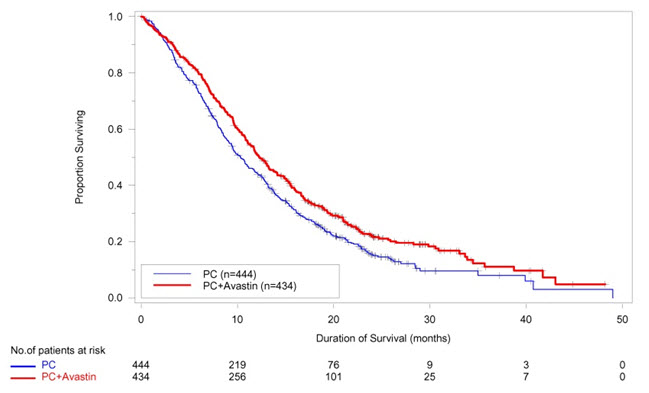 Figure 3 (Avastin 03) |
In an exploratory analysis across patient subgroups, the impact of Avastin on OS was less robust in the following subgroups: women [HR 0.99 (95% CI: 0.79, 1.25)], patients ≥ 65 years [HR 0.91 (95% CI: 0.72, 1.14)] and patients with ≥ 5% weight loss at study entry [HR 0.96 (95% CI: 0.73, 1.26)].
Study BO17704
The safety and efficacy of Avastin in patients with locally advanced, metastatic or recurrent non-squamous NSCLC, who had not received prior chemotherapy was studied in another randomized, double-blind, placebo controlled study [BO17704 (NCT00806923)]. A total of 1043 patients were randomized (1:1:1) to receive cisplatin and gemcitabine with placebo, Avastin 7.5 mg/kg or Avastin 15 mg/kg. The main outcome measure was PFS. Secondary outcome measure was OS.
The median age was 58 years; 36% were female and 29% were ≥ 65 years. Eight percent had recurrent disease and 77% had Stage IV disease.
PFS was significantly higher in both Avastin-containing arms compared to the placebo arm [HR 0.75 (95% CI 0.62, 0.91), p-value of 0.0026 for Avastin 7.5 mg/kg and HR 0.82 (95% CI 0.68; 0.98), p-value of 0.0301 for Avastin 15 mg/kg]. The addition of Avastin to cisplatin and gemcitabine failed to demonstrate an improvement in the duration of OS [HR 0.93 (95% CI: 0.78; 1.11), p-value of 0.420 for Avastin 7.5 mg/kg and HR 1.03 (95% CI: 0.86, 1.23), p-value of 0.761 for Avastin 15 mg/kg].
Study EORTC 26101
The safety and efficacy of Avastin were evaluated in a multicenter, randomized (2:1), open-label study in patients with recurrent GBM (EORTC 26101, NCT01290939). Patients with first progression following radiotherapy and temozolomide were randomized (2:1) to receive Avastin (10 mg/kg every 2 weeks) with lomustine (90 mg/m2 every 6 weeks) or lomustine (110 mg/m2 every 6 weeks) alone until disease progression or unacceptable toxicity. Randomization was stratified by World Health Organization performance status (0 vs. >0), steroid use (yes vs. no), largest tumor diameter (≤ 40 vs. > 40 mm), and institution. The main outcome measure was OS. Secondary outcome measures were investigator-assessed PFS and ORR per the modified Response Assessment in Neuro-oncology (RANO) criteria, health related quality of life (HRQoL), cognitive function, and corticosteroid use.
A total of 432 patients were randomized to receive lomustine alone (N=149) or Avastin with lomustine (N=283). The median age was 57 years; 24.8% of patients were ≥ 65 years. The majority of patients with were male (61%); 66% had a WHO performance status score > 0; and in 56% the largest tumor diameter was ≤ 40 mm. Approximately 33% of patients randomized to receive lomustine received Avastin following documented progression.
No difference in OS (HR 0.91, p -value of 0.4578) was observed between arms; therefore, all secondary outcome measures are descriptive only. PFS was longer in the Avastin with lomustine arm [HR 0.52 (95% CI: 0.41, 0.64)] with a median PFS of 4.2 months in the Avastin with lomustine arm and 1.5 months in the lomustine arm. Among the 50% of patients receiving corticosteroids at the time of randomization, a higher percentage of patients in the Avastin with lomustine arm discontinued corticosteroids (23% vs. 12%).
Study AVF3708g and Study NCI 06-C-0064E
One single arm single center study (NCI 06-C-0064E) and a randomized noncomparative multicenter study [AVF3708g (NCT00345163)] evaluated the efficacy and safety of Avastin 10 mg/kg every 2 weeks in patients with previously treated GBM. Response rates in both studies were evaluated based on modified WHO criteria that considered corticosteroid use. In AVF3708g, the response rate was 25.9% (95% CI: 17%, 36.1%) with a median duration of response of 4.2 months (95% CI: 3, 5.7). In Study NCI 06-C-0064E, the response rate was 19.6% (95% CI: 10.9%, 31.3%) with a median duration of response of 3.9 months (95% CI: 2.4, 17.4).
Study BO17705
Patients with treatment-naïve mRCC were evaluated in a multicenter, randomized, double-blind, international study [BO17705 (NCT00738530)] comparing interferon alfa Avastin versus placebo. A total of 649 patients who had undergone a nephrectomy were randomized (1:1) to receive either Avastin (10 mg/kg every 2 weeks; N = 327) or placebo (every 2 weeks; N = 322) with interferon alfa (9 MIU subcutaneously three times weekly for a maximum of 52 weeks). Patients were treated until disease progression or unacceptable toxicity. The main outcome measure was investigator-assessed PFS. Secondary outcome measures were ORR and OS.
The median age was 60 years (18 to 82 years); 70% were male and 96% were White. The study population was characterized by Motzer scores as follows: 28% favorable (0), 56% intermediate (1-2), 8% poor (3–5), and 7% missing.
PFS was statistically significantly prolonged among patients receiving Avastin compared to placebo; median PFS was 10.2 months vs. 5.4 months [HR 0.60 (95% CI: 0.49, 0.72), p-value < 0.0001, stratified log-rank test]. Among the 595 patients with measurable disease, ORR was also significantly higher (30% vs. 12%, p-value < 0.0001, stratified CMH test). There was no improvement in OS based on the final analysis conducted after 444 deaths, with a median OS of 23 months in the patients receiving Avastin with interferon alfa and 21 months in patients receiving interferon alone [HR 0.86, (95% CI 0.72, 1.04)]. Results are presented in Figure 4.
| Figure 4: Kaplan-Meier Curves for Progression-Free Survival in Metastatic Renal Cell Carcinoma in Study BO17705 |
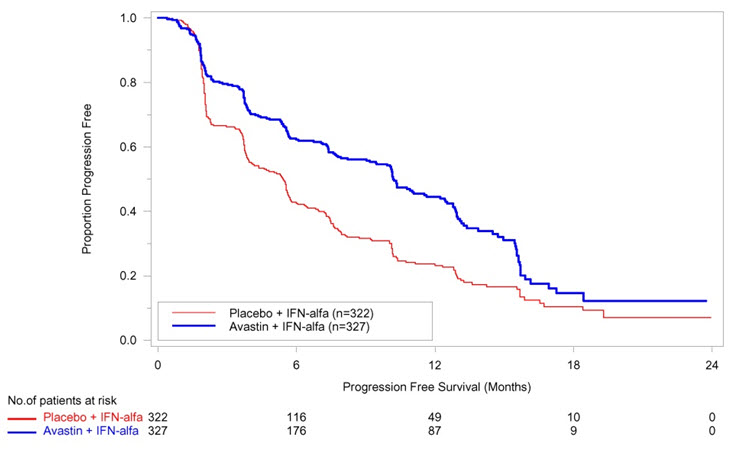 Figure 4 (Avastin 04) |
Study GOG-0240
Patients with persistent, recurrent, or metastatic cervical cancer were evaluated in a randomized, four-arm, multi-center study comparing Avastin with chemotherapy versus chemotherapy alone [GOG-0240 (NCT00803062)]. A total of 452 patients were randomized (1:1:1:1) to receive paclitaxel and cisplatin with or without Avastin, or paclitaxel and topotecan with or without Avastin.
The dosing regimens for Avastin, paclitaxel, cisplatin and topotecan were as follows:
Patients were treated until disease progression or unacceptable adverse reactions. The main outcome measure was OS. Secondary outcome measures included ORR.
The median age was 48 years (20 to 85 years). Of the 452 patients randomized at baseline, 78% of patients were White, 80% had received prior radiation, 74% had received prior chemotherapy concurrent with radiation, and 32% had a platinum-free interval of less than 6 months. Patients had a GOG performance status of 0 (58%) or 1 (42%). Demographic and disease characteristics were balanced across arms.
Results are presented in Table 10 and Figure 5.
| Figure 5: Kaplan-Meier Curves for Overall Survival in Persistent, Recurrent, or Metastatic Cervical Cancer in Study GOG-0240 |
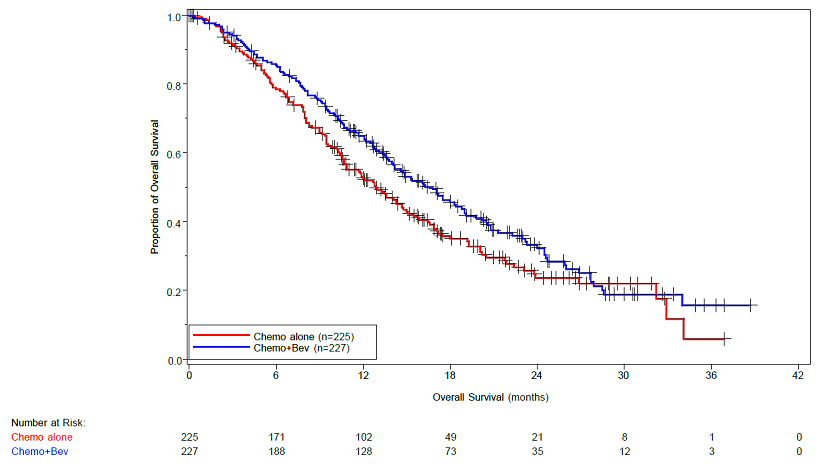 Figure 5 (Avastin 05) |
| Efficacy Parameter | Avastin with Chemotherapy (N=227) | Chemotherapy (N=225) |
|---|---|---|
| Overall Survival | ||
| Median (months) Kaplan-Meier estimates. | 16.8 | 12.9 |
| Hazard ratio [95% CI] | 0.74 [0.58;0.94] (p-value log-rank test (stratified). = 0.0132) | |
The ORR was higher in patients who received Avastin with chemotherapy [45% (95% CI: 39, 52)] compared to patients who received chemotherapy alone [34% (95% CI: 28,40)].
| Efficacy Parameter | Topotecan and Paclitaxel with or without Avastin (N=223) | Cisplatin and Paclitaxel with or without Avastin (N=229) |
|---|---|---|
| Overall Survival | ||
| Median (months) Kaplan-Meier estimates. | 13.3 | 15.5 |
| Hazard ratio [95% CI] | 1.15 [0.91, 1.46] p-value=0.23 | |
The HR for OS with Avastin with cisplatin and paclitaxel as compared to cisplatin and paclitaxel alone was 0.72 (95% CI: 0.51,1.02). The HR for OS with Avastin with topotecan and paclitaxel as compared to topotecan and paclitaxel alone was 0.76 (95% CI: 0.55, 1.06).
Study MO22224
Avastin was evaluated in a multicenter, open-label, randomized study [MO22224 (NCT00976911)] comparing Avastin with chemotherapy versus chemotherapy alone in patients with platinum-resistant, recurrent epithelial ovarian, fallopian tube, or primary peritoneal cancer that recurred within <6 months from the most recent platinum-based therapy (N=361). Patients had received no more than 2 prior chemotherapy regimens. Patients received one of the following chemotherapy regimens at the discretion of the investigator: paclitaxel (80 mg/m2 on days 1, 8, 15 and 22 every 4 weeks; pegylated liposomal doxorubicin 40 mg/m2 on day 1 every 4 weeks; or topotecan 4 mg/m2 on days 1, 8 and 15 every 4 weeks or 1.25 mg/m2 on days 1-5 every 3 weeks). Patients were treated until disease progression, unacceptable toxicity, or withdrawal. Forty percent of patients on the chemotherapy alone arm received Avastin alone upon progression. The main outcome measure was investigator-assessed PFS. Secondary outcome measures were ORR and OS.
The median age was 61 years (25 to 84 years) and 37% of patients were ≥65 years. Seventy-nine percent had measurable disease at baseline, 87% had baseline CA-125 levels ≥2 times ULN and 31% had ascites at baseline. Seventy-three percent had a platinum-free interval (PFI) of 3 months to 6 months and 27% had PFI of <3 months. ECOG performance status was 0 for 59%, 1 for 34% and 2 for 7% of the patients.
The addition of Avastin to chemotherapy demonstrated a statistically significant improvement in investigator-assessed PFS, which was supported by a retrospective independent review analysis. Results for the ITT population are presented in Table 12 and Figure 6. Results for the separate chemotherapy cohorts are presented in Table 13.
| Efficacy Parameter | Avastin with Chemotherapy (N=179) | Chemotherapy (N=182) |
|---|---|---|
| PFS per Investigator | ||
| Median (95% CI), in months | 6.8 (5.6, 7.8) | 3.4 (2.1, 3.8) |
| HR (95% CI) per stratified Cox proportional hazards model | 0.38 (0.30, 0.49) | |
| p-value per stratified log rank test | <0.0001 | |
| Overall Survival | ||
| Median (95% CI), in months | 16.6 (13.7, 19.0) | 13.3 (11.9, 16.4) |
| HR (95% CI) | 0.89 (0.69, 1.14) | |
| Overall Response Rate | ||
| Number of Patients with Measurable Disease at Baseline | 142 | 144 |
| Rate, % (95% CI) | 28% (21%, 36%) | 13% (7%, 18%) |
| Duration of Response | ||
| Median, in months | 9.4 | 5.4 |
| Figure 6: Kaplan-Meier Curves for Investigator-Assessed Progression-Free Survival in Platinum-Resistant Recurrent Epithelial Ovarian, Fallopian Tube, or Primary Peritoneal Cancer in Study MO22224 |
 Figure 6 (Avastin 06) |
| Efficacy Parameter | Paclitaxel | Topotecan | Pegylated Liposomal Doxorubicin | |||
|---|---|---|---|---|---|---|
| Avastin with Chemotherapy | Chemotherapy | Avastin with Chemotherapy | Chemotherapy | Avastin with Chemotherapy | Chemotherapy | |
| (N=60) | (N=55) | (N=57) | (N=63) | (N=62) | (N=64) | |
| NE= Not Estimable | ||||||
| Progression-Free Survival (per Investigator) | ||||||
| Median (months) (95% CI) | 9.6 (7.8, 11.5) | 3.9 (3.5, 5.5) | 6.2 (5.3, 7.6) | 2.1 (1.9, 2.3) | 5.1 (3.9, 6.3) | 3.5 (1.9, 3.9) |
| Hazard ratio per stratified Cox proportional hazards model (95% CI) | 0.47 (0.31, 0.72) | 0.24 (0.15, 0.38) | 0.47 (0.32, 0.71) | |||
| Overall Survival | ||||||
| Median (months) (95% CI) | 22.4 (16.7, 26.7) | 13.2 (8.2, 19.7) | 13.8 (11.0, 18.3) | 13.3 (10.4, 18.3) | 13.7 (11.0, 18.3) | 14.1 (9.9, 17.8) |
| Hazard ratio (95% CI) | 0.64 (0.41, 1.01) | 1.12 (0.73, 1.73) | 0.94 (0.63, 1.42) | |||
| Overall Response Rate | ||||||
| Number of patients with measurable disease at baseline | 45 | 43 | 46 | 50 | 51 | 51 |
| Rate, % (95% CI) | 53 (39, 68) | 30 (17, 44) | 17 (6, 28) | 2 (0, 6) | 16 (6, 26) | 8 (0, 15) |
| Duration of Response | ||||||
| Median (months) | 11.6 | 6.8 | 5.2 | NE | 8.0 | 4.6 |
Study AVF4095g
AVF4095g (NCT00434642) was a randomized, double-blind, placebo-controlled study studying Avastin with chemotherapy versus chemotherapy alone in the treatment of patients with platinum-sensitive recurrent epithelial ovarian, fallopian tube, or primary peritoneal cancer who have not received prior chemotherapy in the recurrent setting or prior bevacizumab treatment (N=484). Patients were randomized (1:1) to receive Avastin (15 mg/kg day 1) or placebo every 3 weeks with carboplatin (AUC 4, day 1) and gemcitabine (1000 mg/m2 on days 1 and 8) a for 6 to 10 cycles followed by Avastin or placebo alone until disease progression or unacceptable toxicity. The main outcome measures were investigator-assessed PFS. Secondary outcome measures were ORR and OS.
The median age was 61 years (28 to 87 years) and 37% of patients were ≥65 years. All patients had measurable disease at baseline, 74% had baseline CA-125 levels >ULN (35 U/mL). The platinum-free interval (PFI) was 6 months to 12 months in 42 % of patients and >12 months in 58% of patients. The ECOG performance status was 0 or 1 for 99.8% of patients.
A statistically significant prolongation in PFS was demonstrated among patients receiving Avastin with chemotherapy compared to those receiving placebo with chemotherapy (Table 14 and Figure 7). Independent radiology review of PFS was consistent with investigator assessment [HR 0.45 (95% CI: 0.35, 0.58)]. OS was not significantly improved with the addition of Avastin to chemotherapy [HR 0.95 (95% CI: 0.77, 1.17)].
| Efficacy Parameter | Avastin with Gemcitabine and Carboplatin (N=242) | Placebo with Gemcitabine and Carboplatin (N=242) |
|---|---|---|
| Progression Free Survival | ||
| Median PFS (months) | 12.4 | 8.4 |
| Hazard ratio (95% CI) | 0.46 (0.37, 0.58) | |
| p-value | < 0.0001 | |
| Overall Response Rate | ||
| % patients with overall response | 78% | 57% |
| p-value | < 0.0001 | |
| Figure 7: Kaplan-Meier Curves for Progression Free Survival in Platinum-Sensitive Recurrent Epithelial Ovarian, Fallopian Tube, or Primary Peritoneal Cancer in Study AVF4095g |
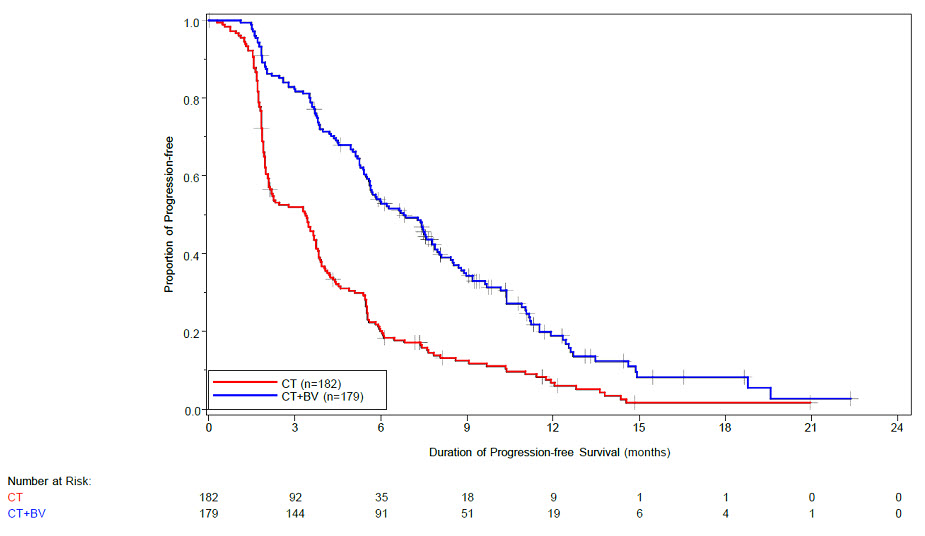 Figure 7 (Avastin 07) |
Study GOG-0213
Study GOG-0213 (NCT00565851) was a randomized, controlled, open-label study of Avastin with chemotherapy versus chemotherapy alone in the treatment of patients with platinum-sensitive recurrent epithelial ovarian, fallopian tube, or primary peritoneal cancer, who have not received more than one previous regimen of chemotherapy (N=673). Patients were randomized (1:1) to receive carboplatin (AUC 5) and paclitaxel (175 mg/m2 IV over 3 hours) every 3 weeks for 6 to 8 cycles (N=336) or Avastin (15 mg/kg) every 3 weeks with carboplatin (AUC 5) and paclitaxel (175 mg/m2 IV over 3 hours) for 6 to 8 cycles followed by Avastin (15 mg/kg every 3 weeks) as a single agent until disease progression or unacceptable toxicity. The main outcome measure was OS. Other outcome measures were investigator-assessed PFS, and ORR.
The median age was 60 years (23 to 85 years) and 33% of patients were ≥ 65 years. Eighty-three percent had measurable disease at baseline and 74% had abnormal CA-125 levels at baseline. Ten percent of patients had received prior bevacizumab. Twenty-six percent had a PFI of 6 months to 12 months and 74% had a PFI of >12 months. GOG performance status was 0 or 1 for 99% of patients.
Results are presented in Table 15 and Figure 8.
| Efficacy Parameter | Avastin with Carboplatin and Paclitaxel (N=337) | Carboplatin and Paclitaxel (N=336) |
|---|---|---|
| Overall Survival | ||
| Median OS (months) | 42.6 | 37.3 |
| Hazard ratio (95% CI) (IVRS) HR was estimated from Cox proportional hazards models stratified by the duration of treatment free-interval prior to enrolling onto this study per IVRS (interactive voice response system) and secondary surgical debulking status. | 0.84 (0.69, 1.01) | |
| Hazard ratio (95% CI) (eCRF) HR was estimated from Cox proportional hazards models stratified by the duration of platinum free-interval prior to enrolling onto this study per eCRF (electronic case report form) and secondary surgical debulking status. | 0.82 (0.68, 0.996) | |
| Progression-free Survival | ||
| Median PFS (months) | 13.8 | 10.4 |
| Hazard ratio (95% CI) (IVRS) | 0.61 (0.51, 0.72) | |
| Overall Response Rate | ||
| Number of patients with measurable disease at baseline | 274 | 286 |
| Rate, % | 213 (78%) | 159 (56%) |
| Figure 8: Kaplan Meier Curves for Overall Survival in Platinum-Sensitive Recurrent Epithelial Ovarian, Fallopian Tube, or Primary Peritoneal Cancer in Study GOG-0213 |
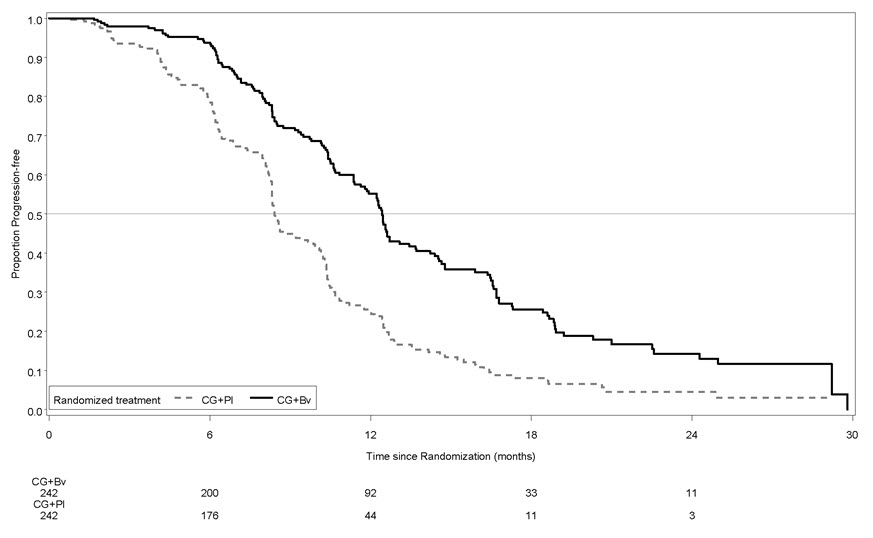 Figure 8 (Avastin 08) |
Gastrointestinal Perforations and Fistulae: Avastin may increase the risk of developing gastrointestinal perforations and fistulae. Advise patients to immediately contact their health care provider for high fever, rigors, persistent or severe abdominal pain, severe constipation, or vomiting [see Warnings and Precautions (5.1)].
Surgery and Wound Healing Complications: Avastin can increase the risk of wound healing complications. Advise patients that Avastin should not be used for at least 28 days before or after surgery and until surgical wounds are fully healed [see Warnings and Precautions (5.2)].
Hemorrhage: Avastin can increase the risk of hemorrhage. Advise patients to immediately contact their health care provider for signs and symptoms of serious or unusual bleeding including coughing or spitting blood [see Warnings and Precautions (5.3)].
Arterial and Venous Thromboembolism: Avastin increases the risk of arterial and venous thromboembolic events. Advise patients to immediately contact their health care provider for signs and symptoms of arterial or venous thromboembolism [see Warnings and Precautions (5.4, 5.5)].
Hypertension: Avastin can increase blood pressure. Advise patients that they will undergo routine blood pressure monitoring and to contact their healthcare provider if they experience changes in blood pressure [see Warnings and Precautions (5.6)].
Posterior Reversible Leukoencephalopathy Syndrome: Posterior reversible encephalopathy syndrome (PRES) has been associated with Avastin treatment. Advise patients to immediately contact their health care provider for new onset or worsening neurological function [see Warnings and Precautions (5.7)].
Renal Injury and Proteinuria: Avastin increases the risk of proteinuria and renal injury, including nephrotic syndrome. Advise patients that treatment with Avastin requires regular monitoring of renal function and to contact their health care provider for proteinuria or signs and symptoms of nephrotic syndrome [see Warnings and Precautions (5.8)].
Infusion Reactions: Avastin can cause infusion reactions. Advise patients to contact their healthcare provider immediately for signs or symptoms of infusion reactions [see Warnings and Precautions (5.9)].
Congestive Heart Failure: Avastin can increase the risk of developing congestive heart failure. Advise patients to contact their healthcare provider immediately for signs and symptoms of CHF [see Warnings and Precautions (5.12)].
Embryo-Fetal Toxicity: Advise female patients that Avastin may cause fetal harm and to inform their healthcare provider with a known or suspected pregnancy [see Warnings and Precautions (5.10), Use in Specific Populations (8.1)]. Advise females of reproductive potential to use effective contraception during treatment with Avastin and for 6 months after the last dose of Avastin [see Use in Specific Populations (8.3)].
Ovarian Failure: Avastin may lead to ovarian failure. Advise patients of potential options for preservation of ova prior to starting treatment [see Warnings and Precautions (5.11)].
Lactation: Advise lactating women not to breastfeed while taking Avastin or within 6 months following their last dose of treatment [see Use in Specific Populations (8.2)].
Representative sample of labeling (see the HOW SUPPLIED section for complete listing):


