Other
Severe Mucocutaneous Reactions
Severe, including fatal, mucocutaneous reactions can occur in patients receiving rituximab-containing products, including RITUXAN HYCELA [see Warnings and Precautions (5.1)].
Hepatitis B Virus (HBV) Reactivation
HBV reactivation can occur in patients treated with rituximab-containing products, including RITUXAN HYCELA, in some cases resulting in fulminant hepatitis, hepatic failure, and death. Screen all patients for HBV infection before treatment initiation, and monitor patients during and after treatment with RITUXAN HYCELA. Discontinue RITUXAN HYCELA and concomitant medications in the event of HBV reactivation [see Warnings and Precautions (5.2)].
Progressive Multifocal Leukoencephalopathy (PML), including fatal PML, can occur in patients receiving rituximab-containing products, including RITUXAN HYCELA [see Warnings and Precautions (5.3) and Adverse Reactions (6.1)].
Preparation
Use a sterile needle and syringe to prepare RITUXAN HYCELA. RITUXAN HYCELA is compatible with polypropylene and polycarbonate syringe material and stainless steel transfer and injection needles.
Using a 20 mL syringe, withdraw the required volume from the vial with a narrow (e.g., 25–30 gauge) needle of any length.
Label the syringe with the provided peel-off label.
Change the needle to a 1/2" to 5/8" long, narrow gauge needle (e.g., 25–30 gauge) immediately prior to subcutaneous administration to avoid needle clogging.
Visually inspect for particulate matter and discoloration prior to administration. RITUXAN HYCELA should be a clear to opalescent and colorless to yellowish liquid. Do not use if particulates or discoloration is present.
Administration
- Inject RITUXAN HYCELA into the subcutaneous tissue of the abdomen over approximately 5–7 minutes. Never inject into areas where the skin is red, bruised, tender or hard, or areas where there are moles or scars. No data are available on performing the injection at other sites of the body.
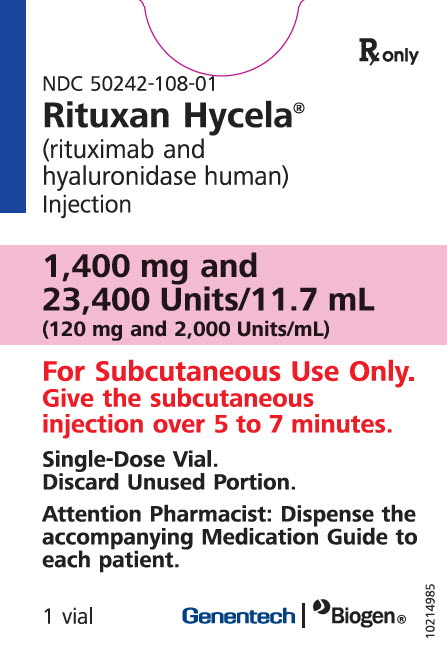
- Inject 11.7 mL of RITUXAN HYCELA 1,400 mg/23,400 Units vial (1,400 mg rituximab and 23,400 Units hyaluronidase human) subcutaneously into the abdomen over approximately 5 minutes.
- Inject 13.4 mL of RITUXAN HYCELA 1,600 mg/26,800 Units vial (1,600 mg rituximab and 26,800 Units hyaluronidase human) subcutaneously into the abdomen over approximately 7 minutes.
- An embryo-fetal developmental toxicity study was performed on pregnant cynomolgus monkeys. Pregnant animals received rituximab via the intravenous route during early gestation (organogenesis period; post coitum days 20 through 50). Rituximab was administered as loading doses on post coitum (PC) Days 20, 21 and 22, at 15, 37.5 or 75 mg/kg/day, and then weekly on PC Days 29, 36, 43 and 50, at 20, 50 or 100 mg/kg/week. The 100 mg/kg/week dose resulted in 80% of the exposure (based on AUC) of those achieved following a dose of 2 grams in humans. Rituximab crosses the monkey placenta. Exposed offspring did not exhibit any teratogenic effects but did have decreased lymphoid tissue B cells.
- A subsequent pre-and postnatal reproductive toxicity study in cynomolgus monkeys was completed to assess developmental effects including the recovery of B cells and immune function in infants exposed to rituximab in utero. Animals were treated with a loading dose of 0, 15, or 75 mg/kg every day for 3 days, followed by weekly dosing with 0, 20, or 100 mg/kg dose. Subsets of pregnant females were treated from PC Day 20 through postpartum Day 78, PC Day 76 through PC Day 134, and from PC Day 132 through delivery and postpartum Day 28. Regardless of the timing of treatment, decreased B cells and immunosuppression were noted in the offspring of rituximab-treated pregnant animals. The B-cell counts returned to normal levels, and immunologic function was restored within 6 months postpartum.
- In an embryo-fetal study, mice have been dosed daily by subcutaneous injection during the period of organogenesis with hyaluronidase human at dose levels up to 2,200,000 U/kg, which is > 2700 times higher than the human dose. The study found no evidence of teratogenicity. Reduced fetal weight and increased numbers of fetal resorptions were observed, with no effects found at a daily dose of 360,000 U/kg, which is > 450 times higher than the human dose.
- In a peri-and post-natal reproduction study, mice have been dosed daily by subcutaneous injection, with hyaluronidase human from implantation through lactation and weaning at dose levels up to 1,100,000 U/kg, which is > 1,300 times higher than the human dose. The study found no adverse effects on sexual maturation, learning and memory or fertility of the offspring.
If administration of RITUXAN HYCELA is interrupted, continue administering at the same site, or at a different site, but restricted to the abdomen.
Observe patients for at least 15 minutes following RITUXAN HYCELA administration [see Warnings and Precautions (5.4)].
During treatment with RITUXAN HYCELA, do not administer other medications for subcutaneous use at the same sites as RITUXAN HYCELA.
Storage
Use immediately.
If not used immediately store refrigerated at 2°C to 8°C (36°F to 46°F) up to 48 hours and subsequently for 8 hours at room temperature up to 30°C (86°F) in diffuse light.
Systemic Reactions
Patients must receive at least one full dose of a rituximab product by intravenous infusion before receiving RITUXAN HYCELA due to the higher risk of hypersensitivity and other acute reactions during the first infusion [see Dosage and Administration (2.1)]. Beginning therapy with a rituximab product by intravenous infusion allows management of hypersensitivity and other administration reactions by slowing or stopping the intravenous infusion.
Rituximab-containing products, including RITUXAN HYCELA, are associated with hypersensitivity and other administration reactions, which may be related to release of cytokines and/or other chemical mediators. Cytokine release syndrome may be clinically indistinguishable from acute hypersensitivity reactions.
This set of reactions which includes syndrome of cytokine release, tumor lysis syndrome and anaphylactic and hypersensitivity reactions are described below. They are not specifically related to the route of administration of a rituximab-containing product.
Severe infusion-related reactions with fatal outcome have been reported with the use of intravenous formulations of rituximab products, with an onset ranging within 30 minutes to 2 hours after starting the first intravenous infusion. They were characterized by pulmonary events in addition to fever, chills, rigors, hypotension, urticaria, angioedema and other symptoms.
Anaphylactic and other hypersensitivity reactions can also occur. In contrast to cytokine release syndrome, true hypersensitivity reactions typically occur within minutes after starting infusion.
Severe cytokine release syndrome is characterized by severe dyspnea, often associated by bronchospasm and hypoxia, in addition to fever, chills, rigors, urticaria, and angioedema. This syndrome may be associated with acute respiratory failure and death [see Warnings and Precautions (5.5)]. Cytokine release syndrome may occur within 1–2 hours of initiating the infusion. Patients with a history of pulmonary insufficiency or those with pulmonary tumor infiltration may be at a greater risk of poor outcome. Rituximab product administration should be interrupted immediately and aggressive symptomatic treatment initiated.
During RITUXAN HYCELA administration, the injection should be interrupted immediately when observing signs of a severe reaction and aggressive symptomatic treatment should be initiated.
Closely monitor the following patients: those with pre-existing cardiac or pulmonary conditions, those who experienced prior cardiopulmonary adverse reactions, and those with high numbers of circulating malignant cells (≥ 25,000/mm3) [see Warnings and Precautions (5.5, 5.7)].
Premedicate patients with an antihistamine and acetaminophen prior to each administration of RITUXAN HYCELA [see Dosage and Administration (2.5)]. Premedication with glucocorticoids should also be considered. Observe patients for at least 15 minutes following RITUXAN HYCELA. A longer period may be appropriate in patients with an increased risk of hypersensitivity reactions.
Local Cutaneous Reactions
Local cutaneous reactions, including injection site reactions, have been reported in patients receiving RITUXAN HYCELA. Symptoms included pain, swelling, induration, hemorrhage, erythema, pruritus, and rash [see Adverse Reactions (6.1)]. Some local cutaneous reactions occurred more than 24 hours after RITUXAN HYCELA administration. The incidence of local cutaneous reactions following administration of RITUXAN HYCELA was 16%. Reactions were mild or moderate and resolved without any specific treatment. Local cutaneous reactions of any Grade were most common during the first RITUXAN HYCELA cycle (Cycle 2; 5%) with the incidence decreasing with subsequent injections.
Administration-related reactions (ARRs)
Administration-related reactions (ARRs) with RITUXAN HYCELA were defined as all the adverse reactions related to the administration of RITUXAN HYCELA within the 24 hours post injection.
The incidence of ARRs with RITUXAN HYCELA was 34% in FL/DLBCL in combination with chemotherapy with injection site erythema (5%), chills (3%), dyspnea, erythema, flushing, injection site pain, nausea, pruritus, pyrexia, rash, and throat irritation (2% each) being the most common ARRs. The incidence of ARRs in FL maintenance setting was 20%. The most common ARRs were injection site erythema (7%), erythema (4%), injection site pain/edema, myalgia, and rash (2% each).
The incidence of ARRs with RITUXAN HYCELA in CLL was 44%.
With the exception of Local Cutaneous Reactions, the incidence and profile of adverse reactions reported for RITUXAN HYCELA were comparable with those for rituximab. The overall incidence of adverse reactions for intravenous rituximab versus RITUXAN HYCELA in combination with chemotherapy for FL/DLBCL was 93% versus 95% (BSA ≤ 1.73 m2), 89% versus 93% (1.73 < BSA ≤ 1.92 m2), and 94% versus 94% (BSA > 1.92 m2). The overall incidence of adverse reactions for rituximab versus RITUXAN HYCELA in CLL was 89% versus 100% (BSA ≤ 1.81 m2), 97% versus 88% (1.82 < BSA ≤ 1.99 m2), and 88% versus 93% (BSA > 2.00 m2).
Summary of Clinical Trial Experience in Follicular Lymphoma (FL)
The data in Table 1 were obtained in the SABRINA study, a two-stage randomized, controlled study in patients with previously untreated FL. The study compared patients receiving RITUXAN HYCELA (1,400 mg rituximab/23,400 Units hyaluronidase human; n=197) with patients receiving a rituximab product by intravenous infusion (375 mg/m2; n=210), both in combination with CHOP or CVP followed by maintenance treatment with RITUXAN HYCELA or a rituximab product by intravenous infusion.
The majority of patients completed all 8 cycles of combination treatment with chemotherapy (91% RITUXAN HYCELA vs. 90% rituximab). In addition, 69% of patients in each of the treatment groups completed all 20 cycles of combination plus maintenance treatment. In both RITUXAN HYCELA and rituximab groups, patients experienced similar median duration of exposure (27.1 months for each arm).
Across the two stages, the overall demographics and baseline characteristics were balanced between the treatment groups. However, there were more female patients (53%) randomized in the study than male patients (47%) and a higher proportion of females were randomized to receive RITUXAN HYCELA (59% female) compared with the rituximab group (48%). The treatment groups in the combined Stage 1 and 2 population were otherwise balanced in regard to baseline demographics, characterized by a median age of 57 years (56.0 years [range 28–85 years] for RITUXAN HYCELA and 57 years [range 28–86 years] for rituximab) and median BSA of 1.83 m2 (1.80 and 1.84 m2 for RITUXAN HYCELA and rituximab, respectively).
The incidence of all adverse reactions was 96% for RITUXAN HYCELA vs. 95% for rituximab (Table 1). Grade 3–4 adverse reactions were reported in 55% of patients receiving RITUXAN HYCELA vs. 53% in patients receiving rituximab. Serious adverse reactions were reported in 37% of patients receiving RITUXAN HYCELA vs. 34% of patients receiving rituximab. The most common adverse reactions (occurring in ≥ 20% of patients in any arm) were infections, neutropenia, nausea, constipation, cough, and fatigue.
A total of 36 patients died, including 14/197 patients (7%) who received RITUXAN HYCELA and 22/210 patients (10%) who received rituximab. Of these 36 patients, 19 patients (7 patients RITUXAN HYCELA [4%] vs. 12 patients rituximab [6%]) died due to adverse reactions and 13 patients (6 patients RITUXAN HYCELA [3%] vs. 7 patients rituximab [3%]) died due to disease progression.
The incidence of administration-related reactions (ARRs) due to the subcutaneous route of administration associated with RITUXAN HYCELA was assessed in combination with chemotherapy and during maintenance. Thirty patients (15%) experienced an ARR during the first administration of RITUXAN HYCELA (Cycle 2). Incidence of ARRs generally decreased at subsequent cycles with 18 patients (9%) reporting ARR at Cycle 3, 13 patients (7%) at Cycle 4, 11 patients (6%) at Cycles 5 and 6, 12 patients (7%) at Cycle 7, and 8 patients (4%) at Cycle 8. During RITUXAN HYCELA monotherapy in the maintenance setting the incidence of ARRs at each cycle was ≤ 7% and was observed in 24 patients (14%) overall. Grade 1–2 ARRs constituted 96% of the overall ARRs. Grade 3 ARRs were reported during the first administration of RITUXAN HYCELA at Cycle 2 by 2 patients. Of the reported ARRs, local cutaneous reactions with RITUXAN HYCELA were reported in 32 patients. These events resolved within a median of 2 days from the onset (range 1 to 37 days). Majority of these reactions were Grade 1 and 2 and were observed in 31 patients (16%).
| Body System/Adverse Reactions | RITUXAN HYCELA (n=197) | Rituximab (n=210) | ||
|---|---|---|---|---|
| All Grades % | Grade 3–4 % | All Grades % | Grade 3–4 % | |
| Gastrointestinal Disorders | ||||
| Nausea | 31 | 0 | 22 | 0 |
| Constipation | 25 | 0 | 26 | < 1 |
| Diarrhea | 18 | 2 | 16 | < 1 |
| Abdominal Pain | 14 | 0 | 12 | < 1 |
| Vomiting | 14 | 0 | 12 | < 1 |
| Dyspepsia | 8 | 0 | 7 | 0 |
| Stomatitis | 6 | 0 | 5 | 0 |
| Abdominal Pain Upper | 5 | 0 | 5 | 0 |
| General Disorders and Administration Site Conditions | ||||
| Fatigue | 20 | 0 | 18 | < 1 |
| Asthenia | 17 | 1 | 13 | 0 |
| Pyrexia | 15 | < 1 | 16 | < 1 |
| Injection Site Erythema | 13 | 0 | 0 | 0 |
| Injection Site Pain | 8 | 0 | 0 | 0 |
| Chills | 8 | 0 | 9 | 0 |
| Chest Pain | 6 | 1 | 3 | 0 |
| Edema Peripheral | 5 | < 1 | 6 | 0 |
| Mucosal Inflammation | 5 | 1 | 6 | < 1 |
| Influenza Like Illness | 3 | 0 | 6 | 0 |
| Infections | ||||
| Upper Respiratory Tract Infection | 15 | < 1 | 10 | 0 |
| Pneumonia | 11 | 5 | 4 | 2 |
| Nasopharyngitis | 10 | 0 | 10 | 0 |
| Bronchitis | 8 | < 1 | 8 | < 1 |
| Urinary Tract Infection | 8 | 1 | 14 | < 1 |
| Sinusitis | 7 | < 1 | 4 | 0 |
| Conjunctivitis | 5 | 0 | 5 | 0 |
| Influenza | 4 | 0 | 6 | < 1 |
| Blood and Lymphatic System Disorders | ||||
| Neutropenia | 32 | 26 | 27 | 21 |
| Anemia | 15 | 5 | 13 | 0 |
| Febrile Neutropenia | 8 | 7 | 6 | 6 |
| Leukopenia | 6 | 4 | 11 | 2 |
| Musculoskeletal and Connective Tissue Disorders | ||||
| Arthralgia | 13 | < 1 | 10 | 0 |
| Bone Pain | 10 | < 1 | 8 | 0 |
| Pain In Extremity | 10 | 0 | 5 | 0 |
| Back Pain | 9 | < 1 | 12 | < 1 |
| Muscle Spasms | 8 | 0 | 3 | 0 |
| Myalgia | 8 | 0 | 5 | 0 |
| Nervous System Disorders | ||||
| Paresthesia | 16 | 0 | 12 | 0 |
| Headache | 13 | 0 | 9 | 0 |
| Neuropathy Peripheral | 12 | 2 | 14 | < 1 |
| Dizziness | 7 | 0 | 7 | 0 |
| Skin and Subcutaneous Tissue Disorders | ||||
| Alopecia | 14 | < 1 | 10 | < 1 |
| Pruritus | 10 | 0 | 12 | < 1 |
| Rash | 10 | 0 | 7 | 0 |
| Erythema | 9 | 0 | 5 | 0 |
| Respiratory, Thoracic and Mediastinal Disorders | ||||
| Cough | 23 | 0 | 13 | < 1 |
| Dyspnea | 11 | 1 | 8 | 2 |
| Oropharyngeal Pain | 9 | 0 | 8 | 0 |
| Psychiatric Disorders | ||||
| Insomnia | 9 | 0 | 9 | 0 |
| Vascular Disorders | ||||
| Hypertension | 6 | 1 | 6 | 0 |
Summary of Clinical Trial Experience in Diffuse Large B-Cell Lymphoma (DLBCL)
The data in Table 2 were obtained in the MabEASE study, a comparative, randomized, parallel-group, multicenter study to investigate the efficacy of RITUXAN HYCELA (1,400 mg rituximab and 23,400 Units hyaluronidase human; n=369) versus 375 mg/m2 a rituximab product by intravenous infusion (n=203) both in combination with CHOP (R-CHOP) in previously untreated patients with CD20-positive DLBCL.
Eighty two percent of patients receiving RITUXAN HYCELA or rituximab completed all 8 cycles of study treatment. In both RITUXAN HYCELA and rituximab treatment groups, patients experienced 4.9 months median duration of rituximab exposure in each arm.
The demographic characteristics were balanced. Most patients were White (79%) and 54% were male. The median was 64 years and median BSA was 1.83 m2.
The incidences of adverse reactions of any grade (RITUXAN HYCELA [94%] vs. rituximab [92%]) (Table 2), Grade 3–4 adverse reactions (RITUXAN HYCELA [63%] vs. rituximab [57%]), and serious adverse reactions (RITUXAN HYCELA [42%] vs. rituximab [37%]) were generally comparable between the two treatment groups. The common adverse reactions (occurring in ≥ 20% of patients in any treatment group) were neutropenia, alopecia, nausea, and anemia.
A total of 91 patients (16%) died, including 58/369 patients (16%) in RITUXAN HYCELA and 33/203 patients (16%) in rituximab. Of these patients, 44 patients (29 patients RITUXAN HYCELA [8%] vs. 15 patients rituximab [7%]) died due to adverse reactions and 35 patients (22 patients RITUXAN HYCELA [6%] vs. 13 patients rituximab [6%]) died due to disease progression. Pneumonia (4 patients RITUXAN HYCELA vs. 1 patient rituximab), septic shock (2 patients RITUXAN HYCELA vs. 3 patients rituximab), and cardiac arrest (1 patient RITUXAN HYCELA vs. 3 patients rituximab) were the most common adverse reactions leading to death.
The incidence of administration-related reactions was balanced between the RITUXAN HYCELA and rituximab groups (28% vs. 29%). Grade 1–2 ARRs constituted 97% of the overall ARRs for the RITUXAN HYCELA arm and 80% for the rituximab arm. Of the reported ARRs, local cutaneous reactions with RITUXAN HYCELA were reported in 17 patients. These events resolved within a median of 2 days from the onset (range 1 to 32 days). Majority of these reactions were Grade 1 and 2 and were observed in 16 patients (4%).
| Body System/Adverse Reactions | RITUXAN HYCELA + CHOP (n=369) | Rituximab + CHOP (n=203) | ||
|---|---|---|---|---|
| All Grades % | Grade 3–4 % | All Grades % | Grade 3–4 % | |
| Gastrointestinal Disorders | ||||
| Nausea | 22 | < 1 | 24 | < 1 |
| Constipation | 15 | < 1 | 17 | < 1 |
| Diarrhea | 14 | 1 | 10 | 1 |
| Vomiting | 11 | < 1 | 8 | < 1 |
| Abdominal Pain | 7 | < 1 | 7 | < 1 |
| Stomatitis | 6 | < 1 | 5 | 0 |
| Dyspepsia | 5 | 0 | 7 | 0 |
| General Disorders and Administration Site Conditions | ||||
| Fatigue | 19 | 1 | 15 | 1 |
| Pyrexia | 13 | < 1 | 13 | 0 |
| Asthenia | 11 | < 1 | 12 | < 1 |
| Mucosal Inflammation | 8 | < 1 | 8 | 1 |
| Edema Peripheral | 8 | < 1 | 4 | 0 |
| Infections | ||||
| Pneumonia | 7 | 3 | 4 | 2 |
| Blood and Lymphatic System Disorders | ||||
| Neutropenia | 31 | 25 | 29 | 19 |
| Anemia | 23 | 5 | 21 | 4 |
| Febrile Neutropenia | 14 | 14 | 12 | 11 |
| Leukopenia | 7 | 3 | 7 | 3 |
| Lymphopenia | 5 | 1 | 6 | 3 |
| Investigations | ||||
| Neutrophil Count Decreased | 14 | 11 | 14 | 11 |
| White Blood Cell Count Decreased | 7 | 4 | 7 | 5 |
| Weight Decreased | 8 | < 1 | 4 | < 1 |
| Lymphocyte Count Decreased | 5 | 2 | 3 | 2 |
| Metabolism and Nutrition Disorders | ||||
| Decreased Appetite | 8 | < 1 | 9 | < 1 |
| Nervous System Disorders | ||||
| Neuropathy Peripheral | 12 | < 1 | 12 | 0 |
| Paresthesia | 9 | < 1 | 6 | 0 |
| Headache | 6 | 0 | 7 | 0 |
| Skin and Subcutaneous Tissue Disorders | ||||
| Alopecia | 24 | 0 | 24 | 0 |
| Respiratory, Thoracic and Mediastinal Disorders | ||||
| Cough | 11 | < 1 | 9 | 0 |
| Dyspnea | 6 | 0 | 4 | < 1 |
| Psychiatric Disorders | ||||
| Insomnia | 7 | < 1 | 6 | < 1 |
Summary of Clinical Trial Experience in Chronic Lymphocytic Leukemia
The data in Table 3 were obtained in part 2 of the SAWYER study, a two-part, comparative, randomized, parallel-group, multicenter study of RITUXAN HYCELA versus a rituximab product by intravenous infusion both in combination with fludarabine and cyclophosphamide (FC) chemotherapy in patients with previously untreated CLL.
The safety analysis population in part 2 of the study included 85 patients receiving RITUXAN HYCELA (1,600 mg rituximab/26,800 Units hyaluronidase human) and 89 patients receiving 500 mg/m2 rituximab. In both RITUXAN HYCELA and rituximab groups, patients had similar median duration of rituximab exposure (4.9 vs. 4.7 months). The majority of patients received all 6 cycles of study treatment (86% RITUXAN HYCELA vs. 81% rituximab).
The patient population was predominantly White (96%) and male (65%), with a median age of 60 years and median BSA of 1.9 m2 (1.97 and 1.86 m2 for the RITUXAN HYCELA and intravenous rituximab groups, respectively). Overall, the treatment groups were balanced with respect to demographic characteristics, with the exception of more males in the RITUXAN HYCELA arm (71% RITUXAN HYCELA vs. 60% rituximab). Baseline disease characteristics were similar between the two groups. Over half of the patients (62%) had Binet Stage B disease and the majority had typical CLL characterizations (93%), with median time from first CLL diagnosis to randomization being 18.5 months.
The incidences of adverse reactions were balanced between the two treatment groups (96% RITUXAN HYCELA vs. 91% rituximab), and the common adverse reactions (occurring in ≥ 20% of patients in any arm) were infections, neutropenia, nausea, thrombocytopenia, pyrexia, anemia, vomiting, and injection site erythema. The incidences of Grade 3–4 adverse reactions were also balanced between the two treatment groups (69% RITUXAN HYCELA vs. 71% rituximab). The incidence of serious adverse reactions was 29% for RITUXAN HYCELA and 33% for rituximab. The incidence of administration-related reactions was 44% for RITUXAN HYCELA and 45% for rituximab). Of the reported ARRs, local cutaneous reactions with RITUXAN HYCELA were reported in 15 patients. These events resolved within a median of 6 days from the onset (range 3 to 29 days). Majority of these reactions were Grade 1 and 2 and were observed in 14 patients (16%).
A total of 9 patients (5%) died, including 5 patients in the RITUXAN HYCELA group and 4 patients in the rituximab group. In the RITUXAN HYCELA group, 1 patient died due to herpes zoster infection, 1 patient died as a result of progressive multifocal leukoencephalopathy (PML) (considered by the investigator as related to rituximab), and 3 patients died due to disease progression. In the rituximab group, 2 patients died due to diarrhea and listeriosis and 2 patients died due to disease progression.
| Body System/Adverse Reactions | RITUXAN HYCELA + FC (n=85) | Rituximab + FC (n=89) | ||
|---|---|---|---|---|
| All Grades % | Grade 3–4 % | All Grades % | Grade 3–4 % | |
| Gastrointestinal Disorders | ||||
| Nausea | 38 | 1 | 35 | 0 |
| Vomiting | 21 | 2 | 22 | 1 |
| Diarrhea | 12 | 0 | 11 | 3 |
| Abdominal Pain | 9 | 0 | 6 | 0 |
| Constipation | 8 | 0 | 8 | 0 |
| General Disorders and Administration Site Conditions | ||||
| Pyrexia | 32 | 5 | 25 | 1 |
| Injection Site Erythema | 26 | 2 | 0 | 0 |
| Injection Site Pain | 16 | 1 | 0 | 0 |
| Chills | 13 | 0 | 10 | 1 |
| Fatigue | 11 | 0 | 10 | 0 |
| Asthenia | 8 | 1 | 17 | 2 |
| Infections | ||||
| Upper Respiratory Tract Infection | 13 | 0 | 12 | 1 |
| Respiratory Tract Infection | 8 | 1 | 4 | 1 |
| Bronchitis | 7 | 0 | 6 | 0 |
| Urinary Tract Infection | 2 | 0 | 8 | 1 |
| Pneumonia | 2 | 2 | 6 | 2 |
| Blood and Lymphatic System Disorders | ||||
| Neutropenia | 65 | 56 | 58 | 52 |
| Thrombocytopenia | 24 | 6 | 26 | 9 |
| Leukopenia | 19 | 14 | 16 | 12 |
| Anemia | 13 | 5 | 24 | 9 |
| Febrile Neutropenia | 11 | 8 | 8 | 8 |
| Musculoskeletal and Connective Tissue Disorders | ||||
| Arthralgia | 9 | 0 | 1 | 0 |
| Pain In Extremity | 7 | 1 | 2 | 0 |
| Bone Pain | 6 | 0 | 2 | 0 |
| Nervous System Disorders | ||||
| Headache | 7 | 0 | 9 | 0 |
| Skin and Subcutaneous Tissue Disorders | ||||
| Erythema | 15 | 0 | 7 | 0 |
| Rash | 12 | 0 | 10 | 1 |
| Pruritus | 8 | 0 | 4 | 0 |
| Respiratory, Thoracic and Mediastinal Disorders | ||||
| Cough | 13 | 0 | 11 | 0 |
| Oropharyngeal Pain | 6 | 0 | 3 | 0 |
| Dyspnea | 4 | 0 | 8 | 1 |
| Psychiatric Disorders | ||||
| Insomnia | 1 | 0 | 7 | 0 |
| Vascular Disorders | ||||
| Hypotension | 1 | 0 | 7 | 1 |
| Hypertension | 0 | 0 | 6 | 1 |
Risk Summary
Based on human data, rituximab-containing products can cause fetal harm due to B-cell lymphocytopenia in infants exposed to rituximab in-utero (see Clinical Considerations). There are no available data on RITUXAN HYCELA use in pregnant women to inform a drug-associated risk of major birth defects and miscarriage. In animal reproduction studies, intravenous administration of a rituximab product to pregnant cynomolgus monkeys during the period of organogenesis caused lymphoid B cell depletion in the newborn offspring at doses resulting in 80% of the exposure (based on AUC) of those achieved following a dose of 2 grams in humans. Reduced fetal weight and increased fetal lethality were observed following subcutaneous administration of hyaluronidase human in mice at a dose > 2700 times higher than the human dose. Comparable systemic exposure levels could occur in a pregnant patient following accidental intravenous administration of an entire vial of RITUXAN HYCELA (see Data). Advise pregnant women of the potential risk to a fetus.
The estimated background risk of major birth defects and miscarriage for the indicated populations is unknown. All pregnancies have a background risk of birth defect, loss, or other adverse outcomes. The estimated background risk in the U.S. general population of major birth defects is 2%–4% and of miscarriage is 15%–20% of clinically recognized pregnancies.
Clinical Considerations
Fetal/Neonatal Adverse Reactions
Observe newborns and infants for signs of infection and manage accordingly.
Data
Human Data
Postmarketing data indicate that B-cell lymphocytopenia generally lasting less than 6 months can occur in infants exposed to rituximab in-utero. Rituximab was detected postnatally in the serum of infants exposed in-utero.
Animal Data
RITUXAN HYCELA for subcutaneous injection contains rituximab and hyaluronidase human [see Description (11)].
Rituximab Product:
Hyaluronidase Human:
Pregnancy Testing
Verify pregnancy status in females of reproductive potential prior to initiating RITUXAN HYCELA.
Contraception
Females
Advise females of reproductive potential to use effective contraception during treatment with RITUXAN HYCELA and for 12 months after the last dose of rituximab-containing products, including RITUXAN HYCELA.
Follicular Lymphoma (FL)
Peripheral B-cell counts decline to levels below normal following the first cycle of rituximab and are maintained during treatment with RITUXAN HYCELA. After stopping RITUXAN HYCELA treatment, B-cell repletion followed similar kinetics to that of rituximab with B-cell repletion beginning after 6 months of stopping treatment, although in some patients this may take longer.
Chronic Lymphocytic Leukemia (CLL)
Following the first cycle of treatment of rituximab, B-cells begin to deplete, with 28% of patients B-cell depleted at pre-dose Cycle 2 in the SAWYER study. An increase in the proportion of B-cell depleted patients was observed with subsequent cycles of RITUXAN HYCELA and by Cycle 6, 96% of patients were depleted. Patients remained B-cell depleted until the month 9 follow-up visit, where signs of repletion were seen.
Specific Populations
The pharmacokinetics of rituximab and hyaluronidase human in children and adolescents is unknown. The effect of either renal or hepatic impairment on the pharmacokinetics of rituximab and hyaluronidase human is unknown.
Drug Interaction Studies
The drug interaction potential of rituximab and hyaluronidase human is unknown.
Severe Mucocutaneous Reactions
Advise patients to contact their healthcare provider immediately for symptoms of severe mucocutaneous reactions, including painful sores or ulcers on the lips or mouth, blisters, peeling skin, rash, and pustules [see Warnings and Precautions (5.1)].
Hepatitis B Virus Reactivation
Advise patients to contact their healthcare provider immediately for symptoms of hepatitis including worsening fatigue or yellow discoloration of skin or eyes [see Warnings and Precautions (5.2)].
Progressive Multifocal Leukoencephalopathy (PML)
Advise patients to contact their healthcare provider immediately for signs and symptoms of PML, including new or changes in neurological symptoms such as confusion, dizziness or loss of balance, difficulty talking or walking, decreased strength or weakness on one side of the body, or vision problems [see Warnings and Precautions (5.3)].
Hypersensitivity and Other Administration Reactions
Inform patients about the signs and symptoms of hypersensitivity and administration-related reactions. Advise patients to contact their healthcare provider immediately to report symptoms of administration-related reactions including dizziness, nausea, chills, fever, vomiting, diarrhea, urticaria, angioedema, breathing problems, or chest pain [see Warnings and Precautions (5.4)].
Tumor Lysis Syndrome (TLS)
Advise patients to contact their healthcare provider immediately for signs and symptoms of tumor lysis syndrome such as nausea, vomiting, diarrhea, and lethargy [see Warnings and Precautions (5.5)].
Infections
Advise patients to contact their healthcare provider immediately for signs and symptoms of infections including fever, cold symptoms (e.g., rhinorrhea or laryngitis), flu symptoms (e.g., cough, fatigue, body aches), earache or headache, dysuria, cold sores, and painful wounds with erythema [see Warnings and Precautions (5.6)]
Cardiovascular Adverse Reactions
Advise patients of the risk of cardiovascular adverse reactions, including ventricular fibrillation, myocardial infarction, and cardiogenic shock. Advise patients to contact their healthcare provider immediately to report chest pain and irregular heartbeats. [see Warnings and Precautions (5.7)]
Renal Toxicity
Advise patients of the risk of renal toxicity. Inform patients of the need for healthcare providers to monitor kidney function [see Warnings and Precautions (5.8)].
Bowel Obstruction and Perforation
Advise patients to contact their healthcare provider immediately for signs and symptoms of bowel obstruction and perforation, including severe abdominal pain or repeated vomiting [see Warnings and Precautions (5.9)].
Embryo-Fetal Toxicity
Advise pregnant women of the potential risk to a fetus. Advise femalesof reproductive potential to inform their healthcare provider of a known or suspected pregnancy [see Warnings and Precautions (5.11), Use in Specific Populations (8.1, 8.3)].
Advise females of reproductive potential to use effective contraception during treatment with RITUXAN HYCELA and for 12 months after the last dose of of rituximab-containing products, including RITUXAN HYCELA [see Use in Specific Populations (8.3)].
Lactation
Advise women not to breastfeed during treatment with RITUXAN HYCELA and for 6 months after the last dose [see Use in Specific Populations (8.2)].
RITUXAN HYCELA® [rituximab and hyaluronidase human]
Manufactured by:
Genentech, Inc.
A Member of the Roche Group
1 DNA Way
South San Francisco, CA 94080-4990
US License No.: 1048
RITUXAN HYCELA® is a registered trademark of Biogen.
Jointly marketed by: Biogen and Genentech USA, Inc.
©2021 Biogen and Genentech USA, Inc.