A similar pattern of liver enzyme elevation, low neutrophil count, low platelet count and lipid elevations is noted with ACTEMRA treatment in the PJIA and SJIA populations. Monitor neutrophils, platelets, ALT and AST at the time of the second infusion and thereafter every 4 to 8 weeks for PJIA and every 2 to 4 weeks for SJIA. Monitor lipids as above for approved adult indications [see Dosage and Administration (2.9)].
In the 24 week, controlled clinical studies, the rate of infections in the ACTEMRA-IV monotherapy group was 119 events per 100 patient-years and was similar in the methotrexate monotherapy group. The rate of infections in the 4 mg per kg and 8 mg per kg ACTEMRA-IV plus DMARD group was 133 and 127 events per 100 patient-years, respectively, compared to 112 events per 100 patient-years in the placebo plus DMARD group. The most commonly reported infections (5% to 8% of patients) were upper respiratory tract infections and nasopharyngitis.
The overall rate of infections with ACTEMRA-IV in the all exposure population remained consistent with rates in the controlled periods of the studies.
In the 24 week, controlled clinical studies, the rate of serious infections in the ACTEMRA-IV monotherapy group was 3.6 per 100 patient-years compared to 1.5 per 100 patient-years in the methotrexate group. The rate of serious infections in the 4 mg per kg and 8 mg per kg ACTEMRA-IV plus DMARD group was 4.4 and 5.3 events per 100 patient-years, respectively, compared to 3.9 events per 100 patient-years in the placebo plus DMARD group.
In the all-exposure population, the overall rate of serious infections remained consistent with rates in the controlled periods of the studies. The most common serious infections included pneumonia, urinary tract infection, cellulitis, herpes zoster, gastroenteritis, diverticulitis, sepsis and bacterial arthritis. Cases of opportunistic infections have been reported [see Warnings and Precautions (5.1)].
During the 24 week, controlled clinical trials, the overall rate of gastrointestinal perforation was 0.26 events per 100 patient-years with ACTEMRA-IV therapy.
In the all-exposure population, the overall rate of gastrointestinal perforation remained consistent with rates in the controlled periods of the studies. Reports of gastrointestinal perforation were primarily reported as complications of diverticulitis including generalized purulent peritonitis, lower GI perforation, fistula and abscess. Most patients who developed gastrointestinal perforations were taking concomitant nonsteroidal anti-inflammatory medications (NSAIDs), corticosteroids, or methotrexate [see Warnings and Precautions (5.2)]. The relative contribution of these concomitant medications versus ACTEMRA-IV to the development of GI perforations is not known.
In the 24 week, controlled clinical studies, adverse events associated with the infusion (occurring during or within 24 hours of the start of infusion) were reported in 8% and 7% of patients in the 4 mg per kg and 8 mg per kg ACTEMRA-IV plus DMARD group, respectively, compared to 5% of patients in the placebo plus DMARD group. The most frequently reported event on the 4 mg per kg and 8 mg per kg dose during the infusion was hypertension (1% for both doses), while the most frequently reported event occurring within 24 hours of finishing an infusion were headache (1% for both doses) and skin reactions (1% for both doses), including rash, pruritus and urticaria. These events were not treatment limiting.
Hypersensitivity reactions requiring treatment discontinuation, including anaphylaxis, associated with ACTEMRA-IV were reported in 0.1% (3 out of 2644) in the 24 week, controlled trials and in 0.2% (8 out of 4009) in the all-exposure population. These reactions were generally observed during the second to fourth infusion of ACTEMRA-IV. Appropriate medical treatment should be available for immediate use in the event of a serious hypersensitivity reaction [see Warnings and Precautions (5.5)].
In the 24 week, controlled clinical studies, decreases in neutrophil counts below 1000 per mm3 occurred in 1.8% and 3.4% of patients in the 4 mg per kg and 8 mg per kg ACTEMRA-IV plus DMARD group, respectively, compared to 0.1% of patients in the placebo plus DMARD group. Approximately half of the instances of ANC below 1000 per mm3 occurred within 8 weeks of starting therapy. Decreases in neutrophil counts below 500 per mm3 occurred in 0.4% and 0.3% of patients in the 4 mg per kg and 8 mg per kg ACTEMRA-IV plus DMARD, respectively, compared to 0.1% of patients in the placebo plus DMARD group. There was no clear relationship between decreases in neutrophils below 1000 per mm3 and the occurrence of serious infections.
In the all-exposure population, the pattern and incidence of decreases in neutrophil counts remained consistent with what was seen in the 24 week controlled clinical studies [see Warnings and Precautions (5.3)].
In the 24 week, controlled clinical studies, decreases in platelet counts below 100,000 per mm3 occurred in 1.3% and 1.7% of patients on 4 mg per kg and 8 mg per kg ACTEMRA-IV plus DMARD, respectively, compared to 0.5% of patients on placebo plus DMARD, without associated bleeding events.
In the all-exposure population, the pattern and incidence of decreases in platelet counts remained consistent with what was seen in the 24 week controlled clinical studies [see Warnings and Precautions (5.3)].
In the all-exposure population, the elevations in ALT and AST remained consistent with what was seen in the 24 week, controlled clinical trials
Elevations in lipid parameters (total cholesterol, LDL, HDL, triglycerides) were first assessed at 6 weeks following initiation of ACTEMRA-IV in the controlled 24 week clinical trials. Increases were observed at this time point and remained stable thereafter. Increases in triglycerides to levels above 500 mg per dL were rarely observed. Changes in other lipid parameters from baseline to week 24 were evaluated and are summarized below:
- –Mean LDL increased by 13 mg per dL in the ACTEMRA 4 mg per kg+DMARD arm, 20 mg per dL in the ACTEMRA 8 mg per kg+DMARD, and 25 mg per dL in ACTEMRA 8 mg per kg monotherapy.
- –Mean HDL increased by 3 mg per dL in the ACTEMRA 4 mg per kg+DMARD arm, 5 mg per dL in the ACTEMRA 8 mg per kg+DMARD, and 4 mg per dL in ACTEMRA 8 mg per kg monotherapy.
- –Mean LDL/HDL ratio increased by an average of 0.14 in the ACTEMRA 4 mg per kg+DMARD arm, 0.15 in the ACTEMRA 8 mg per kg+DMARD, and 0.26 in ACTEMRA 8 mg per kg monotherapy.
- –ApoB/ApoA1 ratios were essentially unchanged in ACTEMRA-treated patients.
Elevated lipids responded to lipid lowering agents.
In the all-exposure population, the elevations in lipid parameters remained consistent with what was seen in the 24 week, controlled clinical trials.
Immunogenicity
As with all therapeutic proteins, there is potential for immunogenicity. The detection of antibody formation is highly dependent on the sensitivity and specificity of the assay. Additionally, the observed incidence of antibody (including neutralizing antibody) positivity in an assay may be influenced by several factors including assay methodology, sample handling, timing of sample collection, concomitant medications, and underlying disease. For these reasons, comparison of the incidence of antibodies to tocilizumab in the studies described below with the incidence of antibodies in other studies or to other products may be misleading.
In the 24 week, controlled clinical studies, a total of 2876 patients have been tested for anti-tocilizumab antibodies. Forty-six patients (2%) developed positive anti-tocilizumab antibodies, of whom 5 had an associated, medically significant, hypersensitivity reaction leading to withdrawal. Thirty patients (1%) developed neutralizing antibodies.
Malignancies
During the 24 week, controlled period of the studies, 15 malignancies were diagnosed in patients receiving ACTEMRA-IV, compared to 8 malignancies in patients in the control groups. Exposure-adjusted incidence was similar in the ACTEMRA-IV groups (1.32 events per 100 patient-years) and in the placebo plus DMARD group (1.37 events per 100 patient-years).
In the all-exposure population, the rate of malignancies remained consistent with the rate observed in the 24 week, controlled period [see Warnings and Precautions (5.4)].
Other Adverse Reactions
Adverse reactions occurring in 2% or more of patients on 4 or 8 mg per kg ACTEMRA-IV plus DMARD and at least 1% greater than that observed in patients on placebo plus DMARD are summarized in Table 2.
Table 2 Adverse Reactions Occurring in at Least 2% or More of Patients on 4 or 8 mg per kg ACTEMRA plus DMARD and at Least 1% Greater Than That Observed in Patients on Placebo plus DMARD| 24 Week Phase 3 Controlled Study Population |
|---|
| ACTEMRA
8 mg per kg MONOTHERAPY | Methotrexate | ACTEMRA
4 mg per kg + DMARDs | ACTEMRA
8 mg per kg + DMARDs | Placebo + DMARDs |
|---|
| Preferred Term | N = 288
(%) | N = 284
(%) | N = 774
(%) | N = 1582
(%) | N = 1170
(%) |
|---|
| Upper Respiratory Tract Infection | 7 | 5 | 6 | 8 | 6 |
| Nasopharyngitis | 7 | 6 | 4 | 6 | 4 |
| Headache | 7 | 2 | 6 | 5 | 3 |
| Hypertension | 6 | 2 | 4 | 4 | 3 |
| ALT increased | 6 | 4 | 3 | 3 | 1 |
| Dizziness | 3 | 1 | 2 | 3 | 2 |
| Bronchitis | 3 | 2 | 4 | 3 | 3 |
| Rash | 2 | 1 | 4 | 3 | 1 |
| Mouth Ulceration | 2 | 2 | 1 | 2 | 1 |
| Abdominal Pain Upper | 2 | 2 | 3 | 3 | 2 |
| Gastritis | 1 | 2 | 1 | 2 | 1 |
| Transaminase increased | 1 | 5 | 2 | 2 | 1 |
Other infrequent and medically relevant adverse reactions occurring at an incidence less than 2% in rheumatoid arthritis patients treated with ACTEMRA-IV in controlled trials were:
Infections and Infestations: oral herpes simplex
Gastrointestinal disorders: stomatitis, gastric ulcer
Investigations: weight increased, total bilirubin increased
Blood and lymphatic system disorders: leukopenia
General disorders and administration site conditions: edema peripheral
Respiratory, thoracic, and mediastinal disorders: dyspnea, cough
Eye disorders: conjunctivitis
Renal disorders: nephrolithiasis
Endocrine disorders: hypothyroidism
Injection Site Reactions
In the 6-month control period, in SC-I, the frequency of injection site reactions was 10.1% (64/631) and 2.4% (15/631) for the weekly ACTEMRA-SC and placebo SC (IV-arm) groups, respectively. In SC-II, the frequency of injection site reactions was 7.1% (31/437) and 4.1% (9/218) for the every other week SC ACTEMRA and placebo groups, respectively. These injection site reactions (including erythema, pruritus, pain and hematoma) were mild to moderate in severity. The majority resolved without any treatment and none necessitated drug discontinuation.
Immunogenicity
In the 6-month control period in SC-I, 0.8% (5/625) in the ACTEMRA-SC arm and 0.8% (5/627) in the IV arm developed anti-tocilizumab antibodies; of these, all developed neutralizing antibodies. In SC-II, 1.6% (7/434) in the ACTEMRA-SC arm compared with 1.4 % (3/217) in the placebo arm developed anti- tocilizumab antibodies; of these, 1.4% (6/434) in the ACTEMRA-SC arm and 0.5% (1/217) in the placebo arm also developed neutralizing antibodies.
A total of 1454 (>99%) patients who received ACTEMRA-SC in the all exposure group have been tested for anti-tocilizumab antibodies. Thirteen patients (0.9%) developed anti-tocilizumab antibodies, and, of these, 12 patients (0.8%) developed neutralizing antibodies.
The rate is consistent with previous intravenous experience. No correlation of antibody development to adverse events or loss of clinical response was observed.
Laboratory Abnormalities
Neutropenia
During routine laboratory monitoring in the 6-month controlled clinical trials, a decrease in neutrophil count below 1 × 10⁹/L occurred in 2.9% and 3.7% of patients receiving ACTEMRA-SC weekly and every other week, respectively.
There was no clear relationship between decreases in neutrophils below 1 × 10⁹/L and the occurrence of serious infections.
Thrombocytopenia
During routine laboratory monitoring in the ACTEMRA-SC 6-month controlled clinical trials, none of the patients had a decrease in platelet count to ≤50,000/mm3.
Elevated Liver Enzymes
During routine laboratory monitoring in the 6-month controlled clinical trials, elevation in ALT or AST ≥3 × ULN occurred in 6.5% and 1.4% of patients, respectively, receiving ACTEMRA-SC weekly and 3.4% and 0.7% receiving ACTEMRA SC every other week.
Lipid Parameters Elevations
During routine laboratory monitoring in the ACTEMRA-SC 6-month clinical trials, 19% of patients dosed weekly and 19.6% of patients dosed every other week and 10.2% of patients on placebo experienced sustained elevations in total cholesterol > 6.2 mmol/l (240 mg/dL), with 9%, 10.4% and 5.1% experiencing a sustained increase in LDL to 4.1 mmol/l (160 mg/dL) receiving ACTEMRA-SC weekly, every other week and placebo, respectively.
Infections
The rate of infections in the ACTEMRA-IV all exposure population was 163.7 per 100 patient years. The most common events observed were nasopharyngitis and upper respiratory tract infections. The rate of serious infections was numerically higher in patients weighing less than 30 kg treated with 10 mg/kg tocilizumab (12.2 per 100 patient years) compared to patients weighing at or above 30 kg, treated with 8 mg/kg tocilizumab (4.0 per 100 patient years). The incidence of infections leading to dose interruptions was also numerically higher in patients weighing less than 30 kg treated with 10 mg/kg tocilizumab (21%) compared to patients weighing at or above 30 kg, treated with 8 mg/kg tocilizumab (8%).
Infusion Reactions
In PJIA patients, infusion-related reactions are defined as all events occurring during or within 24 hours of an infusion. In the ACTEMRA-IV all exposure population, 11 patients (6%) experienced an event during the infusion, and 38 patients (20.2%) experienced an event within 24 hours of an infusion. The most common events occurring during infusion were headache, nausea and hypotension, and occurring within 24 hours of infusion were dizziness and hypotension. In general, the adverse drug reactions observed during or within 24 hours of an infusion were similar in nature to those seen in RA and SJIA patients [see Adverse Reactions (6.1 and 6.5)].
No clinically significant hypersensitivity reactions associated with tocilizumab and requiring treatment discontinuation were reported.
Immunogenicity
One patient, in the 10 mg/kg less than 30 kg group, developed positive anti-tocilizumab antibodies without developing a hypersensitivity reaction and subsequently withdrew from the study.
Laboratory Abnormalities
Neutropenia
During routine laboratory monitoring in the ACTEMRA-IV all exposure population, a decrease in neutrophil counts below 1 × 10⁹ per L occurred in 3.7% of patients.
There was no clear relationship between decreases in neutrophils below 1 × 10⁹ per L and the occurrence of serious infections.
Thrombocytopenia
During routine laboratory monitoring in the ACTEMRA-IV all exposure population, 1% of patients had a decrease in platelet count at or less than 50,000 per mm3 without associated bleeding events.
Elevated Liver Enzymes
During routine laboratory monitoring in the ACTEMRA-IV all exposure population, elevation in ALT or AST at or greater than 3 × ULN occurred in 4% and less than 1% of patients, respectively.
Lipids
During routine laboratory monitoring in the tocilizumab all exposure population, elevation in total cholesterol greater than 1.5-2 × ULN occurred in one patient (0.5%) and elevation in LDL greater than 1.5-2 × ULN occurred in one patient (0.5%).
Infections
In the 12 week controlled phase, the rate of all infections in the ACTEMRA-IV group was 345 per 100 patient-years and 287 per 100 patient-years in the placebo group. In the open label extension over an average duration of 73 weeks of treatment, the overall rate of infections was 304 per 100 patient-years.
In the 12 week controlled phase, the rate of serious infections in the ACTEMRA-IV group was 11.5 per 100 patient years. In the open label extension over an average duration of 73 weeks of treatment, the overall rate of serious infections was 11.4 per 100 patient years. The most commonly reported serious infections included pneumonia, gastroenteritis, varicella, and otitis media.
Macrophage Activation Syndrome
In the 12 week controlled study, no patient in any treatment group experienced macrophage activation syndrome (MAS) while on assigned treatment; 3 per 112 (3%) developed MAS during open-label treatment with ACTEMRA-IV. One patient in the placebo group escaped to ACTEMRA-IV 12 mg per kg at Week 2 due to severe disease activity, and ultimately developed MAS at Day 70. Two additional patients developed MAS during the long-term extension. All 3 patients had ACTEMRA-IV dose interrupted (2 patients) or discontinued (1 patient) for the MAS event, received treatment, and the MAS resolved without sequelae. Based on a limited number of cases, the incidence of MAS does not appear to be elevated in the ACTEMRA-IV SJIA clinical development experience; however no definitive conclusions can be made.
Infusion Reactions
Patients were not premedicated, however most patients were on concomitant corticosteroids as part of their background treatment for SJIA. Infusion related reactions were defined as all events occurring during or within 24 hours after an infusion. In the 12 week controlled phase, 4% of ACTEMRA-IV and 0% of placebo treated patients experienced events occurring during infusion. One event (angioedema) was considered serious and life-threatening, and the patient was discontinued from study treatment.
Within 24 hours after infusion, 16% of patients in the ACTEMRA-IV treatment group and 5% of patients in the placebo group experienced an event. In the ACTEMRA-IV group the events included rash, urticaria, diarrhea, epigastric discomfort, arthralgia and headache. One of these events, urticaria, was considered serious.
Anaphylaxis
Anaphylaxis was reported in 1 out of 112 patients (less than 1%) treated with ACTEMRA-IV during the controlled and open label extension study [see Warnings and Precautions (5.5)].
Immunogenicity
All 112 patients were tested for anti-tocilizumab antibodies at baseline. Two patients developed positive anti-tocilizumab antibodies: one of these patients experienced serious adverse events of urticaria and angioedema consistent with an anaphylactic reaction which led to withdrawal; the other patient developed macrophage activation syndrome while on escape therapy and was discontinued from the study.
Laboratory Abnormalities
Neutropenia
During routine monitoring in the 12 week controlled phase, a decrease in neutrophil below 1 × 10⁹ per L occurred in 7% of patients in the ACTEMRA-IV group, and in no patients in the placebo group. In the open label extension over an average duration of 73 weeks of treatment, a decreased neutrophil count occurred in 17% of the ACTEMRA-IV group. There was no clear relationship between decrease in neutrophils below 1 × 10⁹ per L and the occurrence of serious infections.
Thrombocytopenia
During routine monitoring in the 12 week controlled phase, 1% of patients in the ACTEMRA-IV group and 3% in the placebo group had a decrease in platelet count to no more than 100,000 per mm3.
In the open label extension over an average duration of 73 weeks of treatment, decreased platelet count occurred in 4% of patients in the ACTEMRA-IV group, with no associated bleeding.
Elevated Liver Enzymes
During routine laboratory monitoring in the 12 week controlled phase, elevation in ALT or AST at or above 3× ULN occurred in 5% and 3% of patients, respectively in the ACTEMRA-IV group and in 0% of placebo patients.
In the open label extension over an average duration of 73 weeks of treatment, the elevation in ALT or AST at or above 3× ULN occurred in 13% and 5% of ACTEMRA-IV treated patients, respectively.
Lipids
During routine laboratory monitoring in the 12 week controlled phase, elevation in total cholesterol greater than 1.5× ULN – 2× ULN occurred in 1.5% of the ACTEMRA-IV group and in 0% of placebo patients. Elevation in LDL greater than 1.5× ULN – 2× ULN occurred in 1.9% of patients in the ACTEMRA-IV group and 0% of the placebo group.
In the open label extension study over an average duration of 73 weeks of treatment, the pattern and incidence of elevations in lipid parameters remained consistent with the 12 week controlled study data.
Pregnancy Exposure Registry
There is a pregnancy exposure registry that monitors pregnancy outcomes in women exposed to ACTEMRA during pregnancy. Physicians are encouraged to register patients and pregnant women are encouraged to register themselves by calling 1-877-311-8972.
Risk Summary
The limited available data with ACTEMRA in pregnant women are not sufficient to determine whether there is a drug-associated risk for major birth defects and miscarriage. Monoclonal antibodies, such as tocilizumab, are actively transported across the placenta during the third trimester of pregnancy and may affect immune response in the in utero exposed infant [see Clinical Considerations]. In animal reproduction studies, intravenous administration of tocilizumab to Cynomolgus monkeys during organogenesis caused abortion/embryo-fetal death at doses 1.25 times and higher than the maximum recommended human dose by the intravenous route of 8 mg per kg every 2 to 4 weeks. The literature in animals suggests that inhibition of IL-6 signaling may interfere with cervical ripening and dilatation and myometrial contractile activity leading to potential delays of parturition [see Data]. Based on the animal data, there may be a potential risk to the fetus.
The estimated background risk of major birth defects and miscarriage for the indicated population is unknown. All pregnancies have a background risk of birth defect, loss or other adverse outcomes. In the U.S. general population, the estimated background risk of major birth defects and miscarriage in clinically recognized pregnancies is 2 to 4% and 15 to 20%, respectively.
Clinical Considerations
Fetal/Neonatal adverse reactions
Monoclonal antibodies are increasingly transported across the placenta as pregnancy progresses, with the largest amount transferred during the third trimester. Risks and benefits should be considered prior to administering live or live-attenuated vaccines to infants exposed to ACTEMRA in utero [see Warnings and Precautions (5.8 )]
Data
Animal Data
An embryo-fetal developmental toxicity study was performed in which pregnant Cynomolgus monkeys were treated intravenously with tocilizumab at daily doses of 2, 10, or 50 mg/ kg during organogenesis from gestation day (GD) 20-50. Although there was no evidence for a teratogenic/dysmorphogenic effect at any dose, tocilizumab produced an increase in the incidence of abortion/embryo-fetal death at doses 1.25 times and higher the MRHD by the intravenous route at maternal intravenous doses of 10 and 50 mg/ kg. Testing of a murine analogue of tocilizumab in mice did not yield any evidence of harm to offspring during the pre- and postnatal development phase when dosed at 50 mg/kg intravenously with treatment every three days from implantation (GD 6) until post-partum day 21 (weaning). There was no evidence for any functional impairment of the development and behavior, learning ability, immune competence and fertility of the offspring.
Parturition is associated with significant increases of IL-6 in the cervix and myometrium. The literature suggests that inhibition of IL-6 signaling may interfere with cervical ripening and dilatation and myometrial contractile activity leading to potential delays of parturition. For mice deficient in IL-6 (ll6-/- null mice), parturition was delayed relative to wild-type (ll6+/+) mice. Administration of recombinant IL-6 to ll6-/- null mice restored the normal timing of delivery.
Risk Summary
No information is available on the presence of tocilizumab in human milk, the effects of the drug on the breastfed infant, or the effects of the drug on milk production. Maternal immunoglobulin G (IgG) is present in human milk. If tocilizumab is transferred into human milk, the effects of local exposure in the gastrointestinal tract and potential limited systemic exposure in the infant to tocilizumab are unknown. The lack of clinical data during lactation precludes clear determination of the risk of ACTEMRA to an infant during lactation; therefore the developmental and health benefits of breastfeeding should be considered along with the mother's clinical need for ACTEMRA and the potential adverse effects on the breastfed child from tocilizumab or from the underlying maternal condition.
Intravenous Infusion
ACTEMRA (tocilizumab) injection is supplied as a sterile, preservative-free solution for further dilution prior to intravenous infusion at a concentration of 20 mg/mL. ACTEMRA is a clear, colorless to pale yellow liquid, with a pH of about 6.5. Single-dose vials are available for intravenous administration containing 80 mg/4 mL, 200 mg/10 mL, or 400 mg/20 mL of ACTEMRA. Injectable solutions of ACTEMRA are formulated in an aqueous solution containing disodium phosphate dodecahydrate and sodium dihydrogen phosphate dehydrate (as a 15 mmol per L phosphate buffer), polysorbate 80 (0.5 mg per mL), and sucrose (50 mg per mL).
Subcutaneous Injection
ACTEMRA (tocilizumab) injection is supplied as a sterile, clear, colorless to slightly yellowish, preservative-free liquid solution for subcutaneous administration with a pH of approximately 6.0. It is supplied in a 1 mL ready-to-use, single-use prefilled syringe (PFS) with a needle safety device. Each prefilled syringe delivers 0.9 mL (162 mg) of ACTEMRA, in a histidine buffered solution composed of ACTEMRA (180 mg/mL), polysorbate 80, L-histidine and L-histidine monohydrochloride, L-arginine and L-arginine hydrochloride, L-methionine, and water for injection.
Rheumatoid Arthritis—Intravenous Administration
The pharmacokinetics characterized in healthy subjects and RA patients suggested that PK is similar between the two populations. The clearance (CL) of tocilizumab decreased with increased doses. At the 10 mg per kg single dose in RA patients, mean CL was 0.29 ± 0.10 mL per hr per kg and mean apparent terminal t1/2 was 151 ± 59 hours (6.3 days).
The pharmacokinetics of tocilizumab were determined using a population pharmacokinetic analysis of 1793 rheumatoid arthritis patients treated with ACTEMRA 4 and 8 mg per kg every 4 weeks for 24 weeks.
The pharmacokinetic parameters of tocilizumab did not change with time. A more than dose-proportional increase in area under the curve (AUC) and trough concentration (Cmin) was observed for doses of 4 and 8 mg per kg every 4 weeks. Maximum concentration (Cmax) increased dose-proportionally. At steady-state, estimated AUC and Cmin were 2.7 and 6.5-fold higher at 8 mg per kg as compared to 4 mg per kg, respectively. In a long-term study with dosing for 104 weeks, observed Cmin was sustained over time.
For doses of ACTEMRA 4 mg per kg given every 4 weeks, the estimated mean (± SD) steady-state AUC, Cmin and Cmax of tocilizumab were 13000 ± 5800 mcg∙h per mL, 1.49 ± 2.13 mcg per mL, and 88.3 ± 41.4 mcg per mL, respectively. The accumulation ratios for AUC and Cmax were 1.11 and 1.02, respectively. The accumulation ratio was higher for Cmin (1.96). Steady-state was reached following the first administration for Cmax and AUC, respectively, and after 16 weeks Cmin. For doses of ACTEMRA 8 mg per kg given every 4 weeks, the estimated mean (± SD) steady-state AUC, Cmin and Cmax of tocilizumab were 35000 ± 15500 mcg∙h per mL, 9.74 ± 10.5 mcg per mL, and 183 ± 85.6 mcg per mL, respectively. The accumulation ratios for AUC and Cmax were 1.22 and 1.06, respectively. The accumulation ratio was higher for Cmin (2.35). Steady-state was reached following the first administration and after 8 and 20 weeks for Cmax, AUC, and Cmin, respectively. Tocilizumab AUC, Cmin and Cmax increased with increase of body weight. At body weight at or above 100 kg, the estimated mean (± SD) steady-state AUC, Cmin and Cmax of tocilizumab were 55500 ± 14100 mcg∙h per mL, 19.0 ± 12.0 mcg per mL, and 269 ± 57 mcg per mL, respectively, which are higher than mean exposure values for the patient population. Therefore, ACTEMRA doses exceeding 800 mg per infusion are not recommended [see Dosage and Administration (2.1)].
Rheumatoid Arthritis—Subcutaneous Administration
The pharmacokinetics of tocilizumab was characterized using a population pharmacokinetic analysis using a database composed of 1759 rheumatoid arthritis patients treated with 162 mg SC every week, 162 mg SC every other week, and 8 mg/kg every 4 weeks for 24 weeks.
The pharmacokinetic parameters of tocilizumab did not change with time. For the 162 mg every week dose, the estimated mean (±SD) steady-state AUC1week, Cmin and Cmax of tocilizumab were 8200 ± 3600 mcg∙h/mL, 44.6 ± 20.6 mcg/mL, and 50.9 ± 21.8 mcg/mL, respectively. The accumulation ratios for AUC, Cmin, and Cmax were 6.83, 6.37, and 5.47, respectively. Steady state was reached after 12 weeks for AUC, Cmin, and Cmax.
For the 162 mg every other week dose, the estimated mean (±SD) steady-state AUC2week, Cmin, and Cmax of tocilizumab were 3200 ± 2700 mcg∙h/mL, 5.6 ± 7.0 mcg/mL, and 12.3 ± 8.7 mcg/mL, respectively. The accumulation ratios for AUC, Cmin, and Cmax were 2.67, 5.6, and 2.12, respectively. Steady state was reached after 12 weeks for AUC and Cmin, and after 10 weeks for Cmax.
Giant Cell Arteritis – Subcutaneous Administration
The pharmacokinetics of tocilizumab in GCA patients was determined using a population pharmacokinetic analysis on a dataset composed of 149 GCA patients treated with 162 mg SC every week or with 162 mg SC every other week.
For the 162 mg every week dose, the estimated mean (±SD) steady-state Cavg, Cmin and Cmax of tocilizumab were 71.3 ± 30.1 mcg/mL, 68.1± 29.5 mcg/mL, and 73 ± 30.4 mcg/mL, respectively. The accumulation ratios for Cavg or AUCtau, Cmin, and Cmax were 10.9, 9.6, and 8.9, respectively. Steady state was reached after 17 weeks.
For the 162 mg every other week dose, the estimated mean (±SD) steady-state Cavg, Cmin, and Cmax of tocilizumab were 16.2 ± 11.8 mcg/mL, 11.1 ± 10.3 mcg/mL, and 19.3 ± 12.8 mcg/mL, respectively. The accumulation ratios for Cavg or AUCtau, Cmin, and Cmax were 2.8, 5.6, and 2.3 respectively. Steady-state was reached after 14 weeks.
Polyarticular Juvenile Idiopathic Arthritis—Intravenous Administration
The pharmacokinetics of tocilizumab was determined using a population pharmacokinetic analysis on a database composed of 188 patients with polyarticular juvenile idiopathic arthritis.
For doses of 8 mg/kg tocilizumab (patients with a body weight at or above 30 kg) given every 4 weeks, the estimated mean (± SD) AUC4weeks, Cmax and Cmin of tocilizumab were 29500 ± 8660 mcg∙hr/mL, 182 ± 37 mcg/mL and 7.49 ± 8.2 mcg/mL, respectively.
For doses of 10 mg/kg tocilizumab (patients with a body weight less than 30 kg) given every 4 weeks, the estimated mean (± SD) AUC4weeks, Cmax and Cmin of tocilizumab were 23200 ± 6100 mcg∙hr/mL, 175 ± 32 mcg/mL and 2.35 ± 3.59 mcg/mL, respectively.
The accumulation ratios were 1.05 and 1.16 for AUC4weeks, and 1.43 and 2.22 for Cmin for 10 mg/kg (BW less than 30 kg) and 8 mg/kg (BW at or above 30 kg) doses, respectively. No accumulation for Cmax was observed.
Systemic Juvenile Idiopathic Arthritis—Intravenous Administration
The pharmacokinetics of tocilizumab were determined using a population pharmacokinetic analysis on a database composed of 75 patients with SJIA treated with 8 mg per kg (patients with a body weight at or above 30 kg) or 12 mg per kg (patients with a body weight less than 30 kg), given every 2 weeks. The estimated mean (± SD) AUC2weeks, Cmax and Cmin of tocilizumab were 32200 ± 9960 mcg∙hr per mL, 245 ± 57.2 mcg per mL and 57.5 ± 23.3 mcg per mL, respectively. The accumulation ratio for Cmin (week 12 over week 2) was 3.2 ± 1.3. Steady state was reached on or after week 12. Mean estimated tocilizumab exposure parameters were similar between the two dose groups defined by body weight.
Absorption
Following SC dosing in RA and GCA patients, the absorption half-life was around 4 days. The bioavailability for the SC formulation was 0.8.
In RA patients the median values of Tmax were 2.8 days after the tocilizumab every week dose and 4.7 days after the tocilizumab every other week dose.
In GCA patients, the median values of Tmax were 3 days after the tocilizumab every week dose and 4.5 days after the tocilizumab every other week dose.
Distribution
Following intravenous dosing, tocilizumab undergoes biphasic elimination from the circulation. In rheumatoid arthritis patients the central volume of distribution was 3.5 L and the peripheral volume of distribution was 2.9 L, resulting in a volume of distribution at steady state of 6.4 L.
In GCA patients, the central volume of distribution was 4.09 L, the peripheral volume of distribution was 3.37 L resulting in a volume of distribution at steady state of 7.46 L.
In pediatric patients with PJIA, the central volume of distribution was 1.98 L, the peripheral volume of distribution was 2.1 L, resulting in a volume of distribution at steady state of 4.08 L.
In pediatric patients with SJIA, the central volume of distribution was 0.94 L, the peripheral volume of distribution was 1.60 L resulting in a volume of distribution at steady state of 2.54 L.
Elimination
ACTEMRA is eliminated by a combination of linear clearance and nonlinear elimination. The concentration-dependent nonlinear elimination plays a major role at low tocilizumab concentrations. Once the nonlinear pathway is saturated, at higher tocilizumab concentrations, clearance is mainly determined by the linear clearance. The saturation of the nonlinear elimination leads to an increase in exposure that is more than dose-proportional. The pharmacokinetic parameters of ACTEMRA do not change with time.
Population pharmacokinetic analyses in any patient population tested so far indicate no relationship between apparent clearance and the presence of anti-drug antibodies.
The linear clearance in the population pharmacokinetic analysis was estimated to be 12.5 mL per h in RA patients, 6.7 mL per h in GCA patients, 5.8 mL per h in pediatric patients with PJIA, and 7.1 mL per h in pediatric patients with SJIA.
Due to the dependence of total clearance on ACTEMRA serum concentrations, the half-life of ACTEMRA is also concentration-dependent and varies depending on the serum concentration level.
For IV administration in RA patients, the concentration-dependent apparent t1/2 is up to 11 days for 4 mg per kg and up to 13 days for 8 mg per kg every 4 weeks in patients with RA at steady-state. For SC administration in RA patients, the concentration-dependent apparent t1/2 is up to 13 days for 162 mg every week and 5 days for 162 mg every other week in patients with RA at steady-state.
In GCA patients at steady state, the effective t1/2 of tocilizumab varied between 18.3 and 18.9 days for 162 mg SC every week dosing regimen and between 4.2 and 7.9 days for 162 mg SC every other week dosing regimen.
The t1/2 of tocilizumab in children with PJIA is up to 16 days for the two body weight categories (8 mg/kg for body weight at or above 30 kg or 10 mg/kg for body weight below 30 kg) during a dosing interval at steady state.
The t1/2 of tocilizumab in pediatric patients with SJIA is up to 23 days for the two body weight categories at week 12.
Pharmacokinetics in Special Populations
Population pharmacokinetic analyses in adult rheumatoid arthritis patients and GCA patients showed that age, gender and race did not affect the pharmacokinetics of tocilizumab. Linear clearance was found to increase with body size. In RA patients, the body weight-based dose (8 mg per kg) resulted in approximately 86% higher exposure in patients who are greater than 100 kg in comparison to patients who are less than 60 kg. There was an inverse relationship between tocilizumab exposure and body weight for flat dose SC regimens.
In GCA patients, higher exposure was observed in patients with lower body weight. For the 162 mg every week dosing regimen, the steady-state Cavg was 51% higher in patients with body weight less than 60 kg compared to patients weighing between 60 to 100 kg. For the 162 mg every other week regimen, the steady-state Cavg was 129% higher in patients with body weight less than 60 kg compared to patients weighing between 60 to 100 kg. There is limited data for patients above 100 kg (n=7).
Hepatic Impairment
No formal study of the effect of hepatic impairment on the pharmacokinetics of tocilizumab was conducted.
Renal Impairment
No formal study of the effect of renal impairment on the pharmacokinetics of tocilizumab was conducted.
Most of the RA and GCA patients in the population pharmacokinetic analysis had normal renal function or mild renal impairment. Mild renal impairment (estimated creatinine clearance less than 80 mL per min and at or above 50 mL per min based on Cockcroft-Gault formula) did not impact the pharmacokinetics of tocilizumab.
Approximately one-third of the patients in the GCA clinical trial had moderate renal impairment at baseline (estimated creatinine clearance of 30-59 mL/min). No impact on tocilizumab exposure was noted in these patients.
No dose adjustment is required in patients with mild or moderate renal impairment.
Drug Interactions
In vitro data suggested that IL-6 reduced mRNA expression for several CYP450 isoenzymes including CYP1A2, CYP2B6, CYP2C9, CYP2C19, CYP2D6 and CYP3A4, and this reduced expression was reversed by co-incubation with tocilizumab at clinically relevant concentrations. Accordingly, inhibition of IL-6 signaling in RA patients treated with tocilizumab may restore CYP450 activities to higher levels than those in the absence of tocilizumab leading to increased metabolism of drugs that are CYP450 substrates. Its effect on CYP2C8 or transporters (e.g., P-gp) is unknown. This is clinically relevant for CYP450 substrates with a narrow therapeutic index, where the dose is individually adjusted. Upon initiation of ACTEMRA, in patients being treated with these types of medicinal products, therapeutic monitoring of the effect (e.g., warfarin) or drug concentration (e.g., cyclosporine or theophylline) should be performed and the individual dose of the medicinal product adjusted as needed. Caution should be exercised when ACTEMRA is coadministered with drugs where decrease in effectiveness is undesirable, e.g., oral contraceptives (CYP3A4 substrates) [see Drug Interactions (7.2)].
Simvastatin
Simvastatin is a CYP3A4 and OATP1B1 substrate. In 12 RA patients not treated with ACTEMRA, receiving 40 mg simvastatin, exposures of simvastatin and its metabolite, simvastatin acid, was 4- to 10-fold and 2-fold higher, respectively, than the exposures observed in healthy subjects. One week following administration of a single infusion of ACTEMRA (10 mg per kg), exposure of simvastatin and simvastatin acid decreased by 57% and 39%, respectively, to exposures that were similar or slightly higher than those observed in healthy subjects. Exposures of simvastatin and simvastatin acid increased upon withdrawal of ACTEMRA in RA patients. Selection of a particular dose of simvastatin in RA patients should take into account the potentially lower exposures that may result after initiation of ACTEMRA (due to normalization of CYP3A4) or higher exposures after discontinuation of ACTEMRA.
Omeprazole
Omeprazole is a CYP2C19 and CYP3A4 substrate. In RA patients receiving 10 mg omeprazole, exposure to omeprazole was approximately 2 fold higher than that observed in healthy subjects. In RA patients receiving 10 mg omeprazole, before and one week after ACTEMRA infusion (8 mg per kg), the omeprazole AUCinf decreased by 12% for poor (N=5) and intermediate metabolizers (N=5) and by 28% for extensive metabolizers (N=8) and were slightly higher than those observed in healthy subjects.
Dextromethorphan
Dextromethorphan is a CYP2D6 and CYP3A4 substrate. In 13 RA patients receiving 30 mg dextromethorphan, exposure to dextromethorphan was comparable to that in healthy subjects. However, exposure to its metabolite, dextrorphan (a CYP3A4 substrate), was a fraction of that observed in healthy subjects. One week following administration of a single infusion of ACTEMRA (8 mg per kg), dextromethorphan exposure was decreased by approximately 5%. However, a larger decrease (29%) in dextrorphan levels was noted after ACTEMRA infusion.
Clinical Response
The percentages of intravenous ACTEMRA-treated patients achieving ACR 20, 50 and 70 responses are shown in Table 3. In all intravenous studies, patients treated with 8 mg per kg ACTEMRA had higher ACR 20, ACR 50, and ACR 70 response rates versus MTX- or placebo-treated patients at week 24.
During the 24 week controlled portions of Studies I to V, patients treated with ACTEMRA at a dose of 4 mg per kg in patients with inadequate response to DMARDs or TNF antagonist therapy had lower response rates compared to patients treated with ACTEMRA 8 mg per kg.
Table 3 Clinical Response at Weeks 24 and 52 in Active and Placebo Controlled Trials of Intravenous ACTEMRA (Percent of Patients)| Percent of Patients |
|---|
| Study I | Study II | Study III | Study IV | Study V |
|---|
| MTX | ACTEMRA
8 mg per kg | Placebo + MTX | ACTEMRA
4 mg per kg + MTX | ACTEMRA
8 mg per kg + MTX | Placebo + MTX | ACTEMRA
4 mg per kg + MTX | ACTEMRA
8 mg per kg + MTX | Placebo + DMARDs | ACTEMRA
8 mg per kg + DMARDs | Placebo + MTX | ACTEMRA
4 mg per kg + MTX | ACTEMRA
8 mg per kg + MTX |
|---|
| Response Rate | N=284 | N=286
(95% CI) | N=393 | N=399
( 95% CI)CI: 95% confidence interval of the weighted difference to placebo adjusted for site (and disease duration for Study I only) | N=398
(95% CI) | N=204 | N=213
( 95% CI) | N=205
(95% CI) | N=413 | N=803
(95% CI) | N=158 | N=161
( 95% CI) | N=170
(95% CI) |
|---|
| ACR 20 | | | | | | | | | | | | | |
| Week 24 | 53% | 70%
(0.11, 0.27) | 27% | 51%
(0.17, 0.29) | 56%
(0.23, 0.35) | 27% | 48%
(0.15, 0.32) | 59%
(0.23, 0.41) | 24% | 61%
(0.30, 0.40) | 10% | 30%
(0.15, 0.36) | 50%
(0.36, 0.56) |
| Week 52 | N/A | N/A | 25% | 47%
(0.15, 0.28) | 56%
(0.25, 0.38) | N/A | N/A | N/A | N/A | N/A | N/A | N/A | N/A |
| ACR 50 | | | | | | | | | | | | | |
| Week 24 | 34% | 44%
(0.04, 0.20) | 10% | 25%
(0.09, 0.20) | 32%
(0.16, 0.28) | 11% | 32%
(0.13, 0.29) | 44%
(0.25, 0.41) | 9% | 38%
(0.23, 0.33) | 4% | 17%
(0.05, 0.25) | 29%
(0.21, 0.41) |
| Week 52 | N/A | N/A | 10% | 29%
(0.14, 0.25) | 36%
(0.21, 0.32) | N/A | N/A | N/A | N/A | N/A | N/A | N/A | N/A |
| ACR 70 | | | | | | | | | | | | | |
| Week 24 | 15% | 28%
(0.07, 0.22) | 2% | 11%
(0.03, 0.13) | 13%
(0.05, 0.15) | 2% | 12%
(0.04, 0.18) | 22%
(0.12, 0.27) | 3% | 21%
(0.13, 0.21) | 1% | 5%
(-0.06, 0.14) | 12%
(0.03, 0.22) |
| Week 52 | N/A | N/A | 4% | 16%
(0.08, 0.17) | 20%
(0.12, 0.21) | N/A | N/A | N/A | N/A | N/A | N/A | N/A | N/A |
| Major Clinical Responses Major clinical response is defined as achieving an ACR 70 response for a continuous 24 week period | | | | | | | | | | | | | |
| Week 52 | N/A | N/A | 1% | 4%
(0.01, 0.06) | 7%
(0.03, 0.09) | N/A | N/A | N/A | N/A | N/A | N/A | N/A | N/A |
| | | | | | | | | | | | | |
In study II, a greater proportion of patients treated with 4 mg per kg and 8 mg per kg ACTEMRA + MTX achieved a low level of disease activity as measured by a DAS 28-ESR less than 2.6 compared with placebo +MTX treated patients at week 52. The proportion of ACTEMRA-treated patients achieving DAS 28-ESR less than 2.6, and the number of residual active joints in these responders in Study II are shown in Table 4.
Table 4 Proportion of Patients with DAS28-ESR Less Than 2.6 with Number of Residual Active Joints in Trials of Intravenous ACTEMRA| Study II |
|---|
| Placebo + MTX
N = 393 | ACTEMRA 4 mg per kg + MTX
N = 399 | ACTEMRA 8 mg per kg + MTX
N = 398 |
|---|
| *n denotes numerator of all the percentage. Denominator is the intent-to-treat population. Not all patients received DAS28 assessments at Week 52. |
| DAS28-ESR less than 2.6 | | | |
Proportion of responders at week 52 (n)
95% confidence interval | 3% (12) | 18% (70)
0.10, 0.19 | 32% (127)
0.24, 0.34 |
| Of responders, proportion with 0 active joints (n) | 33% (4) | 27% (19) | 21% (27) |
| Of responders, proportion with 1 active joint (n) | 8% (1) | 19% (13) | 13% (16) |
| Of responders, proportion with 2 active joints (n) | 25% (3) | 13% (9) | 20% (25) |
| Of responders, proportion with 3 or more active joints (n) | 33% (4) | 41% (29) | 47% (59) |
The results of the components of the ACR response criteria for Studies III and V are shown in Table 5. Similar results to Study III were observed in Studies I, II and IV.
Table 5 Components of ACR Response at Week 24 in Trials of Intravenous ACTEMRA | Study III | Study V |
|---|
| ACTEMRA
4 mg per kg + MTX | ACTEMRA
8 mg per kg + MTX | Placebo + MTX | ACTEMRA
4 mg per kg + MTX | ACTEMRA
8 mg per kg + MTX | Placebo + MTX |
|---|
| N=213 | N=205 | N=204 | N=161 | N=170 | N=158 |
|---|
| Component (mean) | Baseline | Week 24 Data shown is mean at week 24, difference in adjusted mean change from baseline compared with placebo + MTX at week 24 and 95% confidence interval for that difference | Baseline | Week 24 | Baseline | Week 24 | Baseline | Week 24 | Baseline | Week 24 | Baseline | Week 24 |
|---|
| Number of tender joints (0-68) | 33 | 19
-7.0
(-10.0, -4.1) | 32 | 14.5
-9.6
(-12.6, -6.7) | 33 | 25 | 31 | 21
-10.8
(-14.6, -7.1) | 32 | 17
-15.1
(-18.8, -11.4) | 30 | 30 |
| Number of swollen joints (0-66) | 20 | 10
-4.2
(-6.1, -2.3) | 19.5 | 8
-6.2
(-8.1, -4.2) | 21 | 15 | 19.5 | 13
-6.2
(-9.0, -3.5) | 19 | 11
-7.2
(-9.9, -4.5) | 19 | 18 |
| Pain Visual analog scale: 0 = best, 100 = worst | 61 | 33
-11.0
(-17.0, -5.0) | 60 | 30
-15.8
(-21.7, -9.9) | 57 | 43 | 63.5 | 43
-12.4
(-22.1, -2.1) | 65 | 33
-23.9
(-33.7, -14.1) | 64 | 48 |
| Patient global assessment | 66 | 34
-10.9
(-17.1, -4.8) | 65 | 31
-14.9
(-20.9, -8.9) | 64 | 45 | 70 | 46
-10.0
(-20.3, 0.3) | 70 | 36
-17.4
(-27.8, -7.0) | 71 | 51 |
| Physician global assessment | 64 | 26
-5.6
(-10.5, -0.8) | 64 | 23
-9.0
(-13.8, -4.2) | 64 | 32 | 66.5 | 39
-10.5
(-18.6, -2.5) | 66 | 28
-18.2
(-26.3, -10.0) | 67.5 | 43 |
| Disability index (HAQ) Health Assessment Questionnaire: 0 = best, 3 = worst; 20 questions; 8 categories: dressing and grooming, arising, eating, walking, hygiene, reach, grip, and activities | 1.64 | 1.01
-0.18
(-0.34, -0.02) | 1.55 | 0.96
-0.21
(-0.37, -0.05) | 1.55 | 1.21 | 1.67 | 1.39
-0.25
(-0.42, -0.09) | 1.75 | 1.34
-0.34
(-0.51, -0.17) | 1.70 | 1.58 |
| CRP (mg per dL) | 2.79 | 1.17
-1.30
(-2.0, -0.59) | 2.61 | 0.25
-2.156
(-2.86, -1.46) | 2.36 | 1.89 | 3.11 | 1.77
-1.34
(-2.5, -0.15) | 2.80 | 0.28
-2.52
(-3.72, -1.32) | 3.705 | 3.06 |
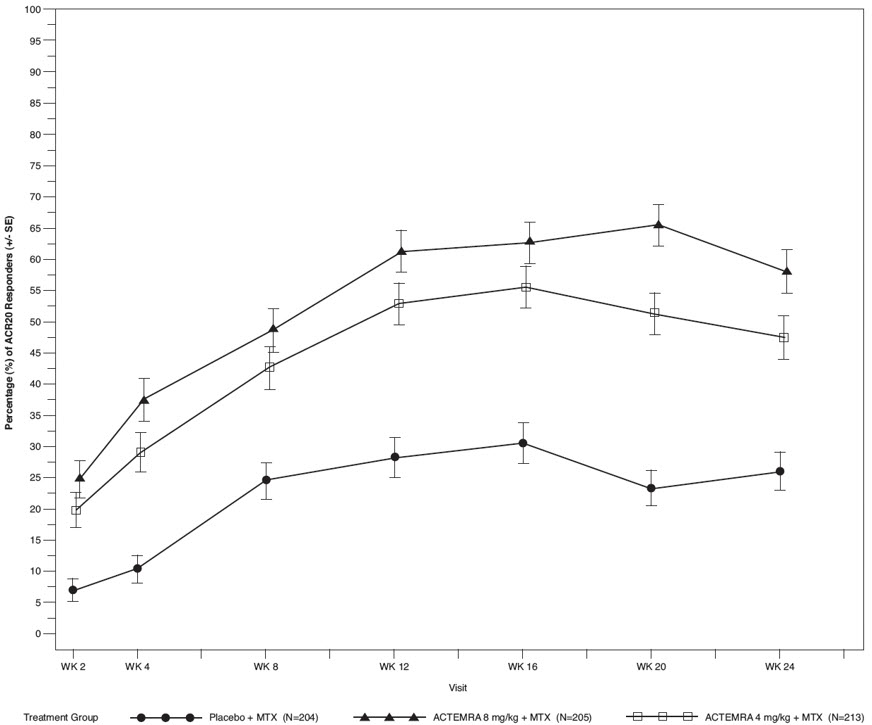
The percent of ACR 20 responders by visit for Study III is shown in Figure 1. Similar response curves were observed in studies I, II, IV, and V.
| Figure 1 Percent of ACR 20 Responders by Visit for Study III (Inadequate Response to MTX) The same patients may not have responded at each timepoint. |
|---|
|
Radiographic Response
In Study II, structural joint damage was assessed radiographically and expressed as change in total Sharp-Genant score and its components, the erosion score and joint space narrowing score. Radiographs of hands/wrists and forefeet were obtained at baseline, 24 weeks, 52 weeks, and 104 weeks and scored by readers unaware of treatments group and visit number. The results from baseline to week 52 are shown in Table 6. ACTEMRA 4 mg per kg slowed (less than 75% inhibition compared to the control group) and ACTEMRA 8 mg per kg inhibited (at least 75% inhibition compared to the control group) the progression of structural damage compared to placebo plus MTX at week 52.
Table 6 Mean Radiographic Change from Baseline to Week 52 in Study II | Placebo + MTX | ACTEMRA
4 mg per kg + MTX | ACTEMRA
8 mg per kg + MTX |
|---|
| N=294 | N=343 | N=353 |
|---|
| SD = standard deviation |
| Week 52 Week 52 analysis employs linearly extrapolated data for patients after escape, withdrawal, or loss to follow up. | | | |
| Total Sharp-Genant Score, Mean (SD) | 1.17
(3.14) | 0.33
(1.30) | 0.25
(0.98) |
| Adjusted Mean difference Difference between the adjusted means (ACTEMRA + MTX - Placebo + MTX)
(95%CI) | | -0.83
(-1.13, -0.52) | -0.90
(-1.20, -0.59) |
| Erosion Score, Mean (SD) | 0.76
(2.14) | 0.20
(0.83) | 0.15
(0.77) |
Adjusted Mean difference
(95%CI) | | -0.55
(-0.76, -0.34) | -0.60
(-0.80, -0.39) |
| Joint Space Narrowing Score, Mean (SD) | 0.41
(1.71) | 0.13
(0.72) | 0.10
(0.49) |
Adjusted Mean difference
(95%CI) | | -0.28
(-0.44, -0.11) | -0.30
(-0.46, -0.14) |
The mean change from baseline to week 104 in Total Sharp-Genant Score for the ACTEMRA 4 mg per kg groups was 0.47 (SD = 1.47) and for the 8 mg per kg groups was 0.34 (SD = 1.24). By the week 104, most patients in the control (placebo + MTX) group had crossed over to active treatment, and results are therefore not included for comparison. Patients in the active groups may have crossed over to the alternate active dose group, and results are reported per original randomized dose group.
In the placebo group, 66% of patients experienced no radiographic progression (Total Sharp-Genant Score change ≤ 0) at week 52 compared to 78% and 83% in the ACTEMRA 4 mg per kg and 8 mg per kg, respectively. Following 104 weeks of treatment, 75% and 83% of patients initially randomized to ACTEMRA 4 mg per kg and 8 mg per kg, respectively, experienced no progression of structural damage compared to 66% of placebo treated patients.
Health Related Outcomes
In Study II, physical function and disability were assessed using the Health Assessment Questionnaire Disability Index (HAQ-DI). Both dosing groups of ACTEMRA demonstrated a greater improvement compared to the placebo group in the AUC of change from baseline in the HAQ-DI through week 52. The mean change from baseline to week 52 in HAQ-DI was 0.6, 0.5, and 0.4 for ACTEMRA 8 mg per kg, ACTEMRA 4 mg per kg, and placebo treatment groups, respectively. Sixty-three percent (63%) and sixty percent (60%) of patients in the ACTEMRA 8 mg per kg and ACTEMRA 4 mg per kg treatment groups, respectively, achieved a clinically relevant improvement in HAQ-DI (change from baseline of ≥ 0.3 units) at week 52 compared to 53% in the placebo treatment group.
Other Health-Related Outcomes
General health status was assessed by the Short Form Health Survey (SF-36) in Studies I – V. Patients receiving ACTEMRA demonstrated greater improvement from baseline compared to placebo in the Physical Component Summary (PCS), Mental Component Summary (MCS), and in all 8 domains of the SF-36.
Radiographic Response
In study SC-II, the progression of structural joint damage was assessed radiographically and expressed as a change from baseline in the van der Heijde modified total Sharp score (mTSS). At week 24, significantly less radiographic progression was observed in patients receiving ACTEMRA SC every other week plus DMARD(s) compared to placebo plus DMARD(s); mean change from baseline in mTSS of 0.62 vs. 1.23, respectively, with an adjusted mean difference of -0.60 (-1.1, -0.1). These results are consistent with those observed in patients treated with intravenous ACTEMRA.
Health Related Outcomes
In studies SC-I and SC-II, the mean decrease from baseline to week 24 in HAQ-DI was 0.6, 0.6, 0.4 and 0.3, and the proportion of patients who achieved a clinically relevant improvement in HAQ-DI (change from baseline of ≥ 0.3 units) was 65%, 67%, 58% and 47%, for the SC every week, IV 8 mg/kg, SC every other week, and placebo treatment groups, respectively.
Other Health-Related Outcomes
General health status was assessed by the SF-36 in Studies SC-I and SC-II. In Study SC-II, patients receiving ACTEMRA every other week demonstrated greater improvement from baseline compared to placebo in the PCS, MCS, and in all 8 domains of the SF-36. In Study SC-I, improvements in these scores were similar between ACTEMRA SC every week and ACTEMRA IV 8 mg/kg.
Systemic Features
Of patients with fever or rash at baseline, those treated with ACTEMRA had fewer systemic features; 35 out of 41 (85%) became fever free (no temperature recording at or above 37.5°C in the preceding 14 days) compared to 5 out of 24 (21%) of placebo-treated patients, and 14 out of 22 (64%) became free of rash compared to 2 out of 18 (11%) of placebo-treated patients. Responses were consistent in the open label extension (data available through 44 weeks).
Corticosteroid Tapering
Of the patients receiving oral corticosteroids at baseline, 8 out of 31 (26%) placebo and 48 out of 70 (69%), ACTEMRA patients achieved a JIA ACR 70 response at week 6 or 8 enabling corticosteroid dose reduction. Seventeen (24%) ACTEMRA patients versus 1 (3%) placebo patient were able to reduce the dose of corticosteroid by at least 20% without experiencing a subsequent JIA ACR 30 flare or occurrence of systemic symptoms to week 12. In the open label portion of the study, by week 44, there were 44 out of 103 (43%) ACTEMRA patients off oral corticosteroids. Of these 44 patients 50% were off corticosteroids 18 weeks or more.
Health Related Outcomes
Physical function and disability were assessed using the Childhood Health Assessment Questionnaire Disability Index (CHAQ-DI). Seventy-seven percent (58 out of 75) of patients in the ACTEMRA treatment group achieved a minimal clinically important improvement in CHAQ-DI (change from baseline of ≥ 0.13 units) at week 12 compared to 19% (7 out of 37) in the placebo treatment group.
For Intravenous Infusion
ACTEMRA (tocilizumab) injection is a preservative-free, sterile clear, colorless to pale yellow solution. ACTEMRA is supplied as 80 mg/4 mL (NDC 50242-135-01), 200 mg/10 mL (NDC 50242-136-01), and 400 mg/20 mL (NDC 50242-137-01) individually packaged 20 mg/mL single-dose vials for further dilution prior to intravenous infusion.
For Subcutaneous Injection
ACTEMRA (tocilizumab) injection is supplied as a preservative-free, sterile, clear, colorless to slightly yellowish solution for subcutaneous administration. Each single-dose prefilled syringe delivers 162 mg/0.9 mL (NDC 50242-138-01).
Patient Counseling
Advise patients and parents or guardians of minors with PJIA, SJIA, or CRS of the potential benefits and risks of ACTEMRA.
Infections:
Inform patients that ACTEMRA may lower their resistance to infections. Instruct the patient of the importance of contacting their doctor immediately when symptoms suggesting infection appear in order to assure rapid evaluation and appropriate treatment.
- Gastrointestinal Perforation:
Inform patients that some patients who have been treated with ACTEMRA have had serious side effects in the stomach and intestines. Instruct the patient of the importance of contacting their doctor immediately when symptoms of severe, persistent abdominal pain appear to assure rapid evaluation and appropriate treatment. - Hypersensitivity and Serious Allergic Reactions
Assess patient suitability for home use for SC injection. Inform patients that some patients who have been treated with ACTEMRA have developed serious allergic reactions, including anaphylaxis. Advise patients to seek immediate medical attention if they experience any symptom of serious allergic reactions.
Instruction on Injection Technique
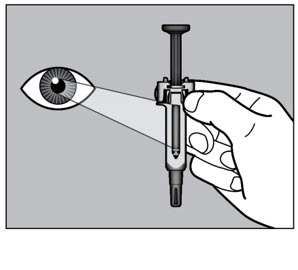
Perform the first injection under the supervision of a qualified healthcare professional. If a patient or caregiver is to administer subcutaneous ACTEMRA, instruct him/her in injection techniques and assess his/her ability to inject subcutaneously to ensure proper administration of subcutaneous ACTEMRA and the suitability for home use [See Patient Instructions for Use].
Prior to use, remove the prefilled syringe from the refrigerator and allow to sit at room temperature outside of the carton for 30 minutes, out of the reach of children. Do not warm ACTEMRA in any other way.
Advise patients to consult their healthcare provider if the full dose is not received.
A puncture-resistant container for disposal of needles and syringes should be used and should be kept out of the reach of children. Instruct patients or caregivers in the technique as well as proper syringe and needle disposal, and caution against reuse of these items.
Pregnancy Exposure Registry
Inform patients that there is a pregnancy registry to monitor fetal outcomes of pregnant women exposed to ACTEMRA [see Use in Specific Populations (8.1)].
Pregnancy
Inform female patients of reproductive potential that ACTEMRA may cause fetal harm and to inform their prescriber of a known or suspected pregnancy [see Use in Specific Populations (8.1)].
ACTEMRA® (tocilizumab)
Manufactured by:
Genentech, Inc.
A Member of the Roche Group
1 DNA Way
South San Francisco, CA 94080-4990
US License No. 1048
Representative sample of labeling (see the HOW SUPPLIED section for complete listing):