Following surgery, patients should continue to receive PERJETA and trastuzumab or trastuzumab hyaluronidase-oysk to complete 1 year of treatment (up to 18 cycles).
PERJETA should be administered in combination with trastuzumab or trastuzumab hyaluronidase-oysk every 3 weeks for a total of 1 year (up to 18 cycles) or until disease recurrence or unmanageable toxicity, whichever occurs first, as part of a complete regimen for early breast cancer, including standard anthracycline- and/or taxane-based chemotherapy as given in APHINITY. PERJETA and trastuzumab or trastuzumab hyaluronidase-oysk should start on Day 1 of the first taxane-containing cycle [see Clinical Studies (14.3)].
Assess left ventricular ejection fraction (LVEF) prior to initiation of PERJETA and at regular intervals during treatment as indicated in Table 2. The recommendations on dose modifications in the event of LVEF dysfunction are also indicated in Table 2 [see Warnings and Precautions (5.1)].
The infusion rate of PERJETA may be slowed or interrupted if the patient develops an infusion-related reaction [see Warnings and Precautions (5.3)].
The infusion should be discontinued immediately if the patient experiences a serious hypersensitivity reaction [see Warnings and Precautions (5.4)].
- Parenteral drug products should be inspected visually for particulates and discoloration prior to administration.
- Withdraw the appropriate volume of PERJETA solution from the vial(s) using a sterile needle and syringe.
- Dilute into a 250 mL 0.9% sodium chloride PVC or non-PVC polyolefin infusion bag.
- Mix diluted solution by gentle inversion. Do not shake.
- Administer immediately once prepared.
- If the diluted infusion solution is not used immediately, it can be stored at 2°C to 8°C for up to 24 hours.
- Dilute with 0.9% Sodium Chloride injection only. Do not use dextrose (5%) solution.
Metastatic Breast Cancer (MBC)
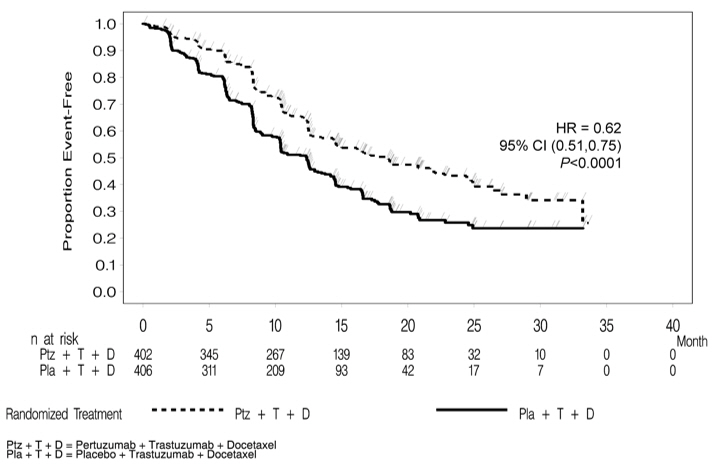
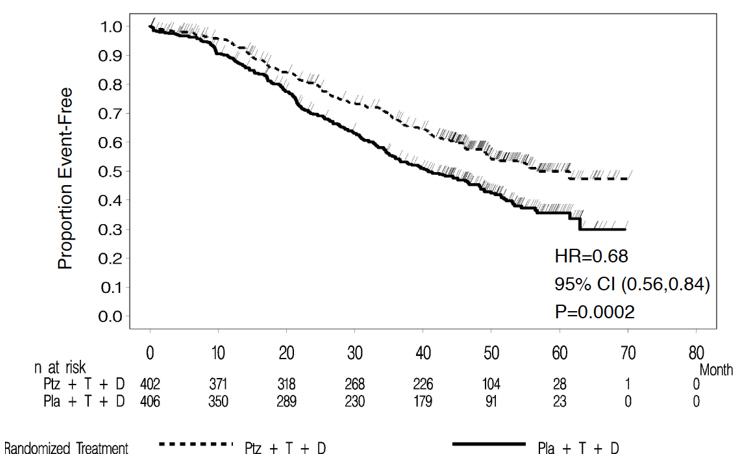
The adverse reactions described in Table 3 were identified in 804 patients with HER2-positive metastatic breast cancer treated in CLEOPATRA. Patients were randomized to receive either PERJETA in combination with trastuzumab and docetaxel or placebo in combination with trastuzumab and docetaxel. The median duration of study treatment was 18.1 months for patients in the PERJETA-treated group and 11.8 months for patients in the placebo-treated group. No dose adjustment was permitted for PERJETA or trastuzumab. Adverse reactions resulting in permanent discontinuation of all study therapy were 6% in the PERJETA-treated group and 5% for patients in the placebo-treated group. The most common adverse reactions (>1%) that led to discontinuation of all study therapy was left ventricular dysfunction (1% for patients in the PERJETA-treated group and 2% for patients in the placebo-treated group). The most common adverse reactions that led to discontinuation of docetaxel alone were edema, fatigue, edema peripheral, neuropathy peripheral, neutropenia, nail disorder and pleural effusion. Table 3 reports the adverse reactions that occurred in at least 10% of patients in the PERJETA-treated group. The safety profile of PERJETA remained unchanged with an additional 2.75 years of follow-up (median total follow-up of 50 months) in CLEOPATRA.
The most common adverse reactions (> 30%) seen with PERJETA in combination with trastuzumab and docetaxel were diarrhea, alopecia, neutropenia, nausea, fatigue, rash, and peripheral neuropathy. The most common NCI - CTCAE v3.0 Grade 3 – 4 adverse reactions (> 2%) were neutropenia, febrile neutropenia, leukopenia, diarrhea, peripheral neuropathy, anemia, asthenia, and fatigue. An increased incidence of febrile neutropenia was observed for Asian patients in both treatment arms compared with patients of other races and from other geographic regions. Among Asian patients, the incidence of febrile neutropenia was higher in the pertuzumab-treated group (26%) compared with the placebo-treated group (12%).
Table 3 Summary of Adverse Reactions Occurring in ≥ 10% of Patients on the PERJETA Treatment Arm in CLEOPATRABody System/
Adverse Reactions | PERJETA + trastuzumab + docetaxel
n=407
Frequency rate % | Placebo + trastuzumab + docetaxel
n=397
Frequency rate % |
|---|
| All Grades
% | Grades 3 – 4
% | All Grades
% | Grades 3 – 4
% |
|---|
| General disorders and administration site conditions | |
| Fatigue | 37 | 2 | 37 | 3 |
| Mucosal inflammation | 28 | 1 | 20 | 1 |
| Asthenia | 26 | 2 | 30 | 2 |
| Edema peripheral | 23 | 0.5 | 30 | 0.8 |
| Pyrexia | 19 | 1 | 18 | 0.5 |
| Skin and subcutaneous tissue disorders | |
| Alopecia | 61 | 0 | 60 | 0.3 |
| Rash | 34 | 0.7 | 24 | 0.8 |
| Nail disorder | 23 | 1 | 23 | 0.3 |
| Pruritus | 14 | 0 | 10 | 0 |
| Dry skin | 11 | 0 | 4 | 0 |
| Gastrointestinal disorders | |
| Diarrhea | 67 | 8 | 46 | 5 |
| Nausea | 42 | 1 | 42 | 0.5 |
| Vomiting | 24 | 1 | 24 | 2 |
| Stomatitis | 19 | 0.5 | 15 | 0.3 |
| Constipation | 15 | 0 | 25 | 1 |
| Blood and lymphatic system disorders | |
| Neutropenia | 53 | 49 | 50 | 46 |
| Anemia | 23 | 2 | 19 | 4 |
| Leukopenia | 18 | 12 | 20 | 15 |
| Febrile neutropenia In this table this denotes an adverse reaction that has been reported in association with a fatal outcome | 14 | 13 | 8 | 7 |
| Nervous system disorders | |
| Neuropathy peripheral | 32 | 3 | 34 | 2 |
| Headache | 21 | 1 | 17 | 0.5 |
| Dysgeusia | 18 | 0 | 16 | 0 |
| Dizziness | 13 | 0.5 | 12 | 0 |
| Musculoskeletal and connective tissue disorders | |
| Myalgia | 23 | 1 | 24 | 0.8 |
| Arthralgia | 15 | 0.2 | 16 | 0.8 |
| Infections and infestations | |
| Upper respiratory tract infection | 17 | 0.7 | 13 | 0 |
| Nasopharyngitis | 12 | 0 | 13 | 0.3 |
| Respiratory, thoracic, and mediastinal disorders | |
| Dyspnea | 14 | 1 | 16 | 2 |
| Metabolism and nutrition disorders | |
| Decreased appetite | 29 | 2 | 26 | 2 |
| Eye disorders | |
| Lacrimation increased | 14 | 0 | 14 | 0 |
| Psychiatric disorders | |
| Insomnia | 13 | 0 | 13 | 0 |
The following clinically relevant adverse reactions were reported in < 10% of patients in the PERJETA-treated group in CLEOPATRA:
Infections and infestations: Paronychia (7% in the PERJETA-treated group vs. 4% in the placebo-treated group)
Adverse Reactions Reported in Patients Receiving PERJETA and Trastuzumab After Discontinuation of Docetaxel
In CLEOPATRA, adverse reactions were reported less frequently after discontinuation of docetaxel treatment. All adverse reactions in the PERJETA and trastuzumab treatment group occurred in < 10% of patients with the exception of diarrhea (19%), upper respiratory tract infection (13%), rash (12%), headache (11%), and fatigue (11%).
Neoadjuvant Treatment of Breast Cancer (NeoSphere)
In NeoSphere, the most common adverse reactions seen with PERJETA in combination with trastuzumab and docetaxel administered for 4 cycles were similar to those seen in the PERJETA-treated group in CLEOPATRA. The most common adverse reactions (> 30%) were alopecia, neutropenia, diarrhea, and nausea. The most common NCI – CTCAE v3.0 Grade 3 – 4 adverse reactions (> 2%) were neutropenia, febrile neutropenia, leukopenia, and diarrhea. In this group, one patient permanently discontinued neoadjuvant treatment due to an adverse event. Table 4 reports the adverse reactions that occurred in patients who received neoadjuvant treatment with PERJETA for breast cancer in NeoSphere.
Table 4 Summary of Adverse Reactions Occurring in ≥ 10% in the Neoadjuvant Setting for Patients Receiving PERJETA in NeoSphereBody System/
Adverse Reactions | Trastuzumab + docetaxel
n=107
Frequency rate
% | PERJETA + trastuzumab + docetaxel
n=107
Frequency rate
% | PERJETA + trastuzumab
n=108
Frequency rate
% | PERJETA + docetaxel
n=108
Frequency rate
% |
|---|
| All Grades
% | Grades 3 – 4
% | All Grades
% | Grades 3 – 4
% | All Grades
% | Grades 3 – 4
% | All Grades
% | Grades 3 – 4
% |
|---|
| General disorders and administration site conditions | |
| Fatigue | 27 | 0 | 26 | 0.9 | 12 | 0 | 26 | 1 |
| Mucosal inflammation | 21 | 0 | 26 | 2 | 3 | 0 | 26 | 0 |
| Asthenia | 18 | 0 | 21 | 2 | 3 | 0 | 16 | 2 |
| Pyrexia | 10 | 0 | 17 | 0 | 8 | 0 | 9 | 0 |
| Edema peripheral | 10 | 0 | 3 | 0 | 0.9 | 0 | 5 | 0 |
| Skin and subcutaneous tissue disorders | |
| Alopecia | 66 | 0 | 65 | 0 | 3 | 0 | 67 | 0 |
| Rash | 21 | 2 | 26 | 0.9 | 11 | 0 | 29 | 1 |
| Gastrointestinal disorders | |
| Diarrhea | 34 | 4 | 46 | 6 | 28 | 0 | 54 | 4 |
| Nausea | 36 | 0 | 39 | 0 | 14 | 0 | 36 | 1 |
| Stomatitis | 7 | 0 | 18 | 0 | 5 | 0 | 10 | 0 |
| Vomiting | 12 | 0 | 13 | 0 | 5 | 0 | 16 | 2 |
| Blood and lymphatic system disorders | |
| Neutropenia | 64 | 59 | 50 | 45 | 0.9 | 0.9 | 65 | 57 |
| Leukopenia | 21 | 11 | 9 | 5 | 0 | 0 | 14 | 9 |
| Nervous system disorders | |
| Dysgeusia | 10 | 0 | 15 | 0 | 5 | 0 | 7 | 0 |
| Headache | 11 | 0 | 11 | 0 | 14 | 0 | 13 | 0 |
| Peripheral Sensory Neuropathy | 12 | 0.9 | 8 | 0.9 | 2 | 0 | 11 | 0 |
| Musculoskeletal and connective tissue disorders | |
| Myalgia | 22 | 0 | 22 | 0 | 9 | 0 | 21 | 0 |
| Arthralgia | 8 | 0 | 10 | 0 | 5 | 0 | 10 | 0 |
| Metabolism and nutrition disorders | |
| Decreased appetite | 7 | 0 | 14 | 0 | 2 | 0 | 15 | 0 |
| Psychiatric disorders | |
| Insomnia | 11 | 0 | 8 | 0 | 4 | 0 | 9 | 0 |
The following adverse reactions were reported in < 10% of patients receiving neoadjuvant treatment and occurred more frequently in PERJETA-treated groups in NeoSphere: (Ptz=pertuzumab; H=trastuzumab; D=docetaxel)
Blood and lymphatic system disorders: Anemia (7% in the H+D arm, 3% in the Ptz+H+D arm, 5% in the Ptz+H arm and 9% in the Ptz+D arm), Febrile neutropenia (7% in the H+D arm, 8% in the Ptz+H+D arm, 0% in the Ptz+H arm and 7% in the Ptz+D arm)
Nervous system disorders: Dizziness (4% in the H+D arm, 3% in the Ptz+H+D arm, 6% in the Ptz+H arm and 3% in the Ptz+D arm)
Infections and infestations: Upper respiratory tract infection (3% in the H+D arm, 5% in the Ptz+H+D arm, 2% in the Ptz+H arm and 7% in the Ptz+D arm)
Eye disorders: Lacrimation increased (2% in the H+D arm, 4% in the Ptz+H+D arm, 0.9% in the Ptz+H arm, and 4% in the Ptz+D arm)
Neoadjuvant Treatment of Breast Cancer (TRYPHAENA)
In TRYPHAENA, when PERJETA was administered in combination with trastuzumab and docetaxel for 3 cycles following 3 cycles of FEC, the most common adverse reactions (> 30%) were diarrhea, nausea, alopecia, neutropenia, vomiting, and fatigue. The most common NCI-CTCAE (version 3) Grade 3 – 4 adverse reactions (> 2%) were neutropenia, leukopenia, febrile neutropenia, diarrhea, left ventricular dysfunction, anemia, dyspnea, nausea, and vomiting.
Similarly, when PERJETA was administered in combination with docetaxel, carboplatin, and trastuzumab (TCH) for 6 cycles, the most common adverse reactions (> 30%) were diarrhea, alopecia, neutropenia, nausea, fatigue, vomiting, anemia, and thrombocytopenia. The most common NCI-CTCAE (version 3) Grade 3 – 4 adverse reactions (> 2%) were neutropenia, febrile neutropenia, anemia, leukopenia, diarrhea, thrombocytopenia, vomiting, fatigue, ALT increased, hypokalemia, and hypersensitivity.
Adverse reactions resulting in permanent discontinuation of any component of neoadjuvant treatment occurred in 7% of patients receiving PERJETA in combination with trastuzumab and docetaxel following FEC, and 8% for patients receiving PERJETA in combination with TCH. The most common adverse reactions (>2%) resulting in permanent discontinuation of PERJETA were left ventricular dysfunction, drug hypersensitivity, and neutropenia. Table 5 reports the adverse reactions that occurred in patients who received neoadjuvant treatment with PERJETA for breast cancer in TRYPHAENA.
Table 5 Summary of Adverse Reactions Occurring in ≥ 10% of Patients Receiving Neoadjuvant Treatment with PERJETA in TRYPHAENA| Body System/Adverse Reactions | PERJETA + trastuzumab + FEC followed by PERJETA + trastuzumab + docetaxel | PERJETA + trastuzumab + docetaxel following FEC | PERJETA + TCH |
|---|
| n=72 | n=75 | n=76 |
|---|
Frequency rate
% | Frequency rate
% | Frequency rate
% |
|---|
| All Grades
% | Grades 3 – 4
% | All Grades
% | Grades 3 – 4
% | All Grades
% | Grades 3 – 4
% |
|---|
| FEC=5-fluorouracil, epirubicin, cyclophosphamide, TCH=docetaxel, carboplatin, trastuzumab |
| General disorders and administration site conditions | |
| Fatigue | 36 | 0 | 36 | 0 | 42 | 4 |
| Mucosal inflammation | 24 | 0 | 20 | 0 | 17 | 1 |
| Pyrexia | 17 | 0 | 9 | 0 | 16 | 0 |
| Asthenia | 10 | 0 | 15 | 1 | 13 | 1 |
| Edema peripheral | 11 | 0 | 4 | 0 | 9 | 0 |
| Skin and subcutaneous tissue disorders | |
| Alopecia | 49 | 0 | 52 | 0 | 55 | 0 |
| Rash | 19 | 0 | 11 | 0 | 21 | 1 |
| Palmar-Plantar Erythrodysaesthesia Syndrome | 7 | 0 | 11 | 0 | 8 | 0 |
| Dry skin | 6 | 0 | 9 | 0 | 11 | 0 |
| Gastrointestinal disorders | |
| Diarrhea | 61 | 4 | 61 | 5 | 72 | 12 |
| Nausea | 53 | 0 | 53 | 3 | 45 | 0 |
| Vomiting | 40 | 0 | 36 | 3 | 39 | 5 |
| Dyspepsia | 25 | 1 | 8 | 0 | 22 | 0 |
| Constipation | 18 | 0 | 23 | 0 | 16 | 0 |
| Stomatitis | 14 | 0 | 17 | 0 | 12 | 0 |
| Blood and lymphatic system disorders | |
| Neutropenia | 51 | 47 | 47 | 43 | 49 | 46 |
| Leukopenia | 22 | 19 | 16 | 12 | 17 | 12 |
| Anemia | 19 | 1 | 9 | 4 | 38 | 17 |
| Febrile neutropenia | 18 | 18 | 9 | 9 | 17 | 17 |
| Thrombocytopenia | 7 | 0 | 1 | 0 | 30 | 12 |
| Immune system disorders | |
| Hypersensitivity | 10 | 3 | 1 | 0 | 12 | 3 |
| Nervous system disorders | |
| Headache | 22 | 0 | 15 | 0 | 17 | 0 |
| Dysgeusia | 11 | 0 | 13 | 0 | 21 | 0 |
| Dizziness | 8 | 0 | 8 | 1 | 16 | 0 |
| Neuropathy peripheral | 6 | 0 | 1 | 0 | 11 | 0 |
| Musculoskeletal and connective tissue disorders | |
| Myalgia | 17 | 0 | 11 | 1 | 11 | 0 |
| Arthralgia | 11 | 0 | 12 | 0 | 7 | 0 |
| Respiratory, thoracic, and mediastinal disorders | |
| Dyspnea | 13 | 0 | 8 | 3 | 11 | 1 |
| Epistaxis | 11 | 0 | 11 | 0 | 16 | 1 |
| Cough | 10 | 0 | 5 | 0 | 12 | 0 |
| Oropharyngeal pain | 8 | 0 | 7 | 0 | 12 | 0 |
| Metabolism and nutrition disorders | |
| Decreased appetite | 21 | 0 | 11 | 0 | 21 | 0 |
| Eye disorders | |
| Lacrimation increased | 13 | 0 | 5 | 0 | 8 | 0 |
| Psychiatric disorders | |
| Insomnia | 11 | 0 | 13 | 0 | 21 | 0 |
| Investigations | |
| ALT increased | 7 | 0 | 3 | 0 | 11 | 4 |
The following selected adverse reactions were reported in < 10% of patients receiving neoadjuvant treatment in TRYPHAENA: (Ptz=pertuzumab; H=trastuzumab; D=docetaxel; FEC= fluorouracil, epirubicin, and cyclophosphamide; TCH=docetaxel, carboplatin, and trastuzumab)
Skin and subcutaneous tissue disorders: Nail disorder (10% in the Ptz+H+FEC/Ptz+H+D arm, 7% in the FEC/Ptz+H+D arm, and 9% in the Ptz+TCH arm), Paronychia (0% in the Ptz+H+FEC/Ptz+H+D arm, and 1% in both the FEC/Ptz+H+D and Ptz+TCH arms), Pruritus (3% in the Ptz+H+FEC/Ptz+H+D arm, 4% in the FEC/Ptz+H+D arm, and 4% in the Ptz+TCH arm)
Infections and infestations: Upper respiratory tract infection (8.3% in the Ptz+H+FEC/Ptz+H+D arm, 4.0% in the FEC/Ptz+H+D arm, and 2.6% in the Ptz+TCH arm), Nasopharyngitis (6.9% in the Ptz+H+FEC/Ptz+H+D arm, 6.7% in the FEC/Ptz+H+D arm, and 7.9% in the Ptz+TCH arm)
Neoadjuvant Treatment of Breast Cancer (BERENICE)
In BERENICE, when PERJETA was administered in combination with trastuzumab and paclitaxel for 4 cycles following 4 cycles of ddAC, the most common adverse reactions (> 30%) were nausea, diarrhea, alopecia, fatigue, constipation, peripheral neuropathy and headache. The most common Grade 3 – 4 adverse reactions (> 2%) were neutropenia, febrile neutropenia, neutrophil count decreased, white blood cell count decreased, anemia, diarrhea, peripheral neuropathy, alanine aminotransferase increased and nausea.
When PERJETA was administered in combination with trastuzumab and docetaxel for 4 cycles following 4 cycles of FEC, the most common adverse reactions (> 30%) were diarrhea, nausea, alopecia, asthenia, constipation, fatigue, mucosal inflammation, vomiting, myalgia, and anemia. The most common Grade 3 – 4 adverse reactions (> 2%) were febrile neutropenia, diarrhea, neutropenia, neutrophil count decreased, stomatitis, fatigue, vomiting, mucosal inflammation, neutropenic sepsis and anemia.
Adverse reactions resulting in permanent discontinuation of any component of neoadjuvant treatment were 14% for patients receiving PERJETA in combination with trastuzumab and paclitaxel following ddAC and 8% for patients receiving PERJETA in combination with trastuzumab and docetaxel following FEC. The most common adverse reactions (>1%) resulting in permanent discontinuation of any component of neoadjuvant treatment were neuropathy peripheral, ejection fraction decreased, diarrhea, neutropenia and infusion related reaction. Table 6 reports the adverse reactions that occurred in patients who received neoadjuvant treatment with PERJETA for breast cancer in BERENICE.
Table 6 Summary of Adverse Reactions Occurring in ≥ 10% of Patients Receiving Neoadjuvant Treatment with PERJETA in BERENICE| Body System/Adverse Reactions | PERJETA + trastuzumab + paclitaxel following ddAC
n=199
Frequency rate
% | PERJETA + trastuzumab + docetaxel following FEC
n=198
Frequency rate
% |
|---|
| All Grades
% | Grades 3 – 4
% | All Grades
% | Grades 3 – 4
% |
|---|
| ddAC = dose-dense doxorubicin, cyclophosphamide, FEC=5-fluorouracil, epirubicin, cyclophosphamide |
| General disorders and administration site conditions | |
| Fatigue | 58 | 1 | 38 | 5 |
| Asthenia | 19 | 2 | 41 | 0 |
| Mucosal inflammation | 22 | 1 | 37 | 4 |
| Pyrexia | 15 | 0 | 18 | 0 |
| Edema peripheral | 9 | 0 | 12 | 1 |
| Skin and subcutaneous tissue disorders | |
| Alopecia | 62 | 0 | 59 | 0 |
| Rash | 14 | 0 | 11 | 0 |
| Dry skin | 14 | 0 | 10 | 0 |
| Nail discoloration | 15 | 0 | 2 | 0 |
| Palmar-Plantar Erythrodysaesthesia Syndrome | 6 | 0 | 10 | 0.5 |
| Gastrointestinal disorders | |
| Nausea | 71 | 3 | 69 | 2 |
| Diarrhea | 67 | 3 | 69 | 10 |
| Constipation | 35 | 0.5 | 38 | 0.5 |
| Vomiting | 23 | 1 | 35 | 4 |
| Stomatitis | 25 | 0 | 27 | 5 |
| Dyspepsia | 19 | 0 | 16 | 0 |
| Abdominal pain upper | 6 | 0 | 13 | 0 |
| Abdominal pain | 5 | 0 | 10 | 0 |
| Gastroesophageal reflux disease | 12 | 0 | 2 | 0 |
| Blood and lymphatic system disorders | |
| Anemia | 27 | 3 | 30 | 3 |
| Neutropenia | 22 | 12 | 16 | 9 |
| Febrile neutropenia | 7 | 7 | 17 | 17 |
| Nervous system disorders | |
| Headache | 30 | 0.5 | 14 | 0.5 |
| Dysgeusia | 20 | 0 | 19 | 0.5 |
| Neuropathy peripheral | 42 | 3 | 26 | 0.5 |
| Paresthesia | 15 | 0 | 9 | 0 |
| Dizziness | 12 | 0 | 8 | 0 |
| Musculoskeletal and connective tissue disorders | |
| Myalgia | 20 | 0 | 33 | 1 |
| Arthralgia | 20 | 0 | 21 | 1 |
| Back pain | 10 | 0 | 9 | 0 |
| Pain in extremity | 10 | 0 | 8 | 0 |
| Bone pain | 12 | 0.5 | 5 | 0 |
| Infections and infestations | |
| Urinary tract infection | 11 | 1 | 2 | 0 |
| Respiratory, thoracic, and mediastinal disorders | |
| Epistaxis | 25 | 0 | 19 | 0 |
| Dyspnea | 15 | 0.5 | 15 | 0.5 |
| Cough | 20 | 0.5 | 9 | 0 |
| Oropharyngeal pain | 10 | 0 | 8 | 0.5 |
| Metabolism and nutrition disorders | |
| Decreased appetite | 20 | 0 | 23 | 0 |
| Eye disorders | |
| Lacrimation increased | 9 | 0 | 18 | 0 |
| Psychiatric disorders | |
| Insomnia | 19 | 0 | 13 | 0 |
| Vascular disorders | |
| Hot flush | 19 | 0 | 13 | 0 |
| Investigations | |
| White blood cell count decreased | 11 | 4 | 3 | 2 |
| Injury, poisoning and procedural complications | |
| Infusion related reaction | 16 | 1 | 13 | 1 |
The following selected adverse reactions were reported in < 10% of patients receiving neoadjuvant treatment in BERENICE: (Ptz=pertuzumab; H=trastuzumab; P=paclitaxel; ddAC=dose-dense doxorubicin and cyclophosphamide; D=docetaxel; FEC= fluorouracil, epirubicin, and cyclophosphamide)
Skin and Subcutaneous tissue disorders: Pruritus (9% in the ddAC/Ptz+H+P arm, and 8% in the FEC/Ptz+H+D arm), Nail disorder (7% in the ddAC/Ptz+H+P arm, and 10% in the FEC/Ptz+H+D arm)
Infections and infestations: Upper respiratory tract infection (7% in the ddAC/Ptz+H+P arm, and 2% in the FEC/Ptz+H+D arm), nasopharyngitis (7% in the ddAC/Ptz+H+P arm, and 9% in the FEC/Ptz+H+D arm), paronychia (0.5% in the ddAC/Ptz+H+P arm, and 1% in the FEC/Ptz+H+D arm)
Adjuvant Treatment of Breast Cancer (APHINITY)
The adverse reactions described in Table 7 were identified in 4769 patients with HER2-positive early breast cancer treated in APHINITY. Patients were randomized to receive either PERJETA in combination with trastuzumab and chemotherapy or placebo in combination with trastuzumab and chemotherapy.
Adverse reactions resulting in permanent discontinuation of any study therapy were 13% for patients in the PERJETA-treated group and 12% for patients in the placebo-treated group. Adverse reactions resulting in permanent discontinuation of PERJETA or placebo was 7% and 6%, respectively. The most common adverse reactions (>0.5%) resulting in permanent discontinuation of any study treatment were ejection fraction decreased, neuropathy peripheral, diarrhea, and cardiac failure. Table 7 reports the adverse reactions that occurred in at least 10% of patients in the PERJETA-treated group.
When PERJETA was administered in combination with trastuzumab and chemotherapy, the most common adverse reactions (> 30%) were diarrhea, nausea, alopecia, fatigue, peripheral neuropathy, and vomiting. The most common Grade 3 – 4 adverse reactions (> 2%) were neutropenia, febrile neutropenia, diarrhea, neutrophil count decreased, anemia, white blood cell count decreased, leukopenia, fatigue, nausea, and stomatitis.
The incidence of diarrhea, all Grades, was higher when chemotherapy was administered with targeted therapy (61% in the PERJETA-treated group vs. 34% in the placebo-treated group), and was higher when administered with non-anthracycline based therapy (85% in the PERJETA-treated group vs. 62% in the placebo-treated group) than with anthracycline based therapy (67% in the PERJETA-treated group vs. 41% in the placebo-treated group). The incidence of diarrhea during the period that targeted therapy was administered without chemotherapy was 18% in the PERJETA-treated group vs. 9% in the placebo-treated group. The median duration of all Grades diarrhea was 8 days for the PERJETA-treated group vs. 6 days for the placebo-treated group. The median duration of Grade ≥3 diarrhea was 20 days for the PERJETA-treated group vs. 8 days for the placebo-treated group. More patients required hospitalization for diarrhea as a serious adverse event in the PERJETA-treated group (2.4%) than in the placebo-treated group (0.7%).
Table 7 Summary of Adverse Reactions Occurring in ≥ 10% of Patients Receiving Adjuvant Treatment with PERJETA in APHINITYBody System/
Adverse Reactions | PERJETA + trastuzumab + chemotherapy
n=2364 | Placebo + trastuzumab + chemotherapy
n=2405 |
|---|
| Frequency rate % | Frequency rate % |
|---|
| All Grades
% | Grades 3 – 4
% | All Grades
% | Grades 3 – 4
% |
|---|
| General disorders and administration site conditions | |
| Fatigue | 49 | 4 | 44 | 3 |
| Mucosal inflammation | 23 | 2 | 19 | 0.7 |
| Asthenia | 21 | 1 | 21 | 2 |
| Pyrexia | 20 | 0.6 | 20 | 0.7 |
| Edema peripheral | 17 | 0 | 20 | 0.2 |
| Skin and subcutaneous tissue disorders | |
| Alopecia | 67 | <0.1 | 67 | <0.1 |
| Rash | 26 | 0.4 | 20 | 0.2 |
| Pruritus | 14 | 0.1 | 9 | <0.1 |
| Dry skin | 13 | 0.1 | 11 | <0.1 |
| Nail disorder | 12 | 0.2 | 12 | 0.1 |
| Gastrointestinal disorders | |
| Diarrhea | 71 | 10 | 45 | 4 |
| Nausea | 69 | 2 | 65 | 2 |
| Vomiting | 32 | 2 | 30 | 2 |
| Constipation | 29 | 0.5 | 32 | 0.3 |
| Stomatitis | 28 | 2 | 24 | 1 |
| Dyspepsia | 14 | 0 | 14 | 0 |
| Abdominal pain | 12 | 0.5 | 11 | 0.6 |
| Abdominal pain upper | 10 | 0.3 | 9 | 0.2 |
| Blood and lymphatic system disorders | |
| Anemia | 28 | 7 | 23 | 5 |
| Neutropenia | 25 | 16 | 23 | 16 |
| Febrile neutropenia In this table this denotes an adverse reaction that has been reported in association with a fatal outcome | 12 | 12 | 11 | 11 |
| Nervous system disorders | |
| Dysgeusia | 26 | 0.1 | 22 | <0.1 |
| Neuropathy peripheral | 33 | 1 | 32 | 1 |
| Headache | 22 | 0.3 | 23 | 0.4 |
| Paresthesia | 12 | 0.5 | 10 | 0.2 |
| Dizziness | 11 | 0 | 11 | 0.2 |
| Musculoskeletal and connective tissue disorders | |
| Arthralgia | 29 | 0.9 | 33 | 1 |
| Myalgia | 26 | 0.9 | 30 | 1 |
| Pain in extremity | 10 | 0.2 | 10 | 0.2 |
| Infections and infestations | |
| Nasopharyngitis | 13 | <0.1 | 12 | 0.1 |
| Respiratory, thoracic, and mediastinal disorders | |
| Epistaxis | 18 | <0.1 | 14 | 0 |
| Cough | 16 | <0.1 | 15 | <0.1 |
| Dyspnea | 12 | 0.4 | 12 | 0.5 |
| Metabolism and nutrition disorders | |
| Decreased appetite | 24 | 0.8 | 20 | 0.4 |
| Vascular disorders | |
| Hot flush | 20 | 0.2 | 21 | 0.4 |
| Eye disorders | |
| Lacrimation increased | 13 | 0 | 13 | <0.1 |
| Psychiatric disorders | |
| Insomnia | 17 | 0.3 | 17 | <0.1 |
| Investigations | |
| Neutrophil count decreased | 14 | 10 | 14 | 10 |
| Injury, poisoning and procedural complications | |
| Radiation skin injury | 13 | 0.3 | 11 | 0.3 |
For the adverse reactions that were reported in ≥10% of patients with at least 5% difference between the PERJETA-treated group and the placebo-treated group in APHINITY, the breakdown per chemotherapy regimen is provided: (Ptz=pertuzumab; H=trastuzumab; AC=anthracyclines; TCH=docetaxel, carboplatin, and trastuzumab)
Gastrointestinal disorders: Diarrhea (67% in the Ptz+H+AC chemo arm, 85% in the Ptz+TCH arm, 41% in the Pla+H+AC chemo arm, 62% in the Pla+TCH arm)
Skin and subcutaneous disorders: Rash (26% in the Ptz+H+AC chemo arm, 25% in the Ptz+TCH arm, 21% in the Pla+H+AC chemo arm, 19% in the Pla+TCH arm), Pruritus (14% in the Ptz+H+AC chemo arm, 15% in the Ptz+TCH arm, 9% in the Pla+H+AC chemo arm, 9% in the Pla+TCH arm)
The following clinically relevant adverse reactions were reported in < 10% of patients in the PERJETA-treated group in APHINITY:
Blood and lymphatic system disorders: Leukopenia (9% in the PERJETA-treated group vs. 9% in the placebo-treated group)
Infections and infestations: Upper respiratory tract infection (8% in the PERJETA-treated group vs. 7% in the placebo-treated group), paronychia (4% in the PERJETA-treated group vs. 2% in the placebo-treated group)
Adverse Reactions Reported in Patients Receiving PERJETA and Trastuzumab After Discontinuation of Chemotherapy
In the APHINITY study, during the targeted treatment alone phase, all adverse reactions in the PERJETA treatment group occurred in < 10% of patients with the exception of diarrhea (18%), arthralgia (15%), radiation skin injury (12%), and hot flush (12%).
Pregnancy Pharmacovigilance Program
There is a pregnancy pharmacovigilance program for PERJETA. If PERJETA is administered during pregnancy, or if a patient becomes pregnant while receiving PERJETA or within 7 months following the last dose of PERJETA in combination with trastuzumab, health care providers and patients should immediately report PERJETA exposure to Genentech at 1-888-835-2555.
Risk Summary
Based on its mechanism of action and findings in animal studies, PERJETA can cause fetal harm when administered to a pregnant woman. There are no available data on the use of PERJETA in pregnant women. However, in post-marketing reports, use of another HER2/neu receptor antagonist (trastuzumab) during pregnancy resulted in cases of oligohydramnios and oligohydramnios sequence manifesting as pulmonary hypoplasia, skeletal abnormalities, and neonatal death. In an animal reproduction study, administration of pertuzumab to pregnant cynomolgus monkeys during the period of organogenesis resulted in oligohydramnios, delayed fetal kidney development, and embryo-fetal deaths at clinically relevant exposures that were 2.5 to 20-fold greater than exposures in humans receiving the recommended dose, based on Cmax [see Data]. Apprise the patient of the potential risks to a fetus. There are clinical considerations if PERJETA in combination with trastuzumab is used during pregnancy or within 7 months prior to conception [see Clinical Considerations].
The estimated background risk of major birth defects and miscarriage for the indicated population is unknown. In the U.S. general population, the estimated background risk of major birth defects and miscarriage in clinically recognized pregnancies is 2-4% and 15-20%, respectively.
Clinical Considerations
Fetal/Neonatal Adverse Reactions
Monitor women who received PERJETA in combination with trastuzumab during pregnancy or within 7 months prior to conception for oligohydramnios. If oligohydramnios occurs, perform fetal testing that is appropriate for gestational age and consistent with community standards of care.
Data
Animal Data
Pregnant cynomolgus monkeys were treated on Gestational Day (GD)19 with loading doses of 30 to 150 mg/kg pertuzumab, followed by bi-weekly doses of 10 to 100 mg/kg. These dose levels resulted in clinically relevant exposures of 2.5 to 20-fold greater than exposures in humans receiving the recommended dose, based on Cmax. Intravenous administration of pertuzumab from GD19 through GD50 (period of organogenesis) was embryotoxic, with dose-dependent increases in embryo-fetal death between GD25 to GD70. The incidences of embryo-fetal loss were 33, 50, and 85% for dams treated with bi-weekly pertuzumab doses of 10, 30, and 100 mg/kg, respectively (2.5 to 20-fold greater than the recommended human dose, based on Cmax). At Caesarean section on GD100, oligohydramnios, decreased relative lung and kidney weights, and microscopic evidence of renal hypoplasia consistent with delayed renal development were identified in all pertuzumab dose groups. Pertuzumab exposure was reported in offspring from all treated groups, at levels of 29% to 40% of maternal serum levels at GD100.
Risk Summary
There is no information regarding the presence of pertuzumab in human milk, the effects on the breastfed infant or the effects on milk production. Published data suggest that human IgG is present in human milk but does not enter the neonatal and infant circulation in substantial amounts. Consider the developmental and health benefits of breast feeding along with the mother's clinical need for PERJETA treatment and any potential adverse effects on the breastfed child from PERJETA or from the underlying maternal condition. This consideration should also take into account the elimination half-life of pertuzumab and the trastuzumab wash out period of 7 months.
Pregnancy Testing
Verify the pregnancy status of females of reproductive potential prior to the initiation of PERJETA.
Contraception
Females
Based on the mechanism of action and animal data, PERJETA can cause embryo-fetal harm when administered during pregnancy. Advise females of reproductive potential to use effective contraception during treatment and for 7 months following the last dose of PERJETA in combination with trastuzumab [see Use in Specific Populations (8.1)].
NeoSphere
NeoSphere (NCT00545688) was a multicenter, randomized trial conducted in 417 patients with operable, locally advanced, or inflammatory HER2-positive breast cancer (T2-4d) who were scheduled for neoadjuvant therapy. HER2 overexpression was defined as a score of 3+ IHC or FISH amplification ratio of 2.0 or greater as determined by a central laboratory. Patients were randomly allocated to receive 1 of 4 neoadjuvant regimens prior to surgery as follows: trastuzumab plus docetaxel, PERJETA plus trastuzumab and docetaxel, PERJETA plus trastuzumab, or PERJETA plus docetaxel. Randomization was stratified by breast cancer type (operable, locally advanced, or inflammatory) and estrogen receptor (ER) or progesterone receptor (PgR) positivity.
PERJETA was given intravenously at an initial dose of 840 mg, followed by 420 mg every 3 weeks for 4 cycles. Trastuzumab was given intravenously at an initial dose of 8 mg/kg, followed by 6 mg/kg every 3 weeks for 4 cycles. Docetaxel was given as an initial dose of 75 mg/m2 by intravenous infusion every 3 weeks for 4 cycles. The docetaxel dose could be escalated to 100 mg/m2 at the investigator's discretion if the initial dose was well tolerated. Following surgery all patients received 3 cycles of 5-fluorouracil (600 mg/m2), epirubicin (90 mg/m2), and cyclophosphamide (600 mg/m2) (FEC) given intravenously every 3 weeks and trastuzumab administered intravenously every 3 weeks to complete 1 year of therapy. After surgery, patients in the PERJETA plus trastuzumab arm received docetaxel every 3 weeks for 4 cycles prior to FEC.
The primary endpoint of the study was pathological complete response (pCR) rate in the breast (ypT0/is). The FDA-preferred definition of pCR is the absence of invasive cancer in the breast and lymph nodes (ypT0/is ypN0).
Demographics were well balanced (median age was 49 – 50 years old, the majority were Caucasian (71%) and all were female. Overall, 7% of patients had inflammatory cancer, 32% had locally advanced cancer, and 61% had operable cancer. Approximately half the patients in each treatment group had hormone receptor-positive disease (defined as ER-positive and/or PgR-positive).
The efficacy results are summarized in Table 9. Statistically significant improvements in pCR rates by both the study and FDA-preferred definitions were observed in patients receiving PERJETA plus trastuzumab and docetaxel compared to patients receiving trastuzumab plus docetaxel. The pCR rates and magnitude of improvement with PERJETA were lower in the subgroup of patients with hormone receptor-positive tumors compared to patients with hormone receptor-negative tumors.
Table 9 Summary of Efficacy from NeoSphere| Endpoint/Study Population | H+T | Ptz+H+T | Ptz+H | Ptz+T |
|---|
| Overall ITT | N=107 | N=107 | N=107 | N=96 |
|---|
| T=docetaxel, Ptz=PERJETA, H=trastuzumab |
| CI=Confidence Interval |
pCR, n
(%)
[95% CI] | 23
(21.5%)
[14.1, 30.5] | 42
(39.3%)
[30.0, 49.2] | 12
(11.2%)
[5.9, 18.8] | 17
(17.7%)
[10.7, 26.8] |
| p-value (with Simes correction for CMH test) | | 0.0063
(vs. H+T) | 0.0223
(vs. H+T) | 0.0018
(vs. Ptz+H+T) |
| Hormone receptor-positive subgroup | N=50 | N=50 | N=51 | N=46 |
pCR, n
(%)
[95% CI] | 6
(12.0%)
[4.5, 24.3] | 11
(22.0%)
[11.5, 36.0] | 1
(2.0%)
[0.1, 10.5] | 4
(8.7%)
[2.4, 20.8] |
| Hormone receptor-negative subgroup | N=57 | N=57 | N=55 | N=50 |
pCR, n
(%)
[95% CI] | 17
(29.8%)
[18.4, 43.4] | 31
(54.4%)
[40.7, 67.6] | 11
(20.0%)
[10.4, 33.0] | 13
(26.0%)
[14.6, 40.3] |
TRYPHAENA
An additional neoadjuvant study (TRYPHAENA, NCT00976989) was conducted in 225 patients with HER2-positive locally advanced, operable, or inflammatory (T2-4d) breast cancer designed primarily to assess cardiac safety in which all arms included PERJETA. HER2 overexpression was defined as a score of 3+ IHC or FISH amplification ratio of 2.0 or greater as determined by a central laboratory.
Patients were randomly allocated to receive 1 of 3 neoadjuvant regimens prior to surgery as follows: 3 cycles of FEC followed by 3 cycles of docetaxel all in combination with PERJETA and trastuzumab, 3 cycles of FEC alone followed by 3 cycles of docetaxel and trastuzumab in combination with PERJETA, or 6 cycles of docetaxel, carboplatin, and trastuzumab (TCH) in combination with PERJETA. Randomization was stratified by breast cancer type (operable, locally advanced, or inflammatory) and ER and/or PgR positivity.
PERJETA was given by intravenous infusion at an initial dose of 840 mg, followed by 420 mg every 3 weeks. Trastuzumab was given by intravenous infusion at an initial dose of 8 mg/kg, followed by 6 mg/kg every 3 weeks. 5-Fluorouracil (500 mg/m2), epirubicin (100 mg/m2), and cyclophosphamide (600 mg/m2) were given intravenously every 3 weeks for 3 cycles. In the PERJETA plus trastuzumab, docetaxel, and FEC arms, docetaxel was given as an initial dose of 75 mg/m2 by intravenous infusion every 3 weeks for 3 cycles with the option to escalate to 100 mg/m2 at the investigator's discretion if the initial dose was well tolerated. However, in the PERJETA plus TCH arm, docetaxel was given intravenously at 75 mg/m2 (no escalation was permitted) and carboplatin (AUC 6) was given intravenously every 3 weeks for 6 cycles. Following surgery all patients received trastuzumab to complete 1 year of therapy, which was administered intravenously every 3 weeks.
Demographics were well balanced (median age was 49-50 years old, the majority were Caucasian [76%]) and all were female. Overall 6% of patients had inflammatory cancer, 25% had locally advanced cancer and 69% had operable cancer, with approximately half the patients in each treatment group having ER-positive and/or PgR-positive disease.
The pCR (ypT0/is ypN0) rates were 56.2% (95% CI: 44.1%, 67.8%), 54.7% (95% CI: 42.7%, 66.2%), and 63.6% (95% CI: 51.9%, 74.3%) for patients treated with PERJETA plus trastuzumab and FEC followed by PERJETA plus trastuzumab and docetaxel, PERJETA plus trastuzumab and docetaxel following FEC, or PERJETA plus TCH, respectively. The pCR rates were lower in the subgroups of patients with hormone receptor-positive tumors: 41.0% (95% CI: 25.6%, 57.9%), 45.7% (95% CI: 28.8%, 63.4%), and 47.5% (95% CI: 31.5%, 63.9%) than with hormone receptor-negative tumors: 73.5% (95% CI: 55.6%, 87.1%), 62.5% (95% CI: 45.8%, 77.3%), and 81.1% (95% CI: 64.8%, 92.0%), respectively.
BERENICE
A two-arm non-randomized study (BERENICE, NCT02132949) was conducted in 401 patients with HER2-positive locally advanced, inflammatory, or early-stage HER2-positive breast cancer. HER2 overexpression was defined as a score of 3+ IHC or ISH amplification ratio of 2.0 or greater as determined by a central laboratory.
Patients received 1 of 2 neoadjuvant regimens prior to surgery as follows: 4 cycles of dose dense doxorubicin and cyclophosphamide (ddAC) followed by 4 cycles of PERJETA in combination with trastuzumab and weekly paclitaxel for 12 weeks or 4 cycles of 5-fluorouracil, epirubicin and cyclophosphamide (FEC) followed by 4 cycles of PERJETA in combination with trastuzumab and docetaxel. The choice of neoadjuvant treatment regimen was made by the Investigator on a site-specific basis. Dosing for the regimens was as follows:
- PERJETA was given by intravenous infusion at an initial dose of 840 mg, followed by 420 mg every 3 weeks. Trastuzumab was given by intravenous infusion at an initial dose of 8 mg/kg, followed by 6 mg/kg every 3 weeks.
- In the ddAC cohort, (doxorubicin 60 mg/m2 and cyclophosphamide 600 mg/m2) were given intravenously every 2 weeks (ddAC) for 4 cycles with G-CSF (granulocyte colony stimulating factor) support at investigator discretion, followed by paclitaxel 80 mg/m2 given intravenously weekly for 12 weeks, with PERJETA and trastuzumab every 3 weeks from the start of paclitaxel for 4 cycles.
- In the FEC cohort, 5-Fluorouracil (5-FU) (500 mg/m2), epirubicin (100 mg/m2), and cyclophosphamide (600 mg/m2) were given intravenously every 3 weeks for 4 cycles, followed by docetaxel given as an initial dose of 75 mg/m2 by intravenous infusion every 3 weeks for 4 cycles with PERJETA and trastuzumab, and with the option to escalate to 100 mg/m2 at the investigator's discretion if the initial dose was well tolerated.
Following surgery, all patients received PERJETA and trastuzumab administered intravenously every 3 weeks to complete 1 year of therapy.
The median age of the overall study population was 49 years old (range 21-78), 12% of patients were 65 or older, 83% were Caucasian, and all but one patient was female. Overall 3% of patients had inflammatory cancer, 23% had locally advanced cancer (Stage 3A or greater), 5% were not classified per TNM staging, with approximately two thirds of the patients in each treatment group having ER-positive and/or PgR-positive disease. All patients had an ECOG performance status of 0 or 1.
The pCR (ypT0/is ypN0) rates were 61.8% (95% CI: 54.7, 68.6) and 60.7% (95% CI: 53.6, 67.5) for patients treated with ddAC followed by PERJETA plus trastuzumab and paclitaxel, or FEC followed by PERJETA plus trastuzumab and docetaxel, respectively. The pCR rates were lower in the subgroups of patients with hormone receptor-positive tumors: 51.6% (95% CI: 42.6, 60.5%) and 57.3% (95% CI: 48.1, 66.1%) than with hormone receptor-negative tumors: 81.5% (95% CI: 70.0, 90.1%) and 68.0% (95% CI: 56.2, 78.3%), respectively.
Left Ventricular Dysfunction
- Advise patients to contact a health care professional immediately for any of the following: new onset or worsening shortness of breath, cough, swelling of the ankles/legs, swelling of the face, palpitations, weight gain of more than 5 pounds in 24 hours, dizziness or loss of consciousness [see Warnings and Precautions (5.1)].
Embryo-Fetal Toxicity
- Advise pregnant women and females of reproductive potential that exposure to PERJETA in combination with trastuzumab during pregnancy or within 7 months prior to conception can result in fetal harm. Advise female patients to contact their healthcare provider with a known or suspected pregnancy [see Use in Specific Populations (8.1)].
- Advise women who are exposed to PERJETA in combination with trastuzumab during pregnancy or within 7 months prior to conception that there is a pregnancy pharmacovigilance program that monitors pregnancy outcomes. Encourage these patients to report their pregnancy to Genentech [see Use in Specific Populations (8.1)].
- Advise females of reproductive potential to use effective contraception during treatment and for 7 months following the last dose of PERJETA in combination with trastuzumab [see Use in Specific Populations (8.3)].
PERJETA® (pertuzumab)
Manufactured by:
Genentech, Inc.
A Member of the Roche Group
1 DNA Way
South San Francisco, CA 94080-4990
U.S. License No. 1048
PERJETA is a registered trademark of Genentech, Inc.
©2021 Genentech, Inc.
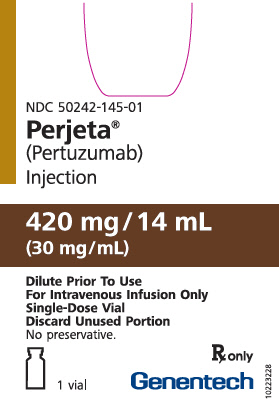
Representative sample of labeling (see the HOW SUPPLIED section for complete listing):