Evrysdi Powder, For Solution
Product Images NDC 50242-175

View Photos of Packaging, Regulatory Labels, and Product Appearance

Product Visual Gallery

This gallery contains 42 technical images submitted to the FDA as part of the official labeling for Evrysdi (NDC 50242-175). Unlike standard consumer photos, these assets often include clinical data figures, molecular chemical structures, and official manufacturer packaging layouts.

As provided by Genentech, Inc., these visuals offer a comprehensive scientific overview of the product's physical and chemical identity, aiding pharmacists and researchers in product verification and study.

FDA Label Image

Chemical Structure (Vrysdi 01)

Chemical Structure (Vrysdi 01)
Chemical structure diagram of Risdiplam, the active ingredient in EVRYSDI. The diagram illustrates the molecular arrangement with rings and nitrogen atoms as represented by the chemical bonds and symbols.*
FDA Label Image

Figure 1 (Vrysdi 02)

Figure 1 (Vrysdi 02)
A line graph showing least squares mean change from baseline in total MFMD32 score over 12 months comparing EVRYSDI and placebo. The x-axis represents time in months (0, 4, 8, 12), and the y-axis shows change scores ranging from -3 to 3. EVRYSDI demonstrates an increasing trend, peaking around month 8, while placebo remains near zero. Error bars indicate variability.*
FDA Label Image

Image (Vrysdi 03)

Image (Vrysdi 03)
EVRYSDI tablets by Genentech, Inc., shown in a white and blue blister pack within a white and teal carton. The product is identified as Risdiplam oral tablets with available strengths including 0.75 mg/mL and 5 mg/1, according to the label.*
FDA Label Image

Image (Vrysdi 04)

FDA Label Image

Image (Vrysdi 05)

Image (Vrysdi 05)
Chemical structure of risdiplam, the active ingredient in EVRYSDI (risdiplam) tablets by Genentech, Inc. The diagram shows the molecular arrangement relevant to the drug's composition.*
FDA Label Image

Image (Vrysdi 06)

Image (Vrysdi 06)
Chemical structure diagram of Risdiplam, the active ingredient in EVRYSDI tablets. The image displays the molecular formula representation, showing atoms and bonds of the compound without additional annotations.*
FDA Label Image

Image (Vrysdi 07)

FDA Label Image

Image (Vrysdi 08)

FDA Label Image

Figure A (Vrysdi 09)

Figure A (Vrysdi 09)
Illustration showing parts of a medication bottle and two oral syringes. The bottle includes a child-resistant cap, a dispensing top, and the main container. The two syringes are depicted separately, likely for measuring and administering oral liquid medication.*
FDA Label Image

Figure B (Vrysdi 10)

Figure B (Vrysdi 10)
Illustration showing parts of a syringe used for dosing medication, including the plunger, dose markings on the barrel, and tip. The diagram labels each part clearly for instructional purposes.*
FDA Label Image

Figure C (Vrysdi 11)

Figure C (Vrysdi 11)
An illustration showing a bottle with a close-up of its label featuring a serial number or lot code in a box, alongside a URL or website address beginning with 'WWW.' This is likely indicating how to find product or batch information on the bottle's label.*
FDA Label Image

Figure D (Vrysdi 12)

Figure D (Vrysdi 12)
An instructional illustration depicting the correct method to open a child-resistant cap on a small bottle. The image shows a hand pressing down on the cap and turning it to the left while holding the bottle firmly, with arrows indicating the direction of pressure and turning.*
FDA Label Image

Figure E (Vrysdi 13)

Figure E (Vrysdi 13)
An instructional illustration showing a hand holding a liquid dosing syringe with an eye symbol directed at the syringe's top. An arrow points to the top of the syringe labeled "End of plunger position," indicating proper plunger placement for accurate dosing.*
FDA Label Image

Figure F (Vrysdi 14)

Figure F (Vrysdi 14)
An instructional diagram showing a hand holding a small bottle with a dropper or syringe being inserted straight down into the bottle's neck. The image suggests how to properly place the dropper or syringe into the bottle for dispensing liquid medication.*
FDA Label Image

Figure G (Vrysdi 15)

Figure G (Vrysdi 15)
An instructional illustration showing a hand holding a bottle-like container upside down while another hand adjusts a measuring component at the bottom. An arrow indicates a direction of movement, suggesting how to prepare or use the product, likely related to dispensing or measuring a dose.*
FDA Label Image

Figure H (Vrysdi 16)

Figure H (Vrysdi 16)
An instructional illustration showing a hand holding an oral syringe attached to a bottle. The syringe is being filled with liquid medicine from the bottle, indicating measurement alignment with the graduated markings on the syringe.*
FDA Label Image

Figure I (Vrysdi 17)

Figure I (Vrysdi 17)
An instructional illustration showing a hand pulling a syringe upwards out of a bottle, while another hand holds the bottle steady on a surface. This image likely depicts how to properly remove medication from a bottle using a syringe.*
FDA Label Image

Figure J (Vrysdi 18)

Figure J (Vrysdi 18)
An instructional illustration showing the correct way to read a liquid medication syringe. It highlights the eye level for proper viewing and compares two syringes labeled 'NO' and 'YES' to demonstrate incorrect and correct liquid measurement positions.*
FDA Label Image

Figure K (Vrysdi 19)

Figure K (Vrysdi 19)
An instructional illustration showing a hand holding a bottle and twisting the cap, indicating how to open the bottle by turning the cap in opposite directions.*
FDA Label Image

Figure L (Vrysdi 20)

Figure L (Vrysdi 20)
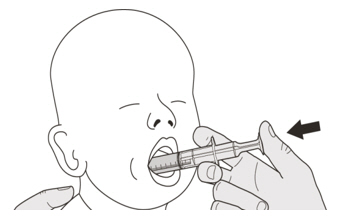
An instructional illustration showing a person administering oral medication to an infant using a syringe. The syringe tip is placed inside the infant's mouth, aimed toward the cheek, while a hand gently supports the syringe and another hand lightly supports the infant's chin.*
FDA Label Image

Figure M (Vrysdi 21)

Figure M (Vrysdi 21)
An instructional illustration depicting an eye next to an oral syringe, indicating the direction to use or observe the syringe, likely as part of medication administration instructions for EVRYSDI (Risdiplam) oral solution.*
FDA Label Image

Figure N (Vrysdi 22)

Figure N (Vrysdi 22)
An instructional illustration showing a person assisting a child in drinking from a cup, with one hand supporting the child's chin and the other holding the cup to the child's mouth. The child's eyes are closed, and a supportive hand is placed on the child's shoulder.*
FDA Label Image

Figure O (Vrysdi 23)

Figure O (Vrysdi 23)
An instructional illustration showing a hand holding a syringe or similar device inserted into a feeding tube secured with adhesive tape on the skin. An arrow points to the thumb of the hand, indicating a motion or pressure to be applied during administration.*
FDA Label Image

Figure P (Vrysdi 24)

Figure P (Vrysdi 24)
An instructional diagram showing an eye next to a dropper bottle with an arrow indicating the application of the liquid from the dropper to the eye. The bottle has a cap and measurement markings on the side.*
FDA Label Image

Figure Q (Vrysdi 25)

Figure Q (Vrysdi 25)
An instructional illustration showing a hand holding a syringe or applicator with an arrow indicating pressure on the plunger, positioned near a patch or adhesive pad on a surface, suggesting a step in medication administration or application technique.*
FDA Label Image

Figure R (Vrysdi 26)

Figure R (Vrysdi 26)
An instructional illustration showing a hand administering a liquid medication orally to a child using a dropper or syringe aimed at the child's mouth.*
FDA Label Image

Figure S (Vrysdi 27)

Figure S (Vrysdi 27)
An instructional illustration showing an eye looking toward a medicine bottle with a dropper cap, indicating eye contact or eye drop administration instructions.*
FDA Label Image

Figure T (Vrysdi 28)

Figure T (Vrysdi 28)
An instructional diagram showing a hand administering oral medication using a syringe to a child's mouth. The syringe is inserted into the child's mouth at an angle, with the hand pressing the plunger to dispense the liquid medication.*
FDA Label Image

Figure U (Vrysdi 29)

Figure U (Vrysdi 29)
An instructional illustration showing a hand holding a dosing syringe at an angle under a running water tap, indicating how to fill or clean the syringe. No text or labeling is visible.*
FDA Label Image

Figure V (Vrysdi 30)

Figure V (Vrysdi 30)
An instructional illustration showing a hand holding a syringe-like device under a running water tap, presumably demonstrating how to rinse or clean the device before use.*
FDA Label Image

Figure W (Vrysdi 31)

Figure W (Vrysdi 31)
An illustration showing two syringes on a gray background. One syringe is angled downward to the left, and the other is angled downward to the right, each with a plunger and measurement markings on the barrel.*
FDA Label Image

Image (Vrysdi 32)

FDA Label Image

Image (Vrysdi 33)

FDA Label Image

Figure A (Vrysdi 34)

Figure A (Vrysdi 34)
An instructional diagram showing a bottle with a child-resistant cap, a bottle body, a sealing component, and four graduated oral dosing syringes of varying sizes. This illustration likely pertains to the oral administration of a medication, aiding in proper dosing.*
FDA Label Image

Figure B (Vrysdi 35)

Figure B (Vrysdi 35)
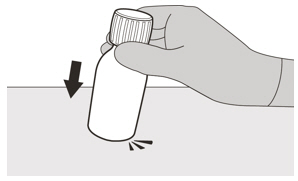
An instructional illustration showing a hand gripping a bottle by the cap and pressing the bottom of the bottle against a surface, indicated by an arrow pointing downward. The image suggests a method to open or close the bottle cap securely.*
FDA Label Image

Figure C (Vrysdi 36)

Figure C (Vrysdi 36)
An instructional illustration showing a hand holding a bottle and another hand twisting the cap, with arrows indicating the direction to turn the cap for opening or closing. The diagram is likely related to the use of EVRYSDI oral medication bottles.*
FDA Label Image

Figure D (Vrysdi 37)

Figure D (Vrysdi 37)
An illustration showing a hand pouring liquid from a small cup into a bottle positioned on a flat surface. The drawing is simple and monochromatic, depicting the action of transferring liquid into the bottle.*
FDA Label Image

Figure E (Vrysdi 38)

Figure E (Vrysdi 38)
An instructional diagram showing a hand holding a bottle with its cap being removed. A close-up inset highlights the correct orientation of the bottle neck threads, indicated as correct with a checkmark.*
FDA Label Image

Figure F (Vrysdi 39)

Figure F (Vrysdi 39)
An instructional illustration showing a hand holding a bottle. An arrow indicates a shaking motion, and a timer icon with "15 sec" suggests shaking the bottle for 15 seconds.*
FDA Label Image

Figure G (Vrysdi 40)

Figure G (Vrysdi 40)
An instructional illustration showing a hand using a pen or marker to write on a label wrapped around a small medicine bottle. The image highlights the label area with a magnified inset zooming in on the label's blank surface, indicating where to add information or marks.*
FDA Label Image

Figure H (Vrysdi 41)

Figure H (Vrysdi 41)
An instructional illustration showing a hand peeling off a label from a bottle. The inset zooms in on the label, displaying a date or code area with placeholder text. This image likely demonstrates how to read or remove the bottle label for EVRYSDI (Risdiplam) oral solution.*
FDA Label Image

Principal Display Panel (60 mg/80 mL Bottle Carton)

Principal Display Panel (60 mg/80 mL Bottle Carton)
Label for Evrysdi (risdiplam) oral solution, containing 60 mg per 80 mL (0.75 mg/mL) after constitution. The label notes the necessity for pharmacists to constitute Evrysdi with water prior to dispensing. The product is RX-only and labeled by Genentech, Inc.*

* About these descriptions: Image descriptions on this page are generated by automated AI analysis of the product label images from the manufacturer's FDA label submission (SPL). They are provided for reference only and may contain errors or omissions. Always rely on the printed label itself and the official FDA labeling, and consult a pharmacist or healthcare professional with any questions about this product.