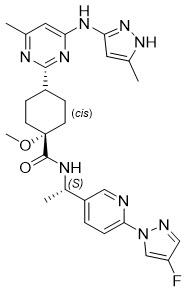
RET Fusion-Positive Non-Small Cell Lung Cancer
The safety of GAVRETO was evaluated as a single agent at 400 mg orally once daily in 220 patients with metastatic rearranged during transfection (RET fusion-positive) non-small cell lung cancer (NSCLC) in ARROW [see Clinical Studies (14.1)]. Among the 220 patients who received GAVRETO, 42% were exposed for 6 months or longer and 19% were exposed for greater than one year.
The median age was 60 years (range: 26 to 87 years); 52% were female, 50% were White, 41% were Asian, and 4% were Hispanic/Latino.
Serious adverse reactions occurred in 45% of patients who received GAVRETO. The most frequent serious adverse reaction (in ≥2% of patients) was pneumonia, pneumonitis, sepsis, urinary tract infection, and pyrexia. Fatal adverse reaction occurred in 5% of patients; fatal adverse reaction which occurred in > 1 patient included pneumonia (n = 3) and sepsis (n = 2).
Permanent discontinuation due to an adverse reaction occurred in 15% of patients who received GAVRETO. Adverse reactions resulting in permanent discontinuation which occurred in > 1 patient included pneumonitis (1.8%), pneumonia (1.8%), and sepsis (1%).
Dosage interruptions due to an adverse reaction occurred in 60% of patients who received GAVRETO. Adverse reactions requiring dosage interruption in ≥2% of patients included neutropenia, pneumonitis, anemia, hypertension, pneumonia, pyrexia, increased aspartate aminotransferase (AST), increased blood creatine phosphokinase, fatigue, leukopenia, thrombocytopenia, vomiting, increased alanine aminotransferase (ALT), sepsis, and dyspnea.
Dose reductions due to adverse reactions occurred in 36% of patients who received GAVRETO. Adverse reactions requiring dosage reductions in ≥ 2% of patients included neutropenia, anemia, pneumonitis, neutrophil count decreased, fatigue, hypertension, pneumonia, and leukopenia.
Table 4 summarizes the adverse reactions in RET Fusion-Positive NSCLC Patients in ARROW.
Table 4: Adverse Reactions (≥ 15%) in RET Fusion-Positive NSCLC Patients Who Received GAVRETO in ARROW| Adverse Reactions | GAVRETO
N=220 |
|---|
Grades 1-4
(%) | Grades 3-4
(%) |
|---|
| General |
| Fatigue Fatigue includes fatigue, asthenia | 35 | 2.3 |
| Pyrexia | 20 | 0 |
| Edema Edema includes edema peripheral, face edema, periorbital edema, eyelid edema, edema generalized, swelling | 20 | 0 |
| Gastrointestinal |
| Constipation | 35 | 1 |
| Diarrhea Diarrhea includes diarrhea, colitis, enteritis | 24 | 3.2 |
| Dry Mouth | 16 | 0 |
| Musculoskeletal Disorders | | |
| Musculoskeletal Pain Musculoskeletal pain includes back pain, myalgia, arthralgia, pain in extremity, musculoskeletal pain, neck pain, musculoskeletal chest pain, bone pain, musculoskeletal stiffness, arthritis, spinal pain | 32 | 0 |
| Vascular |
| Hypertension Hypertension includes hypertension, blood pressure increased | 28 | 14 |
| Respiratory, thoracic and mediastinal |
| Cough Cough includes cough, productive cough, upper-airway cough syndrome | 23 | 0.5 |
| Infections | | |
| Pneumonia Pneumonia includes pneumonia, atypical pneumonia, lung infection, pneumocystis jirovecii pneumonia, pneumonia bacterial, pneumonia cytomegaloviral, pneumonia haemophilus, pneumonia influenza, pneumonia streptococcal | 17 | 8 |
Table 5 summarizes the laboratory abnormalities in ARROW.
Table 5: Select Laboratory Abnormalities (≥ 20%) Worsening from Baseline in RET Fusion-Positive NSCLC Patients Who Received GAVRETO in ARROW| Laboratory Abnormality | GAVRETO
N=220 |
|---|
Grades 1-4
(%) | Grades 3-4
(%) |
|---|
| Denominator for each laboratory parameter is based on the number of patients with a baseline and post-treatment laboratory value available, which ranged from 216 to 218 patients. |
| Chemistry |
| Increased AST | 74 | 2.3 |
| Increased ALT | 49 | 2.3 |
| Increased alkaline phosphatase | 42 | 1.8 |
| Decreased calcium (corrected) | 39 | 1.8 |
| Decreased albumin | 36 | 0 |
| Decreased phosphate | 35 | 11 |
| Increased creatinine | 33 | 0.5 |
| Decreased sodium | 29 | 7 |
| Increased potassium | 26 | 0.9 |
| Hematology |
| Decreased neutrophils | 61 | 16 |
| Decreased hemoglobin | 58 | 9 |
| Decreased lymphocytes | 56 | 19 |
| Decreased platelets | 27 | 3.2 |
Clinically relevant laboratory abnormalities < 20% of patients who received GAVRETO included increased phosphate (10%).
RET-altered Thyroid Cancer
The safety of GAVRETO was evaluated as a single agent at 400 mg orally once daily in 138 patients with RET-altered Thyroid Cancer in ARROW [see Clinical Studies (14.2, 14.3)]. Among the 138 patients who received GAVRETO, 68% were exposed for 6 months or longer, and 40% were exposed for greater than one year.
The median age was 59 years (range: 18 to 83 years); 36% were female, 74% were White, 17% were Asian, and 6% were Hispanic/Latino.
Serious adverse reactions occurred in 39% of patients who received GAVRETO. The most frequent serious adverse reactions (in ≥2% of patients) were pneumonia, pneumonitis, urinary tract infection, pyrexia, fatigue, diarrhea, dizziness, anemia, hyponatremia, and ascites. Fatal adverse reaction occurred in 2.2% of patients; fatal adverse reactions that occurred in > 1 patient included pneumonia (n=2).
Permanent discontinuation due to an adverse reaction occurred in 9% of patients who received GAVRETO. Adverse reactions resulting in permanent discontinuation which occurred in > 1 patient included fatigue, pneumonia and anemia.
Dosage interruptions due to an adverse reaction occurred in 67% of patients who received GAVRETO. Adverse reactions requiring dosage interruption in ≥ 2% of patients included neutropenia, hypertension, diarrhea, fatigue, pneumonitis, anemia, increased blood creatine phosphokinase, pneumonia, urinary tract infection, musculoskeletal pain, vomiting, pyrexia, increased AST, dyspnea, hypocalcemia, cough, thrombocytopenia, abdominal pain, increased blood creatinine, dizziness, headache, decreased lymphocyte count, stomatitis , and syncope.
Dose reductions due to adverse reactions occurred in 44% of patients who received GAVRETO. Adverse reactions requiring dosage reductions in ≥ 2% of patients included neutropenia, anemia, hypertension, increased blood creatine phosphokinase, decreased lymphocyte count, pneumonitis, fatigue and thrombocytopenia.
Table 6 summarizes the adverse reactions occurring in RET-altered Thyroid Cancer Patients in ARROW.
Table 6: Adverse Reactions (≥ 15%) in RET-altered Thyroid Cancer Patients Who Received GAVRETO in ARROW| Adverse Reactions | GAVRETO
N=138 |
|---|
Grades 1-4
(%) | Grades 3-4
(%) |
|---|
| Musculoskeletal |
| Musculoskeletal Pain Musculoskeletal Pain includes arthralgia, arthritis, back pain, bone pain, musculoskeletal chest pain, musculoskeletal pain, musculoskeletal stiffness, myalgia, neck pain, non-cardiac chest pain, pain in extremity, spinal pain | 42 | 0.7 |
| Gastrointestinal |
| Constipation | 41 | 0.7 |
| Diarrhea Diarrhea includes colitis, diarrhea | 34 | 5 |
| Abdominal Pain Abdominal Pain includes abdominal discomfort, abdominal pain, abdominal pain upper, abdominal tenderness, epigastric discomfort | 17 | 0.7 |
| Dry mouth | 17 | 0 |
| Stomatitis Stomatitis includes mucosal inflammation, stomatitis, tongue ulceration | 17 | 0.7 |
| Nausea | 17 | 0.7 |
| Vascular |
| Hypertension | 40 | 21 |
| General |
| Fatigue Fatigue includes asthenia, fatigue | 38 | 6 |
| Edema Edema includes eyelid edema, face edema, edema, edema peripheral, periorbital edema, | 29 | 0 |
| Pyrexia | 22 | 2.2 |
| Nervous System |
| Headache Headache includes headache, migraine | 24 | 0 |
| Peripheral Neuropathy Peripheral neuropathy includes dysaesthesia, hyperaesthesia, hypoaesthesia, neuralgia, neuropathy peripheral, paraesthesia, peripheral sensory neuropathy, polyneuropathy | 20 | 0 |
| Dizziness Dizziness includes dizziness, dizziness postural, vertigo | 19 | 0.7 |
| Dysgeusia Dysgeusia includes ageusia, dysgeusia | 17 | 0 |
| Respiratory |
| Cough Cough includes cough, productive cough, upper-airway cough syndrome | 27 | 1.4 |
| Dyspnea Dyspnea includes dyspnea, dyspnea exertional | 22 | 2.2 |
| Skin and Subcutaneous |
| Rash Rash includes dermatitis, dermatitis acneiform, eczema, palmar-plantar, erythrodysaesthesia syndrome, rash, rash erythematous, rash macular, rash maculo-papular, rash papular, rash pustular | 24 | 0 |
| Metabolism and Nutrition |
| Decreased Appetite | 15 | 0 |
Clinically relevant adverse reactions in <15% of patients who received GAVRETO included tumor lysis syndrome and increased creatine phosphokinase.
Table 7 summarizes the laboratory abnormalities occurring in RET-altered Thyroid Cancer Patients in ARROW.
Table 7: Select Laboratory Abnormalities (≥ 20%) Worsening from Baseline in RET-altered Thyroid Cancer Patients Who Received GAVRETO in ARROW| Laboratory Abnormality | GAVRETO
N=138 |
|---|
Grades 1-4
(%) | Grades 3-4
(%) |
|---|
| Denominator for each laboratory parameter is based on the number of patients with a baseline and post-treatment laboratory value available, which ranged from 135 to 138 patients. |
| Chemistry |
| Decreased calcium (corrected) | 70 | 9 |
| Increased AST | 69 | 4.3 |
| Increased ALT | 43 | 3.6 |
| Increased creatinine | 41 | 0 |
| Decreased albumin | 41 | 1.5 |
| Decreased sodium | 28 | 2.2 |
| Decreased phosphate | 28 | 8 |
| Decreased magnesium | 27 | 0.7 |
| Increased potassium | 26 | 1.4 |
| Increased bilirubin | 24 | 1.4 |
| Increased alkaline phosphatase | 22 | 1.4 |
| Hematology |
| Decreased lymphocytes | 67 | 27 |
| Decreased hemoglobin | 63 | 13 |
| Decreased neutrophils | 59 | 16 |
| Decreased platelets | 31 | 2.9 |
Clinically relevant laboratory abnormalities in patients who received GAVRETO included increased phosphate (40%).
Strong CYP3A Inhibitors
Avoid coadministration with strong CYP3A inhibitors. Coadministration of GAVRETO with a strong CYP3A inhibitor increases pralsetinib exposure, which may increase the incidence and severity of adverse reactions of GAVRETO.
Avoid coadministration of GAVRETO with combined P-gp and strong CYP3A inhibitors. If coadministration with a combined P-gp and strong CYP3A inhibitor cannot be avoided, reduce the GAVRETO dose [see Dosage and Administration (2.4), Clinical Pharmacology (12.3)].
Strong CYP3A Inducers
Coadministration of GAVRETO with a strong CYP3A inducer decreases pralsetinib exposure, which may decrease efficacy of GAVRETO. Avoid coadministration of GAVRETO with strong CYP3A inducers. If coadministration of GAVRETO with strong CYP3A inducers cannot be avoided, increase the GAVRETO dose [see Dosage and Administration (2.5), Clinical Pharmacology (12.3)].
Risk Summary
Based on findings from animal studies and its mechanism of action, GAVRETO can cause fetal harm when administered to a pregnant woman [see Clinical Pharmacology (12.1)]. There are no available data on GAVRETO use in pregnant women to inform drug-associated risk. Oral administration of pralsetinib to pregnant rats during the period of organogenesis resulted in malformations and embryolethality at maternal exposures below the human exposure at the clinical dose of 400 mg once daily (see Data). Advise pregnant women of the potential risk to a fetus.
In the U.S. general population, the estimated background risk of major birth defects and miscarriage in clinically recognized pregnancies is 2-4% and 15-20%, respectively
Data
Animal Data
In an embryo-fetal development study, once daily oral administration of pralsetinib to pregnant rats during the period of organogenesis resulted in 100% post-implantation loss at dose levels ≥20 mg/kg (approximately 1.8 times the human exposure based on area under the curve [AUC] at the clinical dose of 400 mg). Post-implantation loss also occurred at the 10 mg/kg dose level (approximately 0.6 times the human exposure based on AUC at the clinical dose of 400 mg). Once daily oral administration of pralsetinib at dose levels ≥5 mg/kg (approximately 0.2 times the human AUC at the clinical dose of 400 mg) resulted in an increase in visceral malformations and variations (absent or small kidney and ureter, absent uterine horn, malpositioned kidney or testis, retroesophageal aortic arch) and skeletal malformations and variations (vertebral and rib anomalies and reduced ossification).
Risk Summary
There are no data on the presence of pralsetinib or its metabolites in human milk or their effects on either the breastfed child or on milk production. Because of the potential for serious adverse reactions in breastfed children, advise women not to breastfeed during treatment with GAVRETO and for 1 week after the final dose.
Pregnancy Testing
Verify pregnancy status of females of reproductive potential prior to initiating GAVRETO [see Use in Specific Populations (8.1)].
Contraception
GAVRETO can cause fetal harm when administered to a pregnant woman [see Use in Specific Populations (8.1)].
Females
Advise females of reproductive potential to use effective non-hormonal contraception during treatment with GAVRETO and for 2 weeks after the final dose. GAVRETO may render hormonal contraceptives ineffective.
Males
Advise males with female partners of reproductive potential to use effective contraception during treatment with GAVRETO and for 1 week after the final dose.
Infertility
Based on histopathological findings in the reproductive tissues of male and female rats and a dedicated fertility study in which animals of both sexes were treated and mated to each other, GAVRETO may impair fertility [see Nonclinical Toxicology (13.1)].
Animal Toxicity Data
In a 4-week repeat-dose toxicology study in non-human primates, physeal dysplasia in the femur occurred at doses resulting in exposures similar to the human exposure (AUC) at the clinical dose of 400 mg. In rats there were findings of increased physeal thickness in the femur and sternum as well as tooth (incisor) abnormalities (fractures, dentin matrix alteration, ameloblast/odontoblast degeneration, necrosis) in both 4- and 13-week studies at doses resulting in exposures similar to the human exposure (AUC) at the clinical dose of 400 mg. Recovery was not assessed in the 13-week toxicology study, but increased physeal thickness in the femur and incisor degeneration did not show evidence of complete recovery in the 28-day rat study.
Monitor growth plates in adolescent patients with open growth plates. Consider interrupting or discontinuing therapy based on the severity of any growth plate abnormalities and based on an individual risk-benefit assessment.
Cardiac Electrophysiology
The QT interval prolongation potential of pralsetinib was assessed in 34 patients with RET -altered solid tumors administered GAVRETO at the recommended dosage. No large mean increase in QTc (> 20 ms) was detected in the study.
Absorption
The median time to peak concentration (Tmax) ranged from 2 to 4 hours following single doses of pralsetinib 60 mg to 600 mg.
Food Effect
Following administration of a single dose of 200 mg GAVRETO with a high-fat meal, (approximately 800 to 1000 calories with 50 to 60% of calories from fat), the mean (90% CI) Cmax of pralsetinib was increased by 104% (65%, 153%), the mean (90% CI) AUC0-INF was increased by 122% (96%,152%), and the median Tmax was delayed from 4 to 8.5 hours, compared to the fasted state.
Distribution
The mean (CV%) apparent volume of distribution (Vd/F) of pralsetinib is 303 L (68%). Protein binding of pralsetinib is 97.1% and is independent of concentration. The blood-to-plasma ratio is 0.6 to 0.7.
Elimination
The mean (±standard deviation) plasma elimination half-life (T½) of pralsetinib is 15.7 hours (9.8) following single doses and 20 hours (11.7) following multiple doses of pralsetinib. The mean (CV%) apparent oral clearance (CL/F) of pralsetinib is 10.9 L/h (66%) at steady state.
Metabolism
Pralsetinib is primarily metabolized by CYP3A4 and to a lesser extent by CYP2D6 and CYP1A2, in vitro. Following a single oral dose of 310 mg of radiolabeled pralsetinib to healthy subjects, pralsetinib metabolites from oxidation and glucuronidation were detected as 5% or less.
Excretion
Approximately 73% (66% as unchanged) of the total administered radioactive dose [14C] pralsetinib was recovered in feces and 6% (4.8% as unchanged) was recovered in urine.
Specific Populations
No clinically significant differences in the PK of pralsetinib were observed based on age (19 to 87 years), sex, race (370 White, 22 Black, or 61 Asian), and body weight (32.1 to 128 kg). Mild and moderate renal impairment (CLcr 30 - 89 mL/min) had no effect on the exposure of pralsetinib. Pralsetinib has not been studied in patients with severe renal impairment (CLcr < 15 mL/min).
Patients with Hepatic Impairment
Mild hepatic impairment (total bilirubin ≤1.0 × ULN and AST > ULN, or total bilirubin >1.0 to 1.5 × ULN and any AST) had no effect on the PK of pralsetinib. Pralsetinib has not been studied in patients with moderate (total bilirubin >1.5 to 3.0 × ULN and any AST) or severe (total bilirubin > 3.0 ULN and any AST) hepatic impairment.
Drug Interaction Studies
Clinical Studies and Model-Informed Approaches
Combined P-gp and Strong CYP3A Inhibitors: Coadministration of itraconazole 200 mg once daily with a single GAVRETO 200 mg dose increased pralsetinib Cmax by 84% and AUC0-INF by 251%.
Strong CYP3A Inducers: Coadministration of rifampin 600 mg once daily with a single GAVRETO 400 mg dose decreased pralsetinib Cmax by 30% and AUC0-INF by 68%.
Mild CYP3A Inducers: No clinically significant differences in the PK of pralsetinib were identified when GAVRETO was coadministered with mild CYP3A inducers.
Acid-Reducing Agents: No clinically significant differences in the PK of pralsetinib were observed when GAVRETO was coadministered with gastric acid reducing agents.
In Vitro Studies
Cytochrome P450 (CYP) Enzymes: Pralsetinib is a time-dependent inhibitor of CYP3A4/5 and an inhibitor of CYP2C8, CYP2C9, and CYP3A4/5, but not an inhibitor of CYP1A2, CYP2B6, CYP2C19 or CYP2D6 at clinically relevant concentrations.
Pralsetinib is an inducer of CYP2C8, CYP2C9, and CYP3A4/5, but not an inducer of CYP1A2, CYP2B6, or CYP2C19 at clinically relevant concentrations.
Transporter Systems: Pralsetinib is a substrate of P-glycoprotein (P-gp) and breast cancer resistance protein (BCRP), but not a substrate of bile salt efflux pump (BSEP), organic cation transporter [OCT]1, OCT2, organic anion transporting polypeptide [OATP]1B1, OATP1B3, multidrug and toxin extrusion [MATE]1, MATE2-K, organic anion transporter [OAT]1, or OAT3.
Pralsetinib is an inhibitor of P-gp, BCRP, OATP1B1, OATP1B3, OAT1, MATE1, MATE2-K, and BSEP, but not an inhibitor of OCT1, OCT2, and OAT1A3 at clinically relevant concentrations.
Metastatic RET Fusion-Positive NSCLC Previously Treated with Platinum Chemotherapy
Efficacy was evaluated in 87 patients with RET fusion-positive NSCLC with measurable disease who were previously treated with platinum chemotherapy enrolled into a cohort of ARROW.
The median age was 60 years (range: 28 to 85); 49% were female, 53% were White, 35% were Asian, 6% were Hispanic/Latino. ECOG performance status was 0-1 (94%) or 2 (6%), 99% of patients had metastatic disease, and 43% had either a history of or current CNS metastasis. Patients received a median of 2 prior systemic therapies (range 1–6); 45% had prior anti-PD-1/PD-L1 therapy and 25% had prior kinase inhibitors. A total of 52% of the patients received prior radiation therapy. RET fusions were detected in 77% of patients using NGS (45% tumor samples; 26% blood or plasma samples, 6% unknown), 21% using FISH, and 2% using other methods. The most common RET fusion partners were KIF5B (75%) and CCDC6 (17%).
Efficacy results for RET fusion-positive NSCLC patients who received prior platinum-based chemotherapy are summarized in Table 8.
Table 8: Efficacy Results in ARROW (Metastatic RET Fusion-Positive NSCLC Previously Treated with Platinum Chemotherapy)| Efficacy Parameter | GAVRETO
(N=87) |
|---|
| NE = not estimable |
| Overall Response Rate (ORR) Confirmed overall response rate assessed by BICR (95% CI) | 57 (46, 68) |
| Complete Response, % | 5.7 |
| Partial Response, % | 52 |
| Duration of Response (DOR) | (N=50) |
| Median, months(95%CI) | NE (15.2, NE) |
| Patients with DOR ≥ 6-months Calculated using the proportion of responders with an observed duration of response at least 6 months or greater , % | 80 |
For the 39 patients who received an anti-PD-1 or anti-PD-L1 therapy, either sequentially or concurrently with platinum-based chemotherapy, an exploratory subgroup analysis of ORR was 59% (95% CI: 42, 74) and the median DOR was not reached (95% CI: 11.3, NE).
Among the 87 patients with RET-fusion positive NSCLC, 8 had measurable CNS metastases at baseline as assessed by BICR. No patients received radiation therapy (RT) to the brain within 2 months prior to study entry. Responses in intracranial lesions were observed in 4 of these 8 patients including 2 patients with a CNS complete response; 75% of responders had a DOR of ≥ 6 months.
Treatment-naïve RET Fusion-Positive NSCLC
Efficacy was evaluated in 27 patients with treatment-naïve RET fusion-positive NSCLC with measurable disease enrolled into ARROW.
The median age was 65 years (range 30 to 87); 52% were female, 59% were White, 33% were Asian, and 4% were Hispanic or Latino. ECOG performance status was 0-1 for 96% of the patients and all patients (100%) had metastatic disease 37% had either history of or current CNS metastasis. RET fusions were detected in 67% of patients using NGS (41% tumor samples; 22% blood or plasma; 4% unknown) and 33% using FISH. The most common RET fusion partners were KIF5B (70%) and CCDC6 (11%).
Efficacy results for treatment-naïve RET fusion-positive NSCLC are summarized in Table 9.
Table 9: Efficacy Results for ARROW (Treatment-Naïve Metastatic RET Fusion-Positive NSCLC| Efficacy Parameter | GAVRETO
(N=27) |
|---|
| NE = not estimable |
| Overall Response Rate (ORR) Confirmed overall response rate assessed by BICR (95% CI) | 70 (50, 86) |
| Complete Response, % | 11 |
| Partial Response, % | 59 |
| Duration of Response (DOR) | (N=19) |
| Median, months (95% CI) | 9.0 (6.3, NE) |
| Patients with DOR ≥ 6-monthsb, % | 58 |
RET-Mutant MTC Previously Treated with Cabozantinib or Vandetanib
Efficacy was evaluated in 55 patients with RET-mutant metastatic MTC previously treated with cabozantinib or vandetanib (or both).
The median age was 59 years (range: 25 to 83); 69% were male, 78% were White, 5% were Asian, 5% were Hispanic/Latino. ECOG performance status was 0-1 (95%) or 2 (5%), and 7% had a history of CNS metastases. Patients had received a median of 2 prior therapies (range 1-7). RET mutation status was detected in 73% using NGS [55% tumor sample, 18% plasma], 26% using PCR sequencing, and 2% other. The primary mutations in RET-mutant MTC previously treated with cabozantinib or vandetanib are described in Table 10.
Table 10: Primary Mutations in RET-Mutant MTC in ARROW| RET Mutation Type | Prior Cabozantinib or Vandetanib
(n= 55) | Cabozantinib and Vandetanib- Naïve
(n=29) | Total
(n=84) |
|---|
| M918T Three patients (all in the prior cabozantinib and/or vandetanib group) also had a V804M/L mutation. | 37 | 15 | 52 |
| Cysteine Rich Domain Cysteine Rich Domain (including the following cysteine residues: 609, 611, 618, 620, 630, and/or 634) | 11 | 11 | 22 |
| V804M or V804L | 2 | 1 | 3 |
| Other Other included: D898_E901del (1), E632_L633del (1), L790F (1), A883F (2), K666E (1), and R844W (1) | 5 | 2 | 7 |
Efficacy results for RET-mutant MTC are summarized in Table 11.
Table 11: Efficacy Results for RET-Mutant MTC Previously Treated with Cabozantinib or Vandetanib (ARROW)| Efficacy Parameters | GAVRETO
(N=55) |
|---|
| NR = Not Reached; NE = Not Estimable |
| Overall Response Rate (ORR) Confirmed overall response rate assessed by BICR (95% CI) | 60 (46, 73) |
| Complete Response, % | 1.8 |
| Partial Response, % | 58 |
| Duration of Response (DOR) | (N=33) |
| Median in months (95% CI) | NR (15.1, NE) |
| Patients with DOR ≥ 6 months Calculated using the proportion of responders with an observed duration of response at least 6 months or greater , % | 79 |
Cabozantinib and Vandetanib-naïve RET-mutant MTC
Efficacy was evaluated in 29 patients with RET-mutant advanced MTC who were cabozantinib and vandetanib treatment-naïve.
The median age was 61 years (range: 19 to 81); 72% were male, 76% were White, 17% were Asian, 3.4% were Hispanic/Latino. ECOG performance status was 0-1 (100%), 97% had metastatic disease, and 14% had a history of CNS metastases. Twenty-eight percent (28%) had received up to 3 lines of prior systemic therapy (including 10% PD-1/PD-L1 inhibitors, 10% radioactive iodine, 3.4% kinase inhibitors). RET mutation status was detected in 90% using NGS [52% tumor sample, 35% plasma, 3.4% blood] and 10% using PCR sequencing. The primary mutations used to identify and enroll patients are described in Table 10.
Efficacy results for cabozantinib and vandetanib-naïve RET-mutant MTC are summarized in Table 12.
Table 12: Efficacy Results for Cabozantinib and Vandetanib-naïve RET-Mutant MTC (ARROW)| Efficacy Parameters | GAVRETO
(N=29) |
|---|
| NR = Not Reached; NE = Not Estimable |
| Overall Response Rate (ORR) Confirmed overall response rate assessed by BICR (95% CI) | 66 (46, 82) |
| Complete Response, % | 10 |
| Partial Response, % | 55 |
| Duration of Response (DOR) | (N=19) |
| Median in months (95% CI) | NR (NE, NE) |
| Patients with DOR ≥ 6 months Calculated using the proportion of responders with an observed duration of response at least 6 months or greater , % | 84 |
ILD/Pneumonitis
Advise patients to contact their healthcare provider if they experience new or worsening respiratory symptoms [see Warnings and Precautions (5.1)].
Hypertension
Advise patients that they will require regular blood pressure monitoring and to contact their healthcare provider if they experience symptoms of increased blood pressure or elevated readings [see Warnings and Precautions (5.2)].
Hepatotoxicity
Advise patients that hepatotoxicity can occur and to immediately contact their healthcare provider for signs or symptoms of hepatotoxicity [see Warnings and Precautions (5.3)].
Hemorrhagic Events
Advise patients that GAVRETO may increase the risk for bleeding and to contact their healthcare provider if they experience any signs or symptoms of bleeding [see Warnings and Precautions (5.4)].
Tumor Lysis Syndrome
Advise patients to contact their healthcare provider promptly to report any signs and symptoms of TLS [see Warnings and Precautions (5.5)].
Risk of Impaired Wound Healing
Advise patients that GAVRETO may impair wound healing. Advise patients that temporary interruption of GAVRETO is recommended prior to any elective surgery [see Warnings and Precautions (5.6)].
Embryo-Fetal Toxicity
Advise females of reproductive potential of the potential risk to a fetus. Advise females of reproductive potential to inform their healthcare provider of a known or suspected pregnancy [see Warnings and Precautions (5.7), Use in Specific Populations (8.1)].
Advise females of reproductive potential to use effective non-hormonal contraception during the treatment with GAVRETO and for 2 weeks after the final dose [see Use in Specific Populations (8.3)].
Advise males with female partners of reproductive potential to use effective contraception during treatment with GAVRETO and for 1 week after the final dose [see Use in Specific Populations (8.3)].
Lactation
Advise women not to breastfeed during treatment with GAVRETO and for 1 week after the final dose [see Use in Specific Populations (8.2)].
Infertility
Advise males and females of reproductive potential that GAVRETO may impair fertility [See Use in Specific Populations (8.3)].
Drug Interactions
Advise patients and caregivers to inform their healthcare provider of all concomitant medications, including prescription medicines, over-the-counter drugs, vitamins, and herbal products [see Drug Interactions (7.1)].
Administration
Advise patients to take GAVRETO on an empty stomach (no food intake for at least 2 hours before and at least 1 hour after taking GAVRETO) [see Dosage and Administration (2.2)].
Manufactured for:
Genentech, Inc.
A Member of the Roche Group
1 DNA Way, South San Francisco,
CA 94080-4990
Jointly marketed by: Genentech USA, Inc. and Blueprint Medicines Corporation
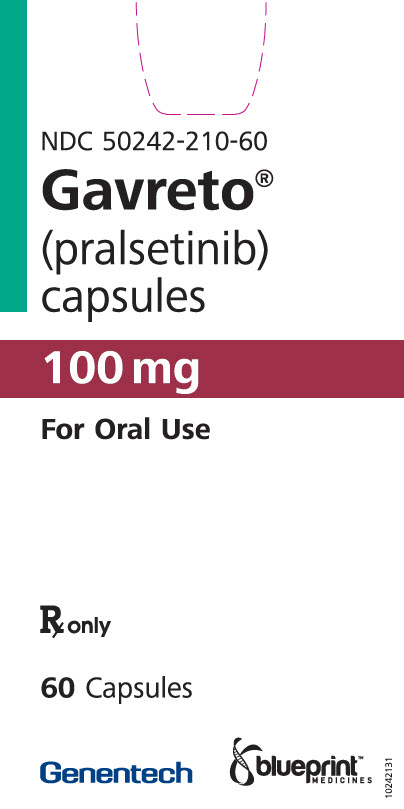
Representative sample of labeling (see the HOW SUPPLIED section for complete listing):