Colchicine Tablet
Product Images NDC 50268-187

View Photos of Packaging, Regulatory Labels, and Product Appearance

Product Visual Gallery

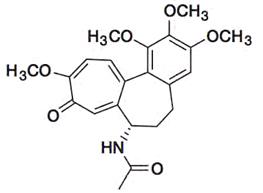
This gallery contains 3 technical images submitted to the FDA as part of the official labeling for Colchicine (NDC 50268-187). Unlike standard consumer photos, these assets often include clinical data figures, molecular chemical structures, and official manufacturer packaging layouts.

As provided by Avpak, these visuals offer a comprehensive scientific overview of the product's physical and chemical identity, aiding pharmacists and researchers in product verification and study.

FDA Label Image

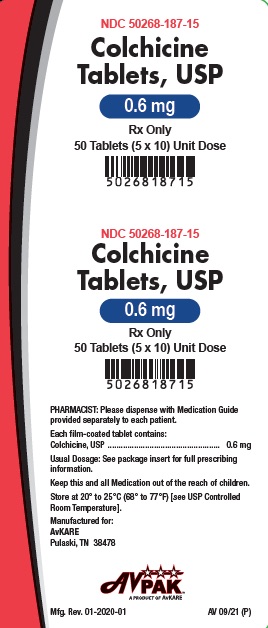
.6 (187 15 0.6mg)

.6 (187 15 0.6mg)
This is a description of a prescription drug identified by its National Drug Code (NOC) of 50268.187.15. The drug is in the form of tablets and is a USP formulation with a dosage of 06mg. The package contains 50 tablets in unit dose packs and can only be obtained through a doctor's prescription. The drug's manufacturer is not specifically identified but has a name resembling "Pl donsswit Medston Gids." Some information about the drug's application is given, discussing the relief of paralysis or pain, but full details need to be obtained through a doctor's prescription or the package instructions. The drug's production date seems to be January 20, 2001.*
FDA Label Image

30a820b8-figure-01 (Colchicine Tablets Usp 1)

FDA Label Image

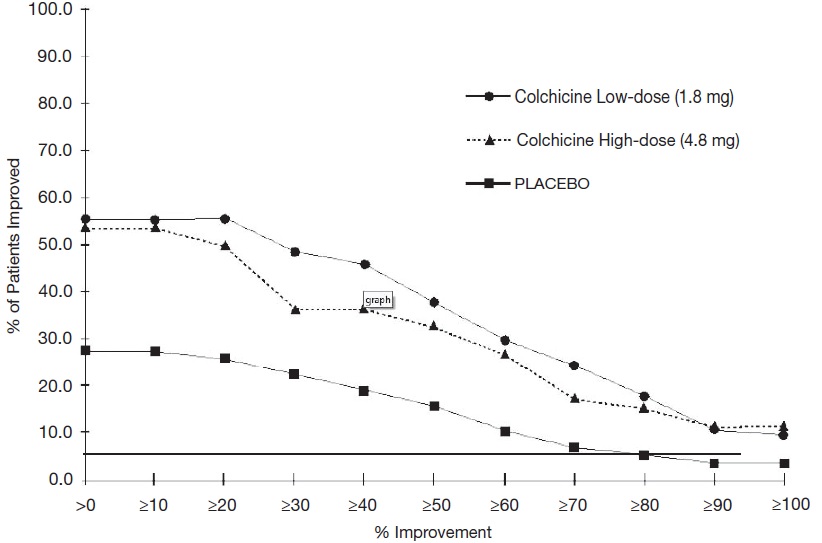
1 (Colchicine Tablets Usp 2)

1 (Colchicine Tablets Usp 2)
The text is a graph showing the percentage of patient improvement with different dosages of Colchicine compared to a placebo. The X-axis shows the increasing numerical range from 0 to 2100, whereas the Y-axis measures improvement percentages ranging from 0 to 90. There are three lines: one represents a low dose of colchicine, the second represents a high dose, and the third line represents the placebo group. The improvement percentage for the high dose line is the highest, followed by the low dose and placebo groups.*

* These product label images have been analyzed using experimental machine learning. Please verify findings with the primary label text.