Cyclobenzaprine Hydrochloride Tablet, Film Coated
Product Images NDC 50268-191

View Photos of Packaging, Regulatory Labels, and Product Appearance

Product Visual Gallery

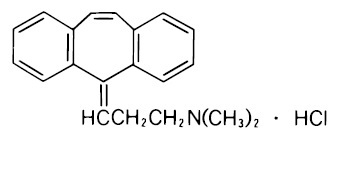
This gallery contains 4 technical images submitted to the FDA as part of the official labeling for Cyclobenzaprine Hydrochloride (NDC 50268-191). Unlike standard consumer photos, these assets often include clinical data figures, molecular chemical structures, and official manufacturer packaging layouts.

As provided by Avpak, these visuals offer a comprehensive scientific overview of the product's physical and chemical identity, aiding pharmacists and researchers in product verification and study.

FDA Label Image

50 (191 15)

50 (191 15)
This is a description of a prescription medication called Cyclobenzaprine. The medication is in the form of round tablets with the size of 10 mg. The medication also has a control number of USP, and it is suitable only for patients with a doctor's prescription. The package comes with 50 tablets with five unit doses. It should be kept in a room temperature-controlled at 20-25°C and kept out of children's reach. The manufacturer of this medication is a company called Avkare located in Pulski, TH 38478.*
FDA Label Image

Image (7d5e3bad 7f85 4e2b 81c5 7981c456e45f 01)

FDA Label Image

Image (7d5e3bad 7f85 4e2b 81c5 7981c456e45f 02)

Image (7d5e3bad 7f85 4e2b 81c5 7981c456e45f 02)
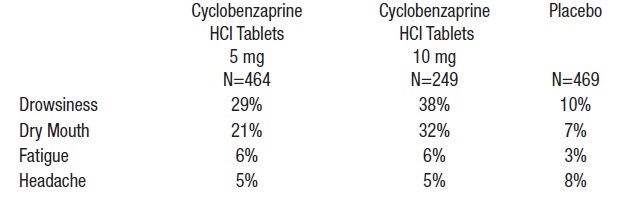
This is a list of common side effects experienced by patients taking Cyclobenzaprine HCI tablets, with dosages of both 5mg and 10mg. The side effects include drowsiness, dry mouth, fatigue, and headache. The percentages indicate the proportion of patients in clinical trials who experienced each of these side effects. The text does not provide information about the purpose of Cyclobenzaprine HCI or the specific conditions it is used to treat.*
FDA Label Image

Image (7d5e3bad 7f85 4e2b 81c5 7981c456e45f 03)

Image (7d5e3bad 7f85 4e2b 81c5 7981c456e45f 03)
This text provides information about the side effects of Cyclobenzaprine HClI Tablets, 10 mg, based on clinical studies and a surveillance program. The most common side effect reported in clinical studies was drowsiness, with a rate of 39%, followed by dry mouth at 2% and dizziness at 1%. The surveillance program reported higher rates of side effects, including drowsiness at 16%, dry mouth at 7%, and dizziness at 3%.*

* These product label images have been analyzed using experimental machine learning. Please verify findings with the primary label text.