Oxybutynin Chloride Tablet, Extended Release
Product Images NDC 50268-628

9 FDA label images from Avpak · Packaging, Regulatory Labels, and Product Appearance

Product Visual Gallery

This gallery contains 9 technical images submitted to the FDA as part of the official labeling for Oxybutynin Chloride (NDC 50268-628). Unlike standard consumer photos, these assets often include clinical data figures, molecular chemical structures, and official manufacturer packaging layouts.

As provided by Avpak, these visuals offer a comprehensive scientific overview of the product's physical and chemical identity, aiding pharmacists and researchers in product verification and study.

FDA Label Image

Chemical Structure (Oxybutynin 1)

Chemical Structure (Oxybutynin 1)
Chemical structure of oxybutynin chloride, showing its molecular components including a cyclohexane ring, phenyl group, ester and amine functional groups, and hydrochloride salt form.*
FDA Label Image

Figure 1 (Oxybutynin 2)

Figure 1 (Oxybutynin 2)
A line graph comparing the mean plasma concentration of oxybutynin over 24 hours for oxybutynin chloride extended-release tablets versus oxybutynin 5 mg taken three times daily (TID). The x-axis represents time in hours, and the y-axis shows mean plasma oxybutynin concentration in ng/mL. Data points include error bars indicating variability.*
FDA Label Image

Figure 2 (Oxybutynin 3)

Figure 2 (Oxybutynin 3)
A line graph depicting the mean plasma concentration of R-Oxybutynin over time in hours. The vertical axis represents concentration in ng/mL, ranging from 0 to 2.0, and the horizontal axis shows time from 0 to 25 hours. Data points with error bars indicate concentration measurements at various time intervals up to 24 hours.*
FDA Label Image

Figure 2 (Oxybutynin 4)

Figure 2 (Oxybutynin 4)
A horizontal error bar chart comparing mean change (±SD) in episodes per week from baseline between Oxybutynin chloride extended-release tablets and placebo. The graph displays the variation in treatment effect for Oxybutynin versus placebo.*
FDA Label Image

Figure 3 (Oxybutynin 5)

Figure 3 (Oxybutynin 5)
A horizontal bar chart illustrating the mean change with standard deviation from baseline in episodes per week for Oxybutynin Chloride extended-release tablets. The x-axis represents the change in episodes per week from -40 to 40, with data points centered near -20, indicating a reduction in episodes.*
FDA Label Image

Figure 4 (Oxybutynin 6)

Figure 4 (Oxybutynin 6)
A horizontal bar chart illustrating the mean change in episodes per week from baseline for oxybutynin and oxybutynin chloride extended-release tablets. The x-axis shows the mean change with a range from -40 to 40. The chart compares two treatments indicating effectiveness in reducing episodes per week.*
FDA Label Image

1 (627 15)

1 (627 15)
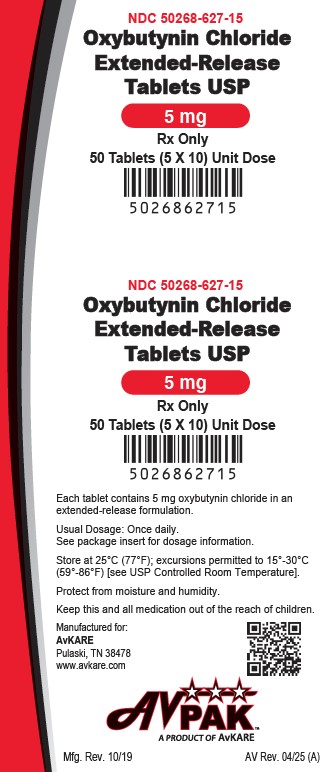
Label for Oxybutynin Chloride Extended-Release Tablets USP, 5 mg, oral extended-release tablets by AvPAK. The image shows unit dose packaging containing 50 tablets (5 x 10). It includes standard storage instructions, dosage guidance, and a barcode with NDC 50268-627-15. The label features the AvPAK logo and manufacturer information from Pulaski, TN.*
FDA Label Image

1 (628 15)

1 (628 15)
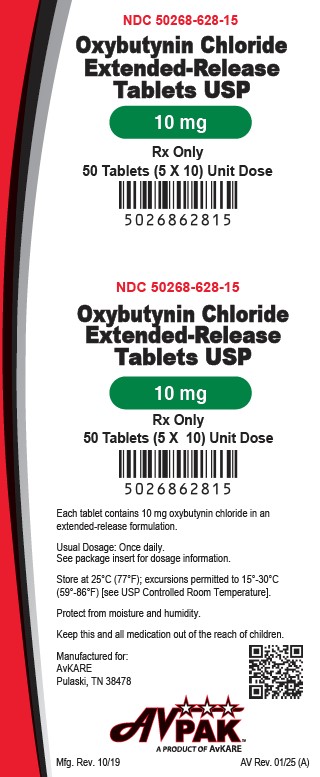
Label for Oxybutynin Chloride Extended-Release Tablets USP 10 mg oral tablets, packaged as 50 tablets in unit dose (5 x 10) manufactured by AvPAK. The label includes dosage form, strength, NDC 50268-628-15, storage instructions, a QR code, and AvPAK logo with a revision date of 10/19.*
FDA Label Image

1 (629 13)

1 (629 13)
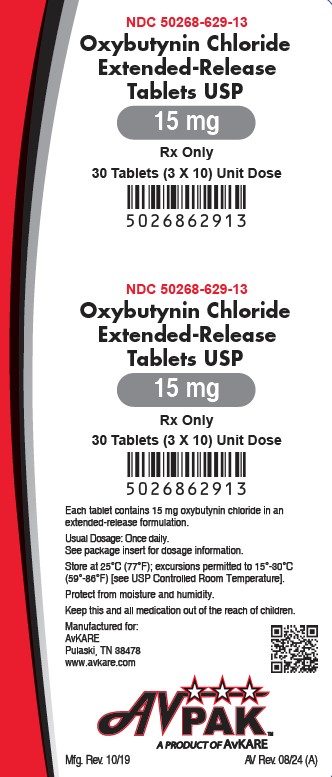
Oxybutynin Chloride Extended-Release Tablets USP 15 mg label in unit dose packaging containing 30 tablets (3 x 10). The label indicates prescription use only, provides storage instructions, and includes manufacturer AvPAK information with a barcode and a QR code. Manufactured by AvKARE in Pulaski, TN.*

* About these descriptions: Image descriptions on this page are generated by automated AI analysis of the product label images from the manufacturer's FDA label submission (SPL). They are provided for reference only and may contain errors or omissions. Always rely on the printed label itself and the official FDA labeling, and consult a pharmacist or healthcare professional with any questions about this product.